

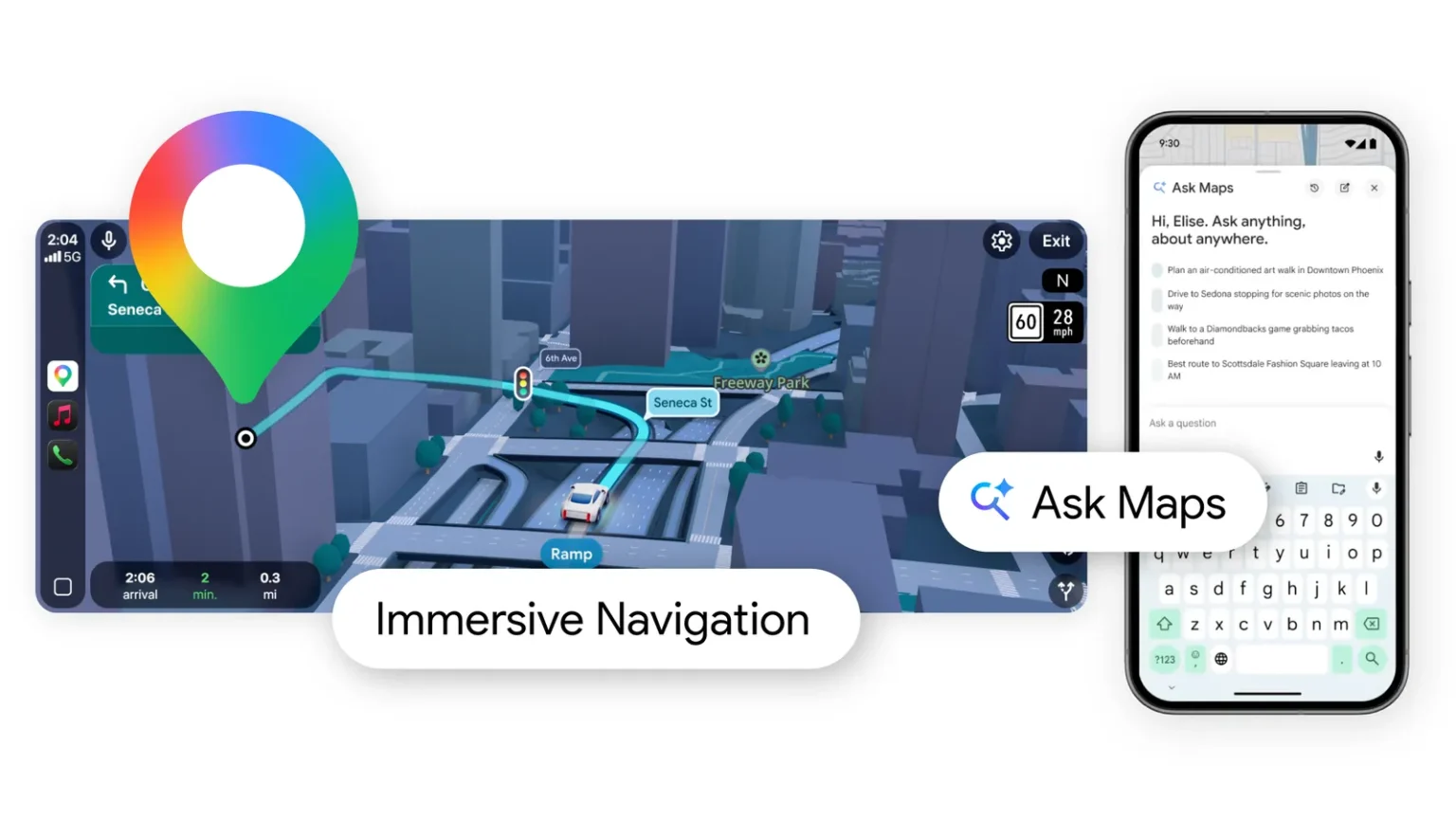

Google has introduced one of the most significant updates to Google Maps in more than a decade. The update brings two major features: Ask Maps, an AI-powered conversational assistant, and Immersive Navigation, a new 3D navigation system designed to make directions clearer and more intuitive. Together, these technologies aim to transform Google Maps from a simple navigation tool into a smarter travel and exploration platform powered by artificial intelligence.
The upgrade is powered by Google’s Gemini AI model, which allows the app to understand natural language queries and provide more personalized navigation, recommendations, and route planning. These features are currently rolling out on Android and iOS devices, with availability starting in the United States and India before expanding to other regions.
Ask Maps: AI-Powered Conversations Inside Google Maps
One of the most notable additions in the update is Ask Maps, a conversational AI tool integrated directly into the Google Maps interface. Instead of typing simple keywords, users can now ask complex questions in natural language, similar to chatting with an AI assistant.
For example, users can ask questions like:
- “Find quiet cafes with charging points near me.”
- “Plan a scenic road trip with intriguing stops.”
- “Where can I get vegan food along my route?”
The system analyzes user preferences, location data, reviews, and photos available on Google Maps to generate detailed and personalized responses. This makes it easier to discover places and plan trips without manually searching through multiple listings.
Ask Maps works more like an intelligent guide. It can suggest destinations, create travel plans, recommend restaurants, and even provide contextual explanations about why a particular location or route is recommended.
The AI assistant also learns from user behavior. If someone frequently visits vegetarian restaurants or outdoor locations, the recommendations will adapt accordingly, making the results more relevant over time.
Immersive Navigation: A More Realistic Way to Follow Routes
Alongside AI-powered search, Google has redesigned navigation with a feature called Immersive Navigation. This update introduces a visually rich 3D driving interface that replaces the traditional flat map view.
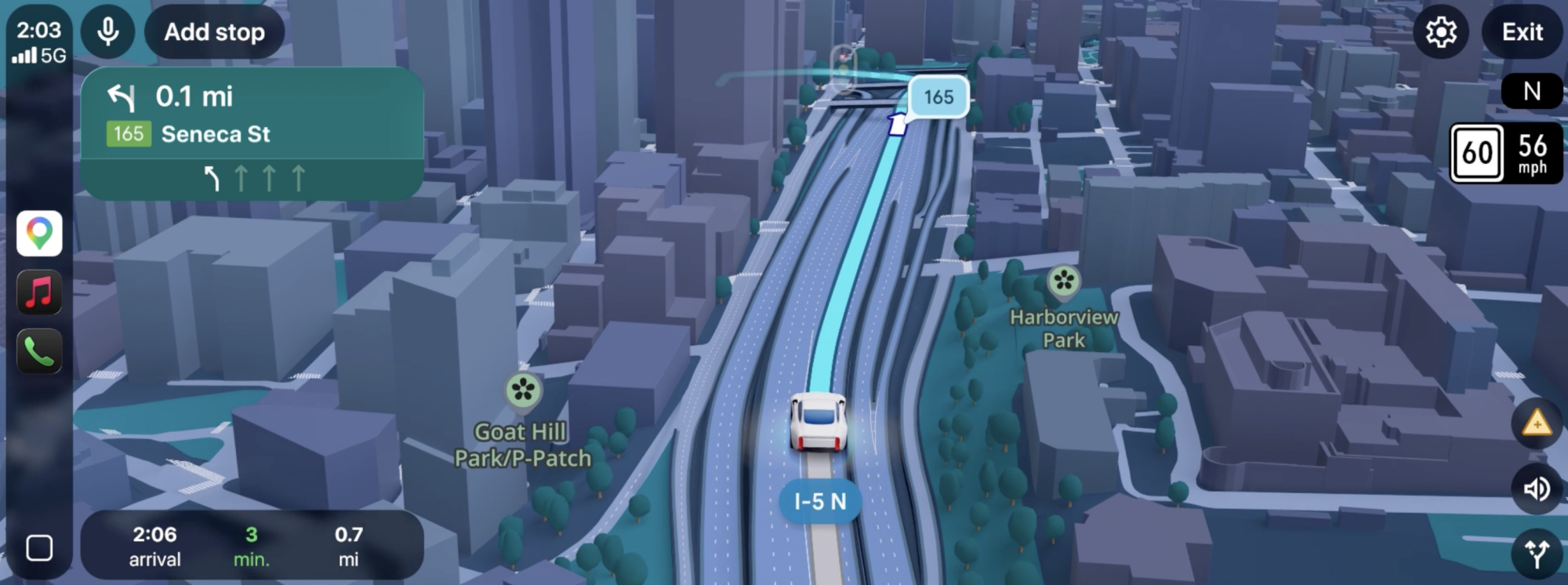
With Immersive Navigation, Google Maps now displays realistic representations of the surrounding environment. Roads, buildings, intersections, traffic lights, pedestrian crossings, and overpasses appear in a 3D format that closely resembles the real world.
This visual approach helps drivers understand complex road layouts more easily, especially in crowded urban areas. Instead of simply following a blue route line, users can see exactly how a junction or interchange will look before reaching it.
Another important improvement is smart zoom and dynamic camera angles. The map automatically adjusts its perspective when approaching complicated intersections or highway exits. This makes it easier to anticipate lane changes and turns while driving.
The feature is built using Google’s large dataset of Street View imagery and aerial photographs, combined with AI to create detailed digital models of real-world environments.
Improved Voice Guidance and Route Intelligence
Google is also improving the way directions are delivered during navigation. Voice instructions are becoming more conversational and easier to understand, helping drivers keep their eyes on the road.
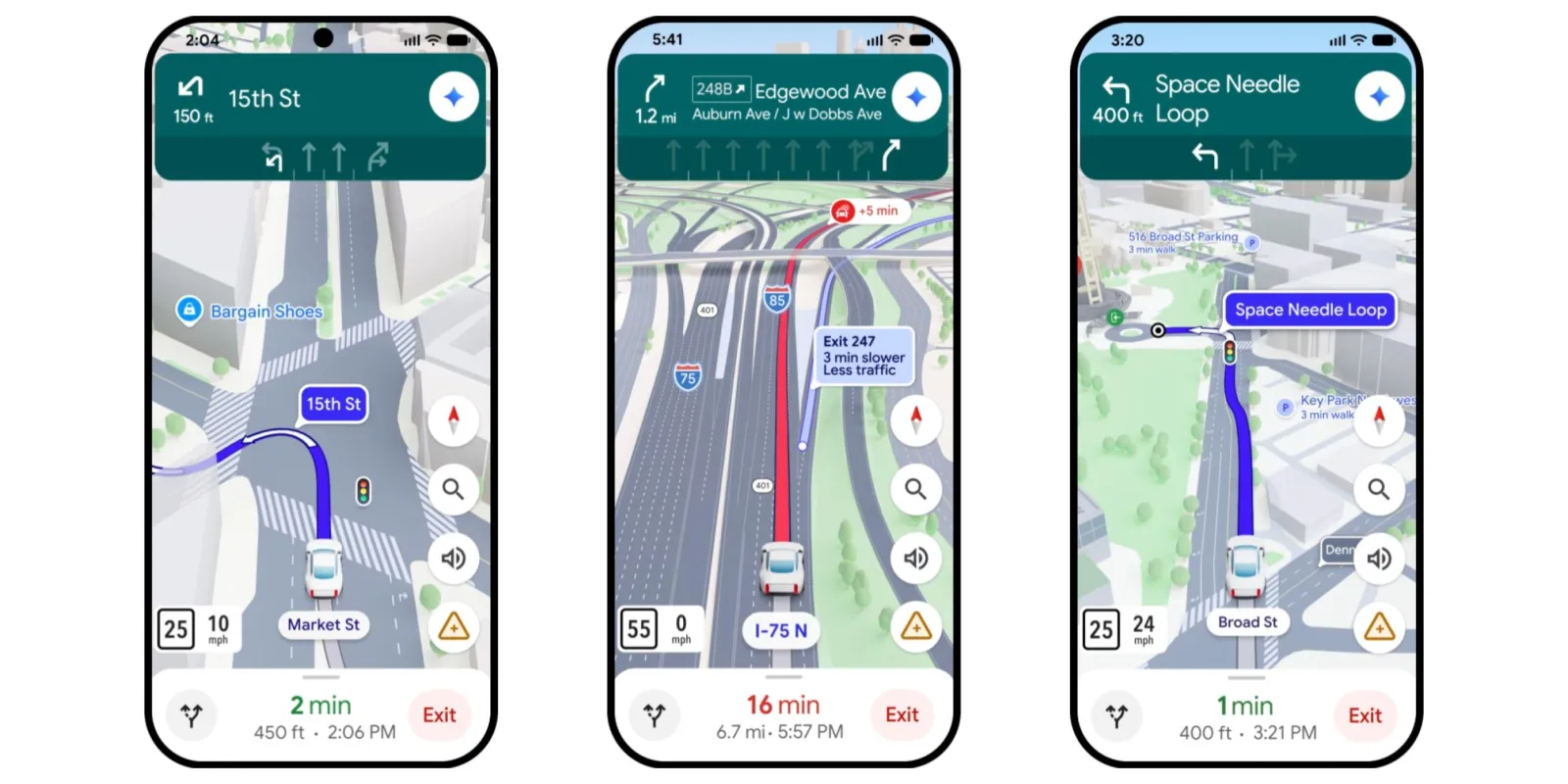
The updated system highlights key road elements such as:
- Lane markings
- Traffic signals
- Stop signs
- Pedestrian crossings
At the same time, Google Maps now provides clearer comparisons between alternate routes, including differences in travel time, traffic conditions, and distance.
This helps users make quicker decisions when choosing the best route during heavy traffic or unexpected delays.
Integration with Real-Time Data and Community Insights
Another key advantage of the new update is its integration with real-time traffic and community data. Google Maps already collects large amounts of information from user reports and services like Waze, which now help power smarter route suggestions.
Ask Maps also uses the platform’s massive database of reviews, photos, and user contributions to provide recommendations. This means suggestions are not only AI-generated but also backed by real experiences shared by millions of users.
Availability and Future Expansion
Google has started rolling out Ask Maps and Immersive Navigation to Android and iOS devices in the United States and India. Support for other regions and additional platforms such as Android Auto and Apple CarPlay is expected to follow gradually.
Future updates, as Google continues to integrate Gemini AI across its ecosystem, should also include desktop support and additional AI capabilities.
The Future of AI-Powered Navigation
This update signals a major shift in how digital maps will function in the future. Instead of simply providing directions, Google Maps is evolving into a smart travel assistant capable of understanding user needs, recommending destinations, and guiding journeys more intelligently.
With conversational AI and immersive 3D navigation, Google is moving toward a more interactive and context-aware mapping experience. As these features expand globally, the way people search for places, plan trips, and navigate cities could change significantly.
Credit: Google


.webp)