
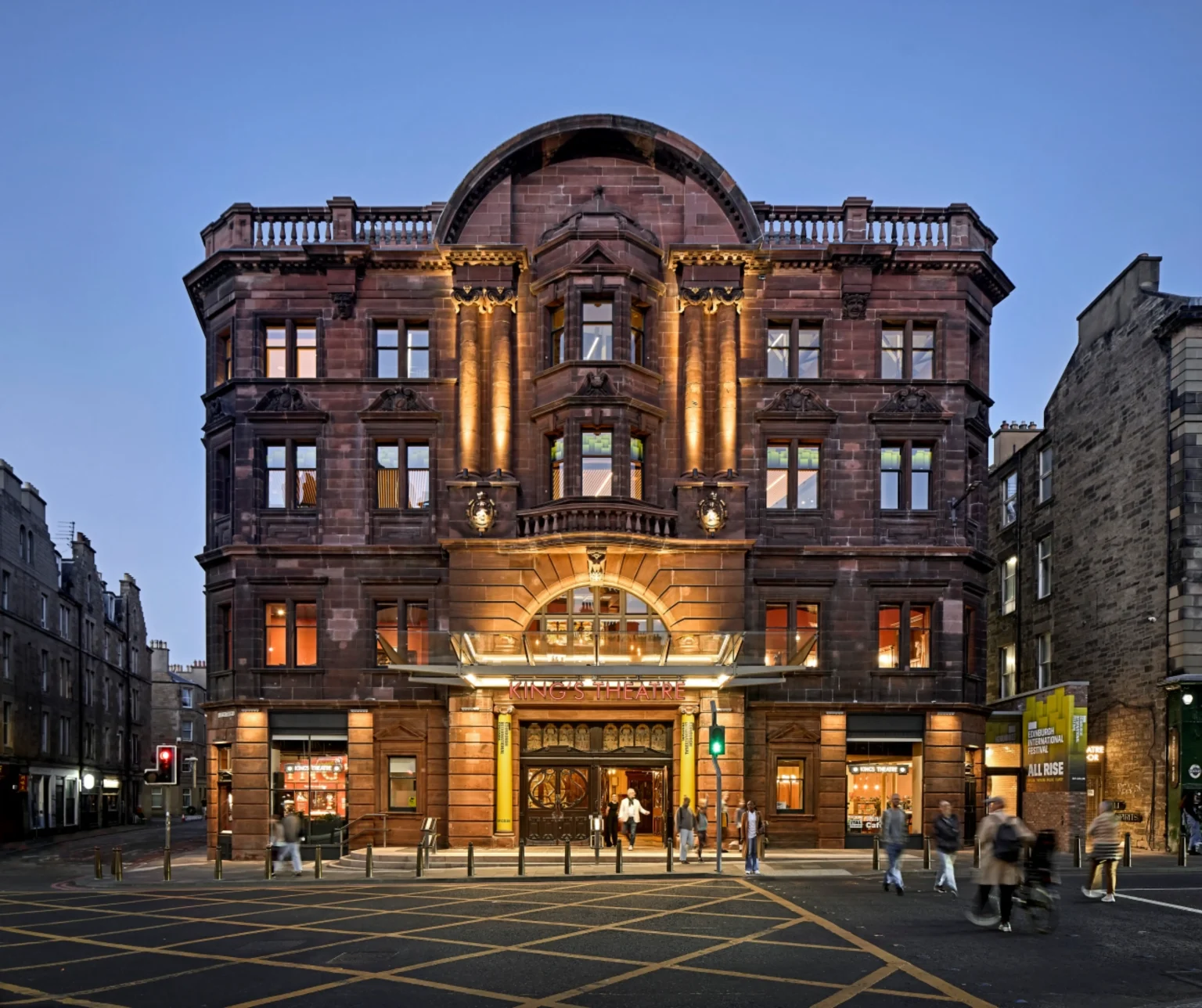

Edinburgh’s King’s Theatre has reopened after a multi-year transformation that balances careful heritage work with the practical demands of contemporary performance. Designed by Bennetts Associates for Capital Theatres, the project upgrades one of Scotland’s most loved venues without erasing the character that has defined it since 1906.
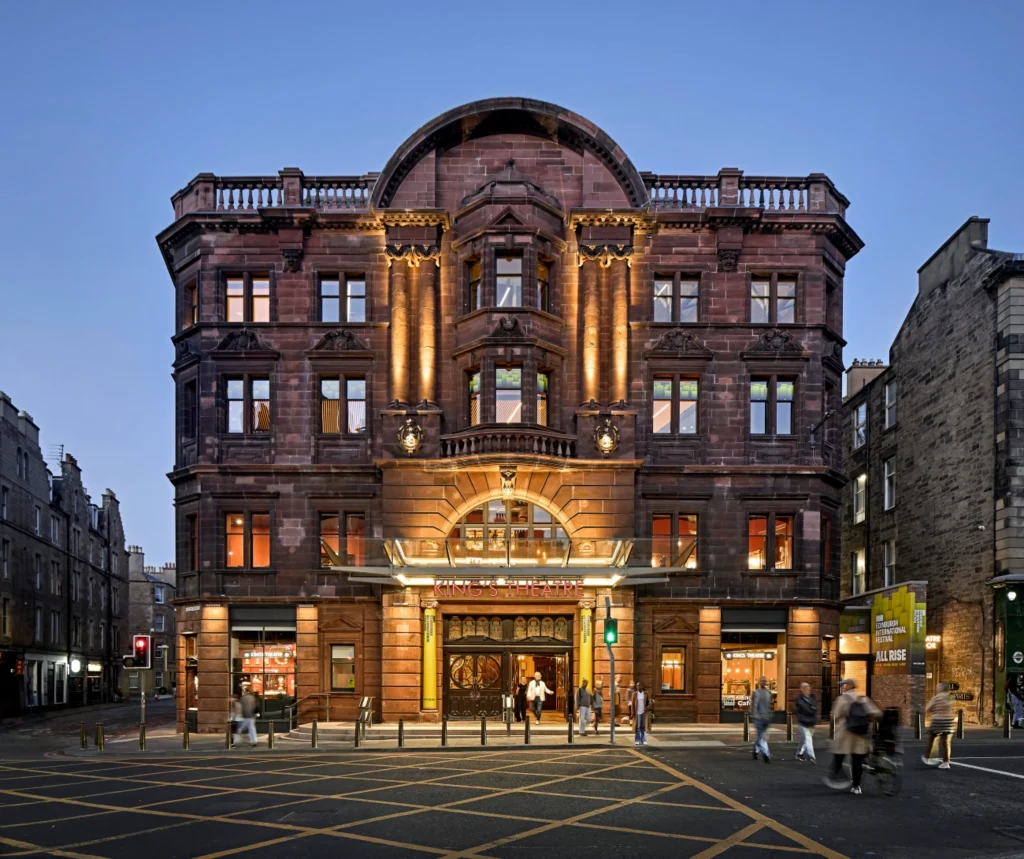
The A-listed building has long been a cornerstone of the city’s cultural life, serving as a home for the Edinburgh International Festival and Scotland’s largest pantomime. Years of use had left it technically constrained and difficult for many audience members to navigate. The redevelopment addresses those limitations while restoring original plasterwork, stained glass and carved stone details.
Heritage and Modern Performance
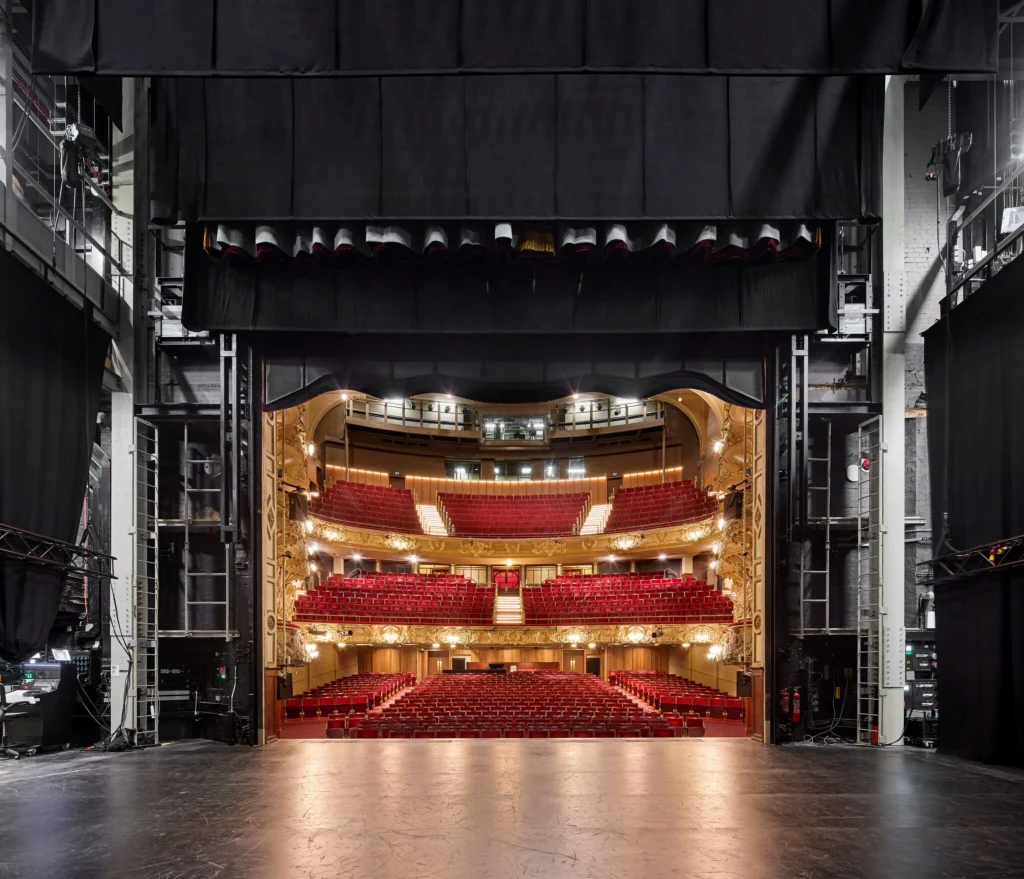
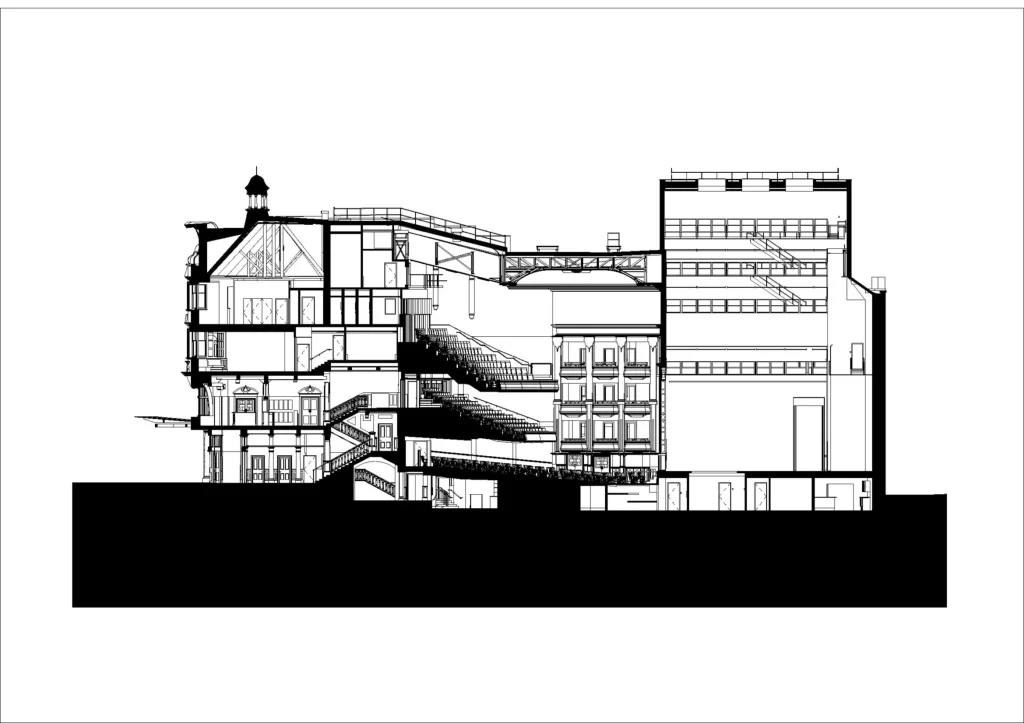
The most significant structural change is the raising of the fly tower by 4.5 meters. This allows the theatre to accommodate larger and more complex touring productions. The original raked stage has been replaced with a level platform, improving conditions for dance and contemporary work and giving greater flexibility to set designers.
Sightlines throughout the auditorium were carefully reviewed to maintain a strong audience experience.
Front-of-house spaces have been substantially reworked. New foyers, bars, and a street-level café extend the theatre’s presence into daily city life. Hospitality capacity has roughly doubled.
A flexible community and learning space supports workshops and engagement programs. Two new public lifts and a backstage lift now provide step-free access from street to seat and stage, making the building one of the more accessible heritage theatres in the UK.
Craft and Clarity
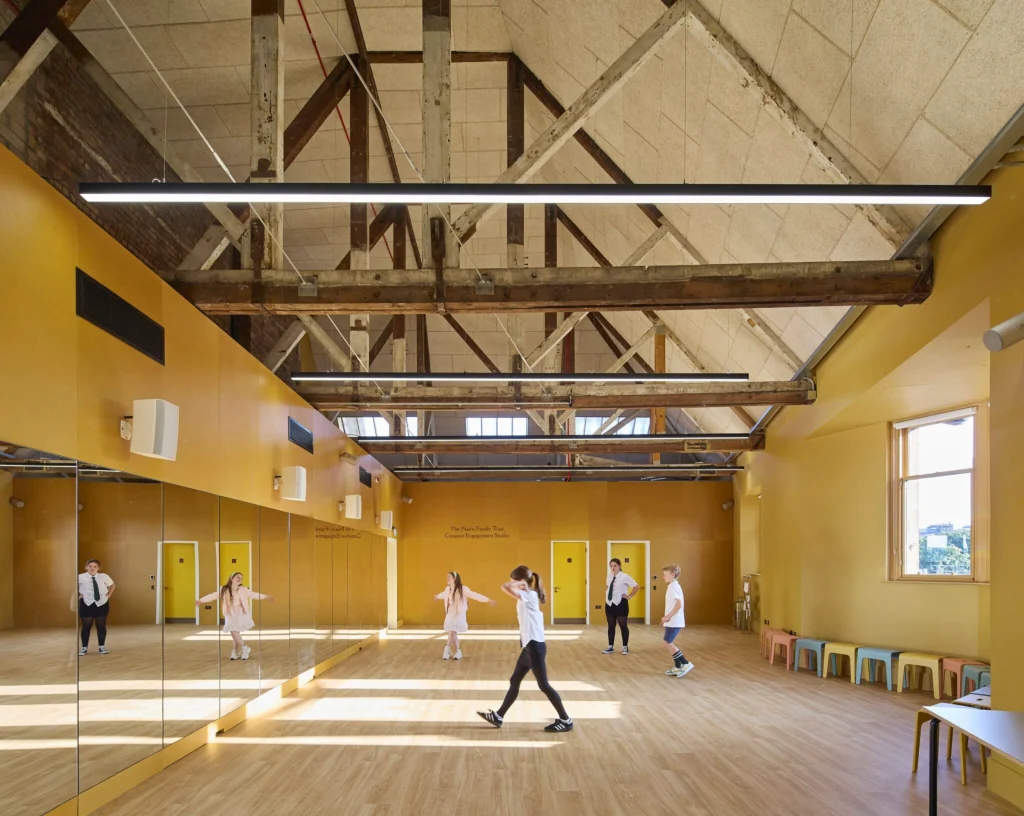
Original decorative elements, including John Byrne’s dome mural, have been conserved. Modern interventions are expressed with deliberate clarity so that old and new remain legible. The approach avoids pastiche. Instead, it allows the Edwardian architecture to remain the dominant presence while discreetly inserting the systems and spaces a 21st-century theatre requires.
The project involved more than 1,370 people across 160 organizations and took over 1,250 days from the start of construction to reopening. Funding came from a combination of Capital Theatres fundraising, the City of Edinburgh Council, the Scottish Government, and the UK Government after earlier cost pressures threatened the scheme’s viability.
King’s Theatre: A Civic Building Renewed
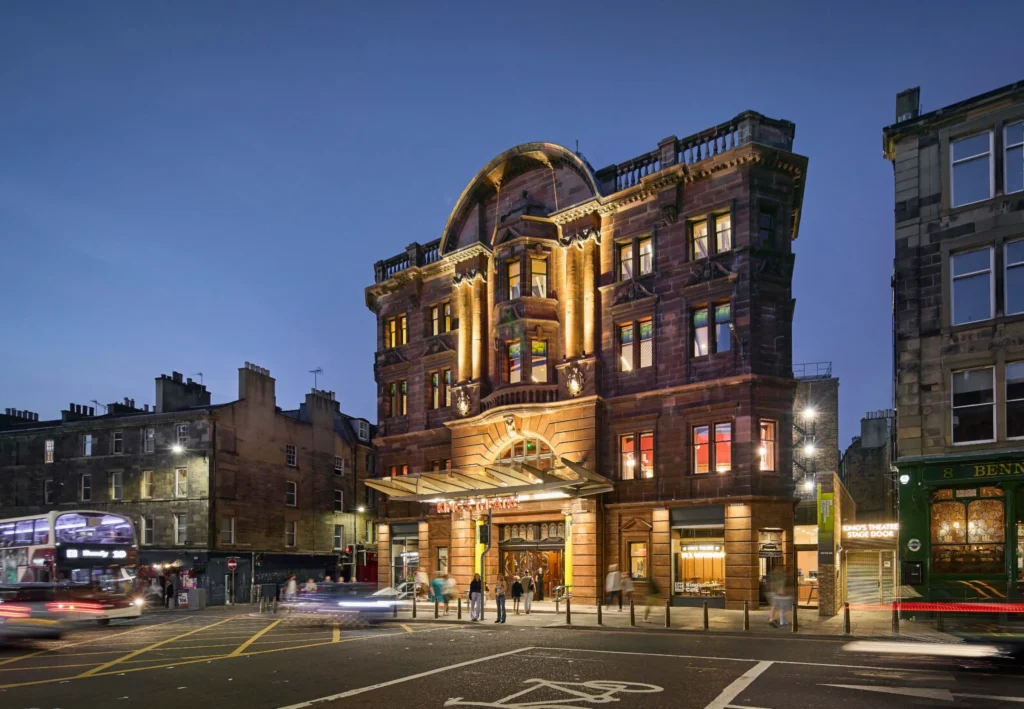
James Nelmes of Bennetts Associates described the completed work as helping the theatre enter its next chapter as a more accessible and resilient venue while preserving the character that has defined it for more than a century. For Capital Theatres, the building is once again able to serve as “the People’s Theatre,” open to a wider range of audiences and capable of hosting a broader repertoire.
All in All
The restored King’s Theatre does not present itself as a new building. It presents itself as a carefully renewed one. In an era when many historic performance venues struggle to meet modern expectations, the project demonstrates that technical upgrading and genuine accessibility can sit alongside the conservation of atmosphere and craft. Edinburgh’s audiences are already returning to a theatre that feels both familiar and newly capable.