
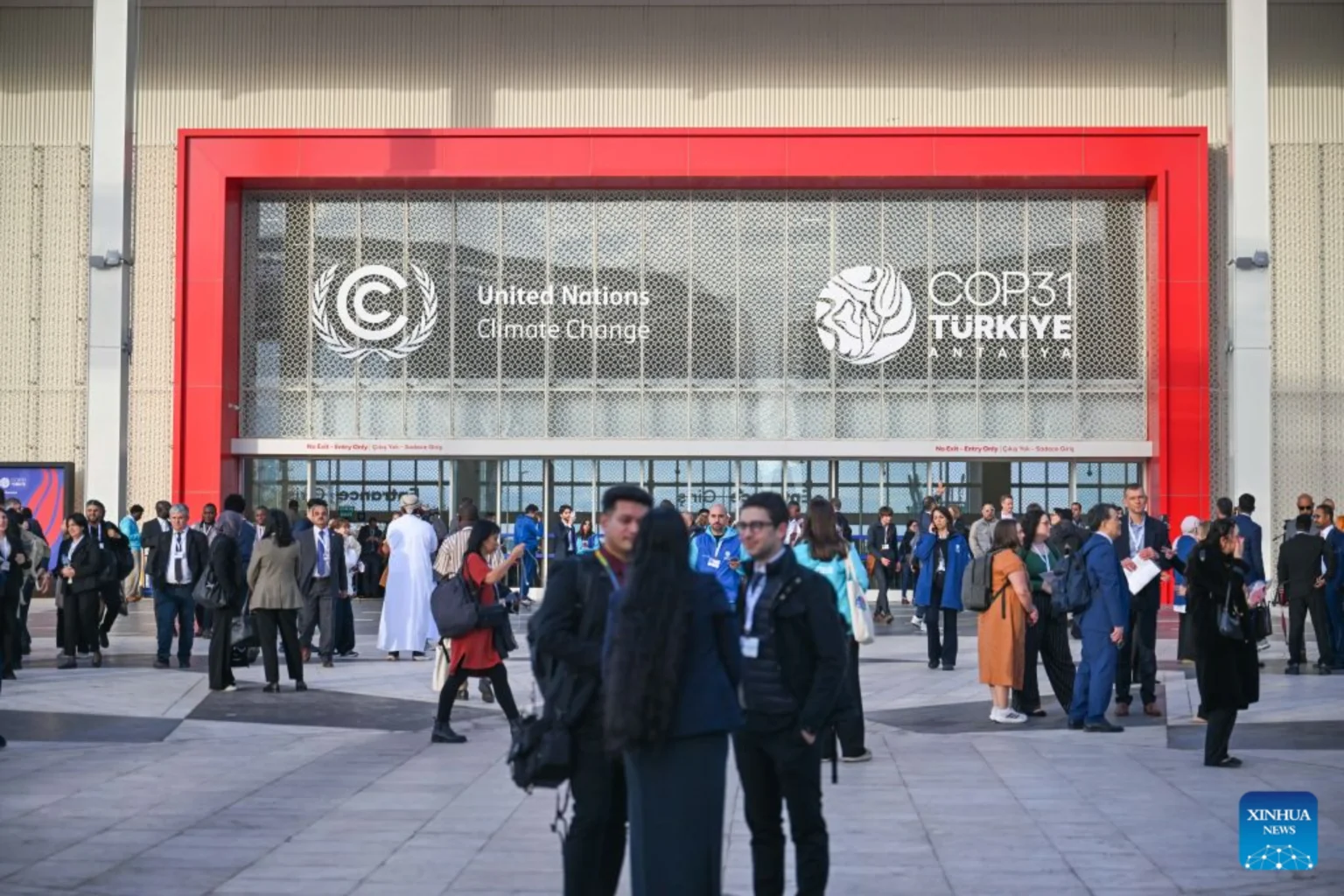

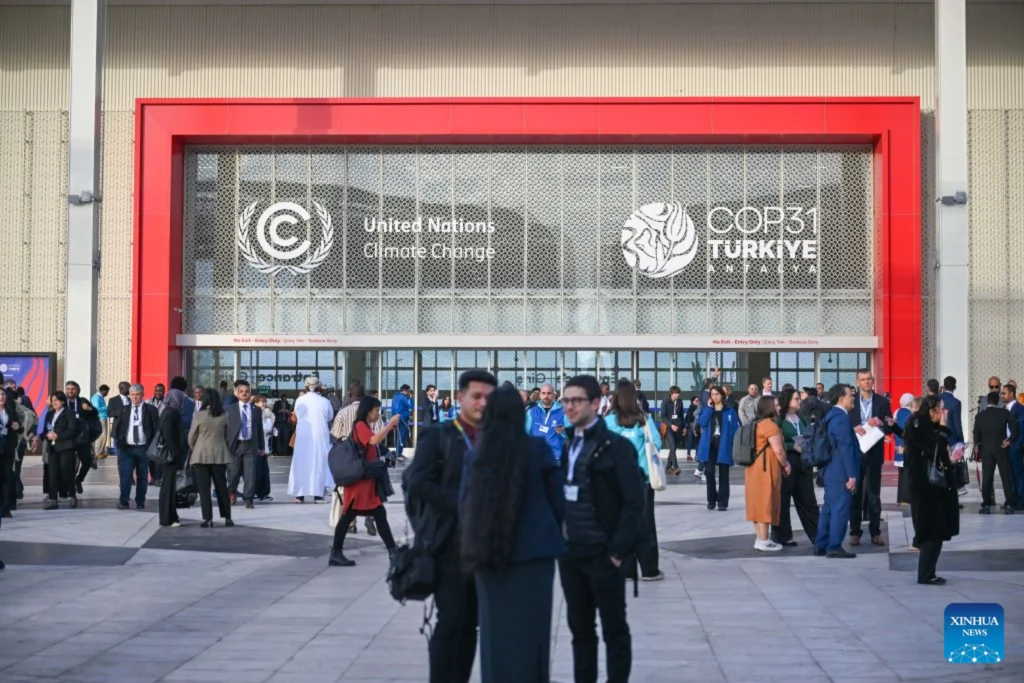
The climate crisis is no longer a background condition for architecture. It has become the primary design brief. At COP31 in Turkey, the urgency is unmistakable. When Marshall Islands President Hilda Heine warned that without an overwhelming response “the world we know is over,” she was speaking about shorelines, coral, and floods — but she was also speaking about the buildings, streets, and settlements that will either endure or fail under those conditions. Architecture sits at the center of that equation.
Architecture as Both Problem and Solution
Buildings and construction account for a significant share of global emissions and resource use. At the same time, the built environment is the frontline of adaptation: the places where people will live through heatwaves, storms, rising water, and shifting weather patterns.
This dual role — major contributor and essential protector — places unusual pressure on the profession. COP31 is not only a diplomatic gathering. It is a moment when architecture is being asked, quietly but firmly, whether it is prepared to redesign itself.
The question is no longer whether climate will change design. It is whether design will change fast enough.
Designing for a World That Is Already Warming
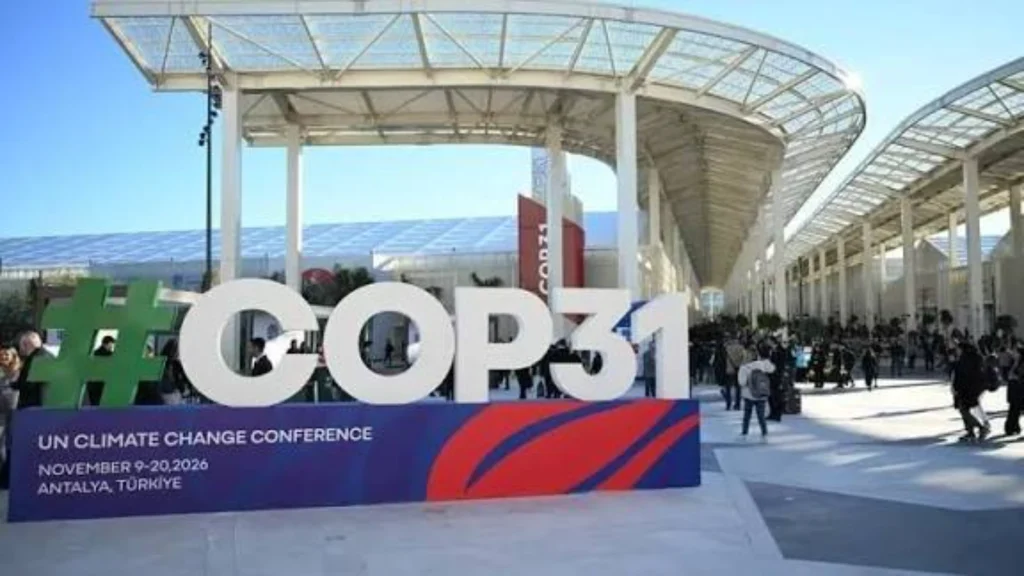
The physical realities Heine described — bleached coral, advancing waves, flooded schools and hospitals — translate directly into architectural challenges.
In low-lying coastal and island contexts, the traditional model of permanent, static buildings is under strain. Architects are exploring elevated structures, amphibious foundations, modular systems that can be relocated, and materials that tolerate salt and moisture without rapid degradation. The goal is no longer simply to resist the water, but to live with it for longer.
In hotter climates, the priority shifts to passive cooling, deep shading, high thermal mass, and ventilation strategies that reduce dependence on mechanical systems. The brise-soleil, the courtyard, the thick wall, and the shaded colonnade are being rediscovered not as historical references but as survival tools.
Across regions, the common demand is resilience measured in decades rather than years.
Systems Thinking Comes Home
Architecture has long borrowed the language of systems. Climate change makes that language operational.
A building is no longer an isolated object. It is a node in networks of energy, water, materials, carbon, and social vulnerability. Parametric and computational tools are increasingly used to test how form, orientation, envelope, and material choices perform under future climate scenarios rather than historical weather data.
This is where computational design finds a new purpose. Instead of generating formal novelty, it can model heat stress, flood risk, embodied carbon, and operational energy as interdependent variables. The most interesting work happening now treats climate not as a constraint to be mitigated at the end of the process, but as a generative parameter from the beginning.
Material Truths
Material selection has become one of the sharpest pressure points. Concrete and steel remain indispensable for many structural tasks, yet their carbon cost is under intense scrutiny. Timber, earth, bamboo, and various bio-based and low-carbon alternatives are moving from niche experimentation into more mainstream consideration — especially where local supply chains and cultural building traditions already exist.
The challenge is scale and durability. A material that performs well in a pavilion may behave differently in a hospital, a school, or a dense urban housing block. Architecture is being asked to hold two truths at once: reduce embodied carbon aggressively, and deliver buildings that will still function under more extreme conditions.
The Equity Question
Climate impacts are not evenly distributed. Neither are architectural resources.
The communities most exposed to sea-level rise, extreme heat, and intensifying storms are often those with the least capacity to commission high-performance design. COP31 conversations about loss and damage, climate finance, and adaptation funding therefore have direct implications for architecture. Who gets to build resiliently? Who is left with informal or under-resourced responses?
An architecture that takes the climate crisis seriously cannot ignore this asymmetry. It must engage with questions of cost, local capacity, knowledge transfer, and the difference between showcase projects and scalable solutions.
Is the Industry Ready?
Readiness is uneven.
Leading practices and research groups are already producing sophisticated climate-responsive work. Codes and regulations in some regions are tightening. Clients in certain markets now demand lower carbon and higher resilience as standard. Yet large parts of the industry still operate on assumptions formed in a more stable climate: historical weather files, business-as-usual material specifications, and a separation between “sustainability” and core design.
The gap between the best work and the average project remains wide. Closing it will require changes in education, procurement, regulation, insurance, and professional culture. COP31 will not deliver those changes by itself, but it can sharpen the sense that delay is no longer neutral.
Designing the Next World
Heine’s warning was stark because the evidence around her is already visible. Coral that was living in July and white months later is not a distant projection. It is present tense.
Architecture cannot prevent the physical processes already underway. What it can do is shape how societies inhabit the altered conditions — how they stay cool, stay dry, stay connected, and retain dignity when the environment becomes less forgiving.
The climate crisis is reshaping architecture whether the profession is fully ready or not. The more interesting question, and the one COP31 places in front of designers, is whether architecture will meet that force with equal seriousness — treating the built environment not as a passive victim of change, but as one of the primary instruments through which a livable future might still be constructed.