

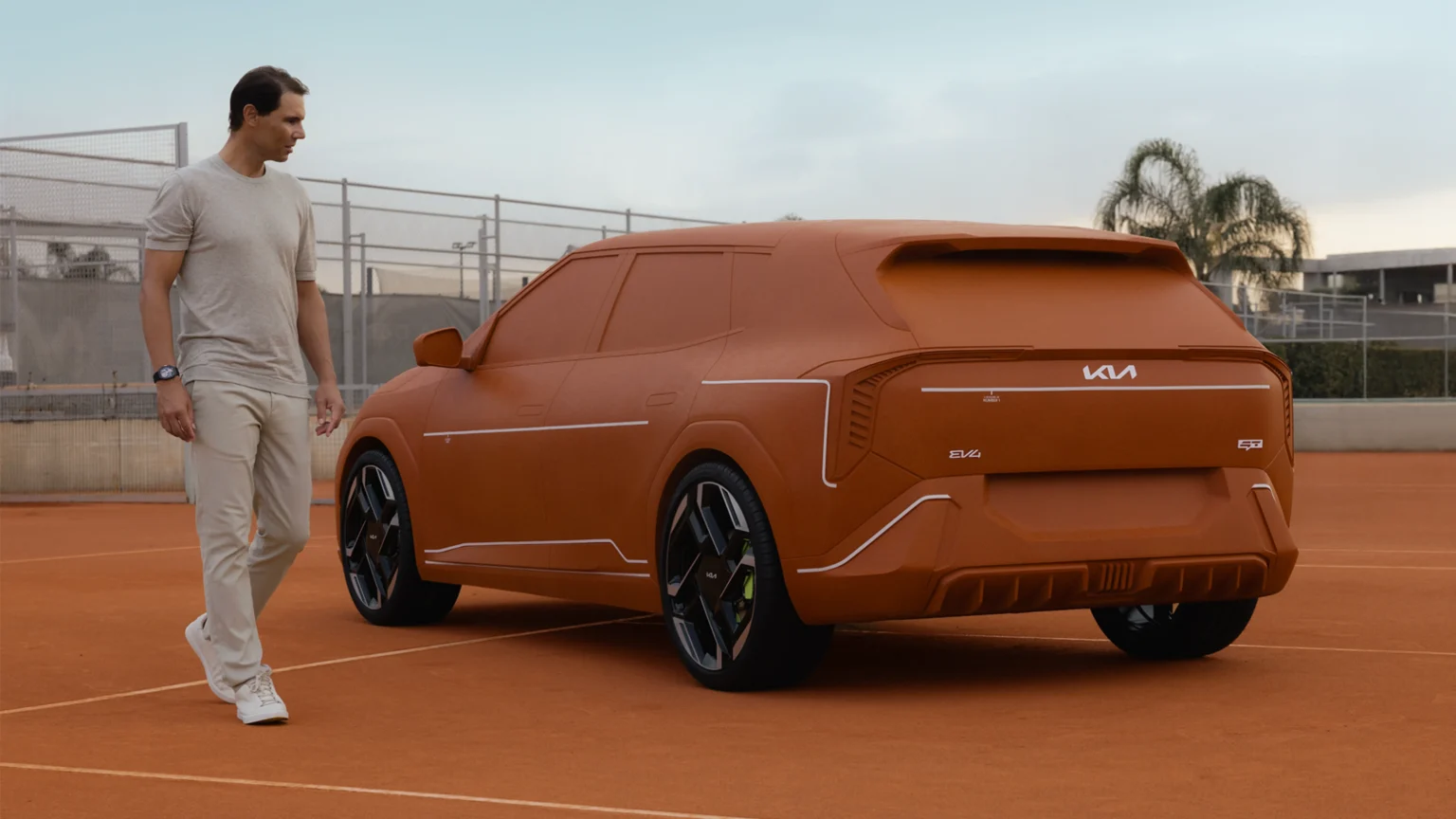



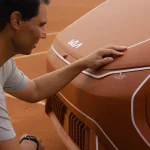
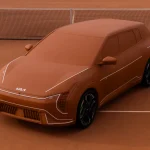


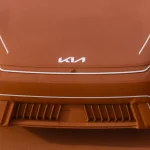
A one-off Kia EV4 GT has been sculpted from tennis clay and presented to Rafael Nadal at his academy in Mallorca. The concept turns the tennis legend’s “King of Clay” identity into a tactile, driveable object that commemorates twenty years of partnership with the brand.
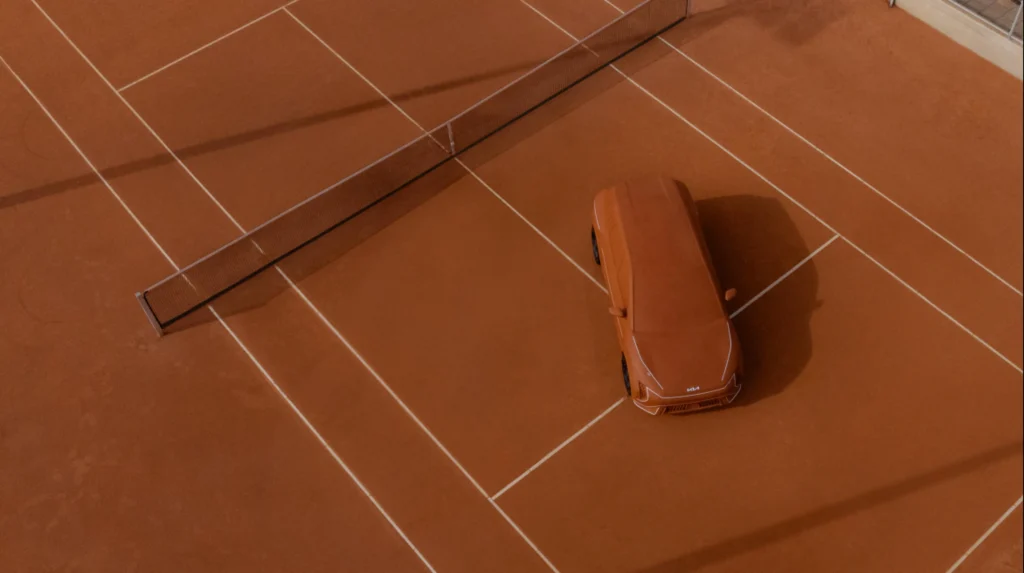
Clay courts leave a distinctive residue. Red dust clings to shoes, balls, and clothing, marking every point played. Kia’s designers took that physical signature and applied it to an entire vehicle body. The result is less a conventional concept car and more a three-dimensional portrait of Nadal’s career surface.
From Court Surface to Car Body
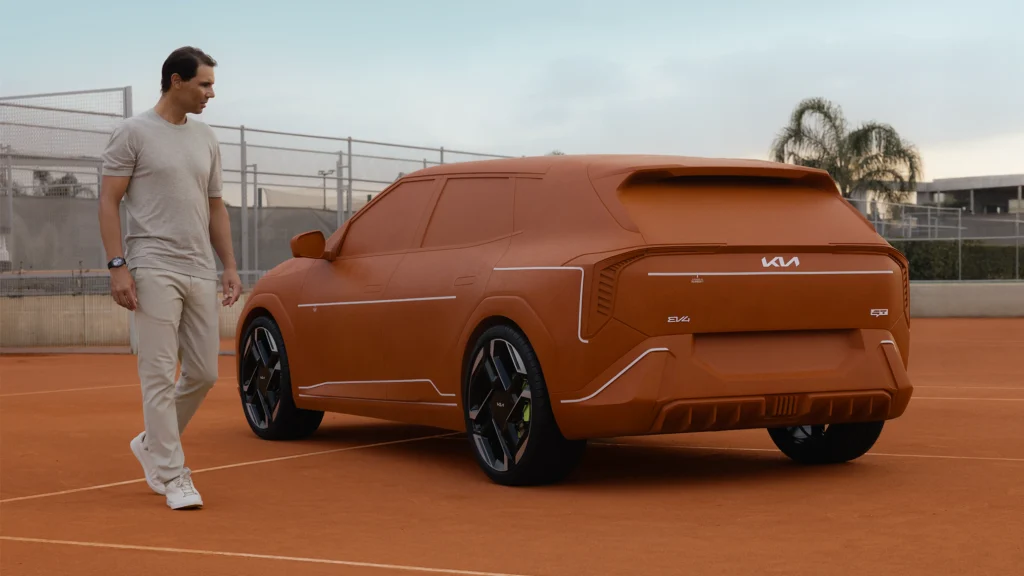
The EV4 GT Clay concept was created to mark two decades of Kia’s association with Rafael Nadal and the brand slogan “movement that inspires.” Instead of applying a simple graphic or color scheme, the design team mixed actual tennis clay with traditional automotive modeling clay. The mixture was then sculpted across the bodywork to produce a matte, slightly rough texture that recalls the surface of a clay court under bright Mediterranean light.
White edges outline the main volumes, echoing the white lines that define a tennis court. The contrast is deliberate: the soft, absorbent red-brown field is contained by sharp, clean boundaries, just as a match is contained by the geometry of the court.
Presented Where the Story Began
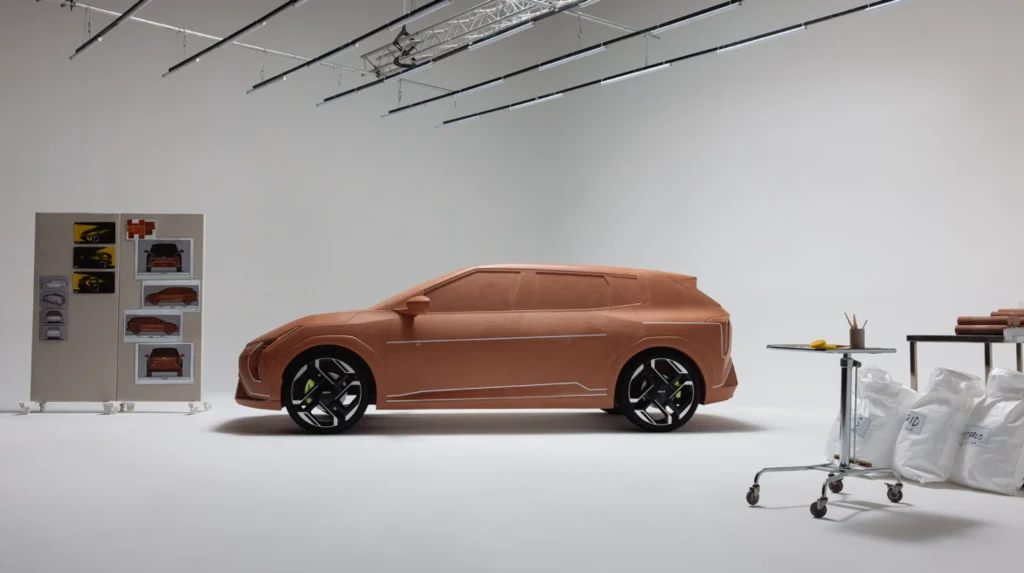
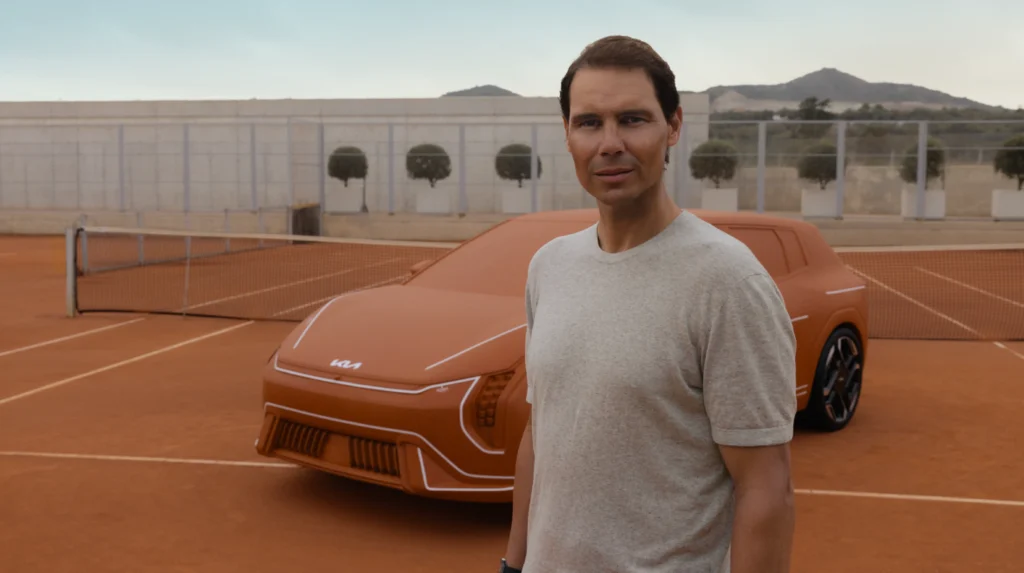
The car was presented to Nadal at the Rafa Nadal Academy in Mallorca, the place most closely associated with his training and legacy. Locating the reveal on the island rather than at a traditional motor-show stand keeps the gesture personal. The vehicle becomes a physical souvenir of a long collaboration rather than a pure marketing exercise.
Material as Narrative
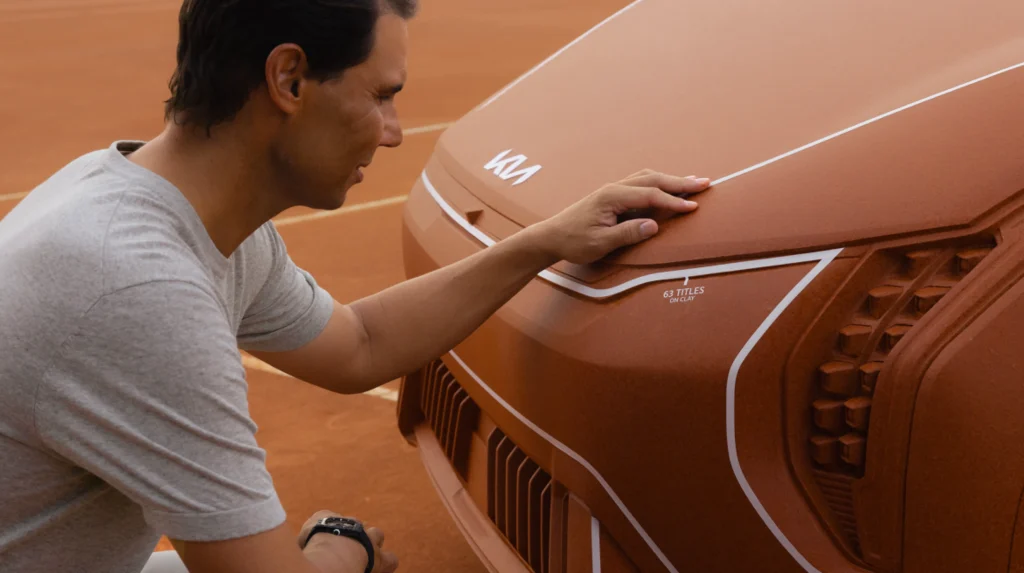
Most concept cars rely on polished paint, carbon fiber, or dramatic lighting to create impact. The EV4 GT Clay takes the opposite approach. Its surface absorbs light. The texture invites touch. The material itself carries the story. Every fingerprint or slight variation in the clay mixture becomes part of the object’s character, much as the unique marks left on a clay court after a match become part of that match’s history.
Automotive Design Meets Sporting Mythology
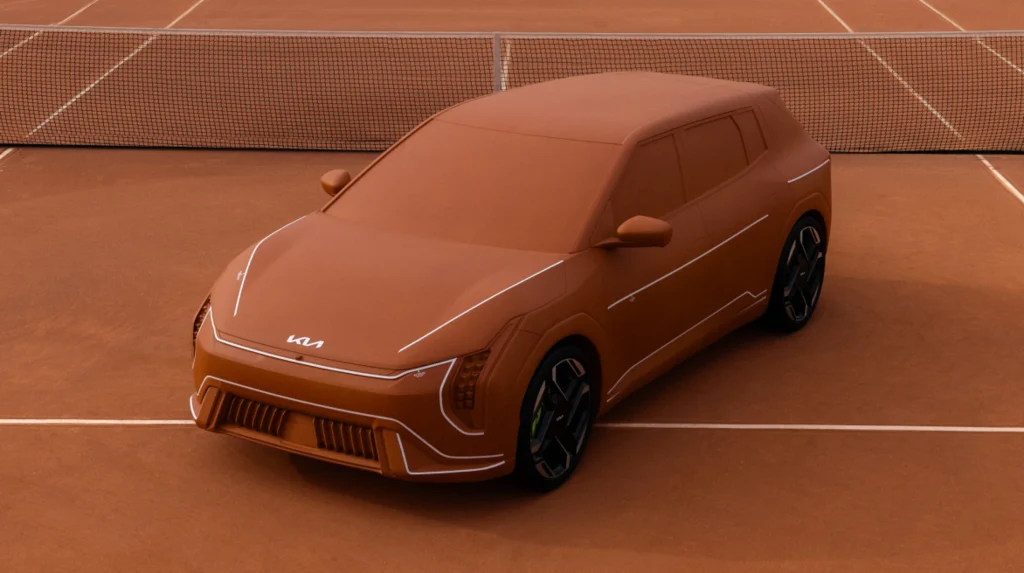
The project sits at an interesting intersection. Automotive designers are increasingly asked to translate cultural narratives into form. In this case, the narrative is unusually specific: one player, one surface, one nickname. By choosing a material that is both literal and symbolic, Kia avoids the risk of superficial branding. The car does not merely reference clay courts; it is made of them.
Parametric Thinking in Hand-Sculpted Form
Although the final surface is handmade, the underlying process still involves controlled parameters. The ratio of tennis clay to modeling clay, the depth of texture, the consistency of the mixture across large body panels, and the precise placement of the white edge lines all require systematic decisions. The designers had to define a set of rules that would allow the organic, irregular quality of clay to coexist with the precise engineering requirements of an EV body. In that sense, the project is a low-tech demonstration of parametric logic: variables are established, constraints are respected, and the final expression emerges from the interaction of those rules with material behavior.
The EV4 GT Clay will not go into production. Its value lies elsewhere. It is a temporary monument to a career built on a particular surface, executed in the material that defined that career. For a few days in Mallorca, the “King of Clay” could stand next to a car that literally carries the dust of the courts he dominated.