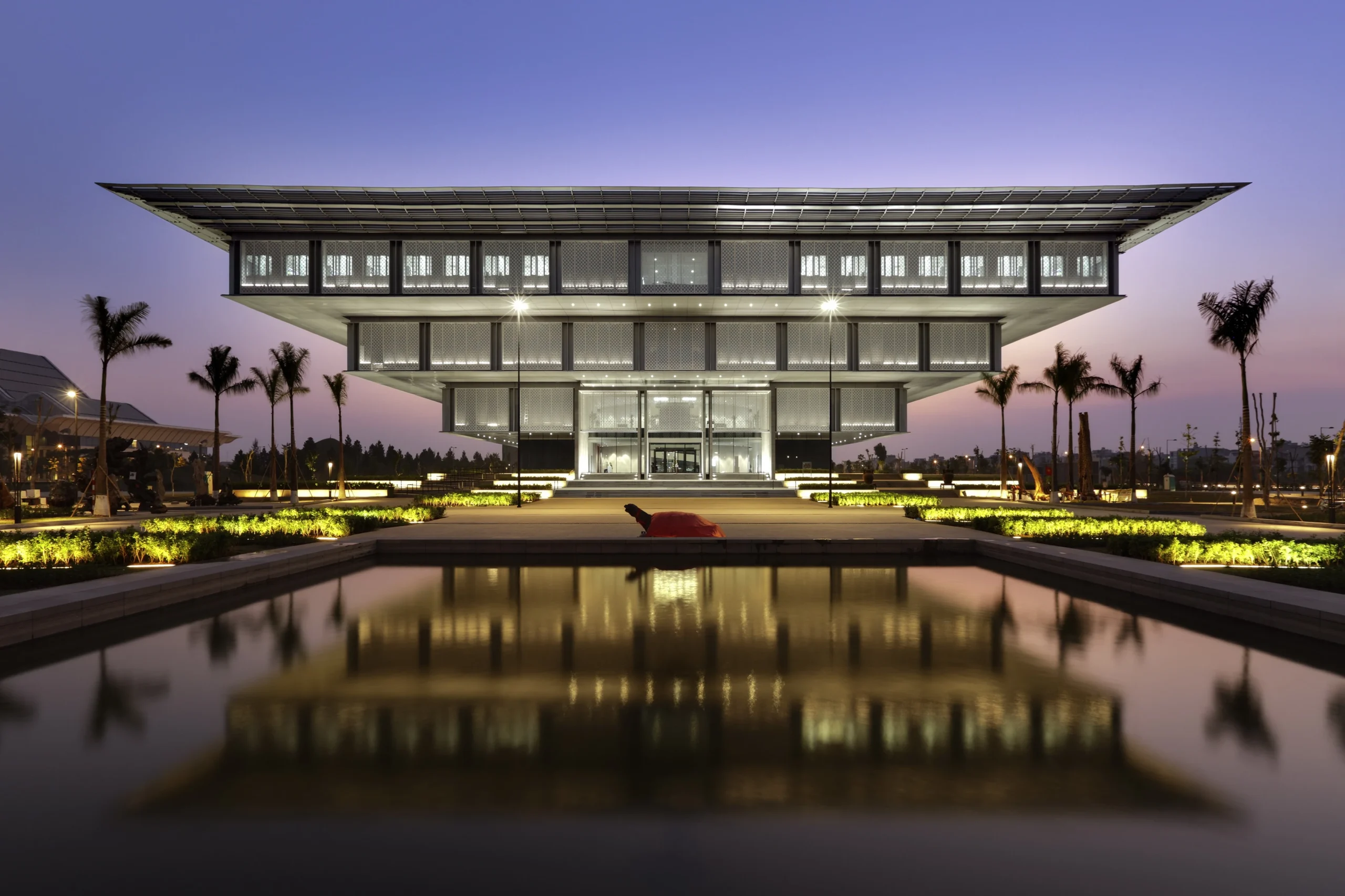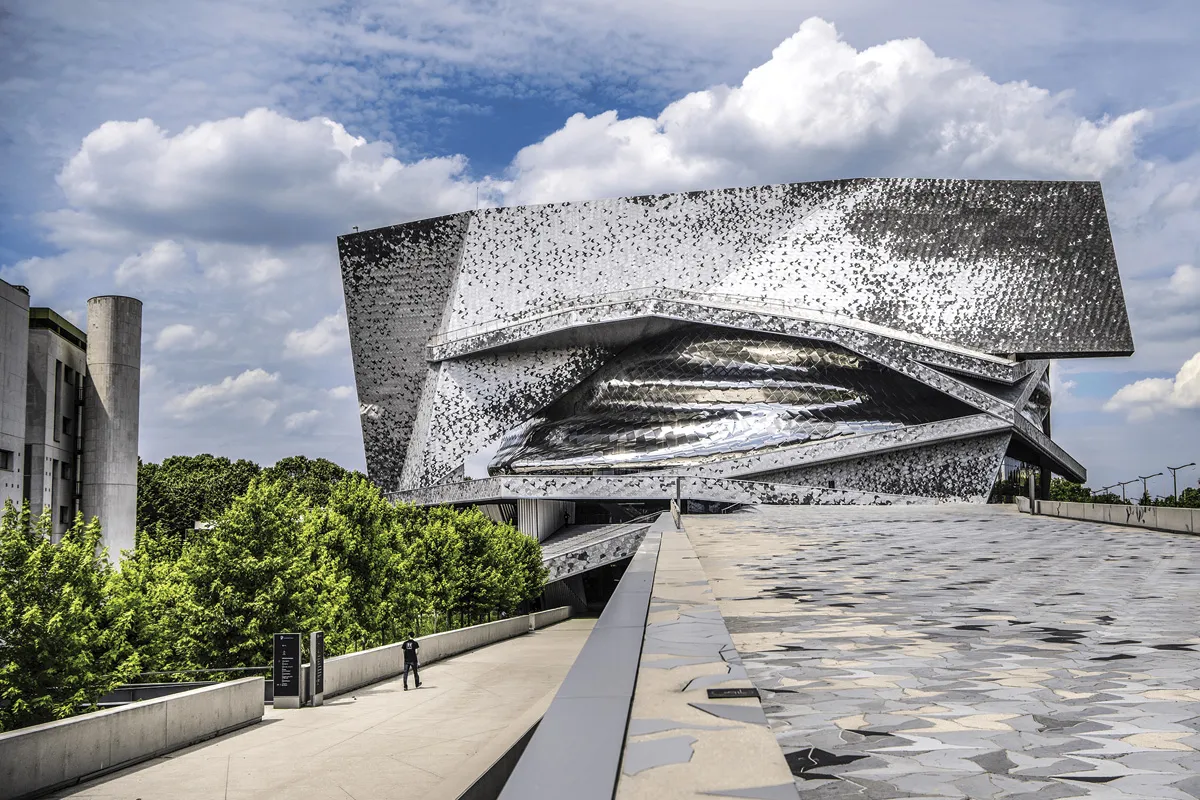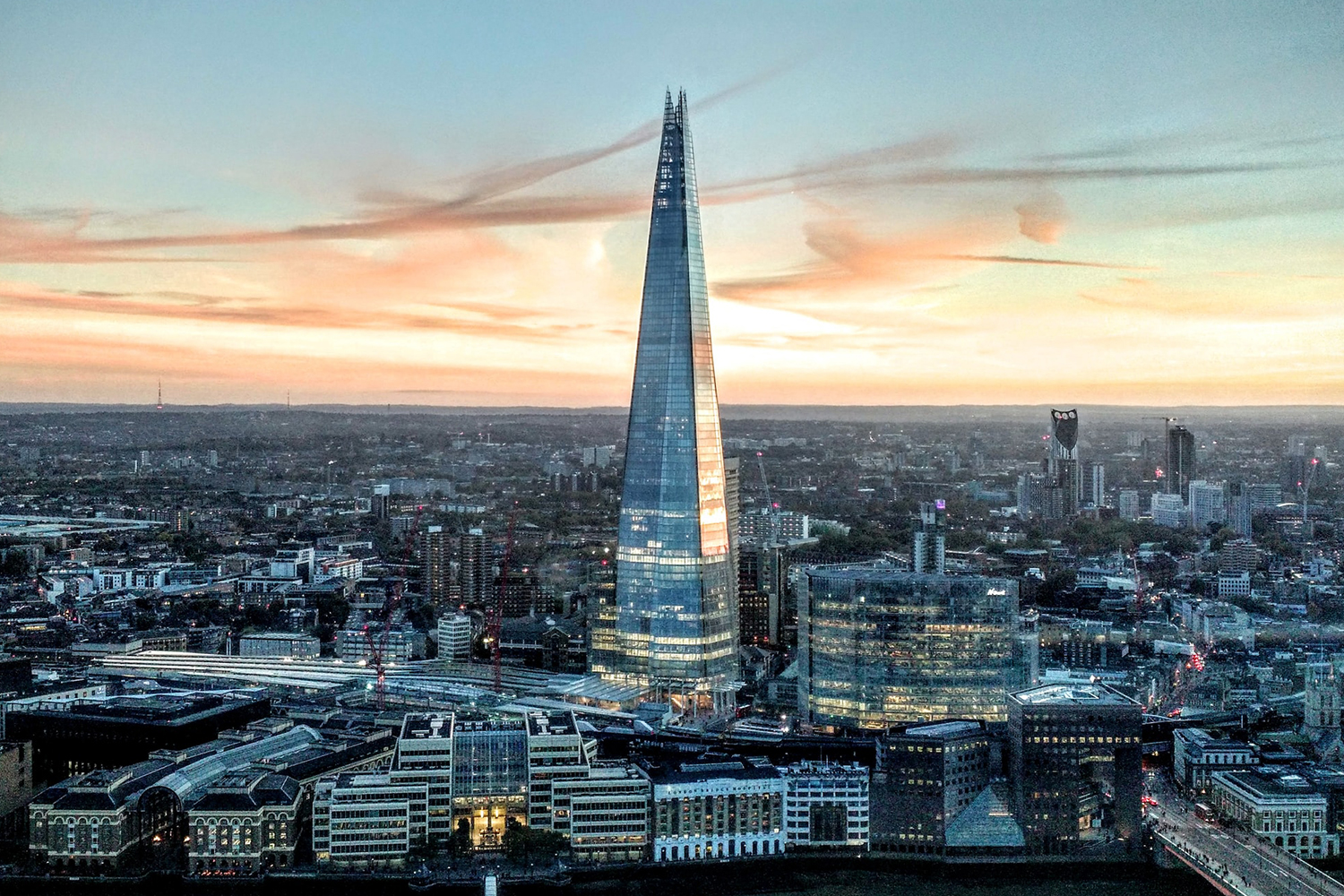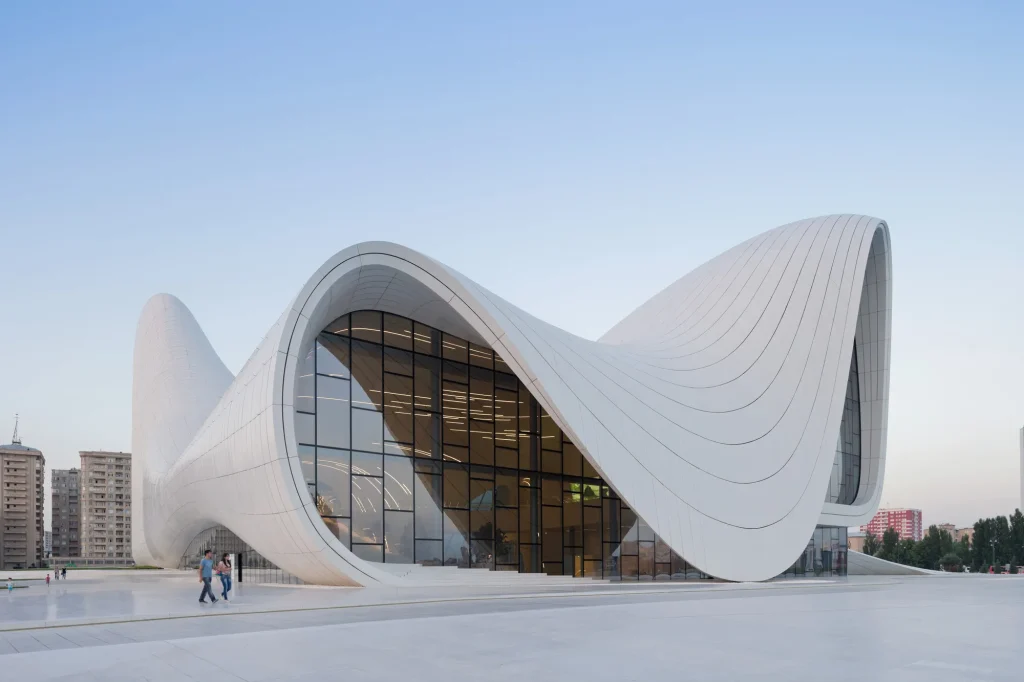


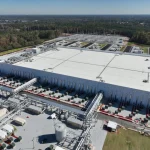
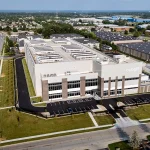
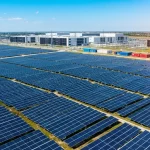
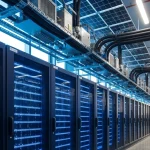
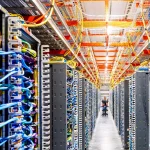
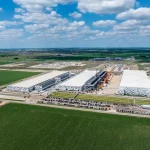
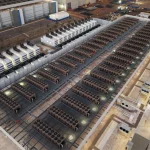
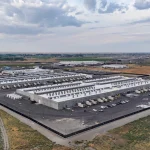
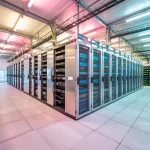
The architecture of artificial intelligence is often discussed through the images it produces: futuristic cities, fluid geometries, speculative landscapes, and buildings that seem to have escaped the limits of gravity. Yet behind these digital visions lies a far less visible architectural reality. Artificial intelligence depends on physical buildings, industrial infrastructure, electrical networks, cooling systems, and vast territories transformed to sustain the continuous movement of data.
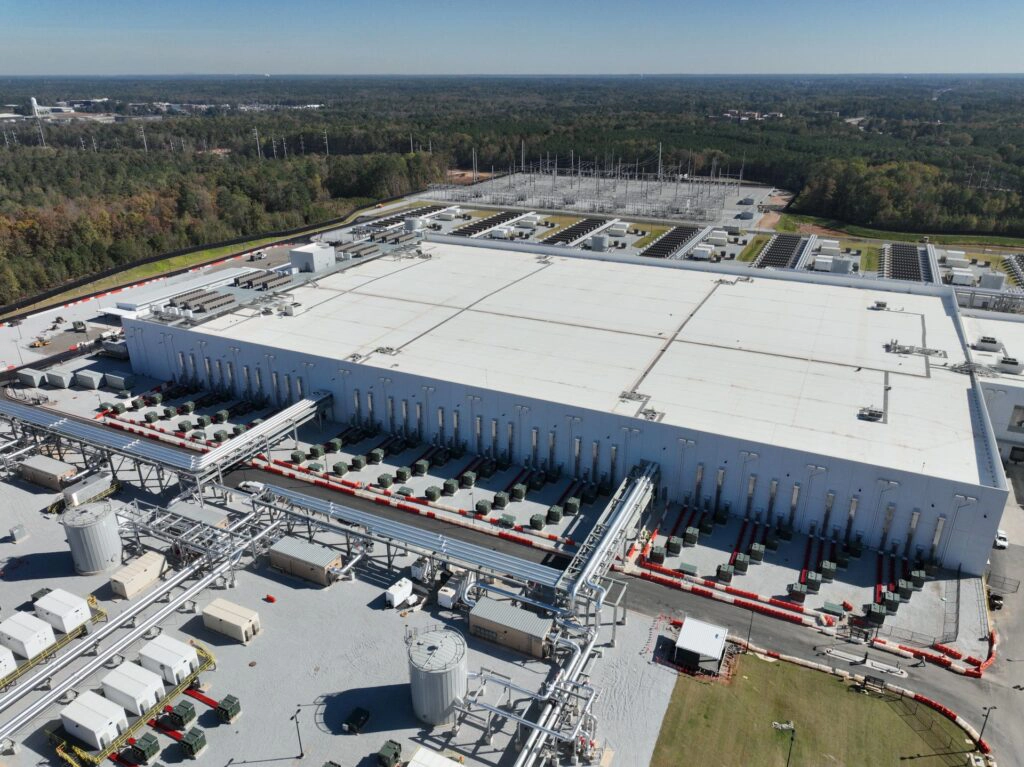
These structures rarely receive the attention given to museums, skyscrapers, or cultural landmarks. They are typically located beyond city centers, enclosed by security fences, and designed to exclude rather than invite. Their architecture does not primarily address the public, but the machines operating inside them. Nevertheless, AI data centers are becoming some of the most consequential building types of our time, raising fundamental questions about architectural form, environmental responsibility, territorial development, and the relationship between digital space and the physical world.
The central paradox is that our increasingly immaterial digital culture depends on an intensely material architecture. The cloud has a location. Intelligence has an energy demand. And every apparently instantaneous digital interaction is supported by a building whose design decisions have consequences far beyond its walls.
The Building Behind the Cloud
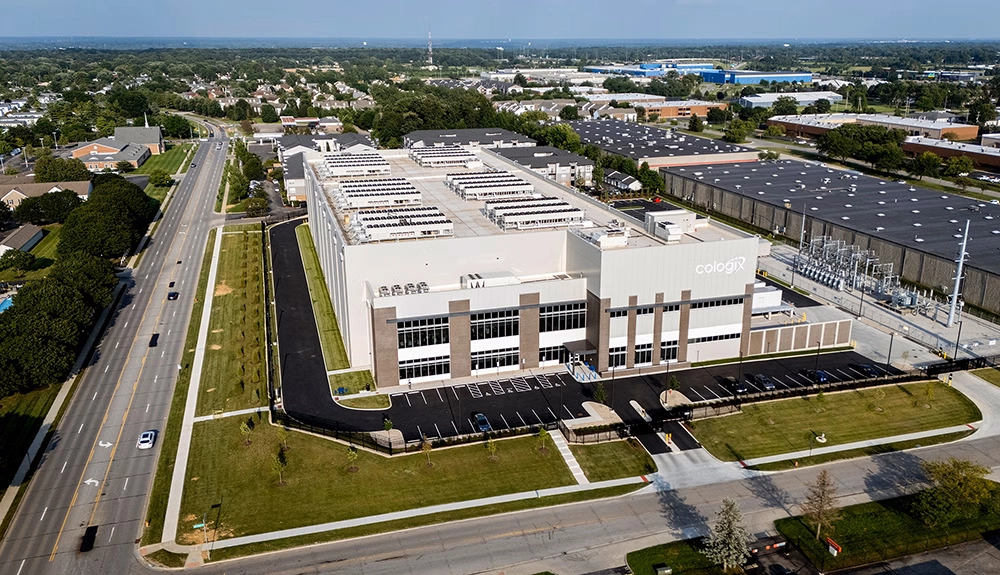
The cloud is perhaps the most misleading metaphor in contemporary technology. It suggests something light, distributed, and almost independent of geography. In reality, cloud computing is anchored to enormous physical facilities that require land, structural systems, mechanical equipment, backup power, and carefully controlled environmental conditions.
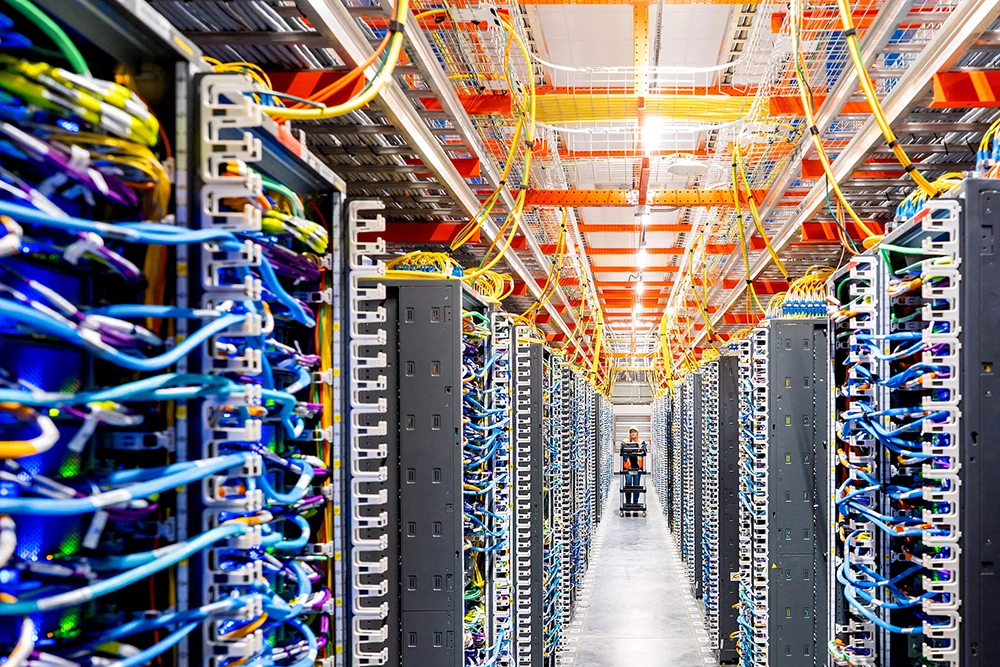
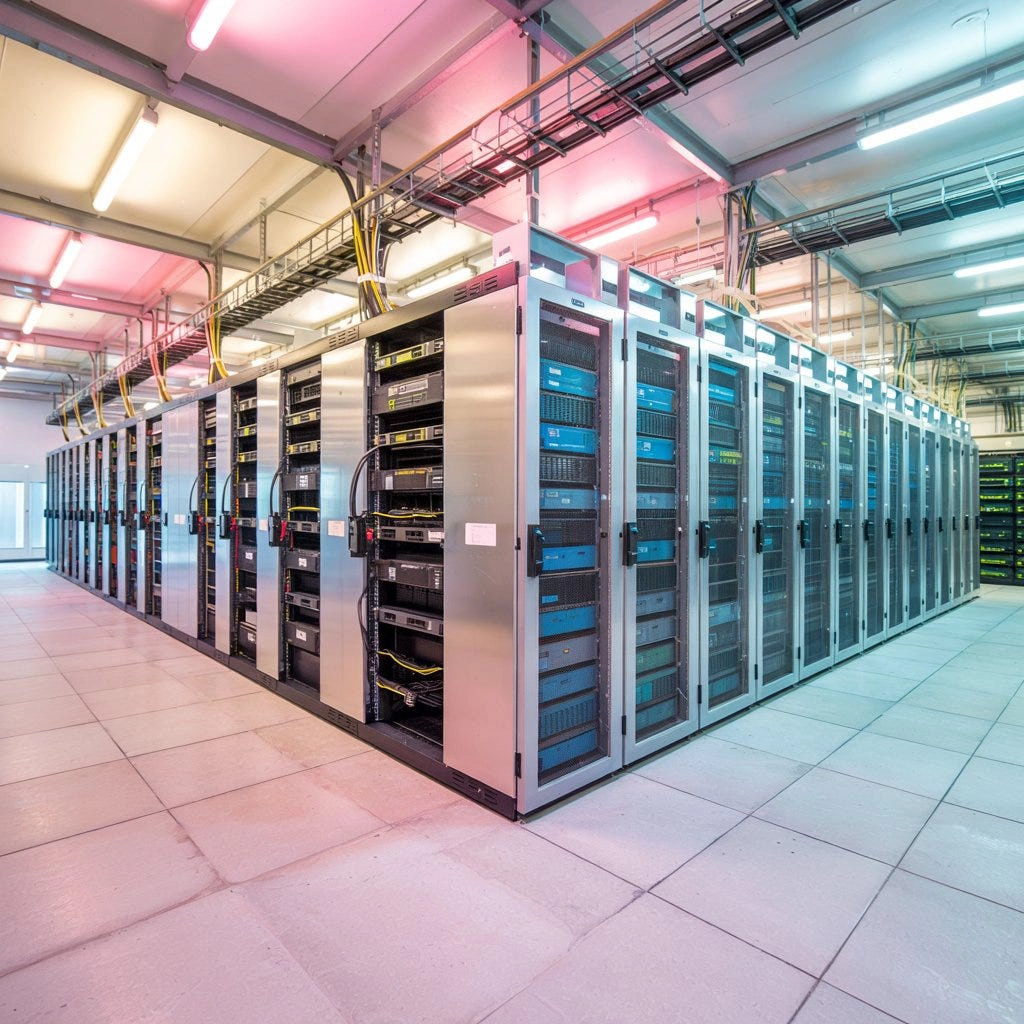
Unlike conventional commercial buildings, data centers are not primarily organized around human occupation. Their internal arrangements respond to equipment density, cable distribution, maintenance access, security requirements, and the management of heat. The server hall, rather than the office or the lobby, becomes the principal architectural space.
This shift challenges some of the assumptions through which architects traditionally understand buildings. In a library, the arrangement of rooms supports reading, concentration, and social exchange. In a hospital, spatial relationships facilitate care, observation, and movement. In an AI data center, the organization of space is largely determined by computational performance and the physical conditions necessary to maintain it.
The resulting architecture is often repetitive, modular, and deliberately restrained. Its apparent simplicity, however, conceals a sophisticated relationship between structure, environmental engineering, and operational logistics. Floor loading, ceiling heights, equipment clearances, service corridors, and the location of mechanical systems directly influence the building’s geometry.
The architectural challenge is not simply to accommodate machines. It is to coordinate a building whose primary occupant generates little conventional architectural feedback. Servers do not need daylight, views, or social spaces. They need reliable power, controlled temperatures, predictable airflow, and uninterrupted operation.
This does not make architecture irrelevant. It makes its responsibilities less visible.
When Energy Becomes a Design Problem
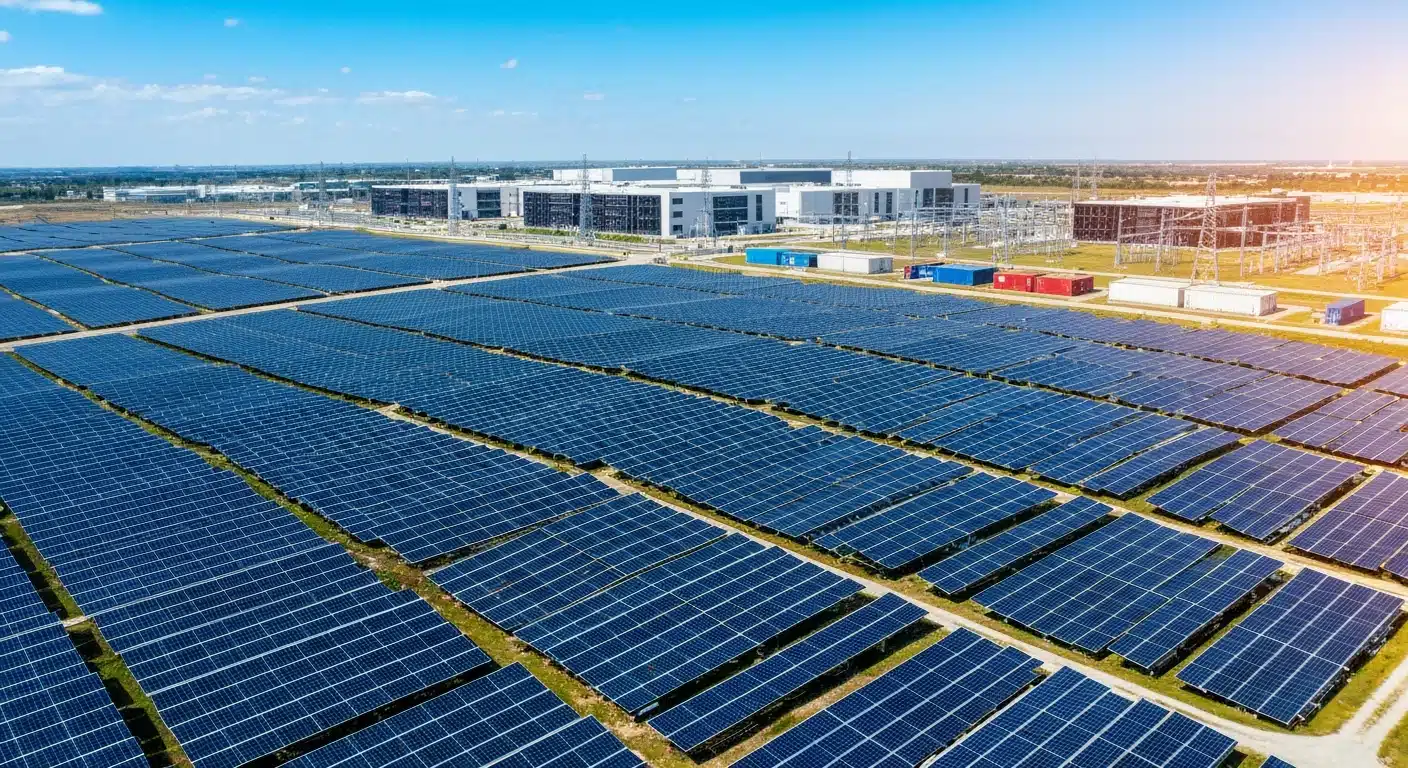
In conventional architectural design, energy performance is often evaluated through insulation, orientation, glazing ratios, shading, and the efficiency of heating and cooling systems. These remain important, but AI infrastructure introduces a different scale of demand. The electricity consumed by computing equipment can become the dominant factor shaping the building’s location, technical organization, and relationship with its surrounding region.
For architects, this means that the energy question begins before the building envelope is designed. Proximity to electrical substations, the availability of transmission capacity, the resilience of the local grid, and the possibility of future expansion may determine whether a site is viable at all.
The site plan becomes inseparable from the energy network.
A data center may occupy a relatively compact footprint while depending on infrastructure extending far beyond its boundaries. High-voltage lines, substations, generators, fuel storage, and emergency access routes form an expanded architectural system that is rarely represented in the familiar image of a single building. The true project is therefore not just the server facility, but the network of spaces and systems that makes its operation possible.
This has implications for architectural practice. Energy infrastructure should not be treated as a technical layer added after the principal design decisions have been made. It should inform site selection, massing, phasing, landscape planning, and the relationship between the project and existing settlements.
The critical question is not whether a data center can be made more energy-efficient in isolation. It is whether its energy requirements are compatible with the broader territory in which it operates. A highly efficient building can still contribute to local infrastructure pressure if its demand exceeds available capacity or competes with other essential users.
Architecture cannot resolve every problem of energy policy. It can, however, make those dependencies explicit rather than allowing them to disappear behind a technically polished building.
Cooling as Architectural Form
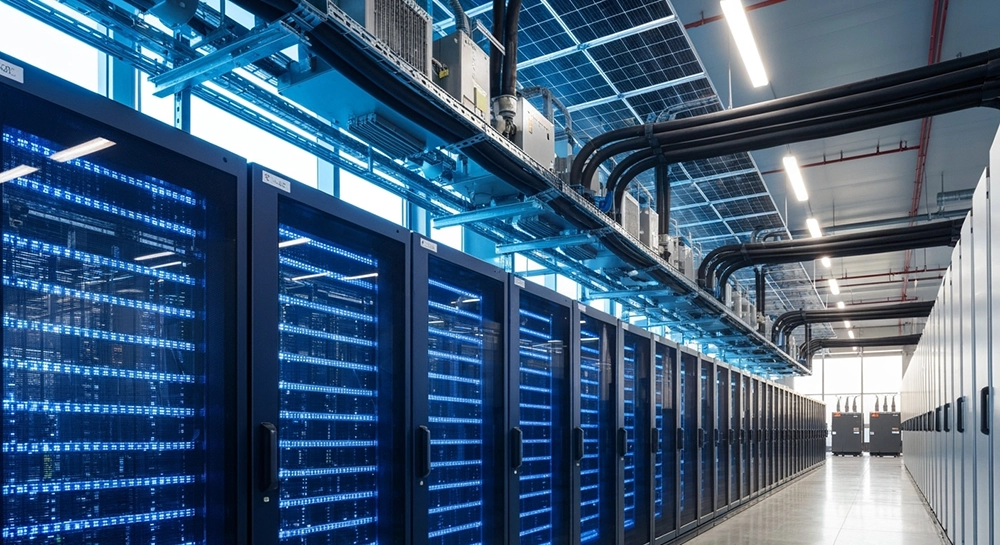
Heat is one of the most important forces shaping the contemporary AI data center. It is also one of the least visible in conventional architectural representations. A building may appear as a simple rectangular volume in a rendering, while the engineering required to control its internal climate determines its dimensions, circulation, service zones, and external appearance.
The growing use of high-density computing has made cooling a primary generator of architectural organization. Liquid-cooling systems, specialized distribution networks, heat exchangers, and mechanical plant rooms increasingly influence the relationship between the server halls and the building envelope. According to ASHRAE, power delivery and cooling must be considered as interdependent systems when designing facilities for intensive AI workloads.
This presents an opportunity to reconsider the conventional separation between architecture and building services. Mechanical infrastructure is no longer merely something to conceal behind ceilings or external screening. It can become the organizing principle of the entire building.
However, making technical systems visible is not automatically good architecture. Exposed pipes and mechanical equipment do not become meaningful simply because they are visible. The real question is whether their arrangement produces a coherent, adaptable, and environmentally responsible building.
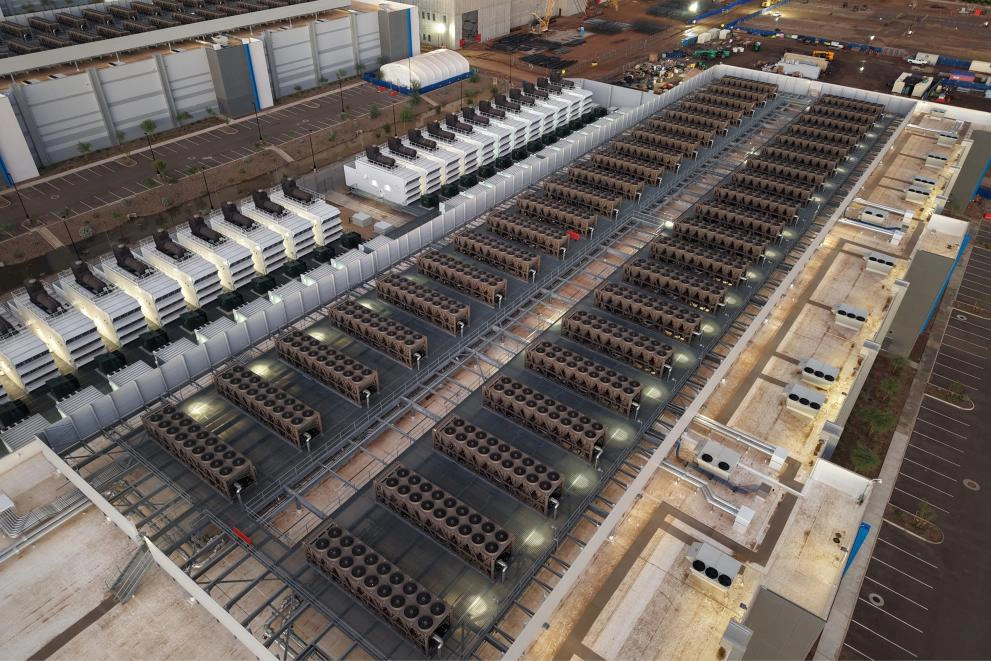
Cooling also creates a design problem at the scale of the site. Air-cooled equipment, dry coolers, heat-rejection systems, and other external installations require space, appropriate clearances, and careful consideration of noise and neighboring uses. Their placement can influence setbacks, landscape buffers, building orientation, and the potential for future expansion.
The most successful designs will recognize these systems as architectural elements with spatial and environmental consequences. Rather than adding a technical enclosure to a predetermined form, architects can develop the form through a precise understanding of heat movement, maintenance access, equipment replacement, and long-term operational change.
The Landscape Outside the Server Hall
The landscape of an AI data center is rarely an ornamental afterthought. It is a contested territory where industrial requirements meet ecological systems, local communities, and the physical limits of a site.
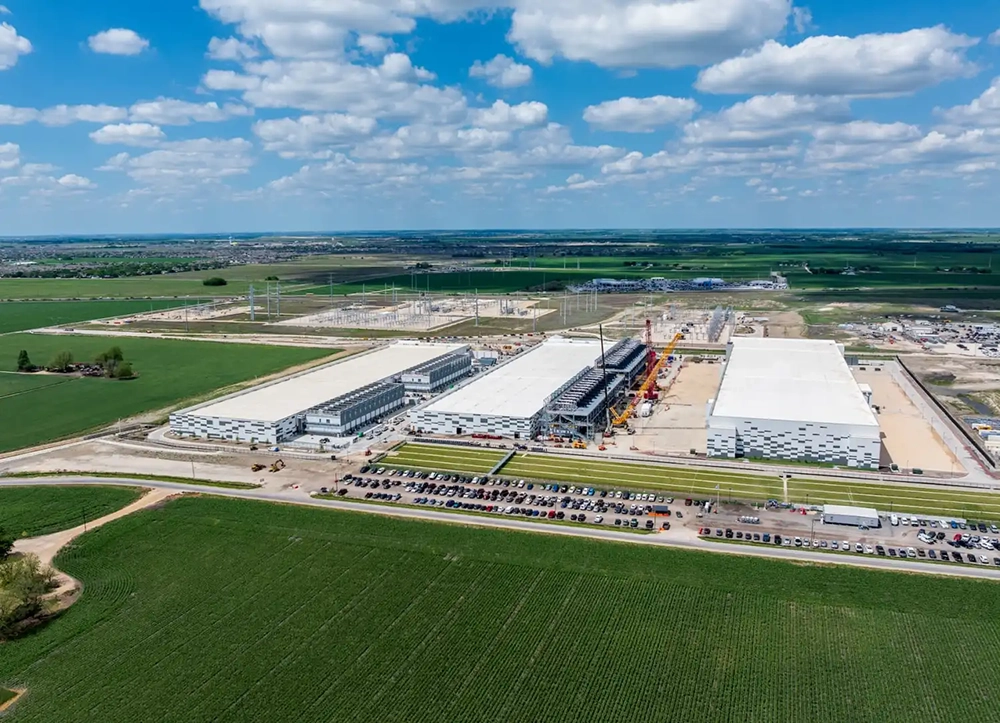
Large facilities can occupy extensive areas of land, and their effects are not confined to the footprint of the building. Access roads, electrical infrastructure, drainage systems, security perimeters, and future expansion zones can transform the character of an entire district. The project may generate relatively little pedestrian activity while fundamentally changing the way land is used.
This creates a difficult question for architectural site planning: how can a building with limited public access contribute positively to the place it occupies?
A conventional landscape strategy might rely on perimeter planting to soften the appearance of security fencing. Such measures can improve the visual experience, but they do not necessarily address the more substantial environmental consequences of development. A genuinely integrated approach would consider soil permeability, stormwater retention, existing vegetation, habitat continuity, heat accumulation, and the relationship between the facility and neighboring settlements.
The distinction matters. A green buffer can conceal an industrial complex without improving its ecological performance. Conversely, a carefully designed landscape can perform practical work by managing runoff, protecting existing habitats, moderating localized heat, and creating more appropriate transitions between technical infrastructure and surrounding land uses.
The architectural boundary itself deserves reconsideration. Security is a legitimate requirement for critical infrastructure, but it need not justify an entirely indifferent relationship with the public realm. The edges of a campus can be designed with attention to local materials, planting, road interfaces, noise, and the visual scale of the surrounding environment.
Not every data center needs a public plaza or a symbolic entrance. The more useful ambition is to ensure that even a restricted building behaves responsibly toward the territory that accommodates it.
The Problem of Digital Obsolescence
AI infrastructure evolves at a speed that conventional buildings are not always designed to accommodate. Processor generations change, computational demands increase, and cooling technologies develop rapidly. A facility designed around one equipment configuration may face substantial alterations long before its structure reaches the end of its useful life.
This creates a fundamental conflict between the long lifespan of architecture and the shorter cycles of technological investment.
The usual response is expansion, replacement, or technical retrofitting. Yet these strategies can become expensive when the original building has insufficient structural capacity, poorly coordinated service routes, limited equipment access, or an inflexible internal layout.
The answer is not to predict every future technology. That would be an entertaining exercise in architectural fortune-telling, but not a reliable design method. Instead, architects should distinguish between elements that must remain stable and systems that are likely to change.
The structural grid, floor capacity, vertical clearances, equipment routes, service access, and distribution corridors deserve particular attention. Modular planning can also support phased construction, allowing additional capacity to be introduced without reconstructing the entire facility. ASHRAE’s current design guidance emphasizes adaptability and integrated planning in response to rapidly changing AI infrastructure requirements.
Adaptability, however, should not be confused with endless expansion. A building that can accommodate more computing equipment indefinitely may simply enable indefinite growth in resource consumption. Architectural flexibility must therefore be accompanied by a more demanding question: which changes genuinely improve the facility, and which merely extend an unsustainable pattern of development?
A durable data center should be capable of technological transformation without requiring the wholesale replacement of its physical framework. Equally, it should have a credible strategy for the eventual removal, reuse, or repurposing of its components.
The circular economy begins with design decisions made decades before demolition becomes an issue. Material selection, disassembly, equipment access, and the separation of building systems can determine whether future adaptation is practical or prohibitively expensive. Research on circularity in data center equipment highlights the costs of neglecting end-of-life planning.
Can Waste Heat Become an Urban Resource?
A particularly revealing feature of AI infrastructure is the relationship between computational activity and heat. The electricity consumed by computing equipment is largely transformed into heat, which must be removed to maintain safe operating conditions. In many facilities, this heat is discharged into the environment rather than used productively.
This is not simply a mechanical engineering issue. It is an urban design opportunity.
The architectural question changes when a data center is considered not as an isolated industrial object but as a potential component of a larger energy system. Could the facility supply useful heat to nearby housing, public buildings, swimming pools, greenhouses, or other compatible uses? Could its location be coordinated with district heating networks rather than determined exclusively by electricity availability and land cost?
The possibilities depend on local conditions. Recovering low-temperature heat may require heat pumps, distribution infrastructure, suitable nearby demand, and an economic arrangement that makes long-term operation viable. Seasonal demand, distance, temperature requirements, and the timing of heat production all affect the outcome. Waste heat is not automatically useful merely because it exists.
Nevertheless, designing for heat recovery from the beginning can change the relationship between the building and its surroundings. Plant rooms may need to accommodate heat-exchange equipment. Service connections may influence the site plan. The location of the facility may be assessed in relation to existing urban infrastructure rather than as an isolated parcel of inexpensive land.
The engineering consultancy Arup identifies heat reuse as a potential way to connect data centers with wider circular energy systems.
There is an important distinction here between environmental efficiency and environmental integration. The first asks how a facility can consume less. The second asks how its unavoidable outputs might serve other needs.
Architecture has a role in both. It can reduce the distance between systems that should work together, create space for future connections, and encourage a more productive relationship between industrial infrastructure and urban life.
But heat recovery should not become a convenient excuse for building facilities whose overall demand remains poorly justified. Reusing waste is valuable; avoiding unnecessary waste in the first place remains the more fundamental principle.
Digital Space Has a Physical Geography
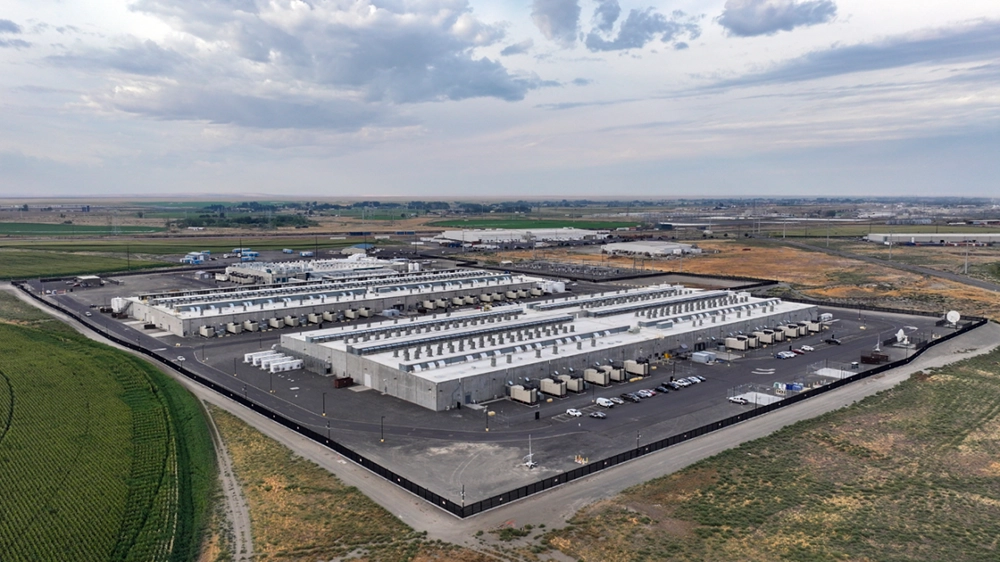
The architecture of AI data centers also exposes a contradiction in the way digital space is understood. Online environments are often described as placeless, accessible from anywhere, and detached from the physical limitations of the built world. Yet the infrastructure supporting them is highly dependent on geography.
The location of a data center affects its access to electricity, cooling resources, telecommunications networks, transport, and labor. It also determines which communities experience its environmental effects and which institutions benefit from the services it enables.
In this sense, digital space is not an alternative to physical space. It is a system built upon it.
For architects, this means that the design of digital infrastructure cannot be evaluated solely through the performance of an individual building. Its territorial relationships matter just as much. A facility may be technologically advanced while contributing little to the region in which it operates. It may create a large industrial presence without producing a comparable improvement in public life.
The problem is partly one of architectural visibility. Data centers tend to conceal their internal complexity behind standardized envelopes, controlled entrances, and extensive setbacks. Their contribution to digital life is enormous, but their relationship with everyday urban experience is often minimal.
This raises a broader question about architectural representation. If a building is essential to contemporary society, should its design communicate something about that role? Not necessarily through monumental gestures or technological spectacle, but through a more intelligible relationship between infrastructure, landscape, and community.
A data center need not resemble a cultural institution to possess architectural significance. Its significance may instead lie in how honestly it expresses its dependencies, how carefully it occupies land, and how responsibly it manages its relationship with the wider built environment.
Digital Space Has a Physical Geography
The architecture of AI data centers also exposes a contradiction in the way digital space is understood. Online environments are often described as placeless, accessible from anywhere, and detached from the physical limitations of the built world. Yet the infrastructure supporting them is highly dependent on geography.
The location of a data center affects its access to electricity, cooling resources, telecommunications networks, transport, and labor. It also determines which communities experience its environmental effects and which institutions benefit from the services it enables.
In this sense, digital space is not an alternative to physical space. It is a system built upon it.
For architects, this means that the design of digital infrastructure cannot be evaluated solely through the performance of an individual building. Its territorial relationships matter just as much. A facility may be technologically advanced while contributing little to the region in which it operates. It may create a large industrial presence without producing a comparable improvement in public life.
The problem is partly one of architectural visibility. Data centers tend to conceal their internal complexity behind standardized envelopes, controlled entrances, and extensive setbacks. Their contribution to digital life is enormous, but their relationship with everyday urban experience is often minimal.
This raises a broader question about architectural representation. If a building is essential to contemporary society, should its design communicate something about that role? Not necessarily through monumental gestures or technological spectacle, but through a more intelligible relationship between infrastructure, landscape, and community.
A data center need not resemble a cultural institution to possess architectural significance. Its significance may instead lie in how honestly it expresses its dependencies, how carefully it occupies land, and how responsibly it manages its relationship with the wider built environment.
Beyond the Invisible Building
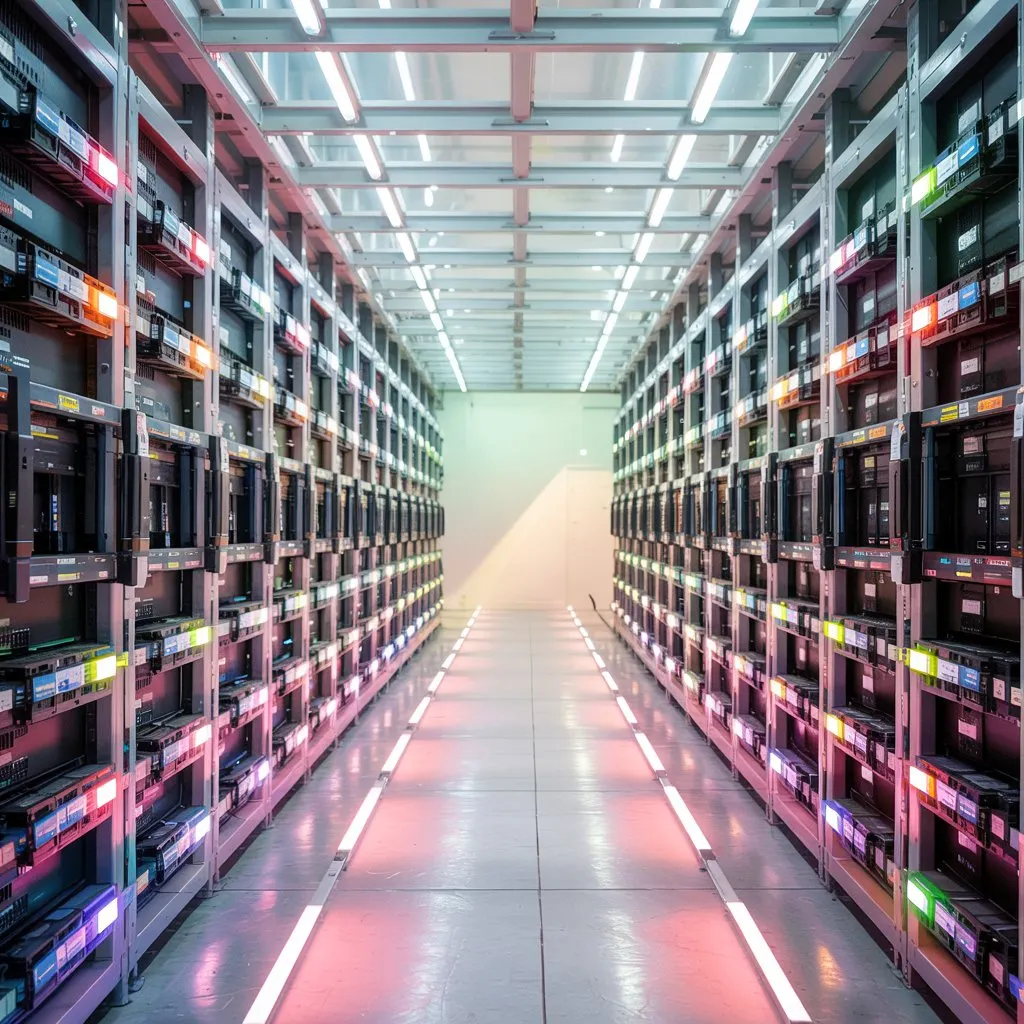
The rapid expansion of AI infrastructure requires architects to reconsider what constitutes a successful building. A data center can meet its technical requirements, operate reliably, and achieve strong energy-efficiency figures while remaining indifferent to the wider consequences of its existence.
Technical performance is indispensable, but it is not a complete architectural argument.
A more ambitious approach would evaluate these buildings through several interconnected questions. Can the structure accommodate changing technologies without repeated reconstruction? Does the site plan respond to ecological conditions rather than simply maximize developable land? Are water, energy, and material demands assessed together? Can heat or other useful outputs be integrated into existing infrastructure? Does the project offer a responsible relationship with its surrounding community?
These questions require collaboration between architects, engineers, urban planners, landscape architects, energy specialists, and local authorities. They also require a willingness to challenge the assumption that greater computational capacity is always an unquestionable public good.
The environmental implications of AI cannot be resolved through architectural design alone. Decisions about what computing should be developed, where infrastructure should be located, and how its costs and benefits should be distributed are also political and economic. Nevertheless, architecture shapes the physical conditions through which these decisions become permanent.
The most consequential design move may therefore occur before the first drawing of a building. It may be the decision to reuse an existing industrial site, preserve the possibility of future adaptation, connect a facility to a useful heat network, or reject a location where the demands of the project would place an unreasonable burden on local resources.
These are architectural decisions because they concern the organization of land, infrastructure, materials, and human environments.
The future of AI architecture should not be measured by how convincingly its buildings represent technological progress. Nor should it be measured exclusively by how efficiently they contain machines. It should be judged by whether their physical existence is proportionate to their purpose, whether their environmental costs are responsibly managed, and whether their relationship with the wider world has been thoughtfully designed.
The cloud may remain invisible to most of its users. Its architecture should not remain invisible to the profession responsible for shaping the built environment.
Ultimately, the challenge is not to make AI infrastructure look more futuristic. It is to make its architecture more accountable. In a world increasingly shaped by digital systems, the most important architectural question may be how to design the physical conditions of technological progress without allowing progress itself to become an excuse for ignoring the limits of the planet.