







“Design is not just what it looks like and feels like. Design is how it works.” Steve Jobs’ familiar line feels newly relevant with the arrival of Apple HomeView.
Apple has spent years refining devices meant for one person at a time. HomeView attempts something different: a shared object that still feels private. The 7-inch square display, announced on 13 October 2026, sits at the center of the company’s latest push into the home, priced at $299 and due to ship from mid-November

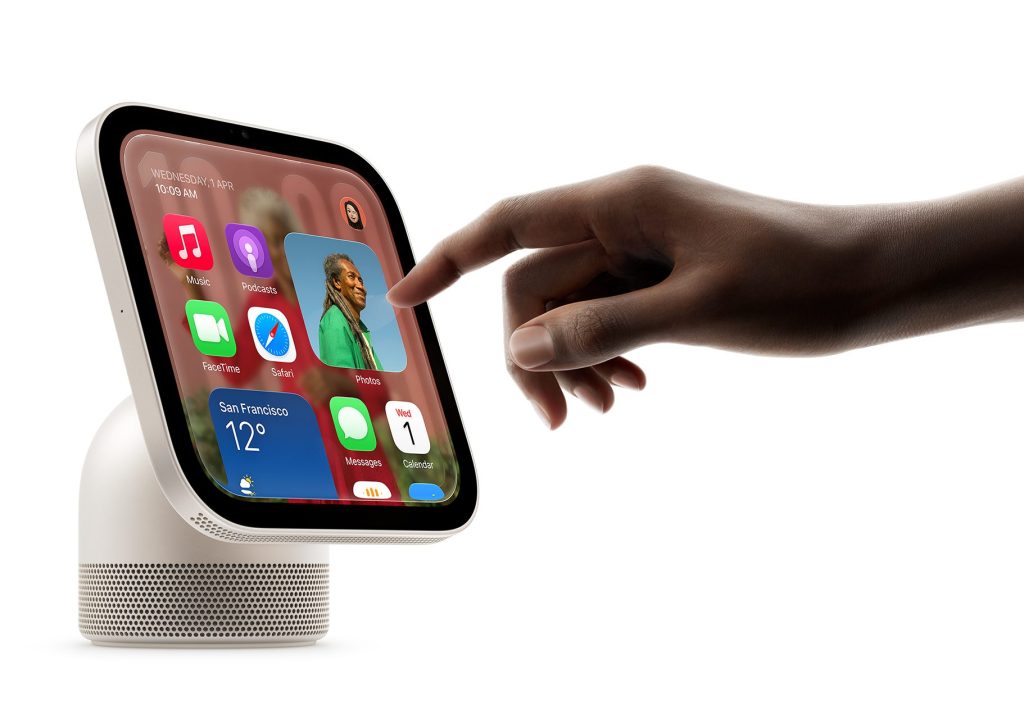
HomeView comes in two versions. The tabletop model pairs a Liquid Retina screen with a domed aluminum speaker base, connected by a stainless-steel hinge that allows smooth tilting. The wall-mounted version offers the same screen without the base. Both run on an A18 chip and feature a 12-megapixel Center Stage camera used for FaceTime and facial recognition.
There are no physical buttons. Brightness ranges from a near-dark 0.3 nits to 500 nits, making the device usable as a bedside clock or a bright kitchen controller.
Adaptive Behaviour as Design Principle
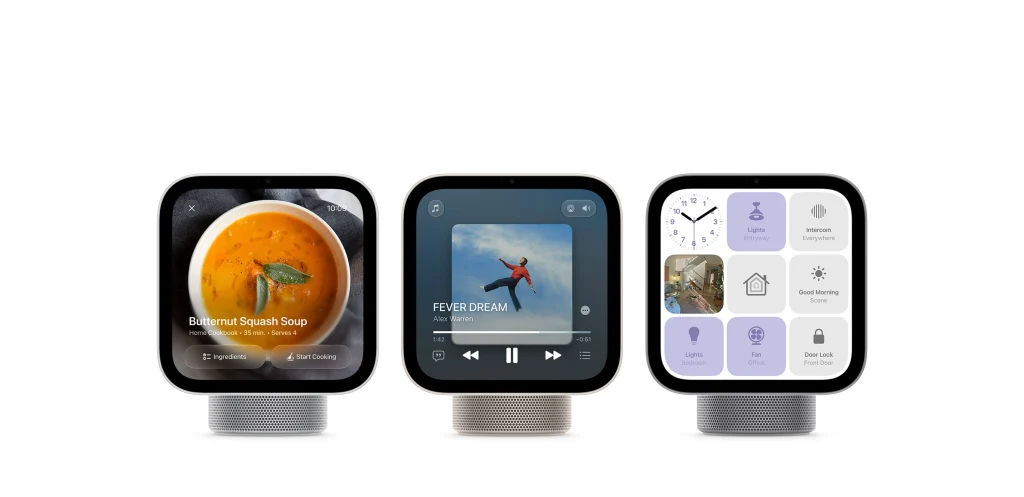
The most distinctive quality of HomeView is not its hardware specification but its behavior. The device can recognize up to six household members by face. When a recognized person approaches, the interface shifts to their personal layout, preferred apps, widgets, and content. From across the room, the display presents larger, simpler information. As the user moves closer, the density of detail increases automatically.
This distance-aware scaling is a form of real-time parametric design. The visual system does not remain fixed; it responds continuously to a changing spatial input. Proximity becomes a variable that drives layout, typography size, and information hierarchy. The result feels less like a static screen and more like a surface that adjusts to the body in front of it.
Faces and Computational Layouts
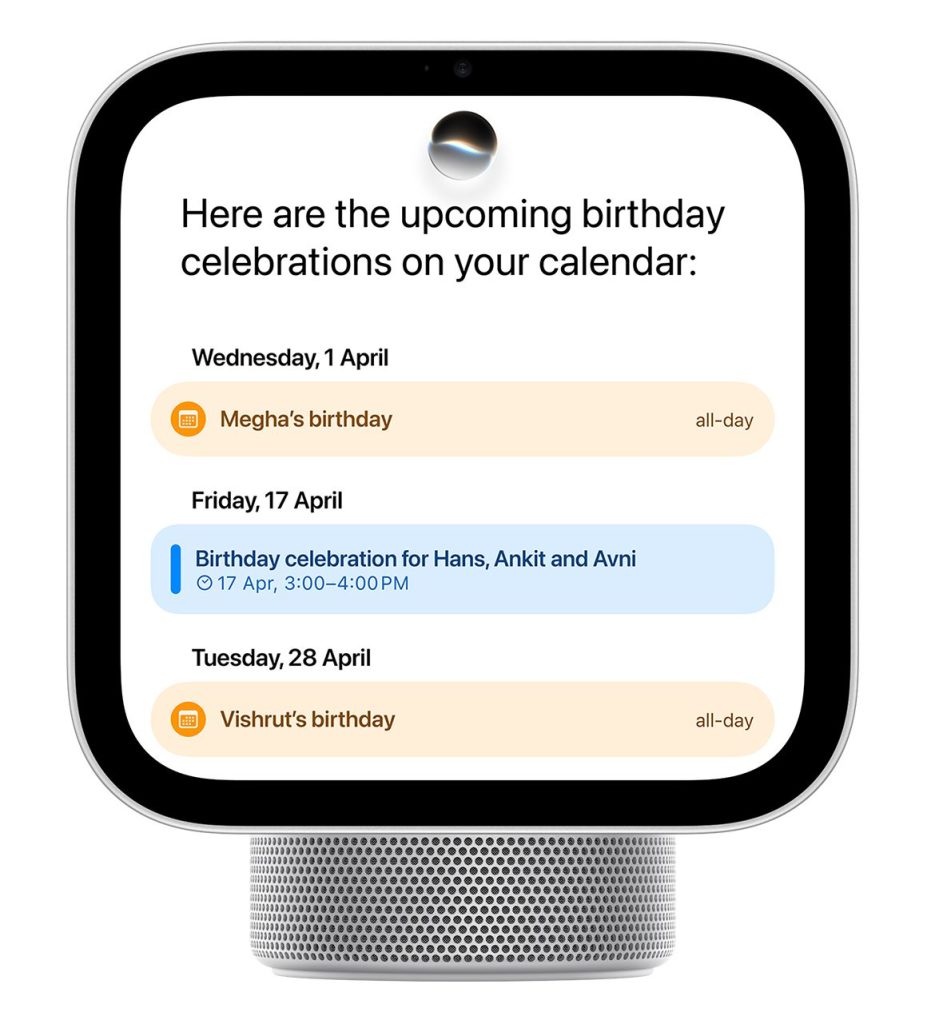
HomeView borrows the “faces” concept from the Apple Watch and expands it. Users swipe between clock faces, photo faces, a modular home-control face, a multi-camera face capable of showing nine live feeds, and even a Snoopy face that reacts to time of day and weather. A “Flow” face responds dynamically to movement in the room. These are not decorative wallpapers. They are computational compositions that reconfigure according to context, identity and distance.
The modular home face turns the device into a glanceable control panel for lights, climate, locks and scenes. The camera face consolidates security views without requiring a phone. In both cases, the interface is organized for speed of comprehension rather than depth of features. That restraint is deliberate.
Privacy and Shared Space
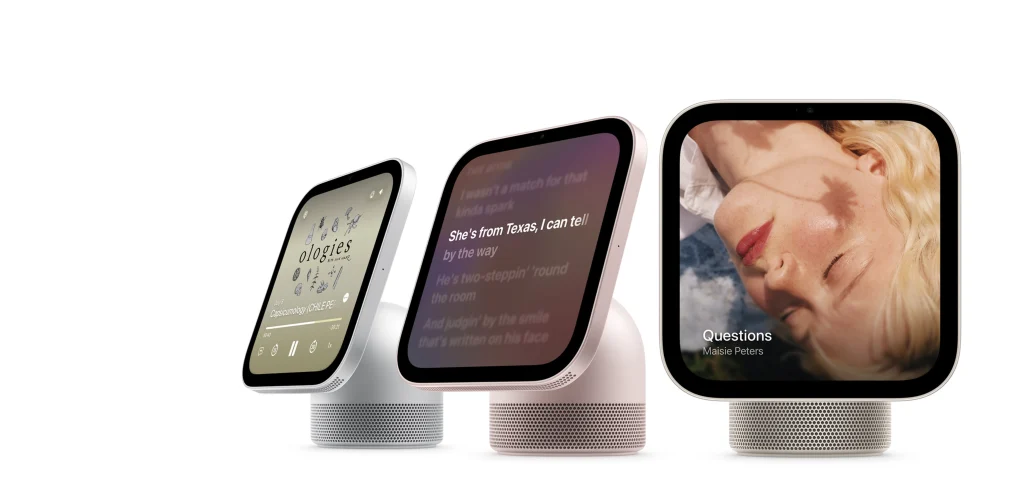
Apple has long argued that personal data should remain under user control. HomeView extends that principle into a multi-user environment. Only the recognized individual sees their messages, calendar or camera history. Recognition and processing occur on-device within a secure container. The shared object does not become a shared data pool.
This separation is technically demanding. Continuous face detection, preference loading and interface reflow must happen quickly enough to feel natural and securely enough to maintain trust. The computational load is managed by the A18 chip and by limiting the number of recognized users to six.
Implications for Domestic Design
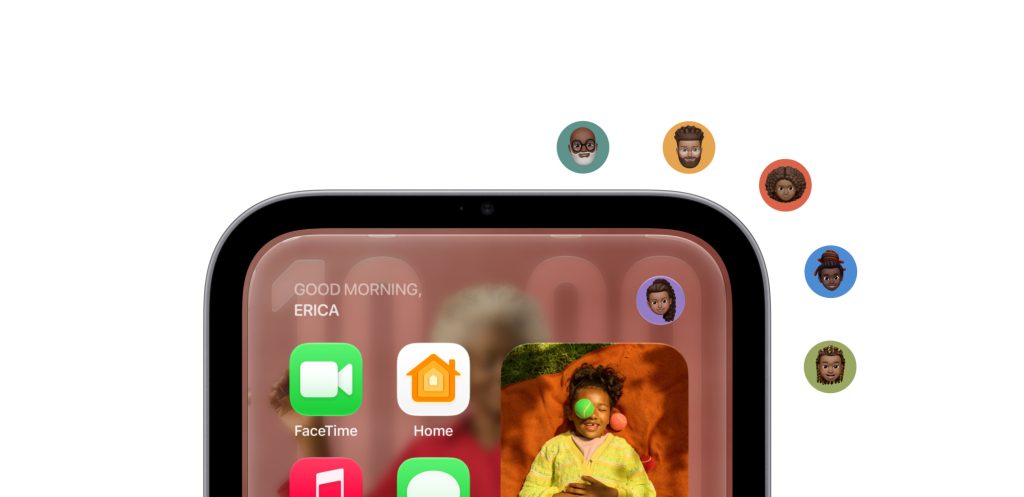
Most smart home interfaces still assume a single primary user or rely on app-based control that pulls attention back to the phone. HomeView attempts to reverse that flow. Information and control come to the room rather than requiring the user to leave the room for their phone. The success of that shift will depend on how reliably the adaptive behaviors perform in real households with changing light, multiple people, and competing demands.
From a design standpoint, the device raises a larger question: can a computational object be both communal and intimate? HomeView’s answer is that identity recognition and parametric interface adjustment can make shared hardware feel personal without fragmenting the household into separate screens.
Whether the product becomes a lasting part of domestic life remains to be tested. What it already demonstrates is a clear design position. The future of the smart home may depend less on adding more devices and more on making the devices we already share behave with greater awareness of who is present and how close they stand.
HomeView does not reinvent the screen. It reinvents the relationship between the screen and the people who move around it. In doing so, Apple has turned a familiar form into a quiet experiment in adaptive, identity-aware design.