


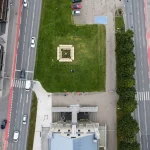
Resonance Pavilion sits on a traffic island in Tallinn and somehow makes the city fall quiet. Built from the most ordinary materials imaginable, it asks whether luxury is something you buy or something you feel when the noise drops away.
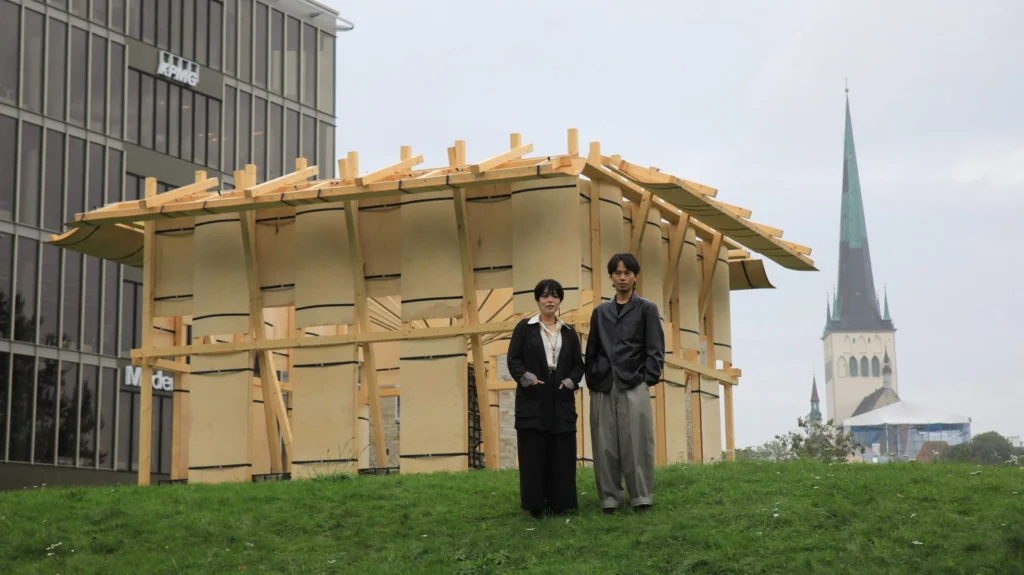
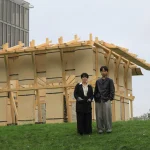
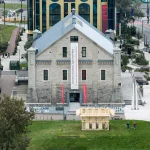
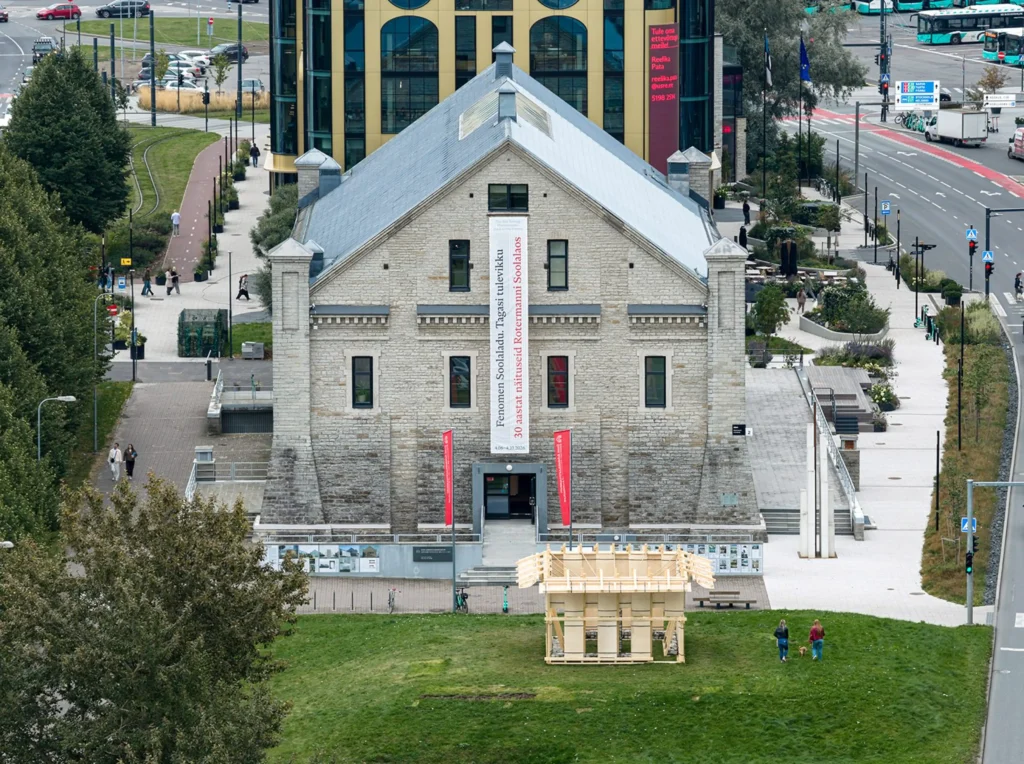
In the middle of Tallinn’s Rotermann district, where cars and pedestrians push past one another all day, a square courtyard has appeared outside the Estonian Museum of Architecture. Its walls are plywood. Its structure is rebar and rope. Its center is a stack of local limestone. The name of the installation is Resonance, and it is the winning pavilion of the 2026 Tallinn Architecture Biennale.
The biennale’s theme this year is “How Much?” It asks hard questions about money, value and what architecture can still achieve when resources are limited. Resonance answers those questions with unusual clarity. Designed by the Shanghai- and Tokyo-based studio Aru Ma- Architects, the pavilion shows that spatial richness does not require expensive finishes or complex engineering. It requires attention.
A Courtyard That Listens
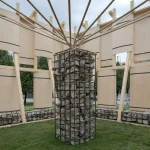
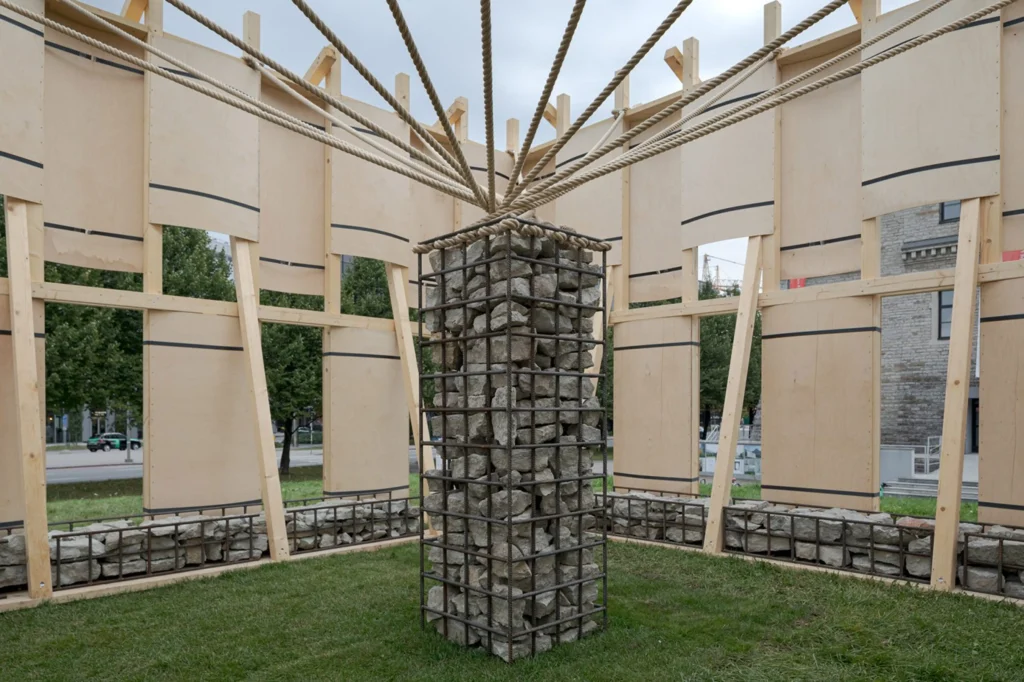
The pavilion forms an inward-facing square of about 59 square meters. Visitors step inside, and the city’s noise softens. A sea breeze moves through the structure. Sunlight filters across the curved plywood screens. The limestone core sits silent in the middle, heavy and still. The experience feels closer to standing inside a large stringed instrument than inside a conventional building.
That musical quality is deliberate. Ropes stretch from the timber frame to the central stone mass like the strings of an instrument. The limestone acts as a ballast, its weight pulling the ropes taut and giving the whole structure its tension and stability. The architects describe it as a carefully balanced tensile system. Gravity does most of the work. The materials simply hold the forces in balance.
Rebar, hemp rope, Estonian limestone and plywood are the entire palette. Nothing is exotic. Nothing is hidden. The beauty comes from the relationships between them: the weight of stone against the pull of rope, the warm curve of plywood against the hard edge of steel, the way light and wind move through the gaps.
Resonance Pavilion: Luxury Without the Price Tag
The competition that produced Resonance was called “Budget Bougie.” It invited architects to reconsider luxury through the lens of limited means. Can a space feel refined, generous or even indulgent when it is built from standard construction materials on a tight budget? Aru Ma- Architects’ answer is yes, provided the luxury is understood as an atmospheric condition rather than a material one.
Founders Cheng Hao Chung and Zhang Jie, working with Cui Jiakai and Matteo Minnicelli, treated constraint as a creative partner rather than an obstacle. The pavilion was designed from the start to be demountable. At the end of the biennale, it can be taken apart with relative ease. The materials return to the ordinary world from which they came, having spent a season creating something quietly extraordinary.
Jury members praised the project for using standard materials in unexpected ways and for achieving a spatially intriguing result with radically simple techniques. That simplicity is the point. In a cultural moment that often equates architectural ambition with technical complexity or material extravagance, Resonance offers a different measure of success: how carefully a place can be tuned.
A Pause in the Commercial Rush
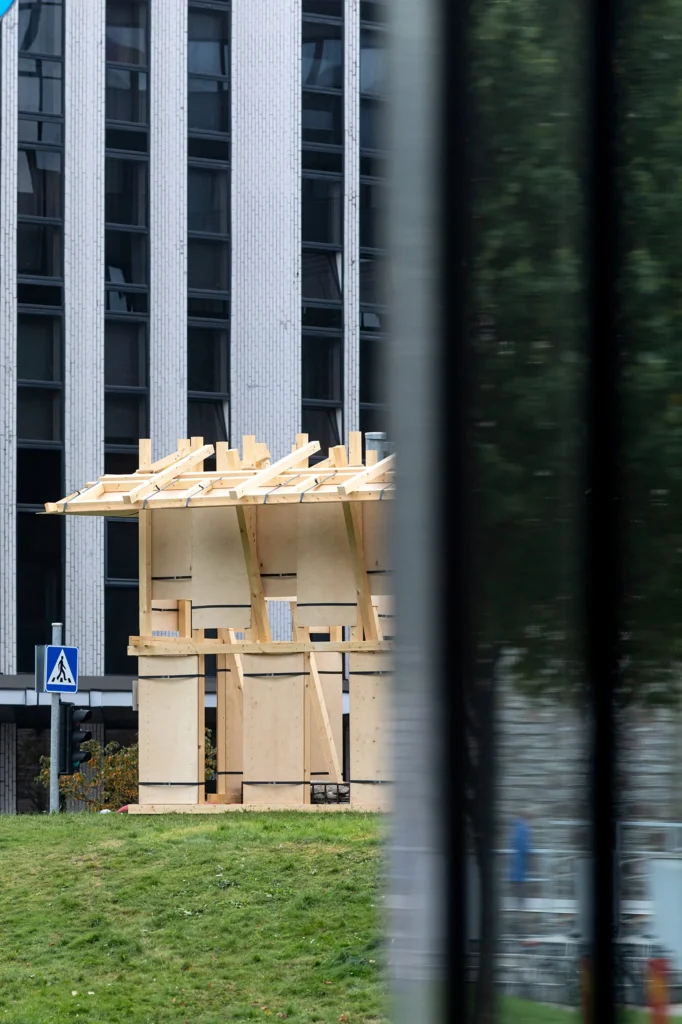
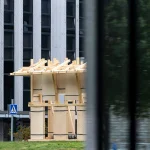
Tallinn’s Rotermann district has changed rapidly in recent years. Old industrial buildings have given way to offices, hotels and retail. The traffic island in front of the Museum of Architecture is not a natural place for contemplation. Resonance makes it one anyway. By turning its back on the surrounding movement and creating an enclosed courtyard, the pavilion offers a deliberate pause. Visitors can sit, listen to the wind in the ropes, watch light travel across the plywood, or simply feel the difference between inside and outside.
The structure does not try to compete with the city. It filters it. The sea air still reaches the courtyard. The sound of traffic becomes a distant murmur rather than a constant presence. In that filtered state, ordinary materials begin to feel generous. The limestone is cool to the touch. The plywood is warm. The ropes vibrate almost imperceptibly when the wind strengthens. These small sensory details accumulate into a feeling that many expensive buildings never manage to produce: a sense of being held.
Part of a Larger Conversation
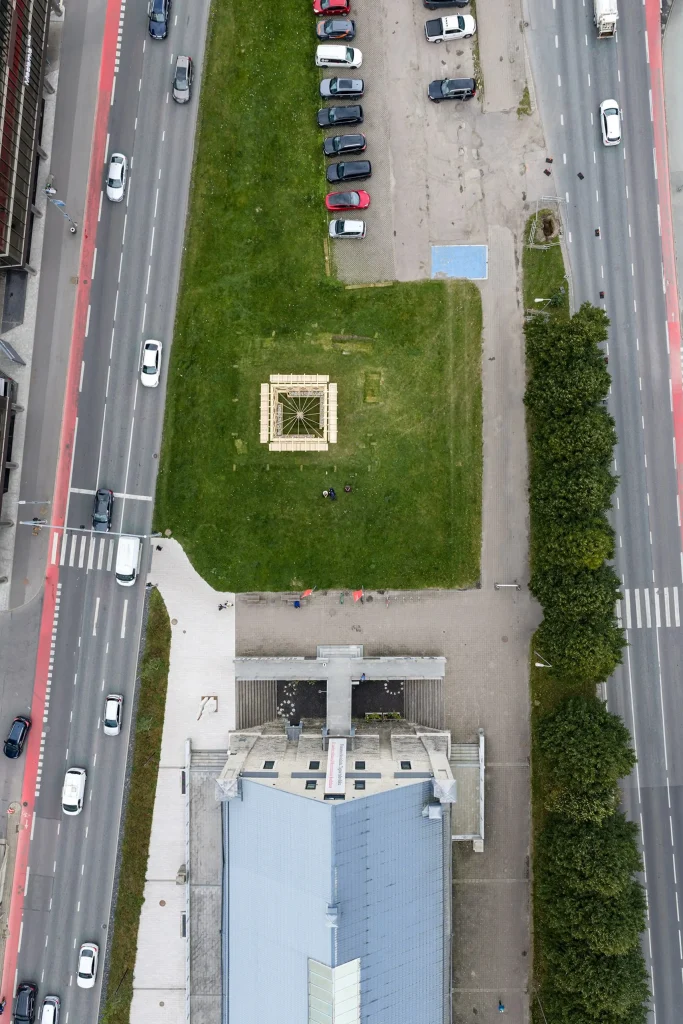
Resonance sits within a broader program that runs from September to November 2026. The main exhibition at Linnahall examines the true costs of architecture, social as well as financial. Other installations and vision proposals explore scarcity, value and responsibility. The pavilion’s role is to make those abstract questions physical. Standing inside it, visitors can feel what the curators are asking: how much is enough, and what do we actually value when resources are limited?
Aru Ma- Architects have given the biennale a structure that is both modest and memorable. It does not rely on spectacle. It relies on proportion, tension, light, and the quiet intelligence of materials that most builders treat as background. In doing so, it suggests that the most interesting luxury available to architecture right now may be the luxury of restraint.
When the biennale ends and the ropes are loosened, the limestone will be stacked elsewhere and the plywood will find new uses. What will remain is the memory of a courtyard that managed to slow the city down using almost nothing at all. In an era of constrained budgets and rising material costs, that memory may prove more useful than many more permanent buildings.