

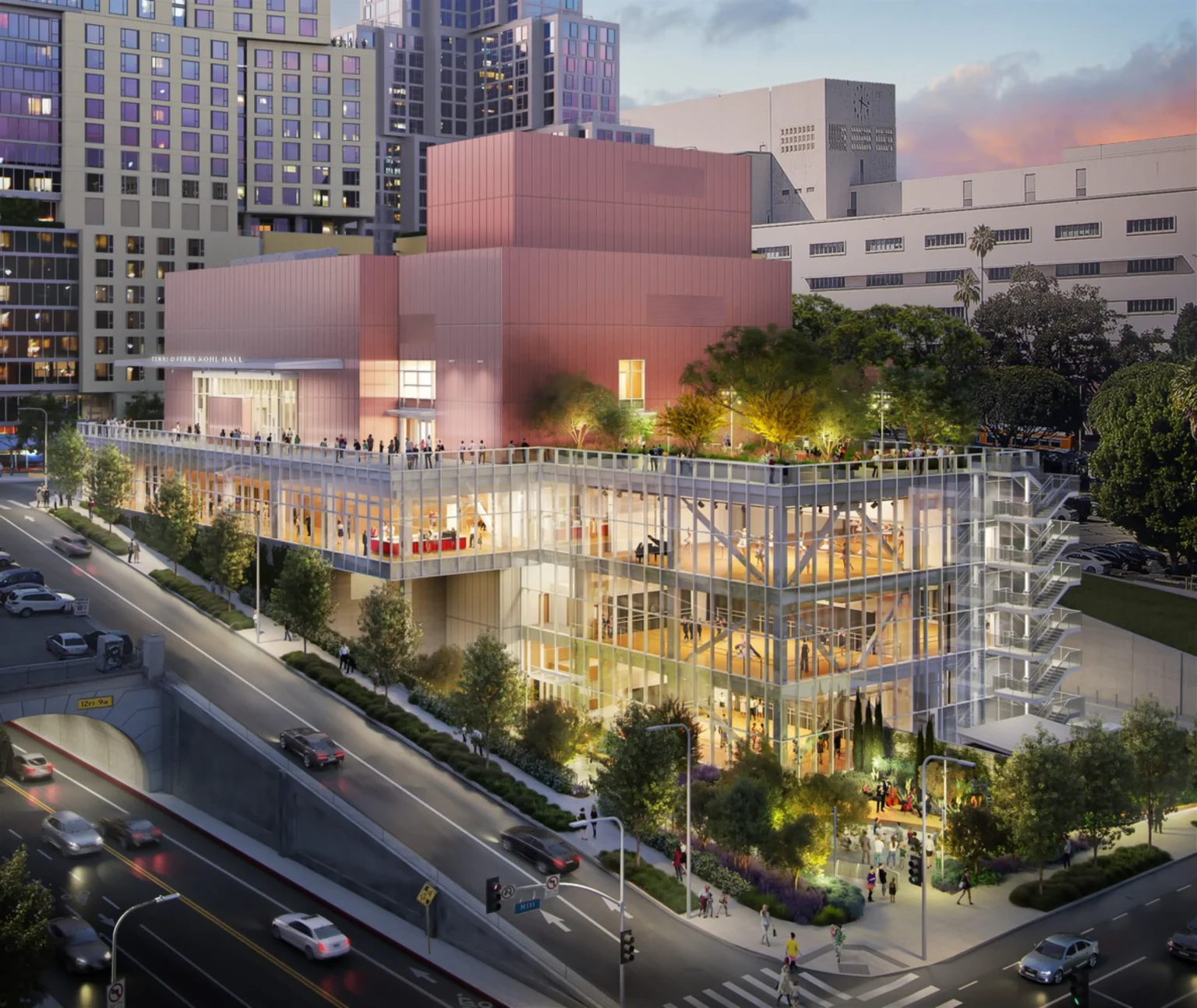


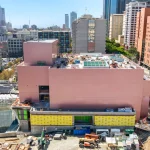
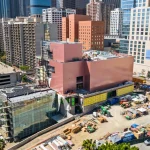
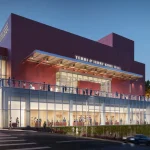

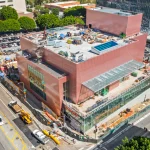
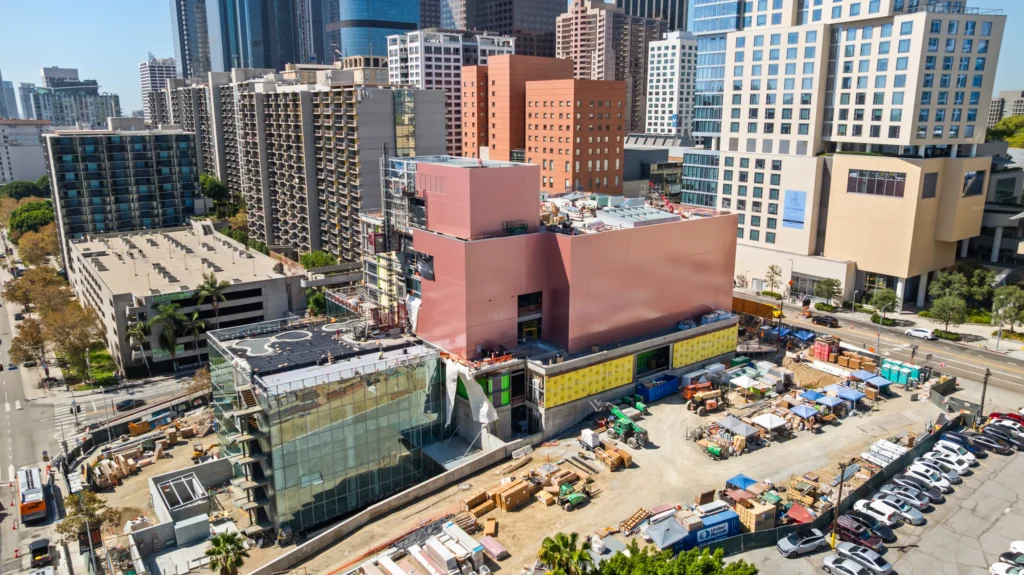
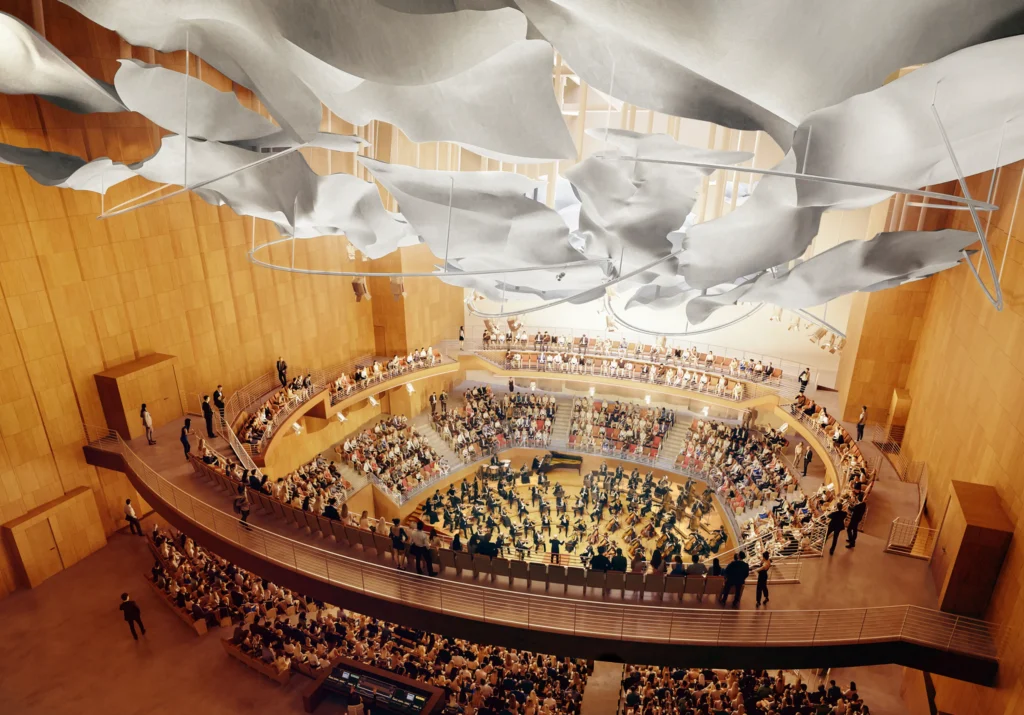
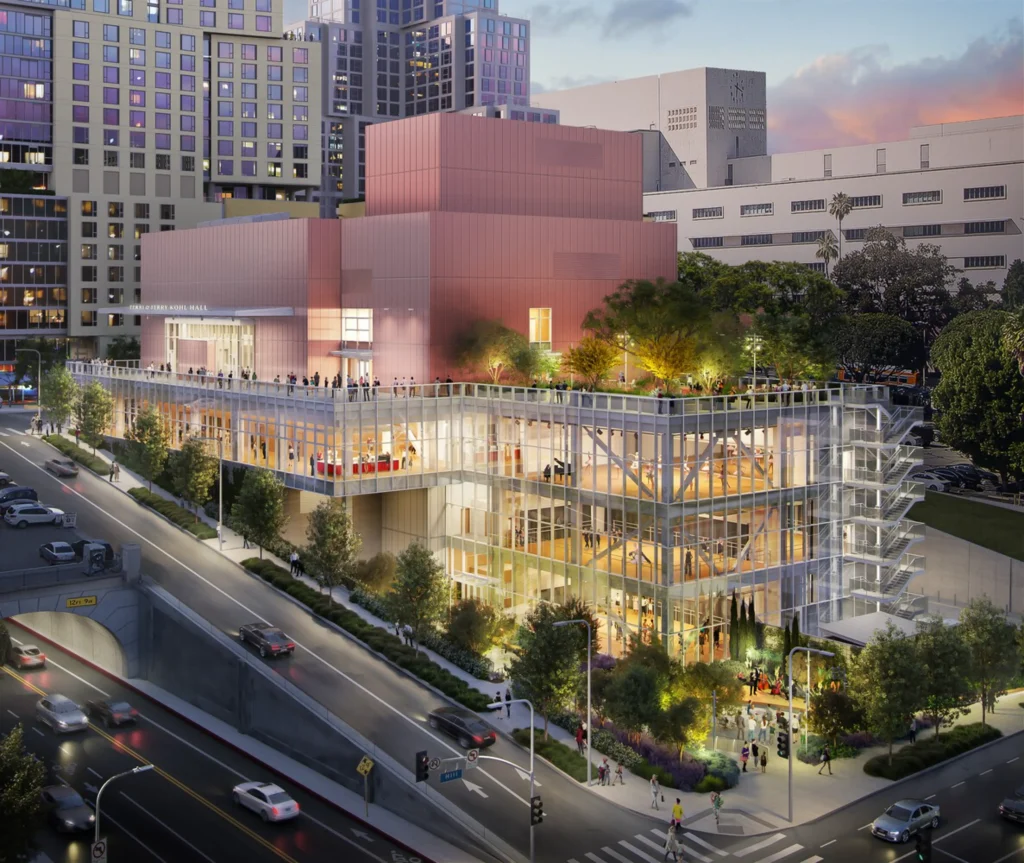
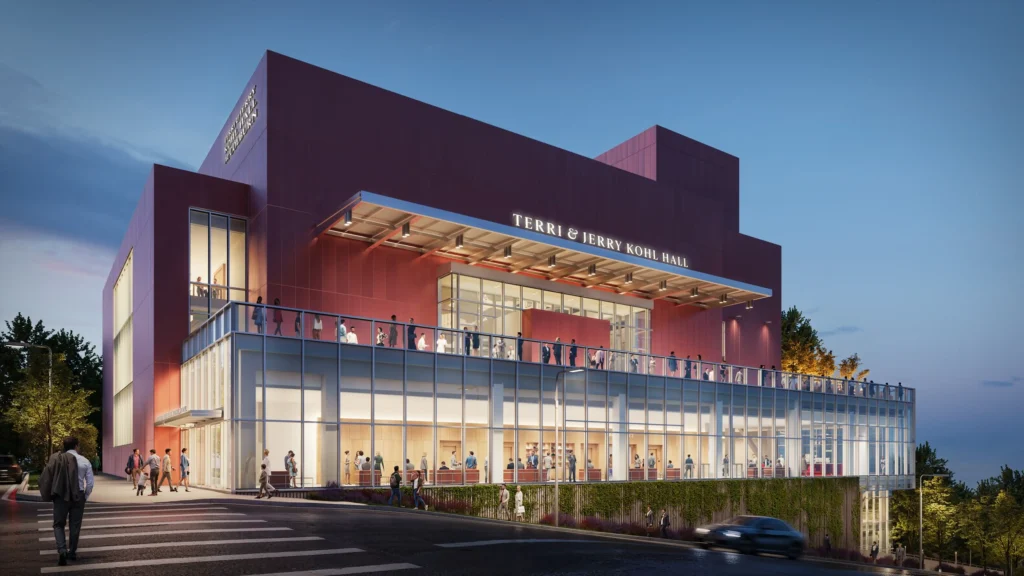
Downtown Los Angeles is about to gain another piece of Frank Gehry’s unmistakable language, this time finished in a bright metallic pink known as Pink Kandi. The Colburn School has set September 25, 2027, as the official opening date for its 100,000-square-foot expansion. The centerpiece is the 1,000-seat Terri and Jerry Kohl Hall, an in-the-round concert space designed to bring performers and listeners into unusually close contact.
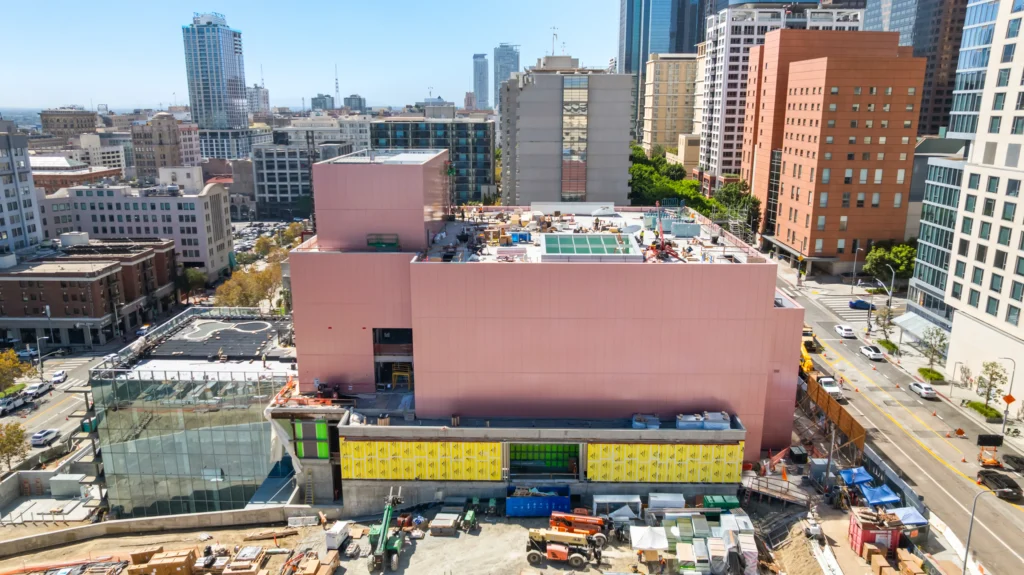
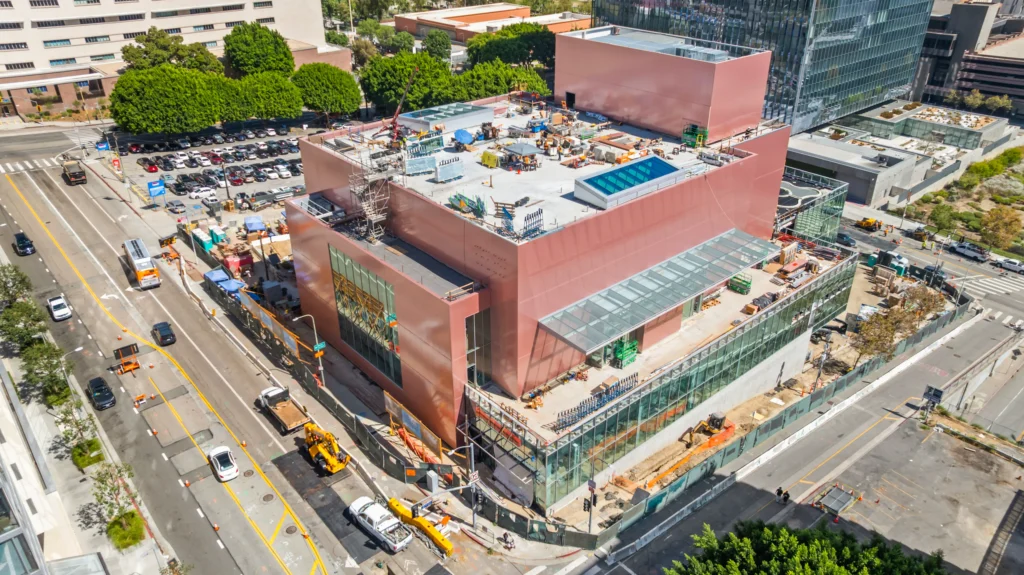
The building sits adjacent to Colburn’s existing Grand Avenue campus. When complete, it will form, together with Walt Disney Concert Hall and The Grand, one of the densest clusters of Frank Gehry-designed architecture anywhere. Construction is expected to reach substantial completion in summer 2027. The Dance Center portion is scheduled to open in August, ahead of the formal September celebrations.
A hall shaped for closeness
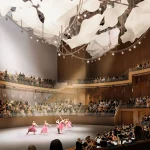
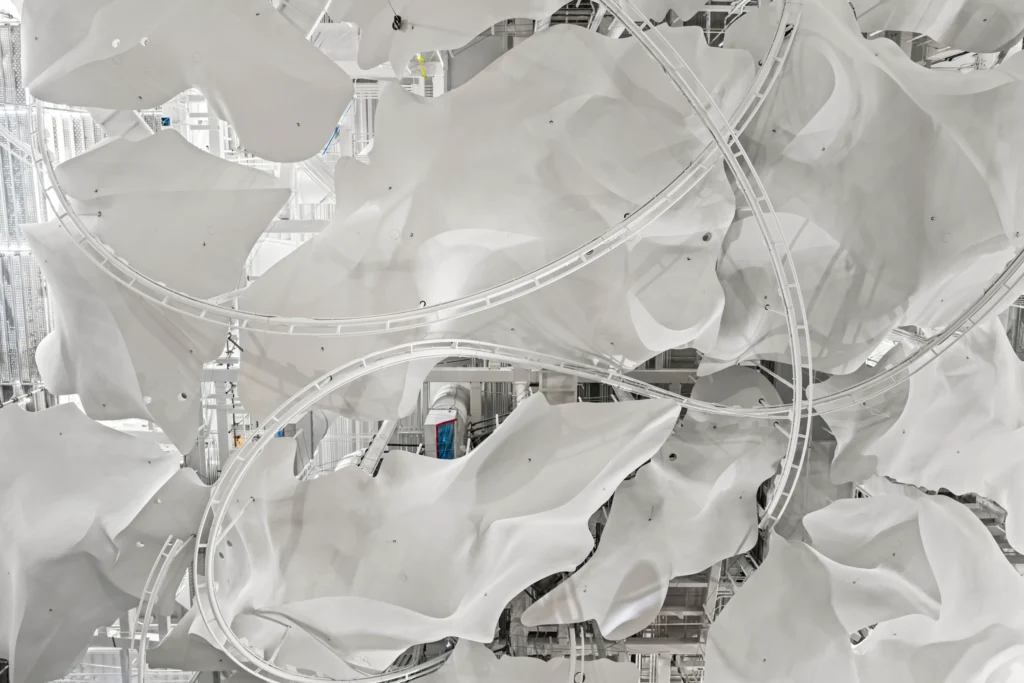
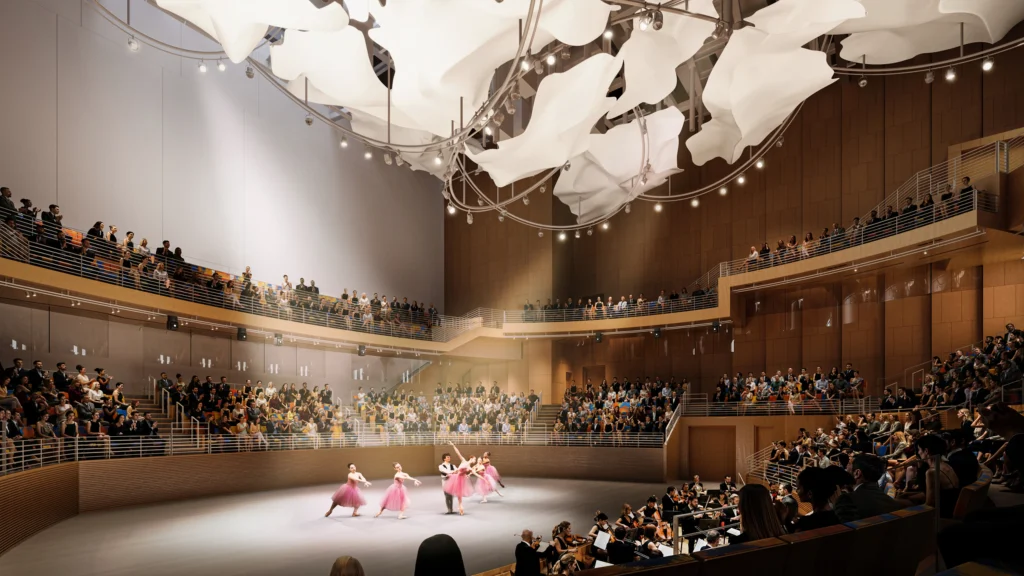
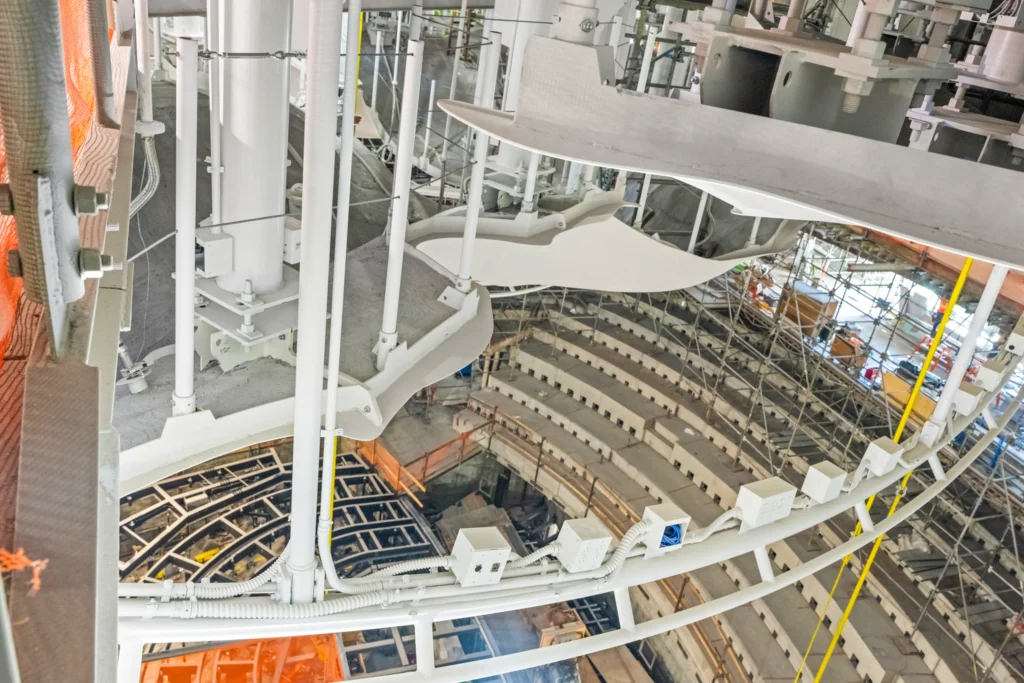
Kohl Hall is deliberately smaller and more intimate than Disney Hall. Its seating surrounds the stage. An orchestra pit and a stage comparable in size to Disney’s allow the room to host full orchestras, opera, dance, jazz and mixed programs without forcing a choice between scale and proximity. Natural light enters the volume. A floating balcony and suspended acoustical clouds complete the interior architecture.
The design responds to a practical gap in Los Angeles performance infrastructure. The city has large halls and many small ones. Mid-sized venues that can handle ambitious repertoire while keeping the audience near the musicians have been scarce. Colburn expects the hall to be used more than 200 times a year, serving student ensembles, the school’s own orchestra, outside presenters, and, beginning with the 2027-28 season, the Los Angeles Chamber Orchestra as its downtown home.
Dance receives equal weight
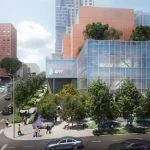
The expansion is not only about music. The new Dance Center will house the Trudl Zipper Dance Institute and roughly triple the space devoted to dance at Colburn. Four professional-sized studios and a 100-seat studio theater give the institute room to train and to present work. Indoor and rooftop gardens, including a street-level garden at Second and Hill, extend the public presence of the building beyond the performance spaces.
The combination of music and dance under one roof continues Colburn’s dual identity as a conservatory that treats both disciplines as central rather than secondary. Shared lobbies, rehearsal adjacency, and outdoor rooms are meant to encourage the kind of informal collision that educational campuses often promise and rarely deliver.
Pink Kandi and the Frank Gehry signature
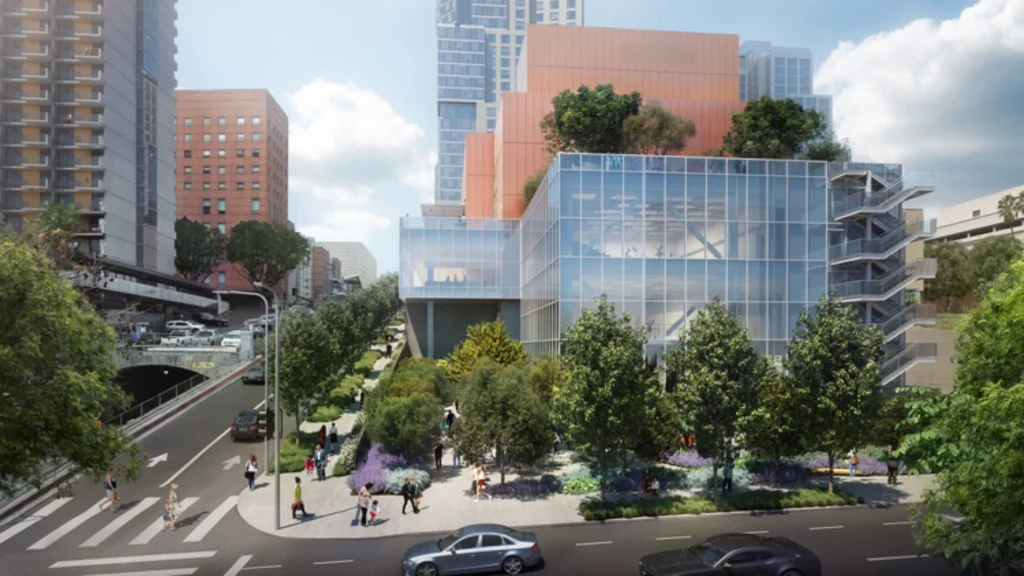
Frank Gehry’s exterior language is familiar yet freshly calibrated. Interlocking volumes, a light-filled entrance sequence, and the distinctive pink metallic finish give the building a vivid presence on the street. The color choice is bold enough to earn its own nickname. In a district already defined by the stainless-steel sails of Disney Hall, Pink Kandi announces a different temperament: still expressive, still sculptural, but warmer and more approachable in tone.
The project has been described by those close to it as a long-standing wish of the architect, a smaller companion piece to the larger concert hall he completed more than two decades earlier. The two buildings will now face each other across Grand Avenue, linked by material ambition and by the continuous public life of the arts corridor.
Opening weekend and beyond
The formal opening on September 25 will take the form of a gala concert inside Kohl Hall. The following day brings a free community celebration with ribbon-cutting, campus-wide performances, inaugural dance presentations, and an evening concert. A weeklong festival of guest artists, resident organizations, faculty and students is planned to follow. The sequence is designed to introduce the building first to its core artistic community and then immediately to the wider public.
Colburn already welcomes an estimated 10,000 people to its campus each week and presents more than 500 public performances a year. The expansion is intended to increase both the quality of training spaces and the volume of accessible events. Street-level gardens and the mid-sized hall’s rental potential should extend that accessibility further into the city’s cultural calendar.
Architecture in the service of education
What distinguishes the project from many civic concert halls is its primary identity as an educational building. The hall and studios exist first for students and faculty. Professional residencies and public performances are layered on top of that foundation rather than the reverse. This hierarchy shapes the architecture: practice rooms, studios and support spaces receive the same design attention as the public volumes. The result is a building that can shift between intense daily use and festival-scale presentation without changing character.
Acoustics, sightlines, stage machinery and dance flooring have been developed to professional standards so that student performances and visiting ensembles share the same technical platform. That parity is itself a pedagogical statement. Young musicians and dancers rehearse and perform in conditions that match the ones they will encounter after graduation.
A late addition to a long conversation
Frank Gehry’s work in downtown Los Angeles has always been about more than individual buildings. The original Grand Avenue master plan imagined a continuous cultural district. Disney Hall, The Broad, the expanded Colburn campus and surrounding developments have gradually filled in that vision. Kohl Hall adds a missing piece of scale and a missing piece of color. It also adds a missing piece of intimacy. Large halls inspire awe. Smaller ones, when carefully shaped, can produce the sensation of shared concentration that makes live performance feel necessary rather than optional.
The metallic pink surface will weather, the gardens will mature, and the hall will accumulate the marks of repeated use. Those changes are part of the project’s future life. For now the announcement of a firm opening date turns years of design and construction into a countdown. On September 25, 2027, the doors of Terri and Jerry Kohl Hall will open, the first notes will sound in the round, and downtown Los Angeles will gain another room in which music and movement can be experienced at close range, under a roof that still carries the unmistakable signature of its architect.