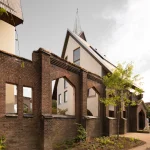
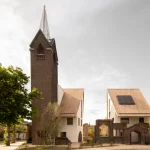
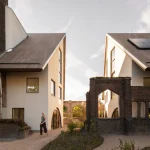
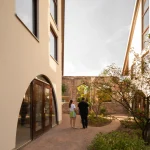
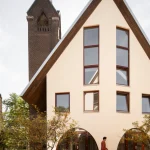
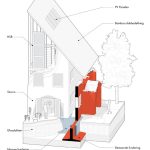
Nine years after the fire gutted the Julianakerk, four new homes stand inside its remaining walls. HA-HA Design & Development has completed JUUL, a residential project that treats the ruined church as a foundation rather than an obstacle.
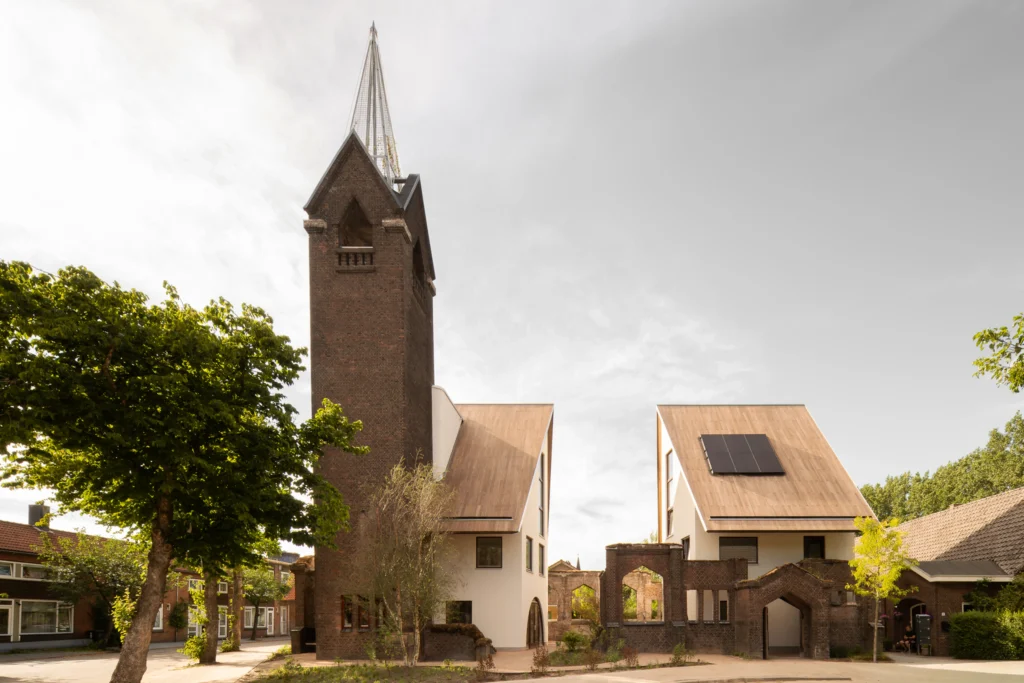
Image credit: © Aiste Rakauskaite
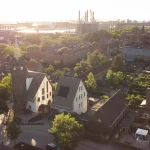
In the Rotterdam garden city of Heijplaat, the former church had stood damaged and empty since 2017. Architect and developer Nima Morkoç of HA-HA acquired the site and chose neither full reconstruction nor erasure. The project adds a new layer in which traces of the past remain visible while space opens for contemporary living.
Building on what remained
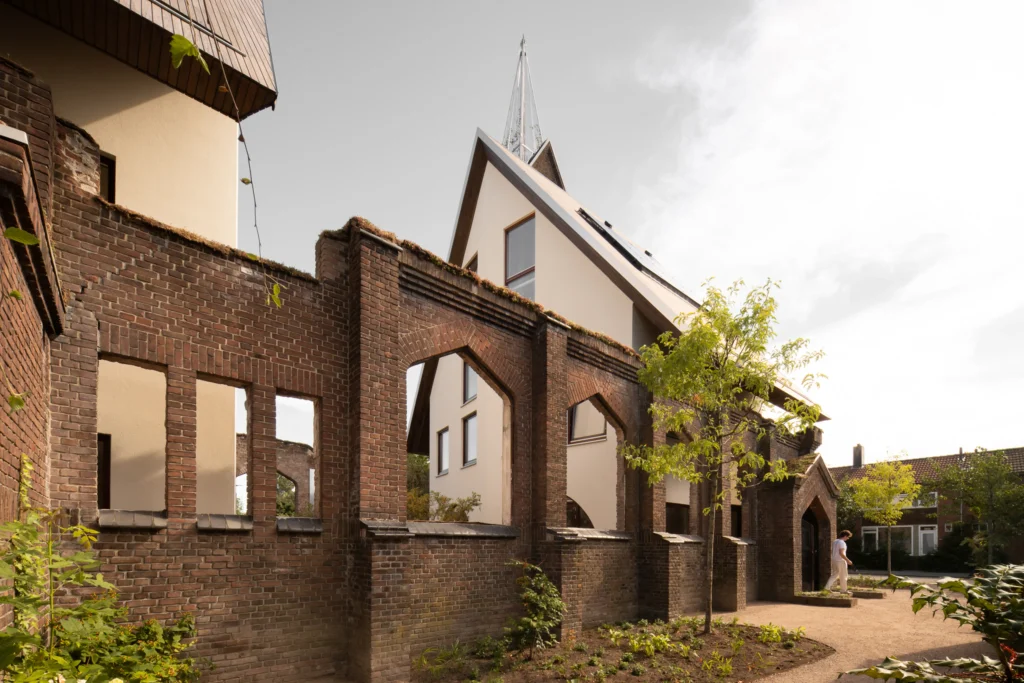
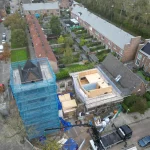
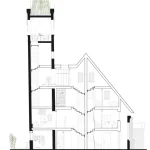
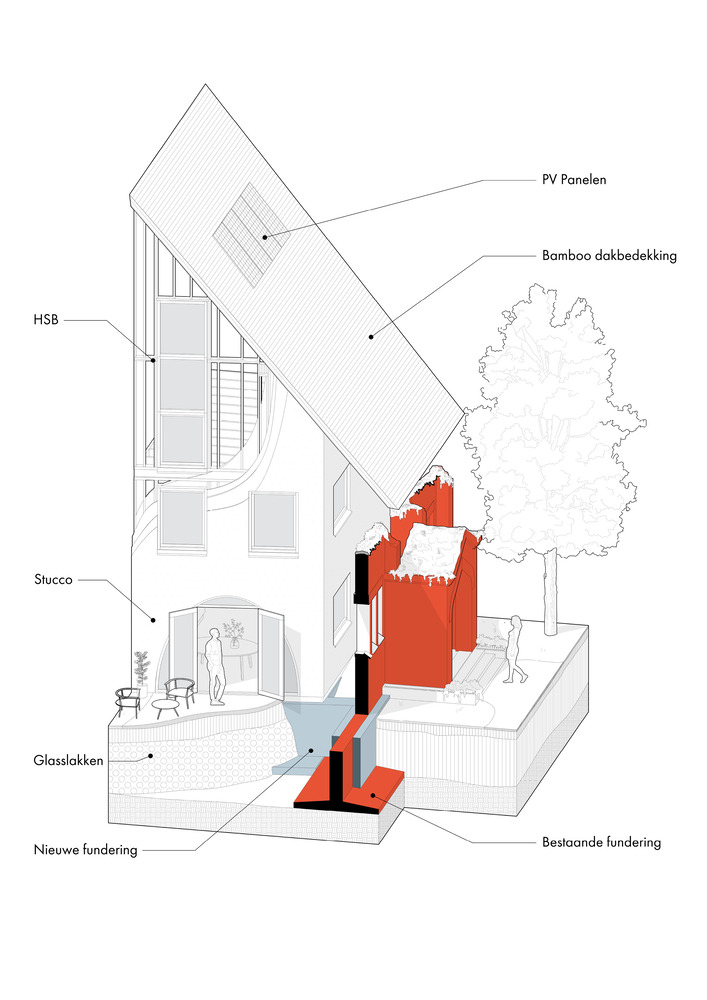
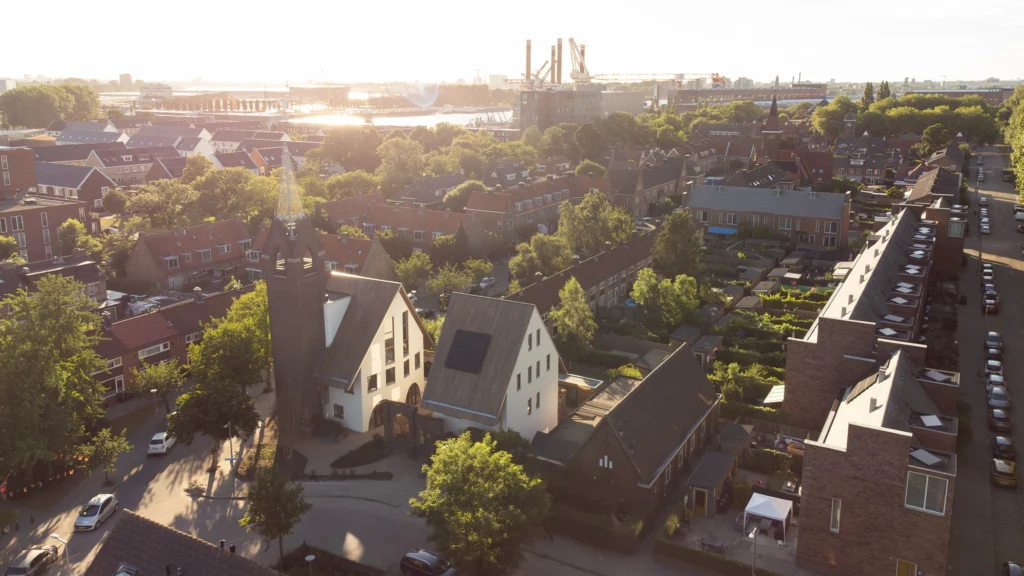
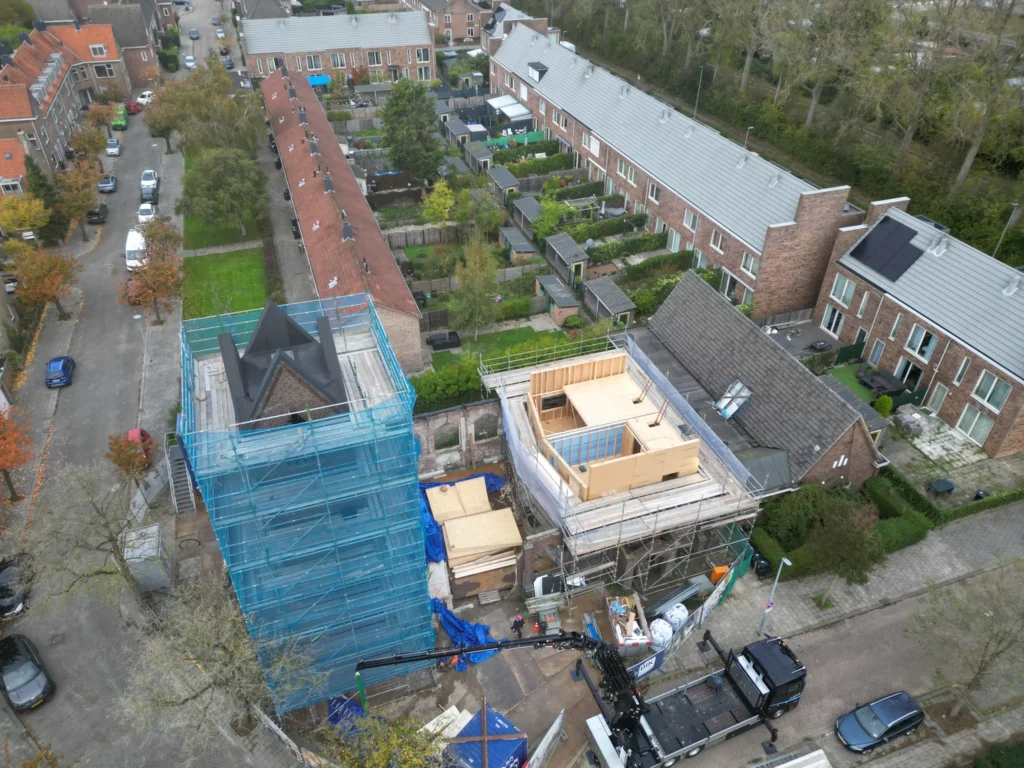
The original Julianakerk, dating from 1930, rested on a shallow foundation without piles, an uncommon method in Rotterdam’s soft ground. Rather than introduce a new system, HA-HA reused the existing foundations to support the four new timber-framed dwellings. The church walls became the outer boundary of the ensemble. A central communal garden occupies the former nave. One of the homes incorporates the rebuilt tower, restoring a third church tower to the neighbourhood silhouette.
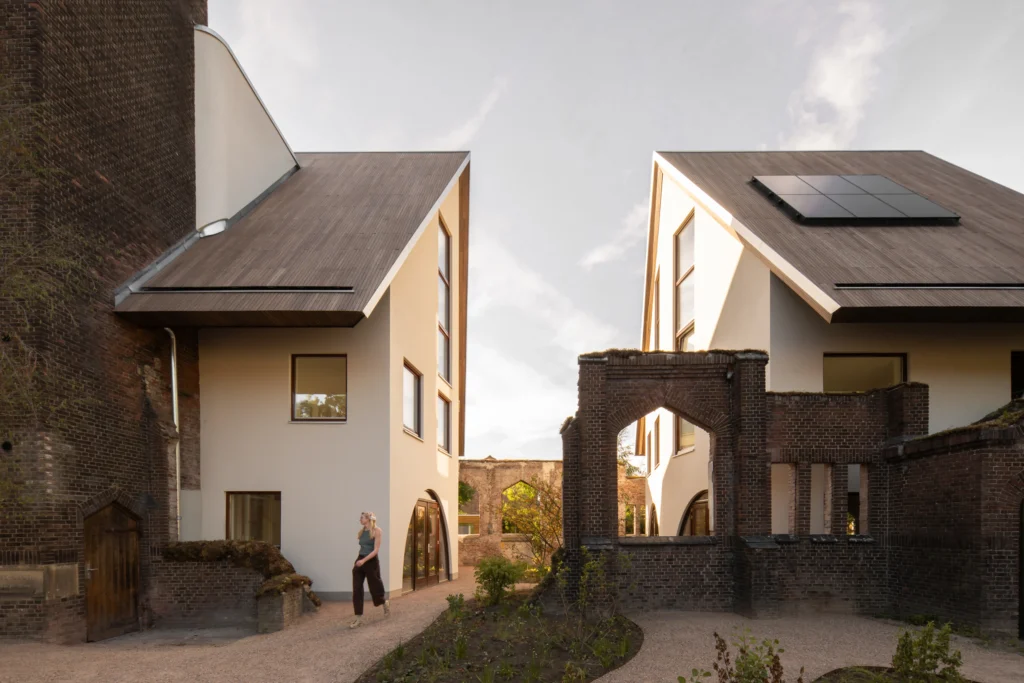
Image credit: © Aiste Rakauskaite
The approach is deliberately non-historicist. The church is not returned to its previous image. Instead, its remains become the starting condition for a different kind of social monumentality, one organized around dwelling and shared outdoor space rather than worship.
Architecture and development in one hand
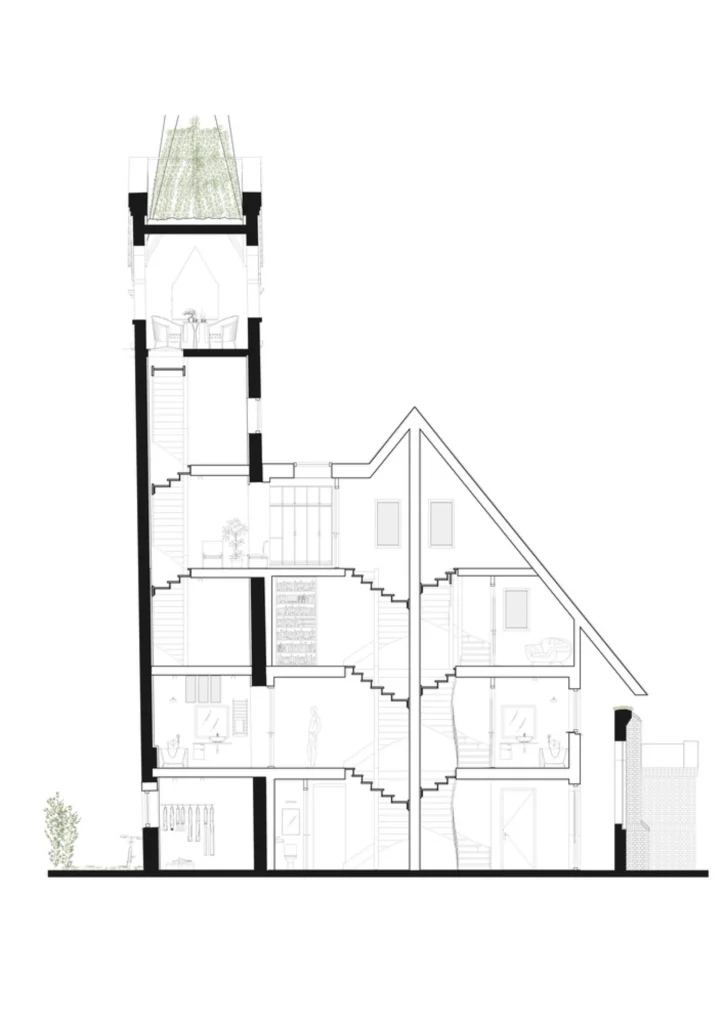
HA-HA acted as both architect and developer, controlling design, planning and realisation in-house. This dual role allowed continuous adjustment between structural constraints, landscape intentions and the practical demands of housing. The total architectural area is approximately 700 square metres, with an additional 1,000 square metres of landscape. Façades combine stucco and bamboo. The structure is timber frame. Construction cost is reported at €1.7 million excluding VAT.
Project architect Nima Morkoç has described the intention clearly: the team did not want to reconstruct the Julianakerk, nor did they want to erase it. JUUL adds a layer in which the past remains legible while new patterns of living take root.
A tower returned
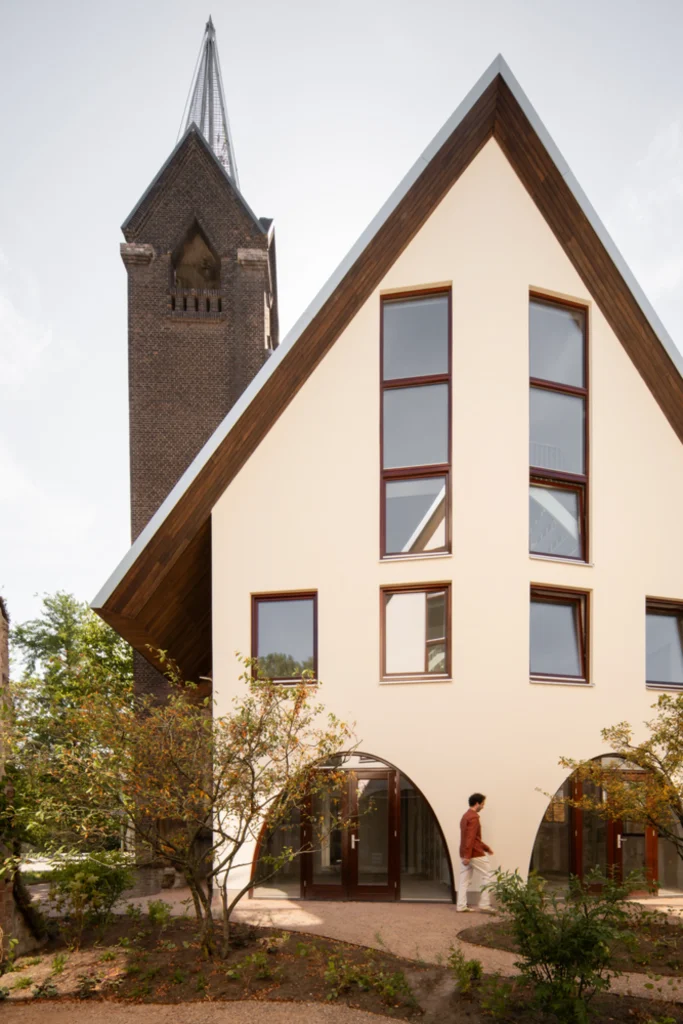
Image credit: © Aiste Rakauskaite
The tower, now a municipal monument, has been rebuilt with a steel structure that recalls the original spire form. Ivy is expected to climb the steel, softening the geometry over time. A balcony at the top gives one dwelling a distinctive outlook. The tower’s return re-establishes a familiar vertical marker within Heijplaat’s low-rise garden-city fabric.
Inside the walls, the four homes are arranged around the shared garden. The arrangement encourages neighbourly contact without forcing it. Circulation and orientation respect the original footprint while introducing daylight and privacy appropriate to residential use.
Heritage as material
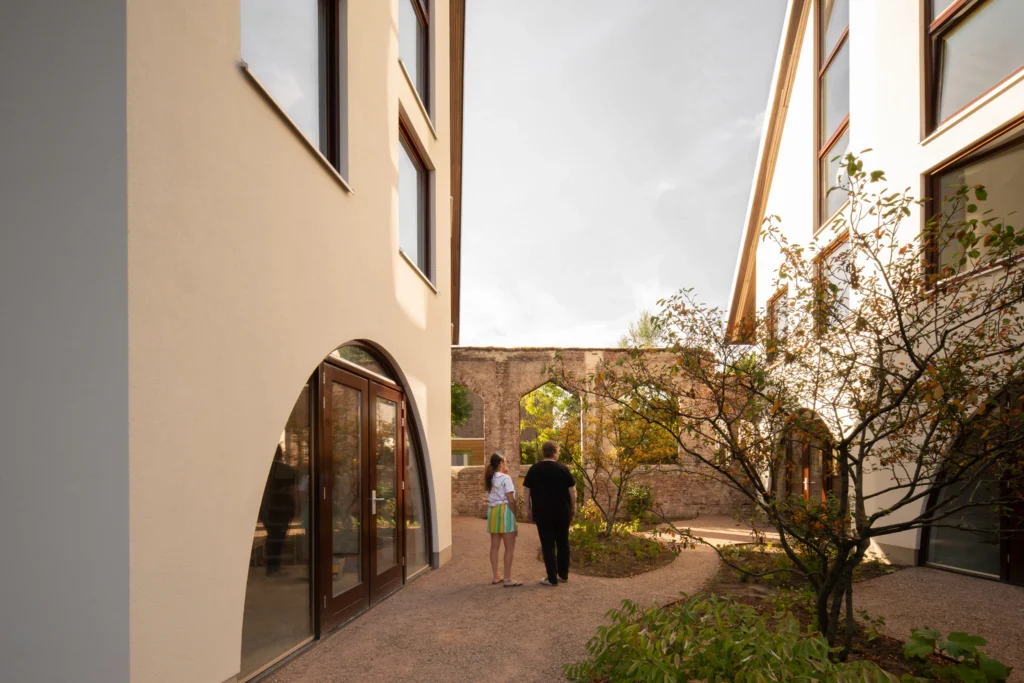
Adaptive reuse projects often face a choice between museum-like preservation and complete reinvention. JUUL occupies a third position. The church is neither frozen nor forgotten. Its walls and foundations are treated as found material, capable of supporting a different programme. The result feels continuous with the site’s history without being nostalgic.
Heijplaat itself carries layers of religious and industrial memory. JUUL continues that layered condition. The project does not claim to solve the larger questions of church vacancy across the Netherlands. It simply demonstrates one careful response: keep what can be kept, build what is needed, and let the two registers remain visible to one another.
Completion and future
The symbolic start of construction involved Rotterdam alderwoman Chantal Zeegers. Three of the four homes were sold before completion; the tower house remained available longer. Photography by Aiste Rakauskaite documents the finished ensemble in clear, unsentimental light.
JUUL is small in scale yet precise in intention. It shows that a fire-damaged church need not become either a romantic ruin or a blank slate. With patience and a dual role as designer-developer, the remains can become the ground for ordinary life to resume, four households at a time, inside walls that still remember another purpose.