


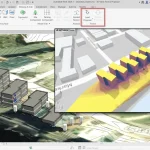
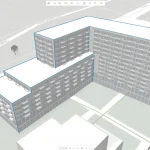
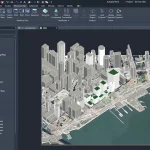
Autodesk has now made its long-term direction for Revit considerably clearer: Autodesk Forma is intended to become the primary environment for an increasing share of architectural, engineering and construction workflows, while Revit gradually moves into a connected role within that broader ecosystem. The change is not an immediate replacement, but it represents one of the most significant strategic shifts in BIM software since Revit became central to digital building design.
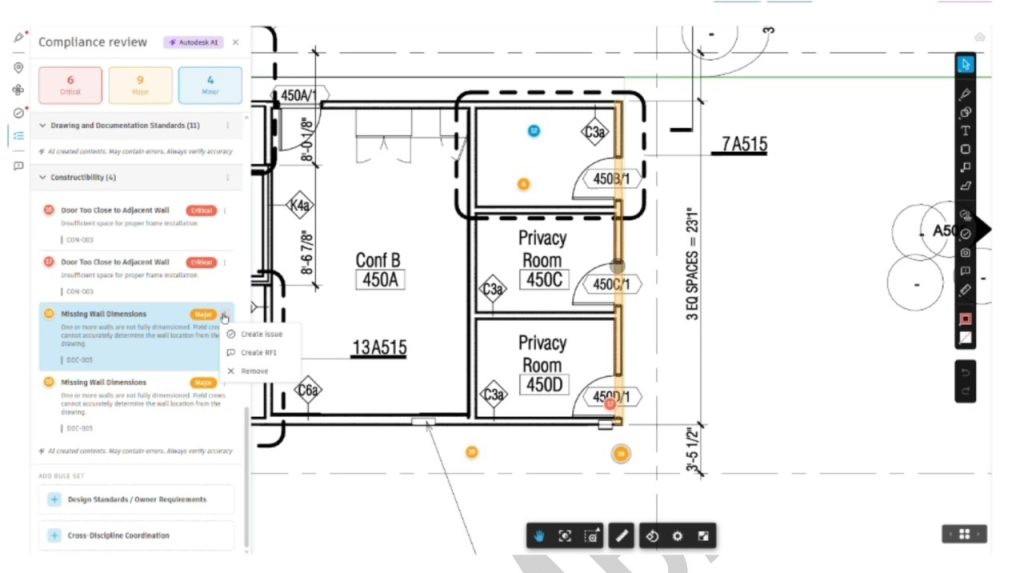
At Autodesk University 2026, the company confirmed that more of the work currently carried out in Revit will eventually move directly into Forma. Autodesk describes the transition as gradual, with continued investment in Revit rather than a sudden discontinuation. The distinction matters because Revit remains a critical production platform for detailed modeling, documentation and coordination.
From a BIM Application to an AEC Industry Cloud
The most important part of Autodesk’s strategy is not simply replacing one software package with another. Forma represents a different conception of how AEC software should operate.
Revit is fundamentally associated with model-based BIM. Architects and engineers construct increasingly detailed digital representations of buildings, coordinate disciplines through those models, and generate drawings and documentation from them. Forma, by contrast, is being developed around a connected, cloud-based, and outcome-oriented approach.
Autodesk wants project information to remain connected from early planning and feasibility studies through design, construction and eventually operations. Instead of treating the model as the centre of the workflow, the company is attempting to connect models with site information, analysis, project decisions, collaboration data and AI-assisted processes.
That shift reflects a broader transformation occurring across design software. BIM is no longer being treated simply as a more sophisticated replacement for CAD. Increasingly, software companies are attempting to turn project data into an active platform for analysis, automation and decision-making.
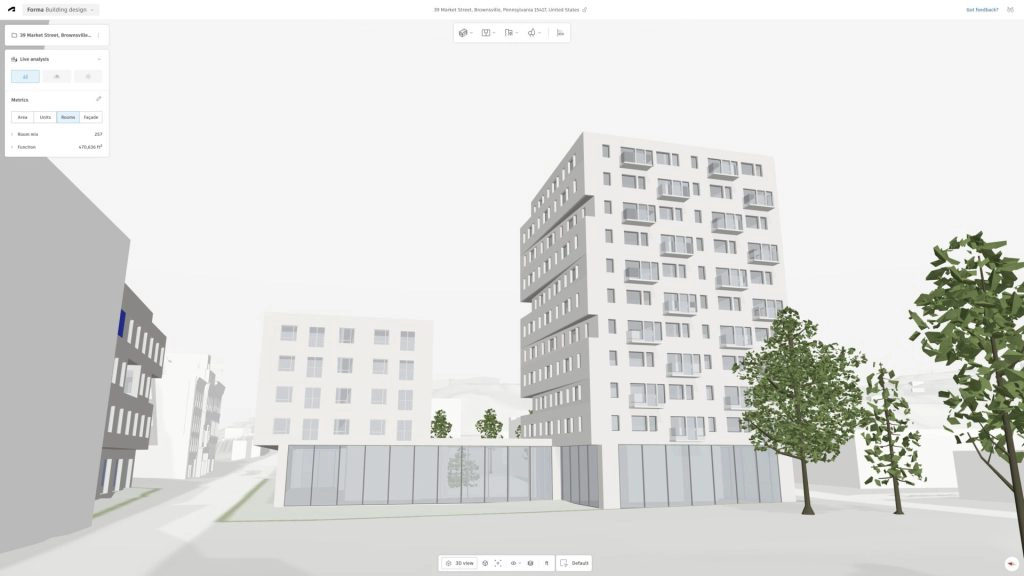
Revit Is Not Disappearing Tomorrow
For architecture practices heavily invested in Revit, the announcement does not mean that existing workflows suddenly become obsolete.
Autodesk has repeatedly stated during 2026 that it will continue investing in Revit. The software remains its principal environment for detailed, model-based BIM and detailed model authoring. The company’s current strategy is instead to make Revit increasingly connected to Forma.
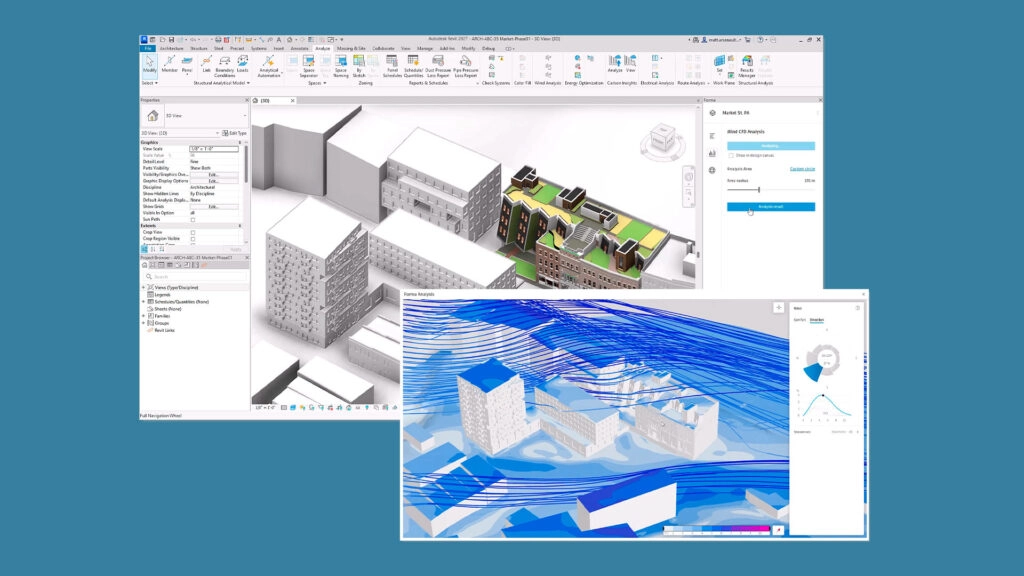
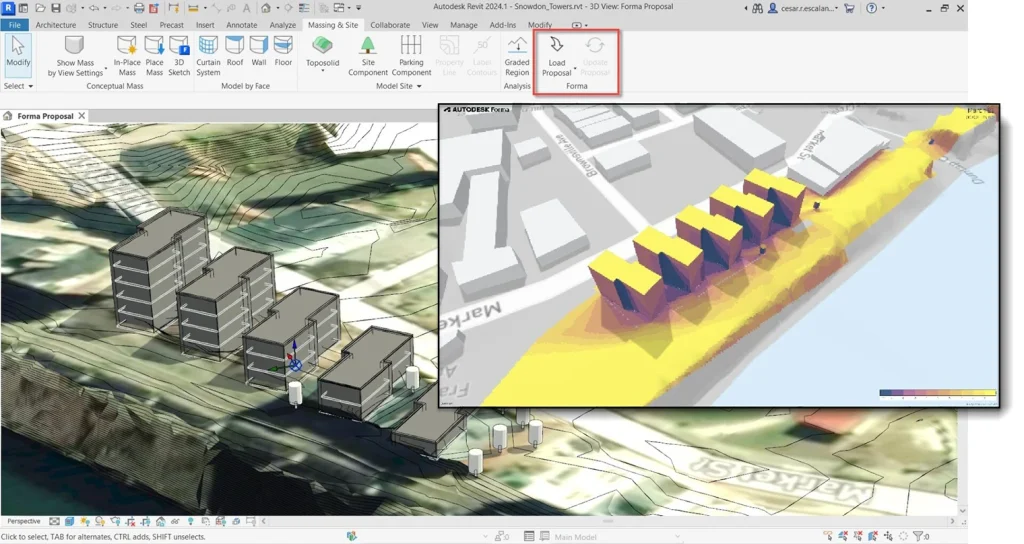
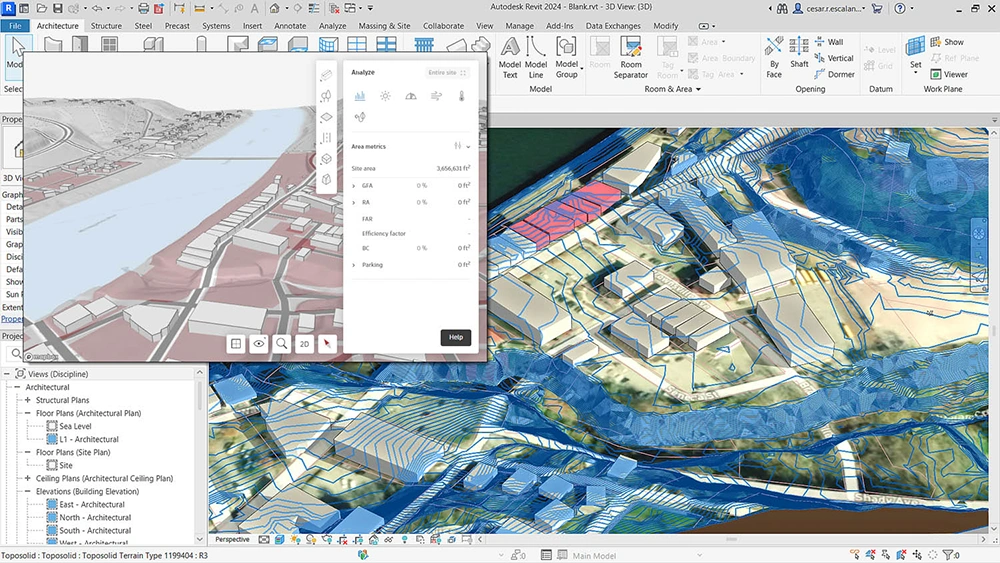
This relationship is already taking shape through the concept of the Forma Connected Client. Revit became the first application to take on this role, allowing users participating in the technology preview to access selected Forma capabilities while continuing to work within Revit.
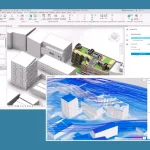
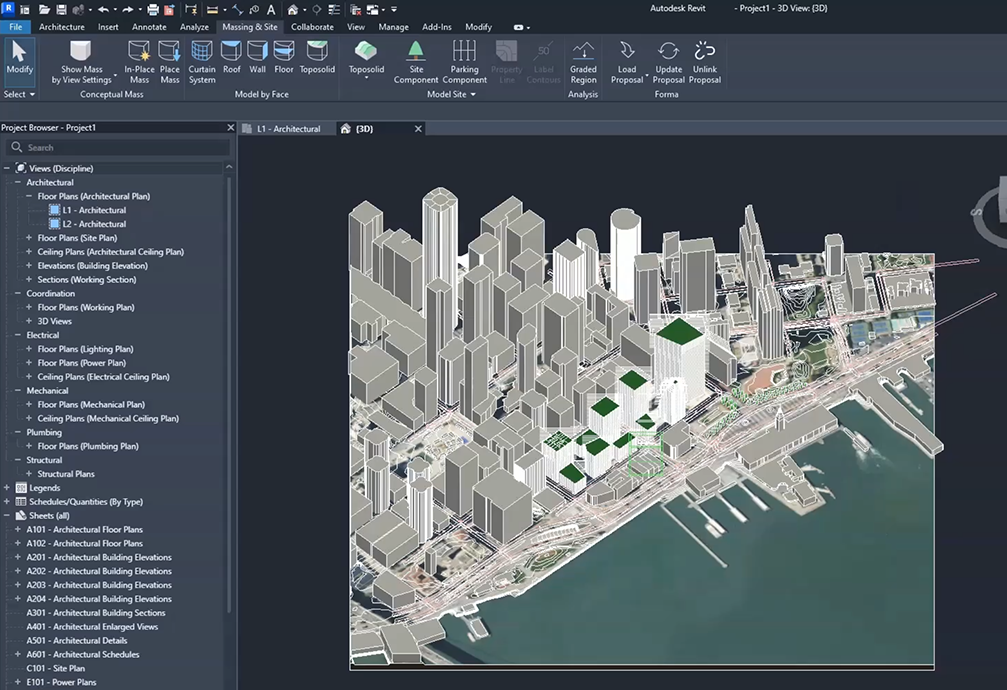
For designers, this could mean bringing terrain, surrounding buildings, parcel information and certain environmental analyses into detailed design without relying on traditional disconnected import and export procedures. Autodesk is effectively attempting to make the transition between conceptual and detailed design less fragmented.
The strategy is therefore less “Revit versus Forma” than “Revit inside a larger Forma ecosystem”, at least during the transition period.
Why Autodesk Wants to Move Work into Forma
The commercial and technological logic behind the shift becomes clearer when Autodesk’s recent announcements are considered together.
A conventional BIM workflow often separates stages. Early design may involve feasibility studies and massing, followed by increasingly detailed modeling, analysis, documentation, and coordination. Information can become fragmented as the project moves between applications and disciplines. Forma is intended to reduce that fragmentation.
Autodesk describes the platform as an industry cloud capable of maintaining project context across the AEC lifecycle. In this model, information generated during early planning can remain available when a project moves into detailed design and construction.
That continuity is particularly important for AI. Autodesk argues that useful AI for architecture and construction requires more than generic internet-trained models. It needs access to project-specific information, design decisions, requirements, site conditions, and other contextual data.
The implication is significant: the future competitive advantage of BIM software may depend less on how efficiently it creates geometry and more on how effectively it connects and interprets project information.
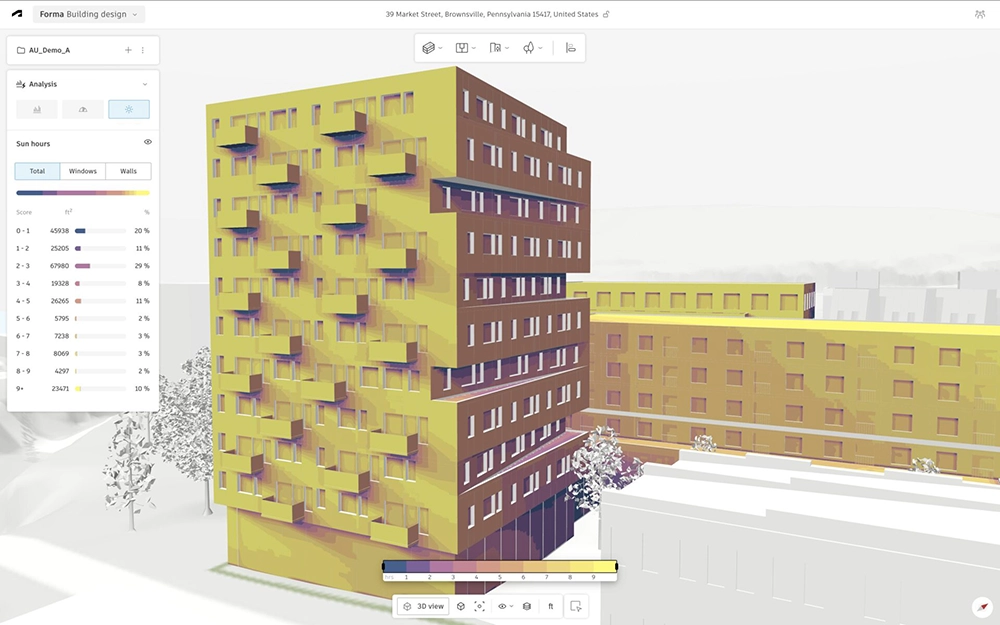
AI Is Becoming Part of the Transition
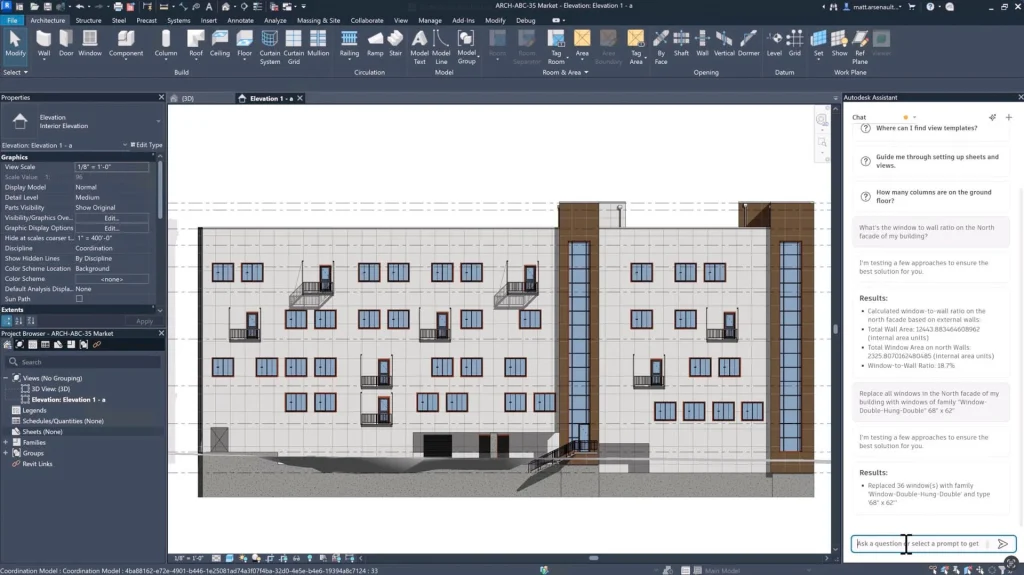
Autodesk’s Forma strategy is closely tied to its expanding use of artificial intelligence. The company has announced AI-supported workflows across both Forma and Revit, including tools designed to automate repetitive documentation tasks, assist with design exploration, and help users interrogate project information.
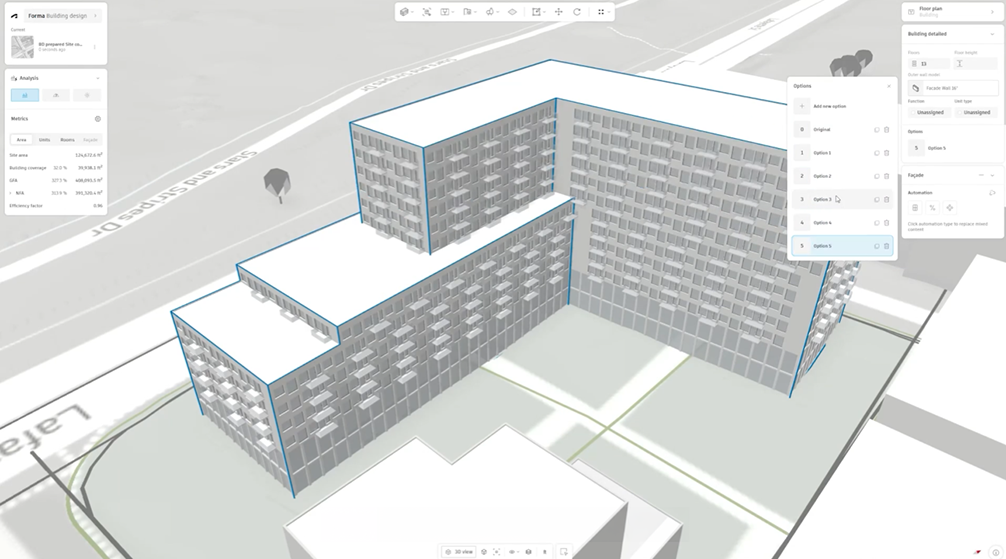
Within Forma, Autodesk is developing capabilities such as Building Layout Explorer and AI-assisted site workflows. In Revit, new AI features are aimed at tasks including room-element completion, annotation optimization, and documentation across multiple views.
The significance is not simply that software can now perform individual tasks automatically. The larger objective is to create an environment in which AI can operate using the project’s own information.
That could eventually change the architect’s relationship with BIM software. Instead of manually constructing every stage of a digital model and then running separate analyses, designers could increasingly describe objectives, constraints and performance requirements while software generates and evaluates possible solutions.
Naturally, this raises uncomfortable questions about authorship, verification and professional responsibility. Automating the tedious parts of BIM is attractive. Automating decisions that carry architectural, structural, regulatory or financial consequences is considerably more complicated.
Civil 3D Is Also Being Pulled into the Same Ecosystem
The shift is not limited to Revit. Autodesk has announced that Civil 3D will become another Forma Connected Client, strengthening the relationship between civil engineering, architectural design and the wider project environment. The company is also introducing Forma Street Design for early-stage street and transportation planning.
This matters because the building cannot be separated from its physical context. Roads, terrain, utilities, parcels and infrastructure directly influence architectural possibilities.
Autodesk’s strategy is therefore moving toward a shared environment in which civil, architectural, and construction information can remain connected rather than being repeatedly translated between specialized applications.
The company is also expanding connections with geospatial and subsurface information providers, reinforcing the idea that future BIM platforms will increasingly combine building models with information about the environments in which projects are located.
Forma Is Becoming More Than a Design Tool
Another important development happened earlier in 2026, when Autodesk Construction Cloud became part of the Forma platform.
Products including Autodesk Docs, BIM Collaborate Pro, Build and Takeoff were incorporated into the Forma naming and platform structure. Autodesk described the move as a platform evolution rather than a disruptive migration, stating that existing data, permissions, integrations and workflows would remain in place.
This provides an important clue about Autodesk’s ambition.
Forma is not being developed merely as a replacement for Revit’s modeling functions. Autodesk is attempting to construct an end-to-end AEC environment that connects planning, design, coordination, preconstruction, construction and project information management.
In that context, Revit becomes one important component within a larger system rather than the centre of the entire Autodesk AEC universe.
What This Means for Architecture Practices
For architectural firms, the immediate response should probably not be to abandon Revit. Autodesk itself is explicitly positioning Revit as a continuing production tool during the transition.
The more significant issue is long-term investment.
Firms developing BIM standards, templates, libraries, training programs and internal workflows may need to consider how much of their operation depends on a desktop-centric model-authoring environment.
The transition also raises questions about interoperability, data ownership, subscription models, cloud dependency and the practical consequences of moving more project intelligence into a vendor-controlled ecosystem.
There is an obvious benefit to having fewer disconnected tools. There is also a strategic risk in becoming increasingly dependent on a single platform. That tension will become more important as Forma expands.
The End of Revit or the End of Revit as We Know It?
The phrase “Revit replacement” can therefore be misleading.
Revit is unlikely to vanish in the near term. Autodesk’s own current position is that it will continue developing the software while gradually moving more workflows into Forma. The company describes this as a workflow-by-workflow evolution rather than a forced migration.
What may eventually disappear is not Revit itself, but its position as the unquestioned center of Autodesk’s BIM strategy. That distinction is crucial.
For decades, BIM development has largely revolved around increasingly sophisticated digital models. Autodesk’s current direction suggests that the next stage may be less about the model alone and more about the connected intelligence surrounding the model. Forma is being positioned as that environment.
A New Definition of BIM Is Emerging
Autodesk’s strategy ultimately points toward a broader transformation of BIM. The traditional BIM model answers questions such as: What is the building? What are its components? How are those components related?
The emerging cloud-based model attempts to answer additional questions: Why was this option selected? What alternatives were considered? How does the site affect the proposal? What happens if a requirement changes? Which project information is current? What should the team investigate next?
AI becomes more useful when those questions can be answered from a connected body of project information. This is why Autodesk’s Forma announcement is more consequential than a conventional software update. The company is effectively redefining where it believes BIM should live.
Revit remains an important part of that transition, but Autodesk has now made the destination considerably less ambiguous. Over time, more design, analysis, coordination and documentation functions are expected to move into Forma.
For architects, engineers and BIM managers, the important question is therefore no longer simply whether Revit will be replaced. It is whether the profession is prepared for a BIM environment in which cloud infrastructure, connected data, AI, and outcome-based design become as fundamental as geometric modeling once was.
And, because software apparently cannot simply do its job without reinventing the entire universe every few years, the next phase of BIM will require practices to rethink not only their tools but also the way they organise design information itself.