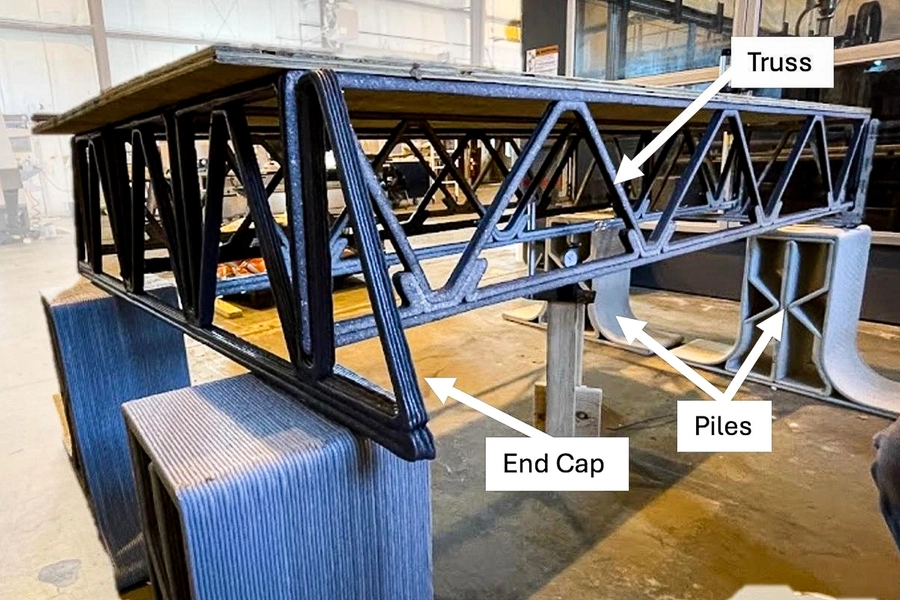
A new construction technology emerging from MIT is moving recycled plastic beyond experimental material research and into real-world infrastructure. Atlas Building Composites, an MIT spinout, has developed a robotic additive-manufacturing system capable of transforming discarded plastic into large-scale structural components. The technology recently reached an important milestone when the company supplied composite trusses for a 40-foot pedestrian bridge commissioned by the U.S. Army Corps of Engineers in a Massachusetts wetland.
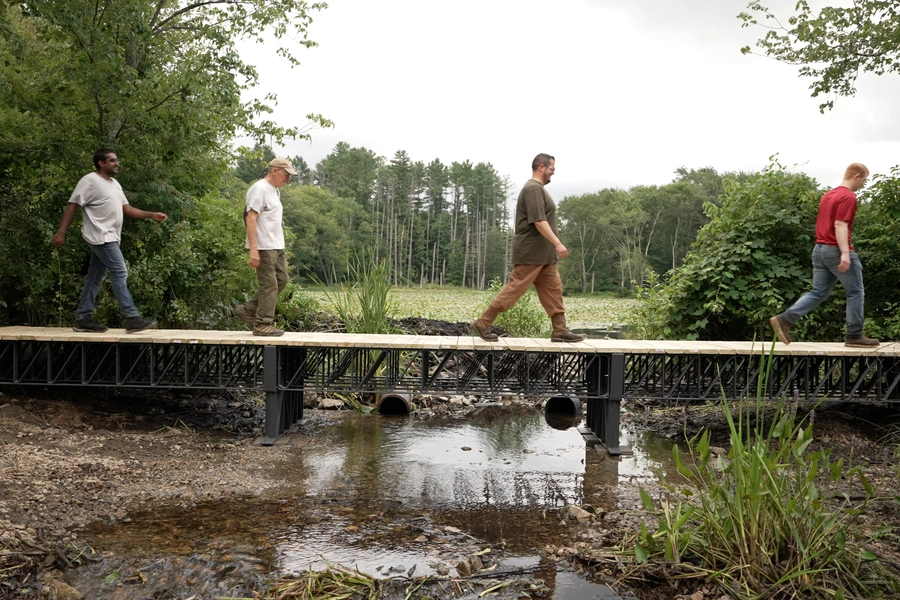
According to MIT, the bridge was installed in less than a day, demonstrating how digitally fabricated components could potentially reduce both manufacturing and construction time. Rather than treating plastic waste solely as a recycling problem, Atlas is positioning it as a potential feedstock for structural construction.
A Composite Material Built from Waste
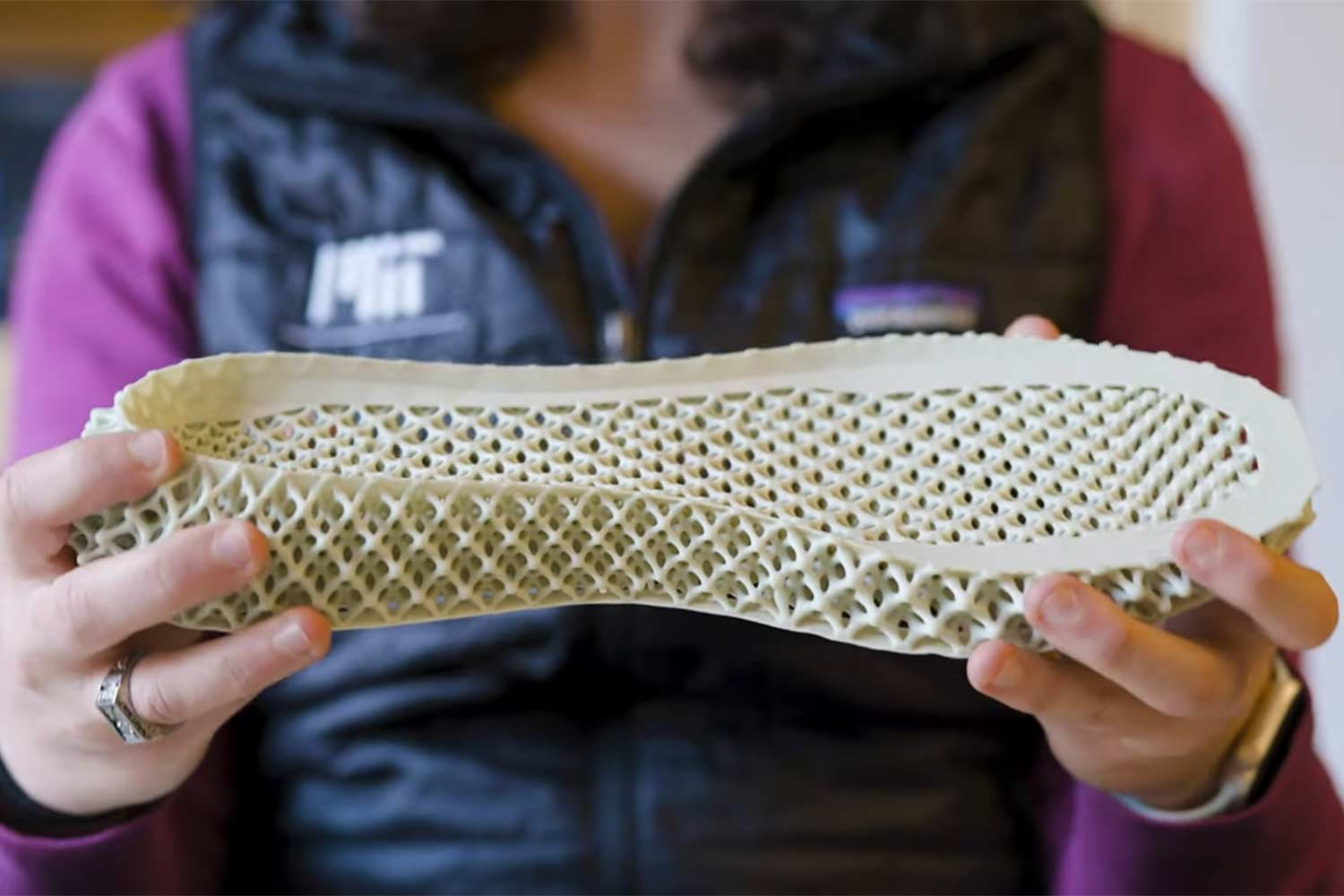
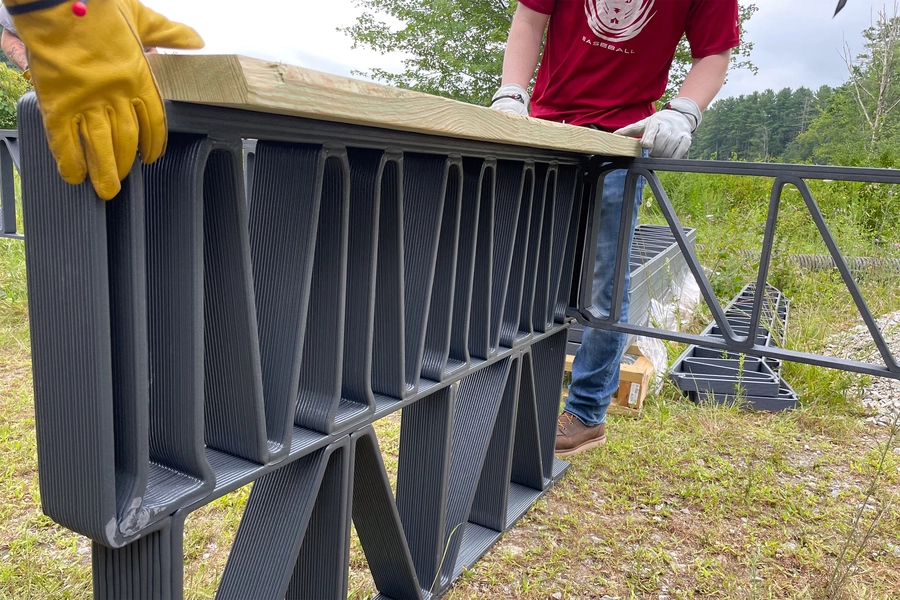
The company’s process begins with single-use plastic, which is shredded and melted before being combined with fiberglass. The resulting composite material is deposited through a robotic additive-manufacturing system that uses artificial intelligence to control fabrication.
This approach allows Atlas to produce relatively large components, including foundations, decking elements, and structural trusses. The manufacturing strategy is particularly relevant to architecture because it combines material recovery with computational fabrication. Instead of producing standardized components in conventional factories and transporting them across long distances, the system is designed around digitally controlled production that can potentially respond to local material availability and project requirements.
Research associated with MIT has demonstrated the structural potential of the approach. In one reported test, a digitally fabricated truss was produced in less than 13 minutes and supported more than 4,000 pounds. These results suggest that recycled polymer composites could have applications beyond non-structural architectural products.
From Centralized Production to Localized Manufacturing
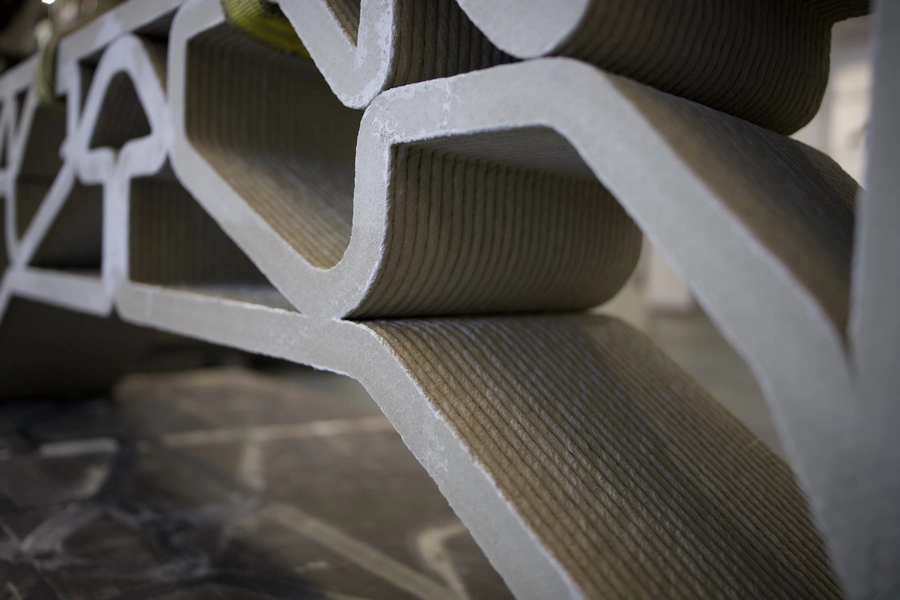
One of the more ambitious aspects of Atlas’s proposition is its vision for decentralized production. The company has proposed localized manufacturing “factory cells” that could eventually produce enough framing material for approximately one small house per day.
If technically and economically validated at scale, such a model could alter the relationship between construction, manufacturing, and material supply. Building components could potentially be fabricated closer to where they are needed, using waste streams generated within the same region.
For architecture, this raises a broader question about whether construction supply chains could become more geographically distributed. Digital fabrication already allows complex geometries and customized components to be produced directly from computational models. Combining that capability with locally recovered materials could extend the logic of digital manufacturing from design customization toward material circularity.
Beyond the Recycling Narrative
The technology should not, however, be presented simply as a breakthrough solution for plastic waste. Its environmental and architectural value depends on the entire material lifecycle.
Fiberglass reinforcement, for example, introduces another material into the composite and complicates questions surrounding embodied carbon, separation, recycling, and eventual disposal. Fire performance is another critical issue for any application involving structural building components. Building-code compliance, long-term durability, moisture exposure, maintenance, repairability, and structural performance under different environmental conditions will also need independent verification.
Atlas has reportedly projected production rates of approximately 150–200 pounds of material per hour, alongside a broader global network of distributed factories. These figures remain company projections and should therefore be distinguished from independently validated performance data.
What This Means for the Future of Construction
The significance of Atlas lies less in the idea of “recycling plastic” itself and more in the convergence of several emerging construction technologies. Circular materials, robotic fabrication, artificial intelligence, computational design, and localized manufacturing are being brought into a single production system.
The Massachusetts bridge provides an early demonstration of how such a system might operate outside the laboratory. Yet the more consequential test will be whether the technology can move from individual infrastructure projects to repeatable, code-compliant, economically viable construction at a larger scale.
The central architectural question is therefore not simply whether plastic waste can become a building material. It is whether robotic fabrication can create a new construction ecosystem in which regional waste becomes a structural resource and digital production becomes increasingly localized.
For architects and designers, this shifts attention from recycling as an isolated technical process toward the design of complete material cycles. From bottles to bridges, the emerging challenge is to understand where materials come from, how they are transformed, how structures perform over decades, and what happens when those structures eventually reach the end of their useful lives.