


A ruined Greek temple rarely arrives as a complete drawing set. It comes as fallen drums of stone, partial foundations, weathered capitals, scattered inscriptions, and a field of unanswered questions. For centuries, archaeologists have worked through these fragments with patience, comparison, and informed imagination.
Georgia Tech researchers are now developing AI and machine-learning tools to support that work. Their goal is not to produce polished ancient-Greece images from a text prompt. It is to help archaeologists and classical-architecture specialists study how temples, theaters, houses, and civic structures were assembled, proportioned, and transformed over time.
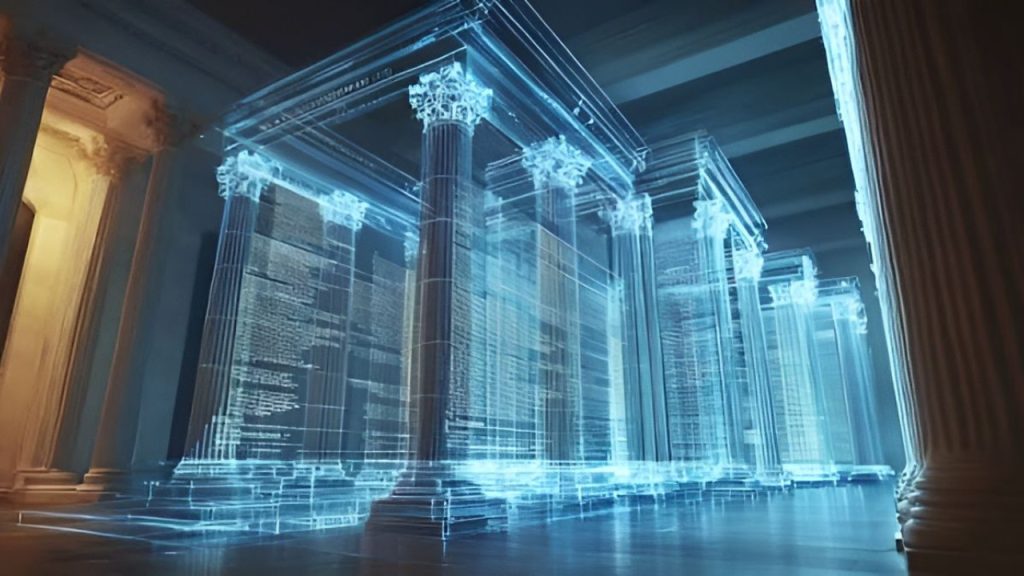
That difference matters. The project treats ancient architecture less like a lost picture and more like a language with rules. For computational design, parametric architecture and heritage professionals, this opens a compelling possibility: reconstruction can become a transparent process of testing geometry, evidence and uncertainty rather than a single visual claim about the past.
Ruins are incomplete datasets
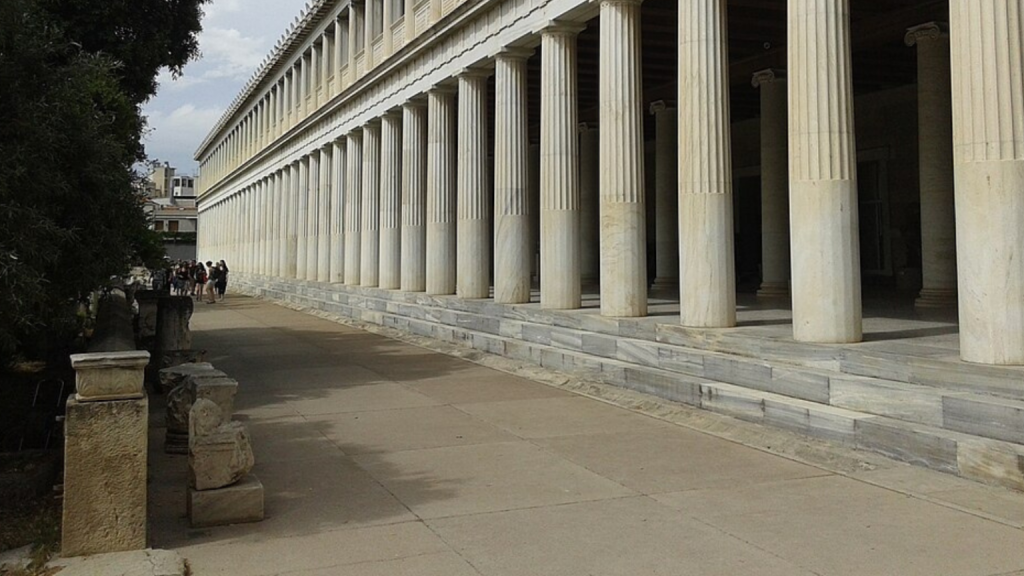
Ancient architecture is difficult to reconstruct because evidence is uneven. A site may preserve a foundation but lose its roof. It may retain column fragments without the entablature that explains their original relationship. Decorative pieces can survive far from the place where they were installed, while later repairs may blur the structure’s original chronology.
Traditional reconstruction is rigorous, but it is also labor-intensive. Archaeologists cross-reference measurements, material traces, historical accounts, site plans, comparable buildings, and prior scholarship. Every proposed capital, wall, or roofline carries a degree of confidence.
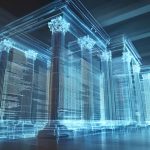
Georgia Tech’s project enters this space as an analytical aid. The research aims to create models that understand relationships in classical architecture: how elements connect, what proportions are likely, which arrangements conform to known design rules, and where the available evidence remains insufficient.
In computational terms, a ruin becomes a partial dataset. The challenge is not simply to fill empty areas. It is to infer possible systems while preserving the difference between documented material and informed hypothesis.
Architecture as a rule-based system
The project draws on a linguistic idea: architecture can be understood as a rule-based system, much like language. In ancient Greek architecture, the relation between parts was rarely arbitrary. Columns, capitals, friezes, roof structures, steps, and internal rooms were shaped by conventions, proportional frameworks, available materials, and local building practices.
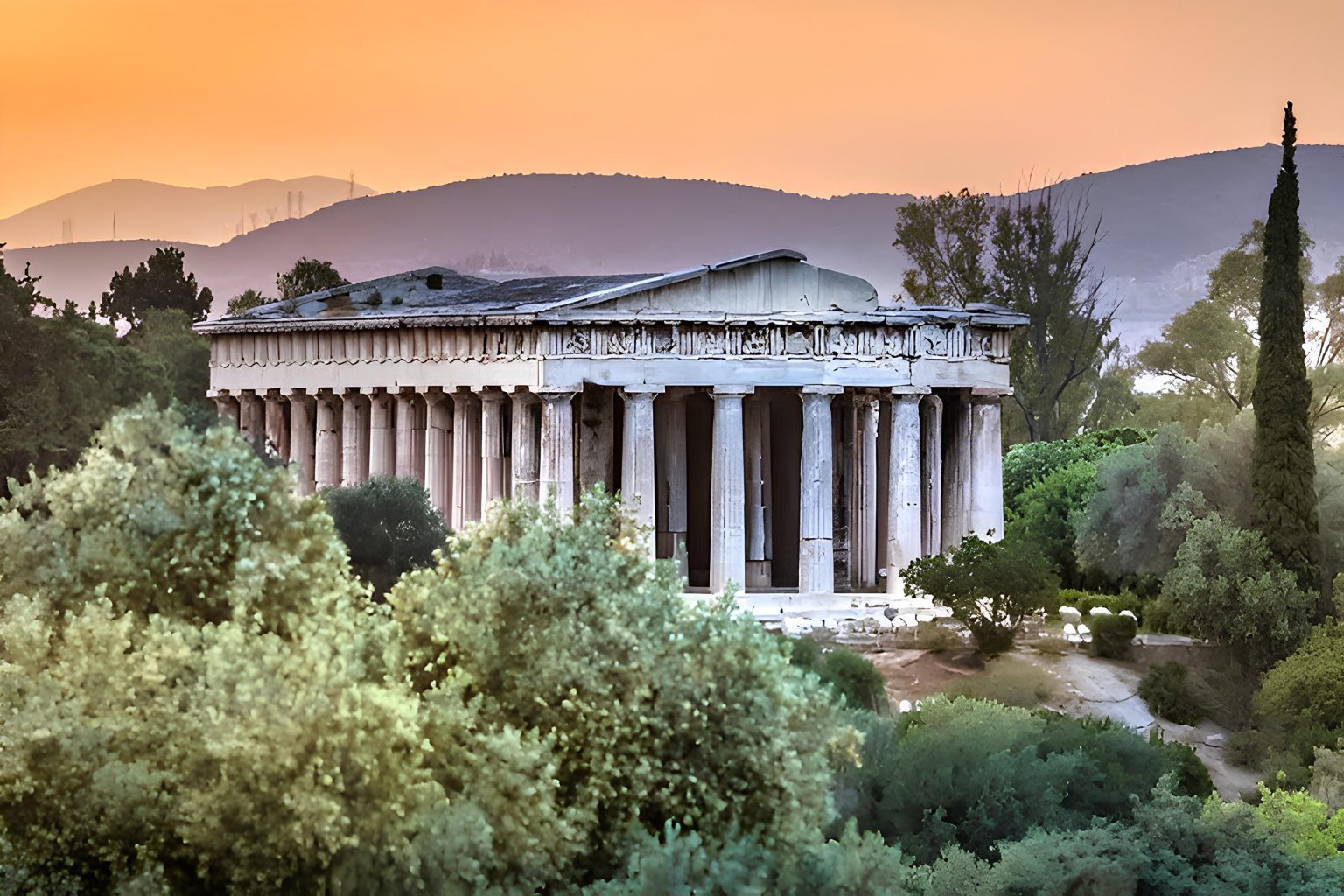
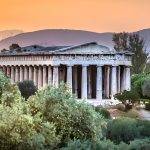
A Doric temple, for example, is not a random collection of stone components. Its dimensions and elements follow a structured vocabulary. The spacing of columns affects the rhythm of the façade. The proportions of the stylobate influence the building’s visual balance. The entablature, triglyphs, and metopes form a coordinated upper register. Deviations can be meaningful, revealing a regional method, a construction adjustment, or a particular historical moment.
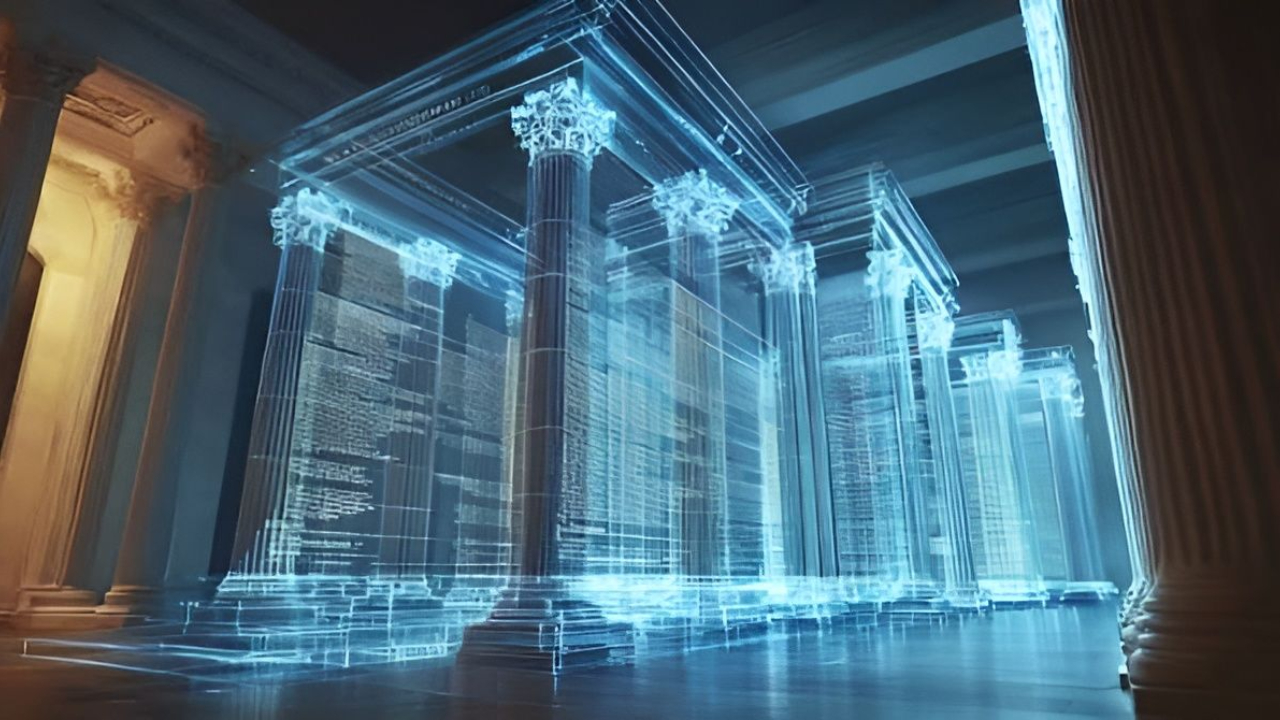
This is where AI models could provide useful assistance. Instead of generating an image that merely resembles antiquity, the system could evaluate whether a proposed reconstruction is geometrically and typologically plausible. It could identify missing components, compare alternative configurations and show which design decisions are strongly supported by evidence.
For parametric designers, the parallel is obvious. Contemporary computational models define relationships between variables: change the span, and the structural depth responds; adjust solar exposure, and the façade pattern evolves. Georgia Tech’s work applies a related logic in reverse. Rather than designing forward from parameters, it studies fragments to identify the parameters that once governed a building.
The Ancient Agora as a living laboratory
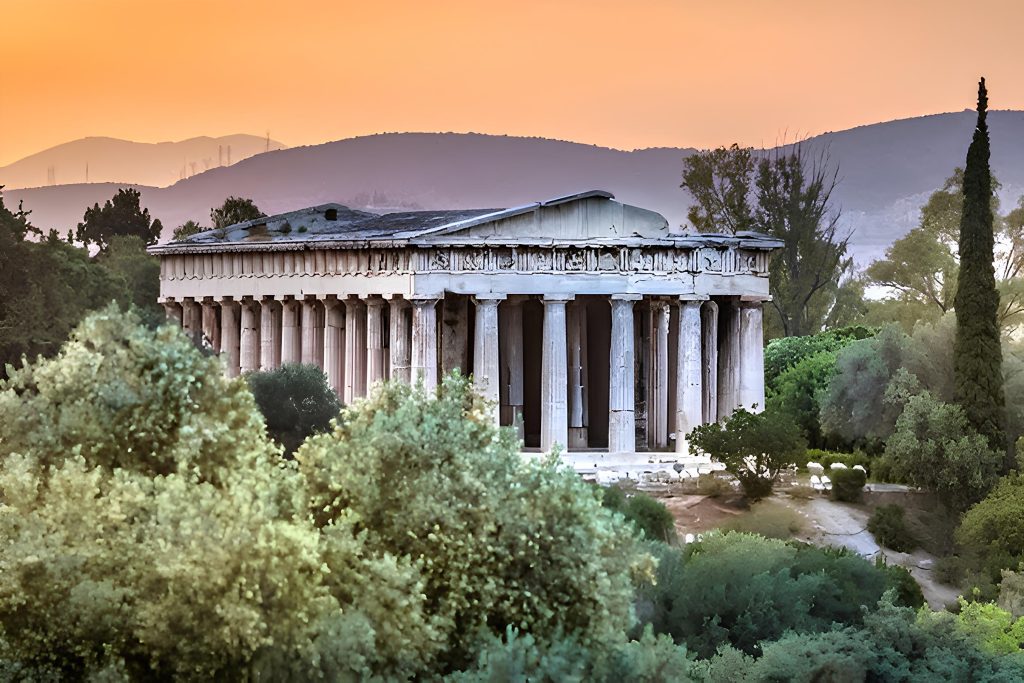
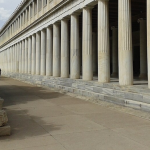
The research focuses on Athens’ Ancient Agora, one of the most significant archaeological sites in Greece. The Agora was a civic and social center where commercial activity, political debate, religious life, and public gathering overlapped. Its buildings included stoas, temples, offices, public facilities and domestic structures, each contributing to a dense urban environment.
That complexity makes the site an appropriate testing ground. Reconstructing a solitary monument is one task. Understanding an urban ensemble is another. Buildings change over generations, ruins overlap with later interventions, and spatial relationships matter as much as individual façades.
An AI-assisted method could help specialists study structures related to streets, gathering spaces, and neighboring buildings. It may also assist with visualizing phases of development over time, allowing researchers to separate what existed in one period from what appeared later.
For the wider AEC audience, that is a powerful model of data-rich urban analysis. Today’s architects use computational tools to test future districts under changing zoning, environmental and mobility constraints. Archaeologists face a comparable challenge when reading cities from incomplete physical records. Both fields depend on making relationships visible.
Beyond the convincing render
The heritage sector has become increasingly alert to the danger of persuasive but unsupported visualization. Digital tools can now generate photorealistic images quickly, and that speed can obscure an essential issue: an image may look credible while remaining historically weak.
Georgia Tech’s stated direction is more careful. The aim is to work with geometric relationships and design principles, rather than treating reconstruction as a surface-level exercise in generating pixels. This puts evidence ahead of atmosphere.
A useful reconstruction system should show its workings. It should distinguish between an excavated column base, a surviving fragment attributed through comparison, and a speculative roof configuration. It should enable users to test alternatives rather than present one final model as undisputed fact.
This is a critical lesson for design technology in general. Computational outputs become trustworthy when assumptions are visible. Whether the task is heritage reconstruction, structural optimization, or urban modeling, a black-box result is less useful than a system that lets experts inspect inputs, constraints, and uncertainty.
What it means for computational design
The Georgia Tech research points towards several applications that could influence digital heritage and architectural practice.
Evidence-led parametric models: Reconstructions can encode measurements, material data, proportions and historical references in a flexible model rather than a static 3D scene.
Alternative scenario testing: Archaeologists can compare several possible roof pitches, column spacings or room layouts against the same evidence base.
Digital twin methods for heritage: Historic sites can be recorded and studied as evolving information models that connect geometry with sources, conservation records and interpretive notes.
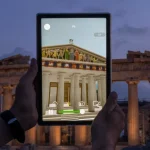
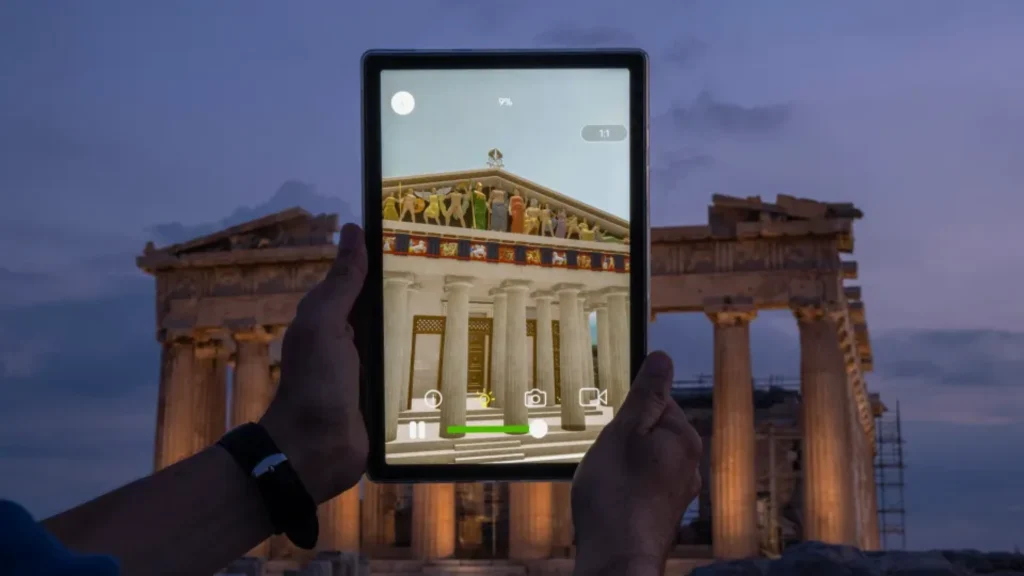
Better public interpretation: Museums and AR experiences can present multiple reconstruction options, showing visitors how knowledge is built rather than delivering a single simplified story.
New interdisciplinary workflows: Archaeologists, historians, architects, computer scientists and visualisation specialists can work from a shared system of evidence.
The key is that the technology remains accountable to disciplinary knowledge. A model can calculate relationships at scale. It cannot replace the archaeological judgment required to interpret a site’s cultural, political and material context.
A $225,000 research step, not a finished tool
The Georgia Tech team secured $225,000 from the National Endowment for the Humanities earlier in 2026 to develop the work. The funding signals institutional confidence in the approach, but it is important to be precise about the project’s current stage.
The researchers are still developing the models. No completed evaluation study, public dataset, or benchmark proving reconstruction accuracy has yet been released. This is early research, not a finished platform that can automatically rebuild ancient Greece.
That restraint should be seen as a strength. Heritage reconstruction requires time, specialist validation, and peer review. Claims of accuracy must be earned through transparent testing against known structures and independent expert assessment.
The ambition is considerable, though: to provide archaeologists and classical-architecture experts with stronger analytical tools for studying a broad range of ancient Greek buildings. If realized carefully, such tools could make complex reconstruction logic more accessible without flattening the ambiguity that makes archaeology intellectually honest.
Rebuilding knowledge, not just buildings
Georgia Tech’s AI reconstruction research is most interesting when viewed as a new kind of architectural drawing. It does not simply show what an ancient building may have looked like. It maps the relationships, rules and evidence that make any reconstruction arguable.
For computational designers, the project offers a timely reminder. Technology is at its most valuable when it helps experts ask better questions. In the Ancient Agora, the question is not, “Can a system generate a temple?” It is, “What can fragments tell us about the design intelligence that made a temple possible?”
That is a far more demanding task. It is also a more meaningful one.