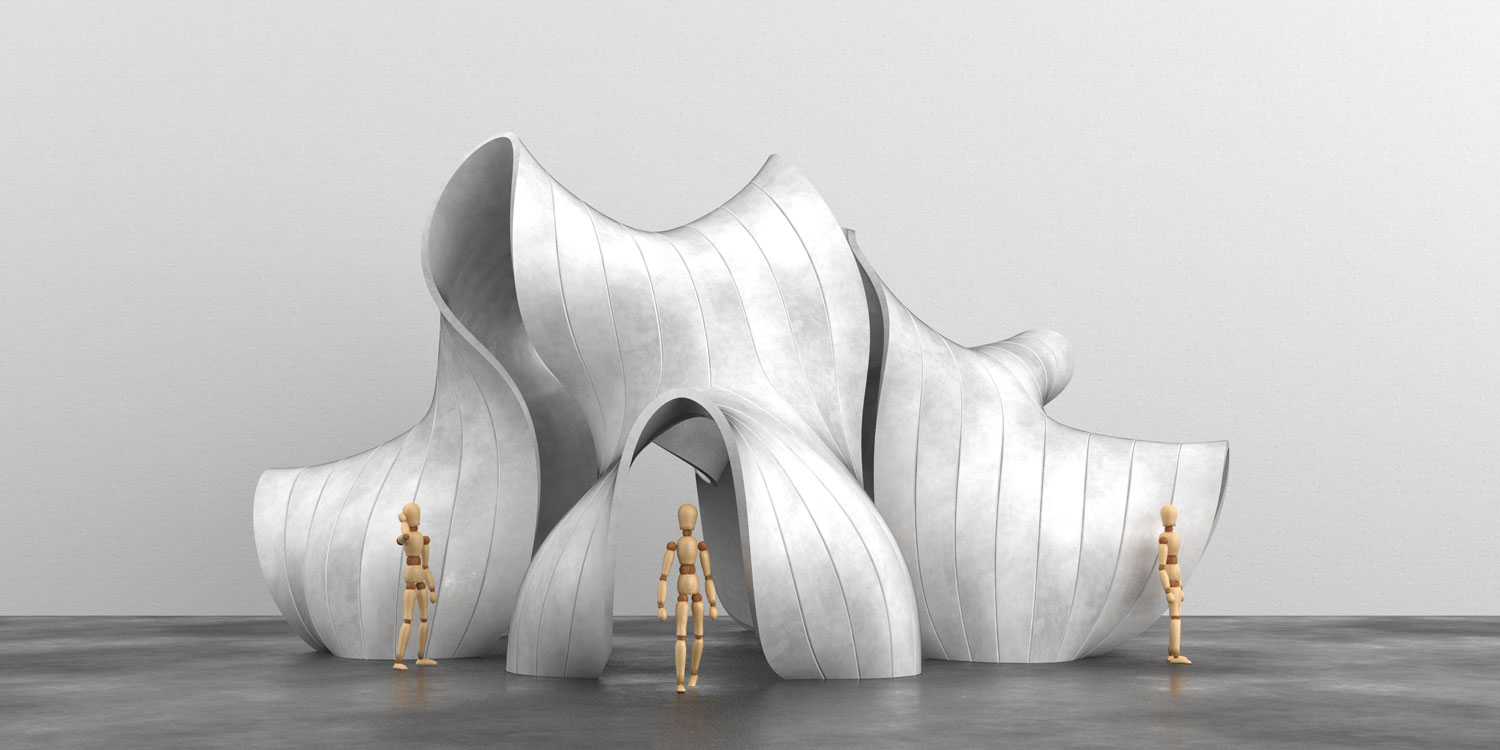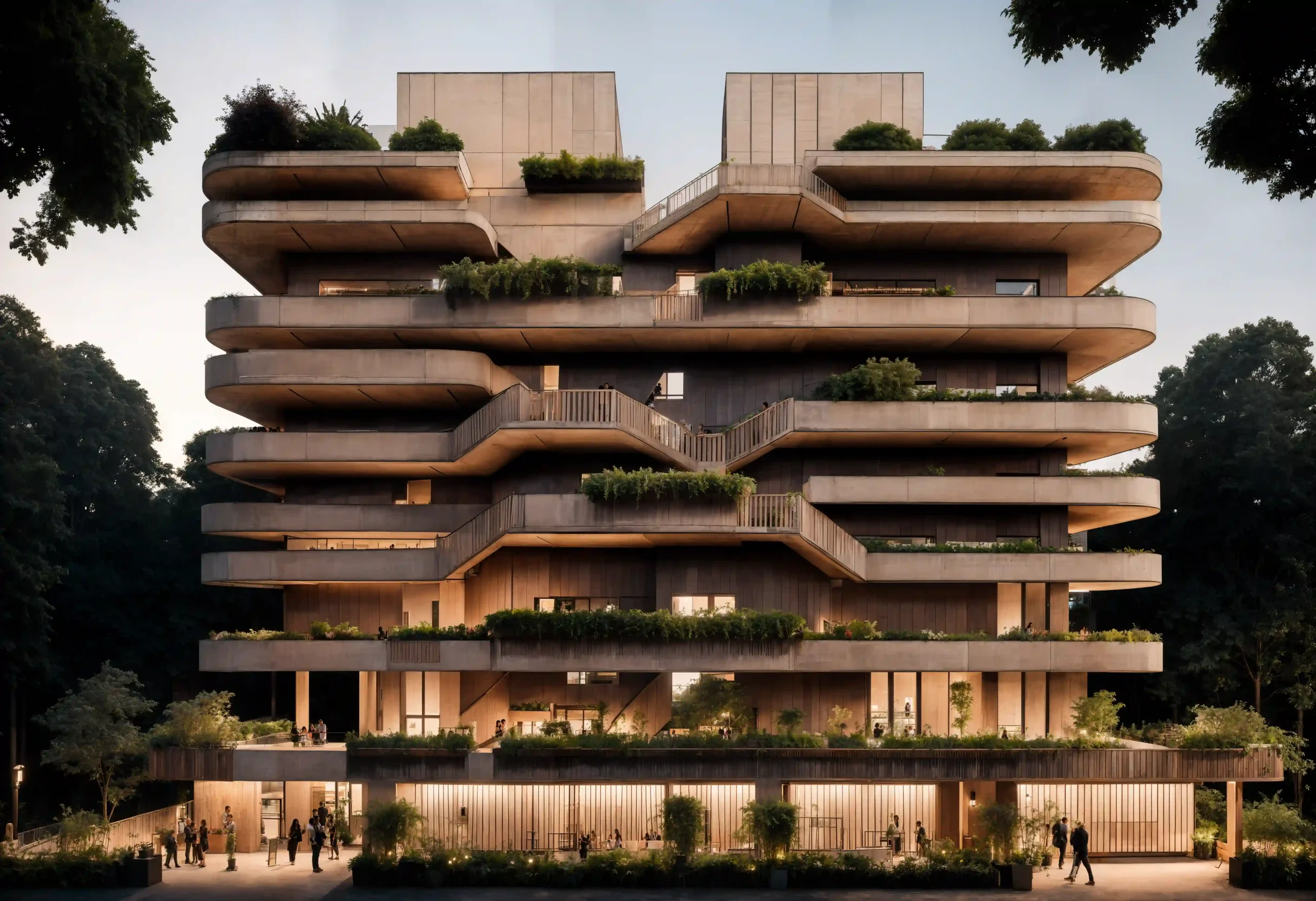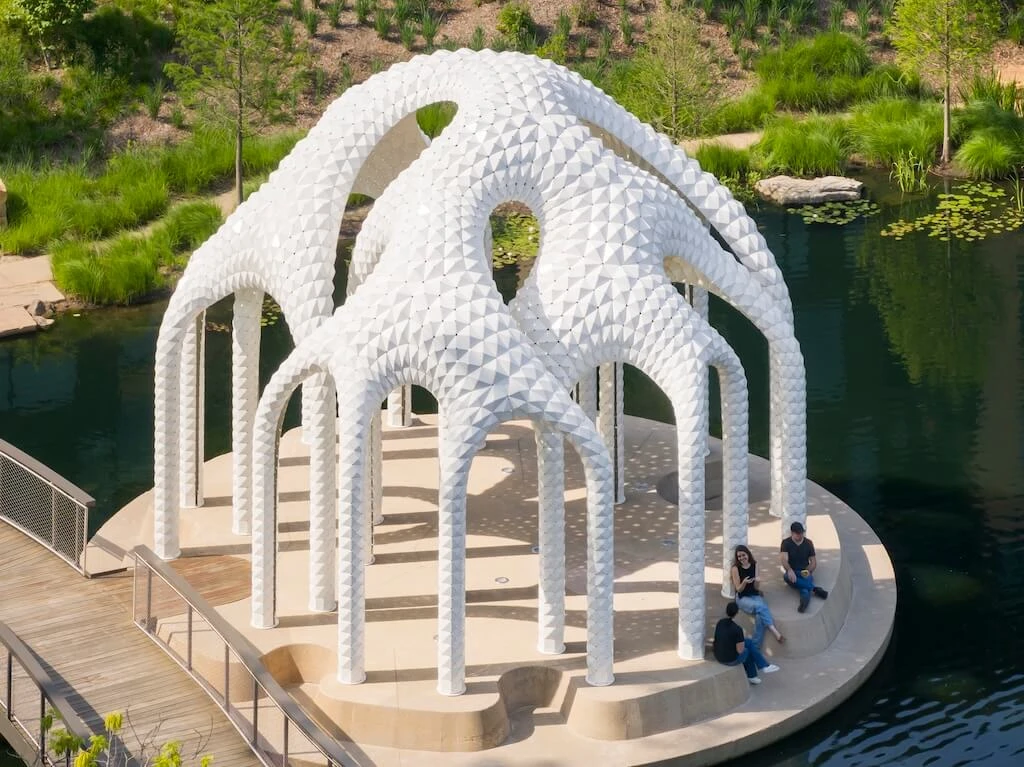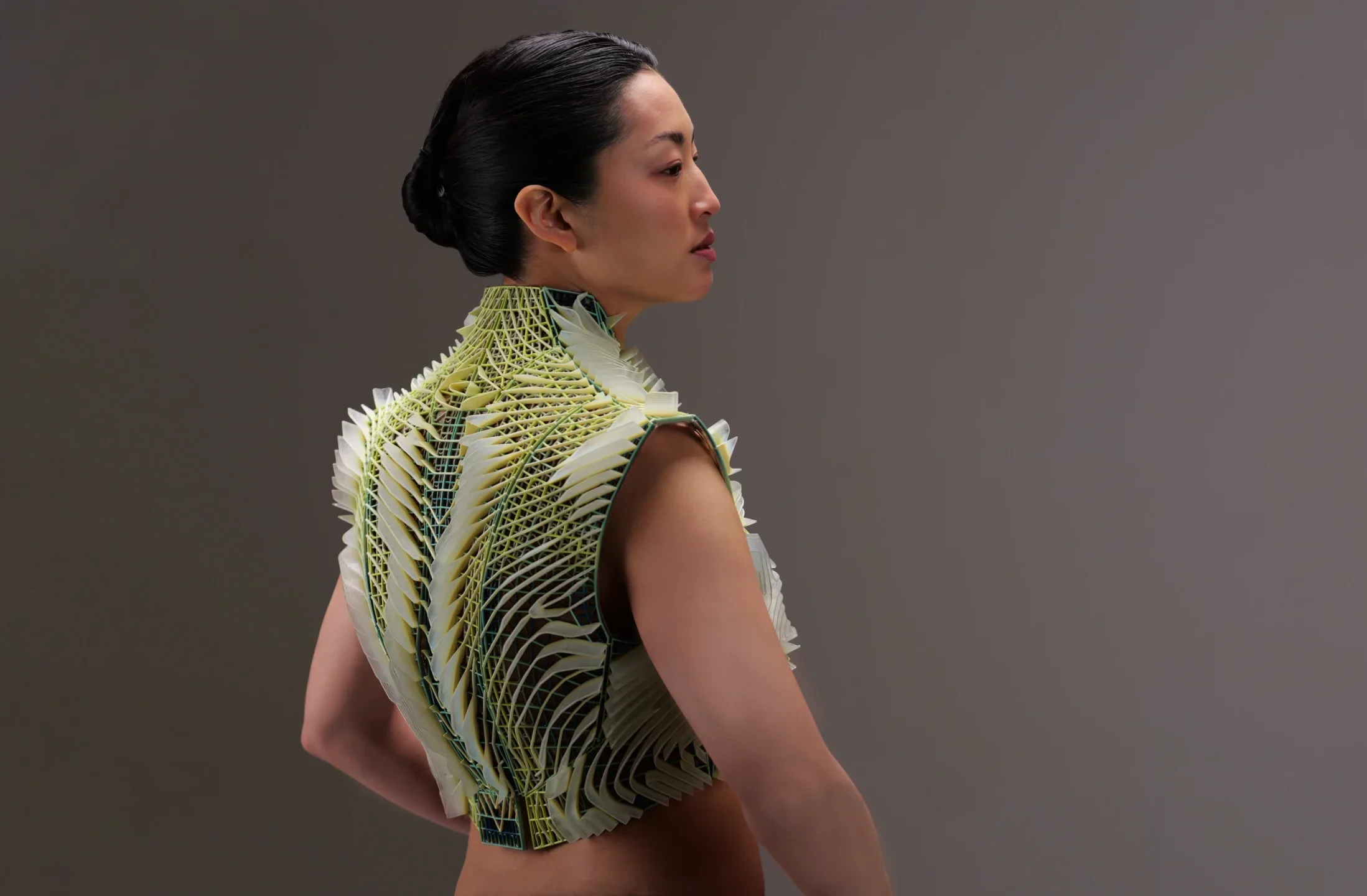

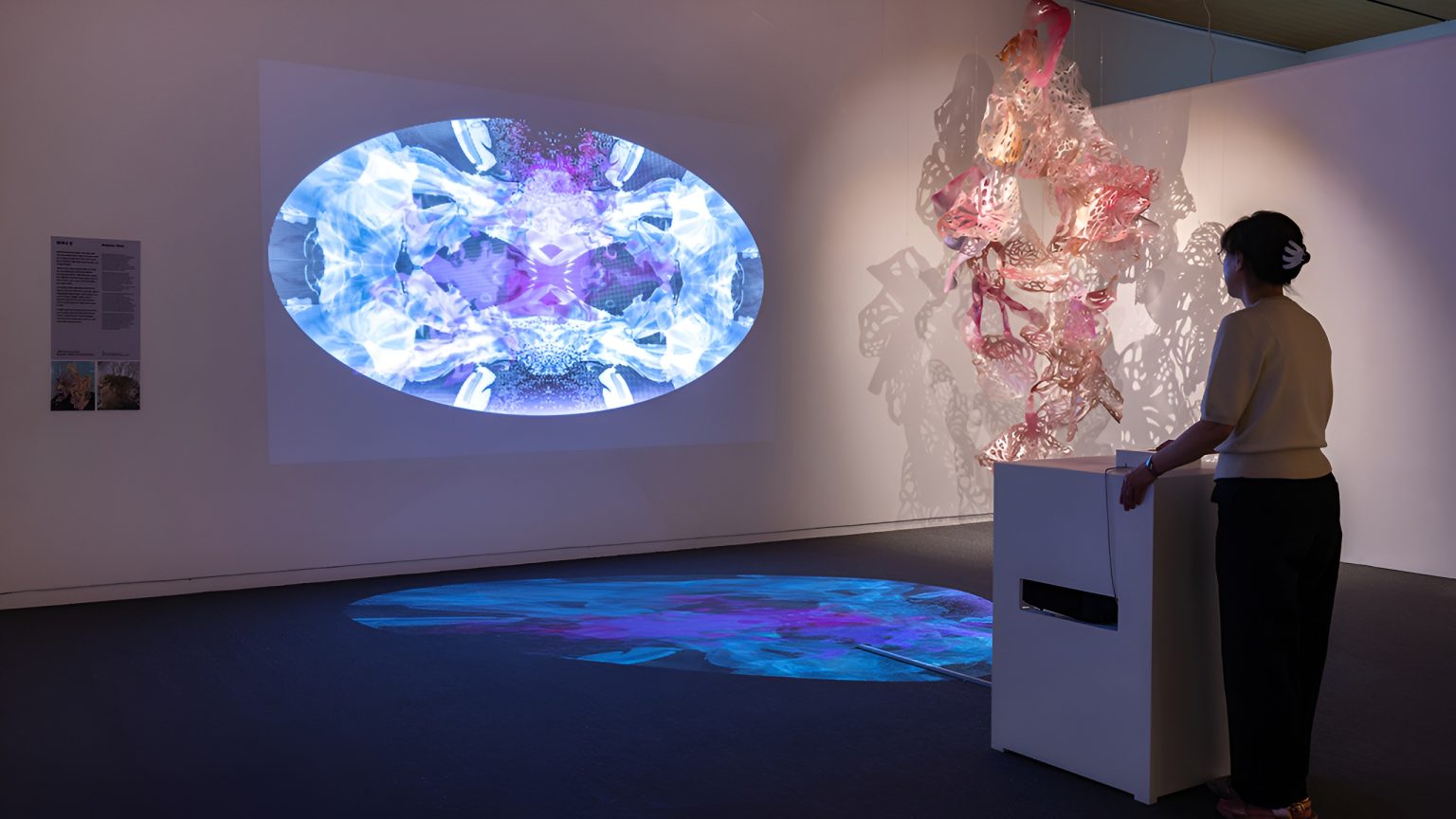

At the Korea Foundation Gallery in central Seoul, an architectural image can become a fabricated object, an archaeological fragment can become a responsive environment, and computational geometry can carry the memory of craft. Crossing Grounds: Art, Design, and Technology avoids the familiar spectacle of digital design for its own sake. Instead, it asks a more consequential question: what happens when computation enters a conversation with materials, heritage, movement, and lived experience?
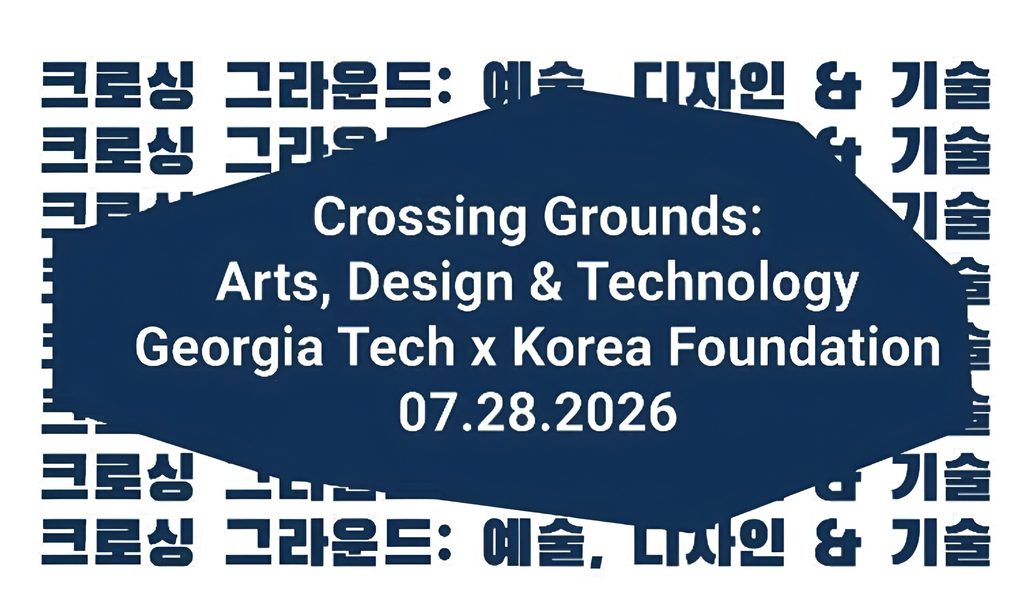
Presented by Georgia Institute of Technology and the Korea Foundation, the exhibition brings together 16 research projects by 22 artists, architects, designers, scientists, engineers and technologists. Co-curated by Hyojin Kwon and Birney Robert, with Santana Nash as assistant curator, the show runs from 28 July to 11 September 2026 at the Korea Foundation Gallery in the KF Global Center, Seoul. Admission is free.
For architects, computational designers and digital-fabrication practitioners, the exhibition offers an important counterpoint to the common language of speed, efficiency and automation. Its strongest work treats computation as a medium of translation: translating image into geometry, historical knowledge into interaction, data into sensory form and material behaviour into new architectural possibilities.
1. Image-based design becomes a construction method
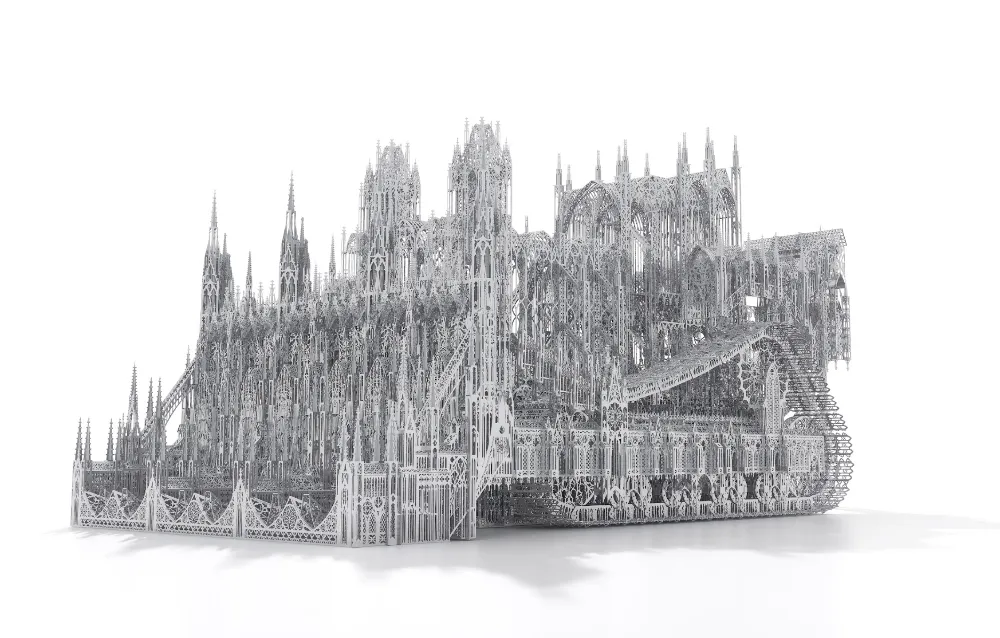
One of the exhibition’s central propositions is that an image does not have to remain flat. Within computational design, photographs, scans, drawings and visual datasets can become inputs for geometry, fabrication logic and spatial systems.
This matters because image-based workflows are changing the traditional sequence of architectural production. In a conventional process, the designer begins with an idea, drafts geometry and later tests whether it can be built. Image-based computation can begin somewhere else: a texture, a shadow, a landscape scan, a hand drawing or a visual pattern can generate the initial rules of a form.
At Crossing Grounds, image-based design and fabrication appears as part of a wider architectural research agenda. The significance is not a polished rendering. It lies in the ability to transform visual information into a material instruction.
For parametric designers, this expands the vocabulary of the model. Geometry can respond to the tonal density of an image, the contours of a terrain scan or the irregularity of an existing façade. The result can escape the repetitive smoothness often associated with scripted design and enter a more textured relationship with context.
2. Machine vision gives architecture new eyes
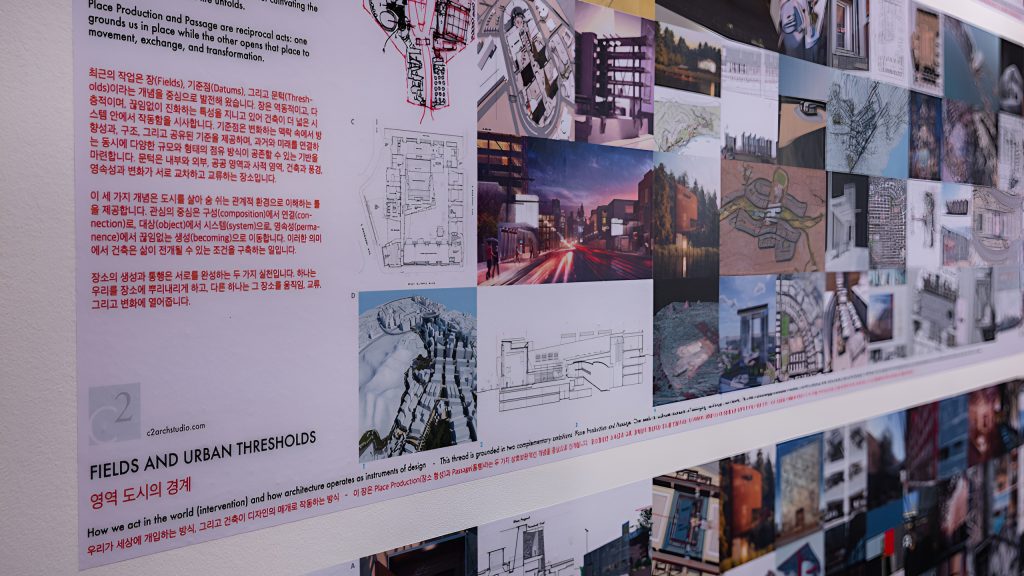
Machine vision is usually discussed in terms of industrial inspection, autonomous vehicles and security systems. In an architecture exhibition, it acquires a different role: a way of seeing space, material and human activity through computational perception.
The architectural projects included in Crossing Grounds explore machine vision alongside digital fabrication and computational geometry. This points toward a practice in which buildings and installations are no longer passive recipients of data. They can sense, interpret and respond.
Imagine a fabrication workflow where a camera scans a timber component before machining, identifies its knots and grain, then adjusts a cutting path to work with the board’s particular character. Or consider a public installation that tracks movement and changes light, sound or projection as visitors gather around it. In both cases, machine vision becomes part of design authorship.
This is especially relevant in Seoul, a city where high-density urban life, digital infrastructure and rapid physical change coexist. The exhibition’s work does not suggest that every room needs a camera or every façade needs an algorithm. It shows that computational perception can help designers understand the physical world with greater precision before intervening in it.
3. Computational geometry moves beyond the parametric cliché
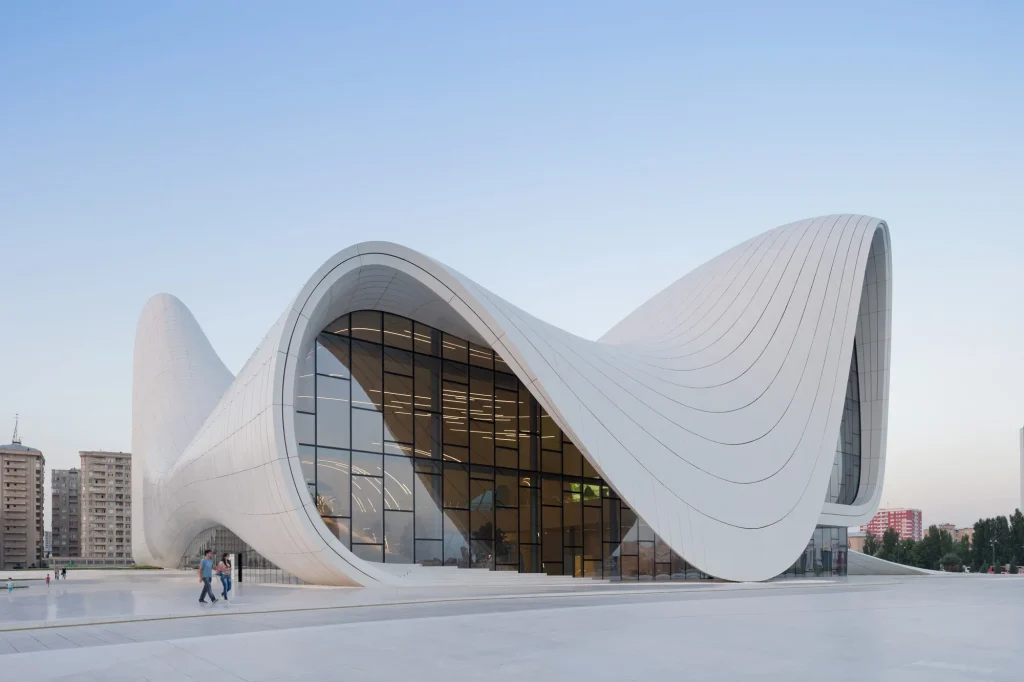
Computational geometry has often been reduced to a visual style: fluid surfaces, intricate lattices and complex repetitions. That reading misses its real value.
At its best, computational geometry is a way to negotiate competing constraints. It can coordinate structural performance, daylight, fabrication limits, material thickness, circulation paths and environmental conditions within a single evolving design system.
The Seoul exhibition positions computational geometry among broader questions of culture, representation and material production. That framing is useful because it places form back into a larger architectural purpose.
A grid can be tuned for acoustic performance. A shell can be subdivided around available sheet sizes. A façade pattern can respond to solar exposure and local viewing distances. A robotic toolpath can be generated from the geometry of a non-standard part. These are not decorative operations. They are forms of coordination.
For the computational design community, the project selection suggests a welcome shift: complexity only becomes meaningful when it produces a more thoughtful relationship between design intention, fabrication and occupation.
4. Digital heritage turns archives into active spaces
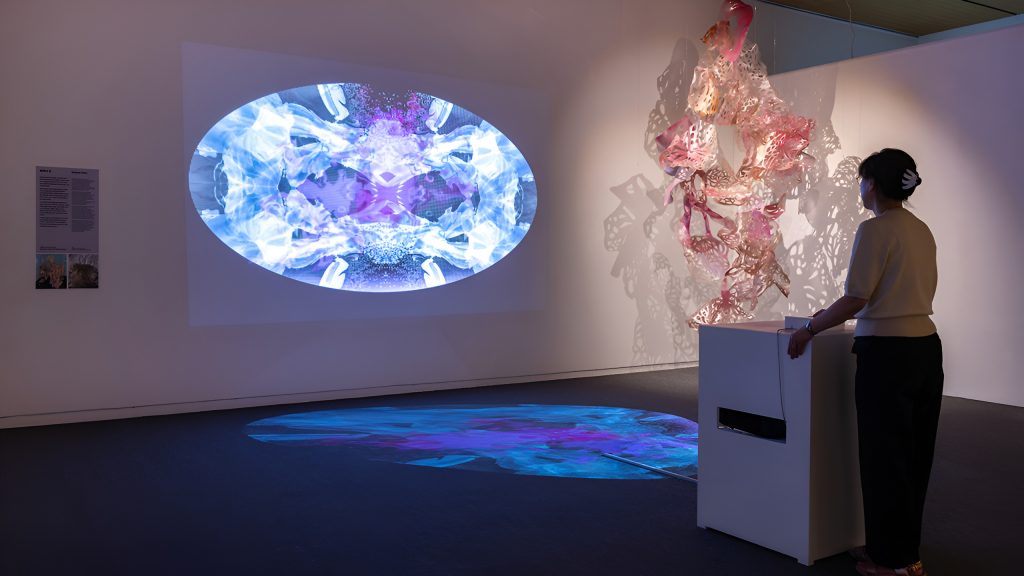
The exhibition’s emphasis on digital heritage is one of its most compelling threads. It considers how archaeological fragments, historic artefacts and cultural records can be translated into interactive environments.
Digital heritage is sometimes mistaken for preservation through scanning: capture an object, store the file, create a virtual model and call the work complete. But the more ambitious possibility lies in interpretation. A scan can become the beginning of a new public encounter rather than the end of archival work.
A fragmented object can be reconstructed as an immersive projection. A historic craft pattern can be analysed as a set of generative rules. A lost building can be experienced through a responsive model that makes uncertainty visible instead of hiding it.
This approach has major relevance for architecture in Korea and beyond. Cities are continually reshaped by redevelopment, infrastructure projects and changing land values. Computational archives can hold material evidence of what has disappeared, while interactive exhibitions can make that evidence available to broader publics.
The strongest digital-heritage work does not simulate the past as a theme-park backdrop. It acknowledges gaps, fragments and contested histories. It asks visitors to consider what has been preserved, what has been altered and whose stories remain absent.
5. Material craft meets digital fabrication
The meeting point between craft and computation is one of the most productive areas in contemporary design. Crossing Grounds explicitly brings traditional craft practices into contact with computational design and material science.
This matters because the most interesting digital fabrication does not erase the hand. It can reveal material knowledge that industrial standardisation often ignores.
A ceramic process may inform a computational model of shrinkage. Textile techniques may inspire flexible structural systems. Wood grain can shape a robotic milling strategy. A craft pattern can become a rule set that produces variation rather than identical repetition.
The key word is reciprocity. The computer does not “improve” craft from above. Craft changes the computational system by introducing material irregularity, embodied knowledge and cultural specificity.
For architects working with parametric tools, this offers a useful reminder: a model is not the object. Materials bend, crack, expand, absorb moisture and age. A fabrication process has tolerances. A maker has knowledge that may never appear in a script. The value of computation is its capacity to work with these realities, rather than suppress them.
6. Interactive media makes visitors part of the work
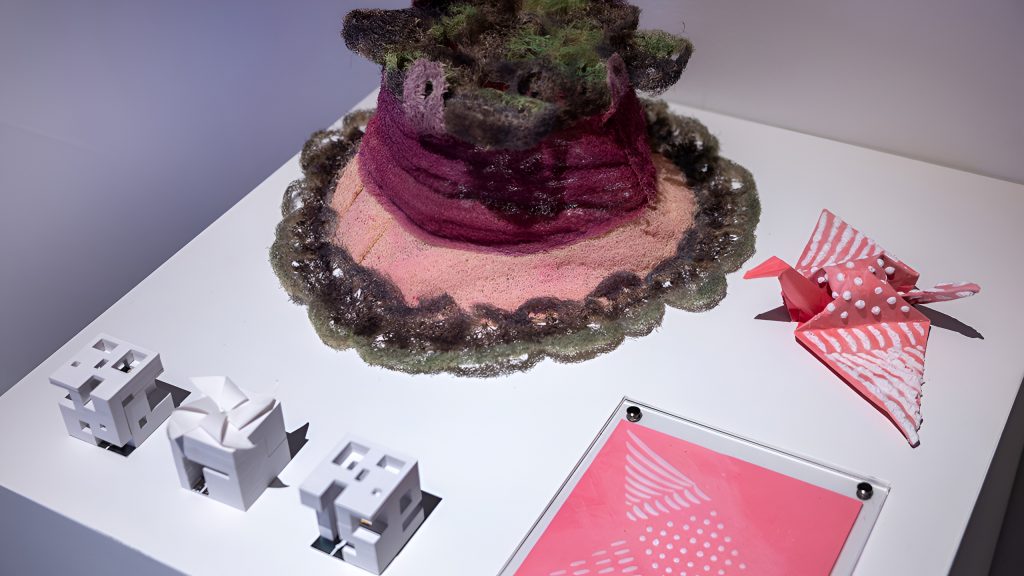
The exhibition spans interactive media, robotics, artificial intelligence and music as well as architecture. This multidisciplinary scope turns the visitor into more than an observer.
Interactive environments can expose the relationship between input and consequence. A gesture can alter an image. A voice can influence a soundscape. A body moving through an installation can change projected fields or trigger a spatial response.
For architecture, this is a useful rehearsal space. Buildings are already interactive in a basic sense: doors open, shadows move, air shifts, people occupy rooms in unpredictable ways. Digital media makes these feedback loops visible and immediate.
There is a danger, of course, in interaction becoming a gimmick. A screen that responds to a hand wave is not automatically meaningful. The more thoughtful installations ask participants to become aware of their own presence, their relationship to others or the systems that surround them.
In that sense, interactivity becomes an architectural lesson. Space is never static. It is continuously rewritten by bodies, time, climate, maintenance and use.
The exhibition itself becomes a bridge
The seventh project is the exhibition’s curatorial structure. Organised around the themes of Ground, Passage and Exchange, Crossing Grounds treats translation as both its subject and method.
“Ground” points toward material, place and environmental conditions. “Passage” suggests movement between formats, disciplines and cultural contexts. “Exchange” brings collaboration into focus, especially the dialogue between Atlanta and Seoul that underpins the exhibition.
This framework is more than exhibition language. It describes the direction computational design needs to take. The field has matured beyond the question of whether digital tools can create new forms. They clearly can. The more urgent question is whether those tools can help build stronger cultural, environmental and social relationships.
By placing architecture beside music, engineering, material science and interactive art, the exhibition resists the false boundary between technical research and cultural production. That is its clearest achievement.
Why Seoul is the right setting?
Seoul is an apt context for this conversation. The city has long paired accelerated urban development with advanced digital culture, while its design community continues to negotiate questions of heritage, density, infrastructure and public life.
The exhibition does not present technology as an inevitable force. It presents it as something shaped by decisions: what data is collected, whose knowledge is included, how materials are sourced and what kinds of experiences are made possible.
That perspective feels particularly timely. As computational systems enter more design studios, universities, workshops and construction sites, the central issue is no longer adoption. It is direction.
Beyond the algorithmic image
Crossing Grounds: Art, Design, and Technology is valuable because it moves computational design away from isolated images and toward cultural exchange. Its projects show that code can produce more than complex form. It can support new ways of reading materials, preserving heritage, engaging visitors and connecting disciplines.
For architects and designers, the lesson is direct. The future of computational practice will not be determined by how quickly it generates geometry. It will be determined by how carefully it translates between systems: digital and physical, historical and contemporary, automated and handmade, local and global.
In Seoul, that translation becomes visible as an exhibition. Outside the gallery, it remains the unfinished work of design.