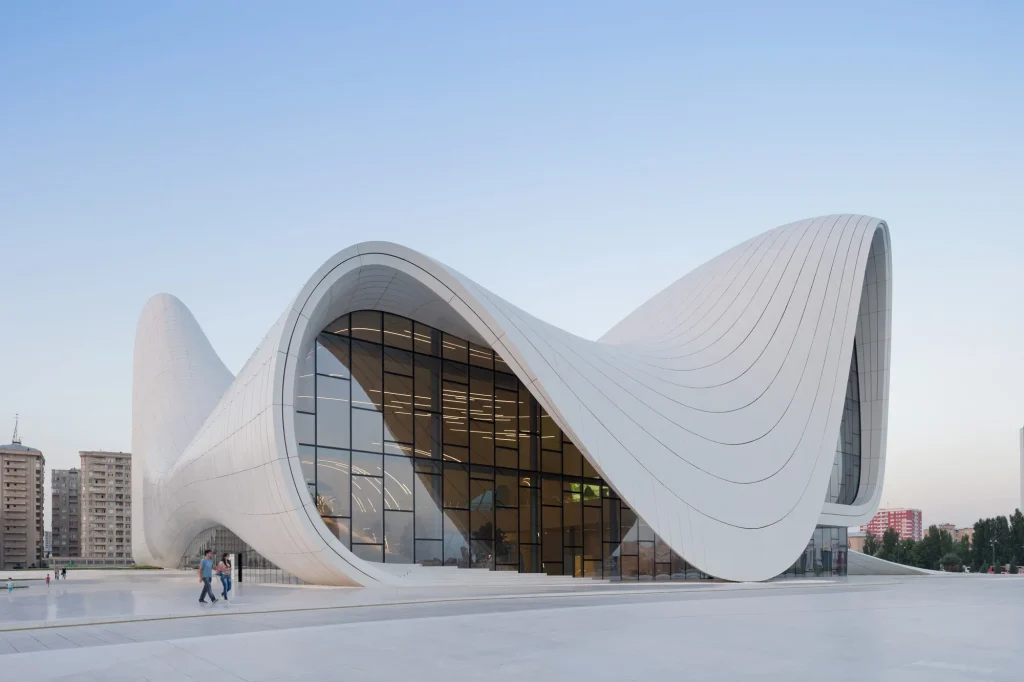









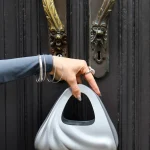

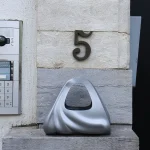

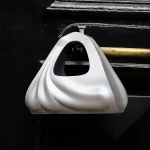
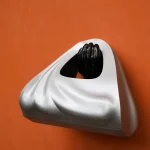


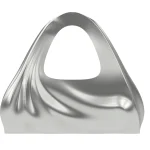
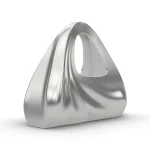
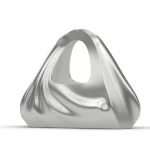
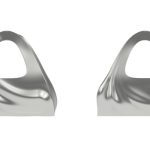
What happens when architectural thinking leaves the scale of the building and enters the scale of the body? Designed by architect Buse Yagci, The Wave Bag explores this transition through a computationally generated and 3D-printed object that sits somewhere between architecture, product design, sculpture, and wearable art. Developed through Rhinoceros 3D and Grasshopper, the project translates principles more commonly associated with parametric architecture, continuous surfaces, controlled deformation, fabrication logic, and adaptable systems, into an object that can be held, carried, and experienced at an intimate scale.
For Yagci, architecture is not defined exclusively by size or permanence, but by a way of thinking about geometry, systems, materiality, fabrication, and the relationship between form and its user. The Wave Bag emerged from an attempt to test that position through a smaller object, beginning not with the conventional typology of a handbag but with a surface and a question: how could that surface bend, stretch, compress, and seemingly move while simultaneously becoming functional?
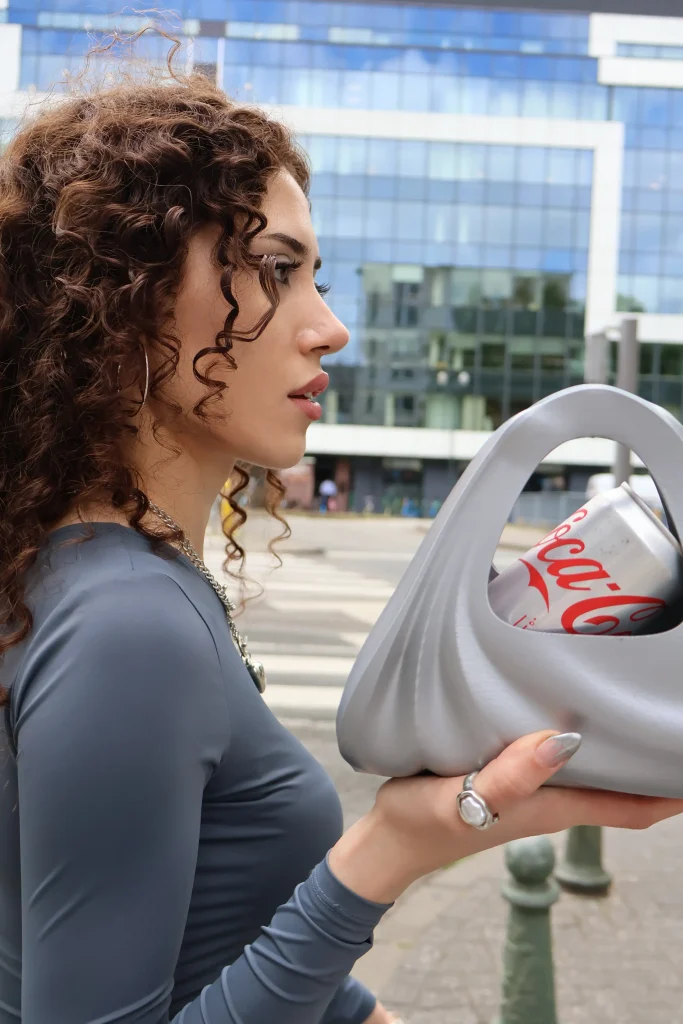
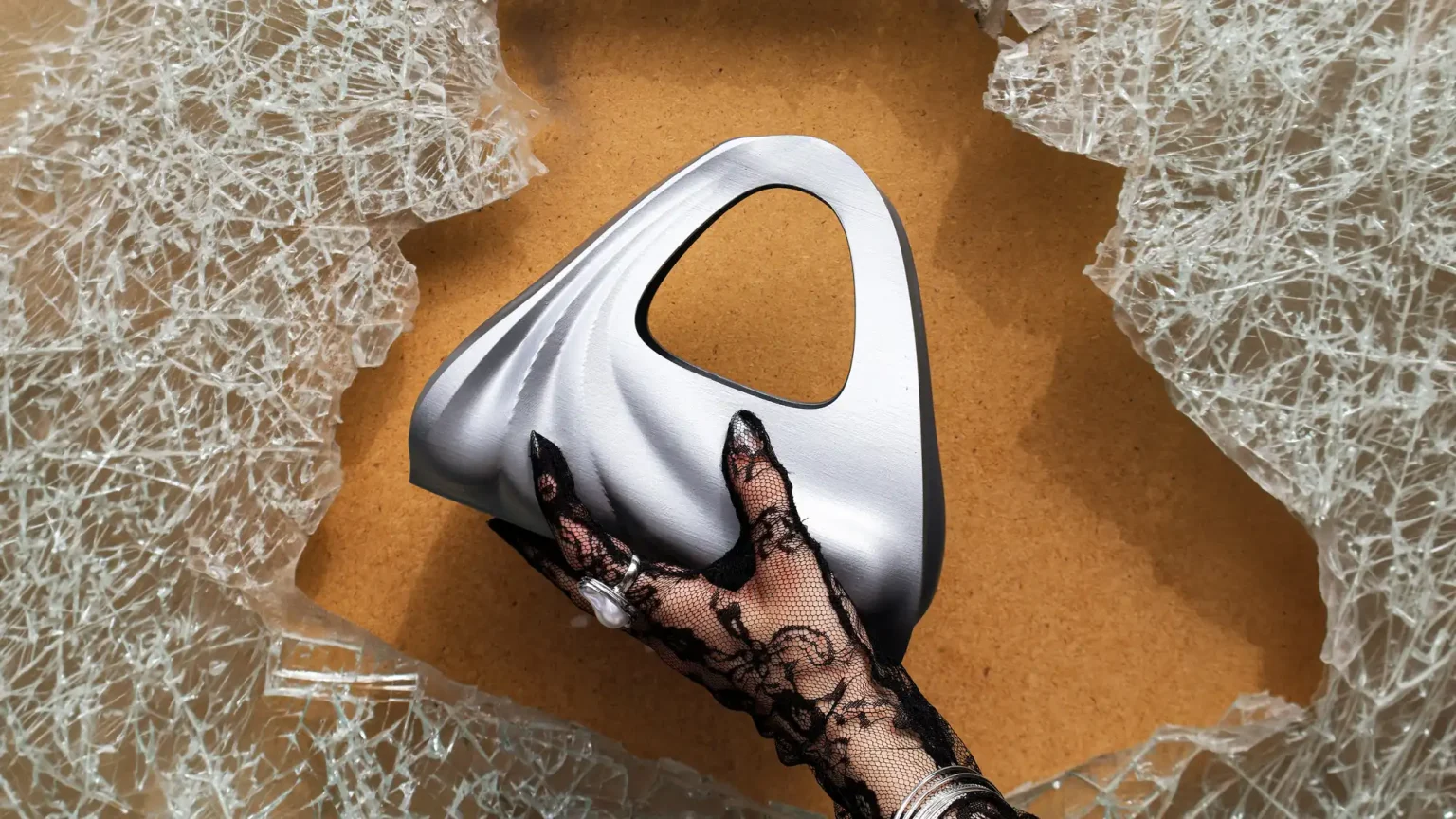
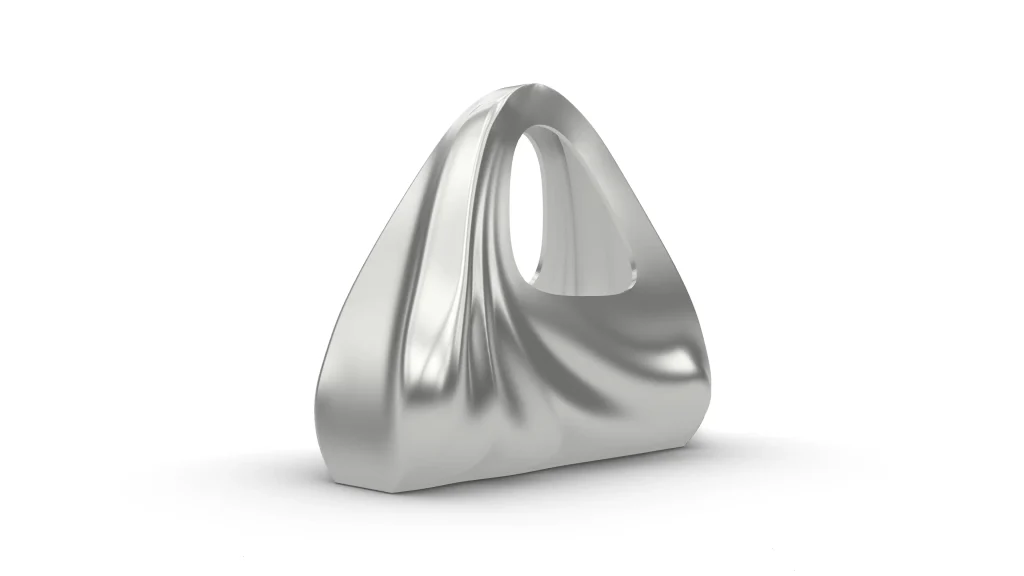
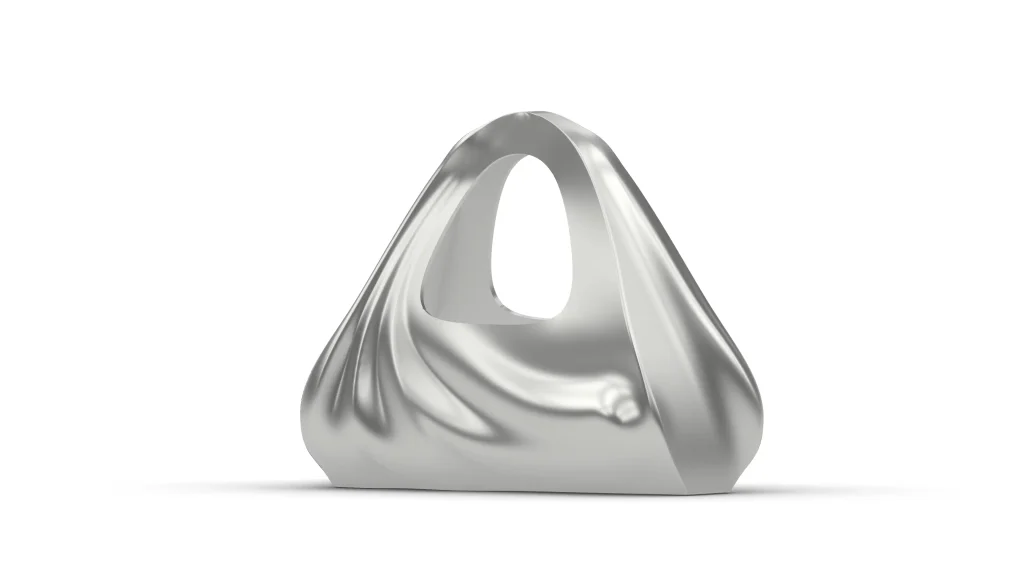
The resulting object is defined by an immediate contradiction. Although produced as a rigid 3D-printed shell, its continuous folds and changing curvature give it the appearance of something soft, almost textile-like. What appears capable of yielding to touch remains structurally fixed, turning the tension between visual softness and physical rigidity into one of the project’s central characteristics.
A Surface in Motion
The name Wave refers less to an applied visual motif than to the behavior of the geometry itself. Yagci’s interest in fluid but controlled architectural forms, surfaces that fold, bend, transition, and appear to move, has been compressed into the scale of the hand and body.
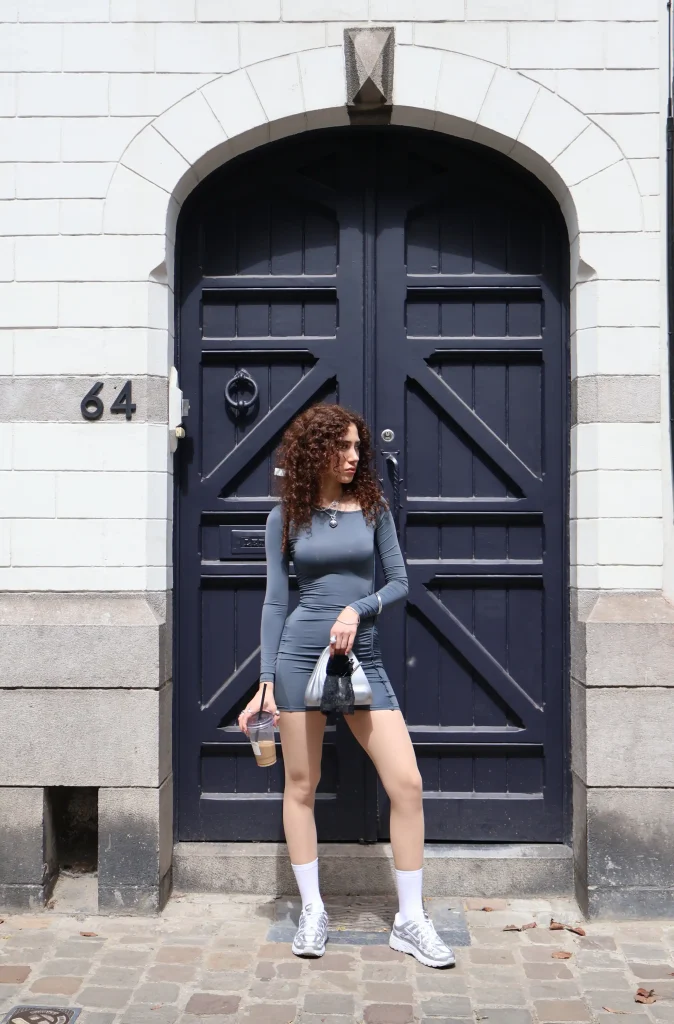
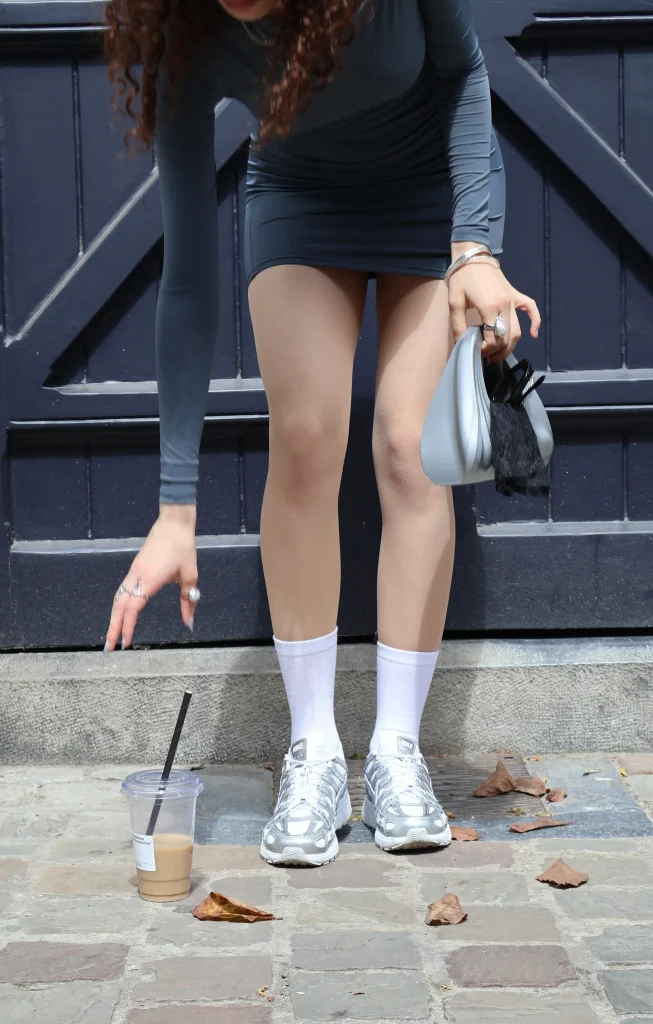
Rather than treating the bag’s body, opening, and handle as separate components assembled afterward, the design attempts to establish a continuous formal language across the entire object. Curvature propagates through the surface, shifting in intensity as it approaches different functional conditions, while the integrated opening and handle emerge from the same geometric logic.
The project can therefore be understood as a study of controlled deformation, investigating how a continuous surface might simultaneously perform structurally, visually, and functionally. The wave is not placed onto the bag as ornament; the bag itself behaves as a wave.
This distinction is significant because it connects the object directly to computational approaches already familiar within contemporary architecture. Parametric design allows form to emerge from relationships rather than isolated gestures, meaning that geometry is not necessarily drawn as a fixed outcome but constructed through a system of dependencies capable of producing multiple outcomes.
Designing the System, Not Just the Object
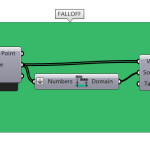
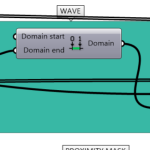
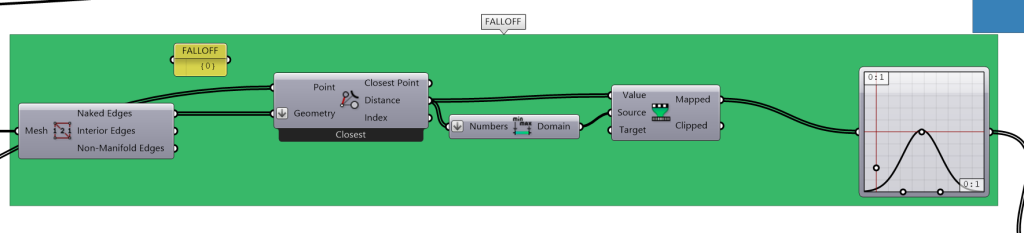
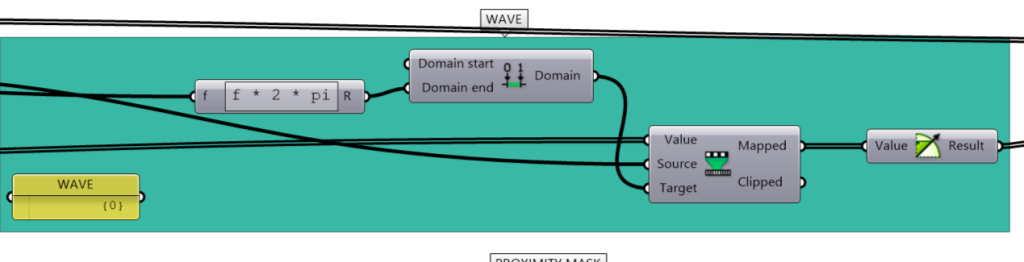
The geometry of The Wave Bag was developed in Rhinoceros 3D and Grasshopper, where graph-driven relationships, distance-based controls, falloff parameters, wave functions, and localized displacement were used to manipulate the original surface.
Rather than modeling one definitive bag, Yagci constructed a parametric system capable of generating a family of related objects. Changes to amplitude, radius, displacement, graph behavior, proportions, or other parameters alter the distribution of curvature across the surface, allowing the silhouette to become restrained or exaggerated while maintaining a recognizable underlying design language.
The physical object presented as The Wave Bag is consequently not the conclusion of that digital process, but one selected condition within it.
This distinction between designing an object and designing the rules capable of producing objects has been fundamental to computational architecture for decades, from parametrically optimized façades and structural systems to urban configurations and digitally fabricated components. At the scale of a wearable object, however, those principles acquire a different relationship with the user. Geometry is no longer experienced across a building or landscape, but through touch, movement, weight, and proximity to the body.
For Yagci, this openness is among the most compelling qualities of parametric design. Instead of fixing a single geometry, computation establishes a design language that can remain adaptable and generative, allowing each physical iteration to feed information back into the system from which it emerged.

From Parametric Surface to Machine Weaving
Once a particular iteration had been selected, the digital surface entered a considerably slower material process.
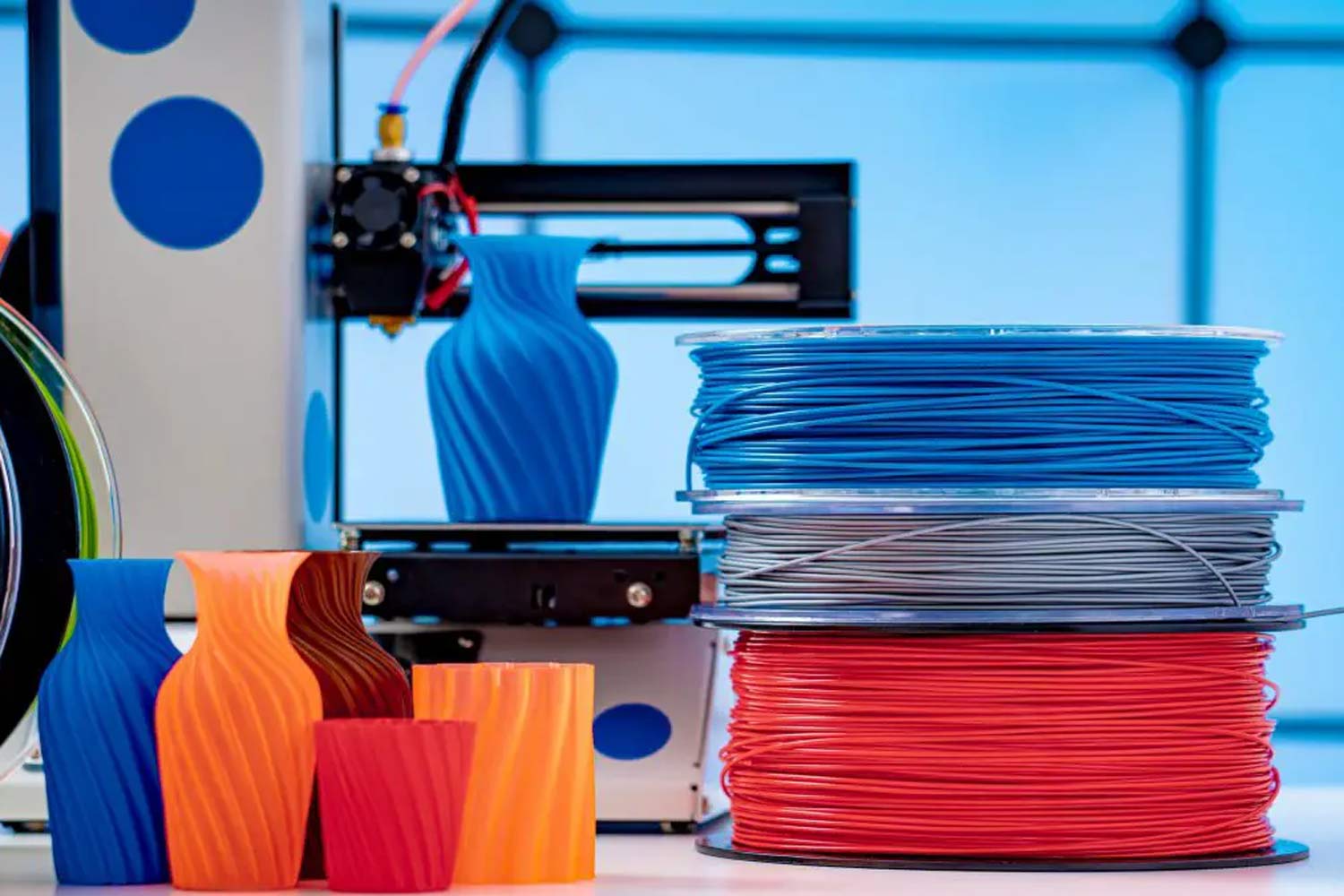
The prototype, measuring approximately 20 centimeters along its longest dimension with a wall thickness of 3 millimeters, was fabricated on a Bambu Lab X1 Carbon using FDM additive manufacturing. Printing required approximately 15 hours and 50 minutes of continuous machine time, revealing an intriguing contrast between the speed of computational manipulation and the physical duration of making.
A parameter within Grasshopper can be altered almost instantaneously; material cannot move with the same speed.
As the printer repeatedly deposited filament along predetermined paths, Yagci began to understand the fabrication process through an analogy to weaving. Traditional textiles emerge through repetition and accumulation, whether through interlocking threads or thousands of individual knots, while FDM printing constructs three-dimensional form through the continuous deposition of a filament controlled by a machine.
The comparison is not literal, but the processes share a logic of repetition, accumulation, precision, and time. A continuous strand moves across the geometry layer after layer until an abstract computational surface acquires thickness, weight, and physical resistance.
For almost sixteen hours, the printer effectively traces the consequences of the digital model.
The process exposes an increasingly important condition within computational design: digital immediacy does not eliminate material time. Instead, computation and fabrication operate according to radically different temporalities, with almost instantaneous digital decisions sometimes requiring hours, or considerably longer, to become physical.
In The Wave Bag, that tension becomes part of the object’s identity.
Digital, Machine, Hand
The process did not end when the printer stopped.
Once removed from the machine, the prototype revealed conditions that were difficult to fully understand through the digital model alone. Its underside required refinement, fabrication marks needed attention, and the tactile qualities of the printed surface began influencing decisions about how the final object should be perceived.
Yagci manually sanded and refined the shell before applying primer, metallic chrome paint, and a protective clear coating. Rather than treating these stages as corrections to an imperfect fabrication process, they became another layer of design.
The workflow establishes a sequence between three forms of authorship: computation generates the system, the machine translates that system into matter, and the hand determines its final physical character.
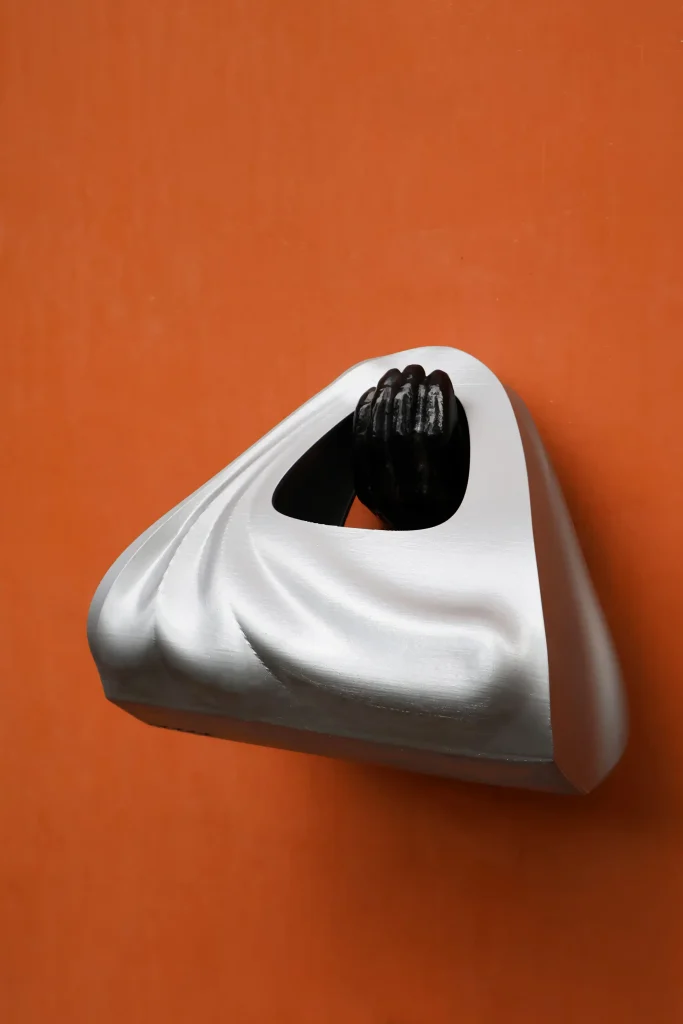
Sanding softens some of the traces left by additive manufacturing, while primer visually consolidates the layered surface. The metallic finish then performs another transformation, emphasizing the geometry as light moves across its ridges, folds, and depressions. Although produced in filament, the finished object acquires an appearance closer to cast metal, creating another productive contradiction between what the object seems to be and how it was actually made.
Importantly, the traces of fabrication do not disappear entirely. Subtle evidence of the additive process remains visible beneath the reflective surface, allowing the final piece to retain a connection to the method through which it was produced.
The result belongs neither entirely to digital fabrication nor traditional craftsmanship. Instead, it emerges through the continuous negotiation between designer, algorithm, machine, material, and hand.
When Architecture Meets the Body
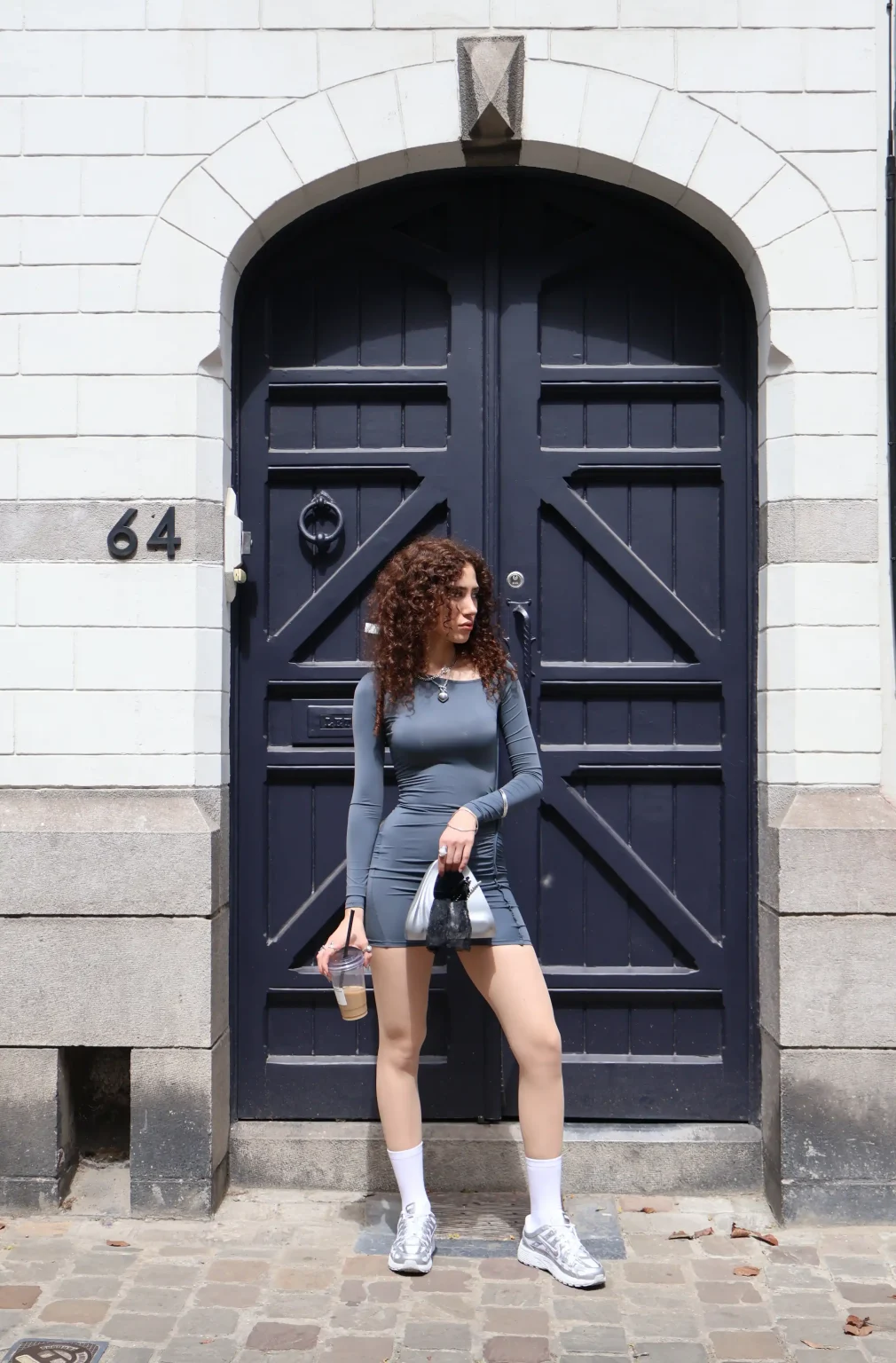
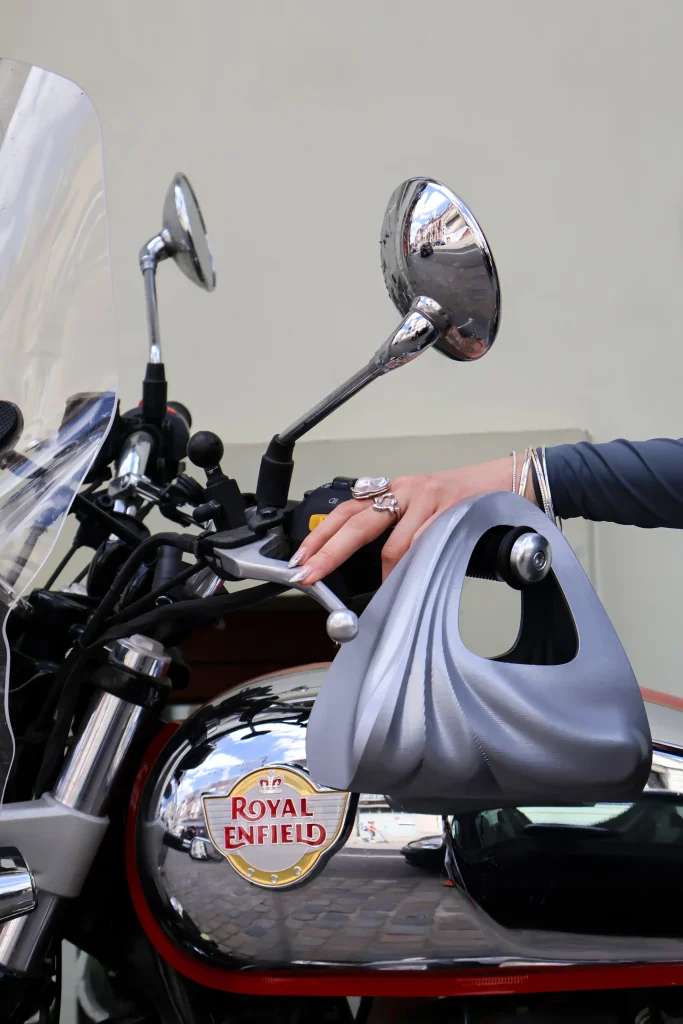
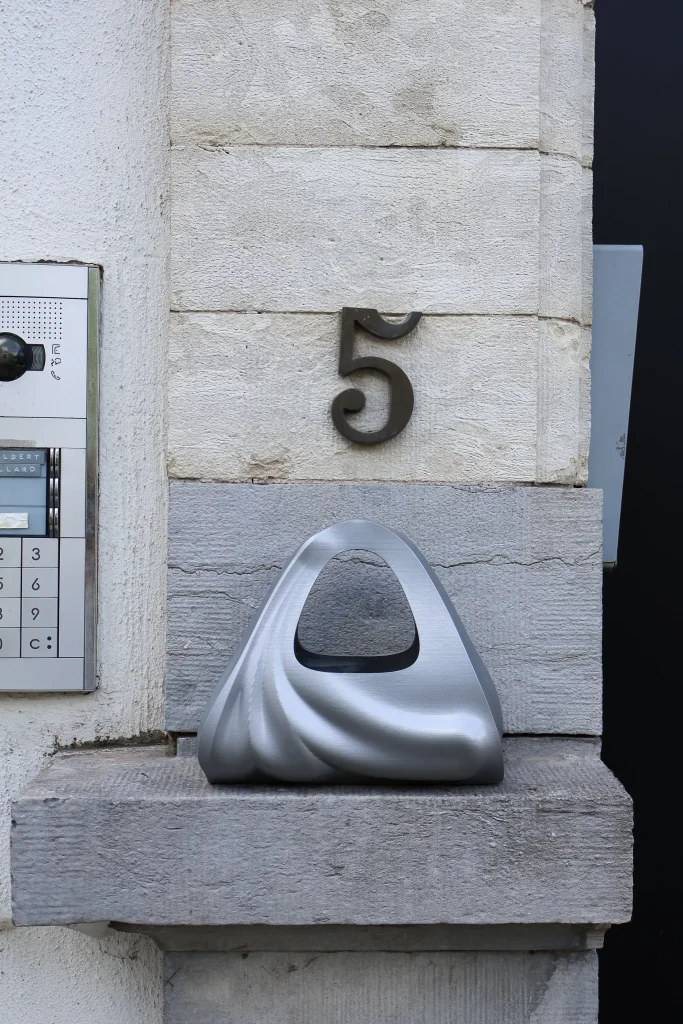
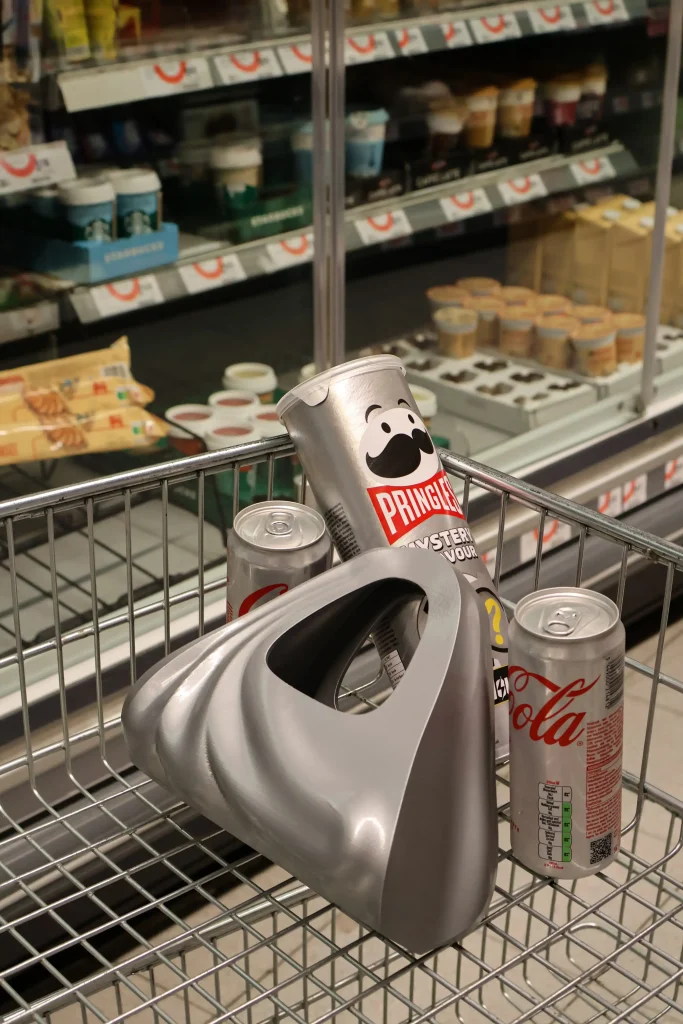
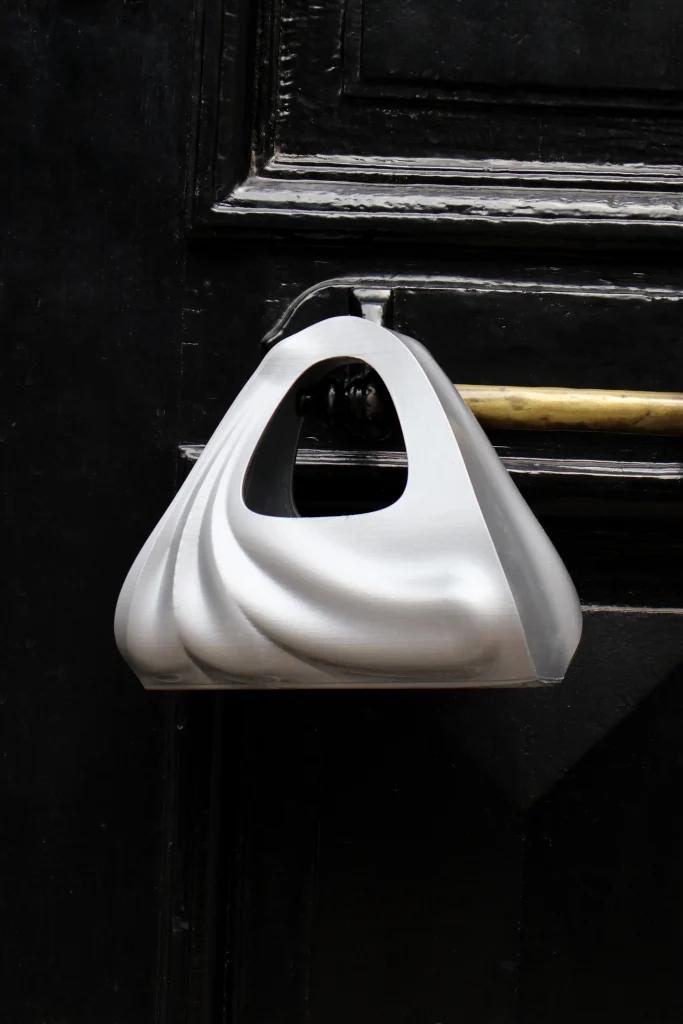
Removed from its context, The Wave Bag carries a deliberate ambiguity of scale. Photographed independently, it might initially resemble an architectural massing model, an experimental façade fragment, or an abstract sculpture. Only when placed alongside the body does its actual scale become immediately apparent.
That moment is crucial.
Architecture traditionally surrounds the body; a wearable object moves with it.
By translating an architectural approach to continuous surfaces into a handbag, Yagci brings computational geometry into direct physical contact with its user. The surface can be touched, carried, rotated, and observed from constantly changing perspectives, creating a relationship considerably more immediate than the visual experience of a digital model.
Function is also integrated into the geometry rather than applied afterward. The handle, opening, shell, and overall silhouette are treated as expressions of the same continuous system, allowing utility and sculpture to emerge from a shared formal logic.
This places The Wave Bag within a broader territory increasingly explored by architects working beyond conventional building scales. Advances in computational design and additive manufacturing have made the boundaries between architecture, furniture, fashion, product design, and sculpture increasingly porous, enabling the same methods used to generate a façade or structural component to inform a chair, shoe, garment, or wearable object.
The significance of this crossover lies not simply in making architecture smaller, but in testing architectural ideas under entirely different conditions of materiality, fabrication, ergonomics, and use.
From Architecture to Fashion
The same computational thinking shaping contemporary architecture is increasingly moving into fashion, footwear, and wearable design. For designers interested in exploring this intersection, PAACADEMY’s fashion design workshops bring together computational design, AI, digital fabrication, and emerging creative technologies, offering new ways to translate spatial thinking into objects made for the body.
An Object Designed to Remain Unfinished
Although the first physical prototype establishes a recognizable identity for The Wave Bag, Yagci does not consider the project a singular, resolved object.
Its parametric origins allow future versions to emerge through variations in proportion, wave intensity, surface behavior, scale, fabrication strategy, and material. Just as changes to the computational system can generate different physical outcomes, information gathered during fabrication can travel in the opposite direction, returning to the digital model and influencing subsequent iterations.
This feedback loop between computation and matter is particularly important to the project’s future development.
Yagci plans to investigate alternative materials, including bio-based and biodegradable polymers compatible with additive manufacturing, while exploring how material behavior itself might eventually become an active parameter within the computational system. Rather than designing geometry first and selecting material afterward, future iterations could allow fabrication constraints and material characteristics to participate directly in generating form.
Such an approach would move the project beyond the conventional sequence of digital design followed by fabrication and toward a more reciprocal relationship in which computation, material, and manufacturing continuously inform one another.
The Wave Bag therefore occupies two conditions simultaneously. It is a finished physical prototype that can be carried as an object, but it is also one outcome extracted from a larger computational field of possibilities.
The bag may be complete, but the wave remains open.
About Buse Yagci:
Buse Yagci is an architect and designer whose practice moves between architecture, computational systems, material experimentation, and digital fabrication. She is currently pursuing an MSc in Architecture at KU Leuven, where her research extends into regenerative architecture and bio-design.
Her work investigates how architectural methods can move across scales, from buildings and spatial systems to experimental objects, and how computation, fabrication, and material research can contribute to more open-ended approaches to design and making.
Project Information
Project: The Wave Bag
Designer: Buse Yagci
Type: Computational Design / Wearable Object / Digital Fabrication
Design Tools: Rhinoceros 3D, Grasshopper
Fabrication: FDM 3D Printing
Printer: Bambu Lab X1 Carbon
Dimensions: Approximately 20 cm at the longest dimension
Wall Thickness: 3 mm
Print Duration: Approximately 15 hours 50 minutes
Layer Height: To be confirmed
Material: To be confirmed
Post-Processing: Manual sanding, primer, metallic chrome coating, protective clear coat
Status: First physical prototype within an ongoing parametric study
All Photographs: Courtesy of Buse Yagci