

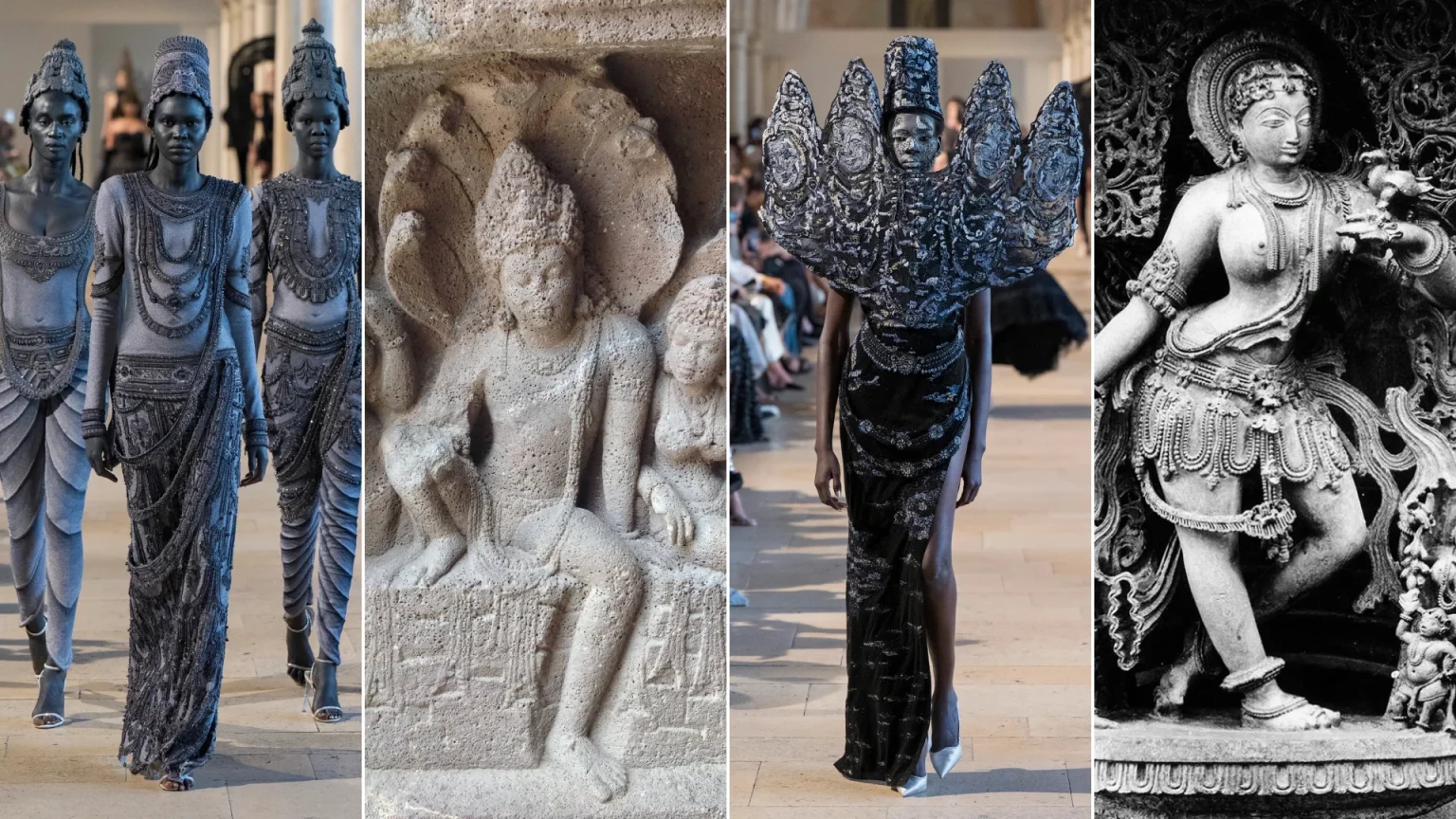
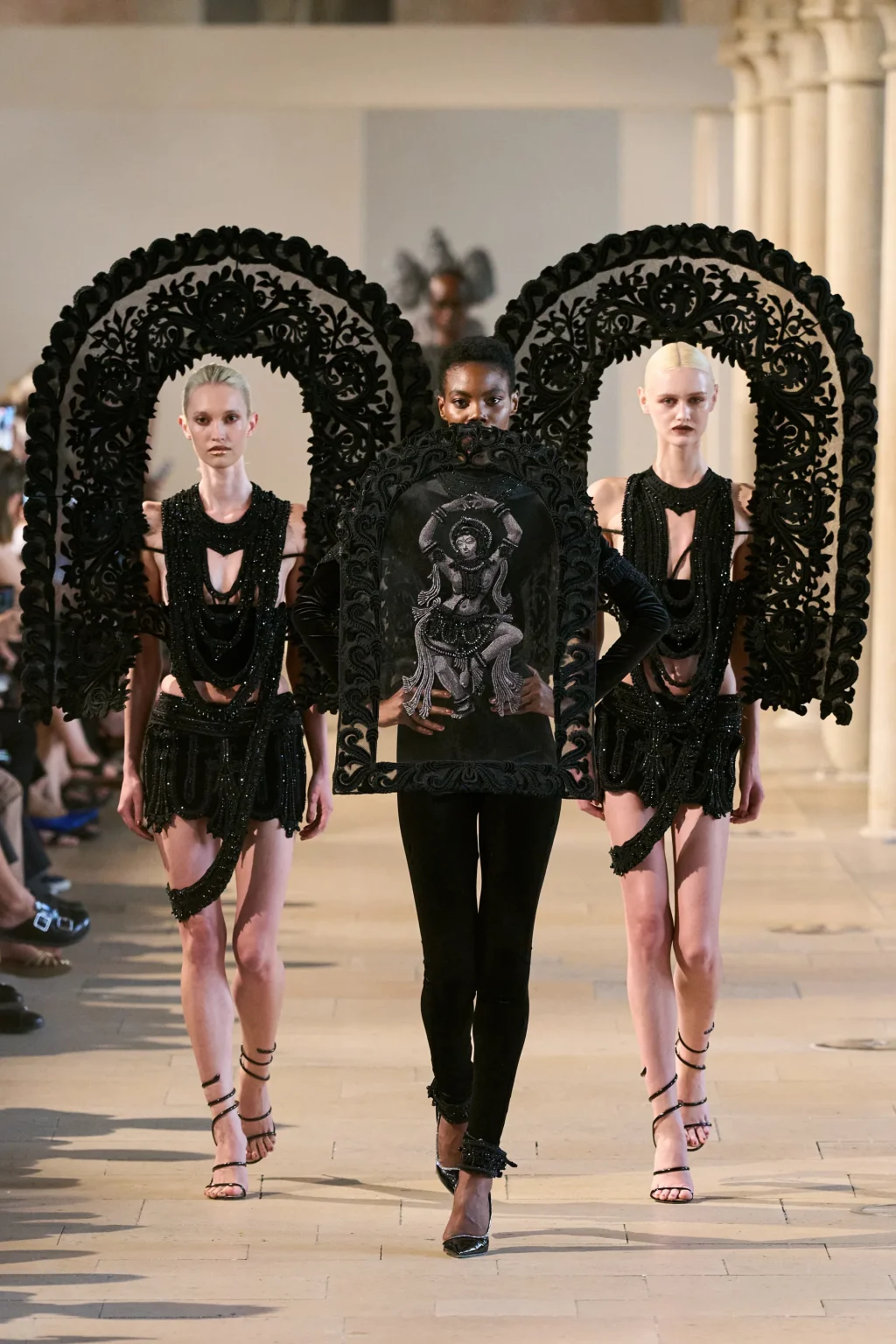




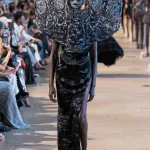
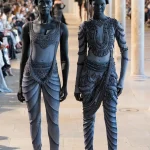
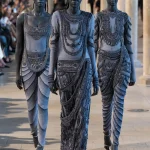

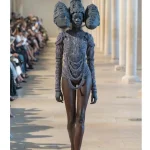

At the intersection of architecture, sculpture, and couture, Rahul Mishra’s Haute Couture Fall 2026 collection, Devi, emerged as one of Paris’ most intellectually layered presentations. Instead of borrowing motifs from India’s architectural heritage as decoration, Mishra approached ancient temple architecture as a design philosophy, translating centuries of sculptural traditions into garments that carried the weight, rhythm, and spirituality of carved stone.
The collection explored the divine feminine through mythology and the visual language embedded in South Asia’s architectural history. Inspired by the archaeological remains of the Indus Valley Civilization, the sculptural traditions of Gandhara, and temple carvings found across Maharashtra and other historic regions, Devi became less a fashion show and more an architectural narrative unfolding through fabric.
Instead of reproducing historical artifacts, Mishra reinterpreted their essence, allowing embroidery, silhouette, and craftsmanship to function as contemporary forms of architectural expression.
Designing with the Language of Ancient Temples
Across India’s historic temples, architecture was never conceived merely as an enclosure. Every carved surface, every sculpted column, every celestial figure was part of a larger visual narrative where structure, symbolism, and craftsmanship existed as one.
That same philosophy guided Devi.
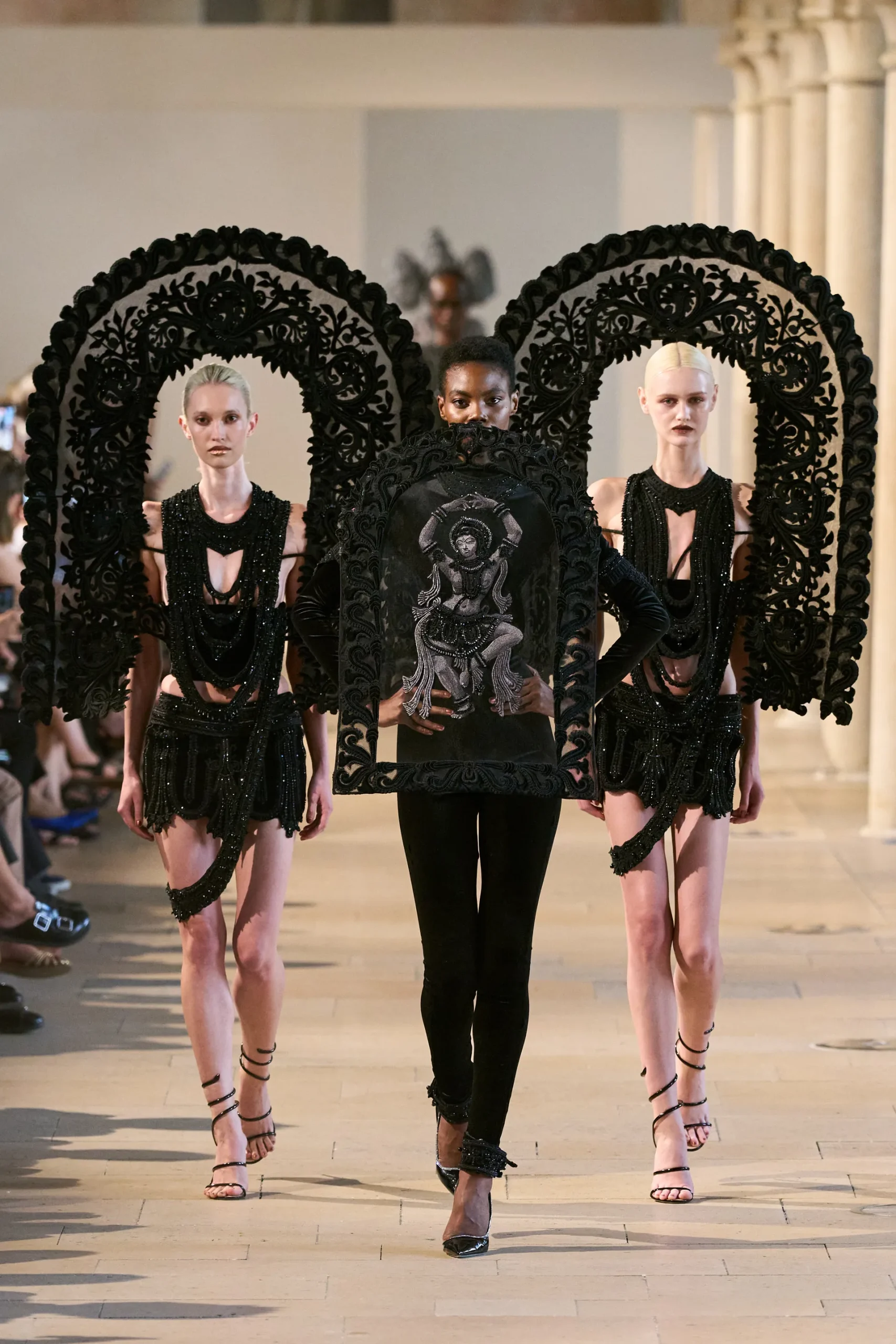
Mishra constructed couture much like temple builders composed sacred monuments through layers of detail that gradually reveal themselves.
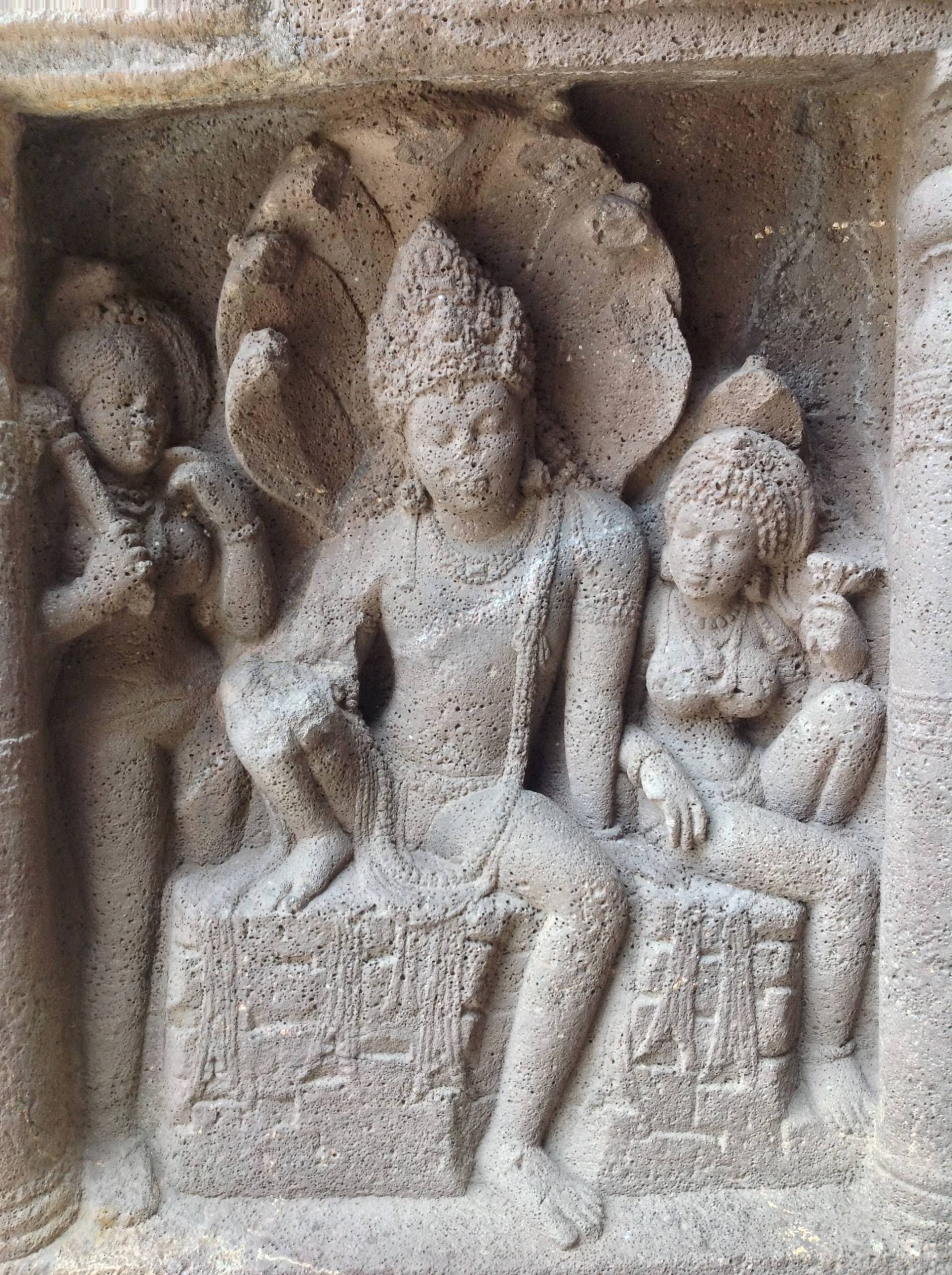
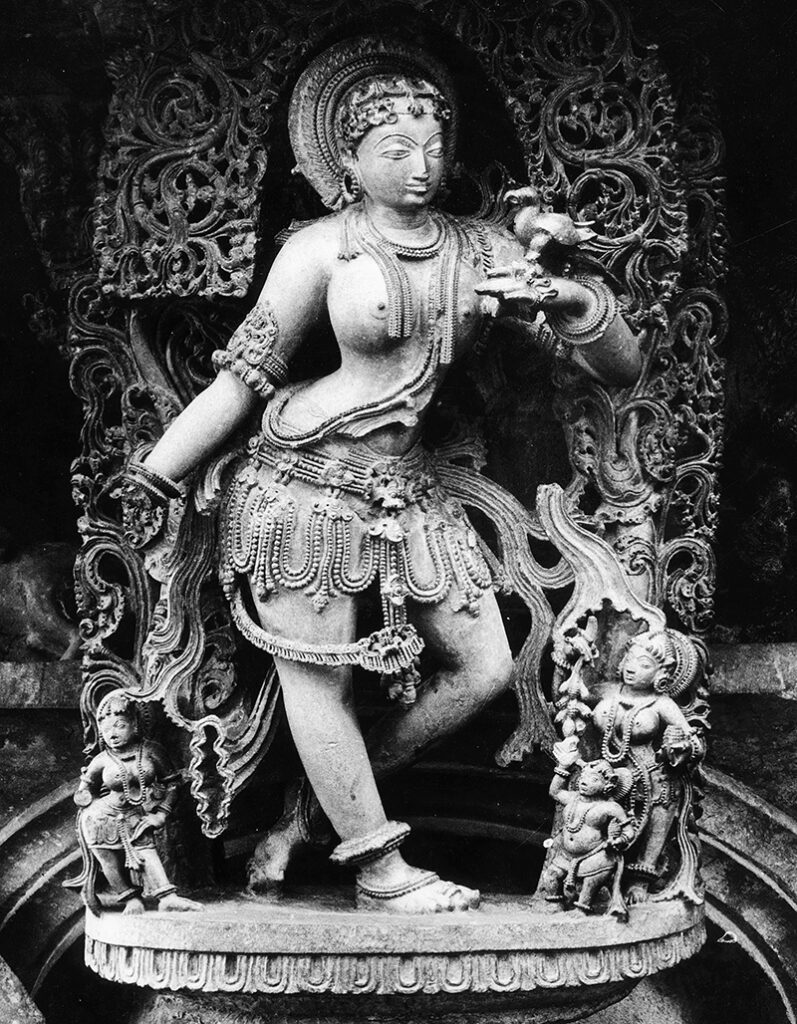
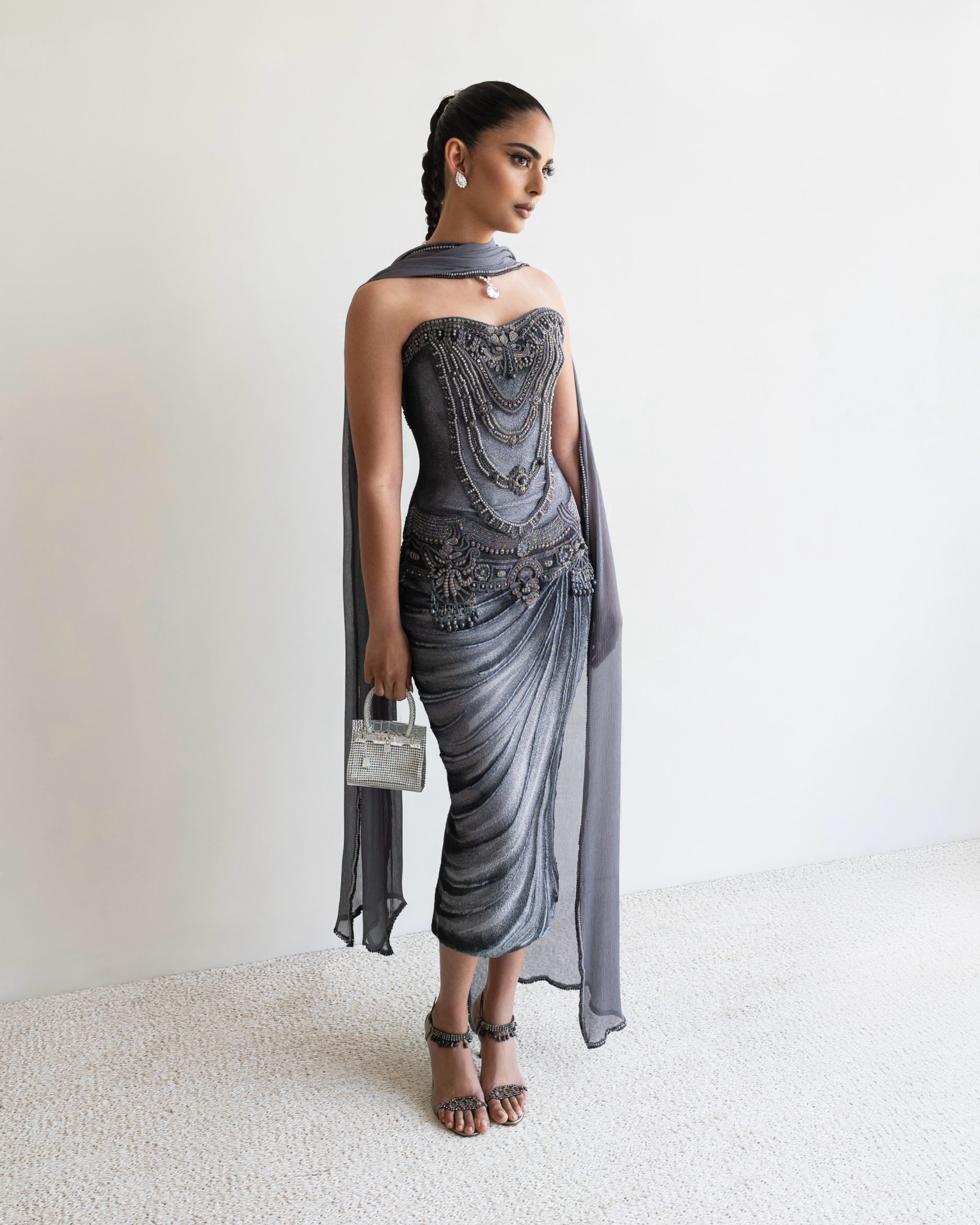
The garments possess remarkable depth. Dense embroidery rises across surfaces like centuries of weathered stone reliefs, while sculptural forms recall temple niches occupied by celestial deities. Flowing drapery echoes the graceful treatment of textiles seen on ancient stone sculptures, where rigid rock appears impossibly soft under the sculptor’s hand.
The result is clothing that feels simultaneously monumental and fluid.
The Influence of the Indus Valley Civilization
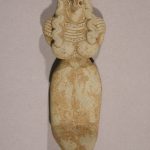
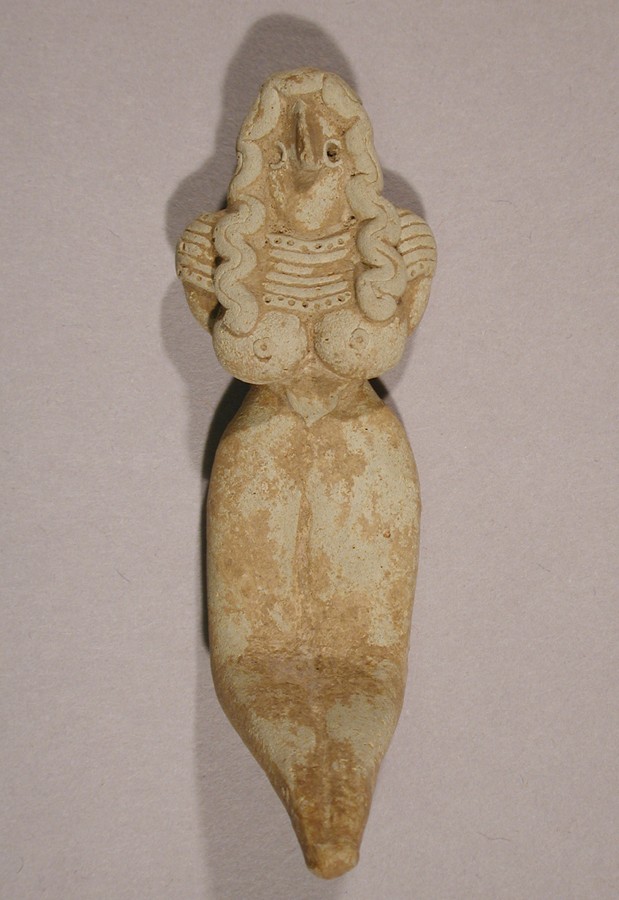
Among the collection’s strongest references are the archaeological discoveries of the Indus Valley Civilization, particularly its terracotta mother goddess figurines.
These early sculptures embody fertility, protection, and feminine power through simplified yet expressive forms. Mishra translates these qualities into couture by emphasizing rounded volumes, organic silhouettes, and richly textured embroidery that carries the tactile quality of aged terracotta.
The garments reinterpret these archaeological fragments as living symbols of femininity, connecting one of humanity’s oldest civilizations with contemporary fashion.
As fashion continues to embrace computational design, material innovation, and digital fabrication, designers are increasingly exploring procedural workflows, 3D modeling, and bio-materials to create adaptive wearables. Those interested in these emerging approaches can further their learning through specialized online workshops at PAACADEMY, where architecture, technology, and fashion come together through hands-on design education.
Gandharan Sculpture Reimagined Through Fabric
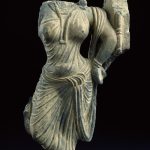
The influence of Gandharan Buddhist sculpture appears throughout the collection in subtler ways.
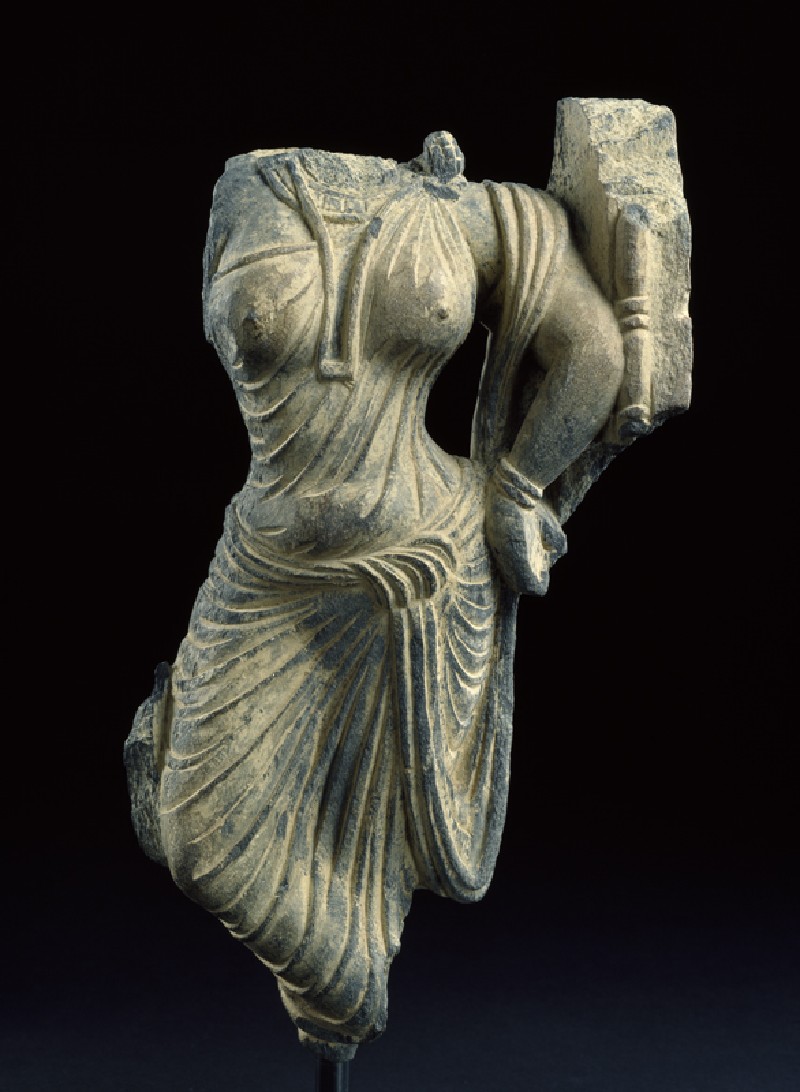
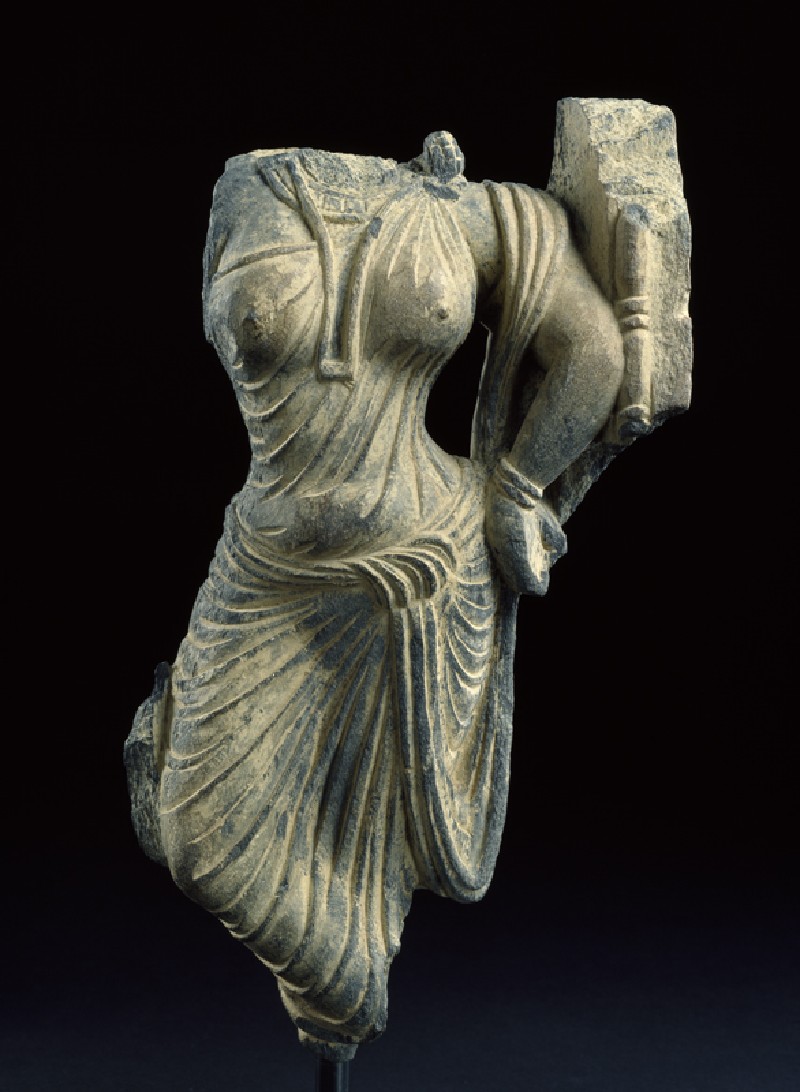
Known for its harmonious balance between Greco-Roman naturalism and Buddhist iconography, Gandharan art introduced remarkably realistic drapery carved into stone. The folds appear weightless despite their material permanence.
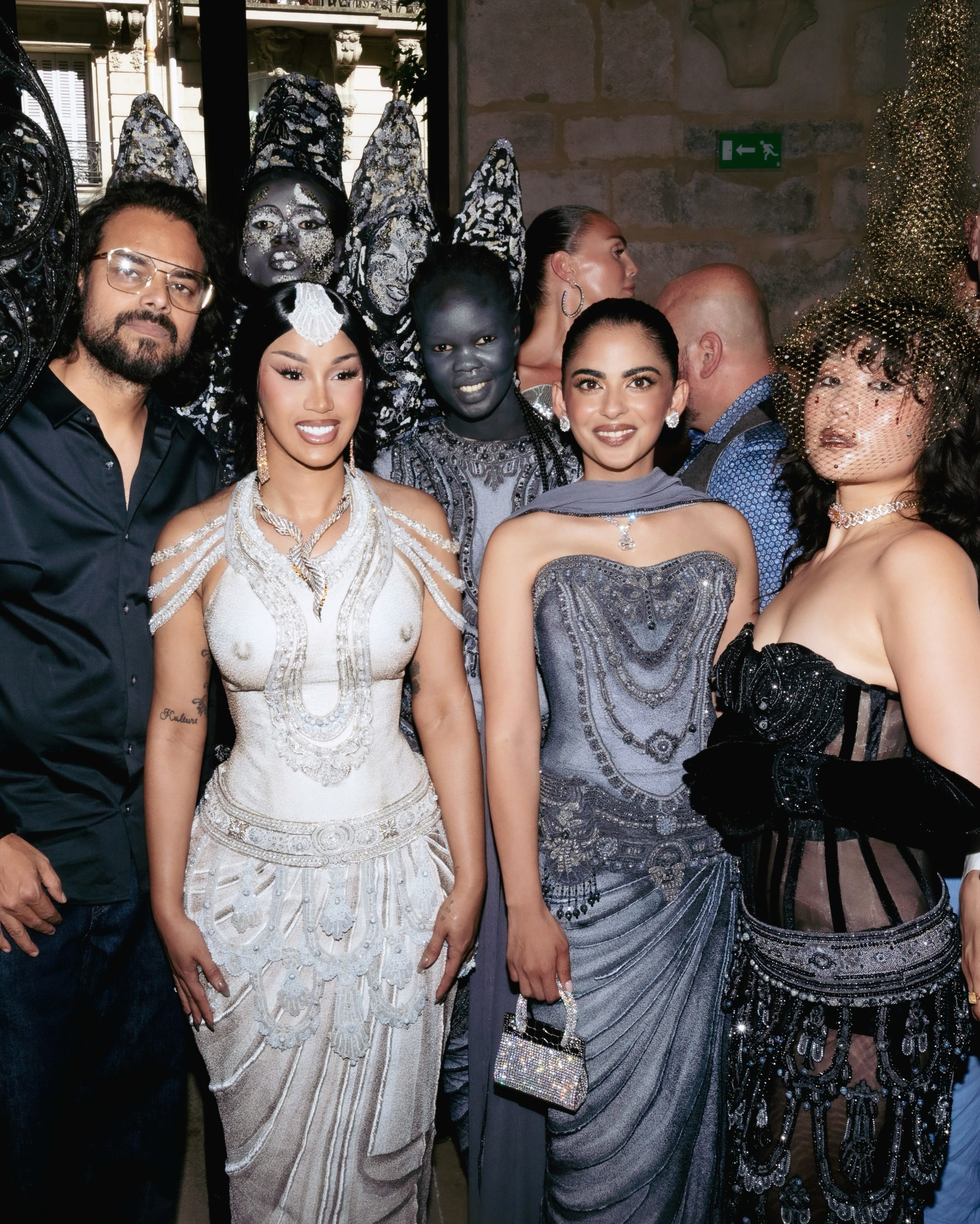
Mishra mirrors this sculptural illusion through layered textiles that fall with architectural precision. Fabric behaves almost like carved marble, maintaining volume while retaining softness. The garments move gently, yet preserve a sculptural integrity reminiscent of ancient Buddhist figures.
This dialogue between permanence and movement becomes one of the collection’s defining characteristics.
Embroidery as Architectural Carving
Perhaps the most remarkable achievement of Devi lies in its embroidery.
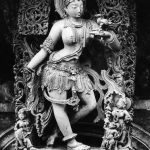
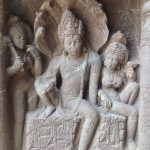
Indian temple architecture has long relied upon stone carving to narrate mythology, cosmology, and daily life. Every surface becomes an opportunity for storytelling.
Mishra replaces the sculptor’s chisel with the artisan’s needle.
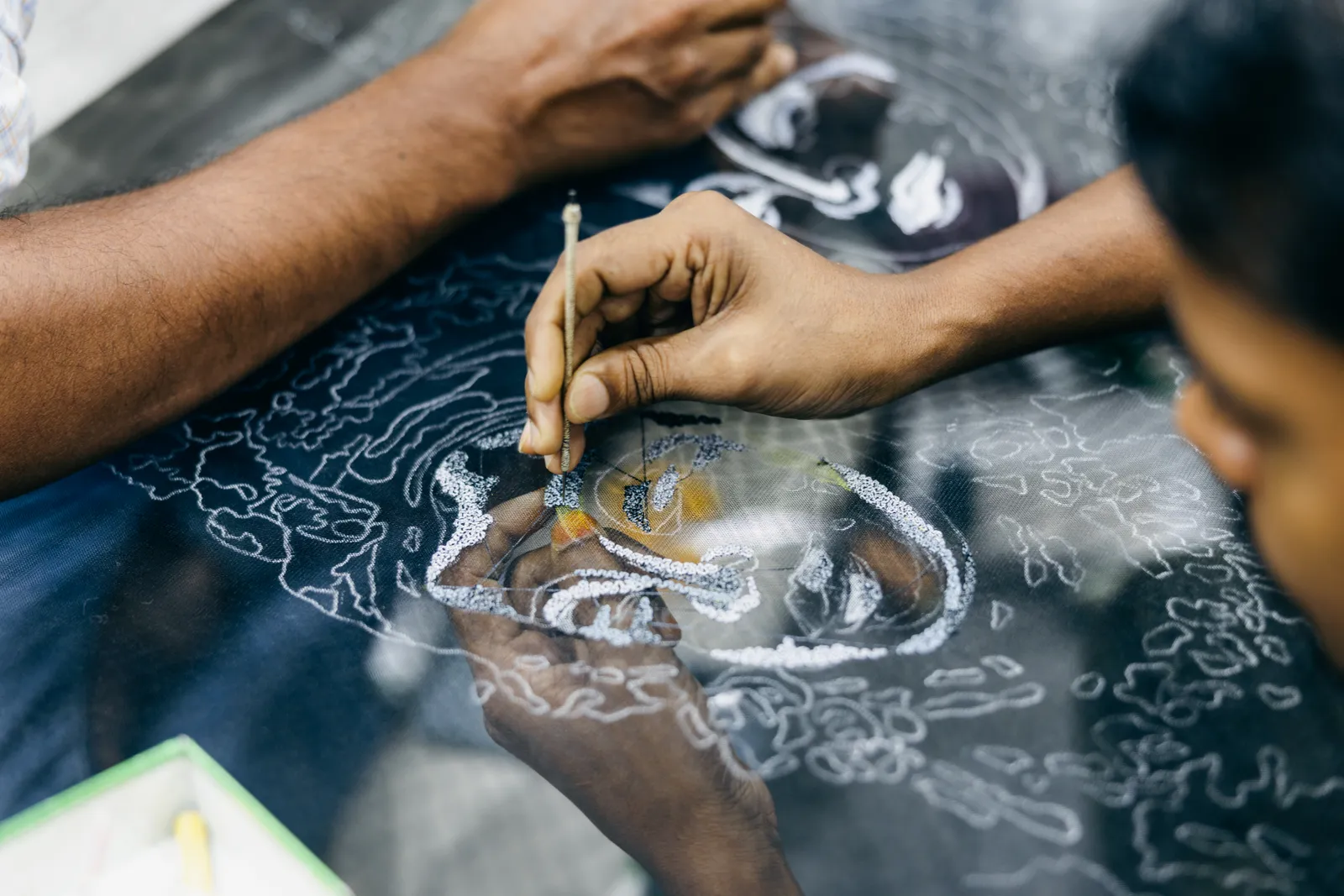
Thousands of hand-embroidered elements create relief-like surfaces that resemble carved sandstone, weathered granite, and ancient temple walls shaped through centuries of craftsmanship. Embroidery becomes architecture itself, building depth, shadow, and dimensionality across every garment.
The collection demonstrates how couture can adopt architectural techniques without literally imitating architecture.
Silhouettes Inspired by Sacred Architecture
The silhouettes throughout Haute Couture Fall 2026 feel remarkably structural.
Many garments possess verticality that recalls temple shikharas rising toward the sky, while others widen dramatically like ceremonial gateways or sacred mandapas designed to gather communities.
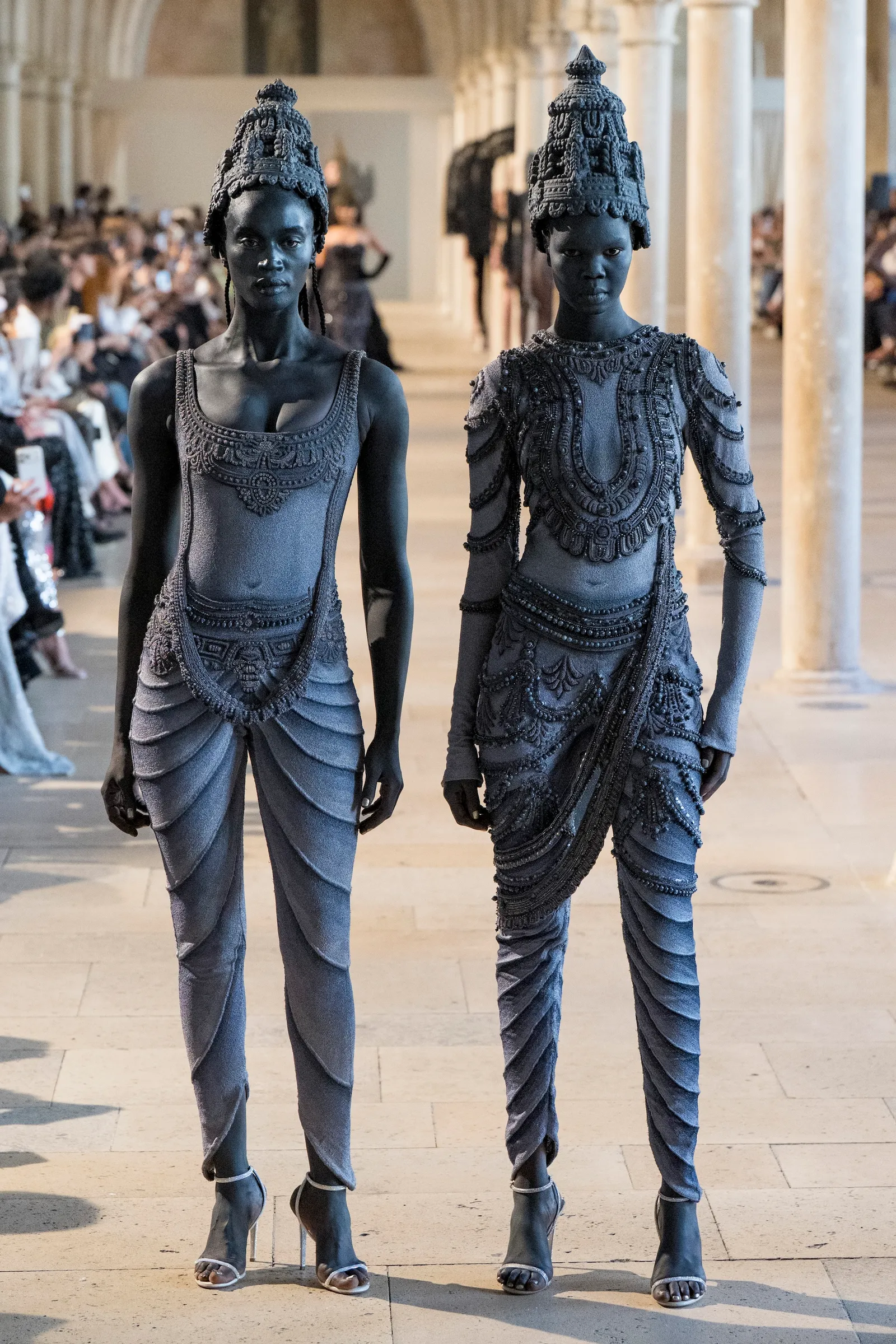
Layered constructions evoke architectural sequencing found within temple complexes, where visitors transition through courtyards, pillared halls, and sanctums before reaching the spiritual center.
Mishra designs garments that possess architectural presence. They occupy space much like monuments, encouraging viewers to experience them from multiple perspectives.
The Material Memory of Stone
One of the collection’s most poetic qualities is its ability to recreate the sensory memory of ancient architecture.
Stone temples weather over centuries, developing textures that record time itself. Terracotta acquires warmth through age, while carved surfaces soften under light and shadow.
Mishra captures these qualities through layered textiles, subtle tonal variation, intricate beadwork, and embroidery that shifts under changing light. The garments seem less manufactured than excavated objects carrying histories embedded within their surfaces.
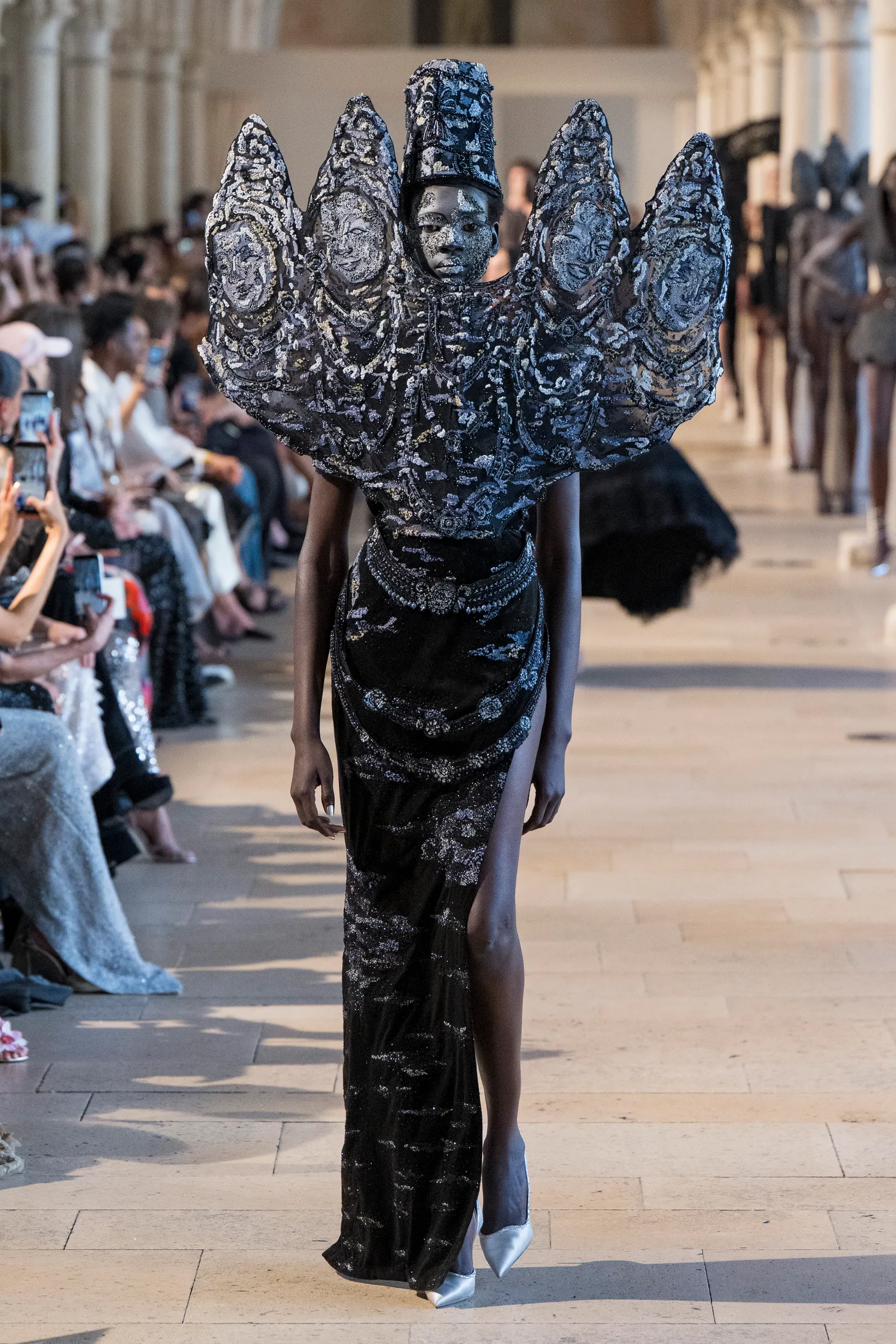
This material richness transforms couture into an archaeological experience rather than simply a visual spectacle.
Indian Craftsmanship as Living Heritage
Beyond aesthetics, Devi also reinforces Rahul Mishra’s long-standing commitment to India’s artisan communities.
Every embroidered surface reflects thousands of hours of hand craftsmanship, continuing traditions passed between generations. Just as ancient temples were collective achievements shaped by architects, sculptors, stone carvers, and craftsmen, Mishra’s couture similarly emerges through collaborative artisanal practice.
The collection reminds audiences that heritage is preserved through monuments and living skills that continue to evolve.
In this sense, couture becomes another architectural medium constructed stitch by stitch rather than stone by stone.
Architecture, Fashion, and the Sacred Feminine
The title “Devi” carries significance beyond religion.
Across South Asian art history, representations of feminine divinity have consistently embodied creation, protection, abundance, and transformation. Temple architecture translated these ideas into sculpture and space; Mishra reinterprets them through contemporary couture.
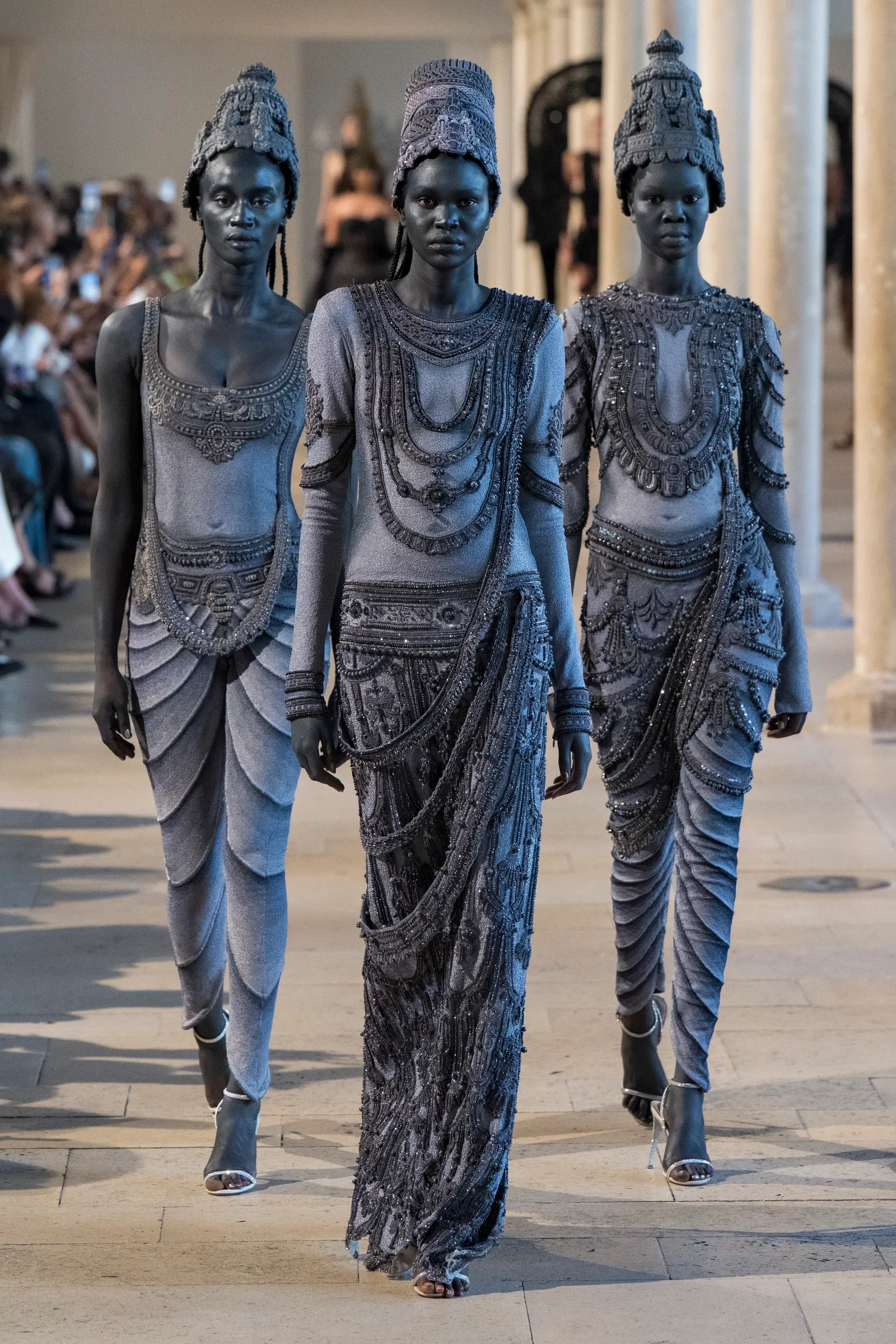
His garments do not simply dress the body; they frame it as architecture once framed the sacred figure within temple sanctuaries.
The wearer becomes both sculpture and storyteller.
A New Architectural Language for Haute Couture Fall 2026
With Devi, Rahul Mishra demonstrates that architecture can inspire fashion beyond visual quotation.
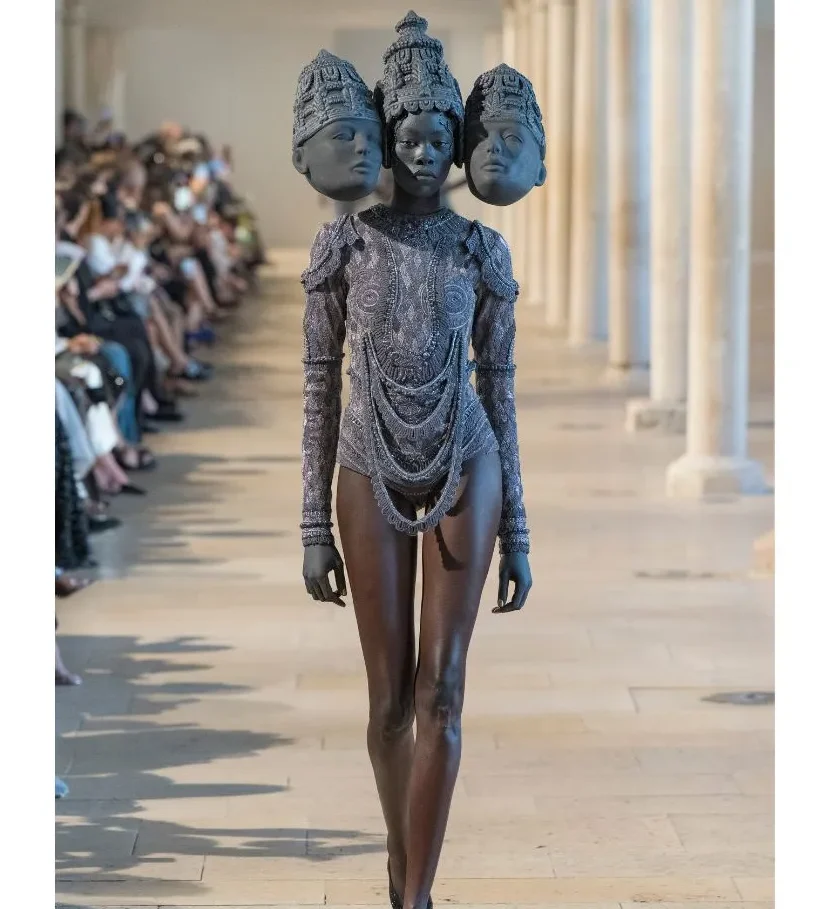
Instead of borrowing decorative patterns from temples, he adopts the deeper principles that shaped India’s architectural heritage: craftsmanship, symbolism, materiality, monumentality, and narrative.
The collection transforms embroidery into carving, silhouettes into architecture, and garments into living monuments that carry centuries of artistic memory.
In doing so, Haute Couture Fall 2026 becomes more than a seasonal presentation. It becomes a compelling dialogue between fashion and architecture, one where India’s ancient temples continue to evolve, not through stone, but through the hands of artisans shaping the future of couture.