








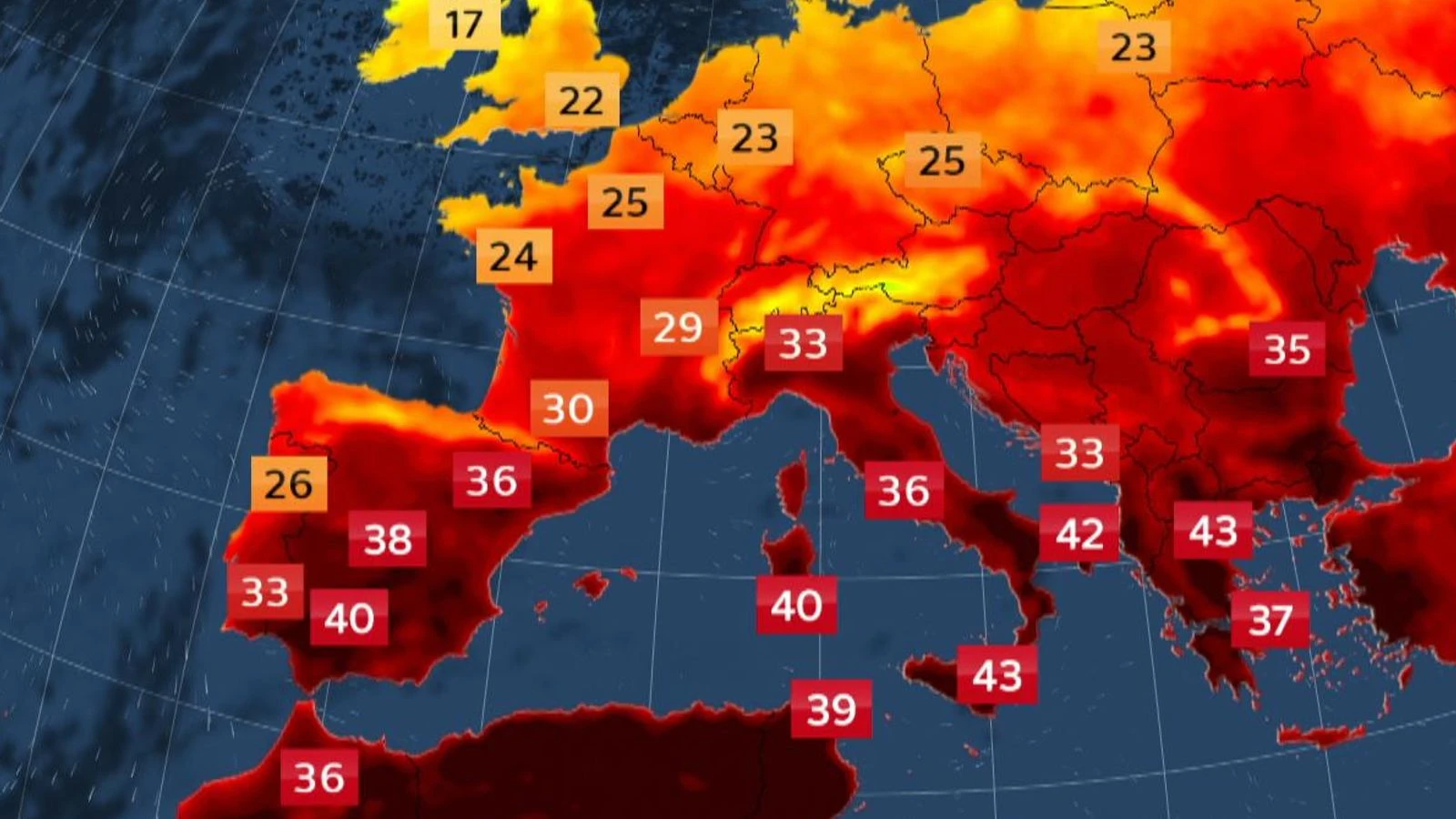
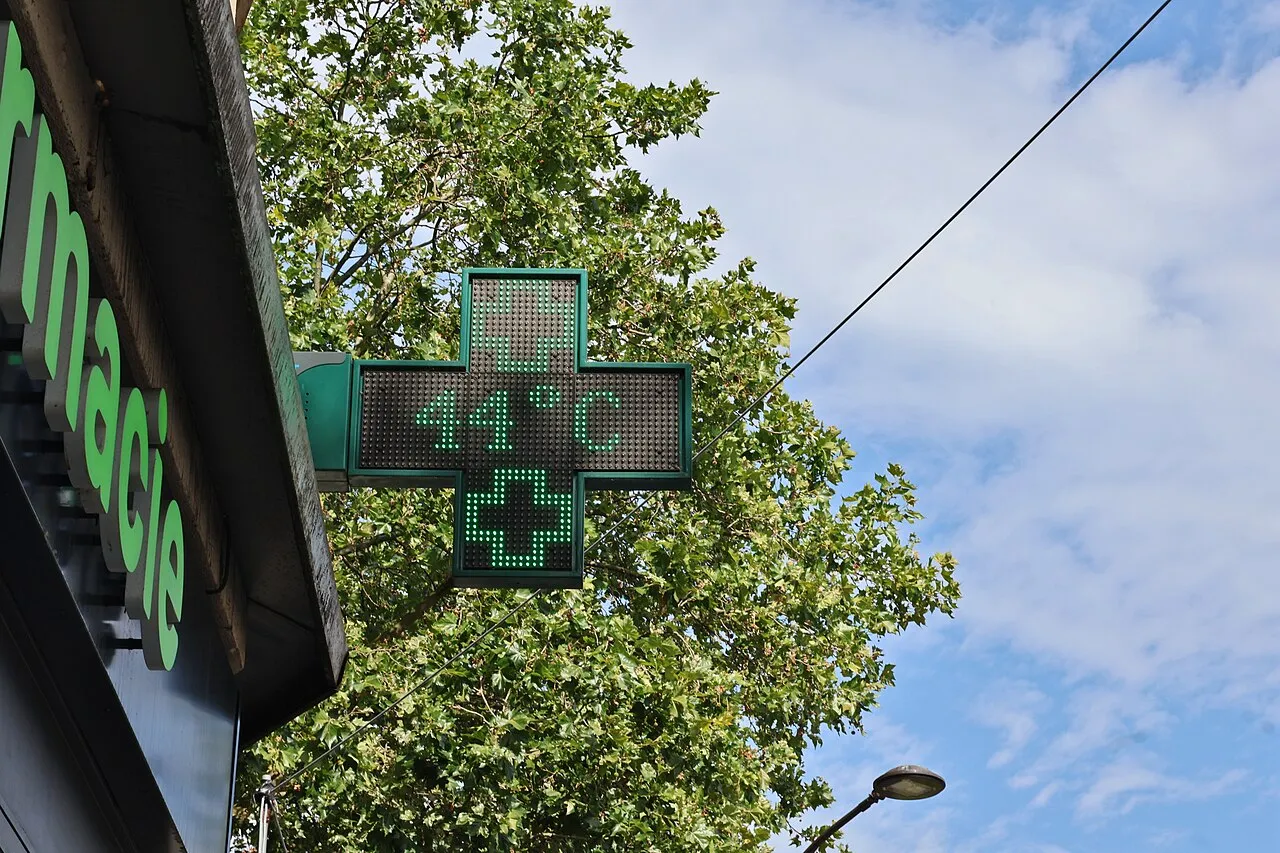
Europe is reeling under an intense heatwave, driven by an omega block weather pattern, with temperatures crossing 40°C in several countries and health alerts issued across western and central Europe. The continent, which is warming at more than twice the global average, is experiencing one of its most persistent spells of extreme heat in recent years.
While climate change is making these events more severe, meteorologists say the immediate driver behind the current heatwave is an atmospheric phenomenon known as the Omega Block.
What is an Omega Block?
An Omega Block is a stalled weather pattern in the upper atmosphere that takes the shape of the Greek letter Ω (Omega). It forms when a strong high-pressure system becomes trapped between two low-pressure systems, causing the jet stream to bend sharply around it. Under normal conditions, the jet stream carries weather systems from west to east, bringing regular changes in temperature and rainfall. During an Omega Block, however, this flow is disrupted, causing the high-pressure system to become almost stationary.
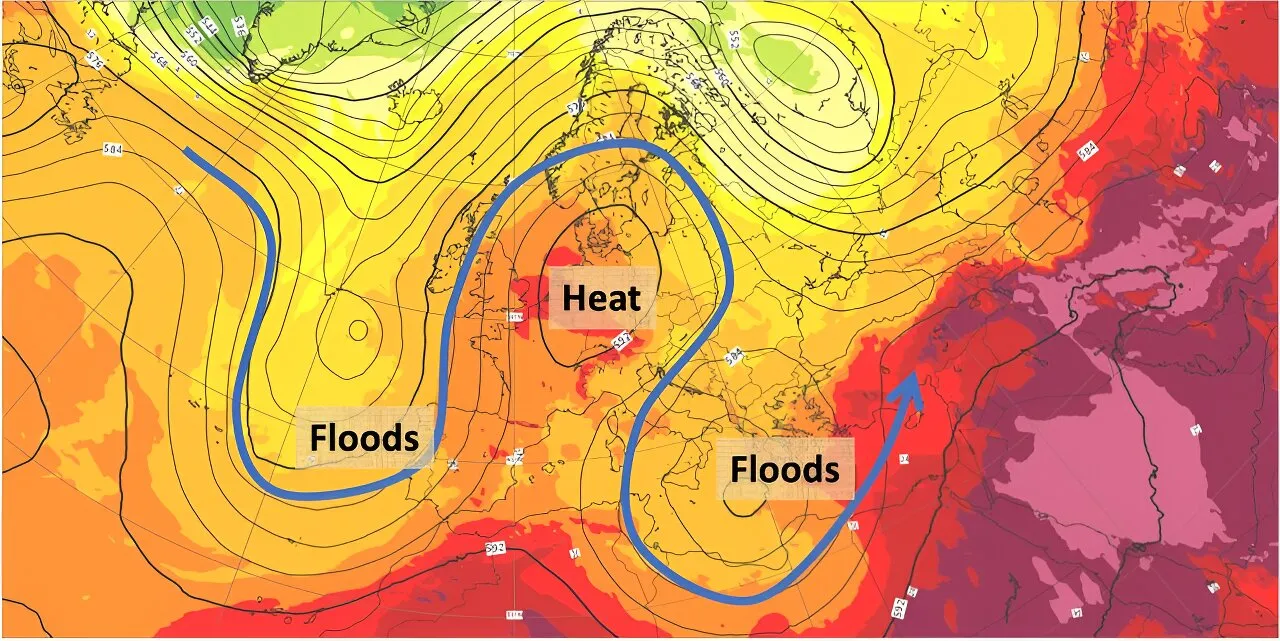
The term “blocking” refers to the way this high-pressure system blocks the normal movement of weather systems. As a result, the same weather conditions remain over a region for several days or even weeks. Omega Blocks typically last three to ten days, but under favourable atmospheric conditions, they can persist much longer.
Why Does an Omega Block Cause a Heatwave?
The stalled high-pressure system acts like a lid over the atmosphere. Air slowly sinks toward the ground and warms as it compresses, suppressing cloud formation and allowing uninterrupted sunshine. With no clouds to reflect sunlight, the land absorbs more heat each day, causing temperatures to climb steadily.
Additionally, the Omega Block prevents cooler Atlantic air from reaching Europe. Instead, hot air from North Africa continues to move northward and becomes trapped beneath the high-pressure dome. Since there is very little air movement or ventilation, the heat accumulates over successive days rather than dispersing.

Unlike a typical heatwave pattern that moves from one region to another, an Omega Block creates stagnant air. This not only prolongs the heat but also prevents temperatures from falling significantly at night, increasing health risks. The stagnant conditions can also trap pollutants close to the surface, leading to deteriorating air quality in many urban areas.
Meteorologists note that weaker steering winds and reduced temperature contrasts in the atmosphere help create these slow-moving blocking patterns. Large-scale climate variations such as El Niño and La Niña may also influence atmospheric circulation, potentially strengthening or prolonging such events under certain conditions.
Which Parts of Europe Are Affected?
The current Omega Block has spread extreme heat across much of the continent, with the most severe conditions concentrated in southern and western Europe before gradually expanding eastward.
Southern and Western Europe: Spain, Portugal, Italy, Greece, France, Belgium, the Netherlands, Luxembourg, and the United Kingdom have experienced the most intense heat, with temperatures exceeding 40°C in several regions, alongside drought, wildfire risk, and widespread heat alerts.
Central, Eastern, and Northern Europe: Germany, Switzerland, Austria, Poland, the Czech Republic, Slovakia, Hungary, Romania, Bulgaria, Moldova, and parts of Ukraine, as well as Denmark, southern Sweden, and Norway, have also recorded unusually high temperatures as the heatwave continues to spread across the continent.
Meteorologists expect the hot conditions to extend further into eastern Europe over the coming days, although it remains uncertain how long the Omega Block will persist.
Is Climate Change Responsible?
The Omega Block itself is not caused by climate change, as it is a naturally occurring atmospheric circulation pattern that has existed for centuries. However, climate change is making its impacts significantly more severe. As global temperatures continue to rise, the air trapped beneath these blocking patterns starts from a much warmer baseline, resulting in hotter, longer-lasting, and more dangerous heatwaves than those experienced in the past.

Scientists often explain the relationship with a simple analogy: the Omega Block acts like a lid that traps heat, while climate change turns up the temperature beneath that lid. Together, they create the ideal conditions for prolonged periods of extreme heat.
As the continent continues to warm faster than the global average, such prolonged extreme heatwaves are expected to become more frequent and more intense, highlighting the growing need for better heat preparedness and climate resilience.