

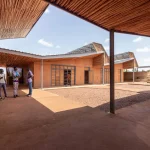
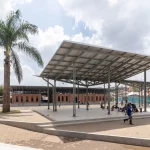
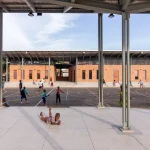
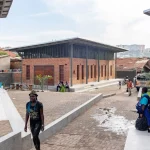
Diébédo Francis Kéré, a Burkinabe architect known for his pioneering approaches to design and sustainable construction methods, is the recipient of the 2022 Pritzker Architecture Prize. Founded in 2005, Kéré Architecture is recognized for its structural elegance, innovative use of materials, and tendency to build in regions that much of contemporary architecture has yet to explore. Approaching architecture with a utopian and pragmatic vision, Francis Kéré draws inspiration from the specific characteristics of each location and its social fabric. By understanding the specific needs of a given context, he uses local knowledge and resources as tools in his designs.
Here are 10 projects designed by Diébédo Francis Kéré:
1. Gando Primary School
Location: Gando, Burkina Faso
Year: 2001
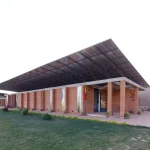
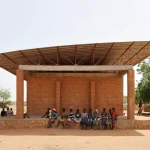
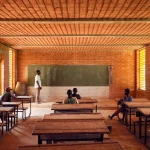
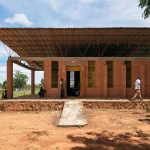
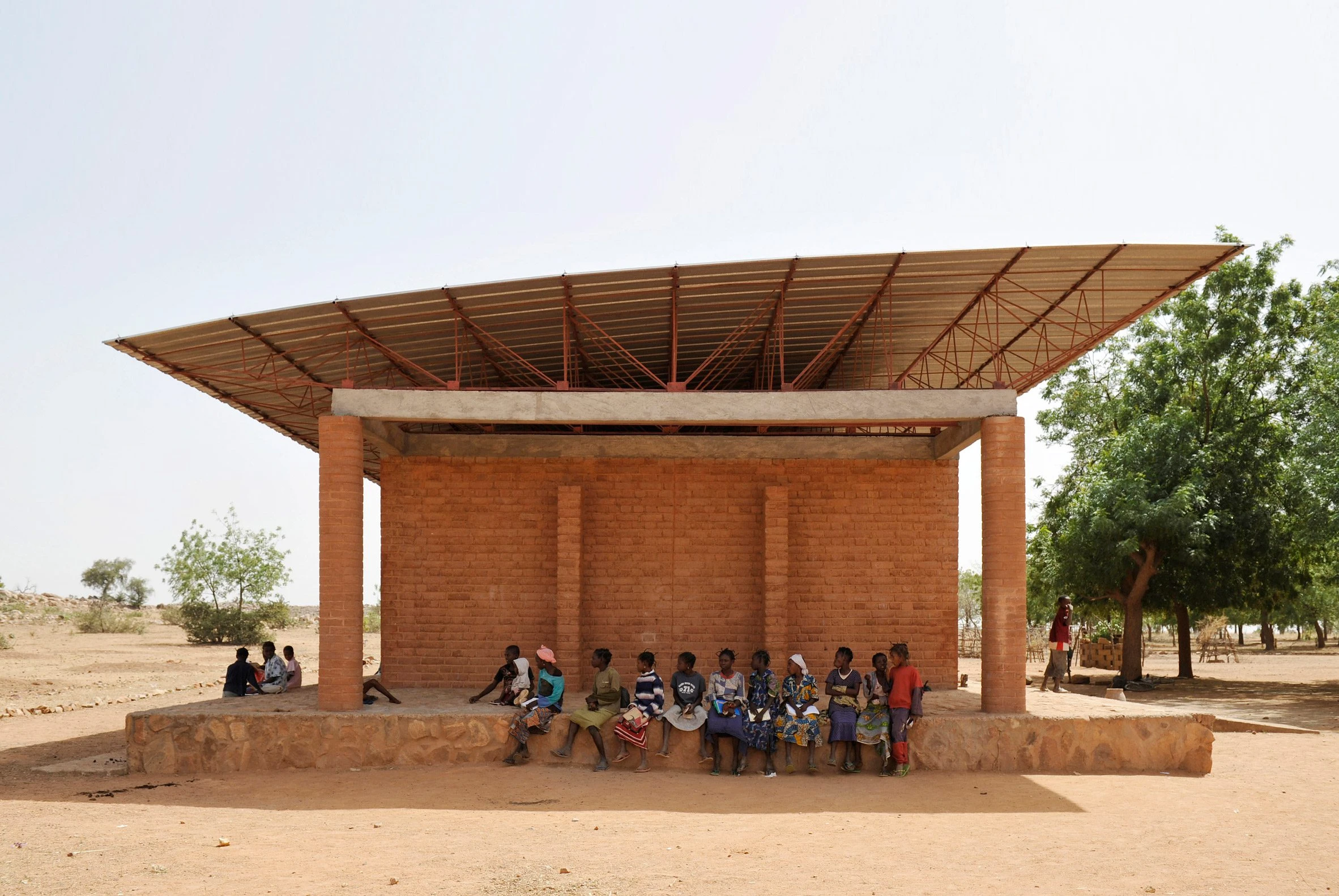
Awarded the 2004 Aga Khan Award for Architecture, the Gando Primary School was built to expand the limited school network in the Boulgou province of eastern Burkina Faso. Diébédo Francis Kéré developed a design that directly addresses the poor ventilation and lighting conditions common in regional schools, working within constraints such as cost, climate, material availability, and construction feasibility. The school was constructed using structurally sound clay-cement hybrid bricks that are easy to produce and provide thermal insulation against the hot climate.
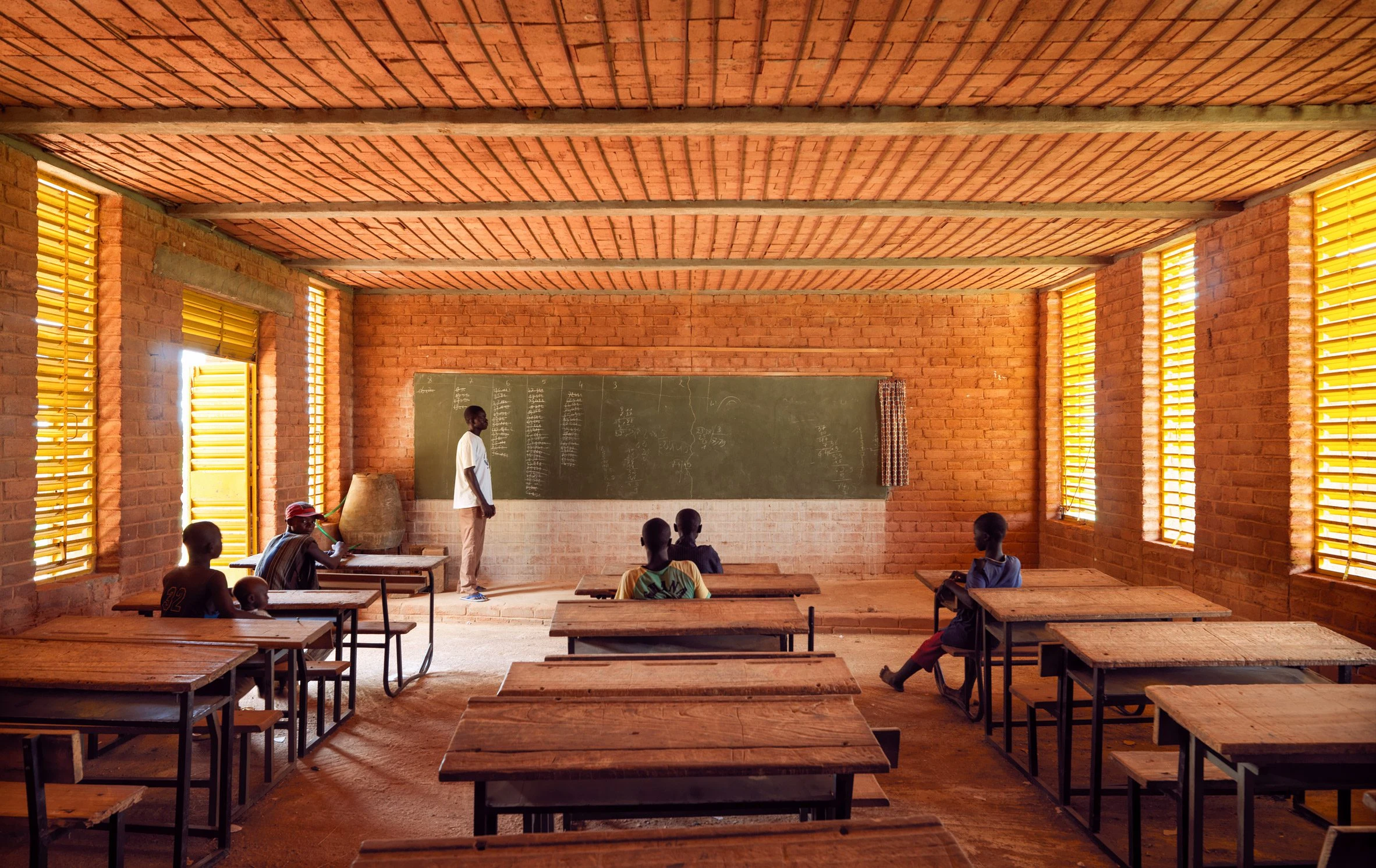
Corrugated metal roofs, a common solution in Burkina Faso, tend to absorb direct sunlight and overheat interiors. To resolve this, Kéré separated the roof of the Gando Primary School from the learning spaces below. The dry brick ceiling placed in between provides maximum ventilation: cool air is drawn in through the interior windows, while hot air is expelled through holes in the clay roof. The project combined traditional construction techniques and modern engineering methods to produce the highest quality building solution and simplify construction and future maintenance, with local people involved in the construction process.
2. Thomas Sankara Mausoleum
Location: Ouagadougou, Burkina Faso
Year: 2023-2025
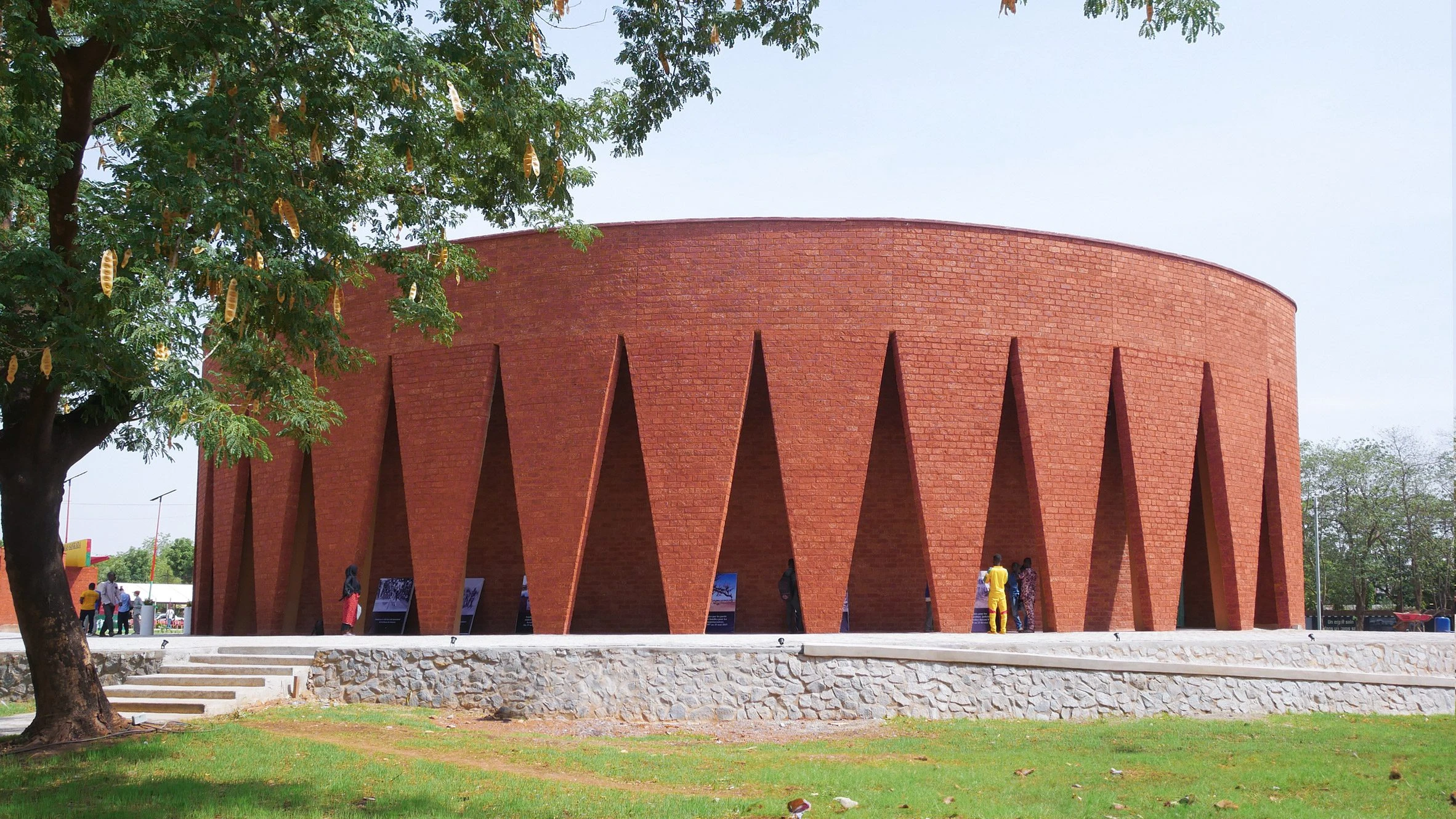
Designed by Diébédo Francis Kéré, the Thomas Sankara Mausoleum is the final resting place of pan-African revolutionary and former president of Burkina Faso, Thomas Sankara, and twelve of his companions. Inspired by the movement of the sun, the 13 tombs are concentrically arranged, starting from the center of the building, and each is under a single skylight. Every hour, the sun illuminates a new tomb, moving the visitor to a new memorial site. The 13 openings created by the 13 columns physically represent the absence of those who were killed.
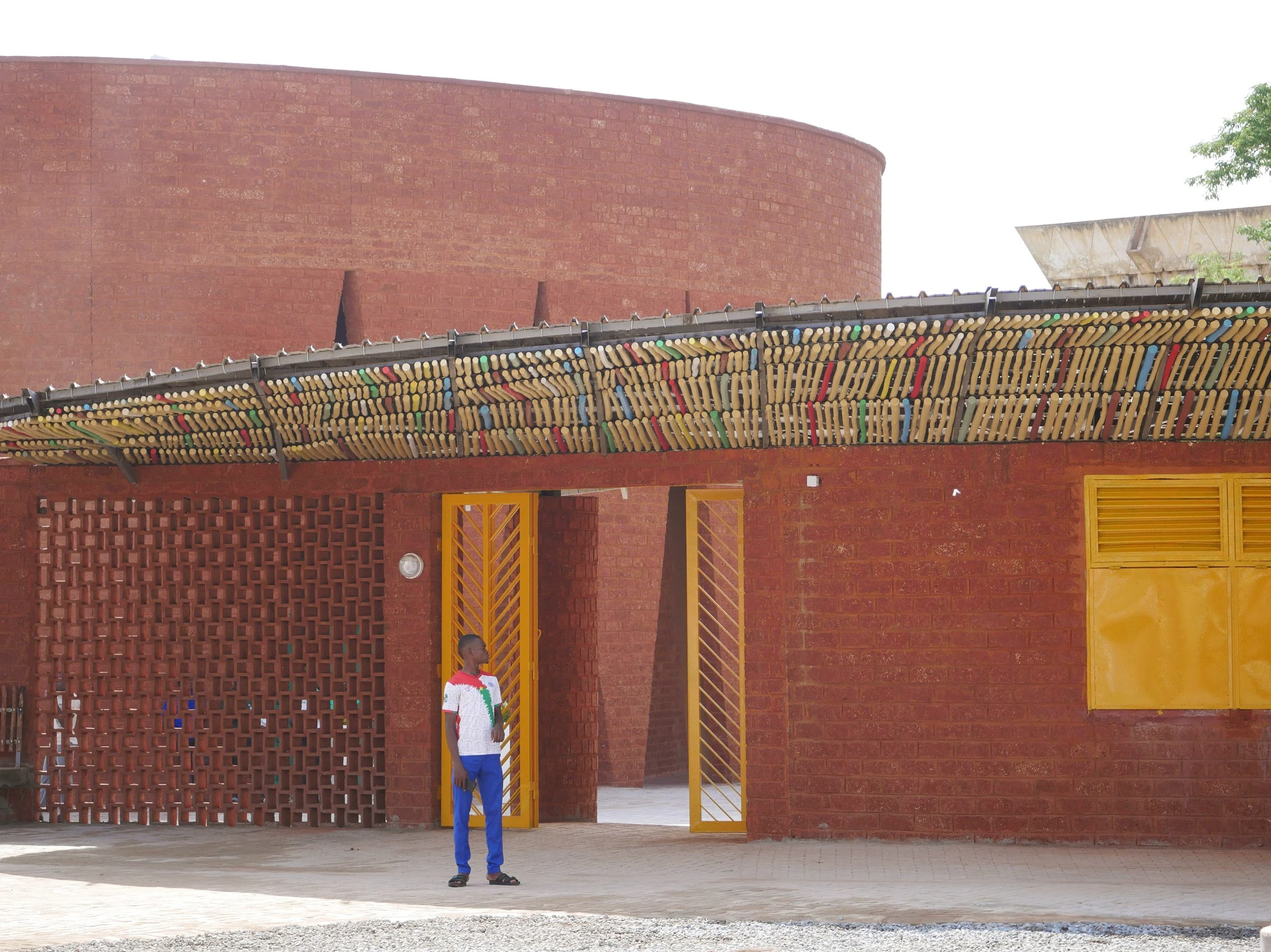
Outside, a curved and colorful pavilion guides visitors from Thomas Sankara Boulevard to the entrance of the building. A massive 34-meter dome encloses the mausoleum, shielding the space from the intense heat of the sun above. Two large doors marking the entrance to the mausoleum are oriented to catch the prevailing east-west winds. The Thomas Sankara Mausoleum was constructed from laterite and clay bricks sourced locally from the region. Local communities were involved in supplying the clay for the structure, marking the beginning of a construction system that spread far beyond the immediate vicinity of Ouagadougou and into Burkina Faso more broadly.
3. Lycée Schorge
Location: Koudougou, Burkina Faso
Year: 2014-2016
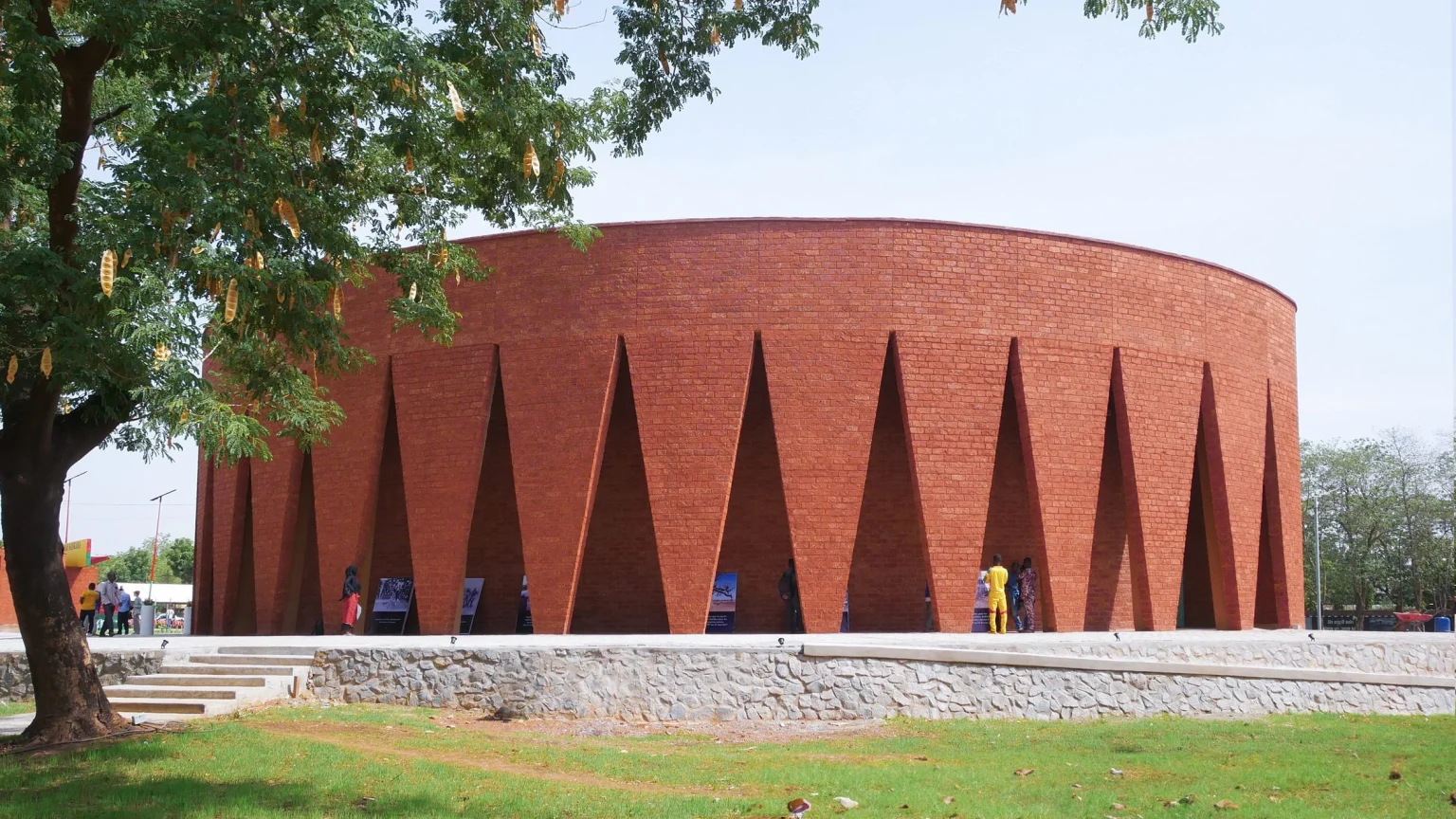
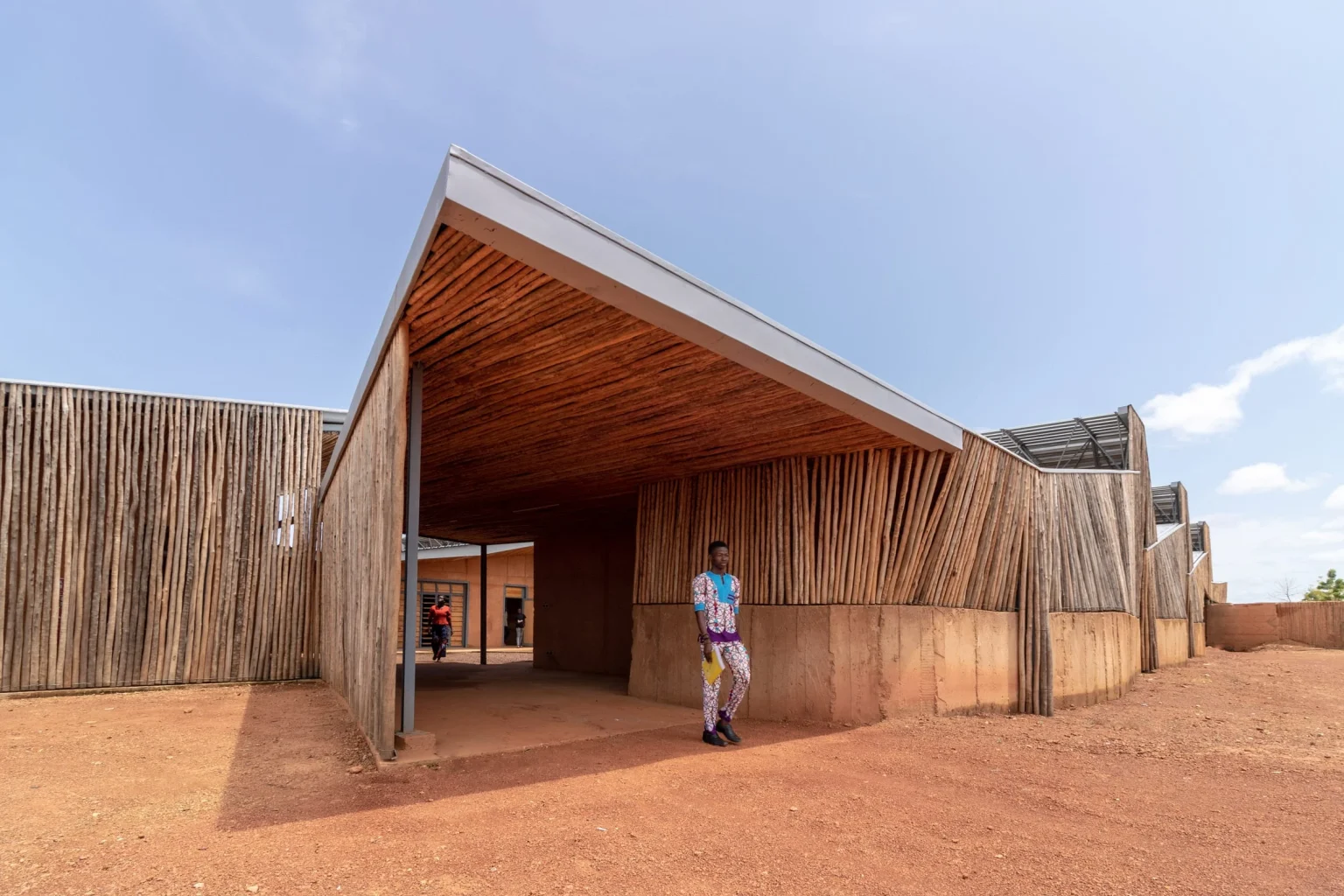
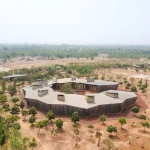
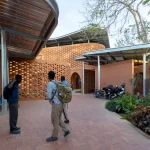
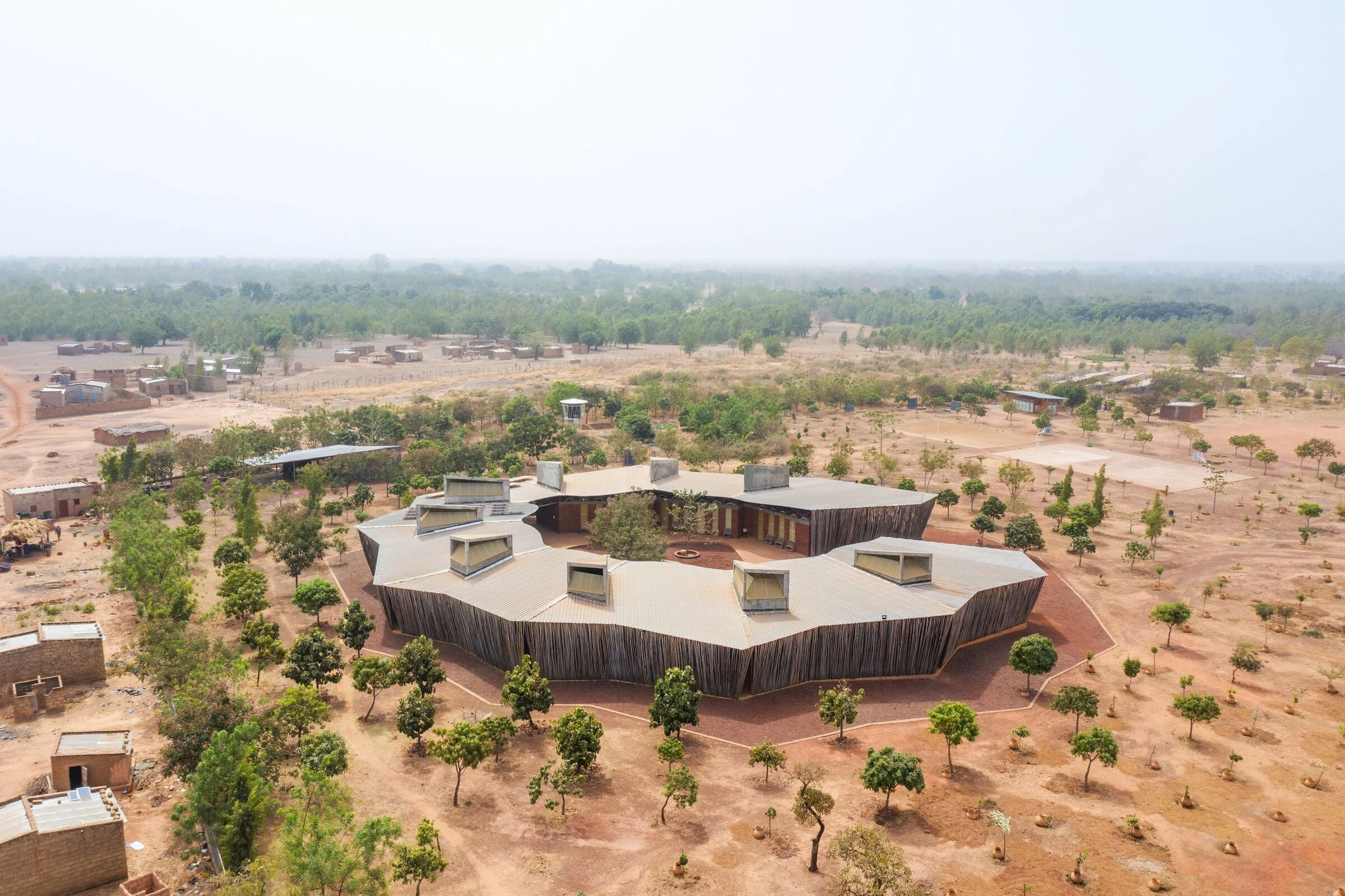
Setting a new standard for educational excellence in the region, the Lycée Schorge is an inspiring example of local building materials applied to an iconic and innovative design. The school consists of nine modules arranged radially around a courtyard that protects the central area from wind and dust. An amphitheater formed by a series of steps hosts informal gatherings for the school and the wider community, as well as ceremonies and celebrations. Each module is constructed from locally sourced laterite stone, giving the walls their striking dark red color. By absorbing heat during the day and releasing it at night, laterite provides excellent thermal mass.
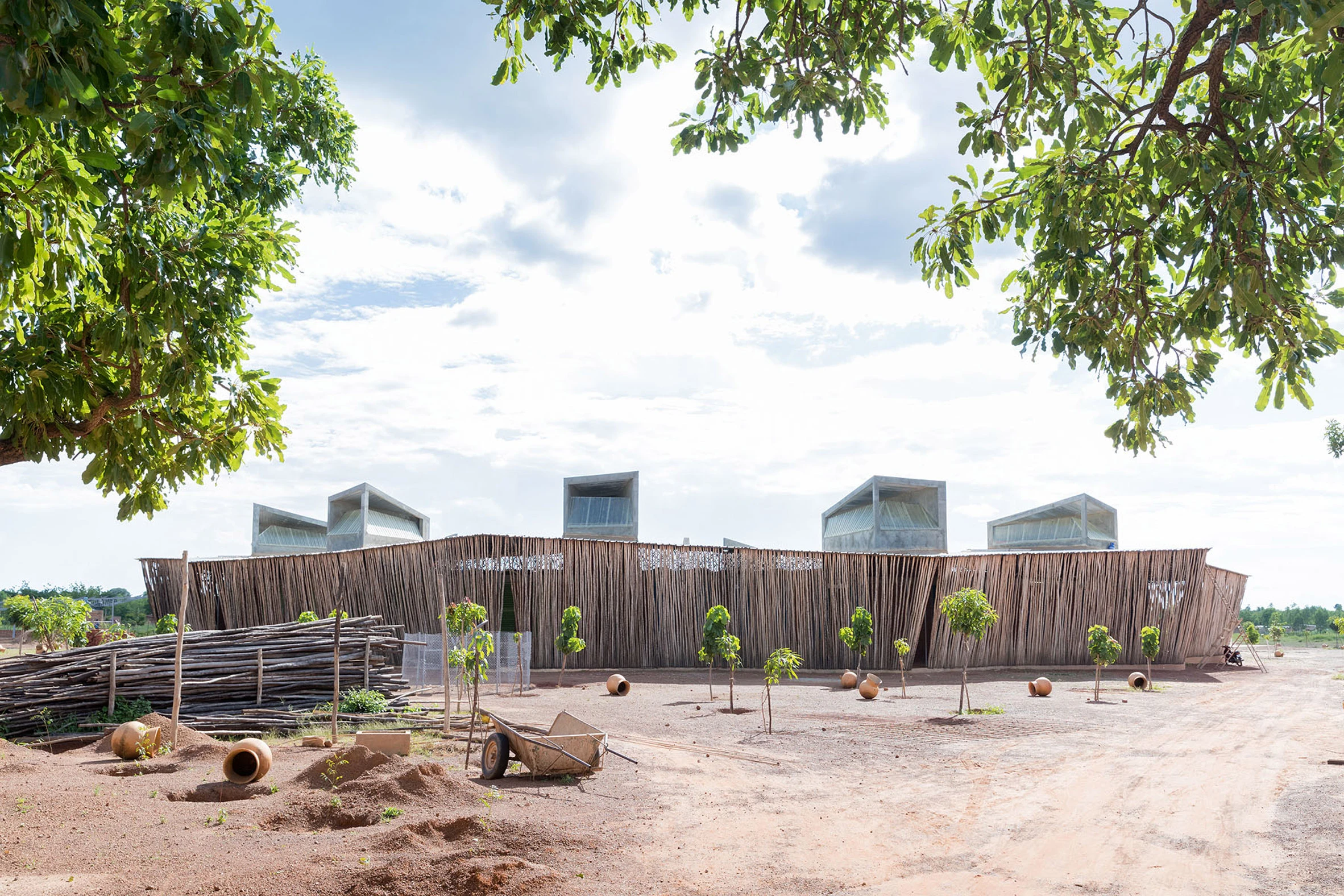
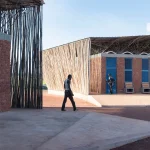
The secondary facade is made of local eucalyptus wood, which wraps the classrooms like a sheer fabric. These areas, where organic vertical elements create a striking play of light, create various shaded interstitial spaces where students can informally gather while waiting for their lessons. Classroom ceilings made of perforated plaster vaults diffuse indirect sunlight to improve light quality while preventing heat from direct radiation. Wind towers located behind each classroom allow hot air to escape, further helping to lower the interior temperature. To minimize costs and reduce material waste, the school’s furniture was made from local hardwood and leftover steel from the roof construction.
4. Burkina Institute of Technology (BIT)
Location: Koudougou, Burkina Faso
Year: 2020
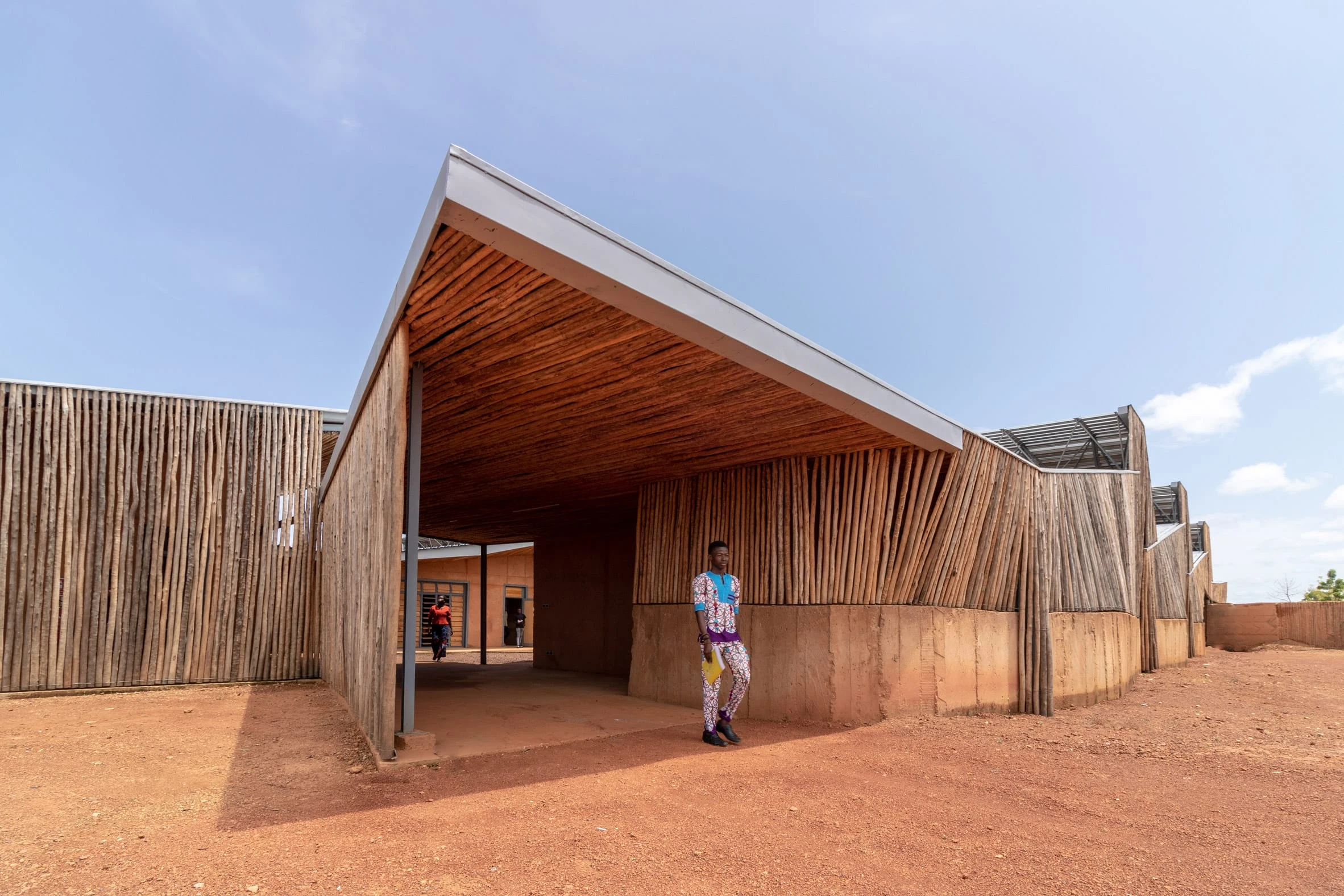
Following the successful construction of the Lycée Schorge, the Stern Stewart Institute commissioned Kéré Architecture to expand the campus with a new facility that would enable high school graduates to continue their education. Designed in this context, the Burkina Institute of Technology (BIT) features a modular system arranged centrally, with a rectangular courtyard defining the space housing classrooms and auxiliary functions. The central void allows for airflow while creating a space for student socialization.
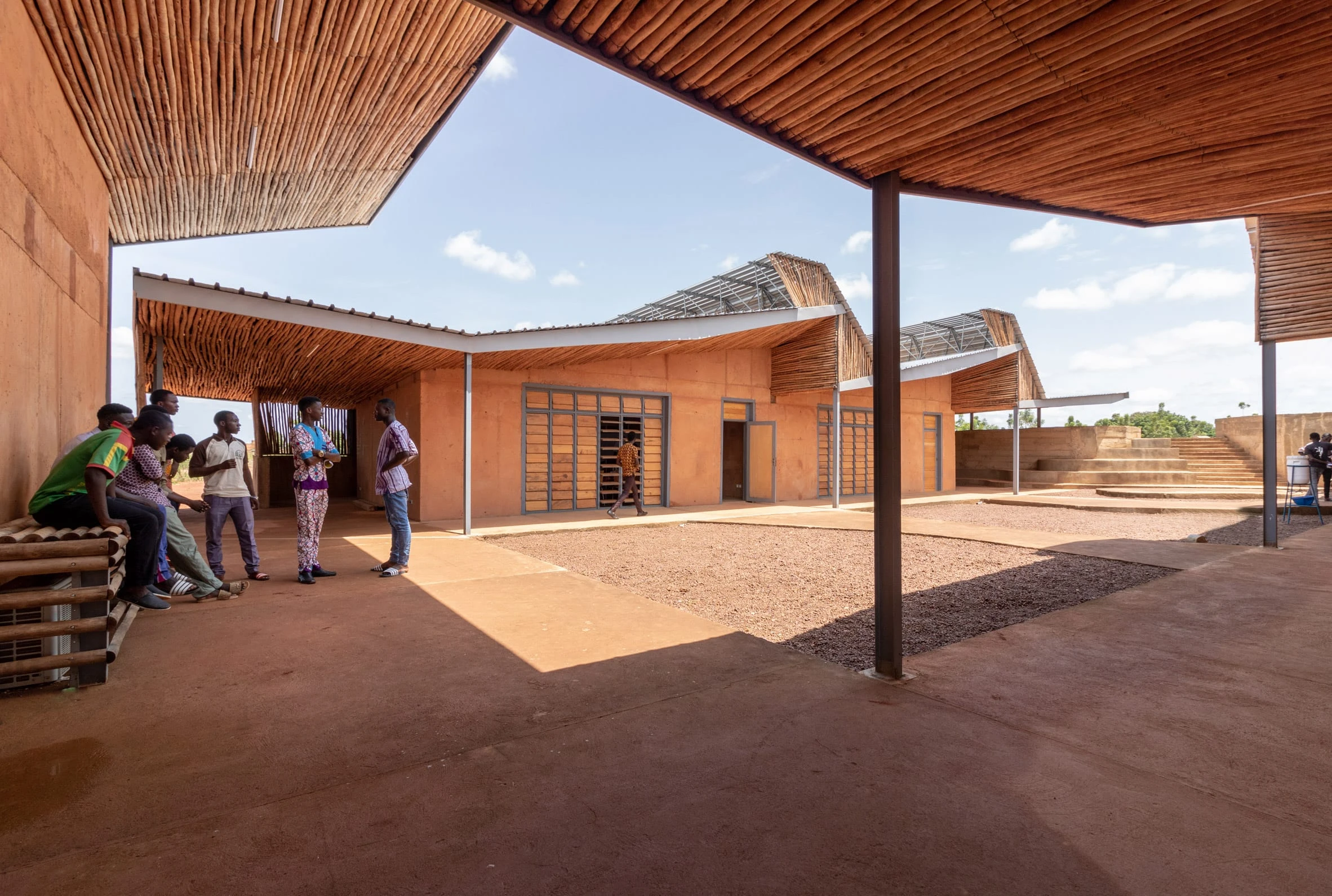
In the construction of BIT, the walls were made from locally sourced clay cast in place. Using large formwork, the system allowed an entire module to be cast in a single session, saving time. The repeating roof profiles, which create a dynamic rhythm, function like chimneys by expelling hot air accumulated at the back of each module. Suspended ceilings made of local eucalyptus wood complement the smooth clay walls, illuminating the interiors. To create a sense of unity with the rest of the campus, the buildings are clad in a transparent eucalyptus wood veneer, in harmony with Lycée Schorge.
5. Serpentine Pavilion
Location: Kensington Gardens, London, UK
Year: 2017
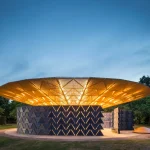
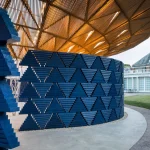
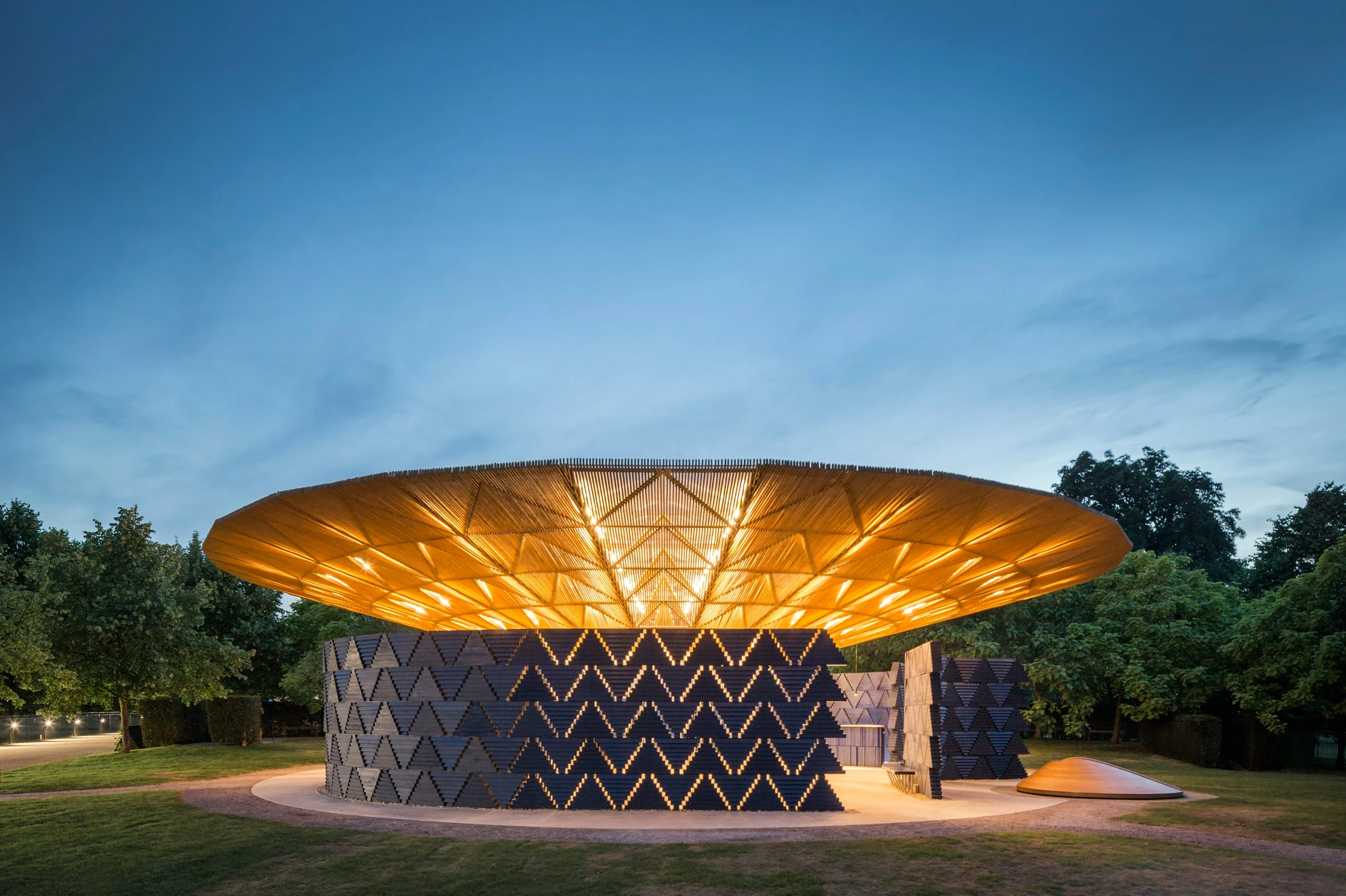
In 2017, Diébédo Francis Kéré designed the Serpentine Pavilion 2017, part of the annual pavilion program held since 2000 in Kensington Gardens. Inspired by the large tree in Gando where community members gather to reflect on the day, the Serpentine Pavilion focuses on creating a sense of community while connecting people with nature. A large, cantilevered roof made of steel and a transparent skin covers the entire footprint, allowing sunlight into the space while protecting it from rain. Wooden shading elements on the underside of the roof change according to the movement of the sun and clouds, creating a dynamic shadow effect.
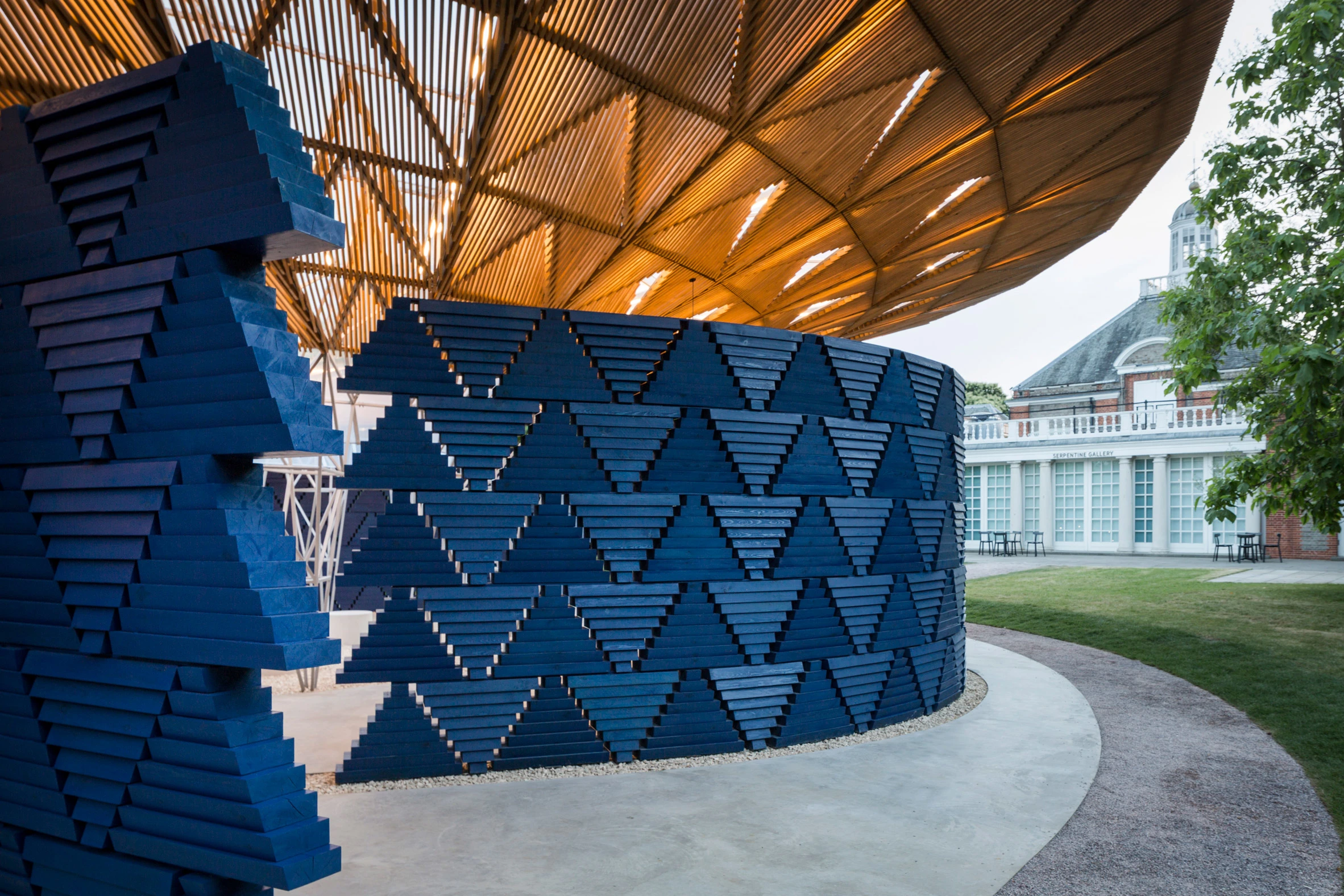
The wall system consists of prefabricated timber blocks assembled in triangular modules with slight openings. This system gives the building lightness and transparency. The curved walls, divided into four sections, provide four separate entry points for the Serpentine Pavilion. Independent of the roof structure, these elements allow both air and visitors to circulate freely.
At the center of the pavilion, a large opening in the roof covering connects it to the sky. When it rains, the roof acts like a funnel, directing water into the heart of the structure. This rainwater harvesting process functions symbolically, emphasizing that water is a fundamental resource for humanity’s survival and well-being. In the evenings, the roof covering becomes a source of light, while the openings in the walls provide clues about movement within the pavilion.
6. Goethe-Institut Dakar
Location: Dakar, Senegal
Year: 2018-2026
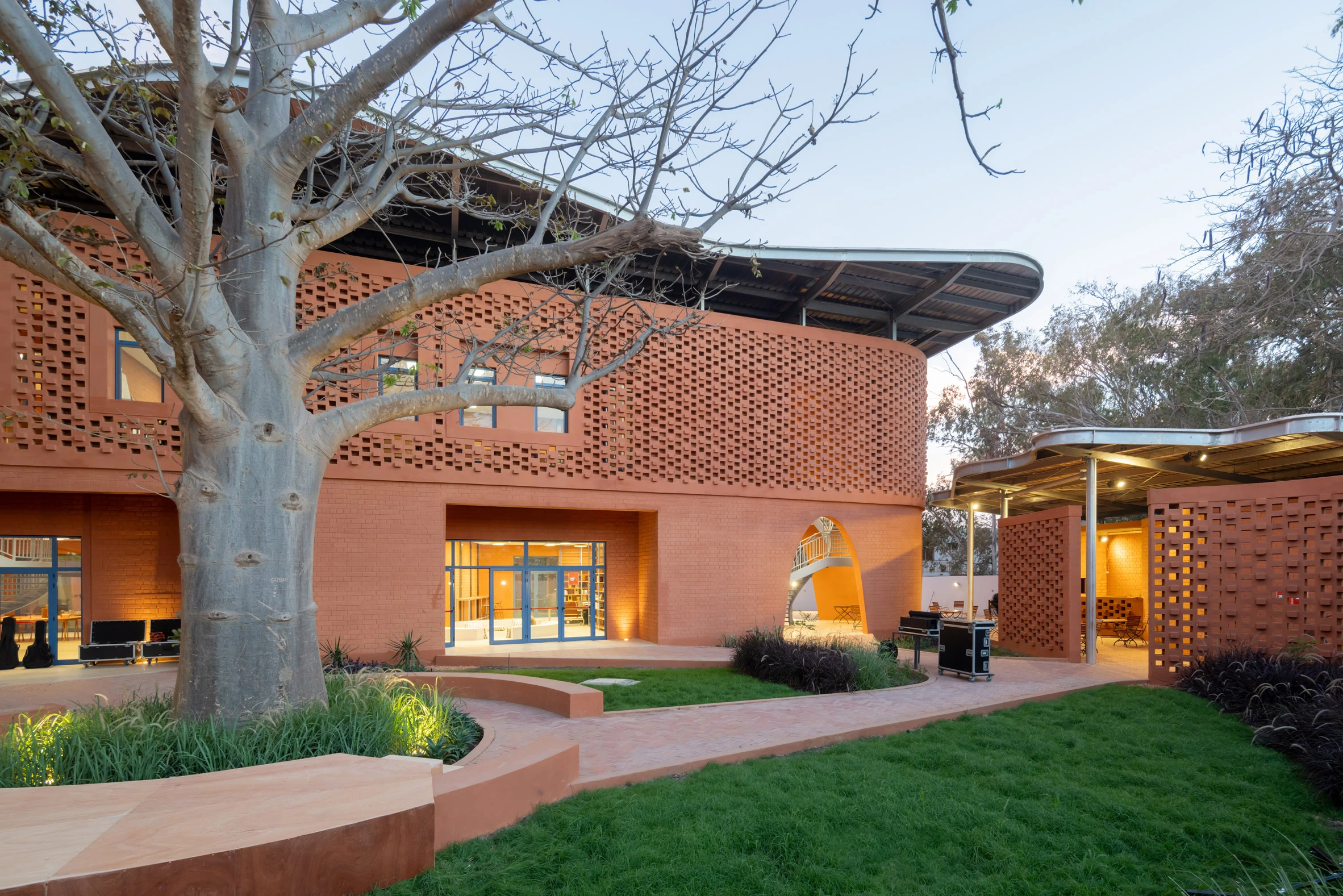
The Goethe-Institut e.V.’s Dakar location was assigned to Kéré Architecture. The Goethe-Institut Dakar is designed as a welcoming and versatile building that serves as an example of what 21st-century cultural exchange should be, addressing the complex history of cultural encounters and bringing together a diverse community to define an inclusive and sustainable future.
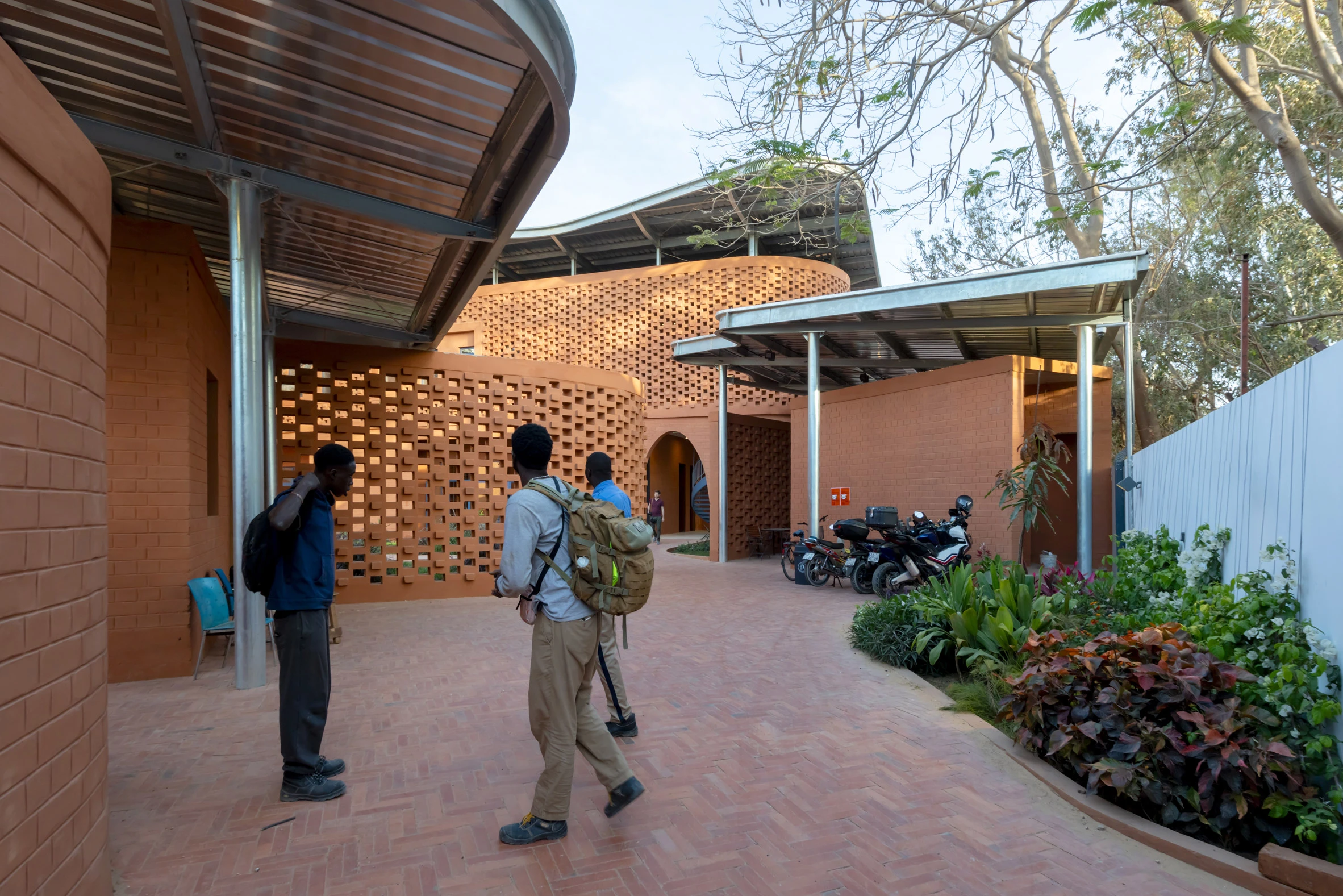
Located in a residential area and a green landscape, the Goethe-Institut Dakar responds to its neighbors, such as the Léopold Sédar Senghor Museum, and the surrounding natural environment with respect. Designed to reflect the outlines of the tree canopies, the compact two-story building creates space for a multitude of activities, from exhibitions and language courses to concerts and informal meetings.
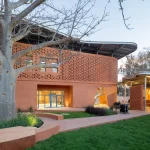
Most public activities, including an auditorium, cafeteria, and library, are located on the ground floor, while administrative offices and classrooms are on the first floor. Protecting its visitors and surrounding residents from potential noise, the Goethe-Institut Dakar’s building walls feature a second, semi-transparent exterior made from the same locally sourced BTC bricks, giving it a light and airy appearance.
7. Leo Surgical Clinic and Health Centre
Location: Leo, Burkina Faso
Year: 2014
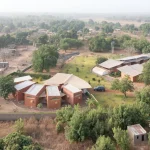
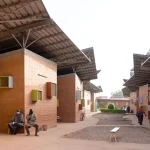
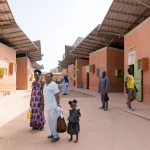
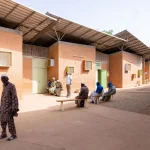
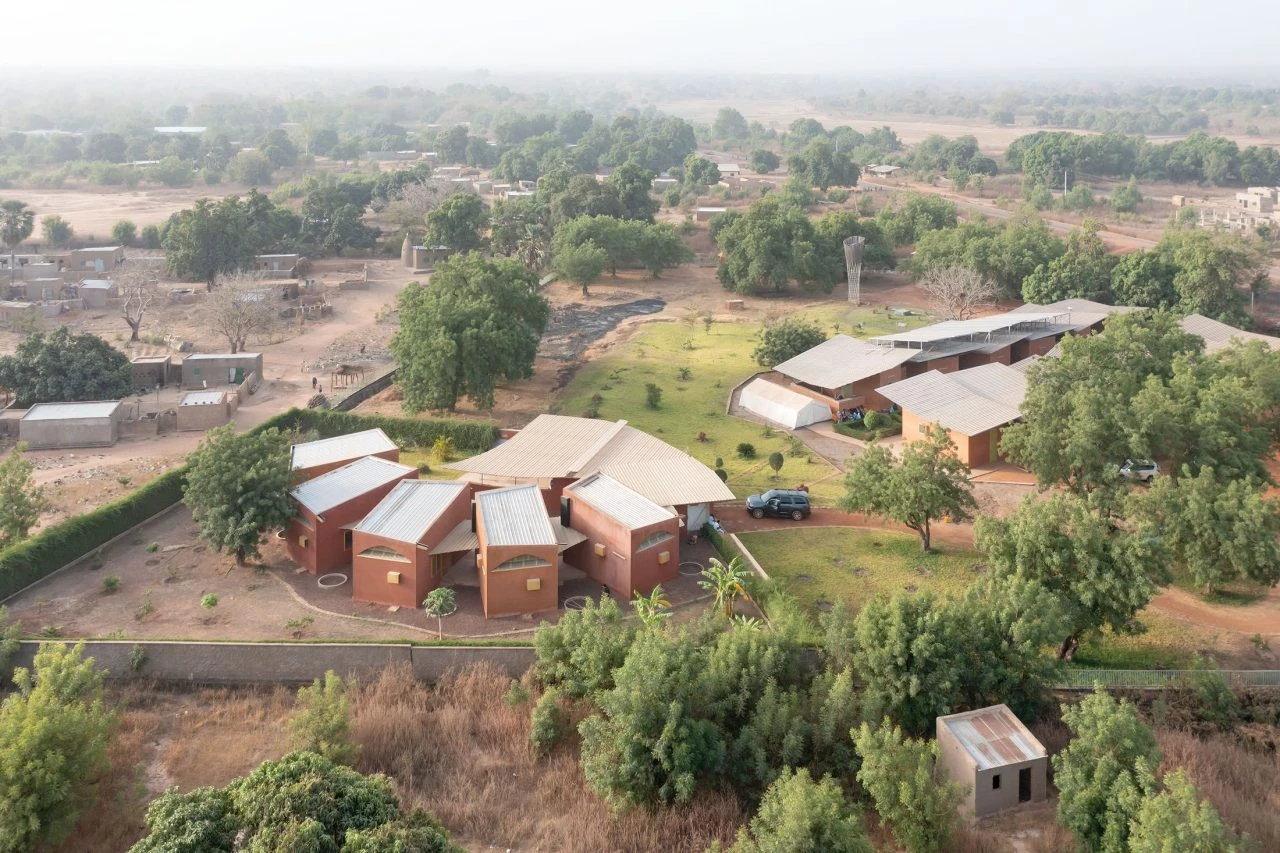
The Leo Surgical Clinic and Health Centre, designed by Diébédo Francis Kéré, was built to relieve pressure on the existing regional hospital and meet the medical needs of the local population. Featuring surgical facilities, inpatient services, and a maternity unit, the centre was completed between 2016 and 2018 with the addition of Leo Doctor’s Housing. Offering an alternative to the intimidating rigidity that often characterizes the architecture of healthcare institutions, the facility creates an inclusive atmosphere.
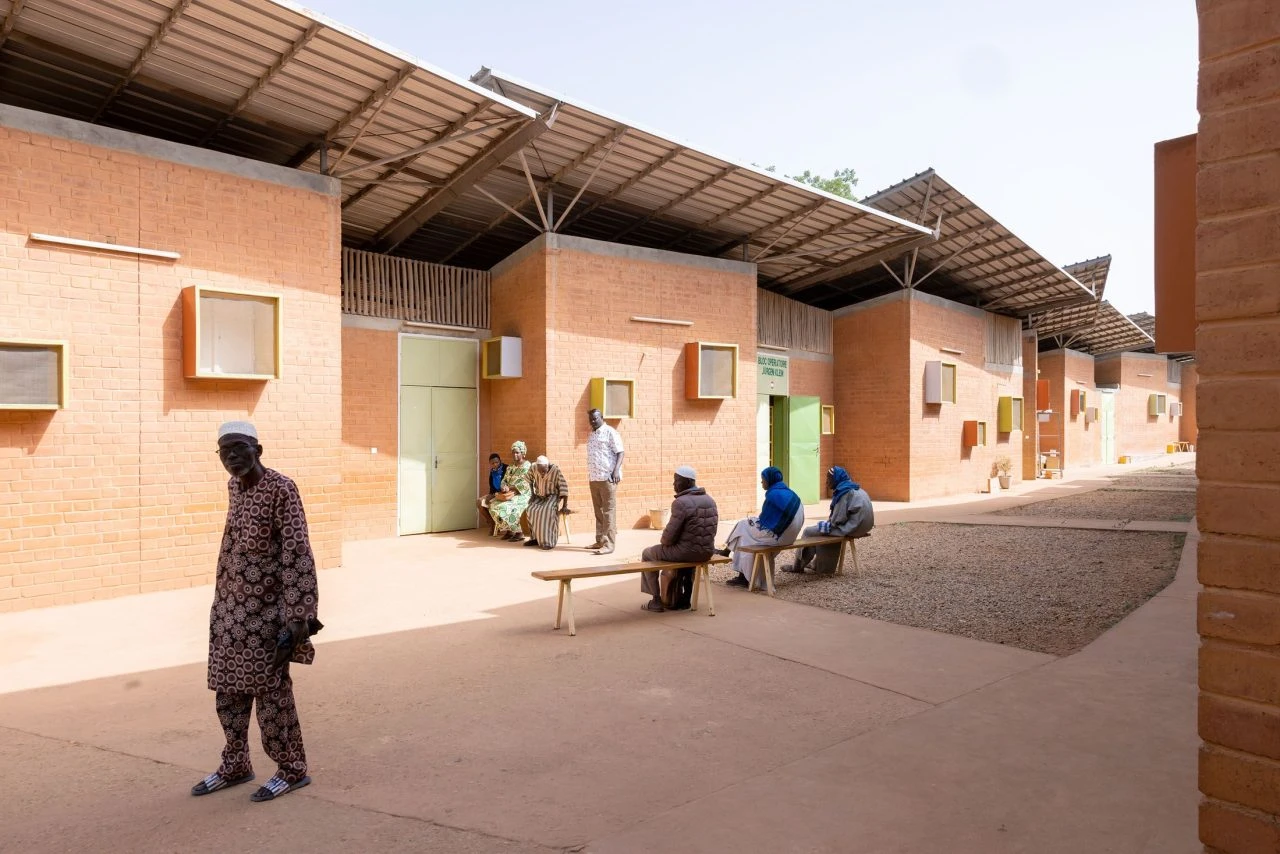
The Leo Surgical Clinic and Health Centre consists of 10 loosely arranged modular units that form a series of sheltered intermediate spaces, producing a dynamic and welcoming environment. This modular system also accelerates construction and reduces costs. The large overlapping roofs of the units protect the raw clay walls from rain during the wet season and provide shade from the intense daytime sun. The roofs are designed to efficiently collect rainwater, and a rainwater and greywater collection and filtration system has been installed. Graywater is treated by adding oxygen using solar energy collected from on-site panels.
8. Xylem
Location: Fishtail, Montana
Year: 2019
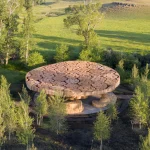
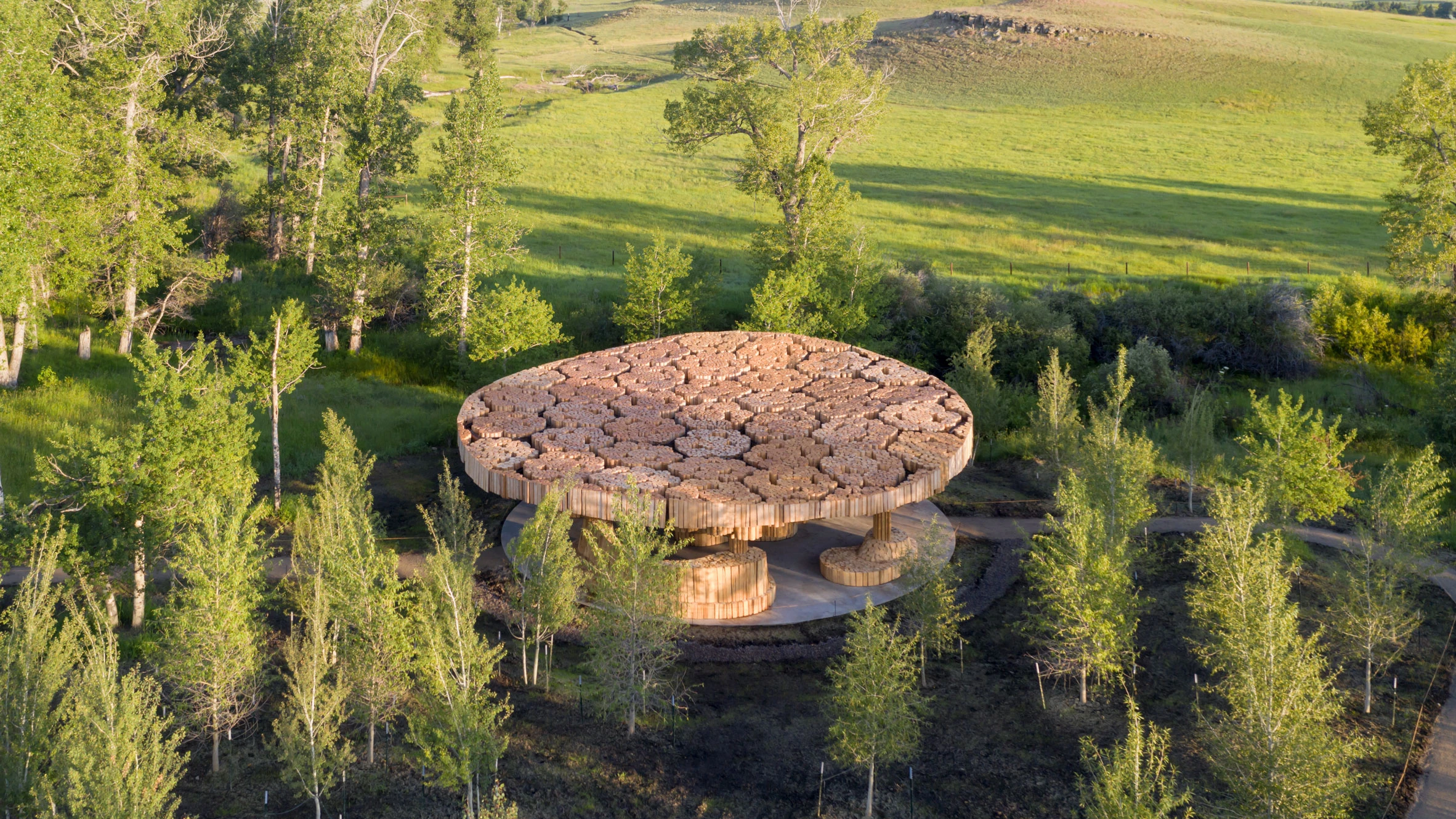
Xylem Pavilion, designed by Kéré, is conceived as a quiet and sheltered refuge for the Tippet Rise Art Center, where visitors can gather and talk or sit alone and reflect. Situated on a gently sloping terrain between the arts centre’s main facilities and the start of the walking trails, the pavilion is located in a clearing surrounded by poplar trees, overlooking a small stream. Completely carved from logs, Xylem invites visitors into the heart of the trees. The sustainable pine trees chosen for the pavilion’s design are locally sourced and used in their raw form, obtained from a natural pruning process that rids forests of parasitic insects.
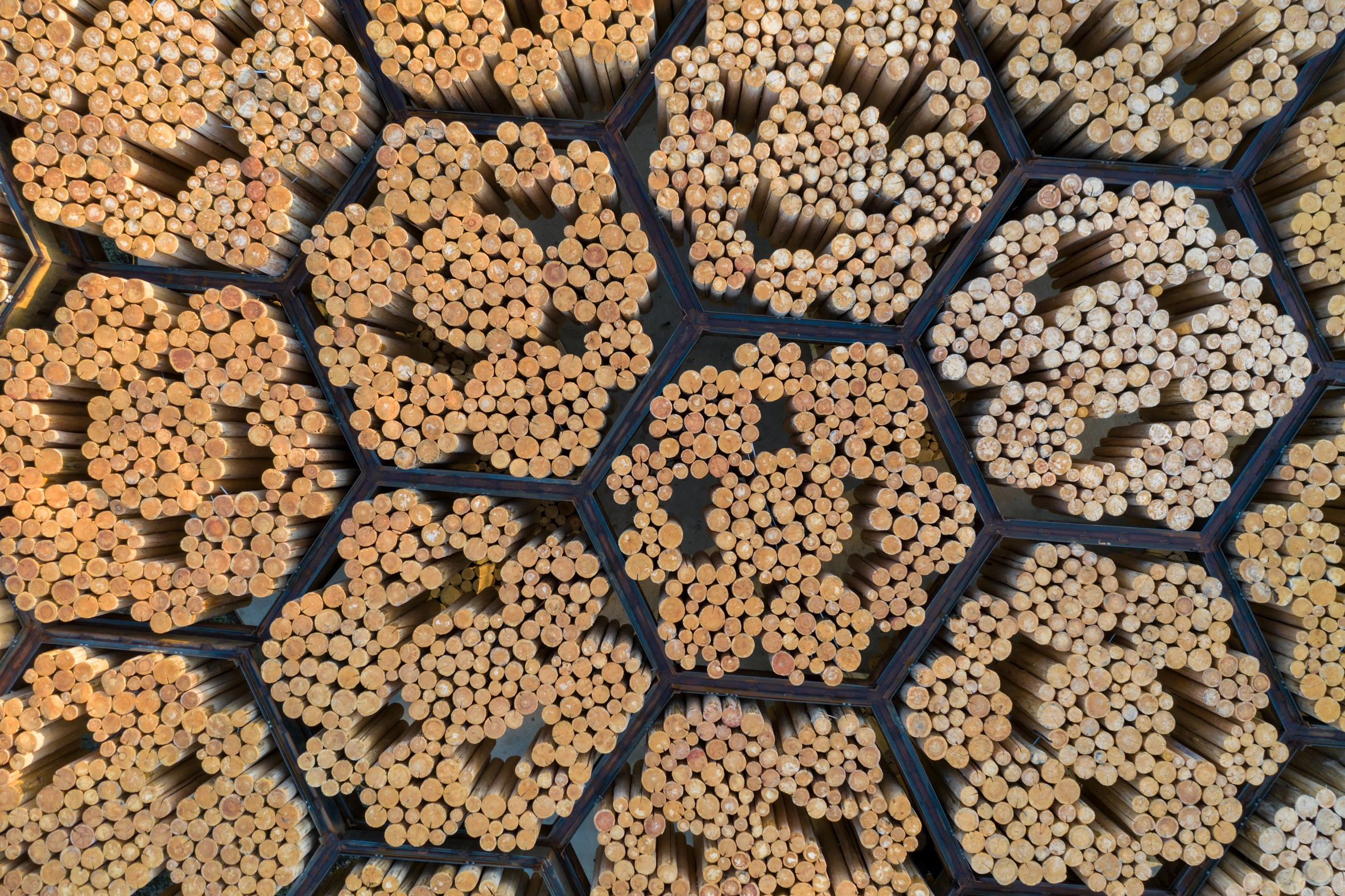
The logs forming the canopy are grouped into circular bundles within a modular hexagonal structure supported by seven steel columns. Inspired by the “tuguna,” a sacred gathering space in Burkinabé communities, the imposing yet lightweight roof has a curved upper surface that blends into the surrounding hills. Sunlight filtering through the vertical logs creates a soft play of light and shadow in Xylem’s curved seating areas and on the polished concrete circular platform below.
9. Kamwokya Community Centre
Location: Kampala, Uganda
Year: 2016-2022
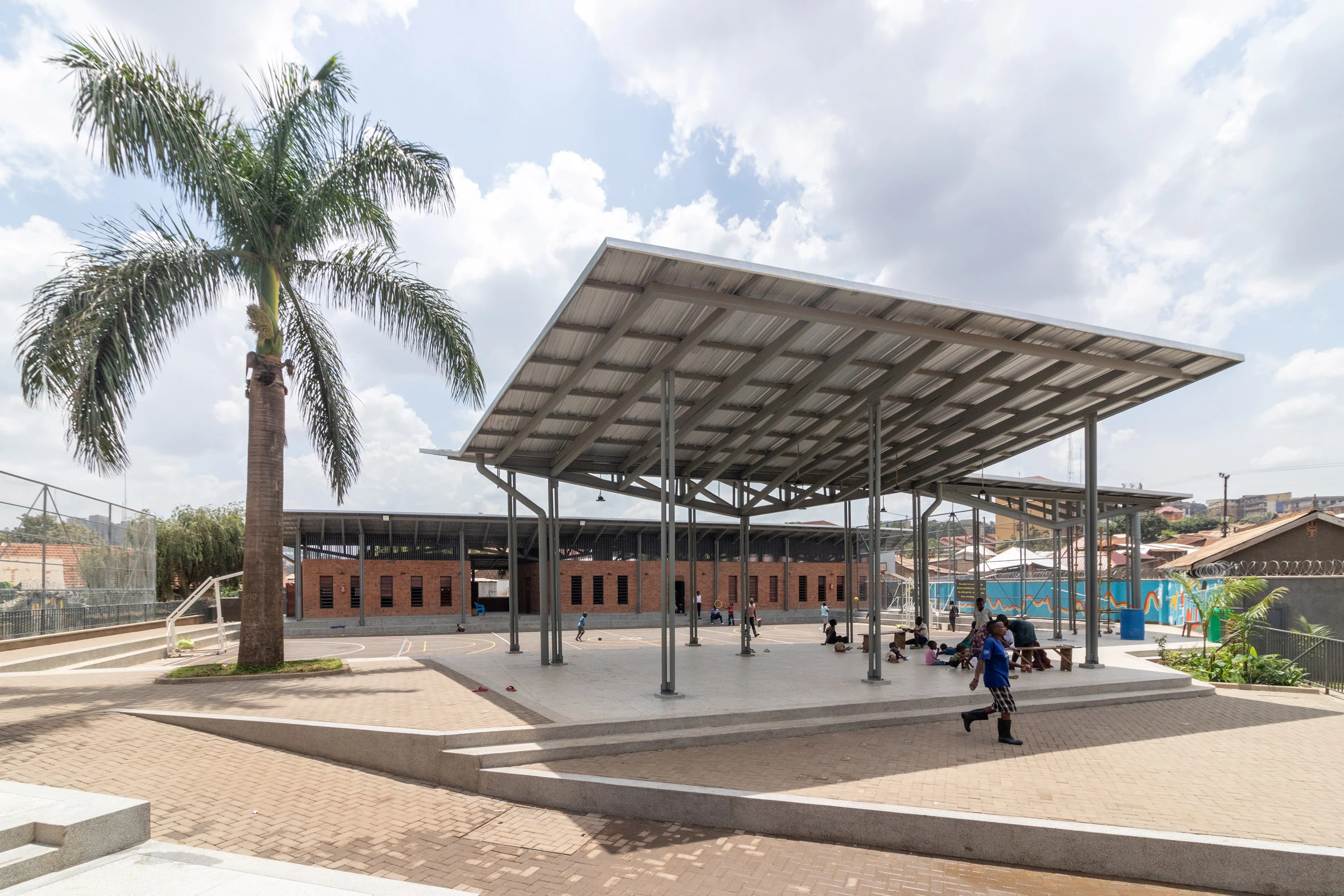
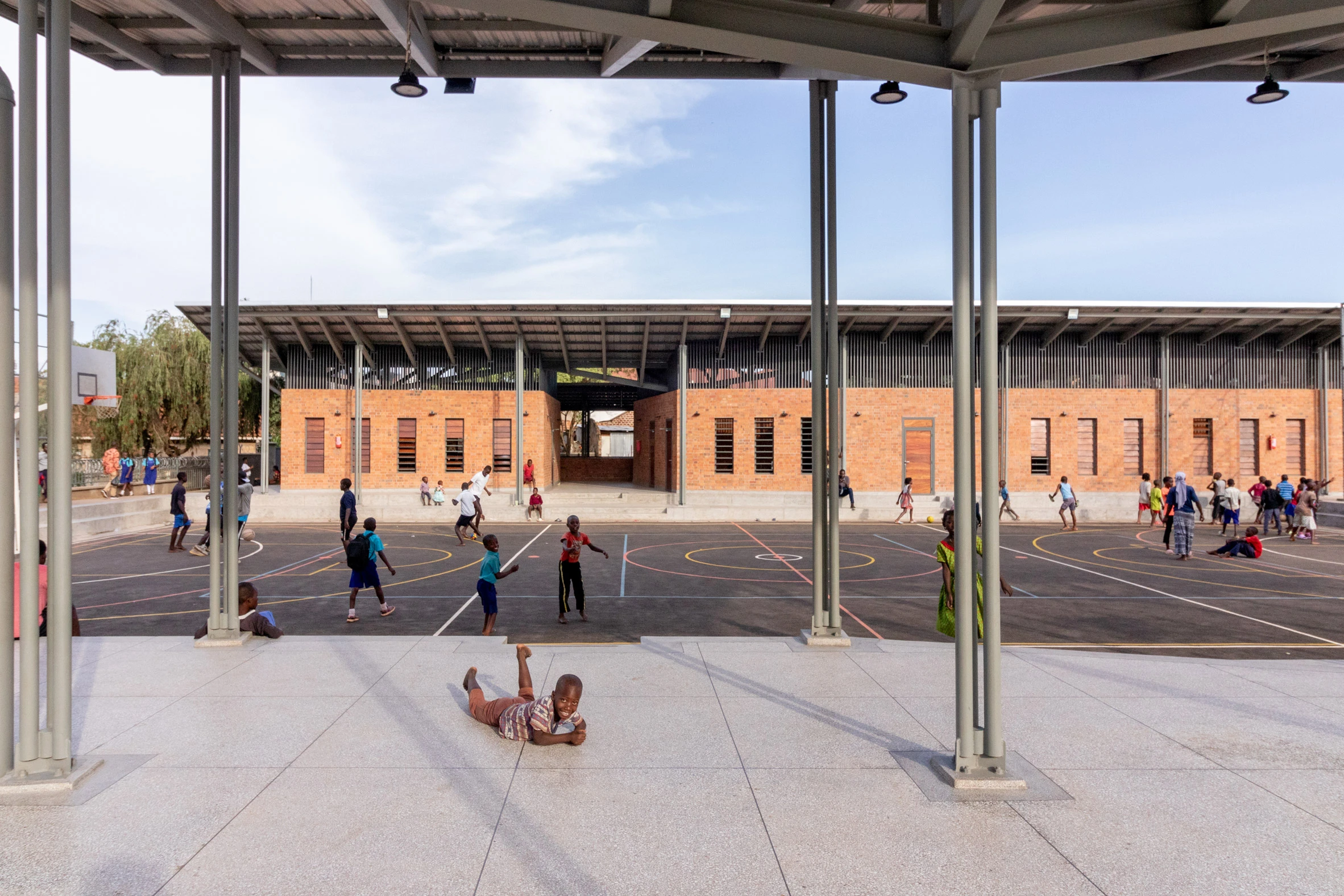
One of Diébédo Francis Kéré’s most striking designs, the Komwokya Community Centre is the result of a partnership between the local non-profit Kamwokya Christian Caring Community and the Ameropa Foundation, which works internationally on projects aimed at improving the lives of disadvantaged communities. Providing suitable space for activities such as playgrounds, sports training and matches, spontaneous gatherings, community events, workshops, and music and dance classes, the project aims to preserve and enhance the public and free character of the area, raising it gently rather than imposing it.
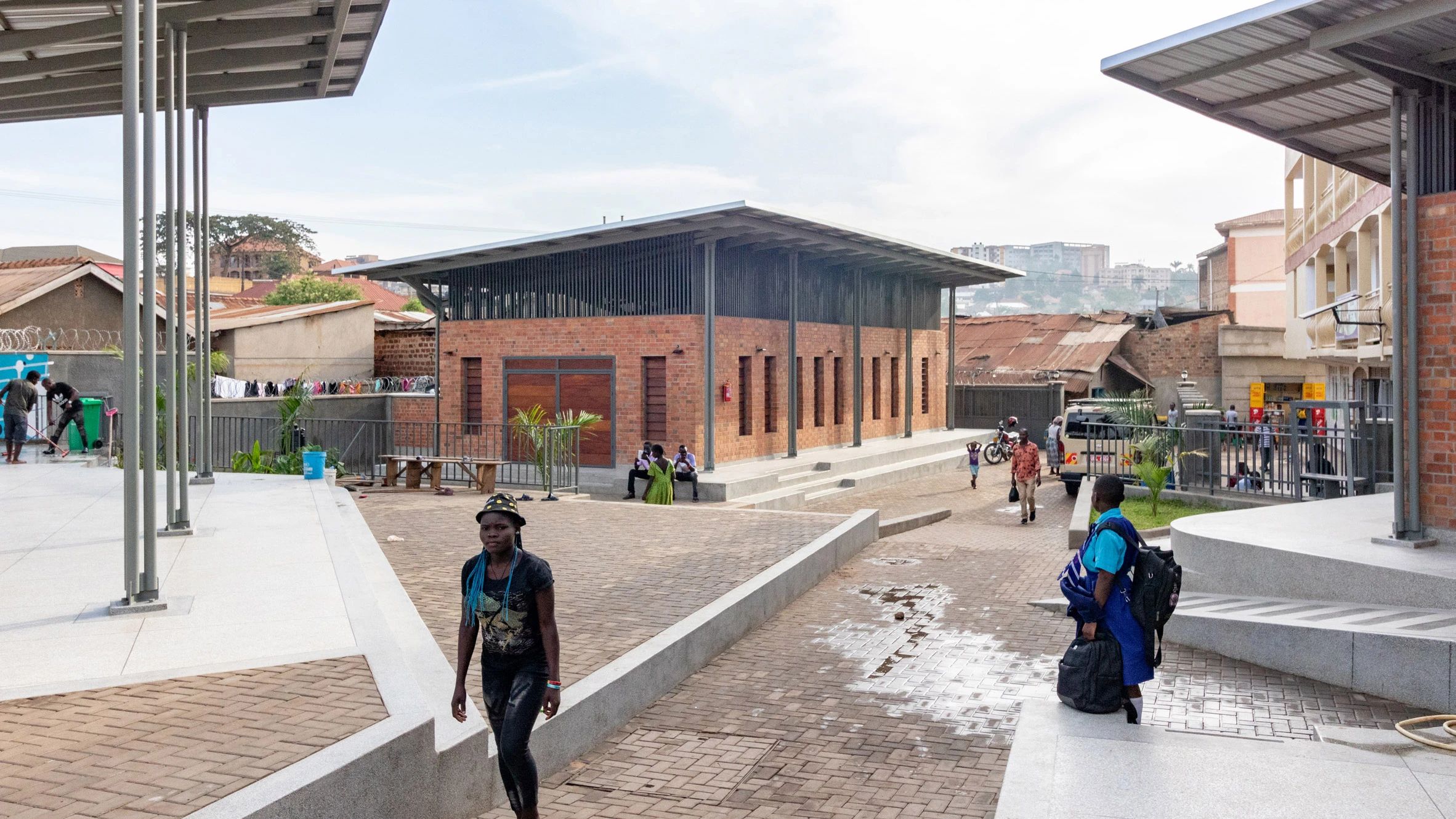
The community centre is built on a raised platform with an efficient drainage system to protect it from repeated flooding during heavy rains. The platform is divided into separate zones through slight level differences, allowing multiple activities to take place simultaneously without interfering with one another. On the platform, two naturally ventilated buildings house a small gymnasium, an internet cafe, various multi-purpose classrooms and workshops, a music studio, and offices, along with an adjacent restroom block. Two butterfly roofs elevated over steel structures covering these spaces enable air circulation. The main sports area, which is drained and shaded, is surrounded by bleacher-like steps for watching games or informally gathering.
10. Centre for Earth Architecture
Location: Mopti, Mali
Year: 2010
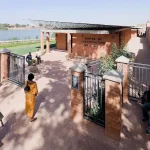
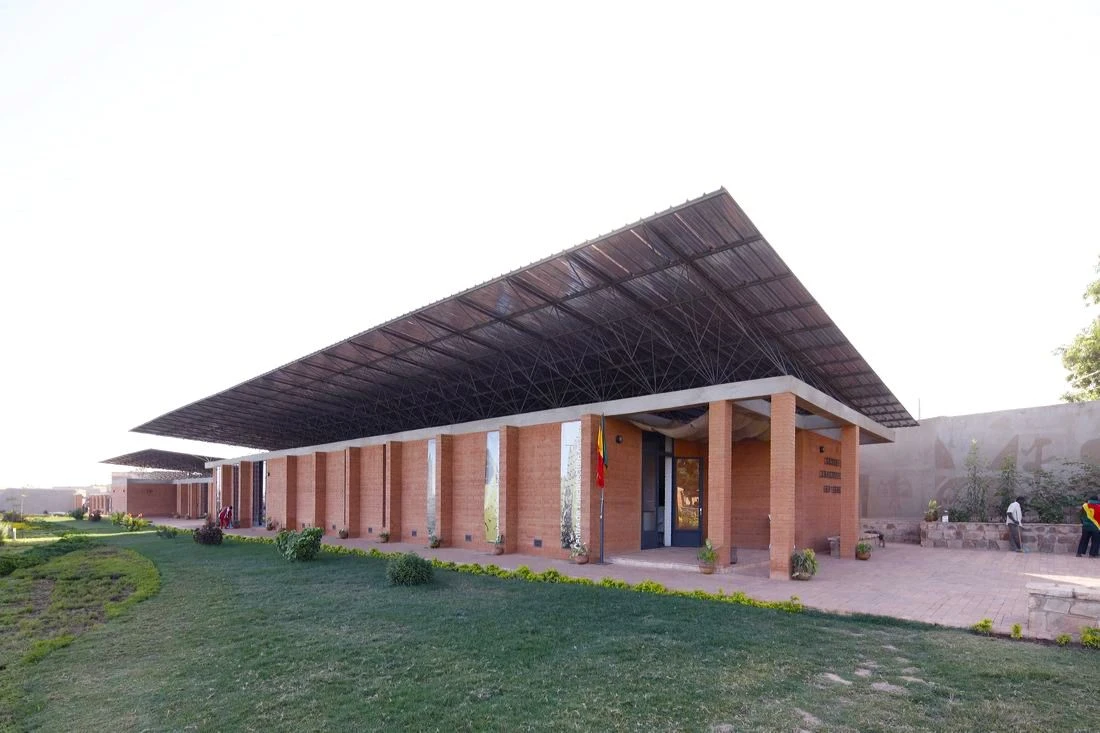
The Centre for Earth Architecture, a showcase of clay construction techniques, is complementary to a program undertaken by the Aga Khan Cultural Foundation in Mopti, Mali, which includes the restoration of a mosque and the construction of a new sewage system. The structure houses exhibition spaces and educational facilities showcasing the region’s traditional earth architecture heritage. Aligned on the same axis as the nearby mosque, its height is carefully adjusted so as not to obstruct the view of the mosque’s earthen towers, integrating into the surrounding urban fabric.
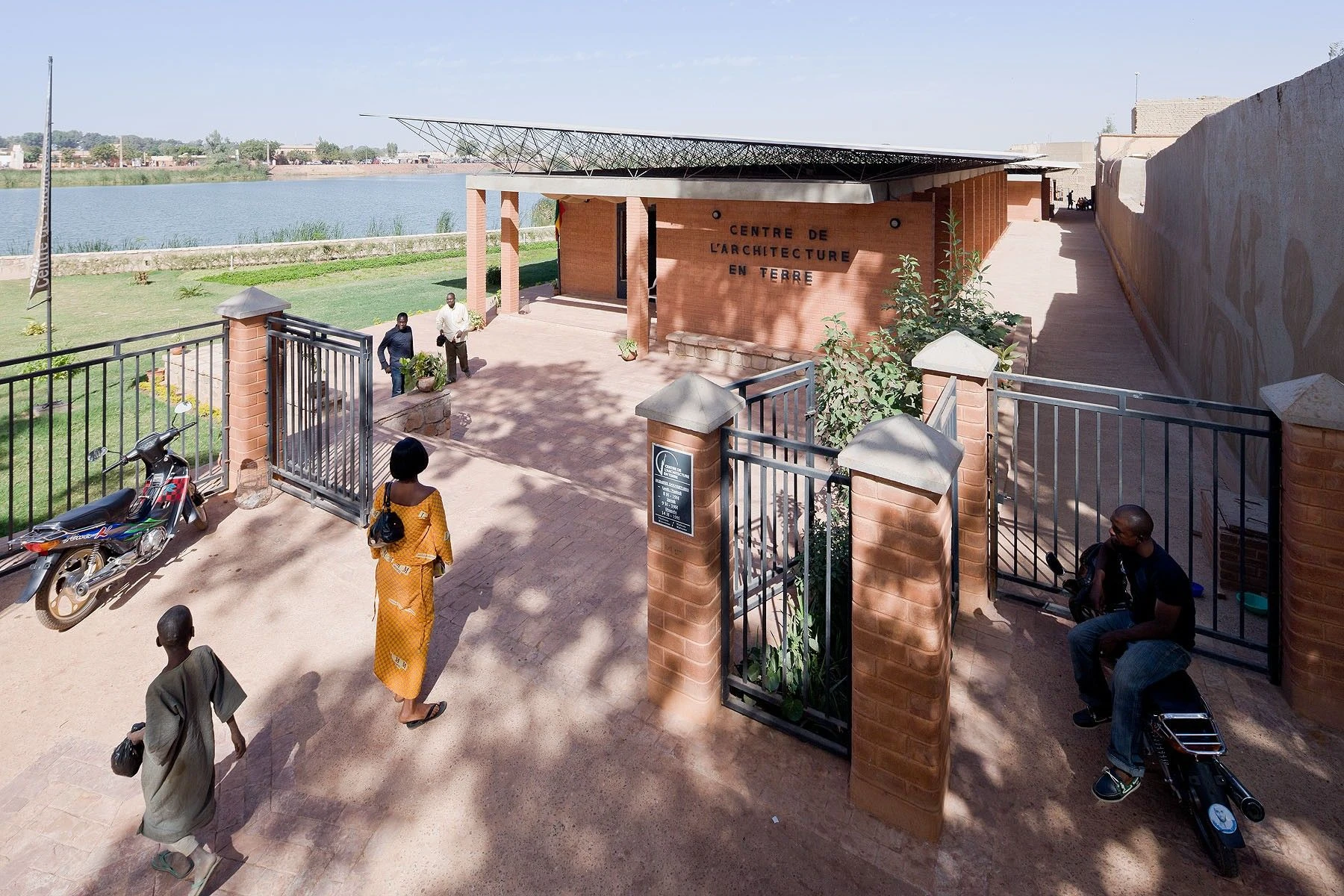
Serving the needs of the local population, the district administration, and visiting guests, the centre is divided into three distinct buildings unified under two roofs. The center’s walls and vaults are constructed from exposed compacted stabilized earth blocks (BTC) held together by clay mortar, creating a natural temperature buffer between the interior and exterior, adapting to the regional climate. The cantilevered roof provides shaded outdoor spaces while keeping the walls cool. The building is naturally ventilated through openings in the walls and vaults, significantly reducing energy consumption.
Operating across diverse geographies, Diébédo Francis Kéré draws inspiration from tradition. His innovative use of local resources and participatory design methods enables him to move beyond the boundaries of established design practices and break away from dominant norms to create his own examples. As seen in the projects examined in this article, Kéré places the users of each project at the center of the design process, learning from and responding to the specific context of each project. He then develops sustainable solutions by drawing on creativity and his inherited knowledge of resource use. Kéré Architecture draws inspiration from tradition to develop applications that meet the demands of today’s realities.