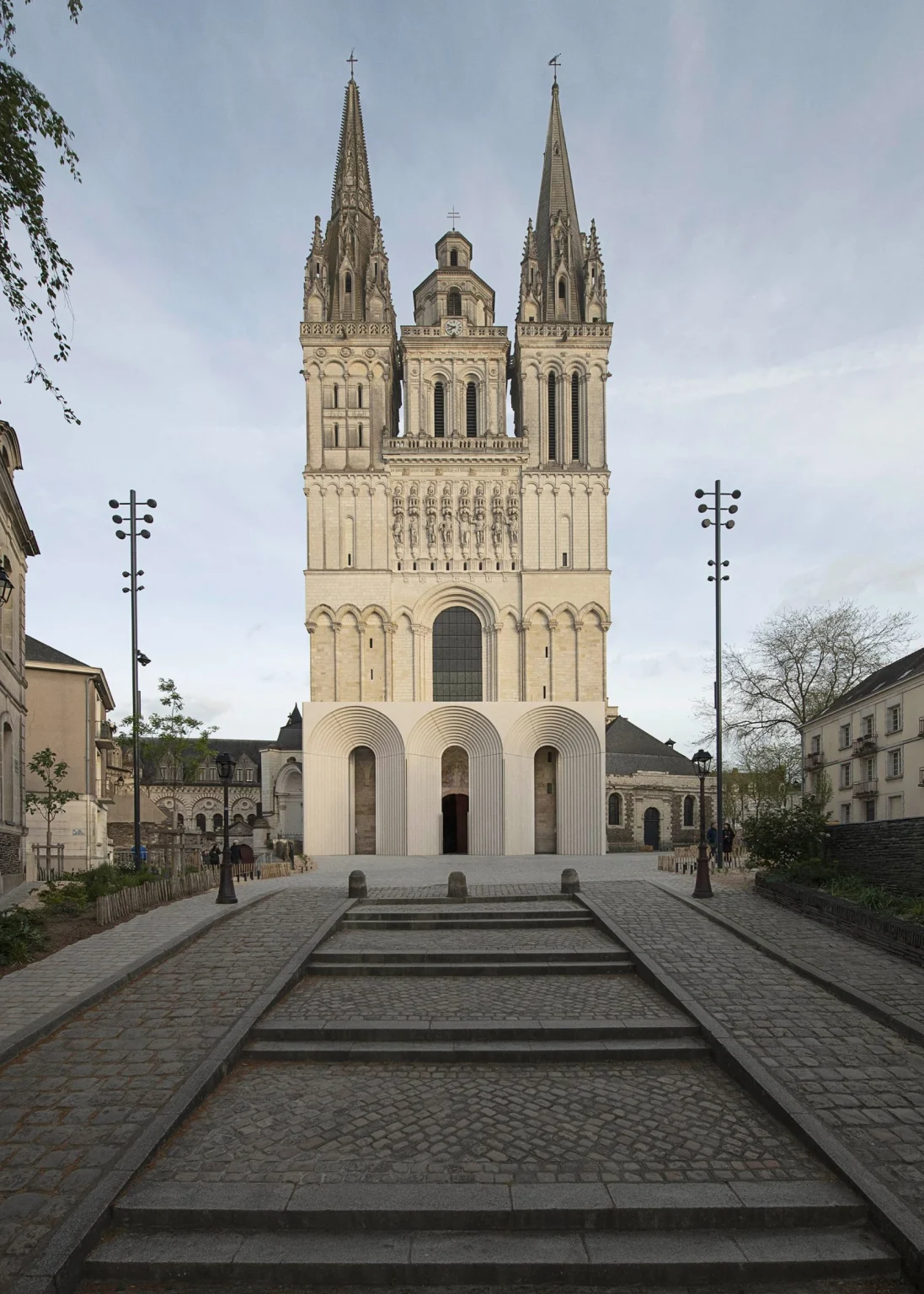

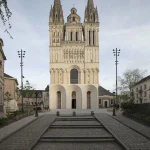
Japanese architect Kengo Kuma has introduced a calibrated architectural intervention at the historic Saint-Maurice Cathedral, transforming its western entrance through a contemporary system of arched forms. The project operates as a protective gallery that mediates between preservation and reinterpretation, addressing both environmental exposure and historical continuity.
A Protective Envelope Rooted in Gothic Logic
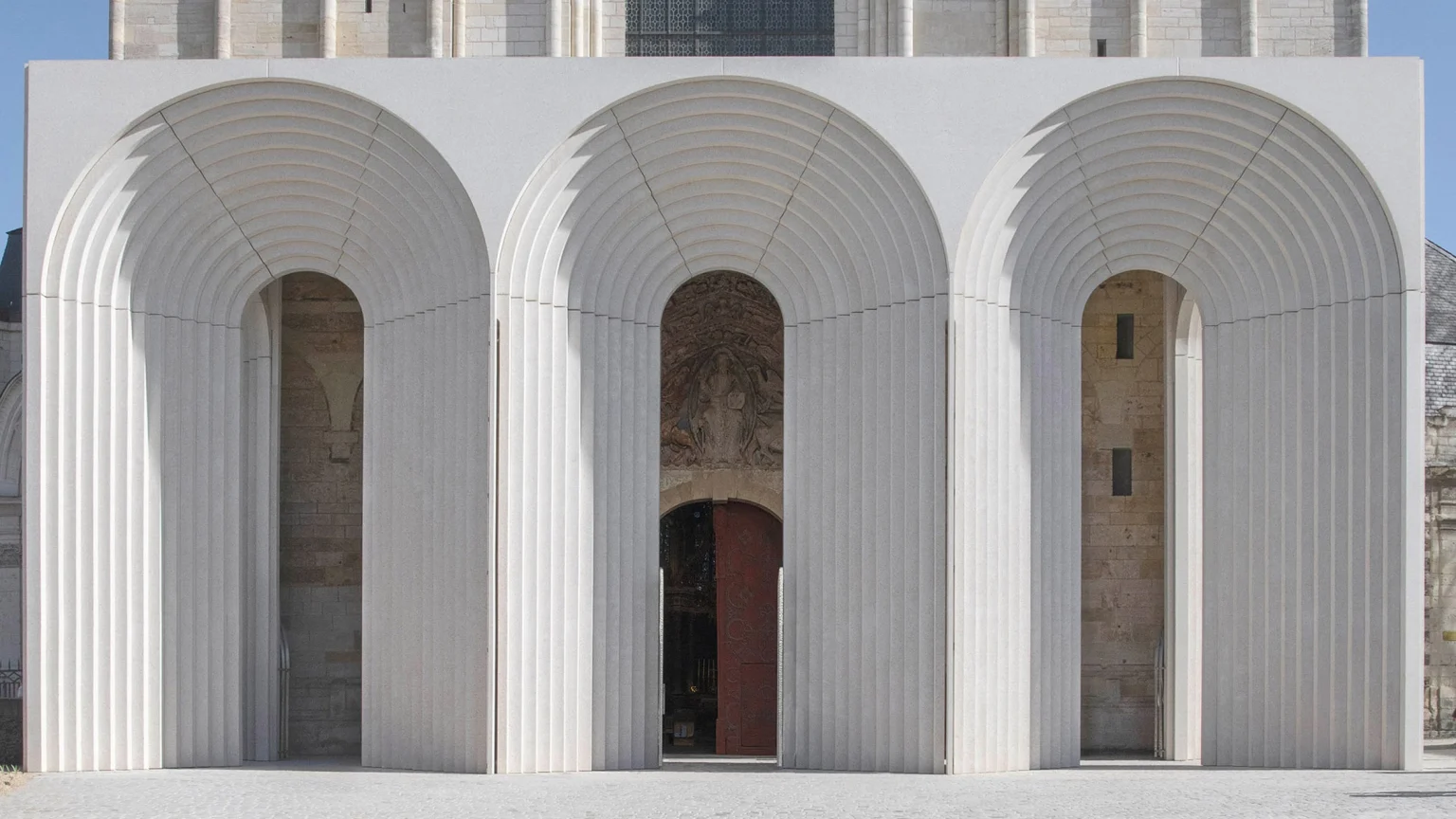
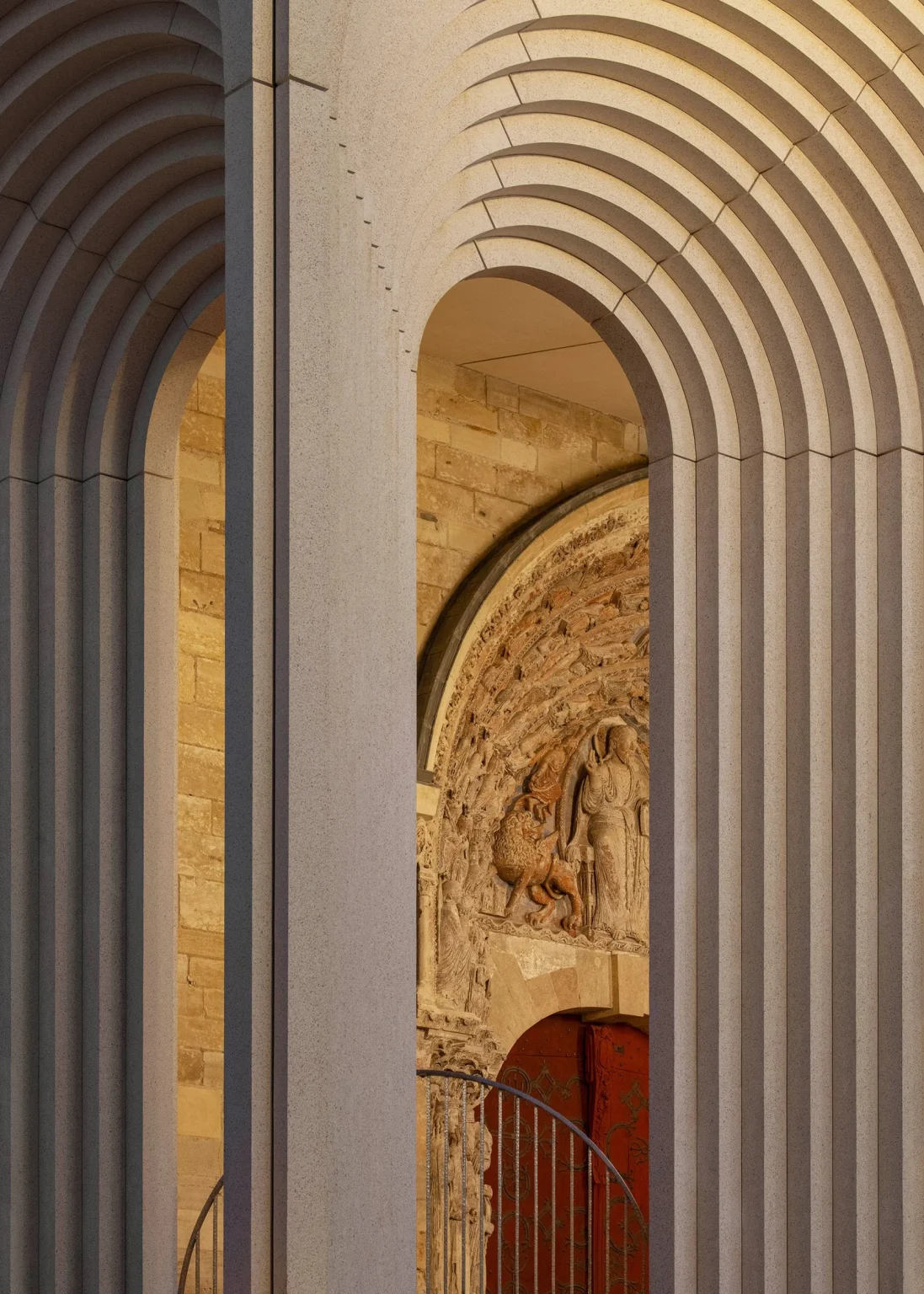
The intervention was developed to safeguard the cathedral’s fragile polychromatic sculptures from the 12th and 17th centuries, which had been exposed after the loss of an earlier porch structure. Kuma’s response is a freestanding gallery composed of layered arches that echo the proportional and geometric logic of medieval construction. By studying the original builders’ methods, including compass-based proportional systems, the design establishes a continuity of architectural language while remaining distinctly contemporary.
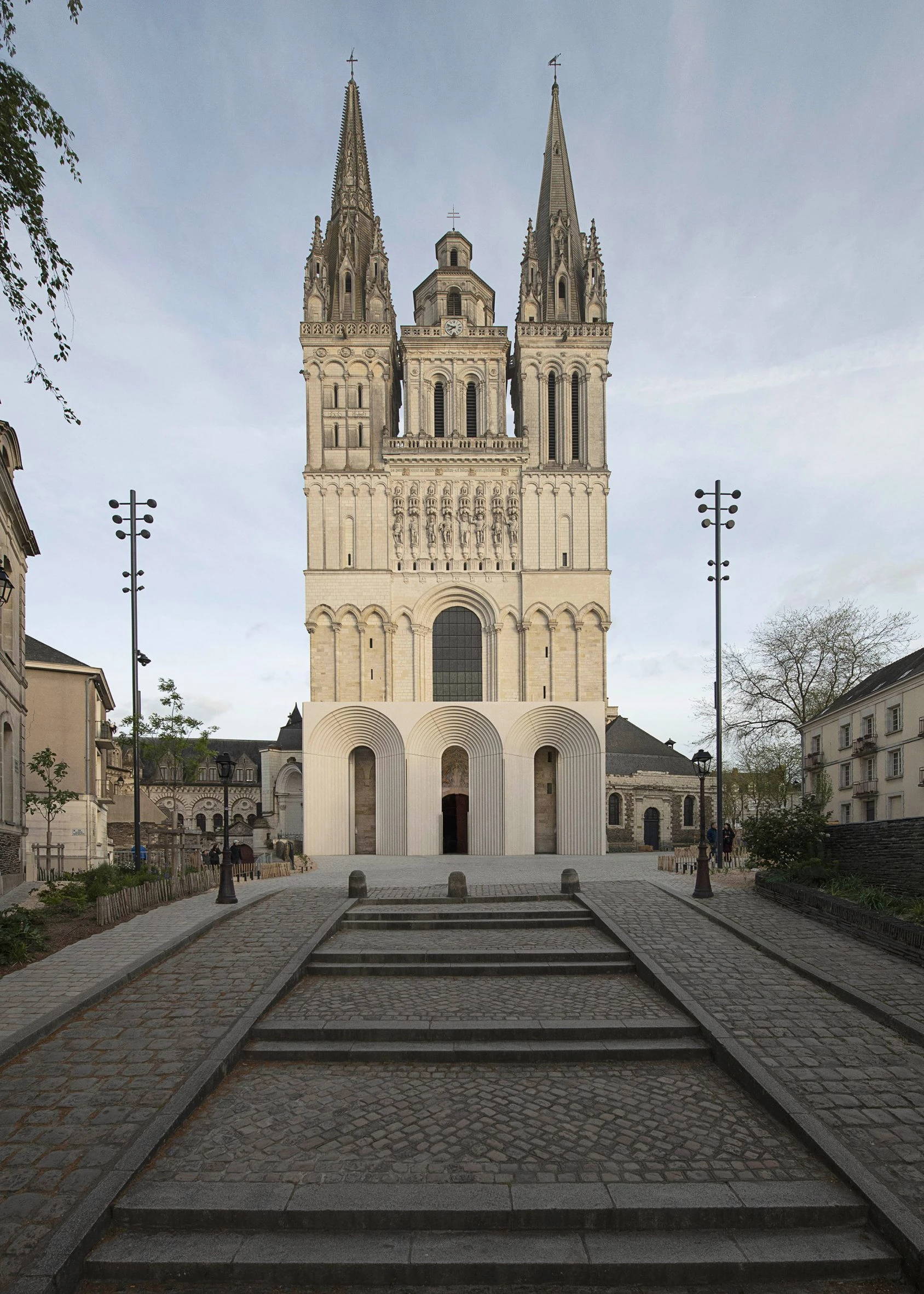
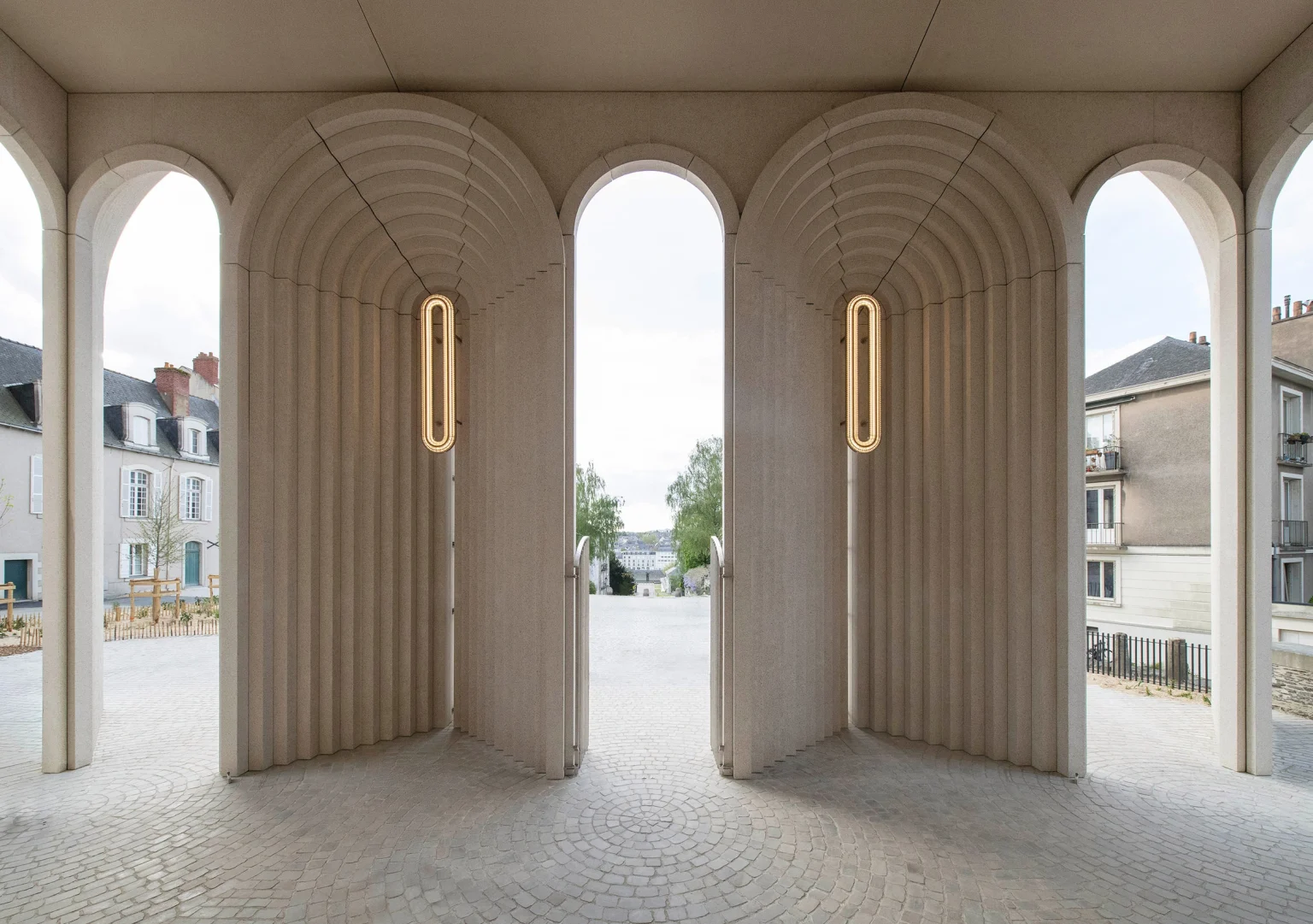
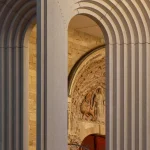
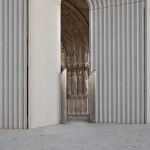
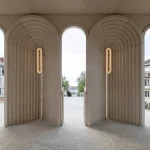
The arched doorways generate depth and procession. Slightly offset and extruded, the arches create a directional movement toward the entrance, enhancing the spatial transition from exterior plaza to sacred interior. This approach allows the new structure to remain visually permeable while avoiding direct attachment to the historic fabric, preserving the cathedral’s structure.
Kengo Kuma’s Constructive Expression
The project relies on finely crafted precast concrete elements, using aggregates sourced from the Loire basin to achieve a nuanced texture and color integration with the existing stonework. Approximately hundreds of individual components were fabricated and assembled to form the gallery, reflecting a high level of stereotomic precision. The result is a surface that reads as both monolithic and granular, bridging contemporary fabrication with traditional masonry techniques.
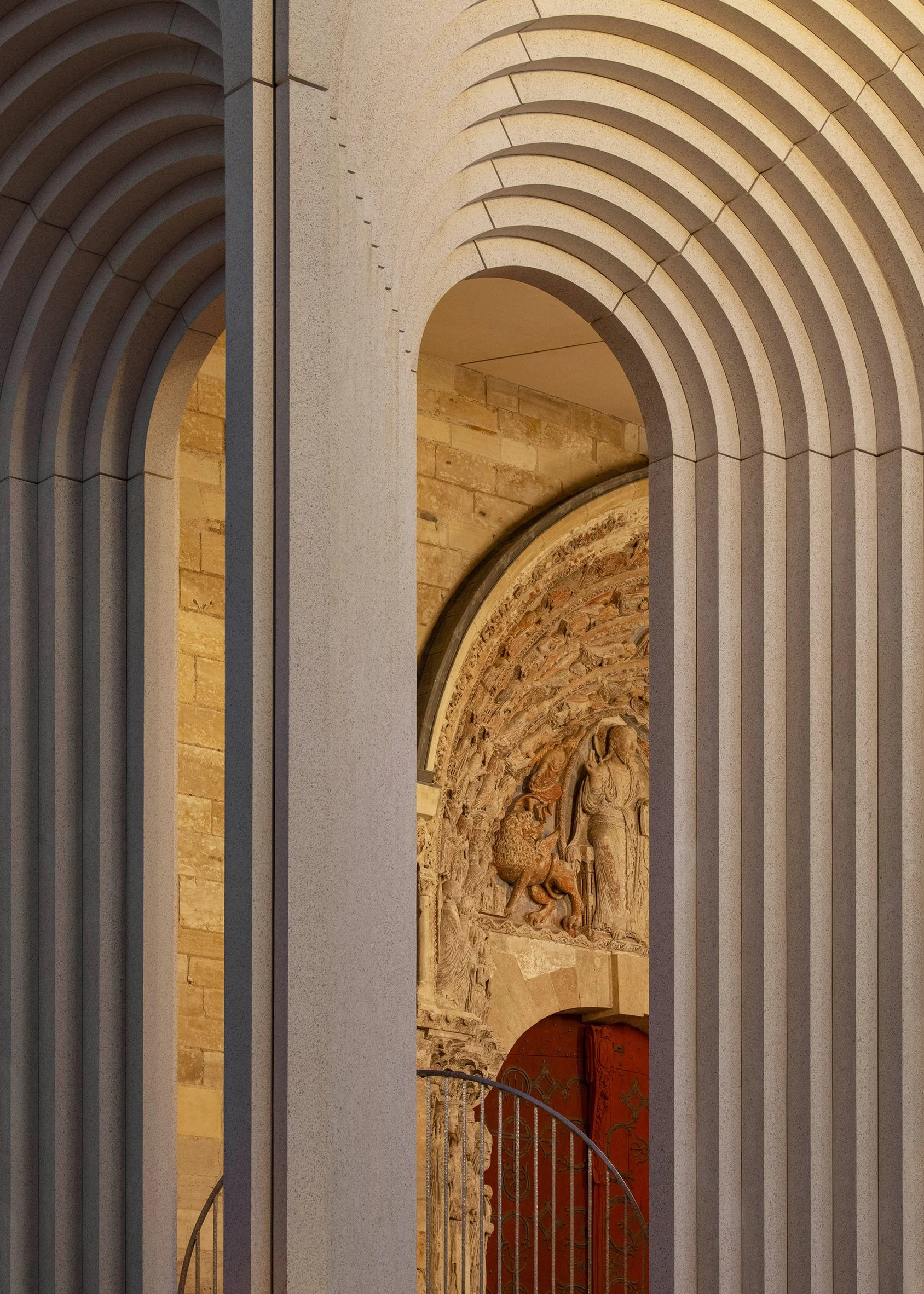
The intervention spans a relatively modest footprint yet introduces a strong architectural presence. Its restrained scale ensures that the Gothic cathedral remains dominant, while the rhythmic arches establish a new threshold condition that frames the historic portal.
Dialogue Between Past and Present
Kengo Kuma’s design operates within a broader discourse on contemporary additions to heritage structures. By avoiding mimicry and instead focusing on proportional harmony and material sensitivity, the project creates what the architects describe as a “harmonious dialogue” between eras. The new entrance does replicate Gothic forms and also abstracts their underlying principles, translating them into a minimalist, sculptural composition.
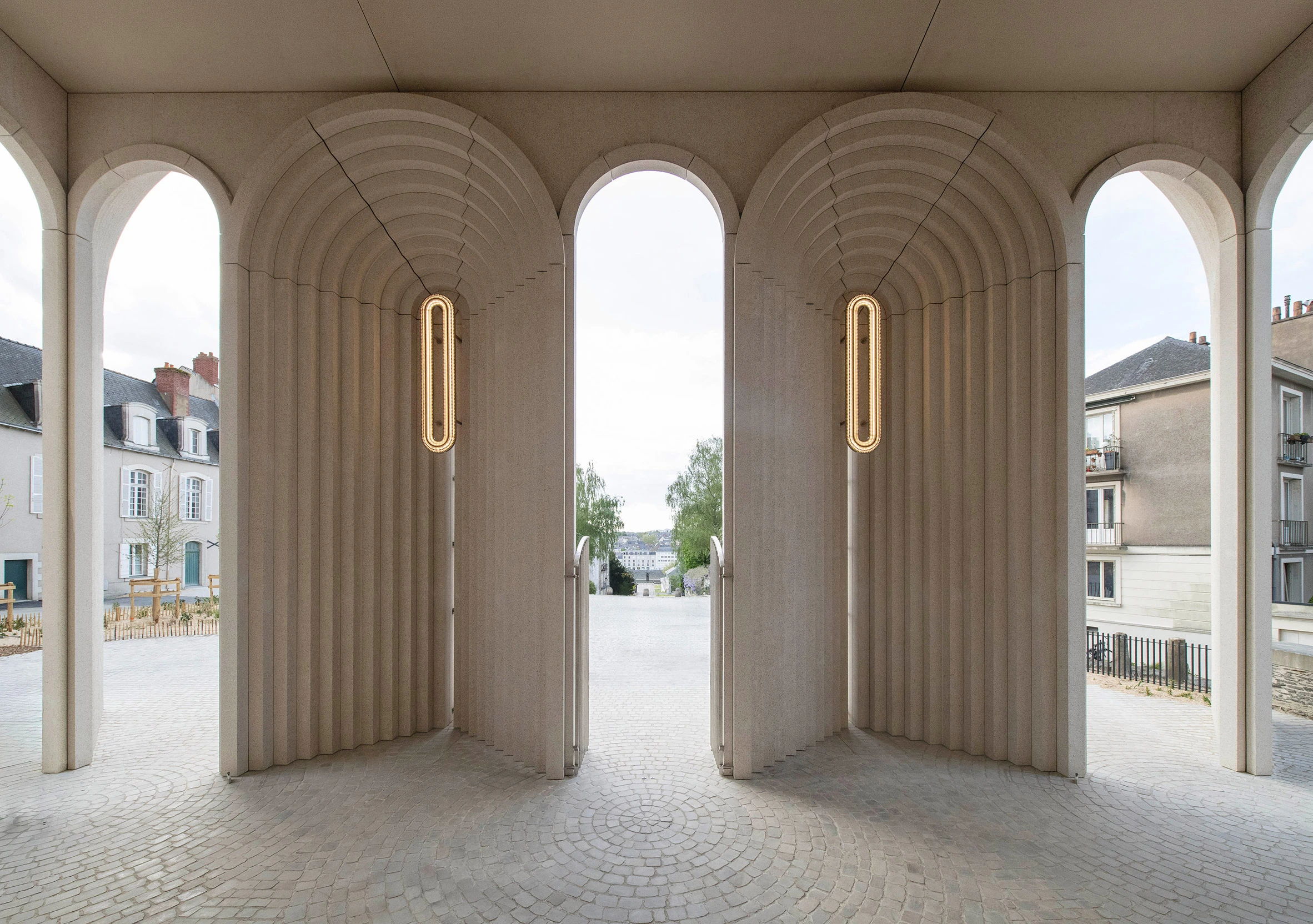
Since its completion and opening in 2026, the intervention has generated mixed reactions, reflecting ongoing tensions in heritage architecture between conservation and innovation. Yet, its architectural intent remains clear: to protect, reveal, and reinterpret a significant medieval artifact through a contemporary spatial lens.
In this project, subtle architectural motions grounded in geometry, materiality, and proportion extend the life of the historic structure while contributing a distinct and thoughtful new layer to its evolving narrative.
Image credit: Guillaume Amat