

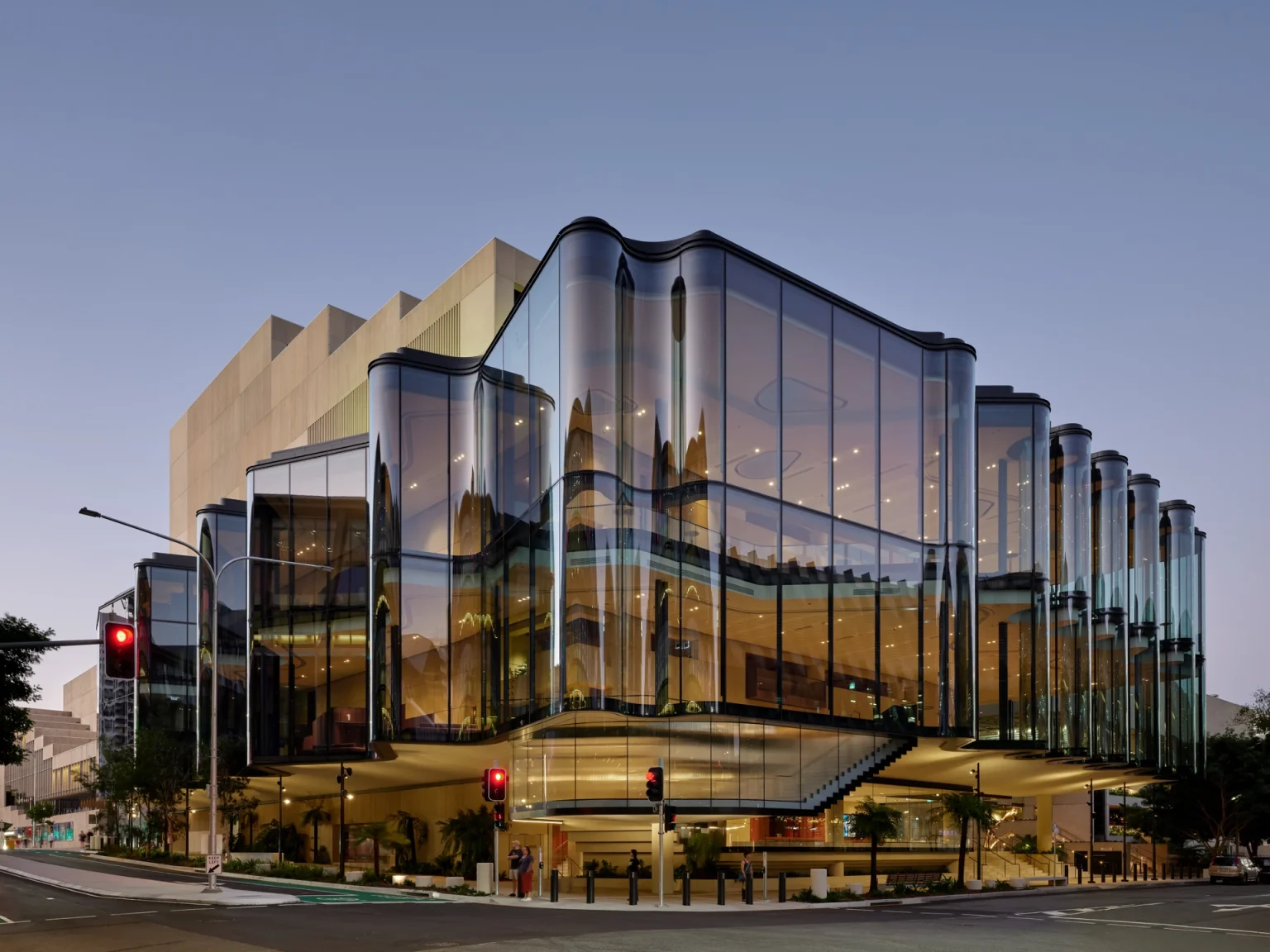
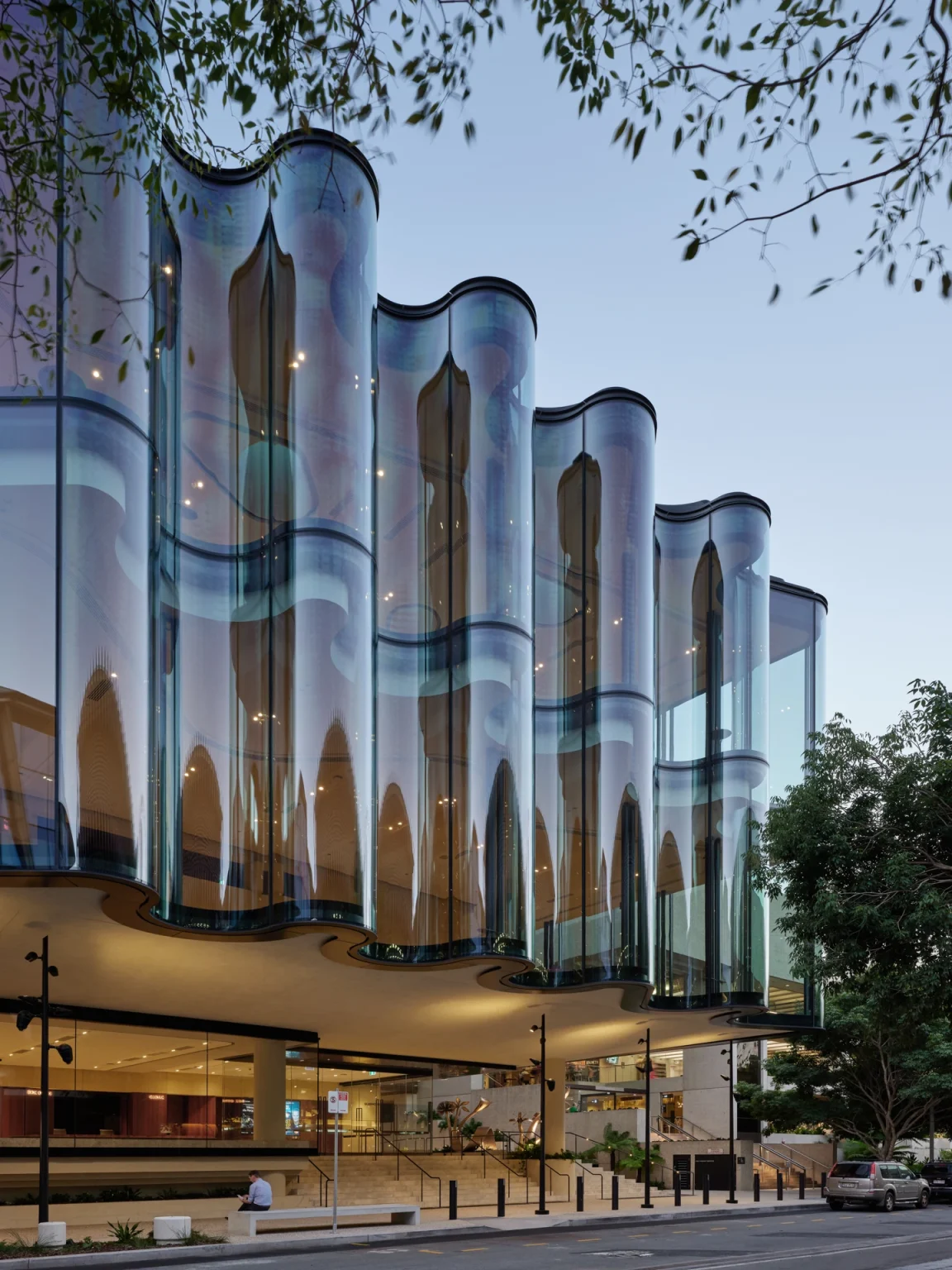


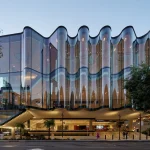
Queensland Performing Arts Centre (QPAC) has unveiled its latest masterpiece, the Glasshouse Theatre at South Bank. With its rippling glass façade and innovative design, the venue redefines how a cultural landmark interacts with the city.
Designed by Blight Rayner Architecture in collaboration with Snøhetta, the 1,500-seat theatre makes QPAC the largest performing arts centre under one roof in Australia. The space is equipped to host world-class ballet, dance, symphony, opera, theatre, and musicals at the highest standard.
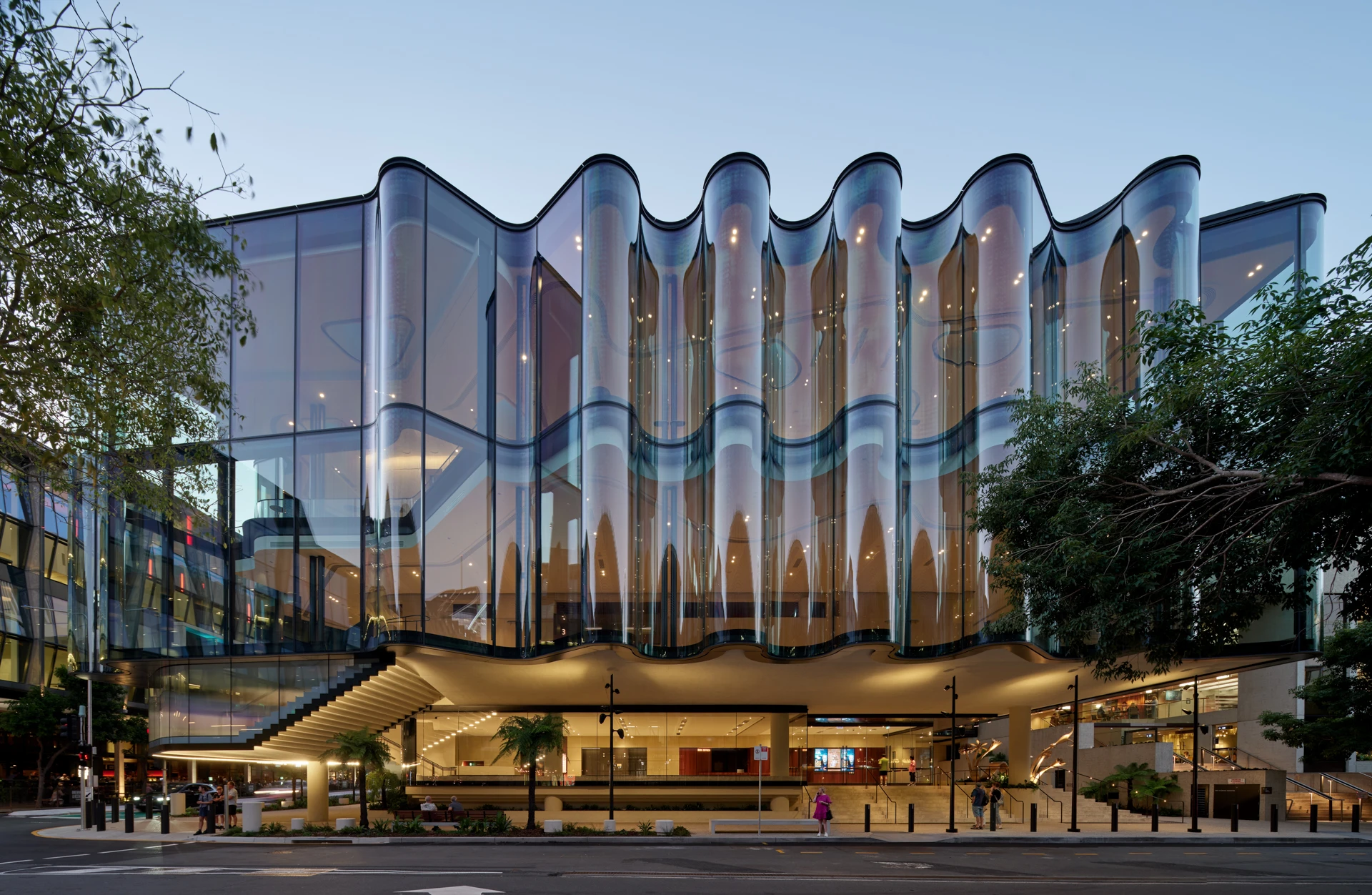
Blight Rayner and Snøhetta were selected through an international design competition in May 2019. The project includes a bold six-metre cantilever on two street frontages, integrating the theatre seamlessly above the existing Playhouse Green.
Transparent Design with Cultural Roots
The architects aimed for a highly transparent edge on the cantilever to reduce visual impact. This design allows the theatre block to align with the existing architecture, respecting QPAC’s heritage and Queensland Cultural Precinct architect Robin Gibson AO.
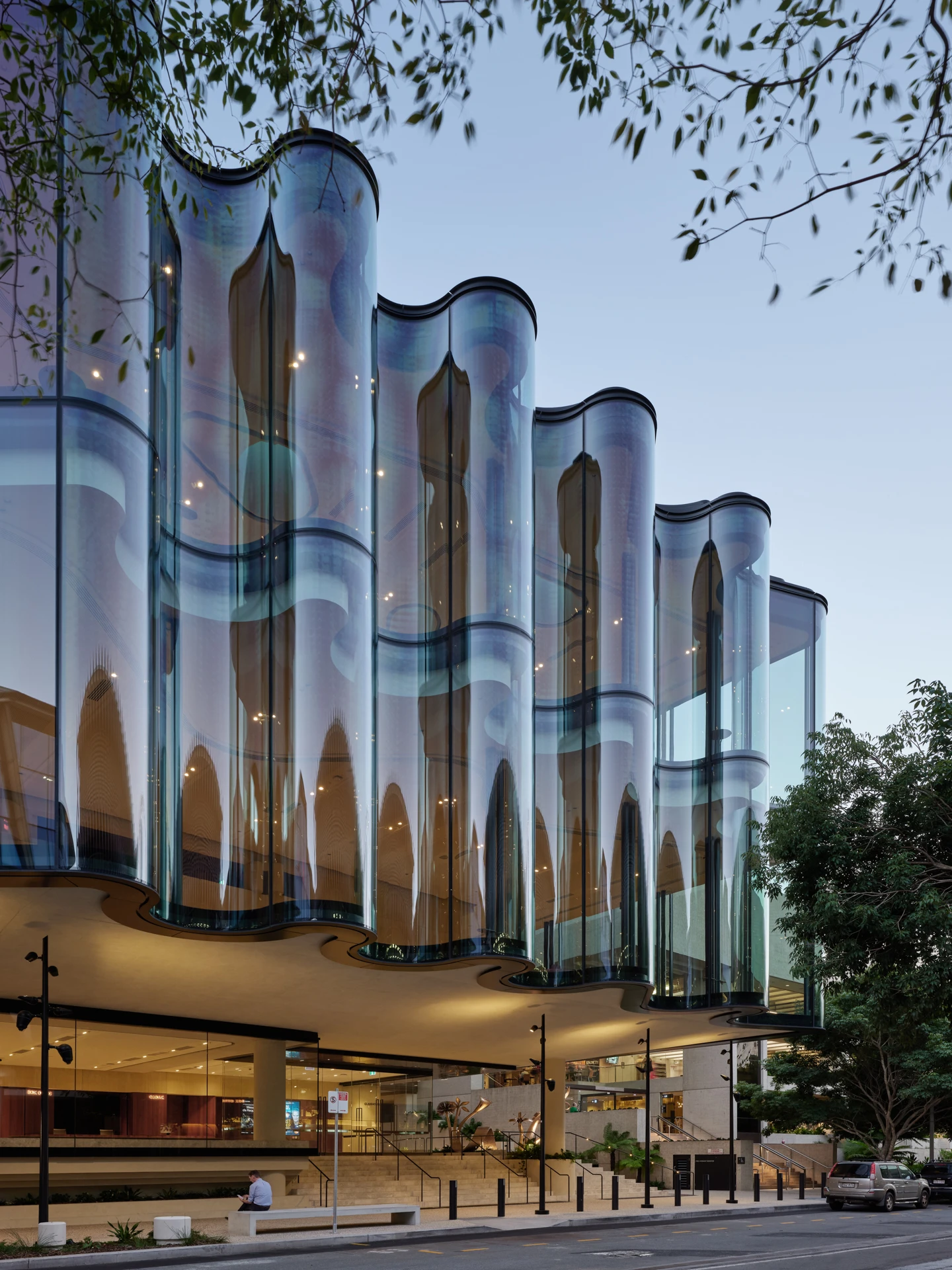
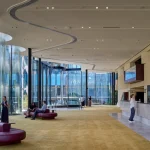
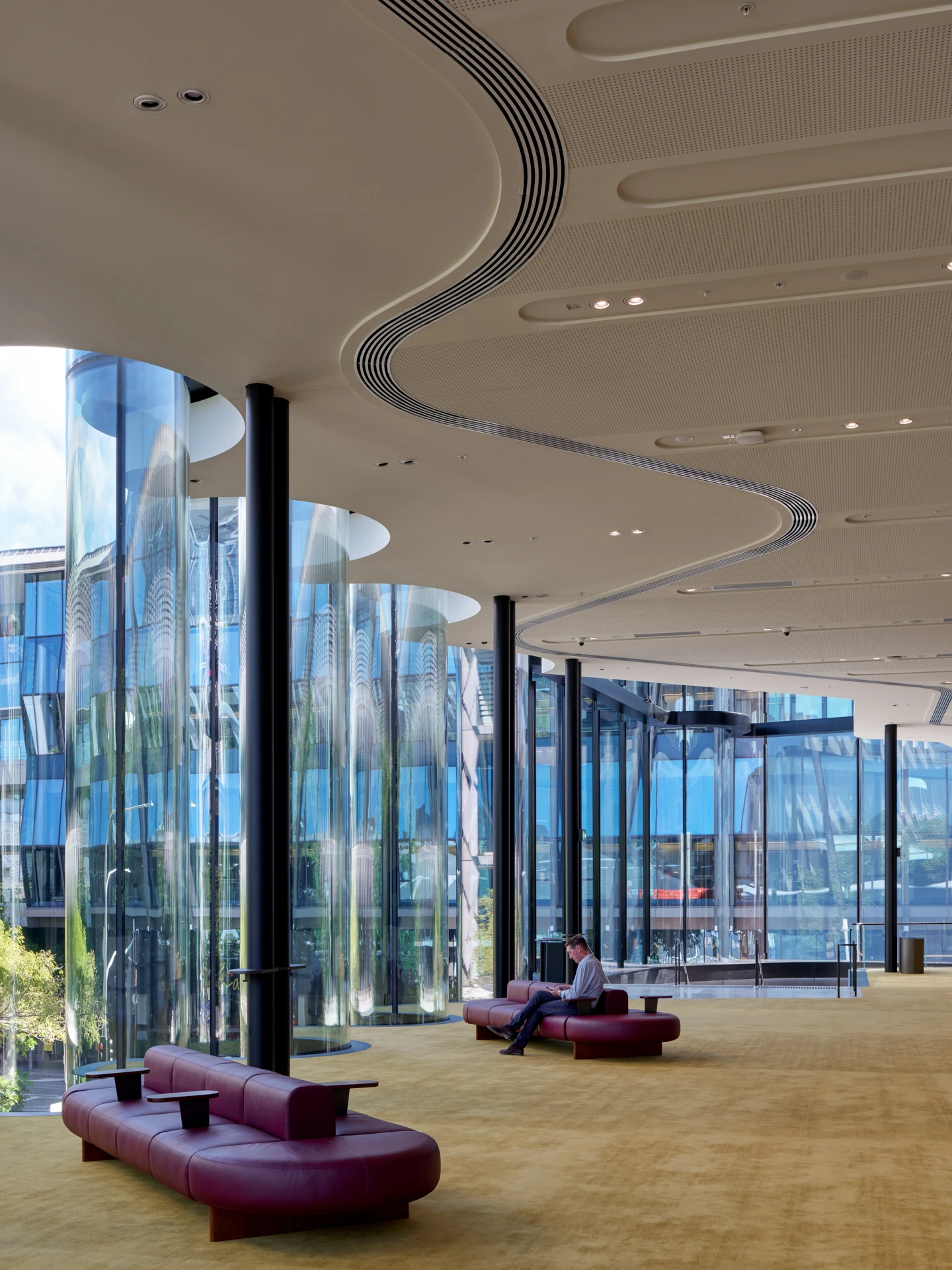
The undulating glass façade draws inspiration from a prose-poem by Aboriginal Elder Lilla Watson, reflecting the ripples of the Brisbane River and fish swimming beneath its surface. Michael Rayner, Director at Blight Rayner Architecture, notes, “We wanted the transparent façade to create a public theatre where people in the foyers are seen variably clearly and blurred from the street, embedding First Nations narratives into the design.”
Celebrating First Nations Heritage
Seven skylights in the roof represent Queensland’s seven watersheds, inspired by First Nations Elder Aunty Colleen Wall. Complementing this, the sculpture Floriate by Torres Strait Islander artist Brian Robinson features seven flowering plants emblematic of the region.
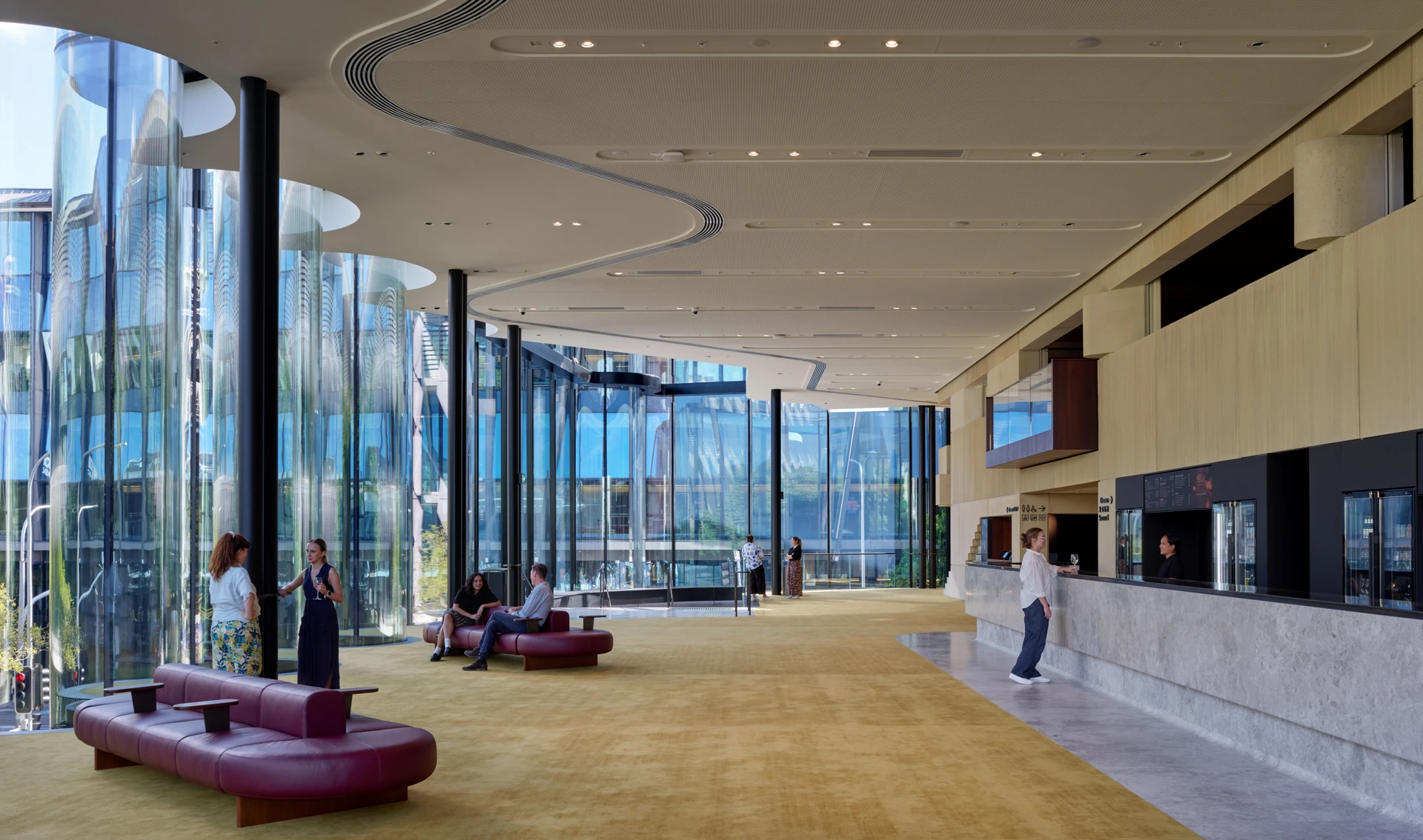
Jayson Blight adds, “Our goal was to maximize engagement between the city’s public life and the performing arts, making the arts more accessible.”
Innovative Architecture and Sustainability
The theatre’s wavy glass walls are highly engineered for thermal performance. Each four-layered panel includes a black ceramic inlay to block direct sunlight, reducing glare and improving energy efficiency.
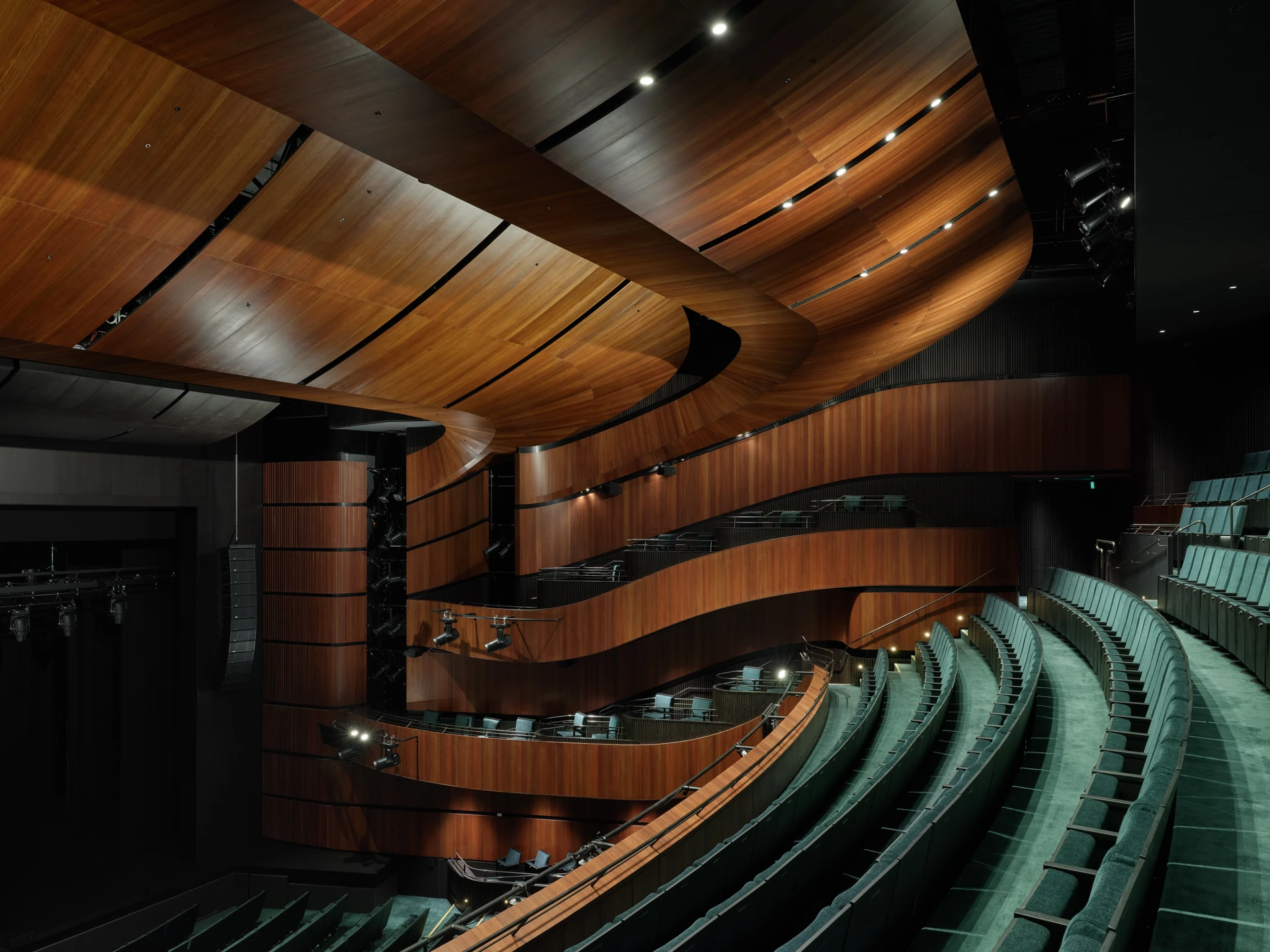
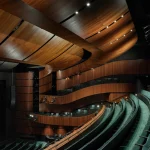
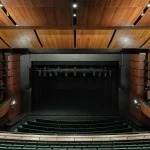
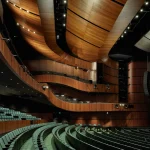
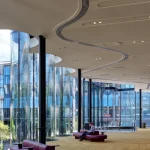
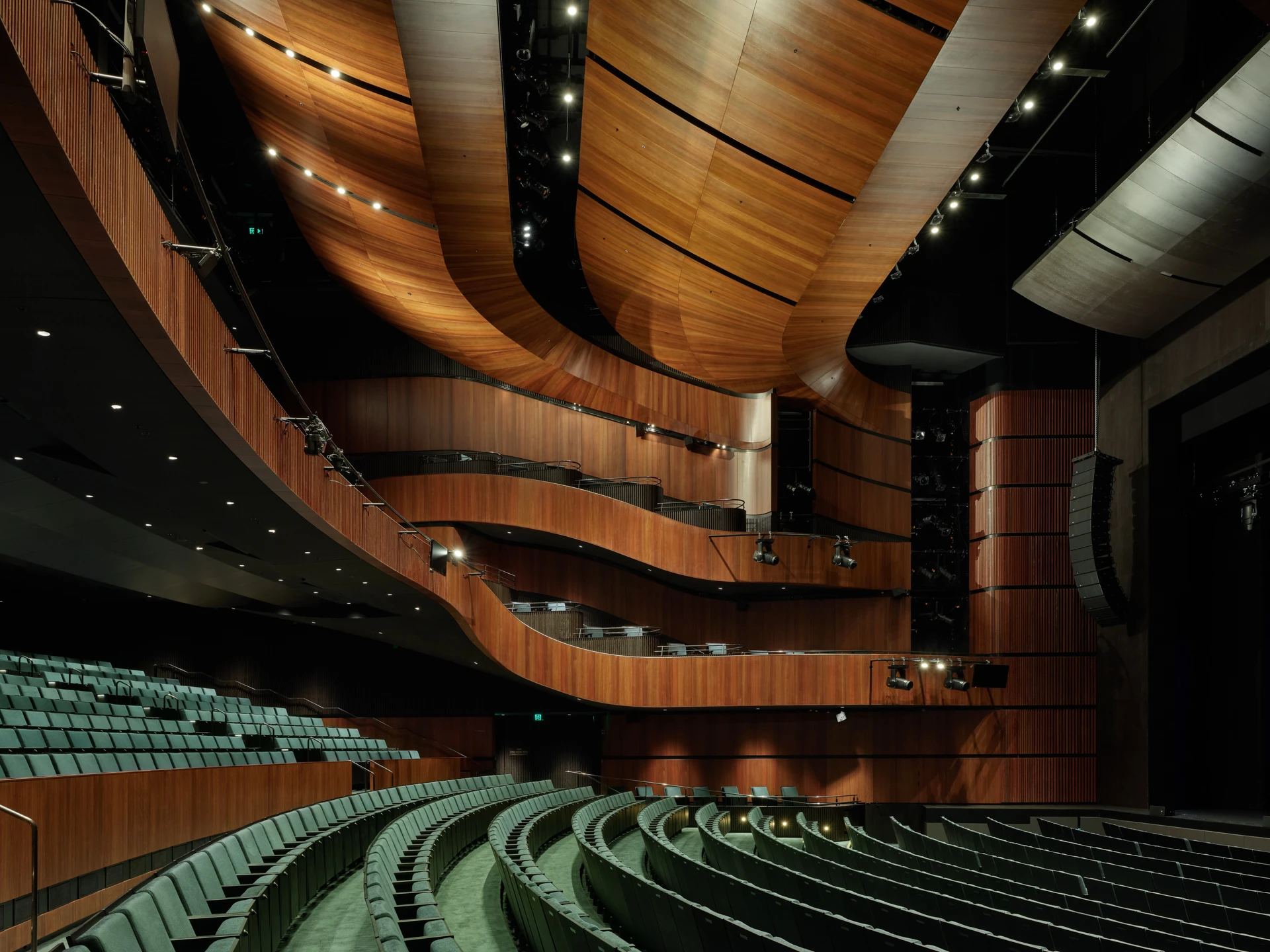
Inside, the foyer’s lightness contrasts with the auditorium’s cocoon-like interior, featuring dark grey ironbark walls and rainforest-green carpeting. Gumji Kang, Managing Director at Snøhetta Australasia, explains, “The auditorium operates like a finely tuned musical instrument, adaptable for opera, ballet, symphony, theatre, and musicals.”
The furthest seat is just 28 metres from the stage, creating an intimate connection between performers and audiences.
State-of-the-Art Performance Features
The orchestra pit has three adjustable floor sections and four possible configurations, two more than standard theatres. A fully automated fly system with 24-metre-high towers enables dynamic stage designs. The theatre also includes an in-house digital broadcast suite for live 4K HDR streaming with Dolby Atmos sound nationwide.
Rachel Healy, Chief Executive of QPAC, highlights the theatre’s significance: “With the Glasshouse Theatre, we expect to welcome an extra 300,000 visitors annually, attracting world-class talent and making the Queensland Cultural Precinct one of Australia’s busiest cultural hubs ahead of Brisbane 2032.”
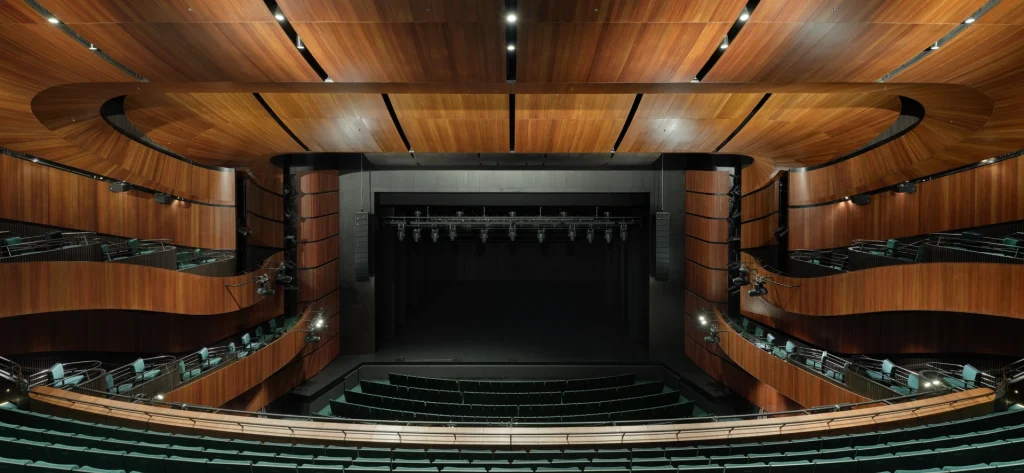
The Glasshouse Theatre features two tiers of seven-metre-high unique glass panels, totaling 14.28 metres in height, manufactured by Austrian company Seele. The auditorium accommodates 1,000 stall seats and 500 balcony seats, designed to provide enhanced sightlines from every angle. Its fly system includes 107 hoists and 29 km of steel wire, fully automated for complex stage setups.
The theatre also integrates artwork by Lilla Watson into the entryway, along with a digital broadcast suite that enables nationwide live streaming of performances. These elements combine to make the Glasshouse Theatre a technological, architectural, and cultural landmark for Queensland.
Glasshouse Theatre Brisbane Project Details
Project Name: Glasshouse Theatre Brisbane
Location: Queensland, Australia
Client/Owner: Queensland Performing Arts Centre (QPAC)
Architects: Blight Rayner Architecture in collaboration with Snøhetta
Capacity: 1,500 seats (1,000 stalls + 500 balcony)
Glass Façade: Two tiers of seven-metre-high panels, total height 14.28 metres
Fly System: 107 hoists, 29 km of steel wire, fully automated
Construction Timeline: completed and officially unveiled in 2026
Photo by: Christopher Frederick Jones