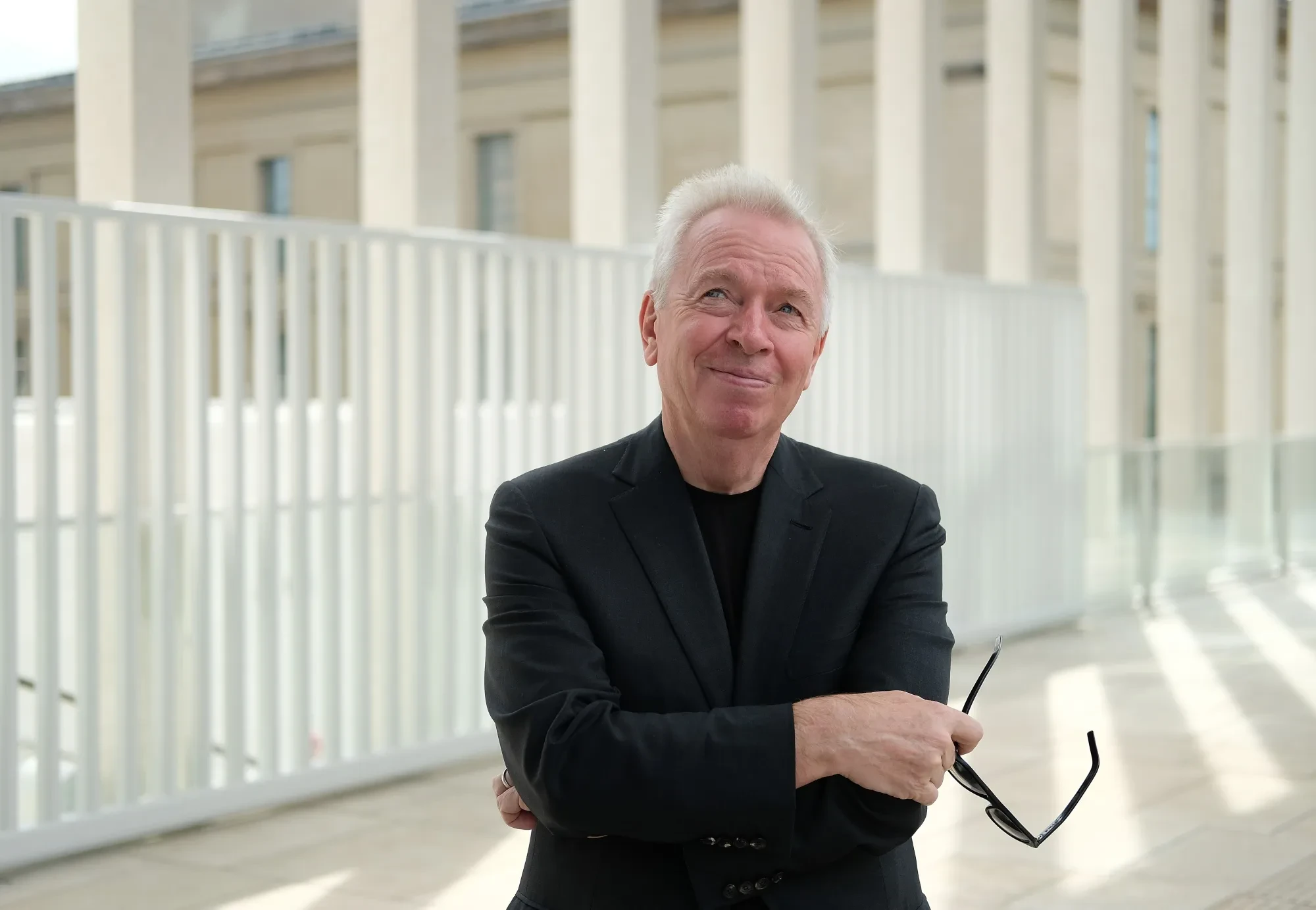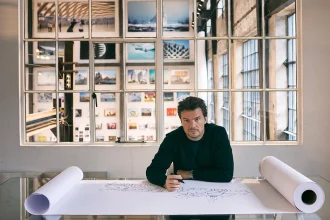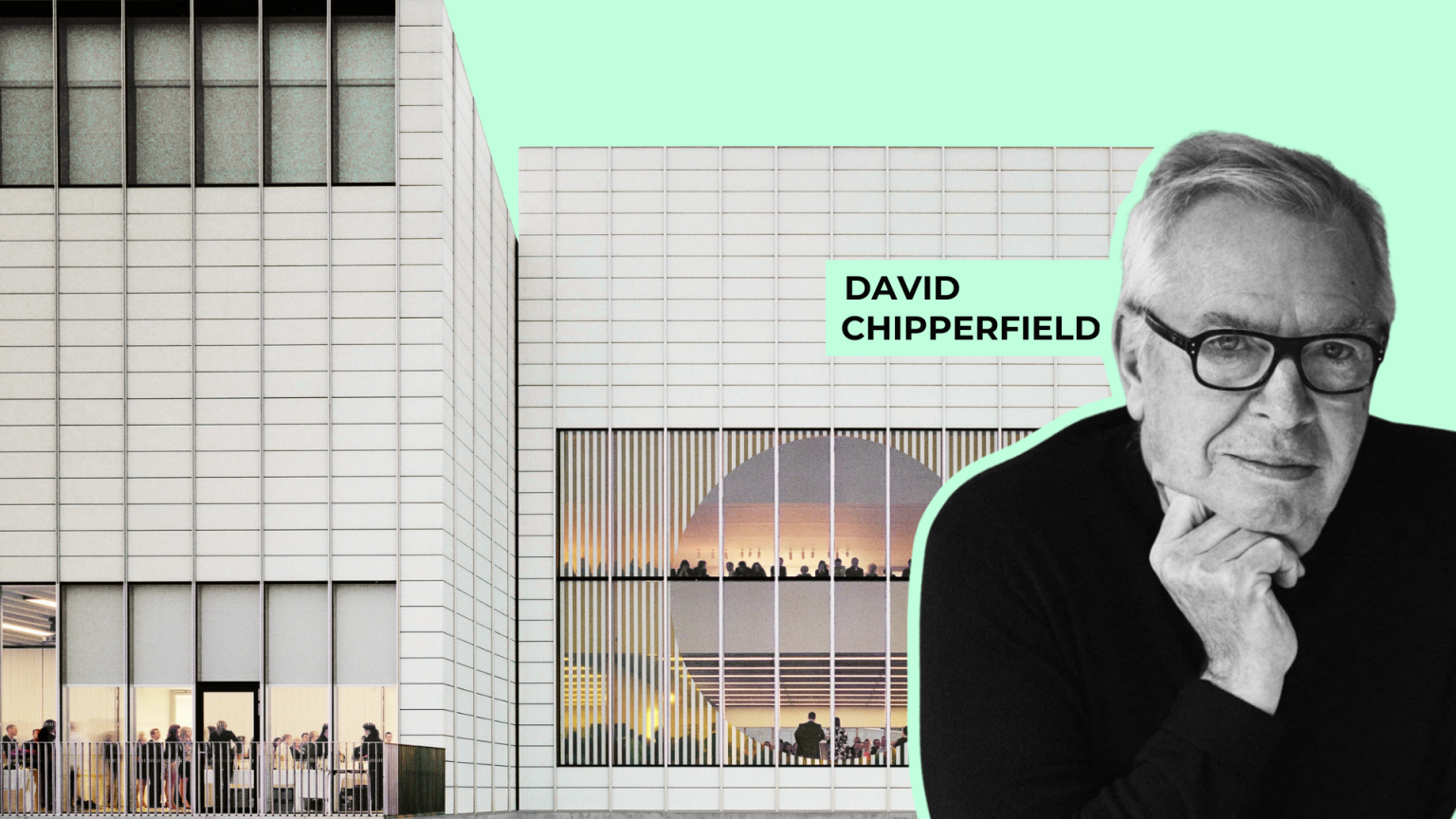
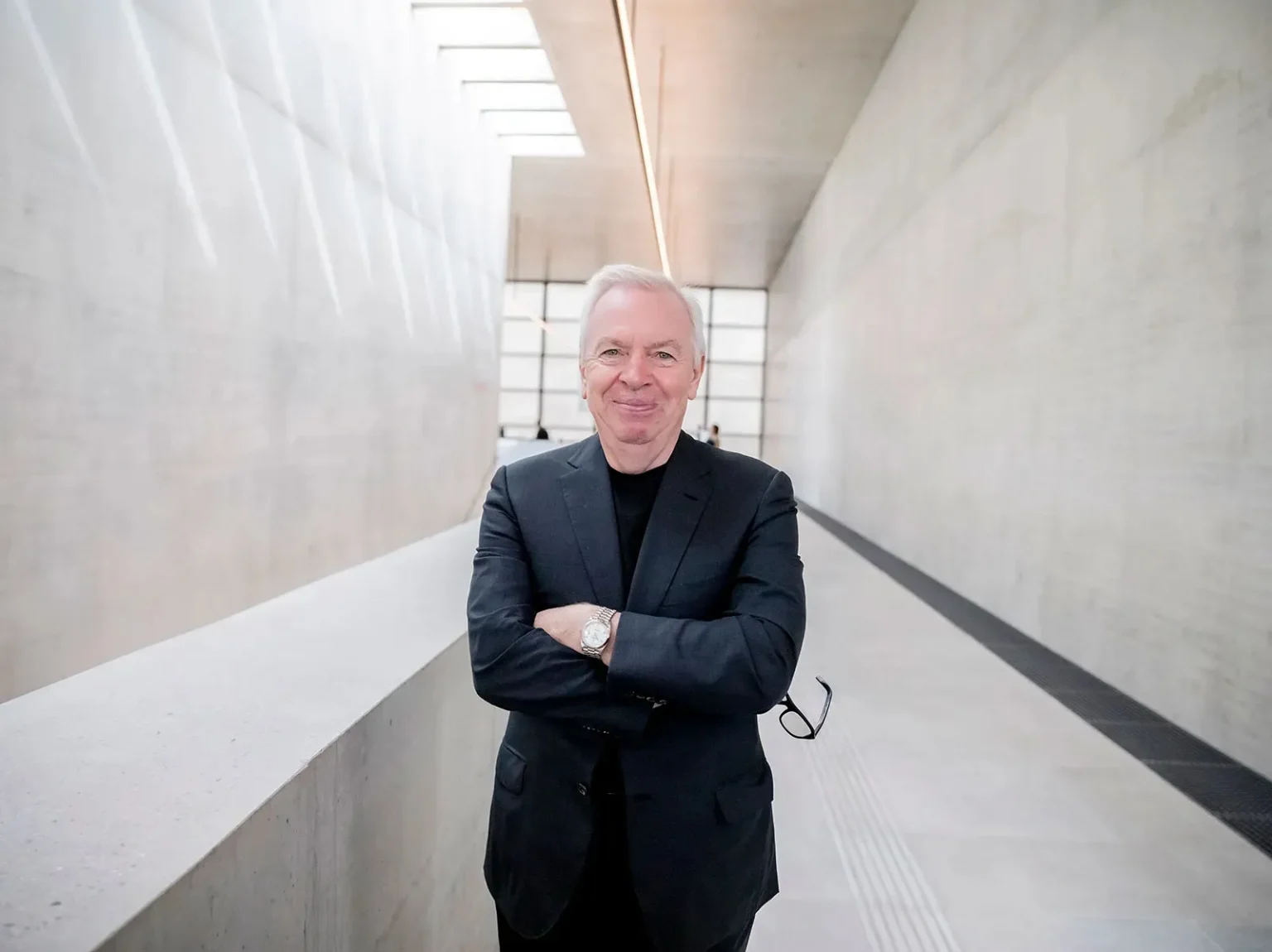





One of the most influential figures in contemporary architecture, Sir David Alan Chipperfield has created timeless designs that confront climate emergencies, transform social relations through modern design, and revitalize cities. Since founding David Chipperfield Architects in 1985, he has gained international recognition with both contemporary buildings and historic restoration projects. Avoiding formal showmanship, Chipperfield instead focuses on the identity of space, its context, and the human experience.
Who is David Chipperfield?
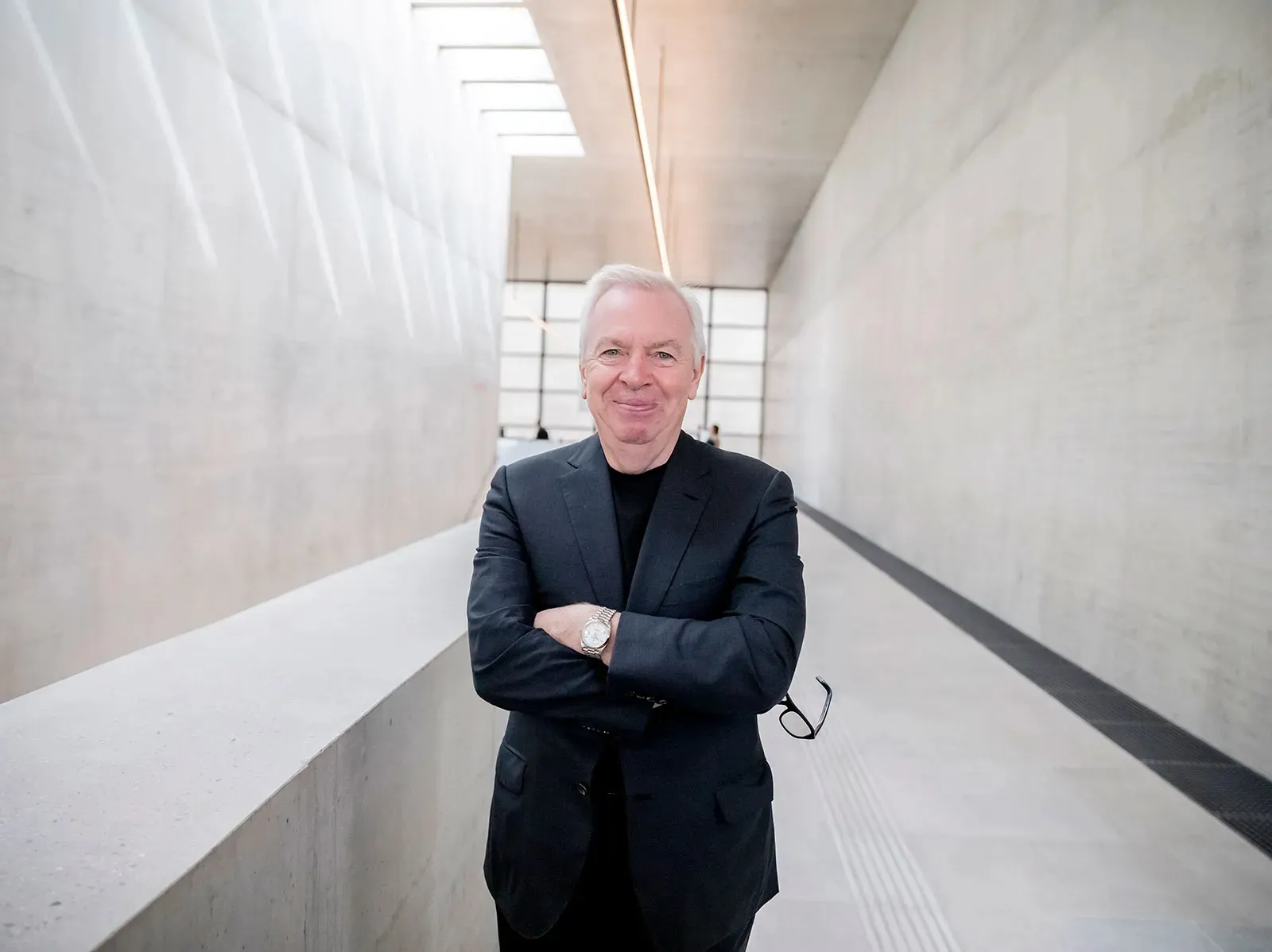
Born on 18 December 1953 in a farmhouse in Devon, England, David Chipperfield formed his first impressions of architecture through the rural buildings and local structures of his childhood. After receiving his architectural education from Kingston School of Art and completing his master’s degree at the Architectural Association (AA) in London, Chipperfield worked with renowned figures in modern architecture, including Norman Foster and Richard Rogers, in his early career. Known for his contemporary yet historically sensitive, restrained yet powerful designs, Chipperfield was awarded the Pritzker Architecture Prize in 2023.
In 1985, he founded David Chipperfield Architects in London, which quickly grew into a global practice with offices in cities such as Berlin, Milan, Shanghai, and Santiago de Compostela. By questioning the unique opportunities of each project and combining the client’s objectives with broader socio-cultural, ecological, and physical contexts, David Chipperfield Architects designs places of enduring value. Committed to setting exemplary standards in sustainable design, the practice prioritizes reuse, resilience, and adaptability to the future.
Based on a concern for the social and environmental sustainability of the built environment and its role in collective quality of life, David Chipperfield Architects’ portfolio encompasses renowned cultural, residential, educational, retail, workplace, and civil society projects across the private and public sectors.
Here are the 10 most striking buildings designed by David Chipperfield Architects:
1. America’s Cup Building ‘Veles e Vents’
Location: Valencia, Spain
Year: 2005-2006
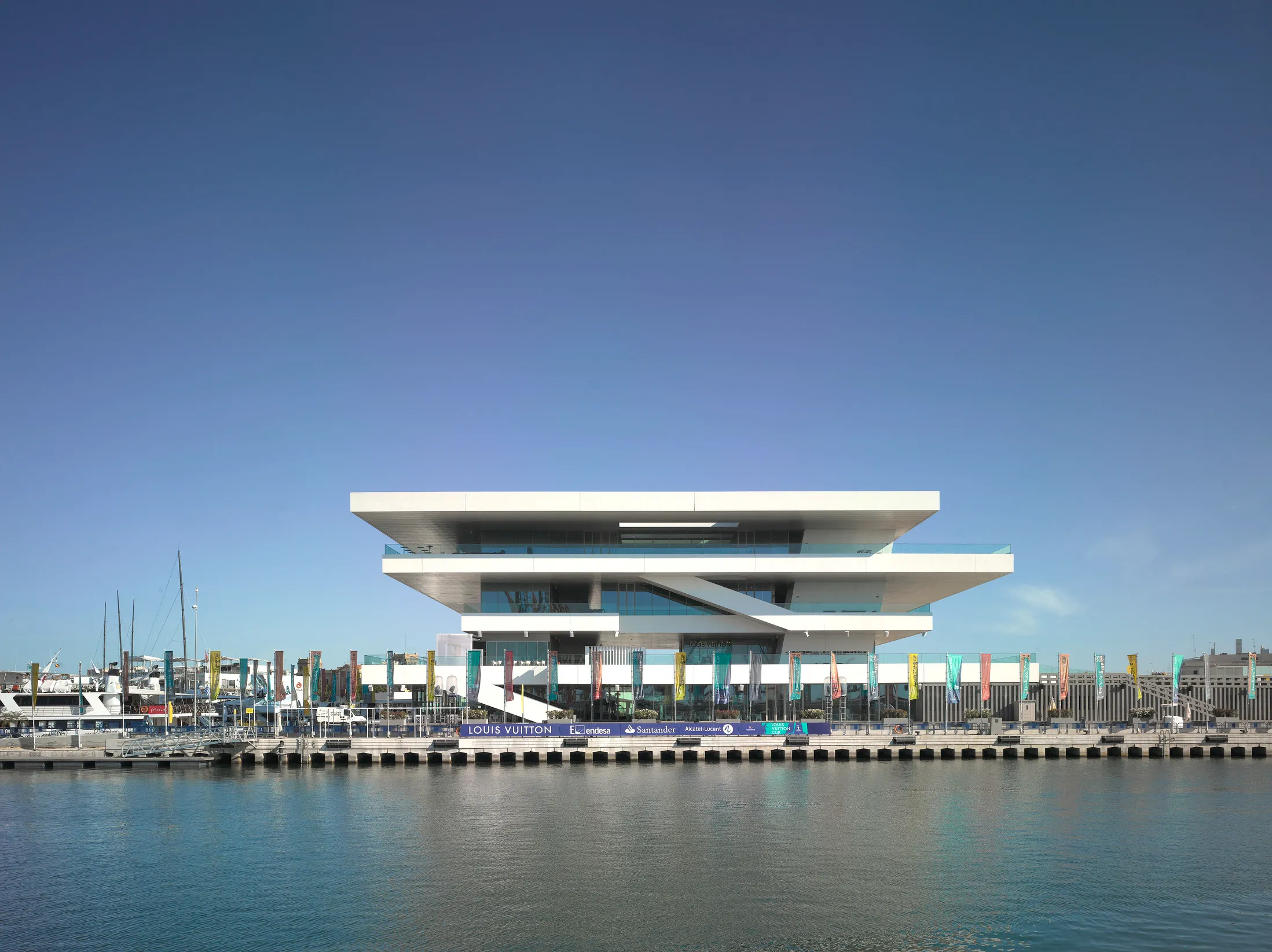
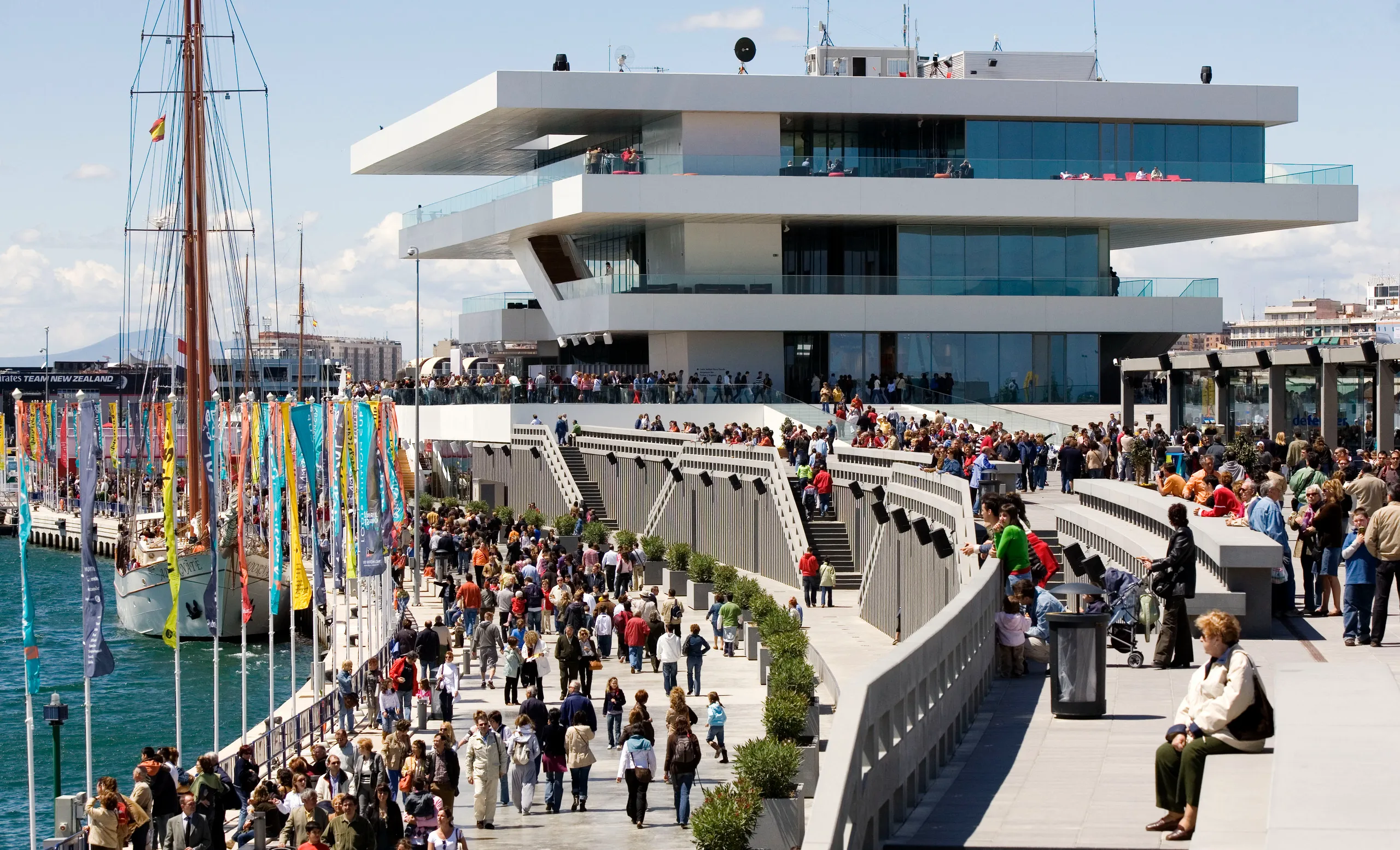
Designed for the America’s Cup, the world’s leading offshore sailing tournament held for the first time in Europe, the structure became the centerpiece of the 2007 redevelopment of Valencia’s industrial port. Located on the Mediterranean coast, the four-story concrete structure brings together spectators and sailors, composed of stacked horizontal planes that provide shade and uninterrupted sea views. Cantilevered slabs, the largest of which reach fifteen meters, form open-air viewing platforms surrounding each floor. A spacious parking garage, located beneath the open-air area that comprises more than half of the building, connects directly to the newly constructed park.
The ground floor features VIP facilities, a restaurant, and a bar overlooking the canal, while the first floor includes retail stores, a bar, and a spacious viewing terrace directly connected to the park by a ramp. The second and third floors house the main VIP facilities, the Foredeck Club, a restaurant, a wellness center, and a lounge for organizers and sponsors.
Constructed with only a few materials, this striking work by David Chipperfield features concrete edges clad in white-painted steel and ceilings made of white metal panels with linear recessed lighting. The exterior floors are solid wood flooring, while the interior floors are white resin.
2. Neune Nationalgalerie Refurbishment
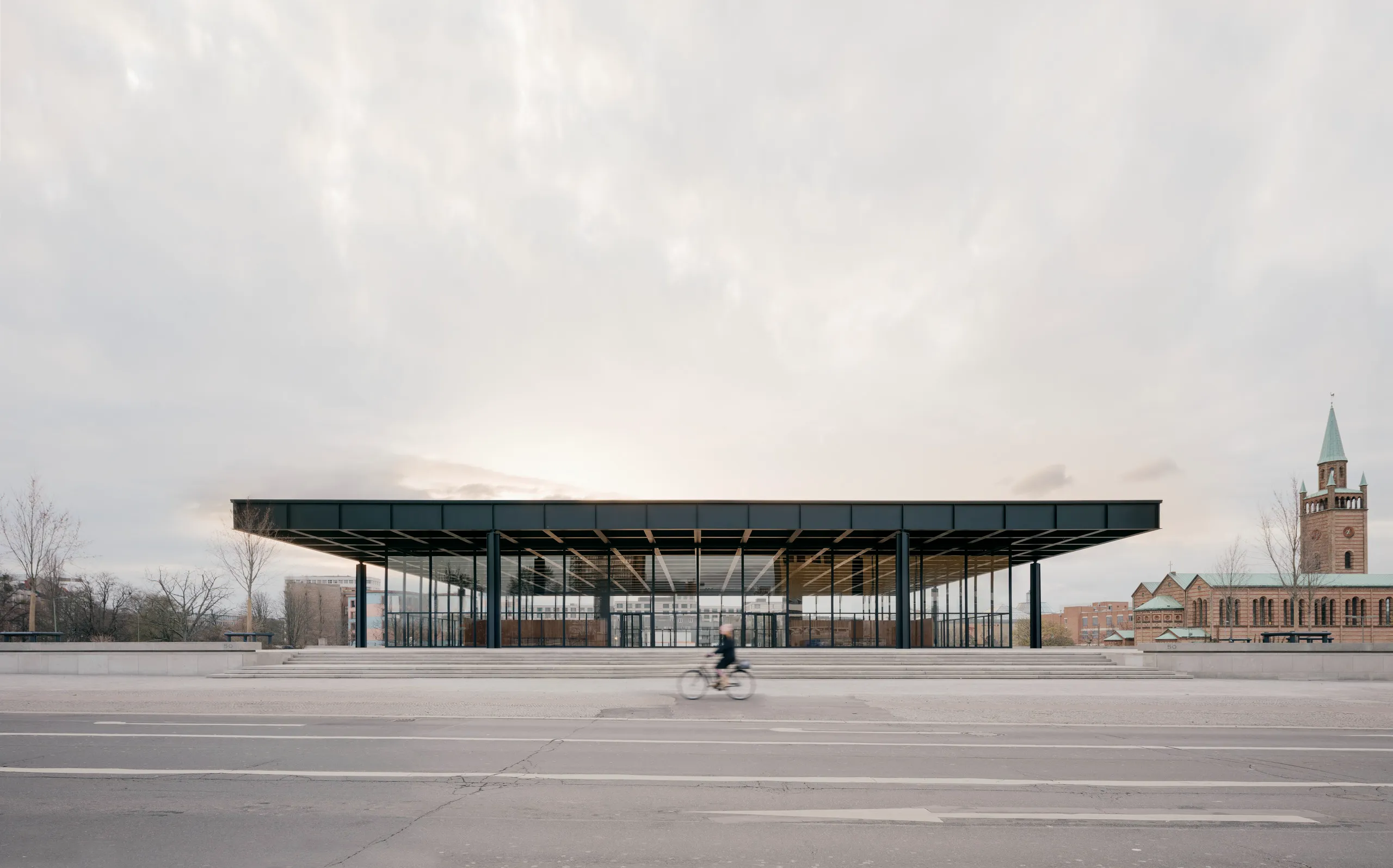
Location: Berlin, Germany
Year: 2012-2021
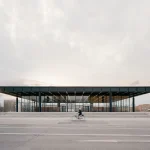
One of David Chipperfield Architects’ most striking projects is the renovation of the Neue Nationalgalerie, a landmark of twentieth-century architecture. Designed by Ludwig Mies von der Rohe between 1963 and 1968, the steel and glass structure required renovation after nearly fifty years of intensive use. In this renovation project, undertaken by David Chipperfield Architects, the existing building was renovated and upgraded to meet current technical standards, minimizing any compromises to the building’s original appearance. In addition to upgrades such as air conditioning, artificial lighting, and enhanced security, visitor-oriented facilities, including a cloakroom, café, and museum shop, were also introduced.
The reinforced concrete shell of the building required extensive repairs, and approximately 35,000 original structural components, including stone cladding and all interior fittings, were dismantled to reveal the shell structure. Seeking a suitable balance between monument preservation and the building’s use as a modern museum, David Chipperfield completed the renovations while preserving as much of the building’s essence as possible.
3. James-Simon Galerie
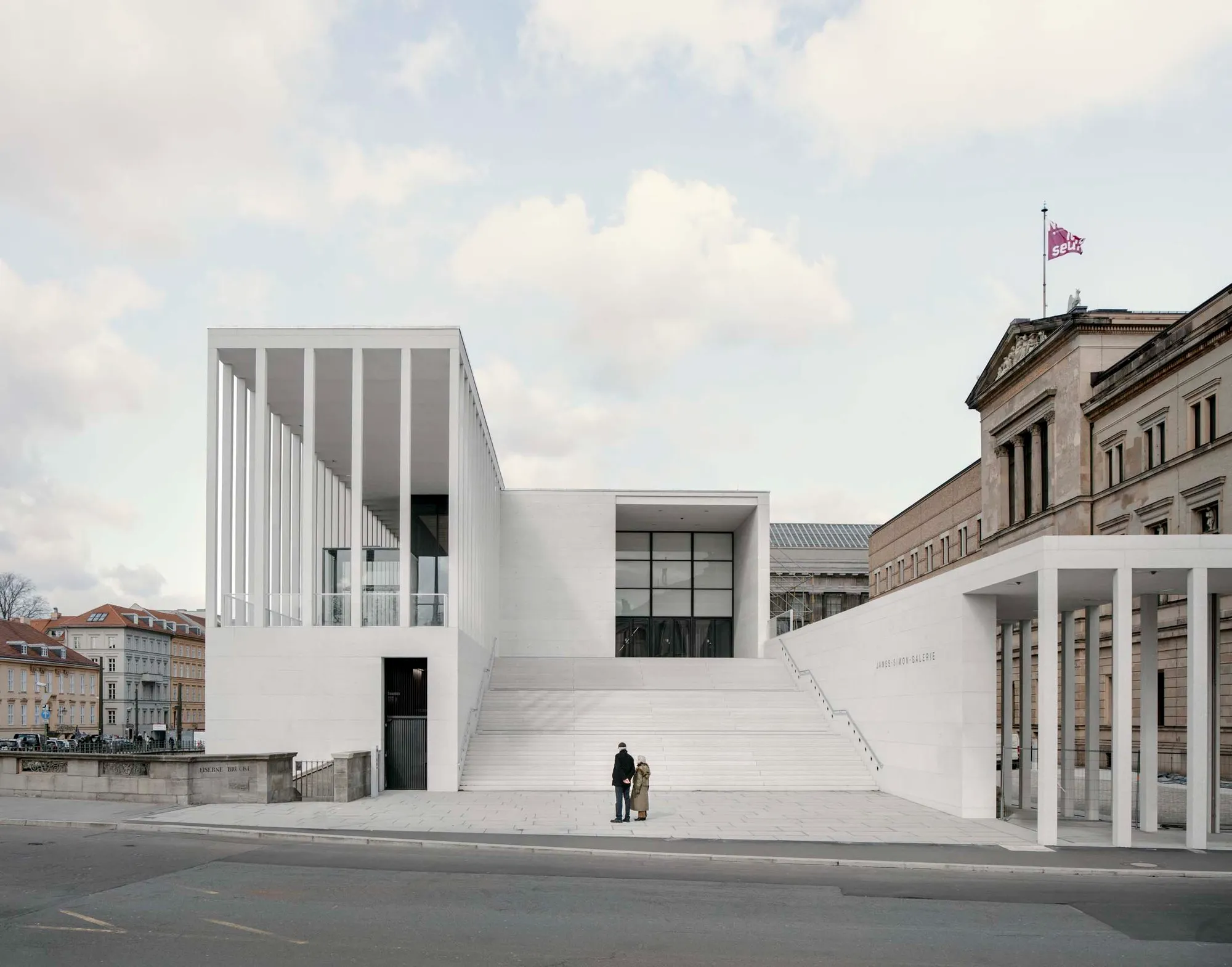
Location: Berlin, Germany
Year: 1999-2019
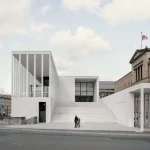
The James-Simon Galerie in Berlin serves as the new entrance building for Museum Island and continues the forum architecture of Friedrich August Stüler. The James-Simon Galerie, which provides direct access to the Pergamon Museum and the New Museum, serves as the central reception building for the “Archaeological Promenade,” a walkway connecting the four museums in the basement.
David Chipperfield Architects enlarged the building’s dimensions to preserve the connections stretching from the Schlossbrücke into the heart of Museum Island and towards the western façade of the Neues Museum. Its high stone base reinforces the Kupfergraben canal bank, above which rises a colonnade that recalls the classical piano nobile.
It continues the colonnade that originally ended at the Neues Museum in a contemporary form, inviting visitors into the building with three wide steps placed between the lower colonnade and the extended plinth, which creates a new, small colonnaded courtyard between the Neues Museum and the gallery. Below, the mezzanine houses the museum shop, a large cloakroom, restrooms, and lockers, while the basement accommodates temporary exhibition spaces and an auditorium.
4. The Hepworth Wakefield
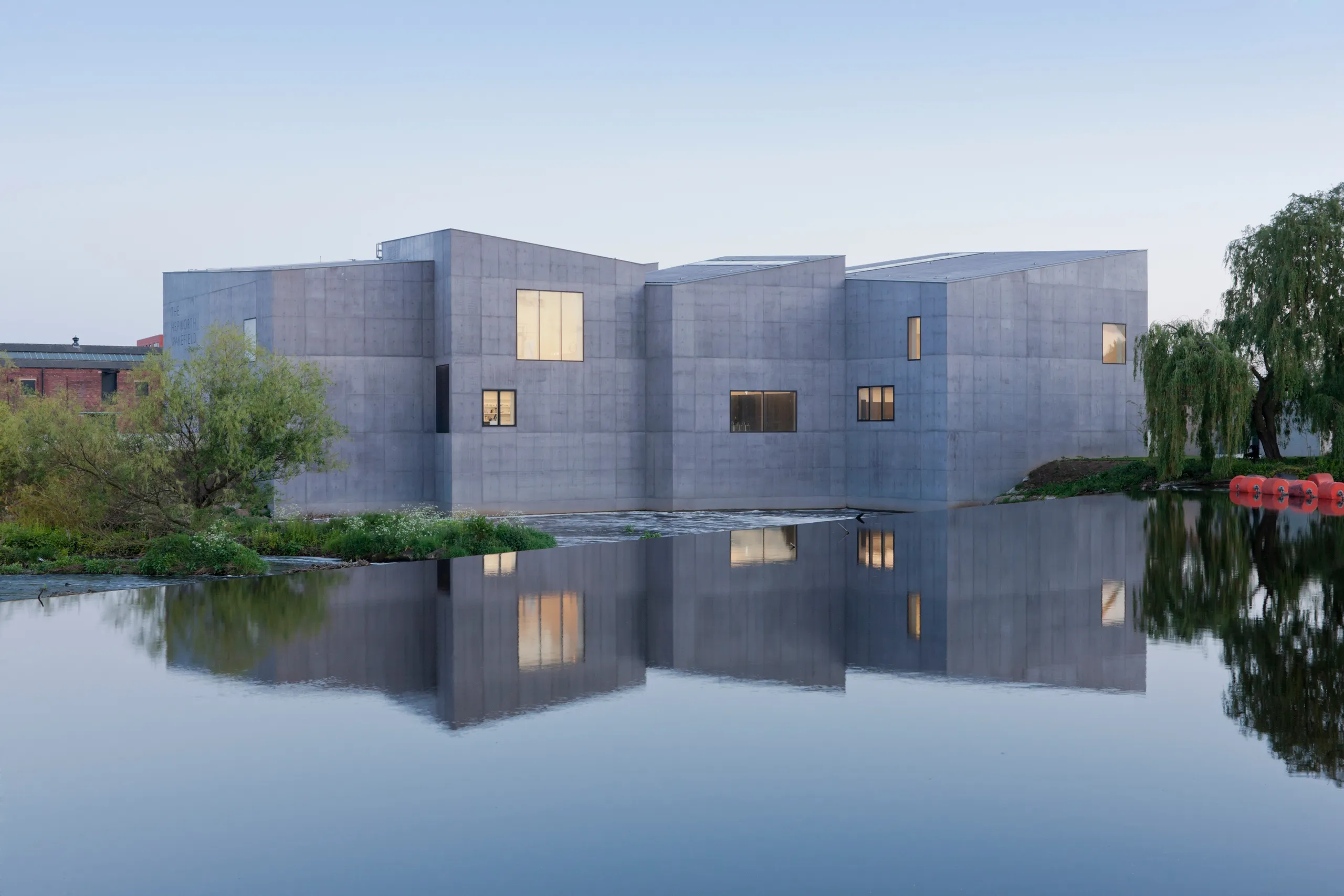
Location: West Yorkshire, UK
Year: 2003-2011
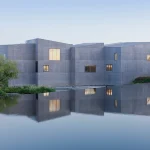
The Hepworth Wakefield, an art gallery named after artist Barbara Hepworth, is one of David Chipperfield Architects’ most striking projects. Located within the Wakefield Waterfront Conservation Area, the building’s façade avoids dominance in order to harmonize with its surroundings, which include a twentieth-century road bridge. The structure is closely tied to its riverside setting and consists of several unique volumes that vary in size and form, interlocking gradually with one another. The building is constructed of in-situ concrete, giving it a monolithic solidity befitting its open space and sinking into the water, similar to the old mills and warehouses nearby on the riverbank.
The ground floor accommodates a reception, shop, café, large terrace, auditorium, learning studios, offices, archives, and storage spaces. The upper-floor galleries are accessed via a central staircase that brings natural light into the heart of the building. Most of the rooms upstairs house the gallery’s permanent collection, while others are designed for temporary exhibitions. Open thresholds link the gallery spaces in fluid and varied sequences, offering inviting glimpses of other works as well as outward views to the surrounding world.
5. Museo Jumes
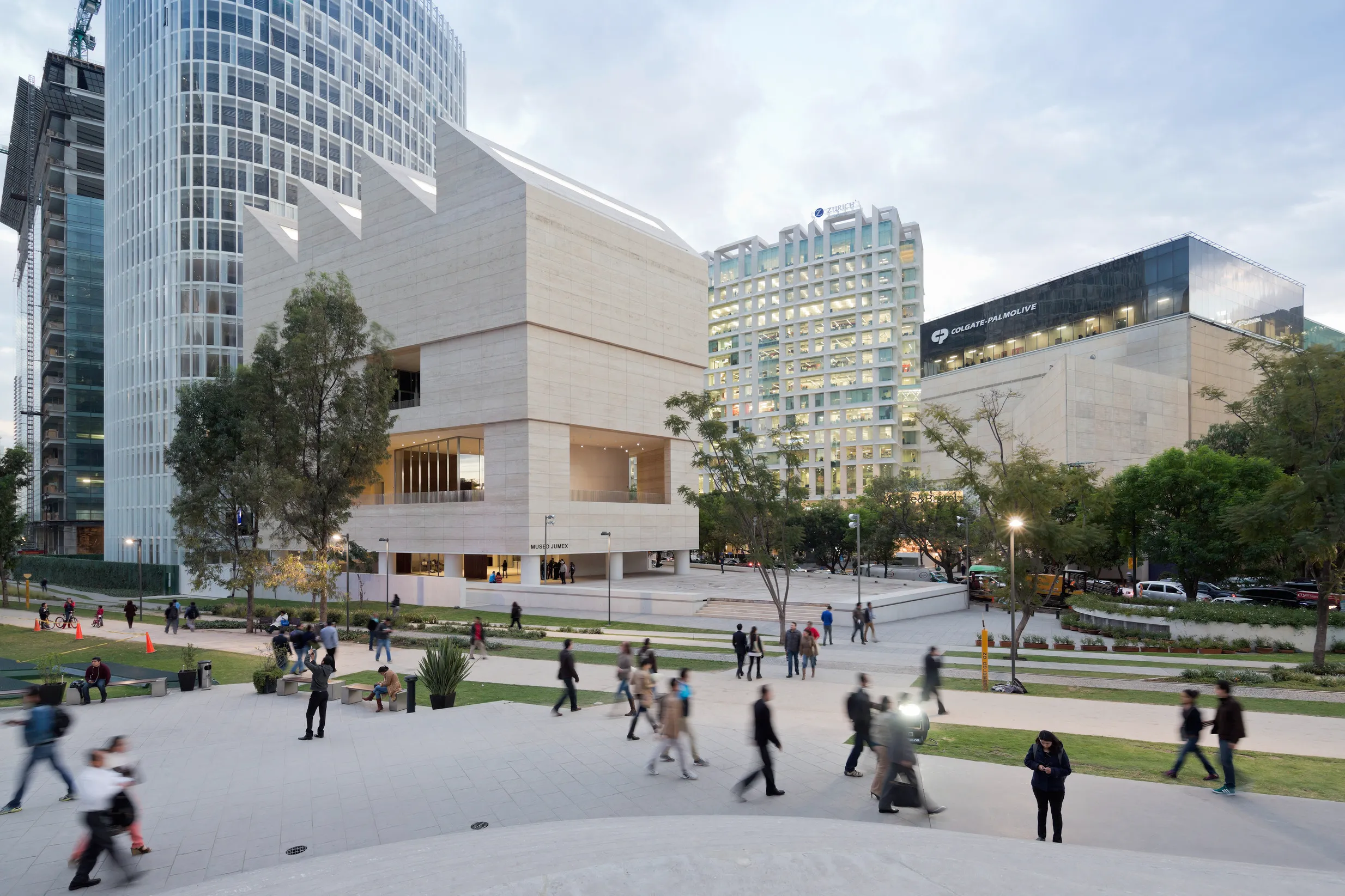
Location: Mexico City, Mexico
Year: 2009-2013
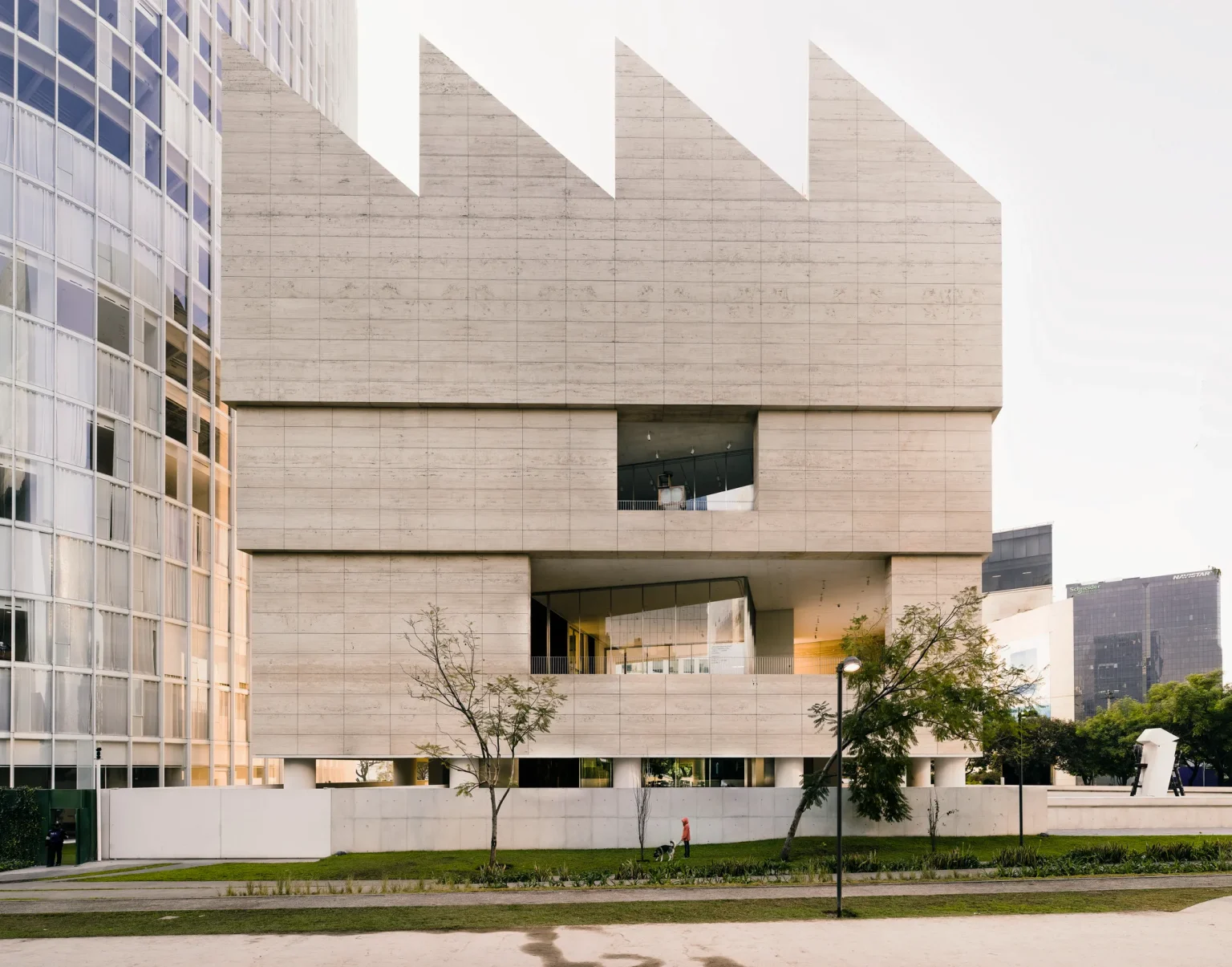
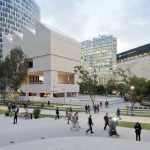
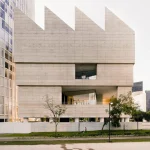
Museo Jumés, which houses some of Latin America’s largest private contemporary art collections, is located on a triangular site in the redeveloped Polanco district of Mexico City. Located at the rear of the triangular site, the four-story structure rises on 14 sturdy columns rising from a raised plinth, connecting the ground floor to the square and allowing the private cultural institution’s program to extend into the public realm.
The main exhibition spaces, located on the second and third floors, optimize the use of natural daylight. The format of the floor slabs and the positioning of the building’s cores provide large, autonomous rooms that can easily be divided into two or more independent spaces. Designed by David Chipperfield Architects, the west-facing windows and the sawtooth roof made of steel with a horizontal diffuser layer create a rhythmic geometry that defines the third-floor gallery while distributing light evenly across the space. The lighting can be adjusted to meet specific curatorial requirements.
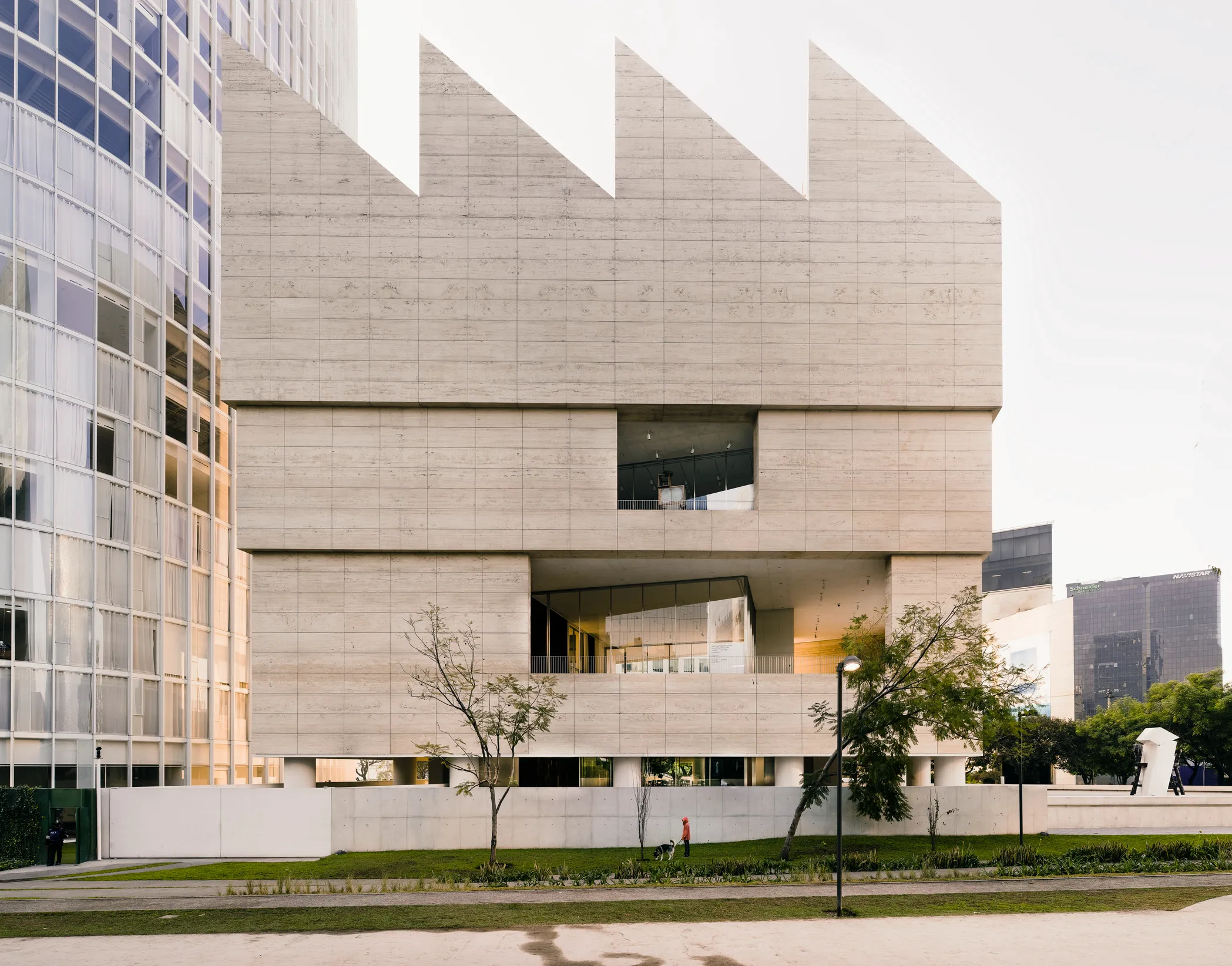
Exposed white concrete was used for the Muse Jumes’ plinth, columns, ground and first-floor towers, and all eaves. From the roof and plinth up, the floors and facades feature travertine sourced locally from Xalapa, Veracruz. The continuity of the travertine cladding gives the building a robust character inspired by local sculptural traditions.
6. Des Moines Public Library

Location: Iowa, USA
Year: 2002-2006
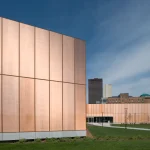
Located at the center of the Des Moines West Gateway Park urban renewal project, the Des Moines Public Library is located at the eastern end of the park and provides a connection to downtown Des Moines. In addition to the library facilities, the building also includes a flexible activity space, educational facilities, children’s playgrounds, a conference hall, and a cafeteria, thus enhancing its urban structure.
Designed with the clarity of a built schema, the library responds to the orthogonal grid of the city blocks to the east, while extending more organically toward the park to the west. This unusual form creates diverse outdoor spaces within the park and, together with the historic Masonic Temple, frames a new entrance courtyard facing the city.
The form also maximizes the area of the red glass-and-metal exterior, which gives the building its distinctive appearance, creating a visual connection to the park. The triple-glass panels contain an expanded copper mesh layer between the outer panes. This three-dimensional mesh reduces glare and solar gain while ensuring that views toward the park remain unobstructed.
David Chipperfield, Architect, placed the community functions with an emphasis on taking advantage of light and views. This creates a sense of openness and transparency, positioning the bookcases so that visitors always face the park. On the ground floor, the Gateway Gallery—a flexible public activity space—creates an open route through the building, serving as a bridge between the park and the city.
7. Royal Academy of Arts Masterplan

Location: London, UK
Year: 2008-2018
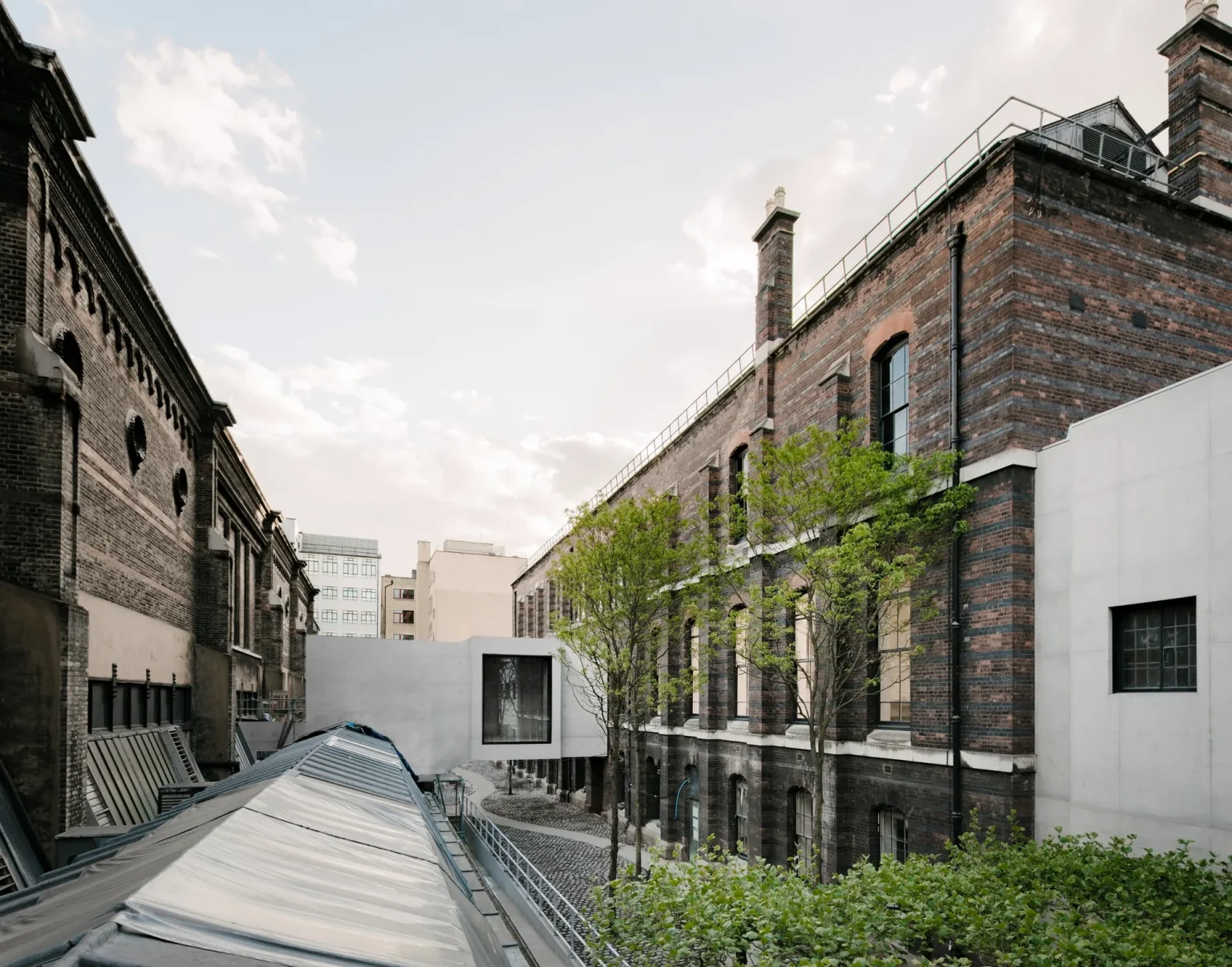
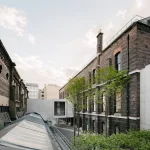
The Royal Academy of Arts, the oldest art institution in England, is located within 6 Burlington Gardens, originally designed as the Senate House for the University of London, dating back to 1768. The masterplan, designed by David Chipperfield Architects and encompassing the Burlington House and Burlington Gardens sites, aims to create coherence throughout the complex, renovating two listed buildings and opening up previously closed spaces, integrating contemporary elements into the historic structures. This initiative is driven by a new public pathway running through the center of the complex to connect the newly accessible main entrances of both buildings.
Starting from Burlington House, the path descends into a brick-vaulted corridor, formerly used for storage and services, which has been lowered to create underground space. It continues through the RA Schools and reaches a newly built in-situ concrete bridge at 6 Burlington Gardens. The bridge, which houses an elevator and staircase, spans the elevation change and the different axes of the two buildings.
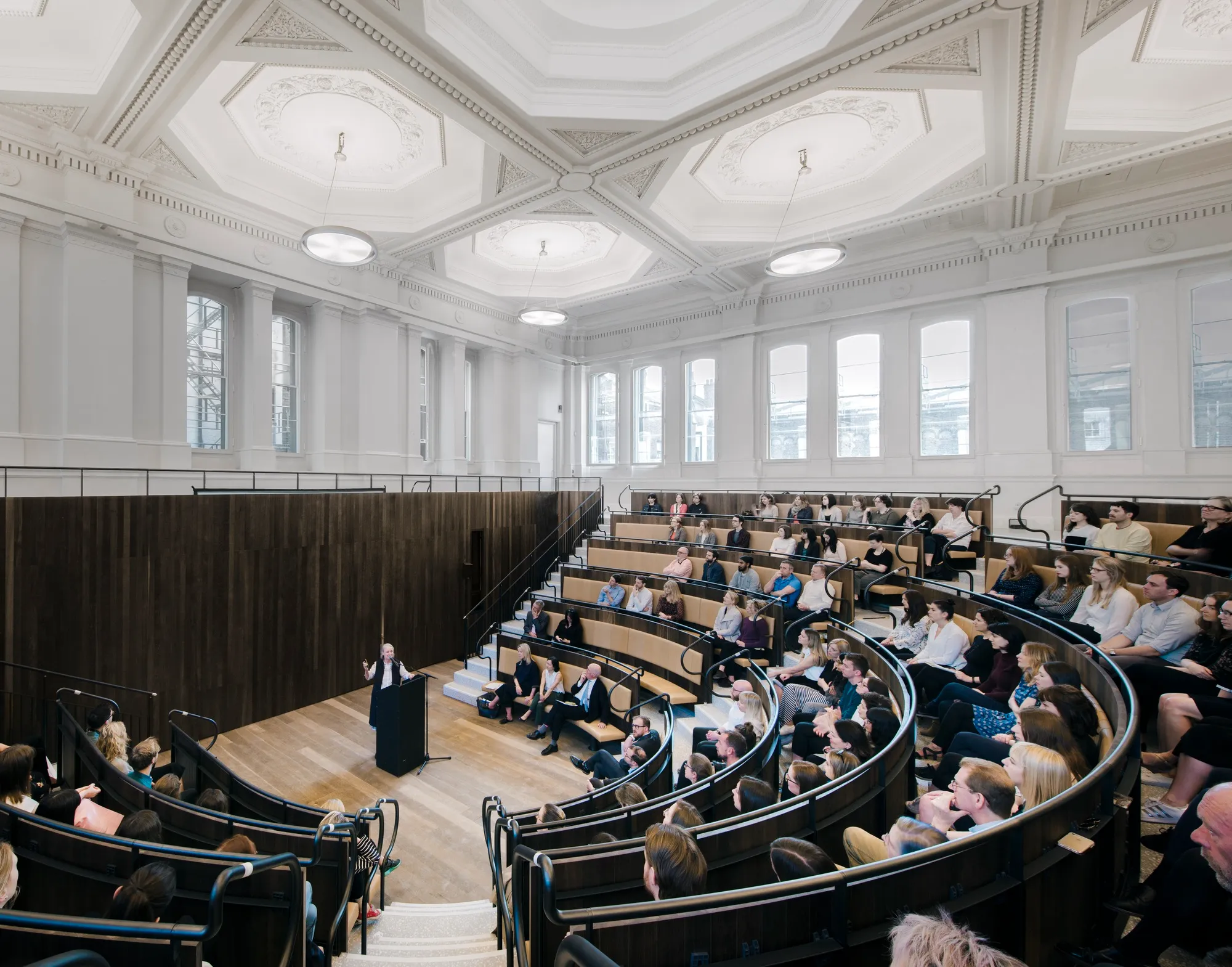
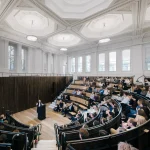
The repurposed 6 Burlington Gardens features a new, semicircular auditorium with a capacity of 250 people. Historic laboratory rooms have been transformed into contemporary gallery spaces filled with natural light, while the grand western hall—formerly a library—now serves as the Collections Gallery. On the ground floor, new education rooms overlook the garden, and the restored Senate Room has been converted into a café. This project, which preserves the campus’s integrity, identity, and dynamic life, is one of the most striking projects designed by David Chipperfield Architects.
8. Cava Arcari
Location: Zovencedo, Italy
Year: 2010-2018
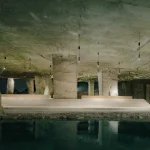
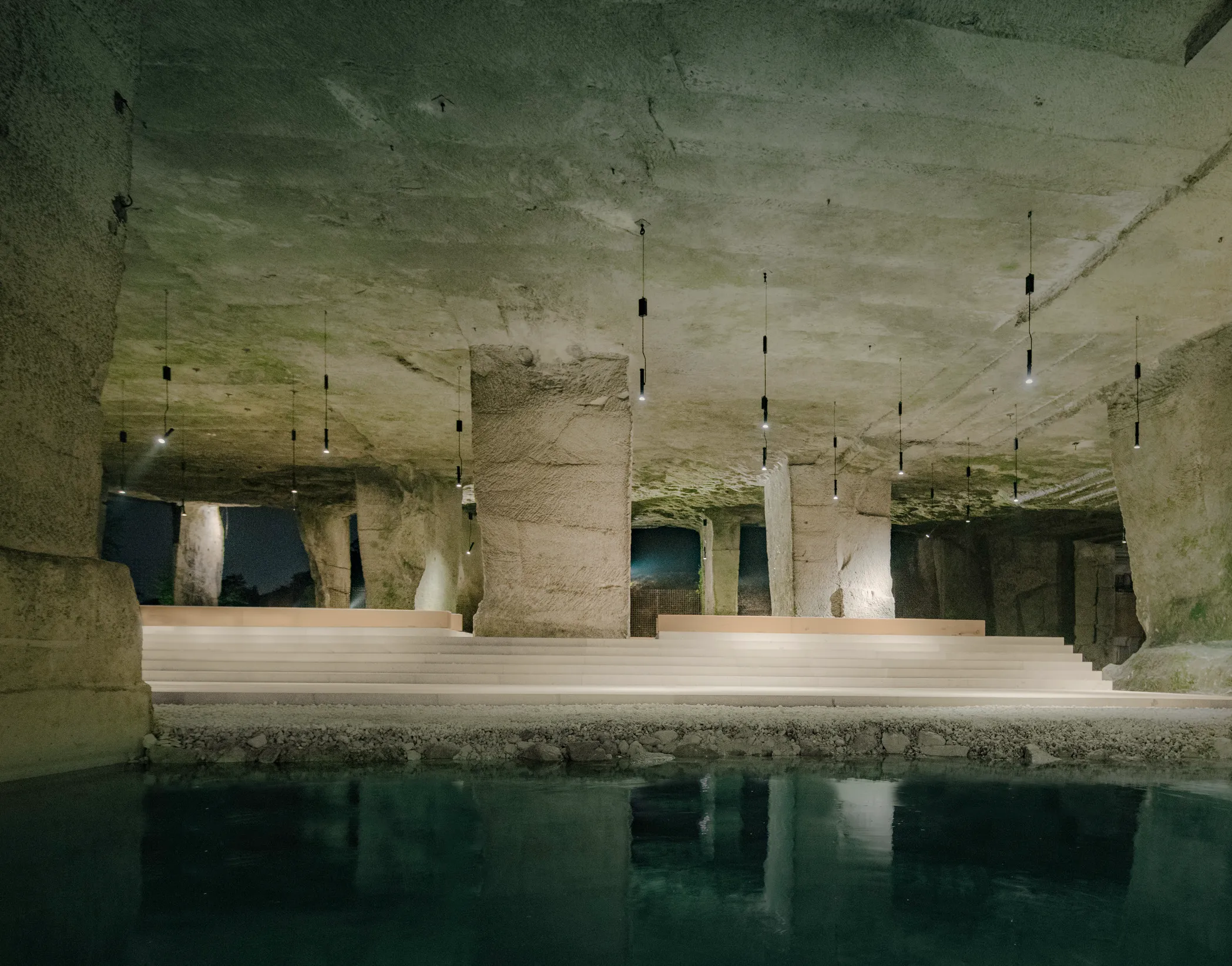
Cava Arcari, designed by David Chipperfield Architects in collaboration with the traditional Venetian stone and marble producer Laboratorio Morseletto, is a performance space project situated within the Arcari caves, an approach far removed from conventional commissions or typologies. The caves, the result of a 60-year quarry operation, offer a unique experience of materials and structures, where nature and architecture imitate each other.
With its hewn stone and filtered water, the quarry possesses strong romantic and tectonic qualities, and the architectural interventions were kept to a minimum. The project reintroduces the typical white Vicenza stone to the space with a series of platforms, steps, and ramps reminiscent of Adolphe Appia’s stage sets. The platforms are known as caveas, a reference to the steps in ancient Roman theaters.
Vicenza stone is the sole material used in the project. Stone was both added and removed, allowing the project to be seen as a continuation of the historic quarry constructed on site. Lighting design by Viabizzuno enriches the atmosphere, while water-filled chambers illuminated from below add a striking visual dimension.
9. Morland Mixite Capitale
Location: Paris, France
Year: 2015-2022
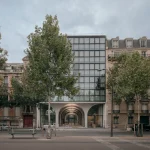
Located on Boulevard Morland in Paris’s 4th arrondissement, along the banks of the Seine, the “Préfecture de Paris” was designed in the 1960s by architect Albert Laprade to house the city administration. The complex, consisting of a 16-story tower flanked by two 9-story wings, presented a closed and inaccessible appearance due to its large scale and repetitive façade layout. David Chipperfield Architects, who won the competition under the “Réinventer Paris” project call, reimagined the structure as a public and neighborhood-focused space.
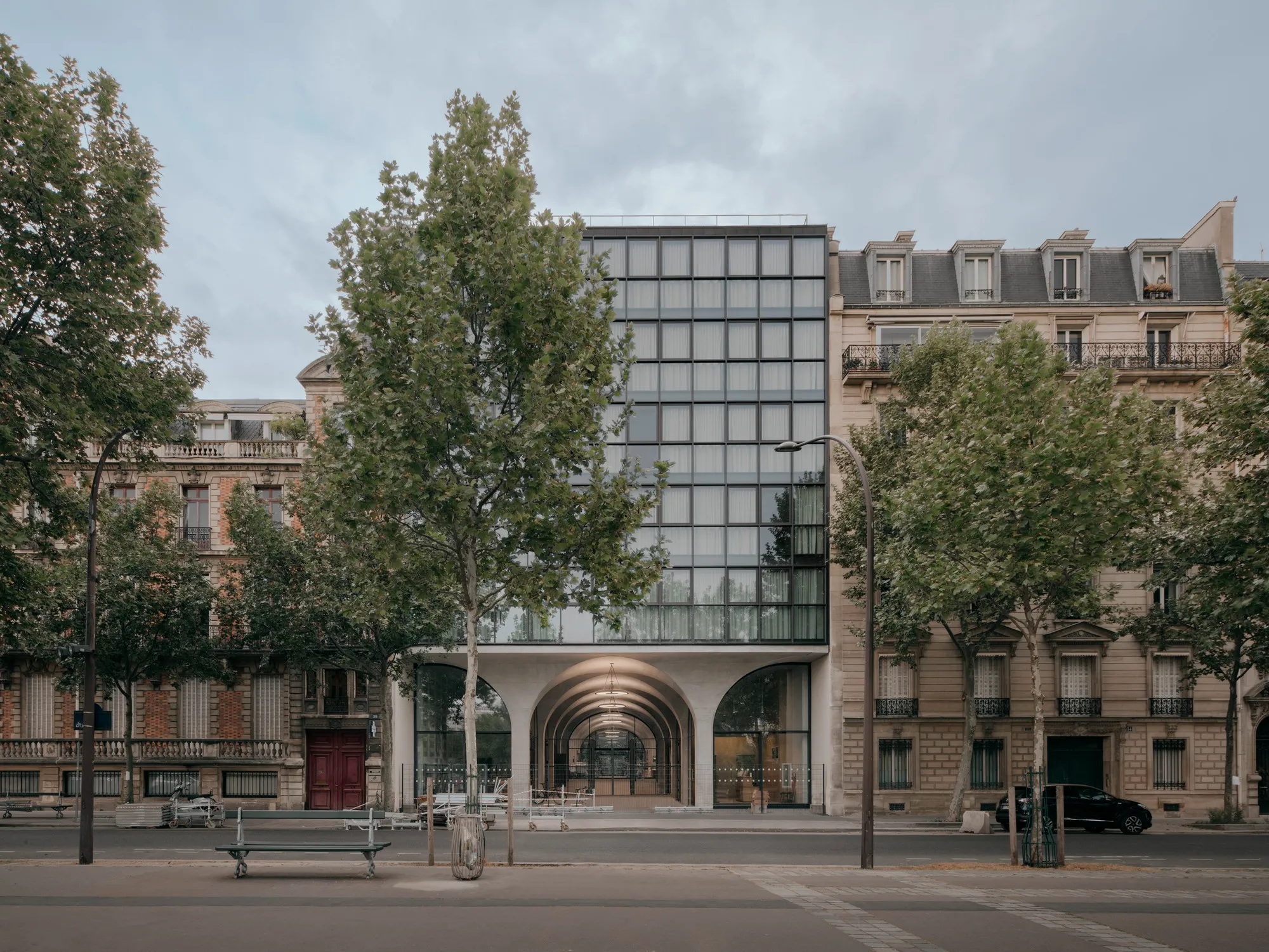
The “Morland Mixite Capitale,” created through the renovation, remodeling, and expansion of existing buildings, has been transformed from its insular character into a vibrant, open space open to the public. Two new building volumes facing the boulevard and the Seine mediate between the scale of the existing and neighboring structures.
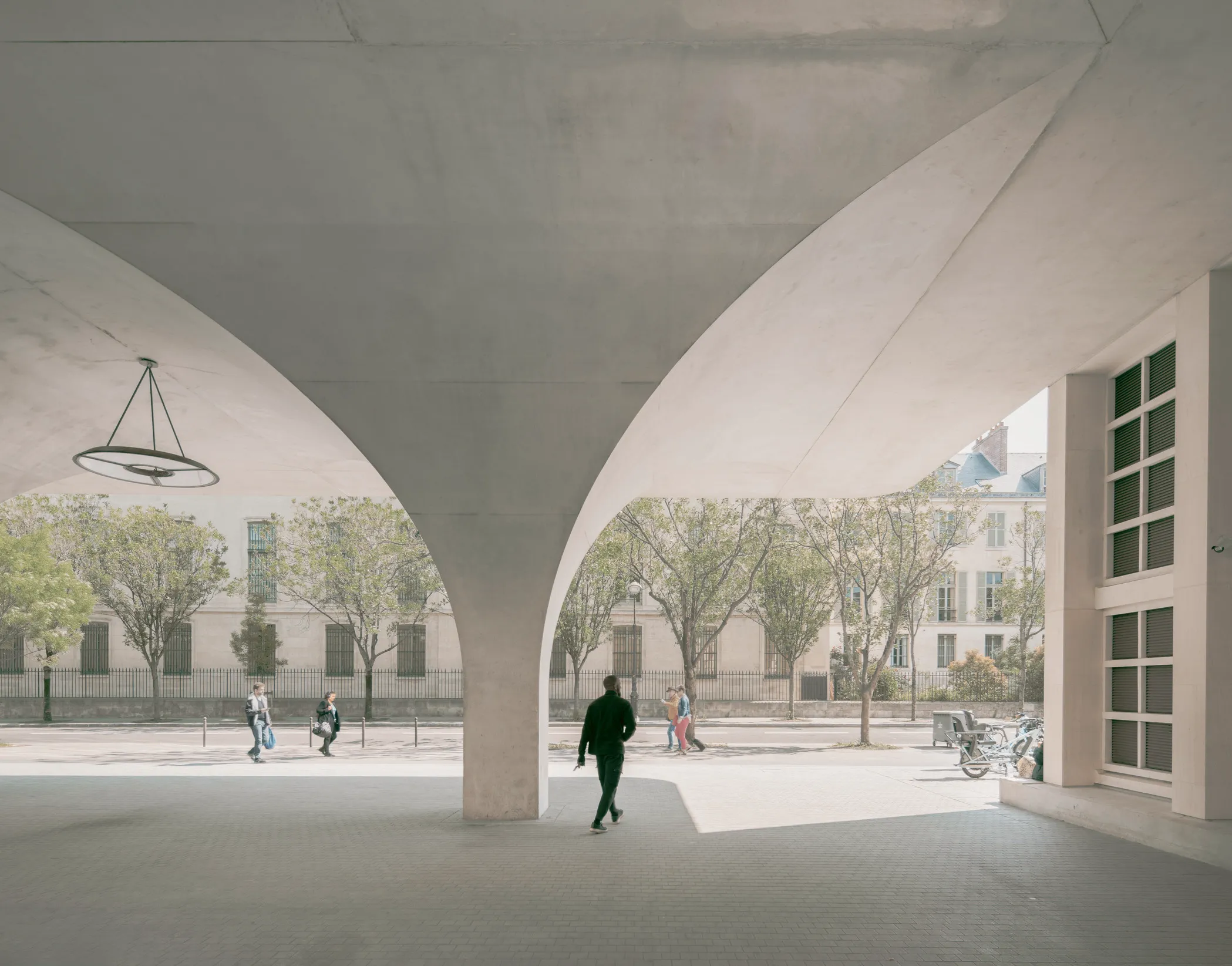
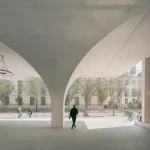
Elevated above the ground, these additions create a new public axis that connects directly to the Seine. The load-bearing, vaulted arches that characterize this ground-floor passageway contrast with the existing structure’s tight column structure. These arches create a welcoming entrance to the campus, guiding passersby into the complex. The complex, which offers a wide range of uses, includes luxury and affordable housing, a hotel, a youth hostel, offices, retail stores, a gallery, a marketplace, and a childcare facility.
Morland Mixite Capitale, one of David Chipperfield’s most striking projects, not only ensures urban continuity but also serves as a fundamental component of the sustainability concept. The existing structure was meticulously respected, being repaired wherever possible rather than replaced. Low energy and resource consumption, along with an energy cycle based on heat exchange, were prioritized.
10. Turner Contemporary
Location: Margate, UK
Year: 2006-2011
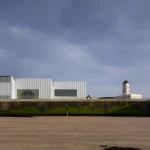
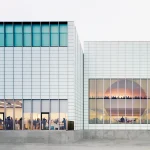
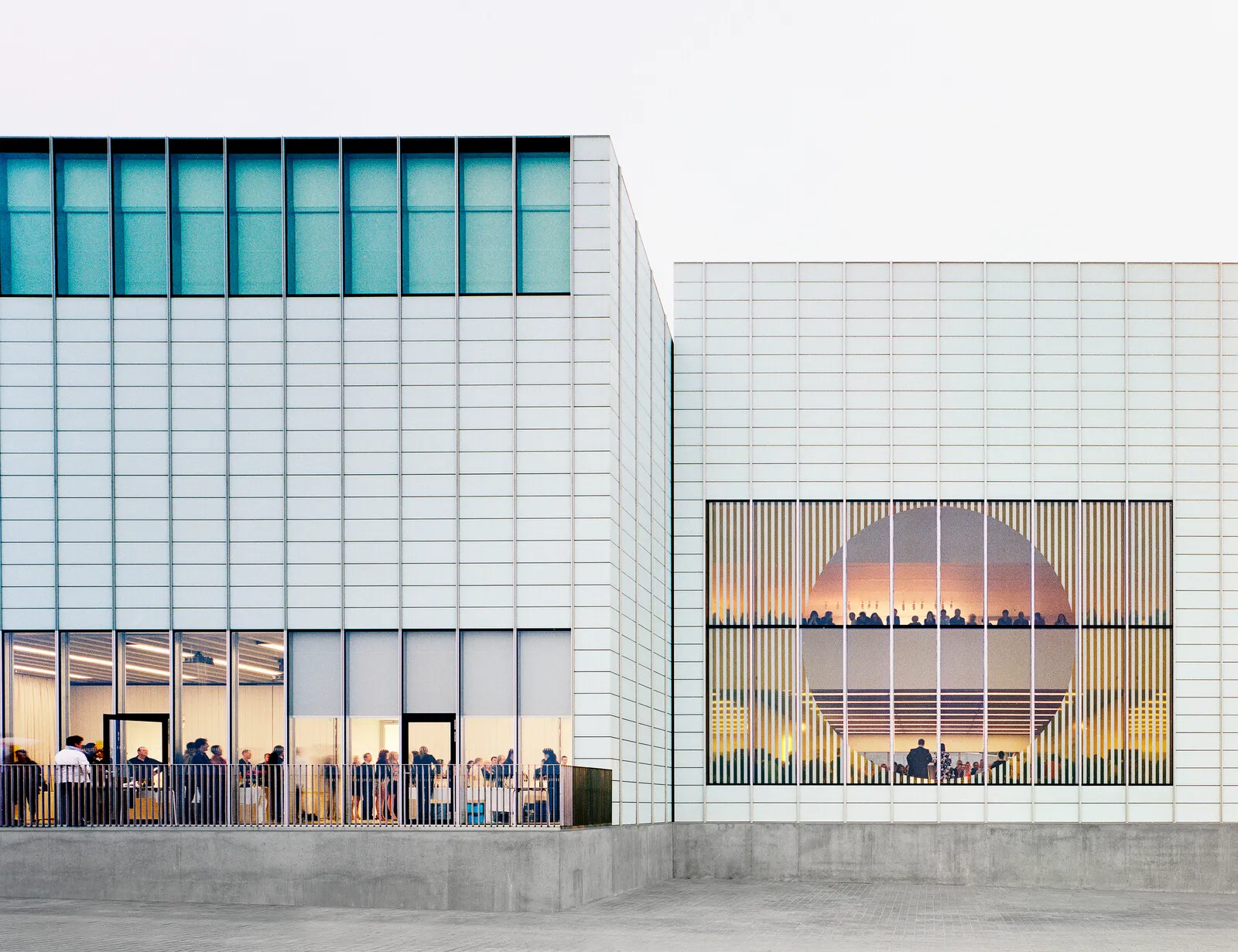
Located on the northern coast of the town, the Turner Contemporary is a private art gallery named after the English painter JMW Turner. The public gallery, which has no permanent collection, offers both historical and contemporary works, as well as a broad program of educational and cultural activities of public interest. Visible from the train station, the gallery rises as a focal point on the town’s horizon, elevated on a plinth overlooking the sea, a gesture befitting its striking location.
A sheltered courtyard, which serves as the cafeteria’s terrace, serves as a public space overlooking the town across from the beach. On the ground floor, extending this public area, are the reception, gift shop, flexible event space, and art studios, all operating independently from the climate-controlled exhibition spaces above. Large windows on the façade offer sea views, revealing the activities within and encouraging a sense of community participation.
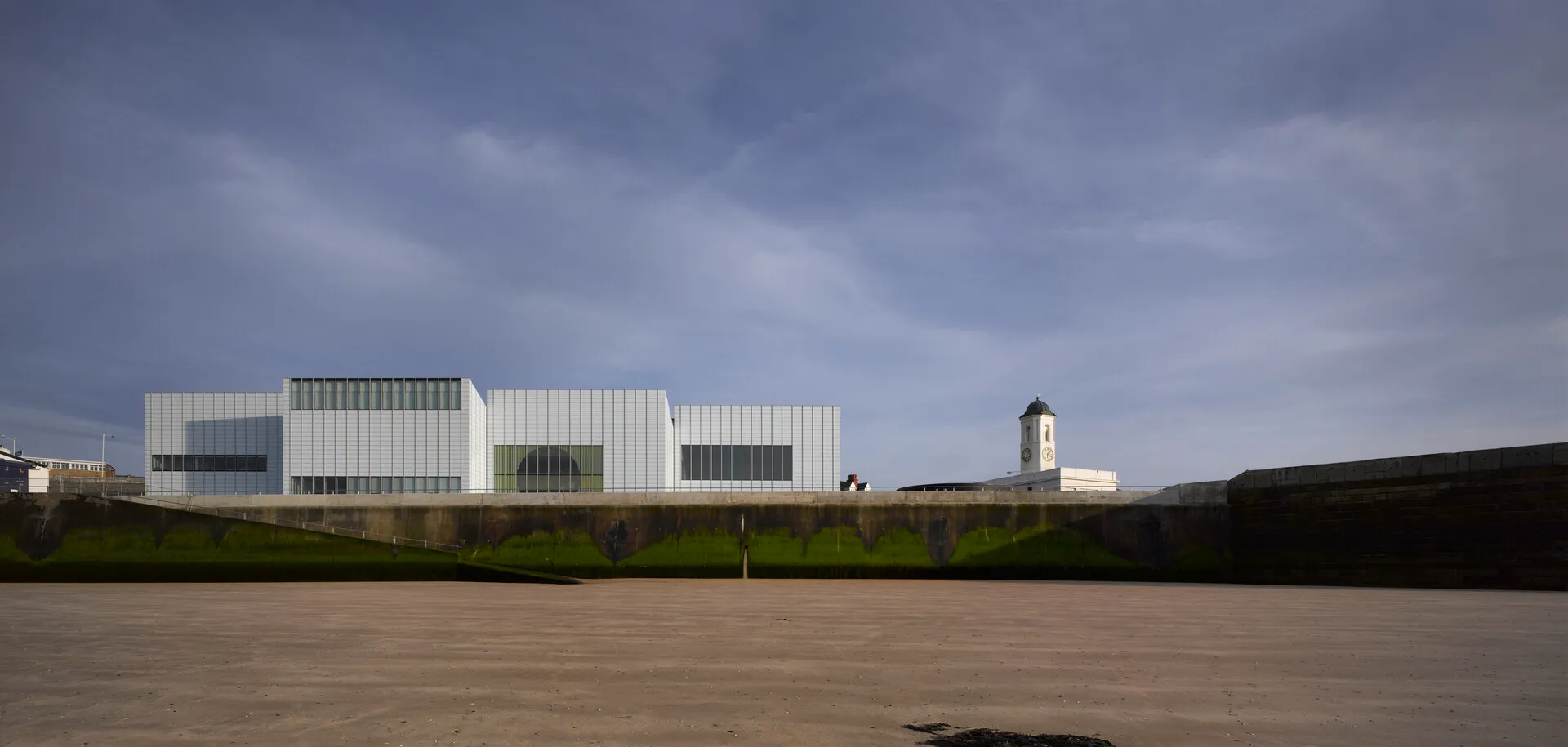
On the first floor, three galleries are illuminated with natural light, designed to capture the daily and seasonal variations of light. Tall windows on the north-facing walls admit direct daylight, while glazed openings set into the sloping ceilings filter the warmer southern light and diffuse it into the spaces below. An acid-etched glass rain screen captures and reflects ambient light conditions, giving the building an almost luminous appearance.