



Squid Game, a brilliantly designed show, stormed Netflix in 2021, exploring the depth of a deeply resonating architectural story that controls the narrative, manipulates the mind, and becomes a silent witness to the haunting world.
The whimsical spaces, psychologically brutal and unreal elements of the set design, delve into the expressive symbolism that unmasks the design secrets of Squid Game architecture. In this blog, we will discover how interior elements shape the spaces that deceive, disorient, and impact the human mind.
Design as Control: Unpacking the Architecture of Squid Game
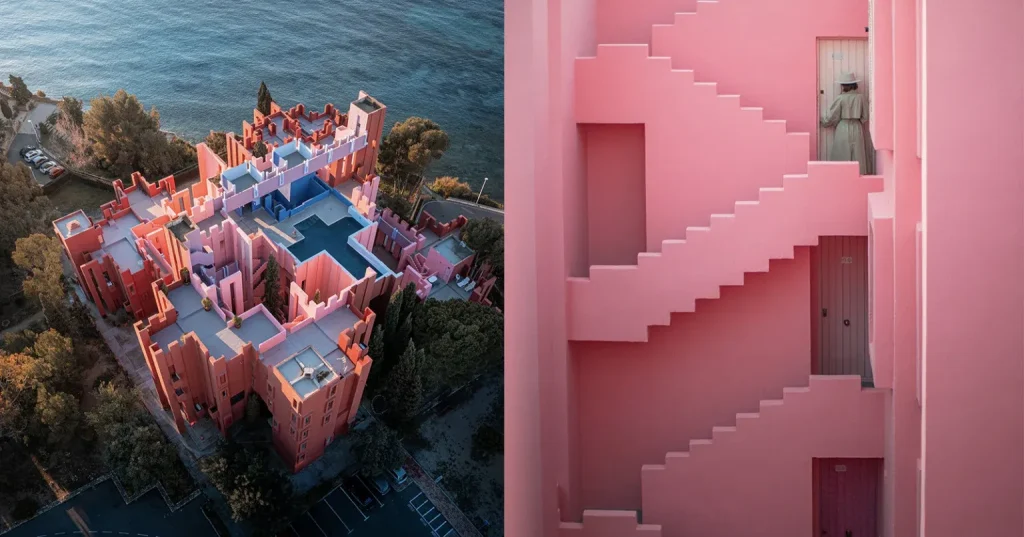
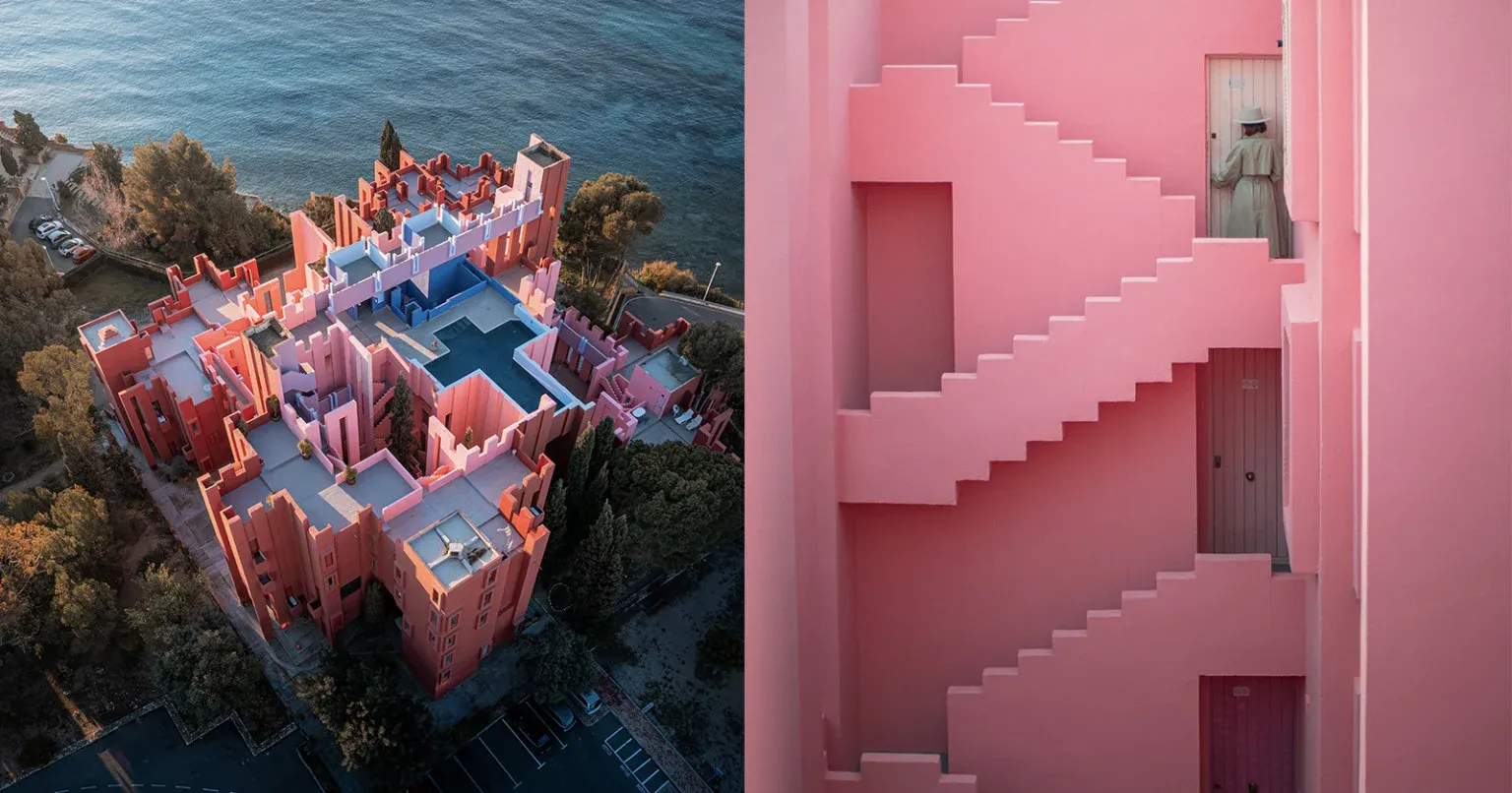
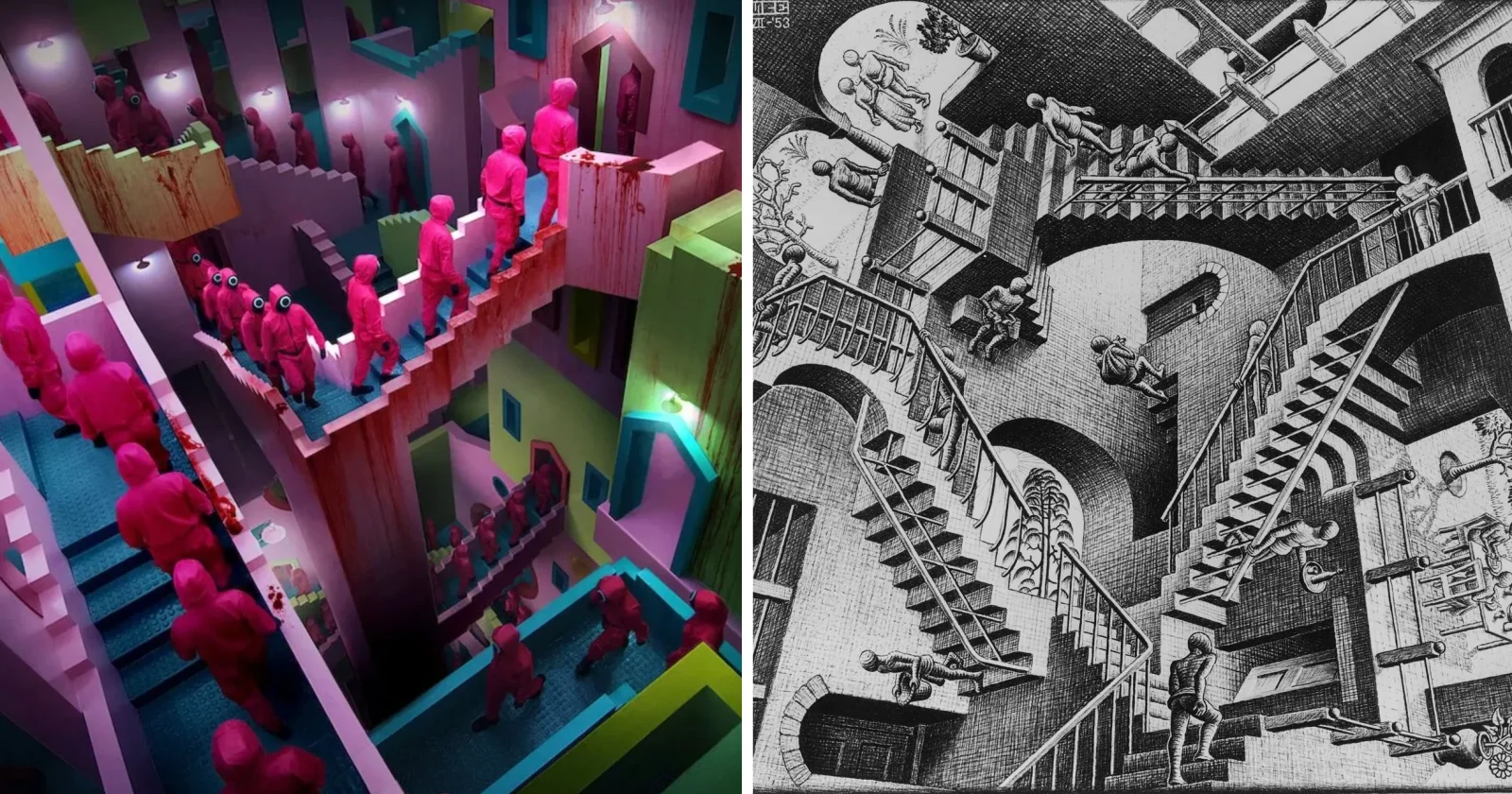
A show captivated by millions inspired by La Muralla Roja, a unique building, not just has an engaging plot and complex characters, but with the set design colourfully conceptualised by Art Director Chae Kyung-sun, continued to play a central role, which intensified the dystopian narrative. It’s designed inspired by Escher to brutalist pioneers, impacts real-life architecture and interior, and vibrant architectural elements that strike pop culture.
It portrays the chilling narrative that captivates the audience in feeling the surreal fantasy, and dystopian commentary wrapped in the childhood innocence and powerful architecture that speaks louder through design. The Squid Game architecture has layers of deception that become the central theme of the show, and it reveals the design through complex and fearful characters
If you’re intrigued by how architecture can become a silent storyteller consider exploring our workshop, Architectural Diagrams: From SketchUp to Photoshop to After Effects. This course guides you through the process of turning conceptual designs into powerful visual narratives using industry-standard tools.
Psychological and Emotional Impact
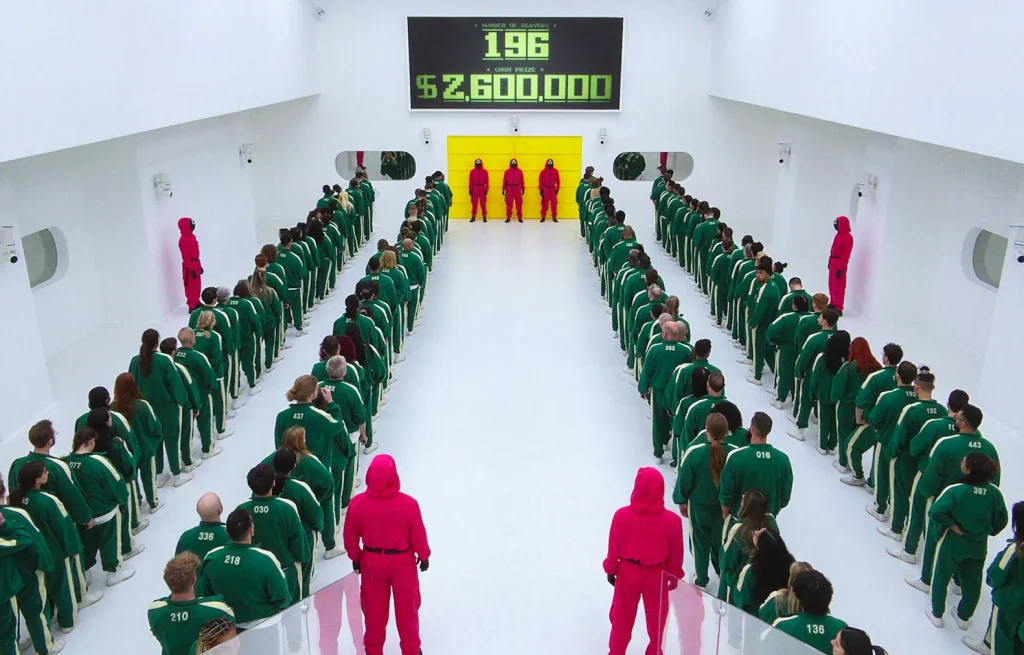
It is often said that design does not just shape space, but it is crafted by human behaviour. Squid Game illustrated that, though with its striking storyline, set design, and spatial choices that influenced the viewers’ psychology. The brilliant designers don’t just use interiors as a backdrop or decor, but they consciously transform spaces into tools of manipulation, nostalgia, chaos, and control.
The play of colours, volumes, materials, and transitional spaces is intentionally designed to unsettle one to support the show’s narrative, and that’s where it becomes an outstanding design of interior architecture. It depicts the cinematic brilliance from haunting colour scheme to surreal spatial hierarchy, resulting in an emotional design.
Colour Contrast in Interior Design
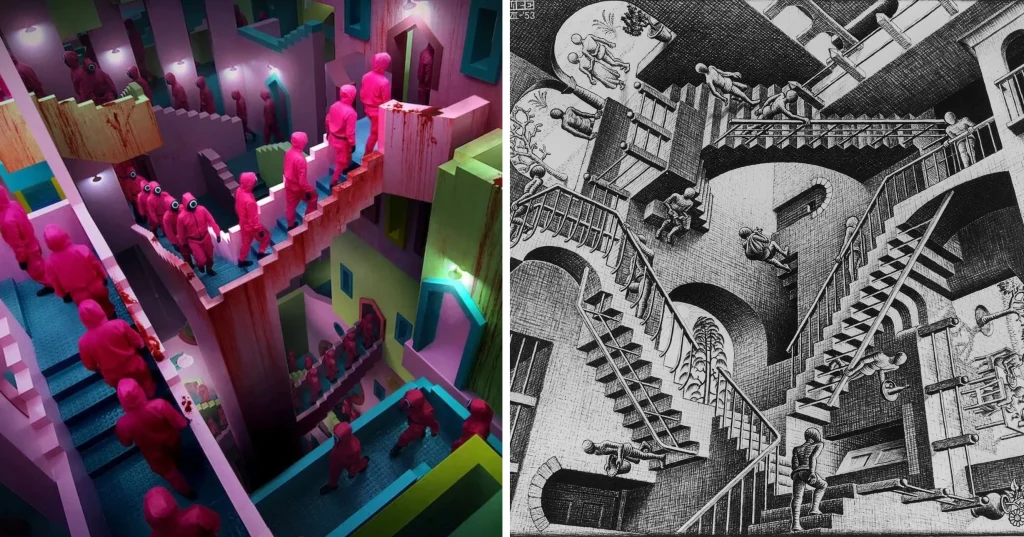
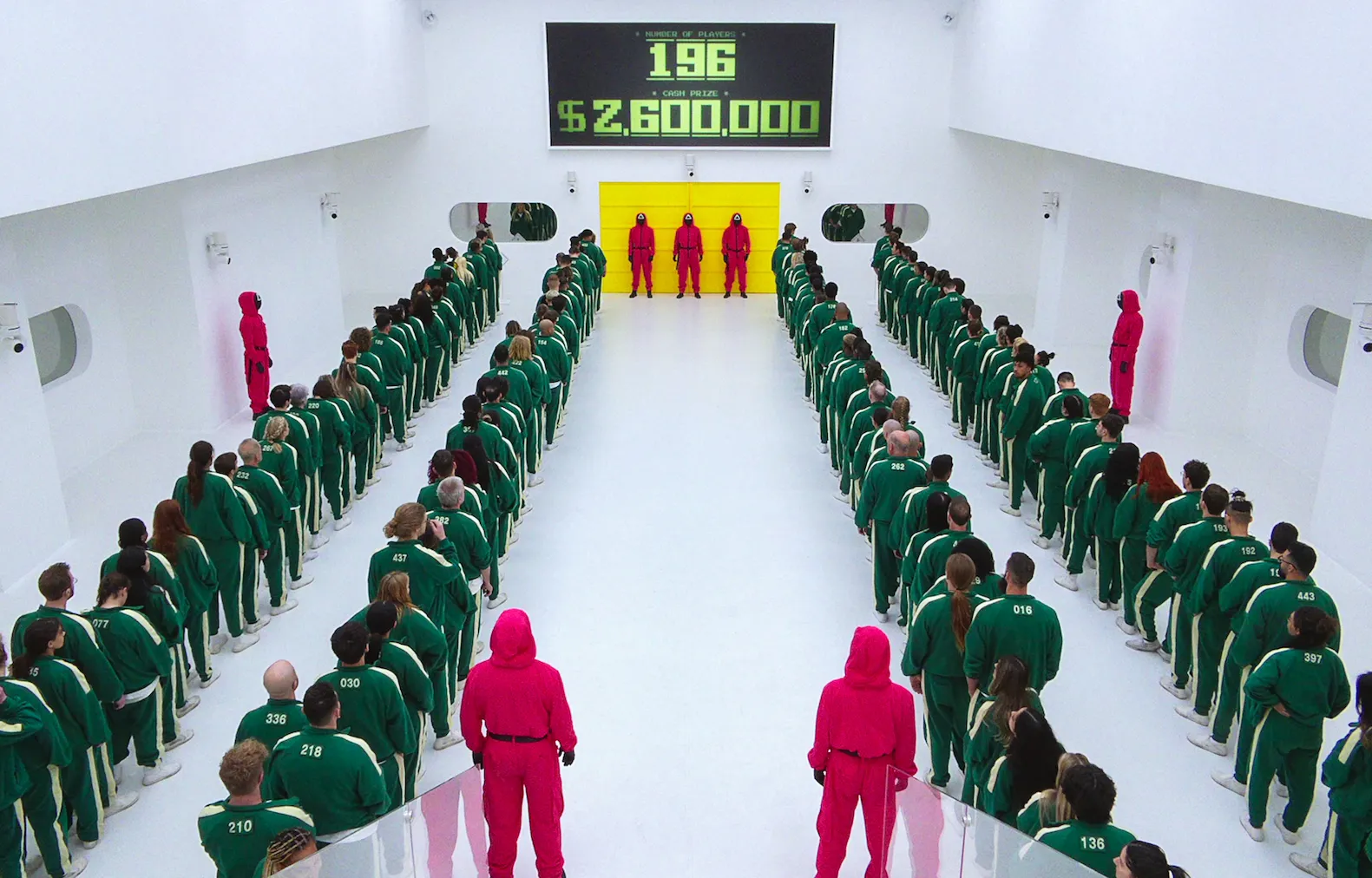
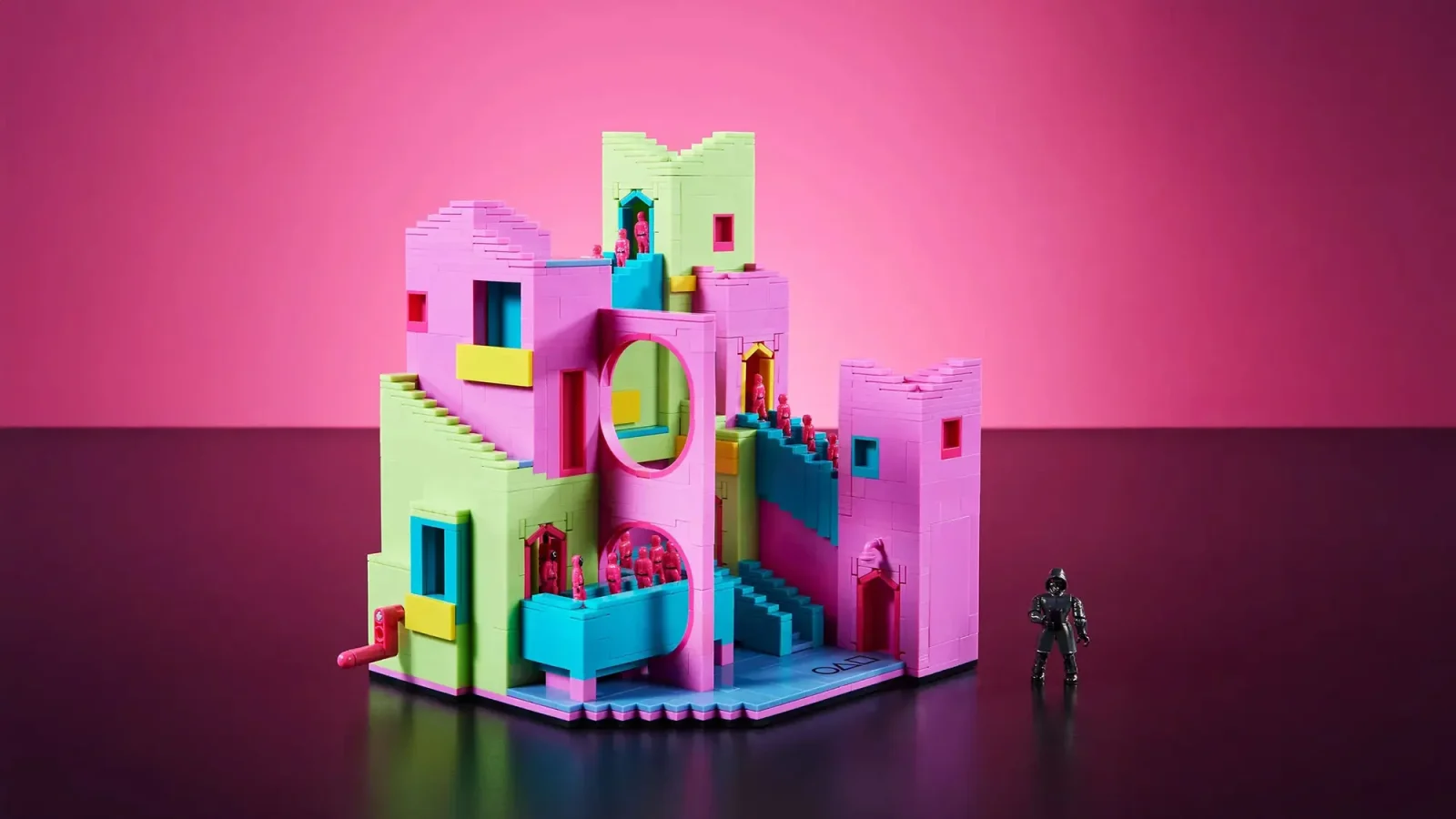
The Squid Game architecture shows a powerful use of colour contrast that is more than just pretty shades. It takes viewers to a chilling level of deception, with the use of vibrant sentimental pastel pinks, greens, and yellows of the guard’s uniforms and the infamous staircases are a harsh juxtaposition against the brutal reality of the games.
It shows how contrast can amplify the message, and an unexpected colour combination or material can create a distinctive mood or gain the audience’s attention. The aesthetic textured or pop of vibrant colour evokes the expression of curiosity and fear, an emphatic psychological design that wraps viewers in
Hidden Depths of Space Planning
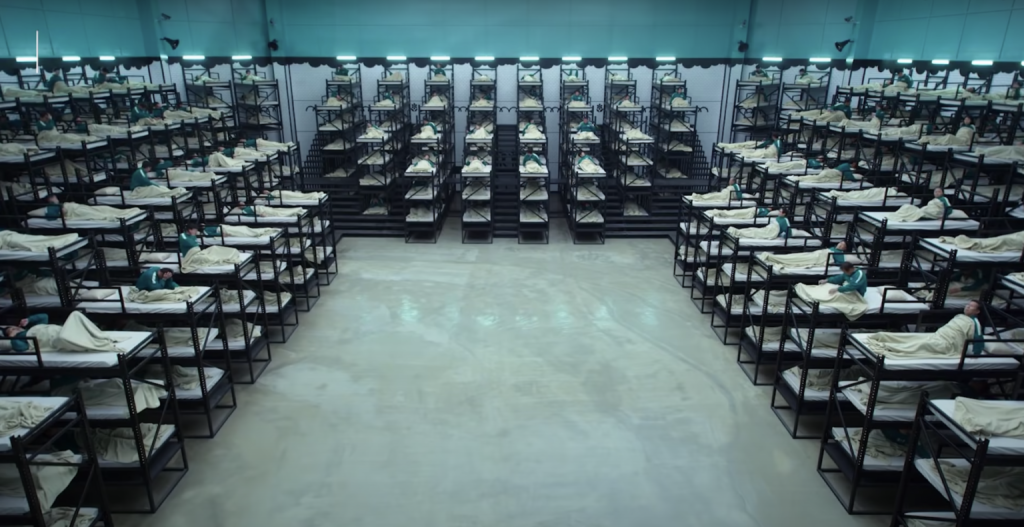
Spaces make us feel comfortable and at peace, while in Squid Game, it was intentionally designed to disturb players, a striking example of space planning as a manipulative emphasis. Its design was focused on profound themes of life, isolation, loneliness, and a sense of togetherness.
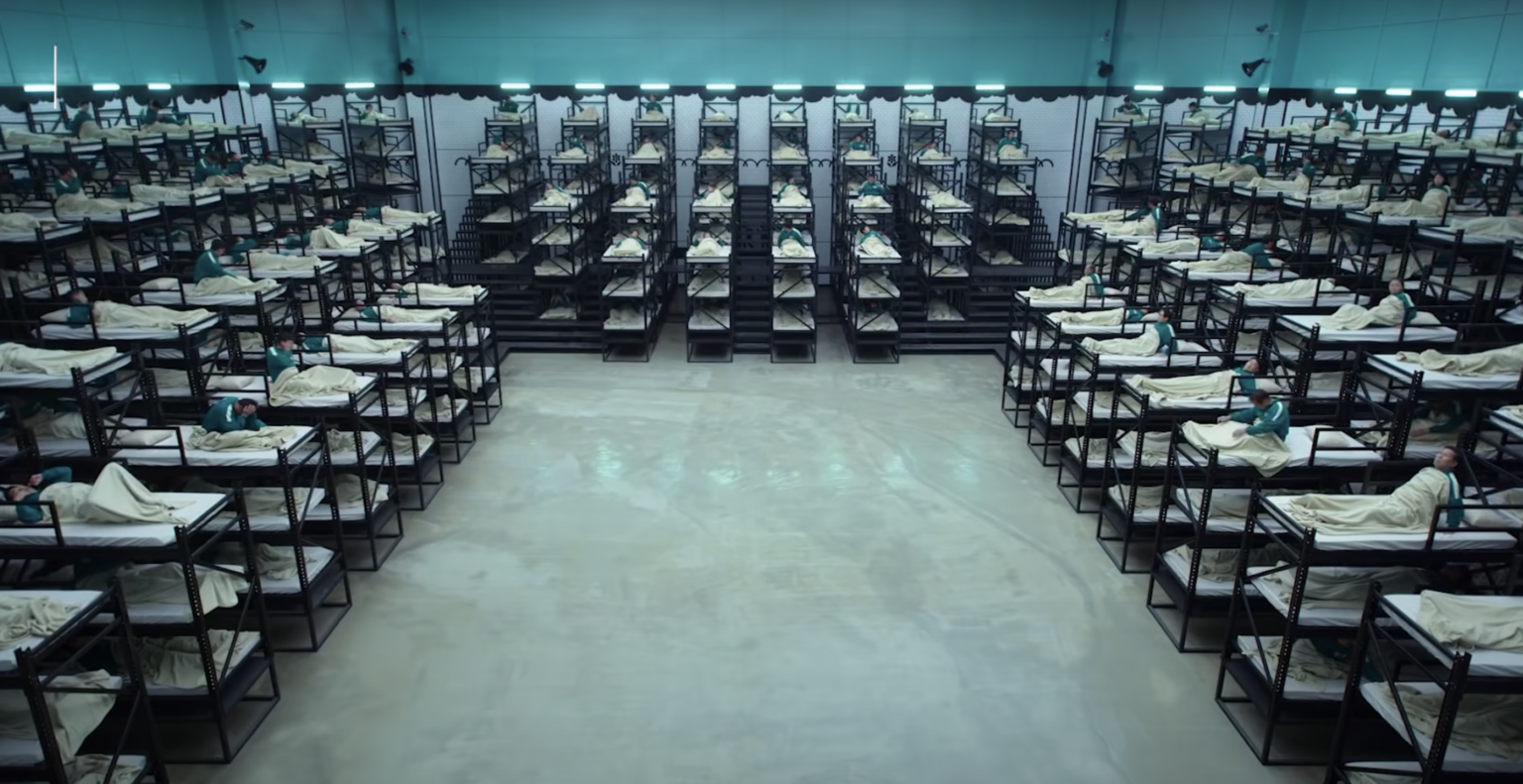
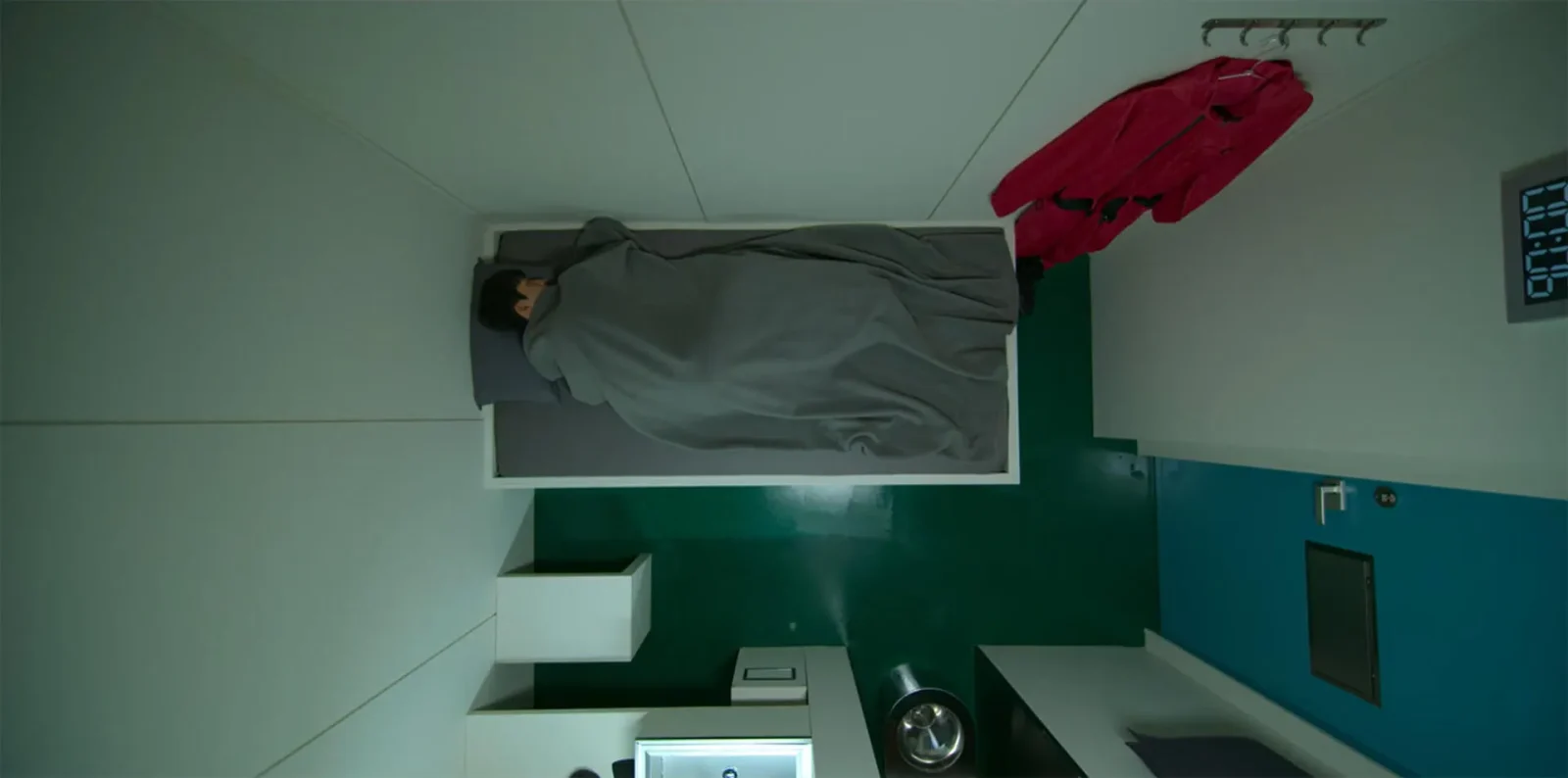
The spatial layout of the dormitory exemplifies this with an open communal space in the middle, fostering a false sense of belonging and slowly revealing the emptiness and the feeling of unease. It shows how it impacts the emotional states of players, highlighting vulnerability through design.
Building Anticipation Through Design Elements
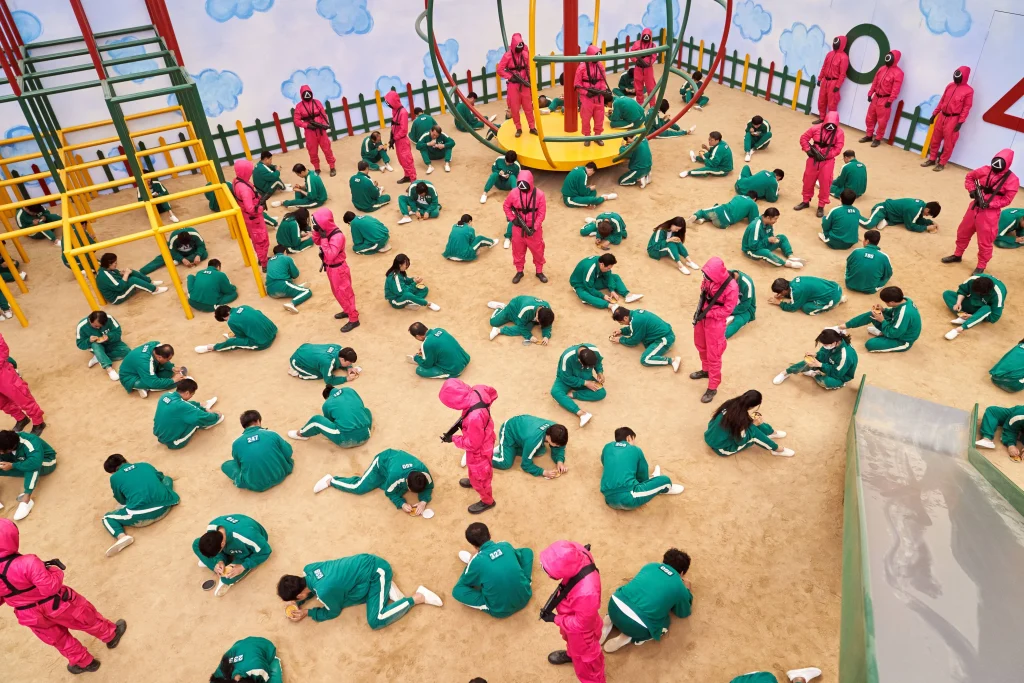
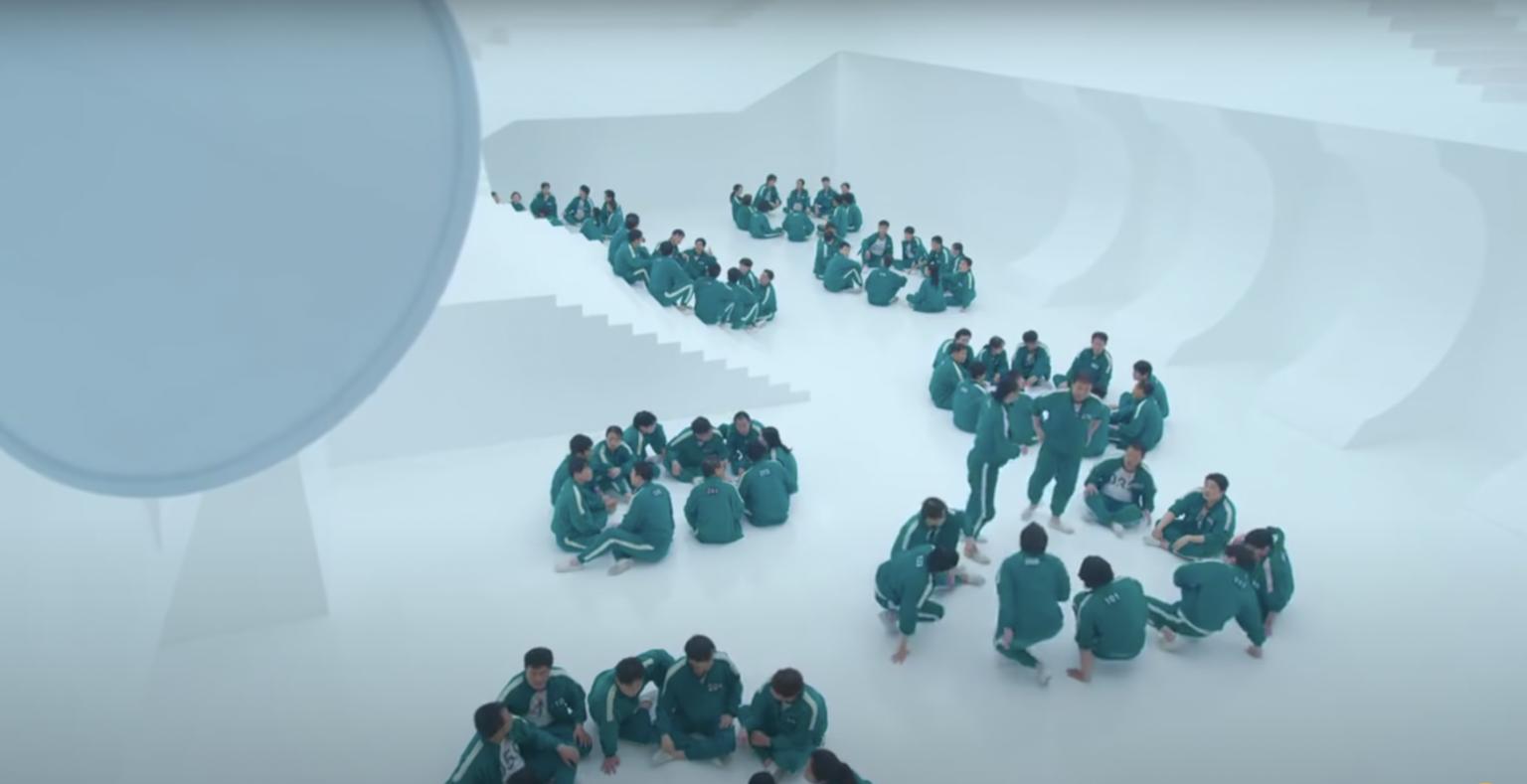
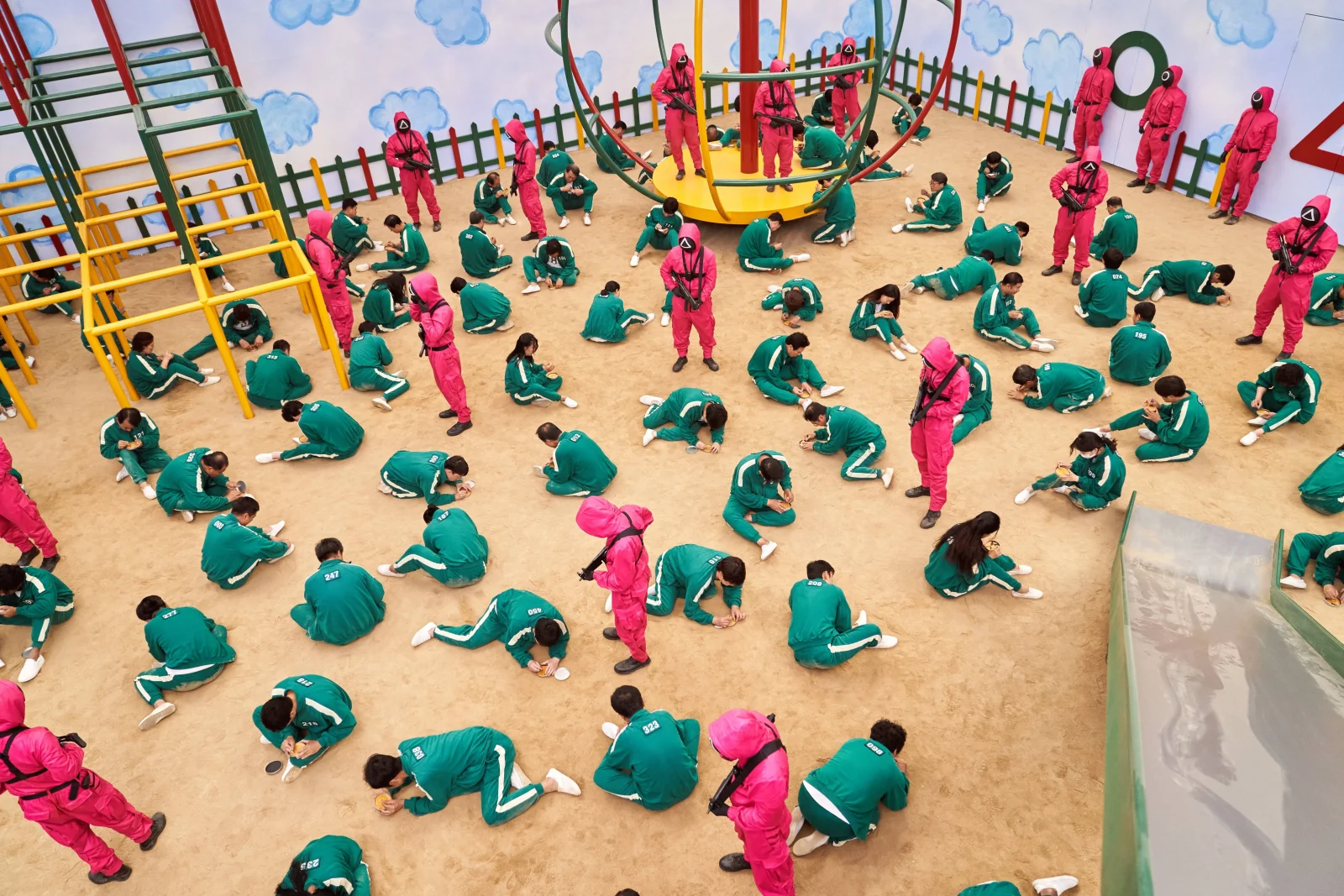
In Squid Game set design, grandness in the space felt overwhelming powerlessness, while intimate, detailed elements of architecture showed curiosity, creating a sense of intimidation. One such space was Red Light, Green Light arena for a splendid illusion that showcases the brilliant use of scale and consonance.
With the use of the colossal doll, the expansive, open field, and the tiny figures of the players, designers manipulated the scale and proportion that impacted emotional perception.
Functional vs. Decorative Lighting
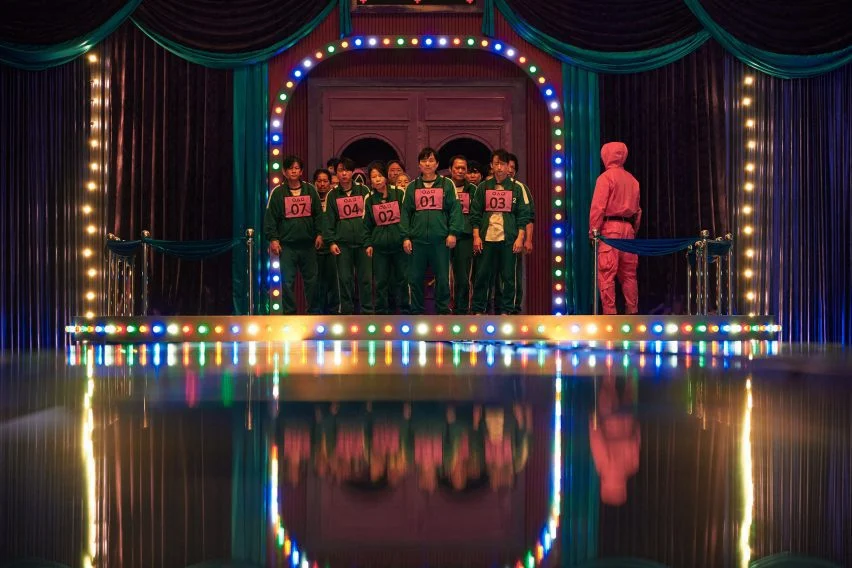
Lighting is an important tool in interior design that transforms the space and highlights the features and characteristics of the curated interpretation. Lighting in the dormitory had a fluorescent glow that deprived privacy, while the glass bridge displayed a theatrical spotlighting engaging the viewers. Here, lighting shows the layers and acknowledges the truth of the detailed layout of the spatial experience.
Intentional Maximalism
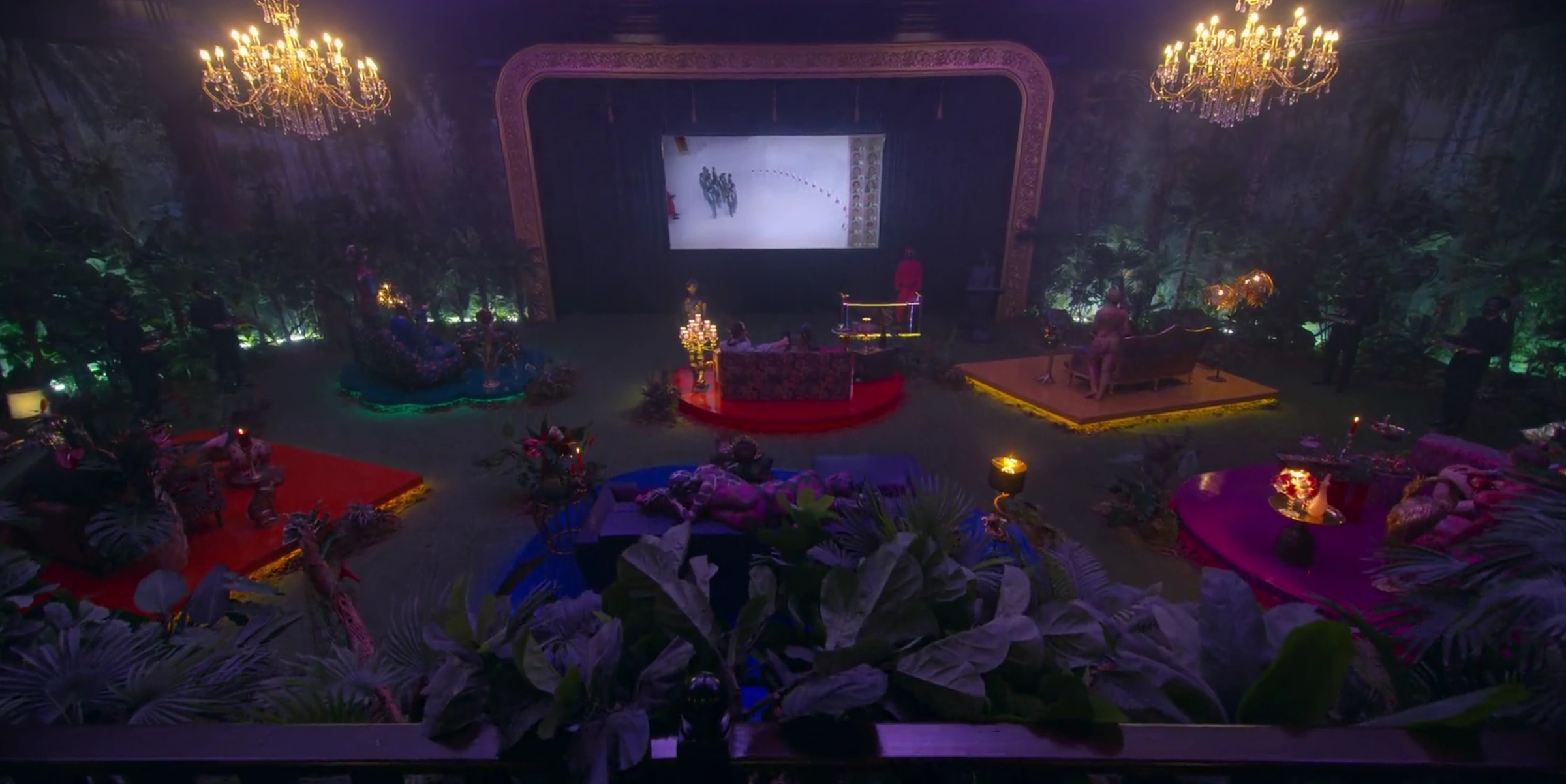
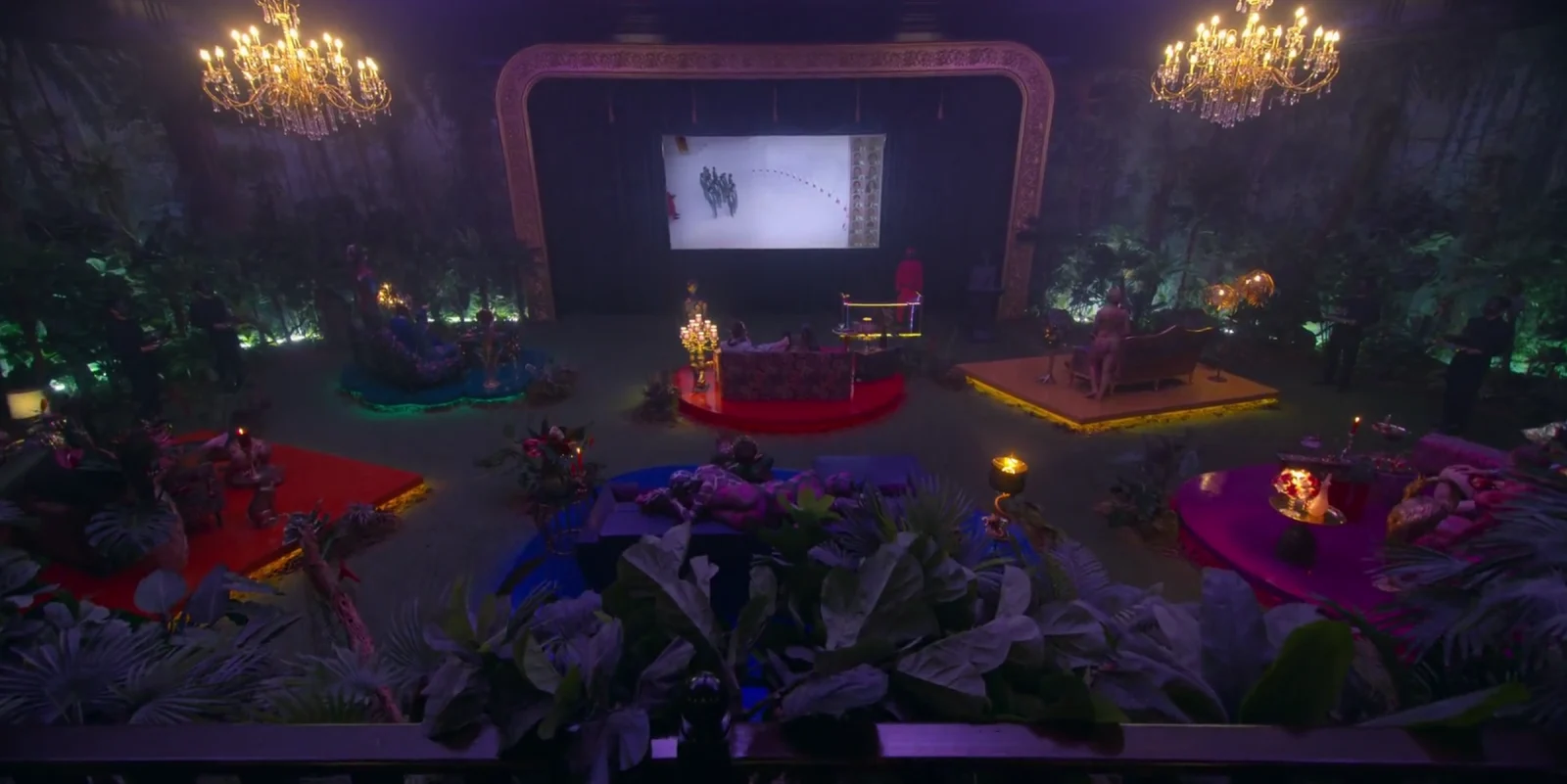
A cohesive narrative guides the maximalist design approach that explores animalistic sculptures, dark, rich textures, and overwhelming opulence, reflecting the perverse nature of the game’s spectators. The VIP lounge shows carefully curated elements that tell the story of power, morality, and wealth, crafting a space that is comforting and represents the sense of absurdity.
Texture and Materiality
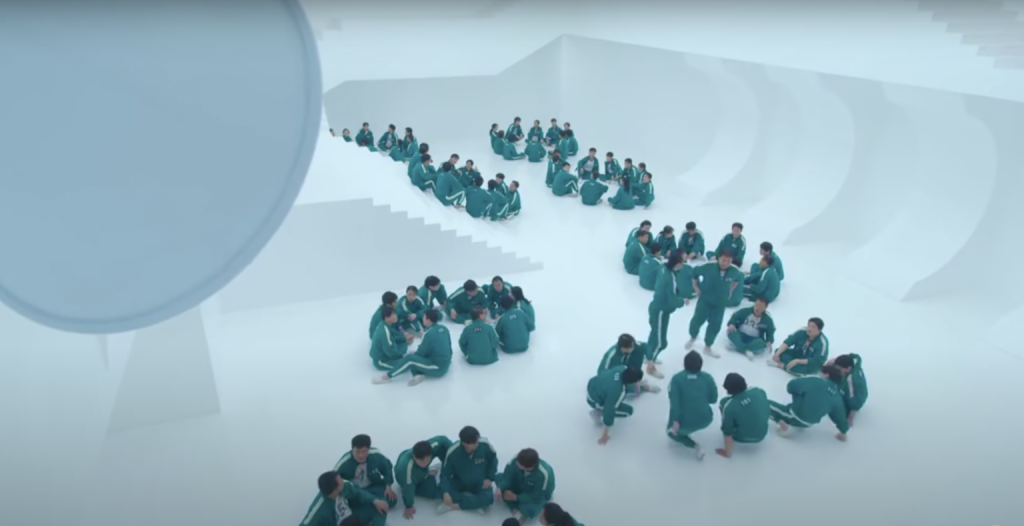
In the set design, brutalism was reimagined in the dormitory with striking interiors without ornamentation, a monochrome box of concrete, steel, and exposed controlled light, resulting in a dehumanisation that suppresses individuality and turns people into numbers. The choice of colour, material, and volume creates a sense of unease and uncertainty in the order of design elements.
Nostalgia as a Design Tool
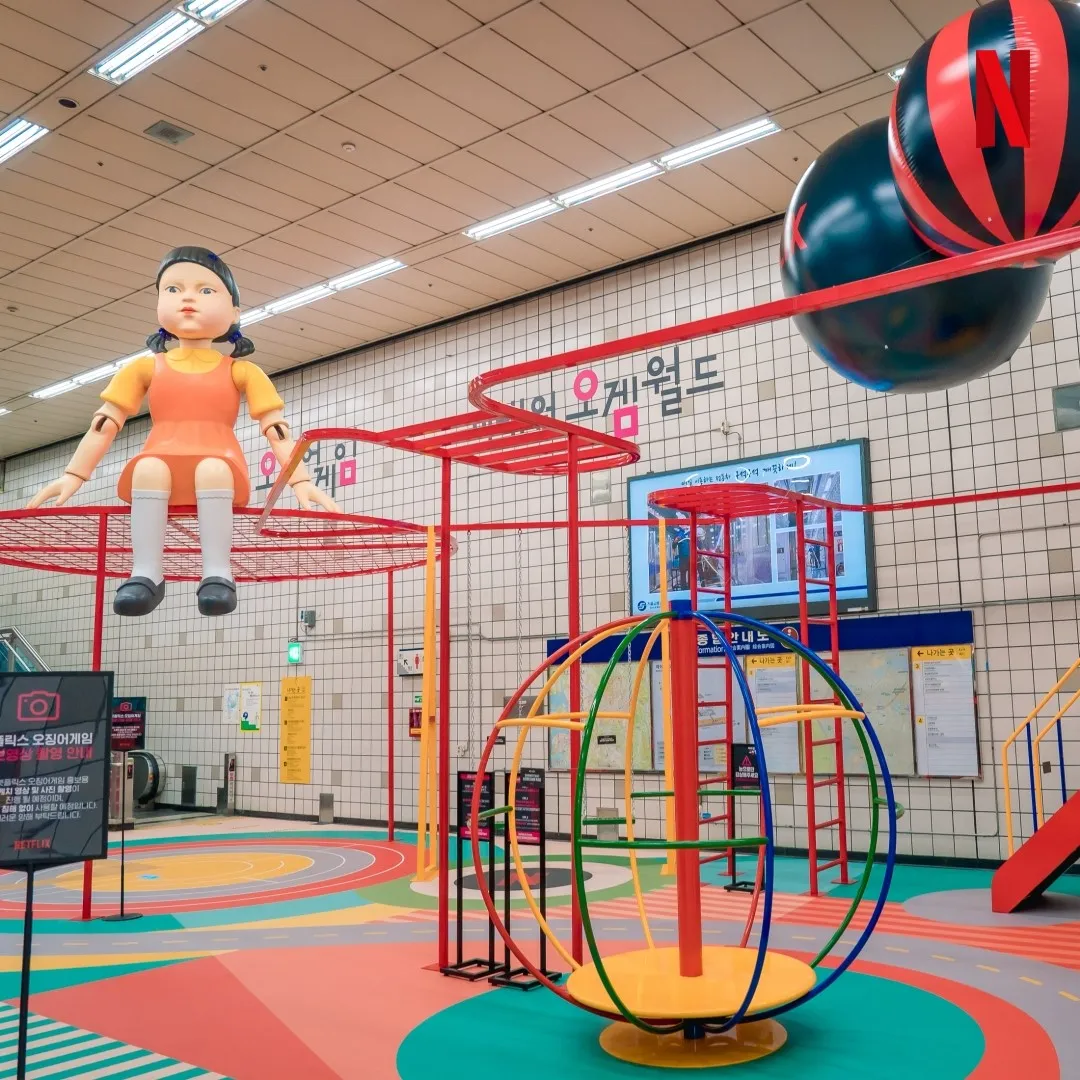
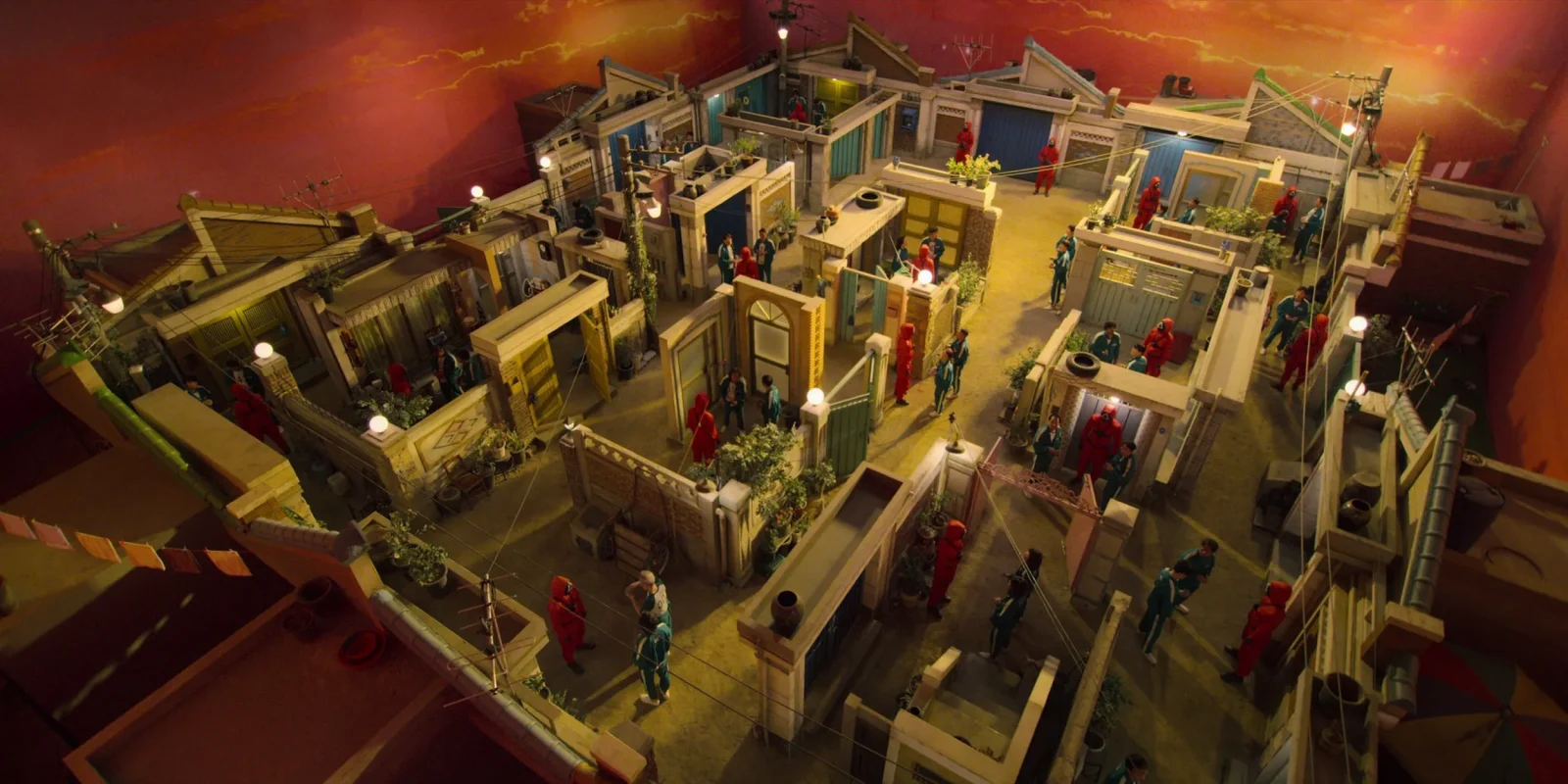
Inspired by childhood memories or surreal environments, the game takes place in a modelled schoolyard, playroom, or a maze that challenges the perception capabilities of the human mind. It is a clever manipulation of scale, colour, and surfaces, evoking a false tactile experience of nostalgia that is terrifying and enjoyable.
Movement Through Confusion
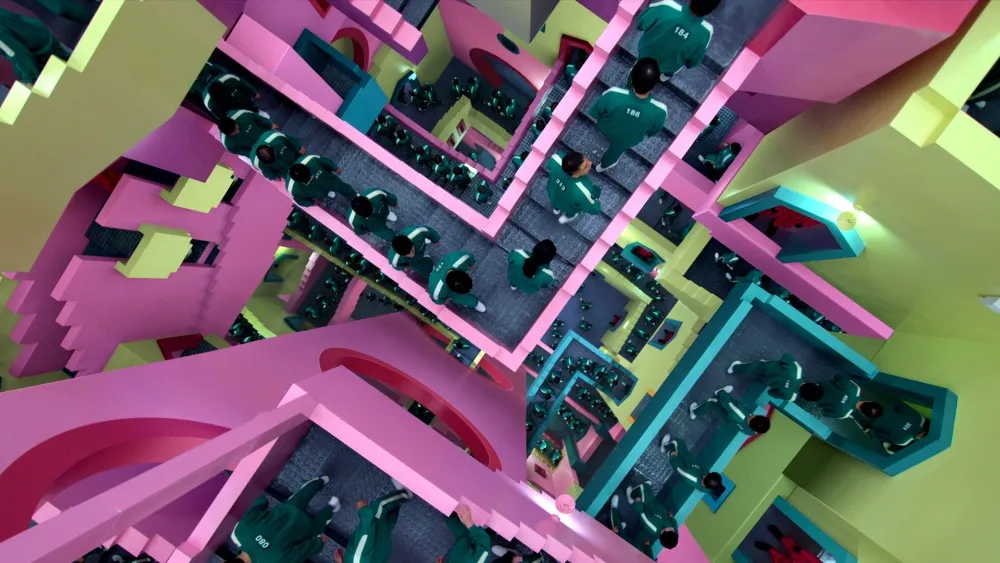
To empower manipulation and disempowerment, the designers had crafted transitional spaces that are not intentional and lack lighting, signage, and clear movement, forming a chaotic setting for players. It serves no functional clarity; this architectural confusion mirrors the psychological state of the players. This philosophical approach to the transition spaces, the hallways, staircases, and waiting areas, indicates the deliberate absence of orientation, breaking the traditional notion of gently moving through the space.
Squid Game Interiors as Silent Storytellers
In Squid Game, architecture is more than a backdrop; it is a narrative force, shaping the viewer’s emotions as much as the characters’ fates. The show’s set design masterfully constructs psychological landscapes, where space manipulates memory, behaviour, and perception with the precision of a script. Each corridor, staircase, and chamber becomes a character in itself, speaking in a visual language of control, hierarchy, and illusion.
Rooted in brutalism yet wrapped in childlike nostalgia, the series uses geometry to communicate power, circles for workers, triangles for enforcers, squares for commanders, embedding societal structure into every architectural gesture. But beyond symbolism, these spaces touch something deeper: they disorient, unsettle, and move us. In doing so, Squid Game reveals the extraordinary potential of interior design not just to house a story, but to become the story, a chilling reminder that design, at its most powerful, doesn’t just look good. It changes how we feel, think, and ultimately, how we see the world.
.jpg "Fran Silvestre - Rethinking Architecture")
.jpg2.jpg "Carlo Ratti - Rethinking Architecture")