

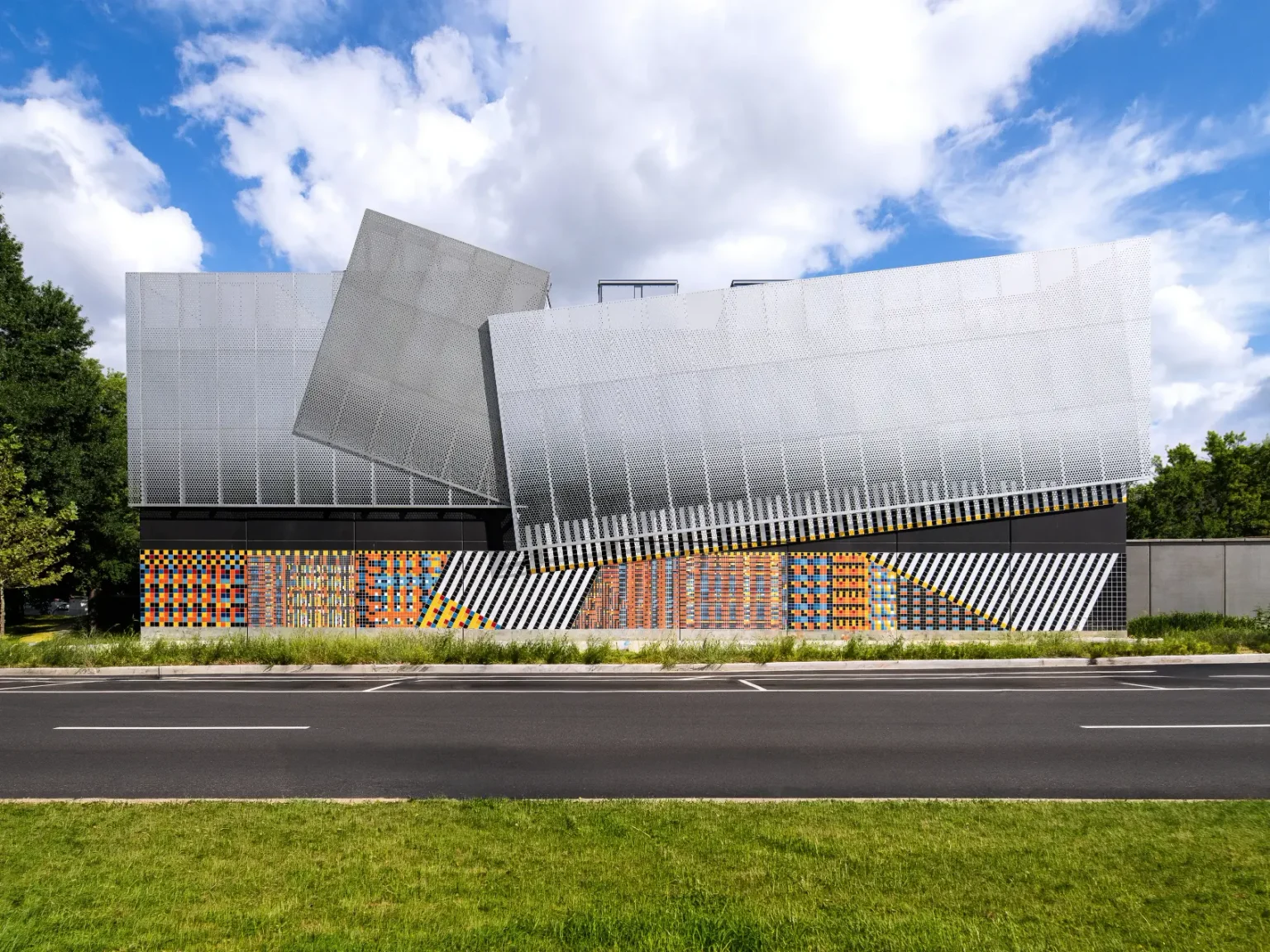
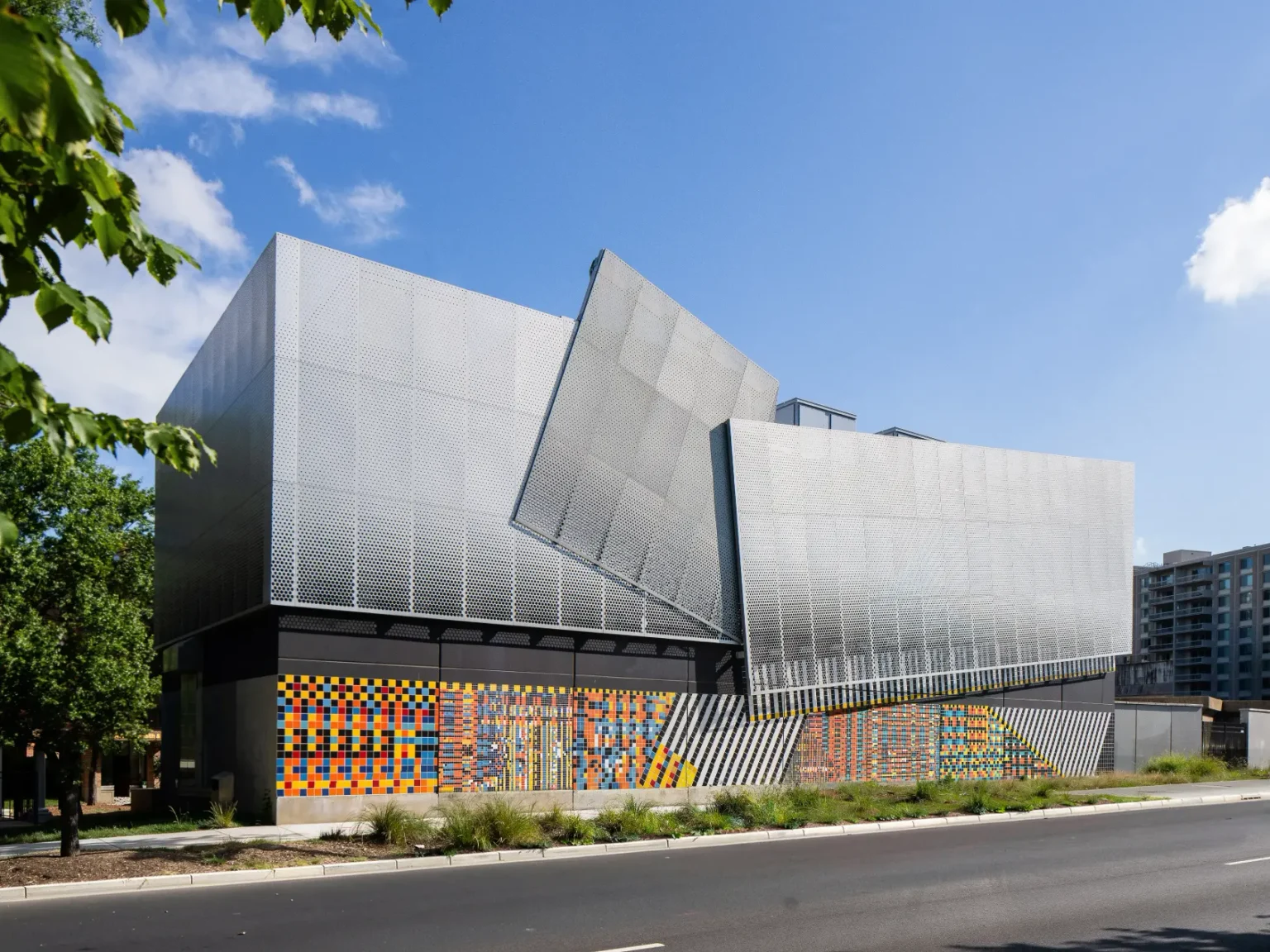


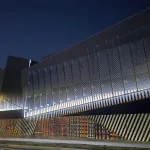
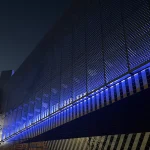
Atelier Manferdini’s project inVisible showcases how abstract use of geometry and materials on a façade can create an immersive visual experience. Through an unexpected combination of contrasting colors, industrial materials, and shifting angles, the electrical substation becomes almost a piece of public art. Located in Arlington County, Virginia, the project transforms an overlooked piece of urban infrastructure into an expressive architectural landmark, making the invisible processes of electricity visible through design.
The design explores the relationship between technology and architecture, using the building’s exterior as a canvas for visual experimentation. Its combination of computationally generated patterns, textured surfaces, and changing light creates a dynamic composition that responds to the surrounding environment and offers a different experience depending on the viewer’s perspective.
Transforming Urban Infrastructure Through Art and Design
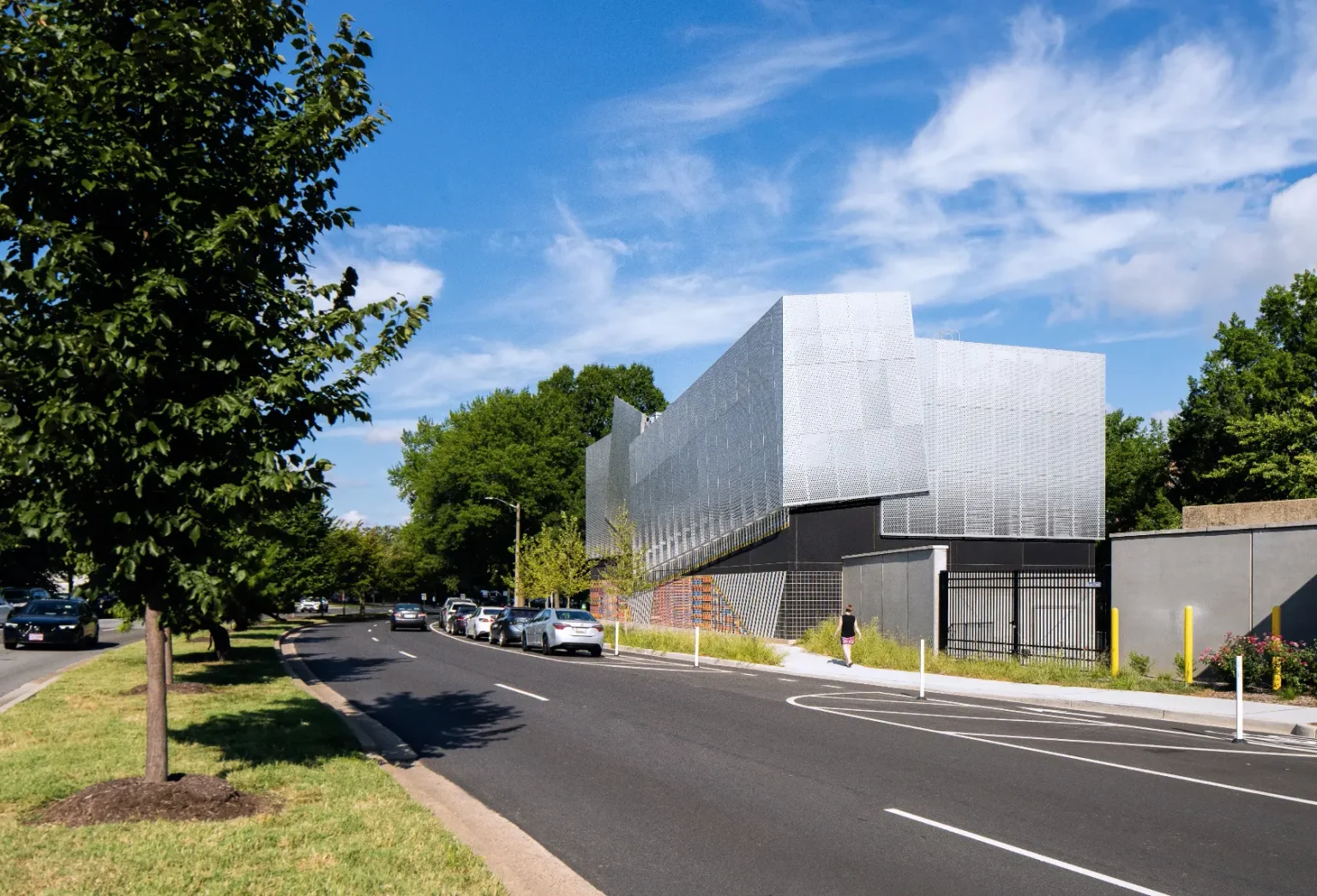
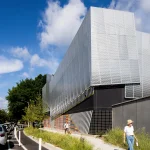
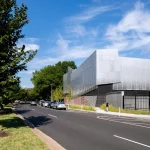
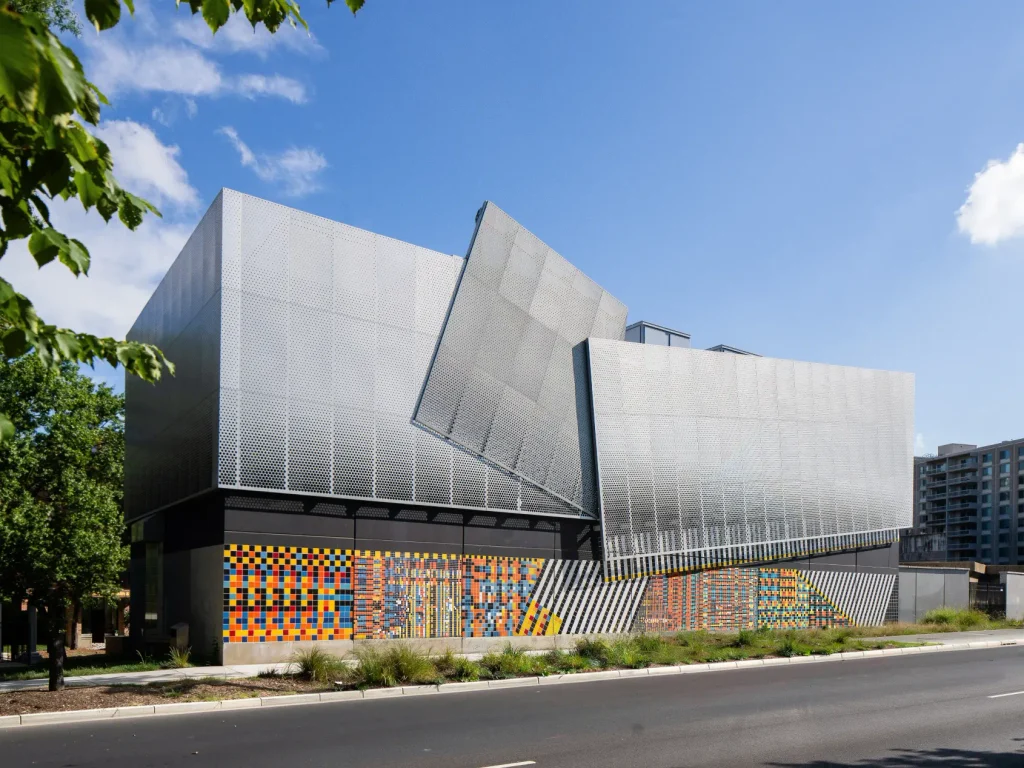
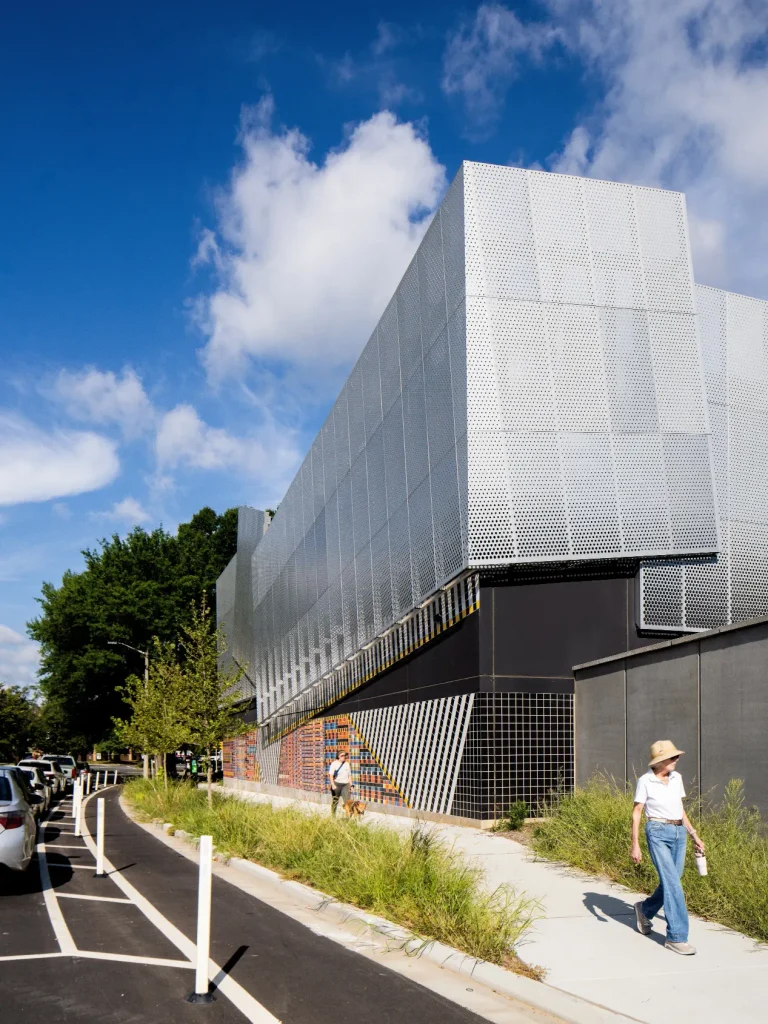
Atelier Manferdini designed inVisible for Dominion Energy’s Crystal Substation, at the corner of South Hayes Street and South Fern Street in Arlington County, Virginia. The project wraps the building’s entire exterior and gives a public face to infrastructure that usually goes unnoticed.
An electrical substation transforms voltage levels to facilitate the transmission and distribution of electricity. The Crystal Substation was expanded and renovated to replace aging equipment, improve reliability, and meet rising demand in National Landing. Atelier Manferdini’s design gives the facility a new architectural identity that reflects this infrastructural upgrade and connects it to the surrounding neighborhood.
Making the Invisible Energy of Electricity Visible
inVisible visualizes the creation and distribution of electricity, an unseen yet essential aspect of everyday life. The façade draws inspiration from the immersive effects that vast fields of color can have on viewers, translating this concept into an architectural composition of contrasting materials, patterns, and surfaces.
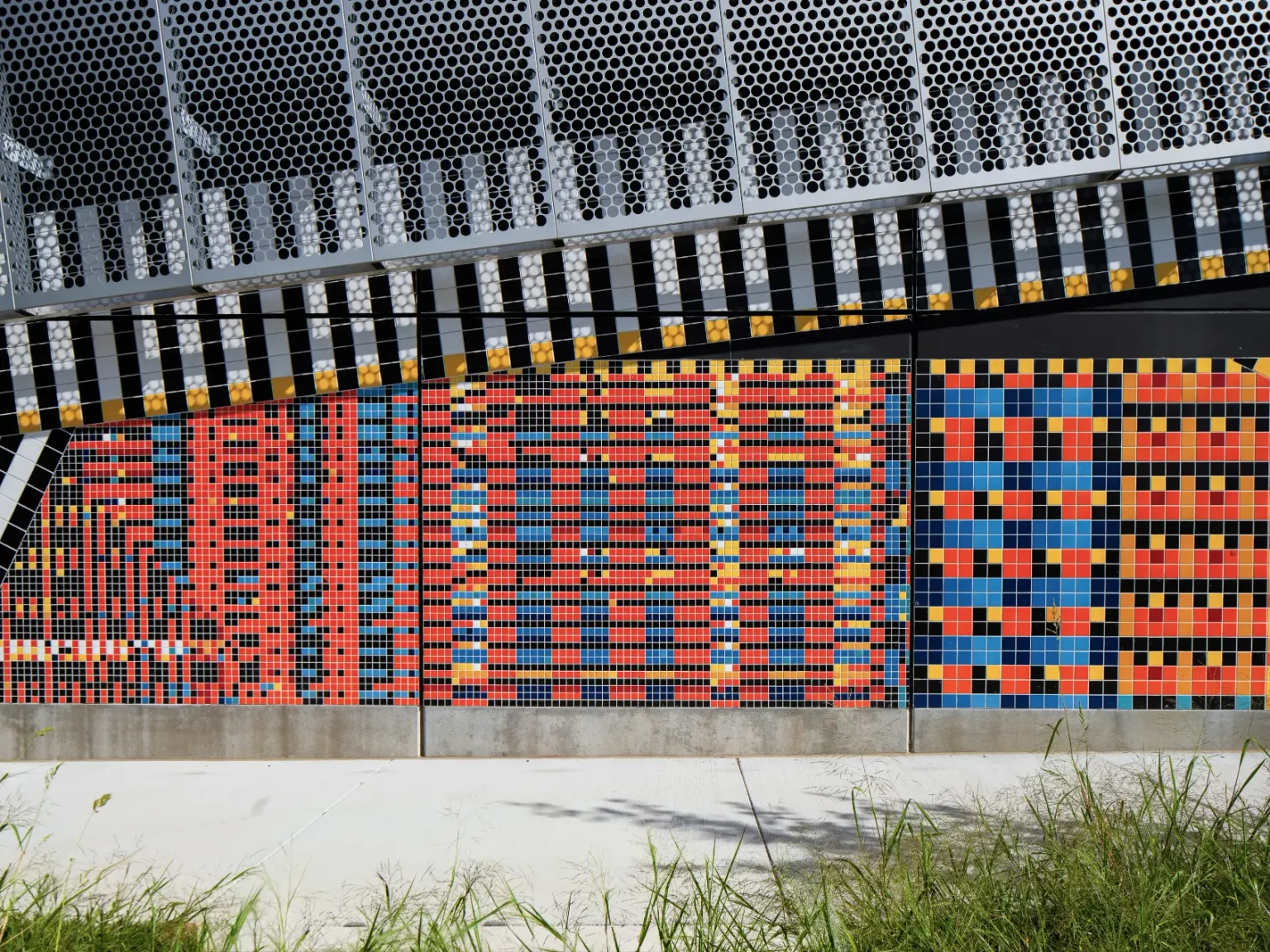
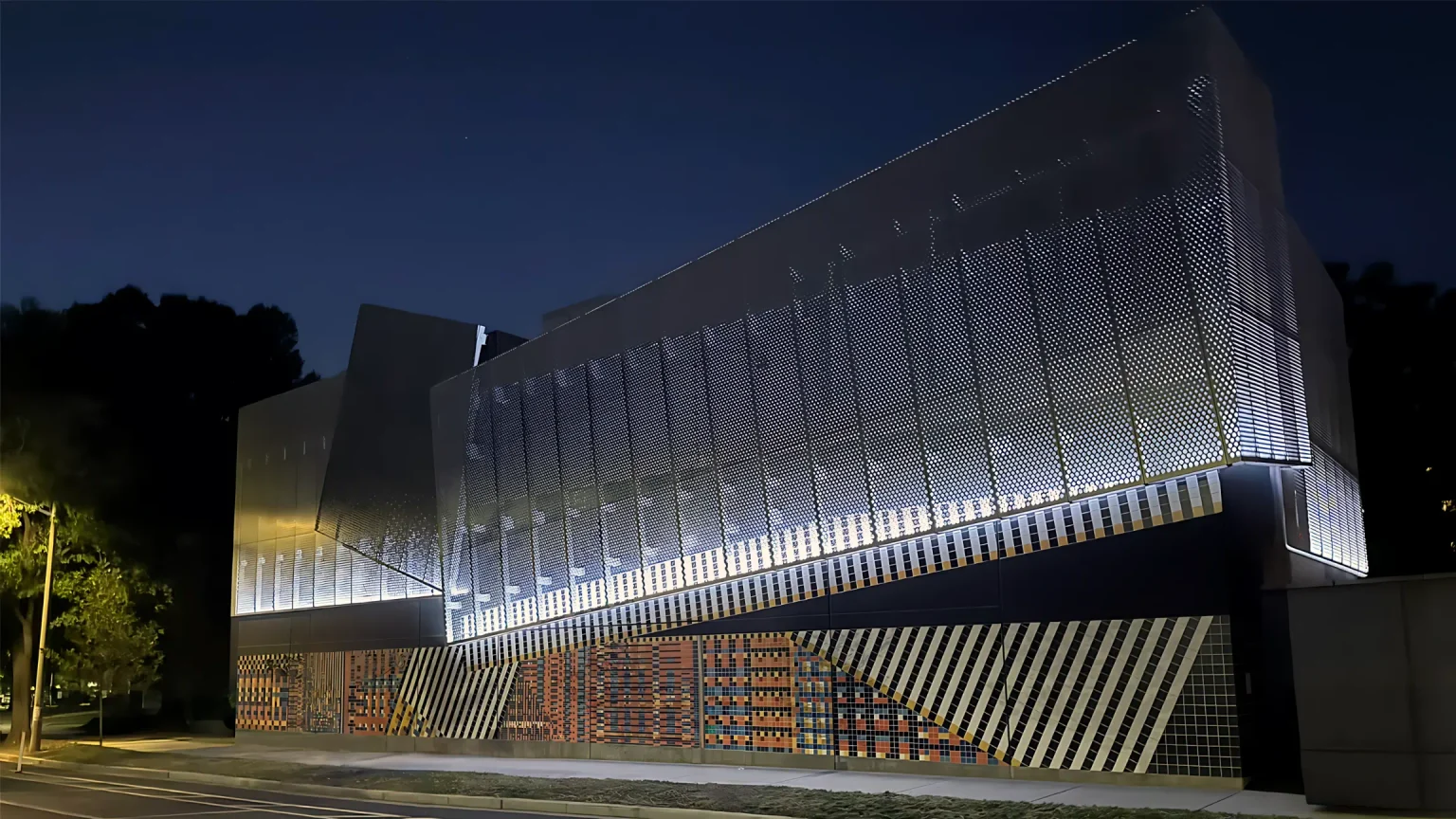
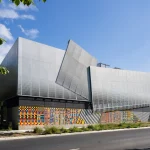
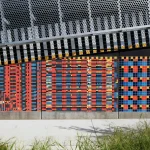
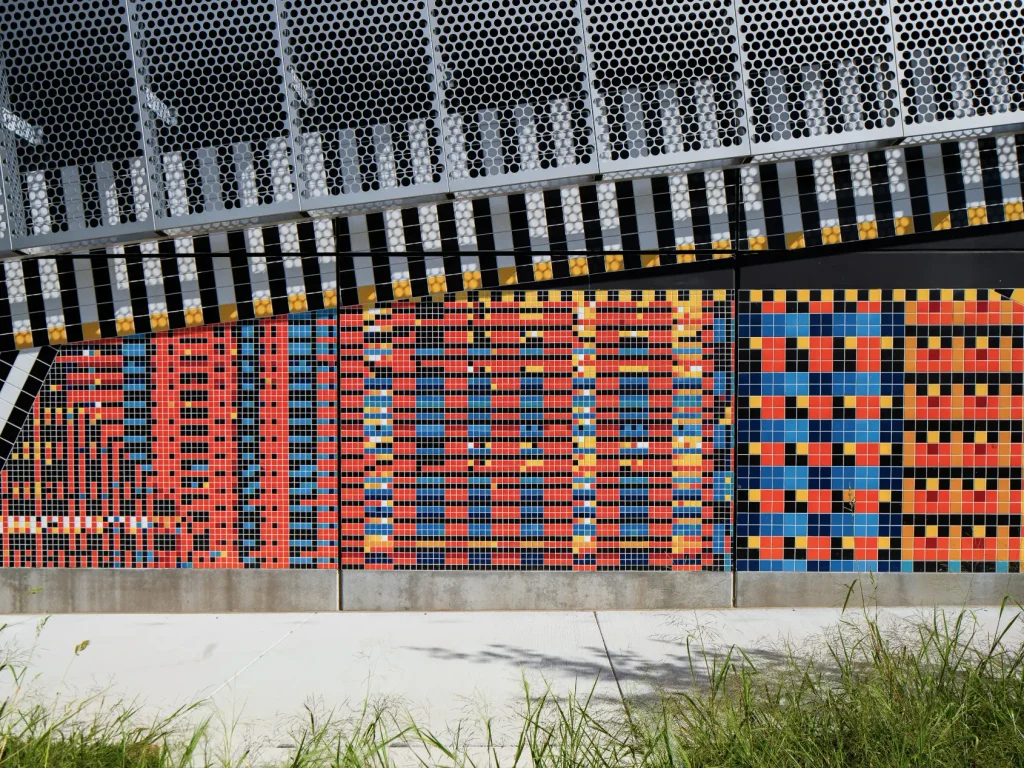
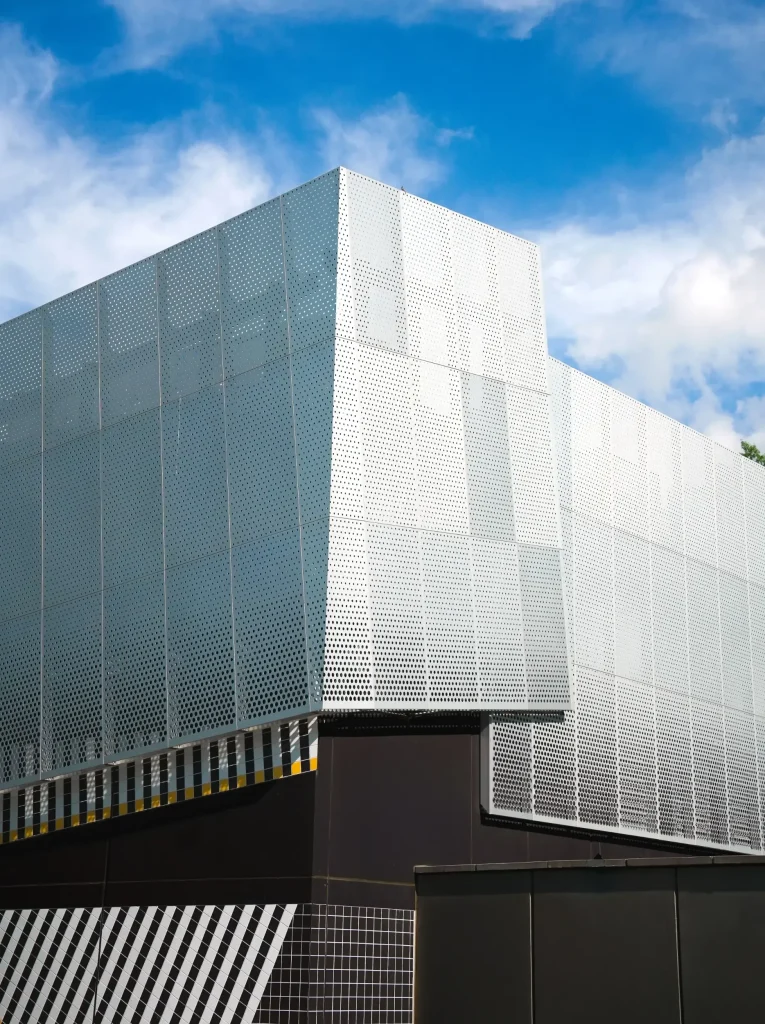
The façade is divided into two horizontal bands. The lower band is clad in ceramic tiles in three sizes (2, 4, and 6 inches), referencing the voltage transformation taking place inside. The pattern uses ten colors and was developed using Processing, a creative coding environment. Scripted digital glitches introduce unexpected visual variations, generating a composition that evokes electrical energy in motion.
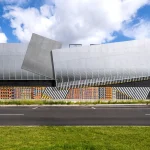
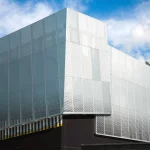
The upper band is monochromatic, composed of folded anodized aluminum panels that suggest an abstracted sky. The folds catch light and cast shadows, allowing the surface to shift with the time of day and the viewer’s position. Quiet and metallic above, saturated and granular below, the two bands form a unified architectural composition.
A New Identity After Dark Through Programmable Lighting
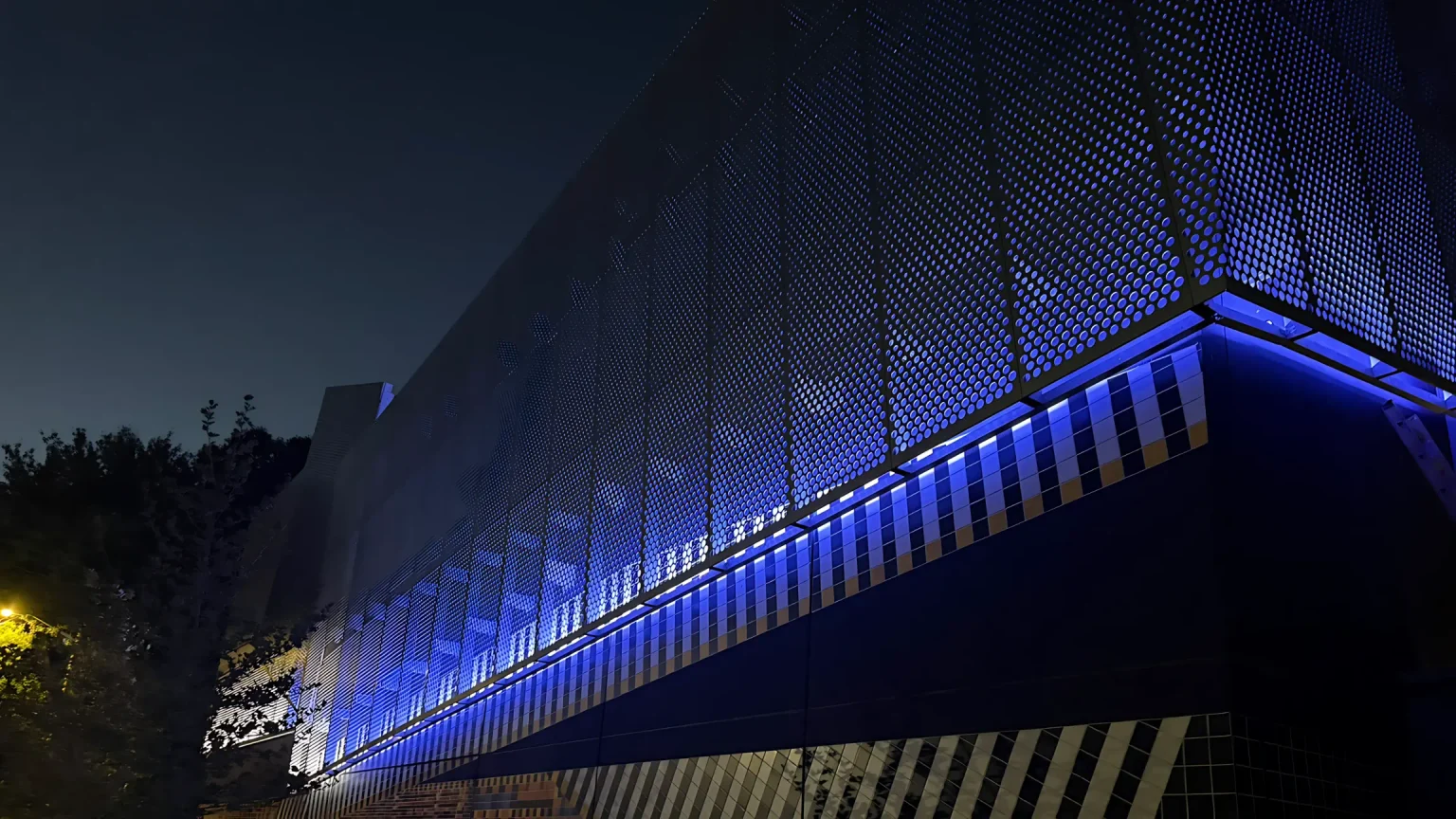
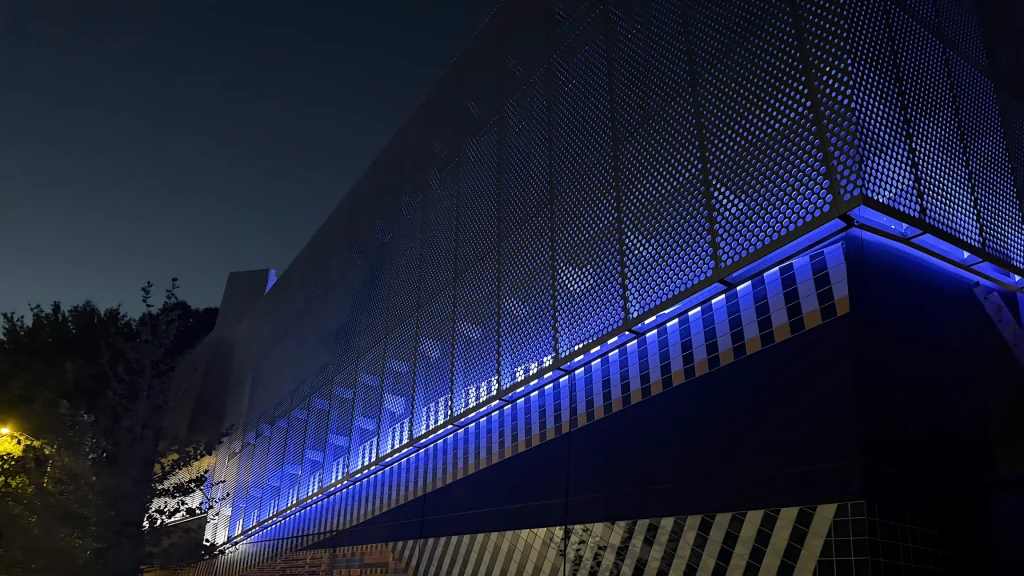
At night, programmable LED lighting introduces shifting patterns of RGB illumination across the façade, giving the building a different character.
Through its combination of computational design, ceramic patterns, folded metal surfaces, and programmable lighting, inVisible demonstrates how architecture can give functional infrastructure a new visual identity. The façade changes throughout the day and night, responding to natural light and introducing illuminated patterns after dark.
By turning an ordinary electrical substation into an engaging part of the urban landscape, Atelier Manferdini invites people to reconsider the architectural potential of the infrastructure that supports everyday life.
Project Details:
Location: Crystal City, Virginia, USA
Architecture Firm: Atelier Manferdini
Project Year: 2026
Architect: Elena Manferdini
Built / Unbuilt: Completed
Artist: Atelier Manferdini
Client: Dominion Energy
Materials: Custom-painted precast concrete, anodized aluminum, and ceramic tiles
Local Architect & Project Engineer: Dewberry