

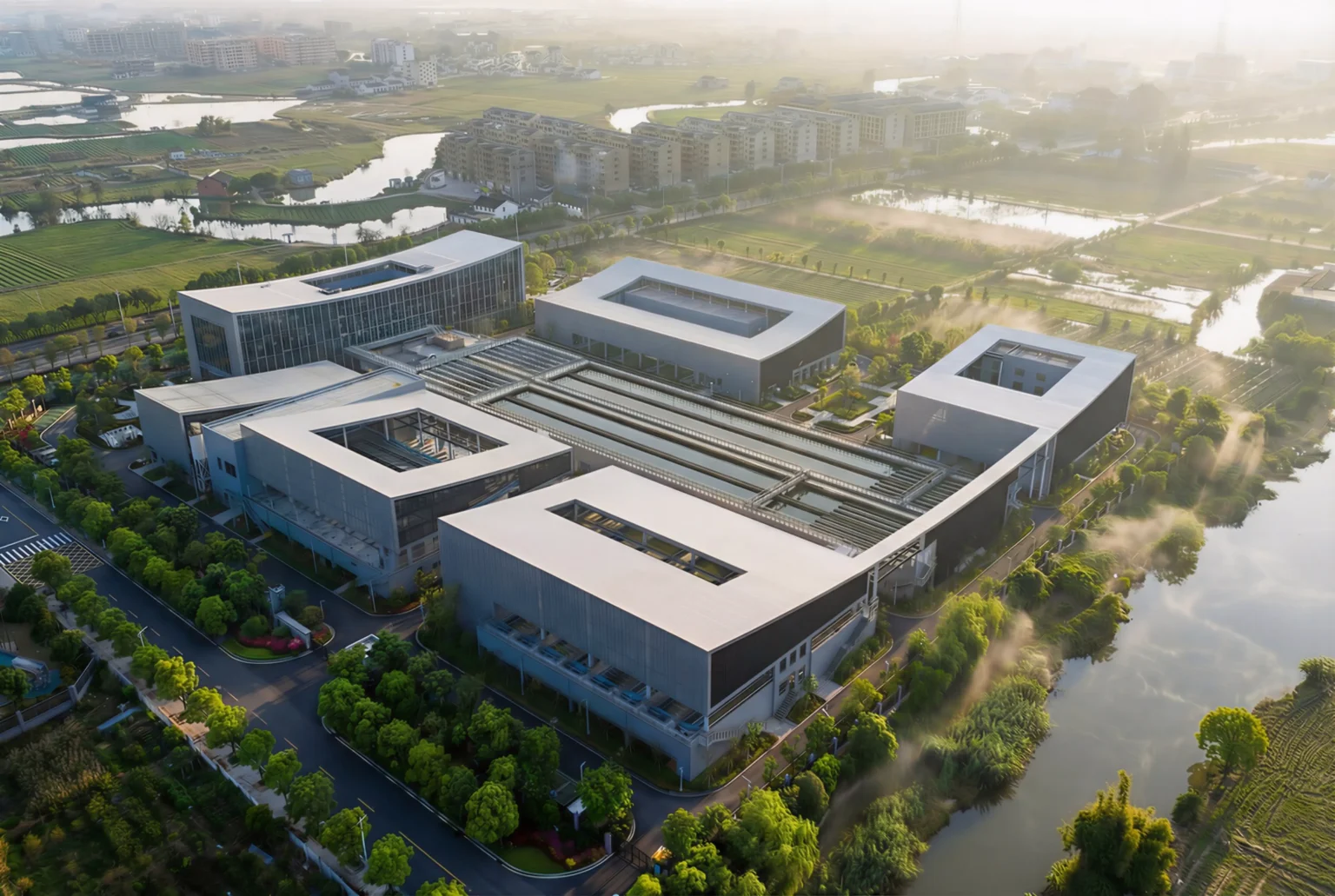





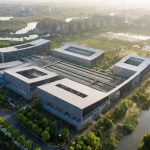

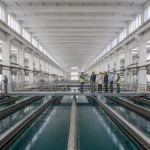
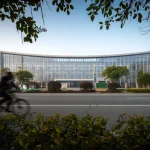
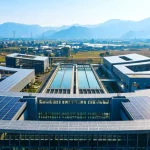
In Qianku Town, Cangnan County, Wenzhou, the Wangshan Qingshui Water Treatment Plant by POA Architects gathers treatment basins, production buildings, and connecting spaces into a clear above-ground ensemble. Completed and brought into formal operation in 2026, the facility supplies 120,000 tonnes of water per day and is designed to serve nearly 300,000 residents across five towns. What distinguishes it is not only its capacity but the decision to treat the entire production landscape as architecture.
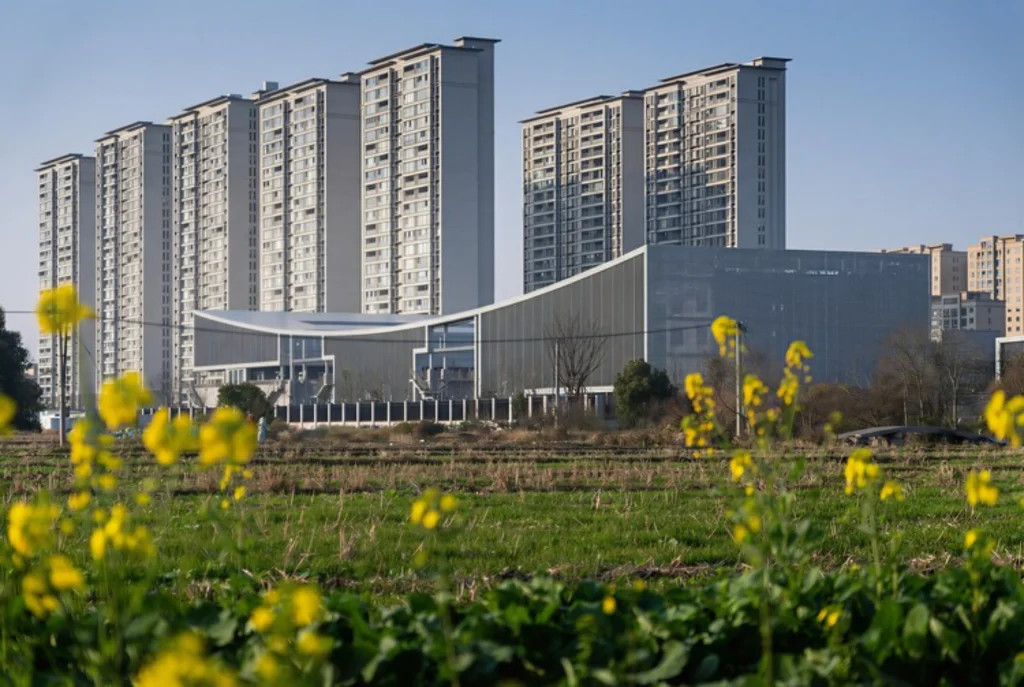
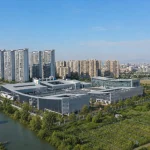
The site sits where housing, cultivated land, and river channels meet. Rather than creating a sealed industrial enclosure, the architects organized the plant as a legible campus whose forms, materials, and outdoor spaces respond to both technical requirements and the surrounding territory.
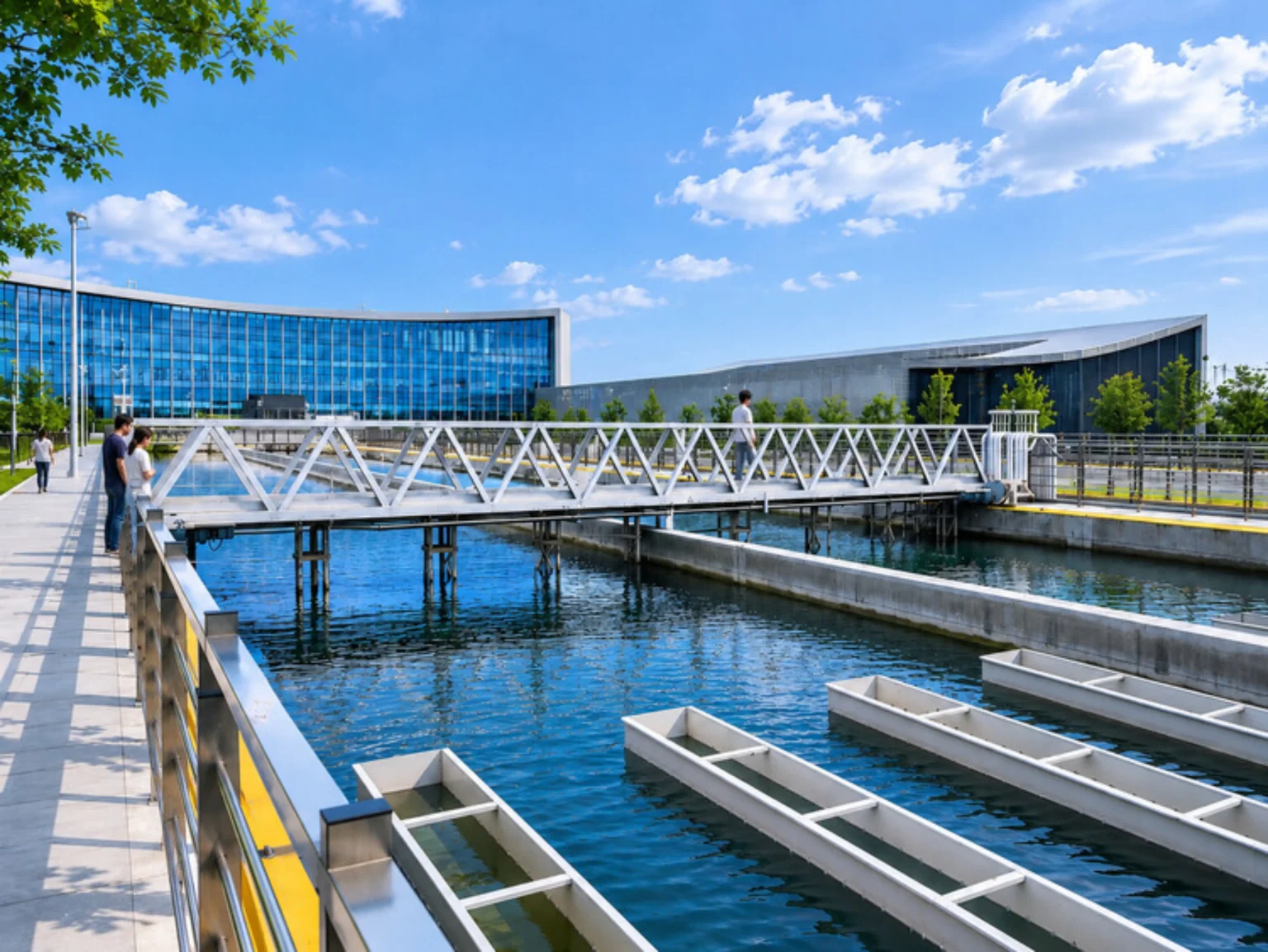
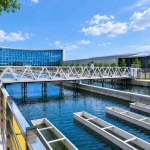
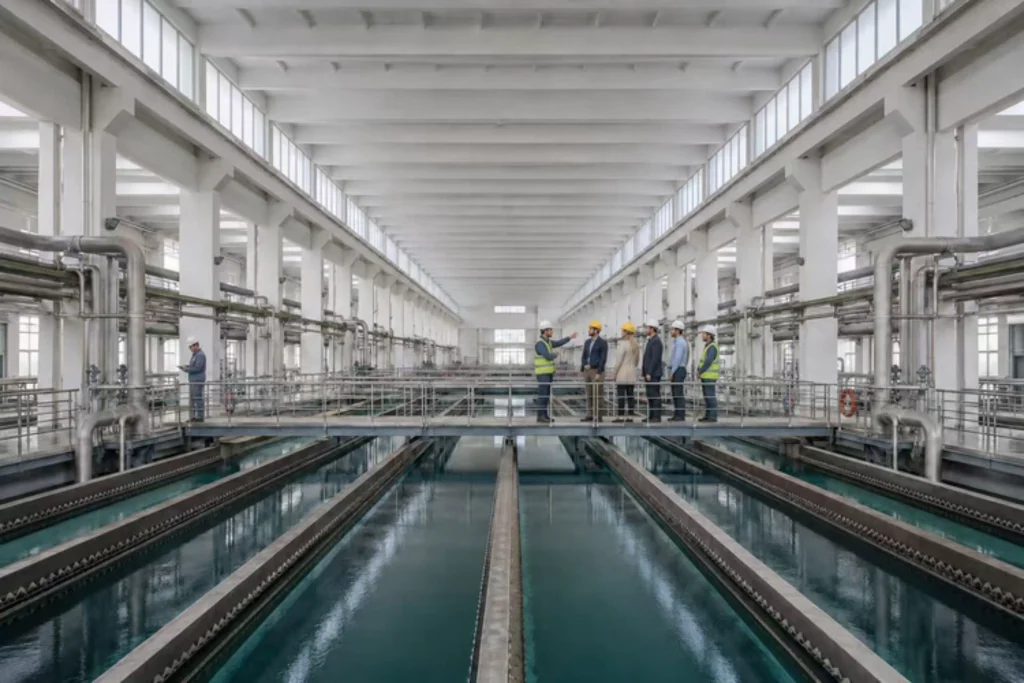
Elongated treatment basins occupy the center of the site. Around them stand buildings of varying dimensions linked by a shared architectural language of roof profiles, rectangular openings, metal screens, and glazed surfaces. Gaps between the volumes create smaller outdoor rooms within the larger production campus. Elevated walkways beside the basins and ground-level paths offer different perspectives on the process, turning circulation into a way of reading the facility.
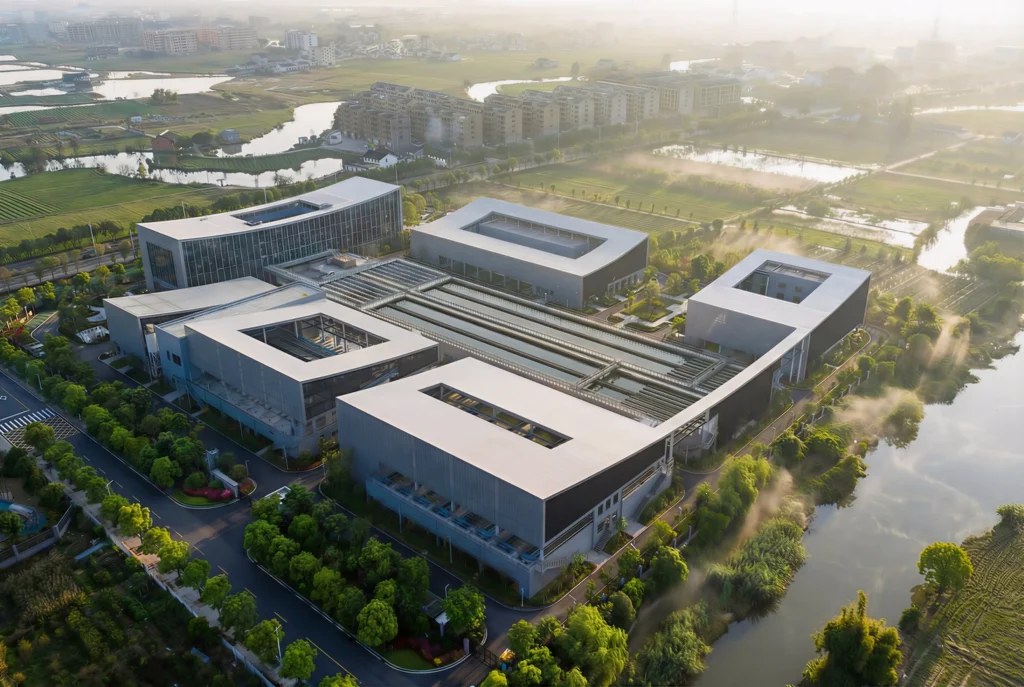
This approach makes the plant understandable. Visitors and workers can grasp the sequence of operations through the arrangement of buildings and open spaces rather than through diagrams alone. The architecture does not disguise the industrial purpose. It clarifies it.
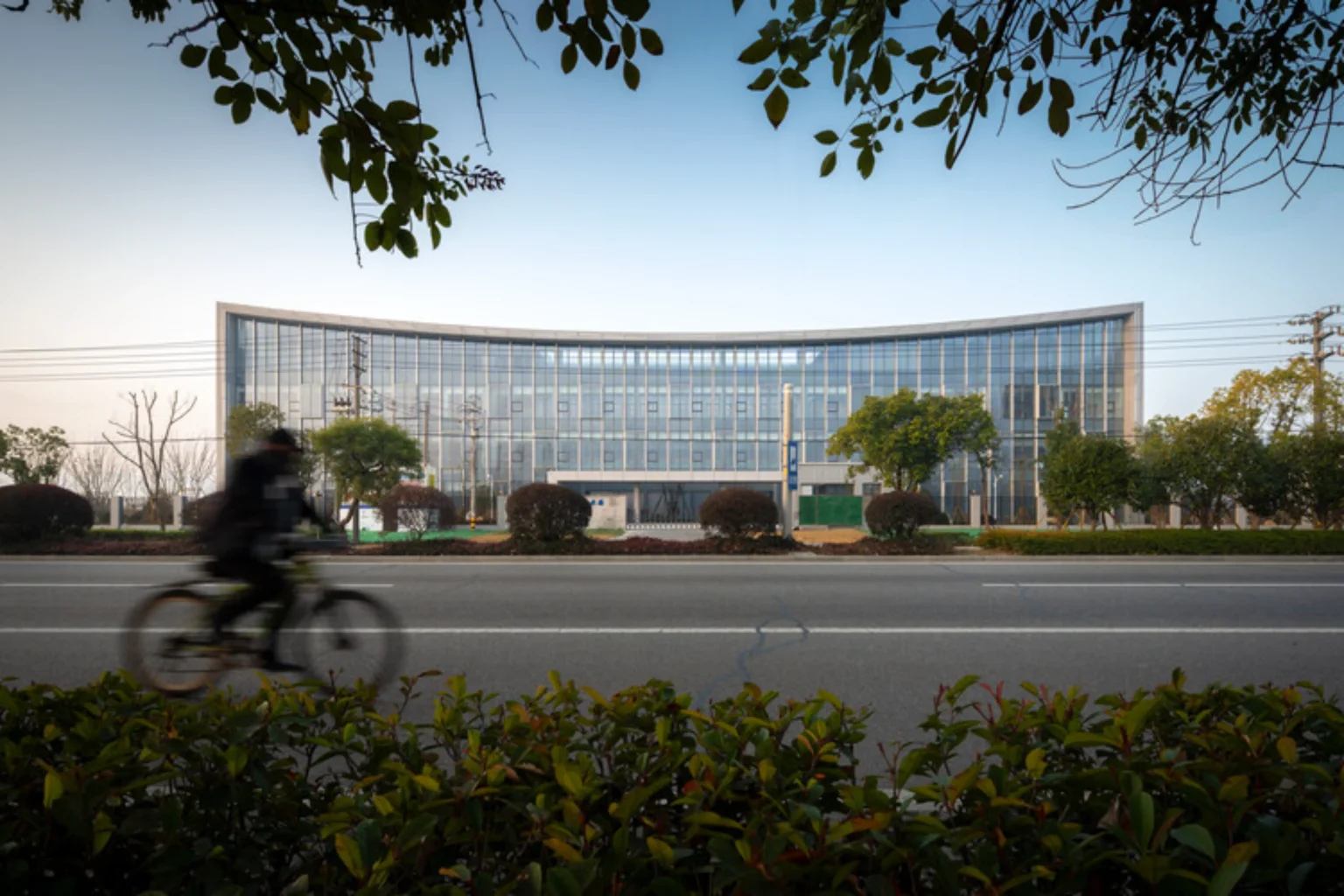
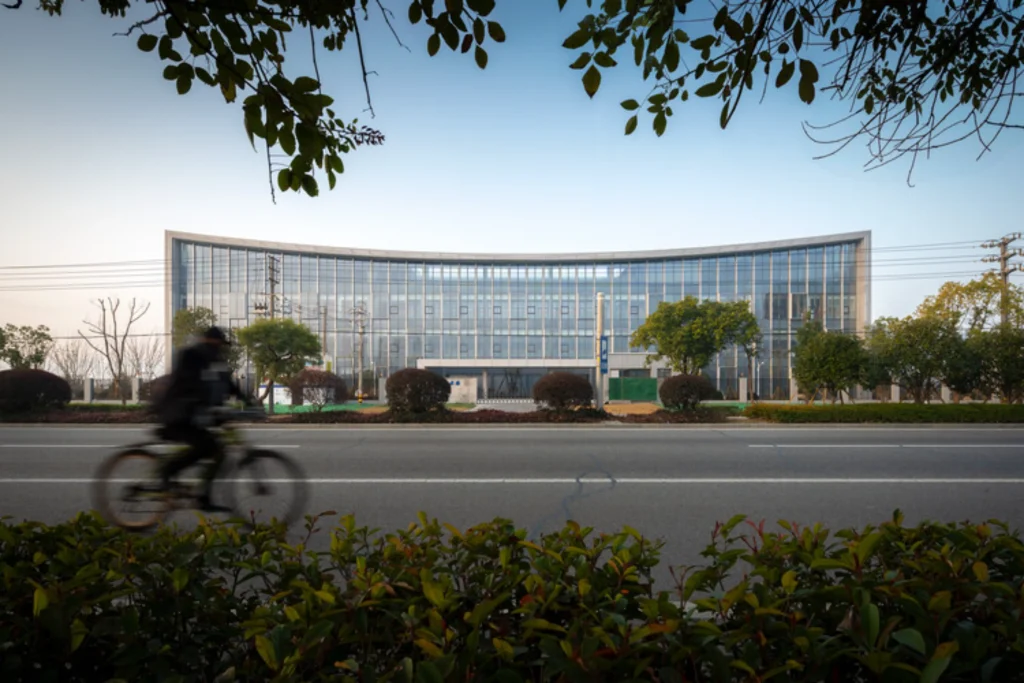
Glass curtain walls and metal screens modulate openness and enclosure according to function, allowing light and views where appropriate while protecting more sensitive processes. The result is a group of buildings that feel related without becoming monotonous.
Landscape and Territory
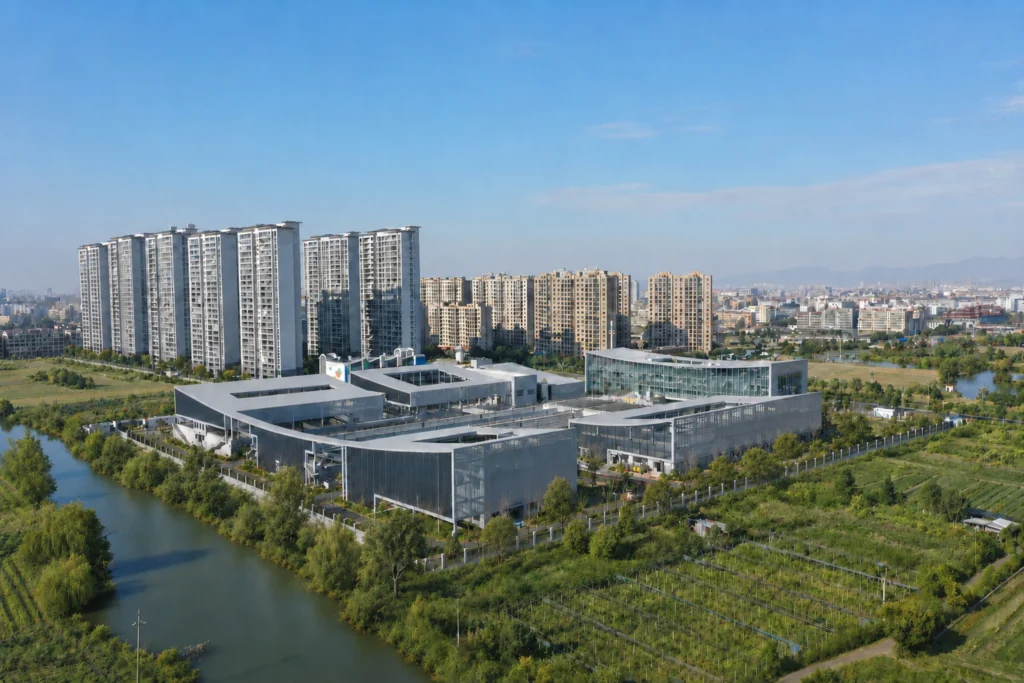
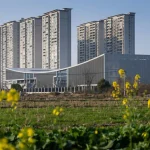
The plant does not turn its back on its context. Low-rise volumes stand in contrast to nearby residential towers, while the surrounding farmland and waterways remain visible from within the campus. Planting along the river edges and site boundaries softens the transition between infrastructure and the broader landscape of Cangnan.
By keeping the main elements above ground and organizing them with care, the project avoids feeling like a sealed technical zone. It becomes part of the visible territory, an “ecological living room” that faces mountains and water while serving the city. The name Wangshan Qingshui, roughly “gazing at mountains, clear water,” signals this dual ambition.
Technical Performance and Spatial Quality
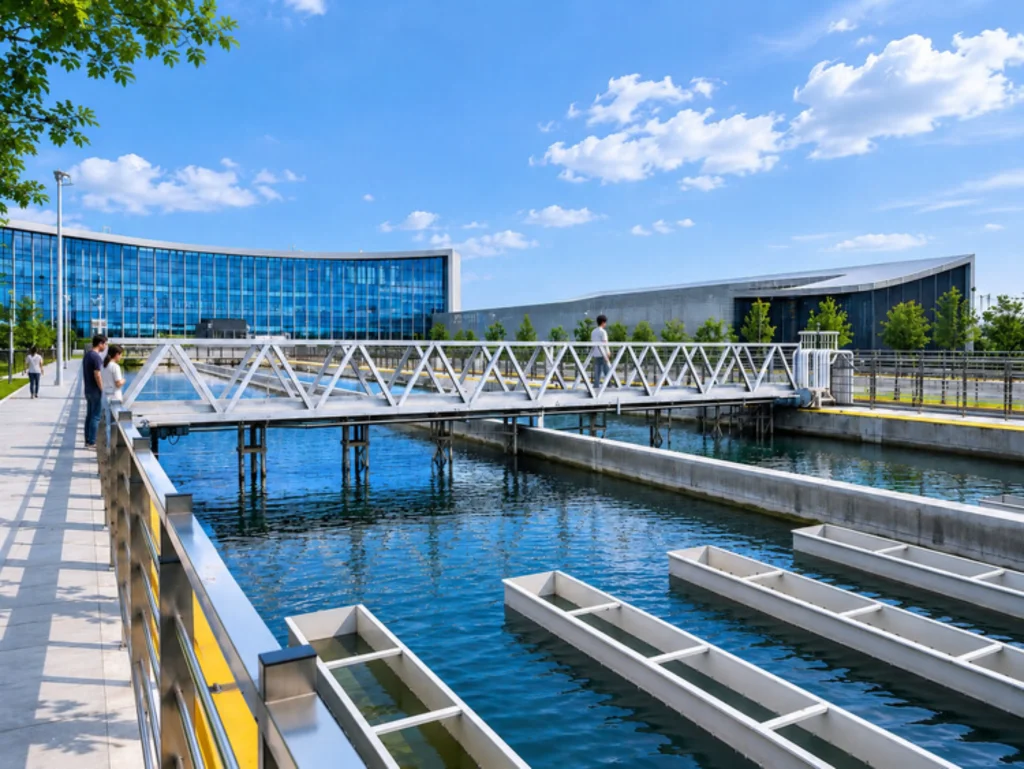
The 13,080-square-meter facility operates within a larger site of nearly 48,000 square meters. Its design balances the strict requirements of water treatment with the everyday needs of staff and the possibility of limited public understanding. Elevated walkways provide both operational access and a way to experience the scale of the basins. Courtyards and gaps between buildings offer moments of relief and orientation.
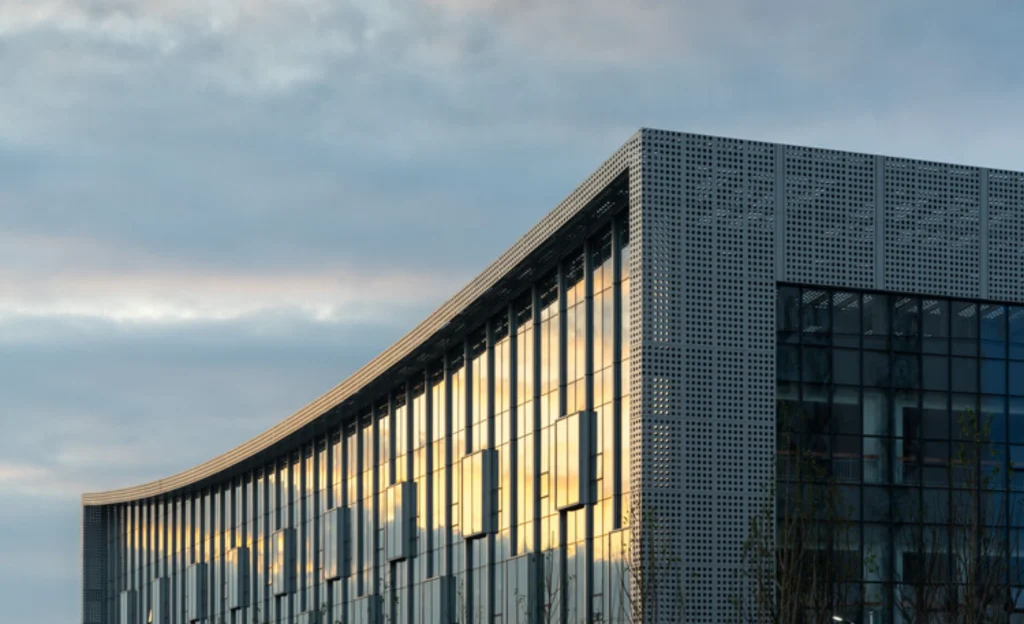
Materials are chosen for durability and clarity. Metal screens, concrete, and glass create a restrained palette that reads as contemporary infrastructure rather than civic monument. The architecture supports the process without competing with it.
Infrastructure as Civic Form
Projects like Wangshan Qingshui belong to a growing conversation about the architectural potential of essential infrastructure. Water treatment plants, power stations, and logistics facilities have long been treated as necessary but visually secondary. When designed with the same attention given to cultural or residential buildings, they can contribute to the character of a place rather than subtract from it.
Here, the decision to organize the plant as a coherent ensemble of buildings and open spaces allows it to participate in the landscape of Qianku. It provides clean water while also offering a model for how technical facilities can be legible, maintainable, and respectful of their surroundings.
The plant has passed completion acceptance and moved from trial operation into full service. Its success will first be measured by the reliability of supply to nearly 300,000 people. Yet its architectural contribution is already clear: it demonstrates that infrastructure can be designed as a readable, spatially rich environment rather than a black box.
In a region defined by the meeting of mountains, water, and settlement, the Wangshan Qingshui Water Treatment Plant stands as a carefully composed working landscape. It treats water, serves a growing population, and shows that the architecture of essential services can be both functional and thoughtful.