




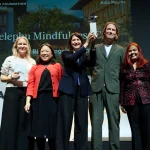
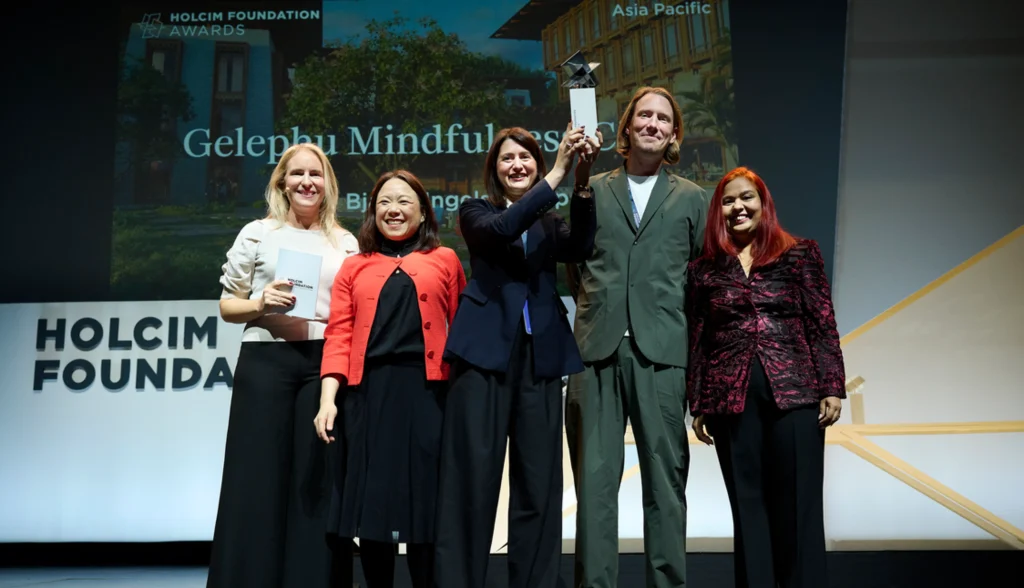
In most places, a new city begins with roads, plots, and projections of economic return. In southern Bhutan, a different logic is being tested. Gelephu Mindfulness City, a Special Administrative Region envisioned by His Majesty the King, is being shaped around the principles of Gross National Happiness rather than conventional growth metrics. Now, Aman Group has entered a strategic partnership with Patience Capital Group and GDL-Raven to help attract long-term investment into this ambitious experiment.
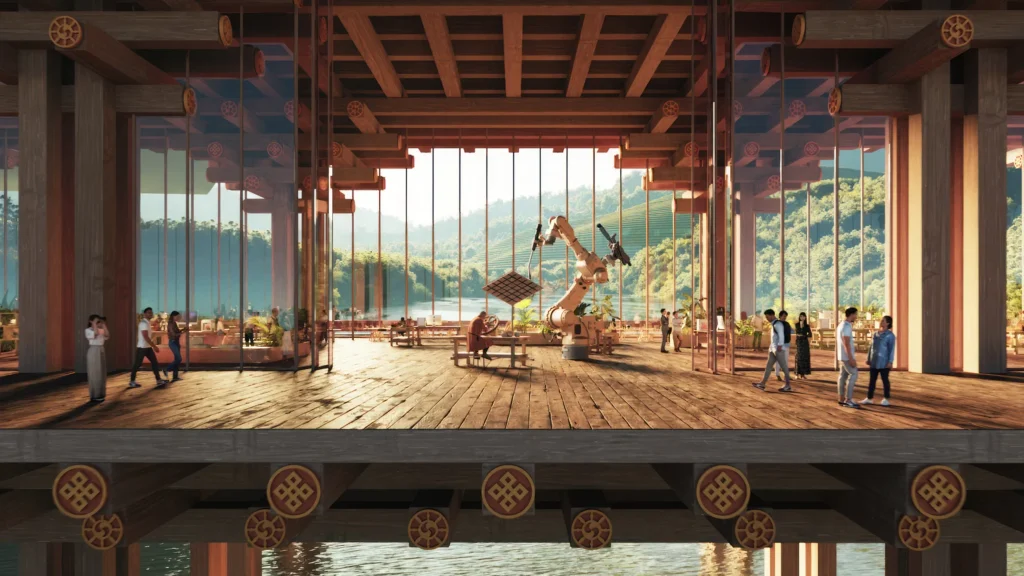
The agreement remains early-stage. No specific hotels or sites have been announced. Yet the collaboration carries weight. Aman has operated in Bhutan for more than two decades through its Amankora lodges, becoming the first international luxury brand to establish a lasting presence in the kingdom. Its involvement signals that the city’s hospitality and lifestyle components will be approached with the same restraint and cultural sensitivity that have defined Aman’s work elsewhere in the country.
Gelephu Mindfulness City: Organized by Water and Mandala
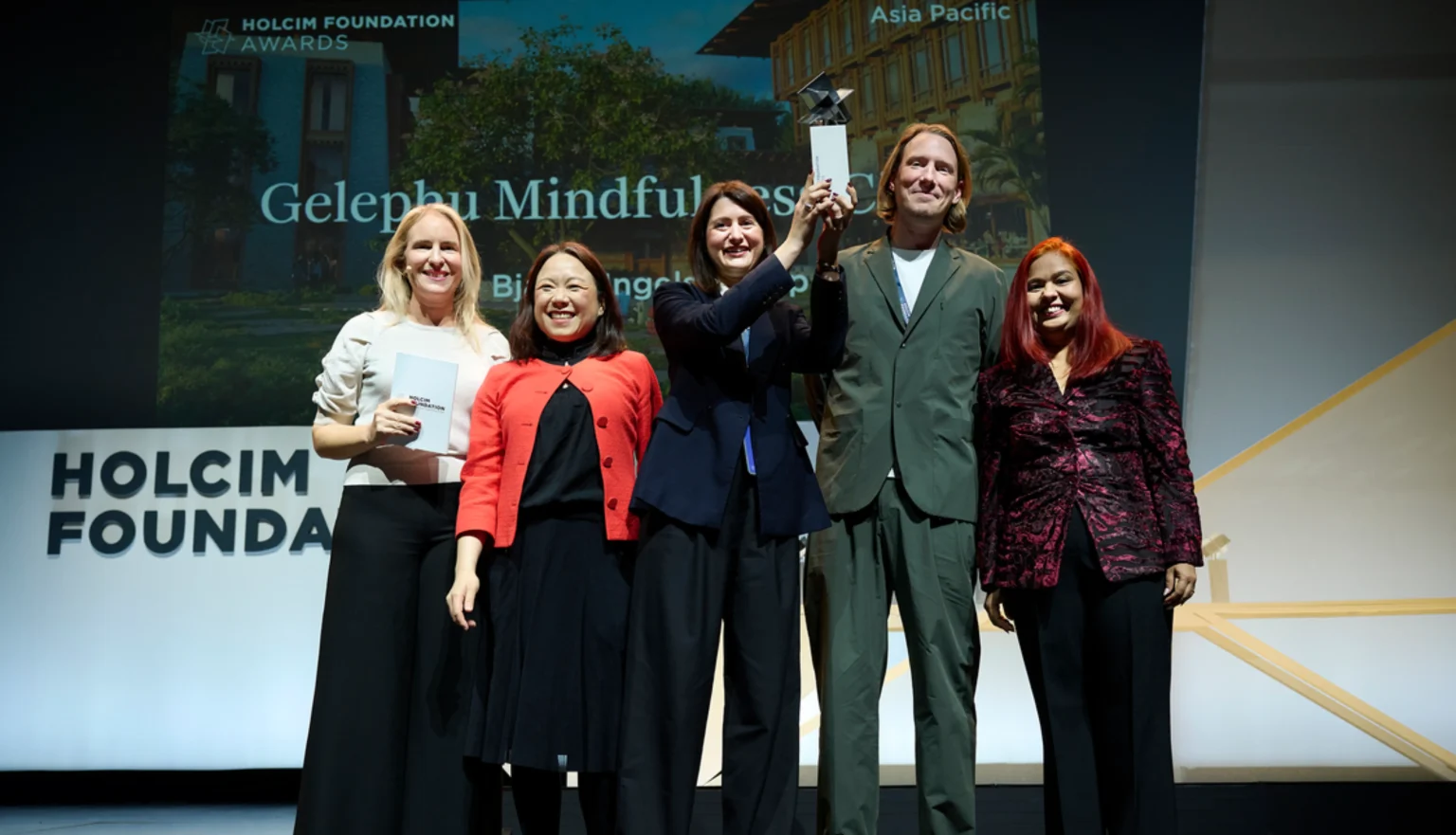
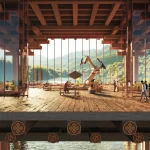
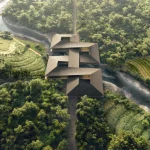
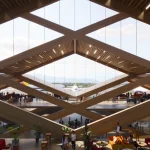
The masterplan of the Gelephu Mindfulness City, developed by BIG – Bjarke Ingels Group in collaboration with Arup and Cistri, treats the landscape as the primary structure. Eleven neighborhoods are arranged along the region’s rivers and streams in patterns inspired by the mandala. Density increases gradually from the rural highlands in the north to more urban conditions in the south, forming ribbon-like terraces that recall the cascading form of traditional paddy fields.
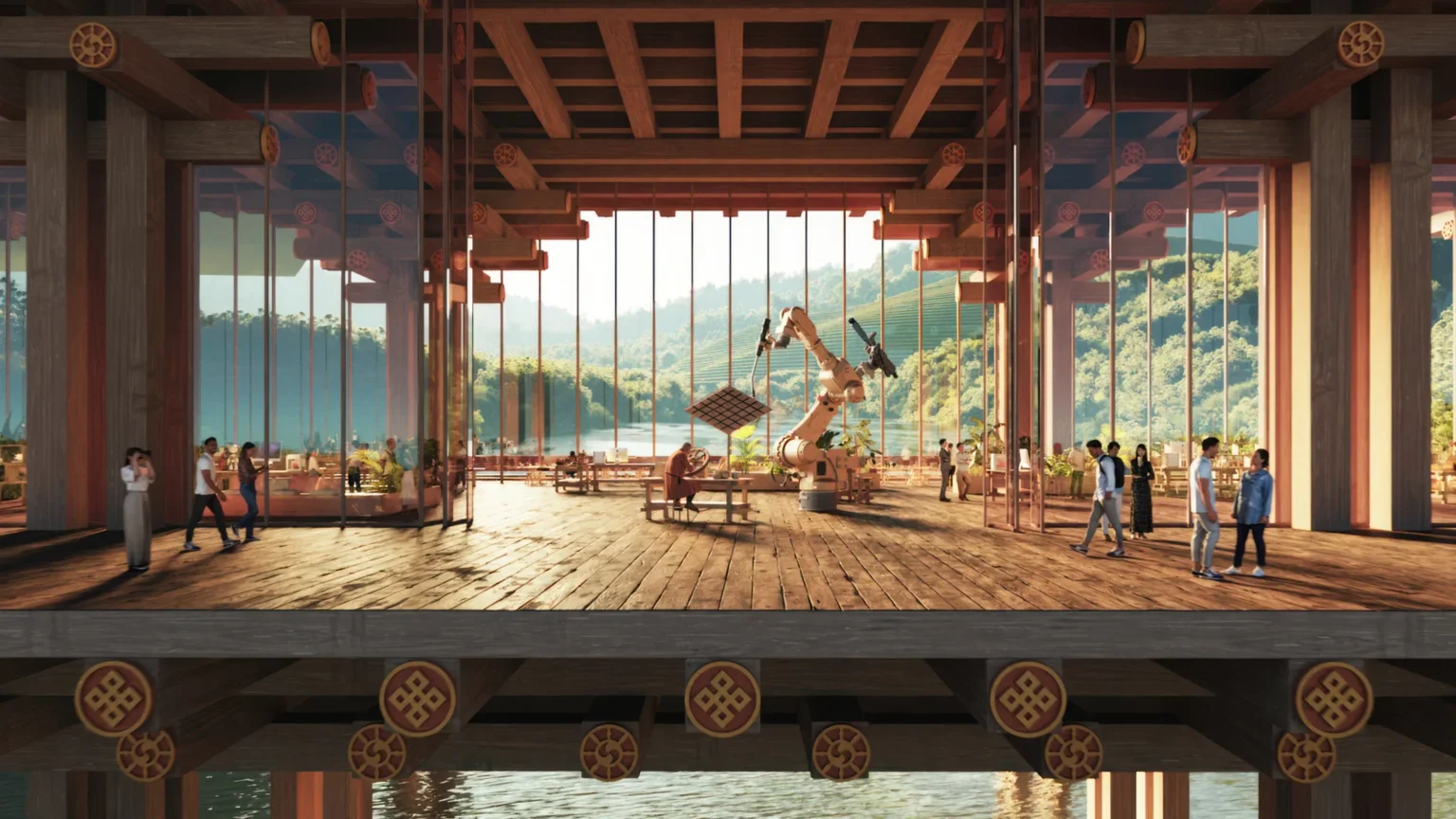
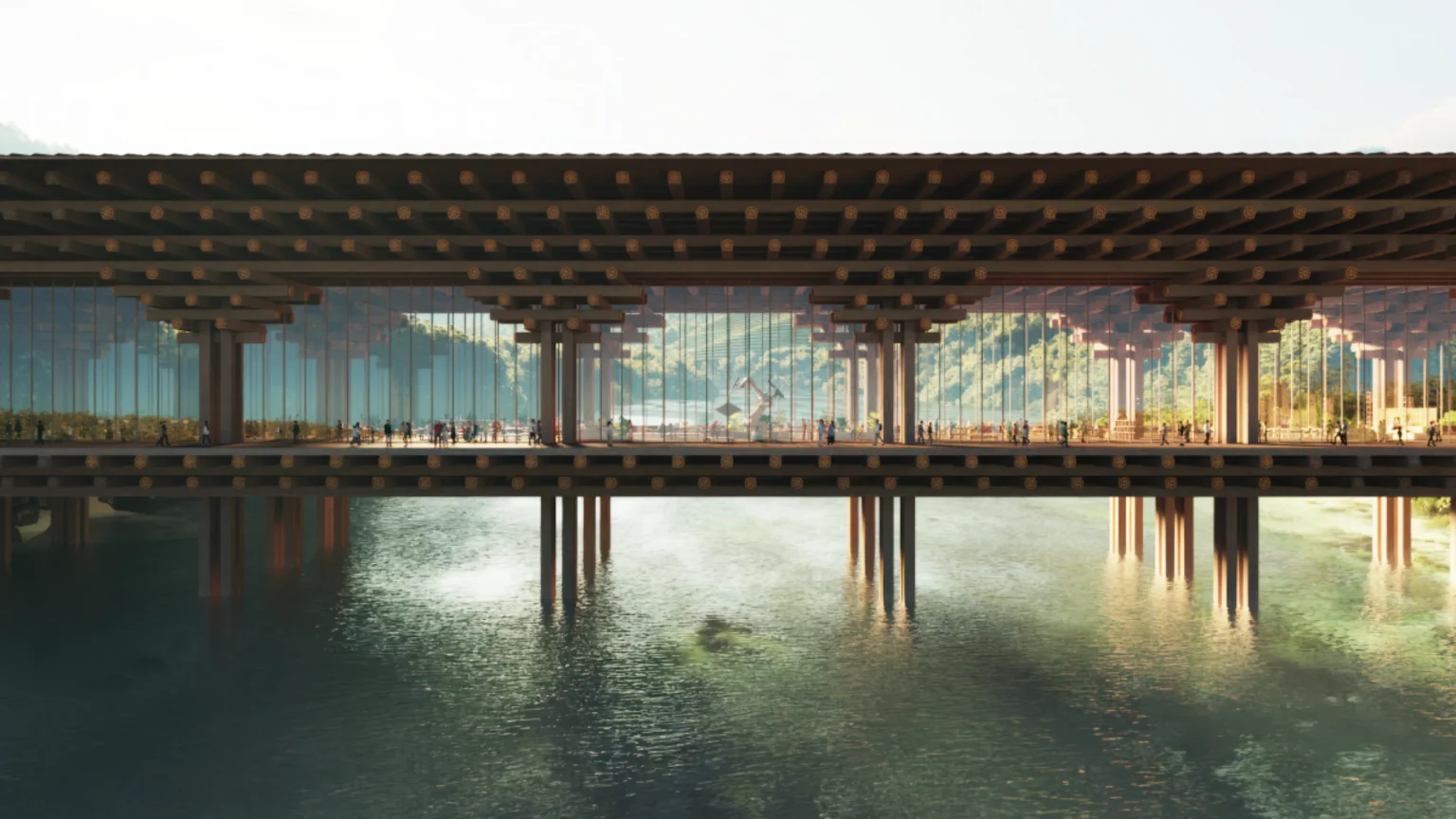
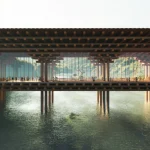
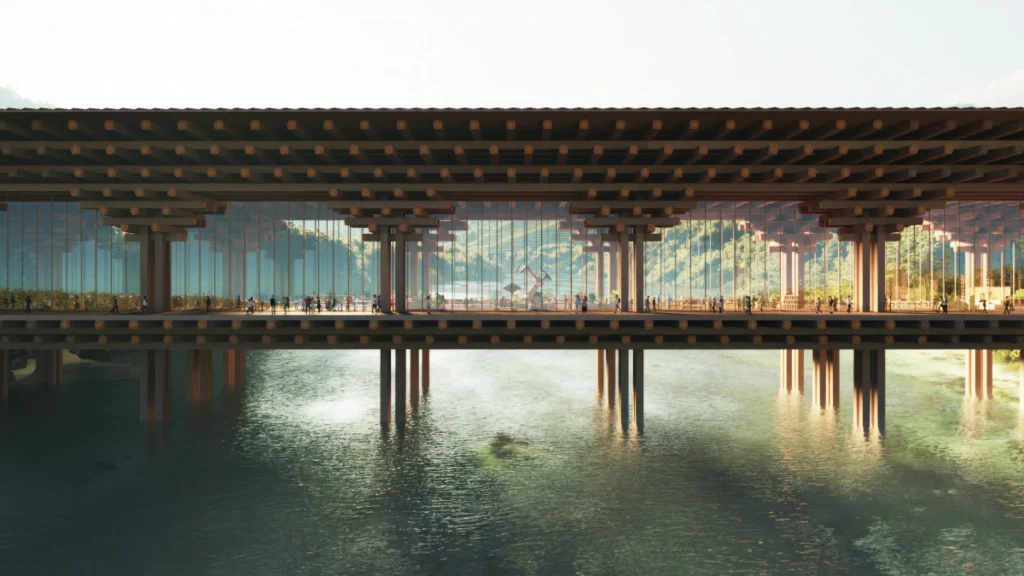
Rather than imposing a grid, the plan follows existing waterways. Bridges become more than connectors; they are designed as inhabitable civic structures that house key functions — a spiritual center, a university, a healthcare facility blending Eastern and Western approaches, a market, and cultural spaces. One of the most striking proposed elements is the Sankosh Temple-Dam, described by Bjarke Ingels as a twenty-first-century counterpart to the Tiger’s Nest monastery: a hydroelectric structure that also carries spiritual and civic meaning.
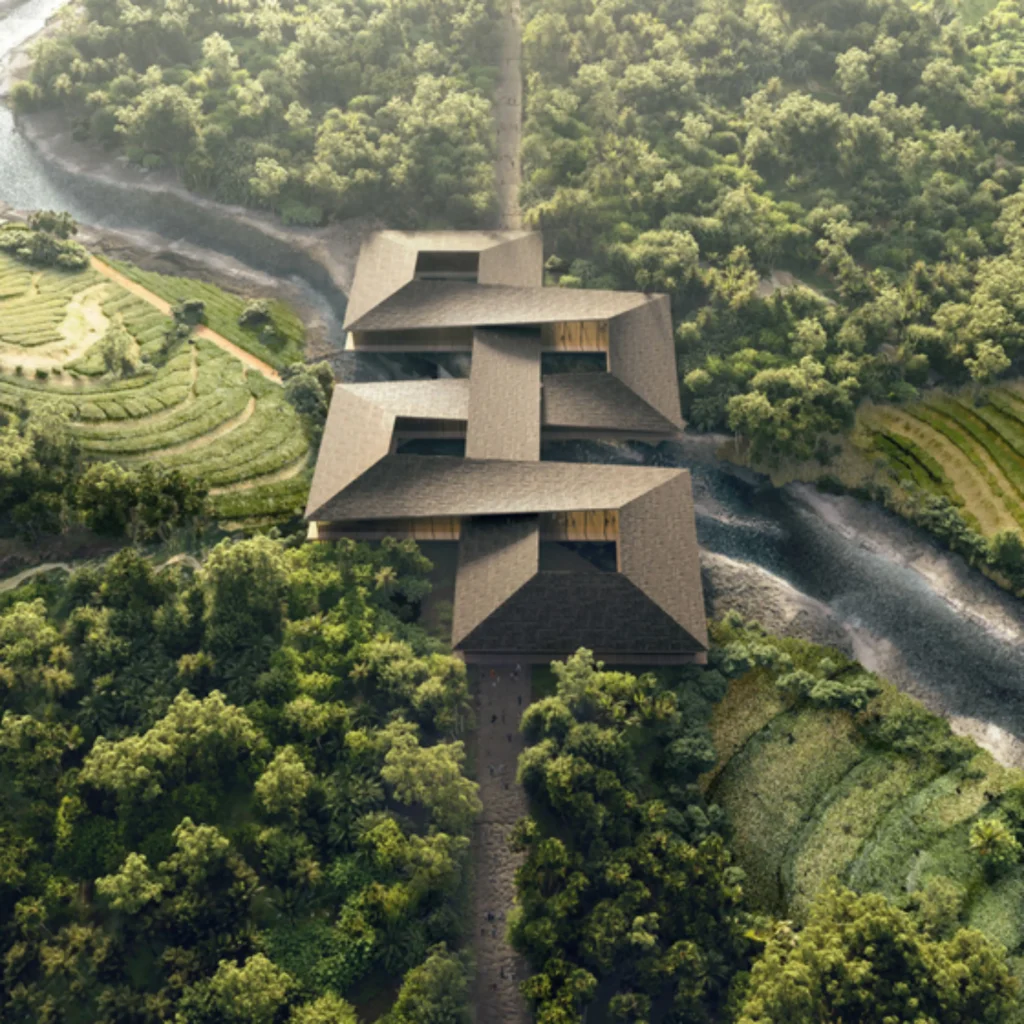
This approach reverses the usual sequence of urban development. Instead of clearing land to make way for buildings, the design begins with the protection and enhancement of natural systems, then asks how human settlement can be woven into them without erasure.
Architecture That Remembers
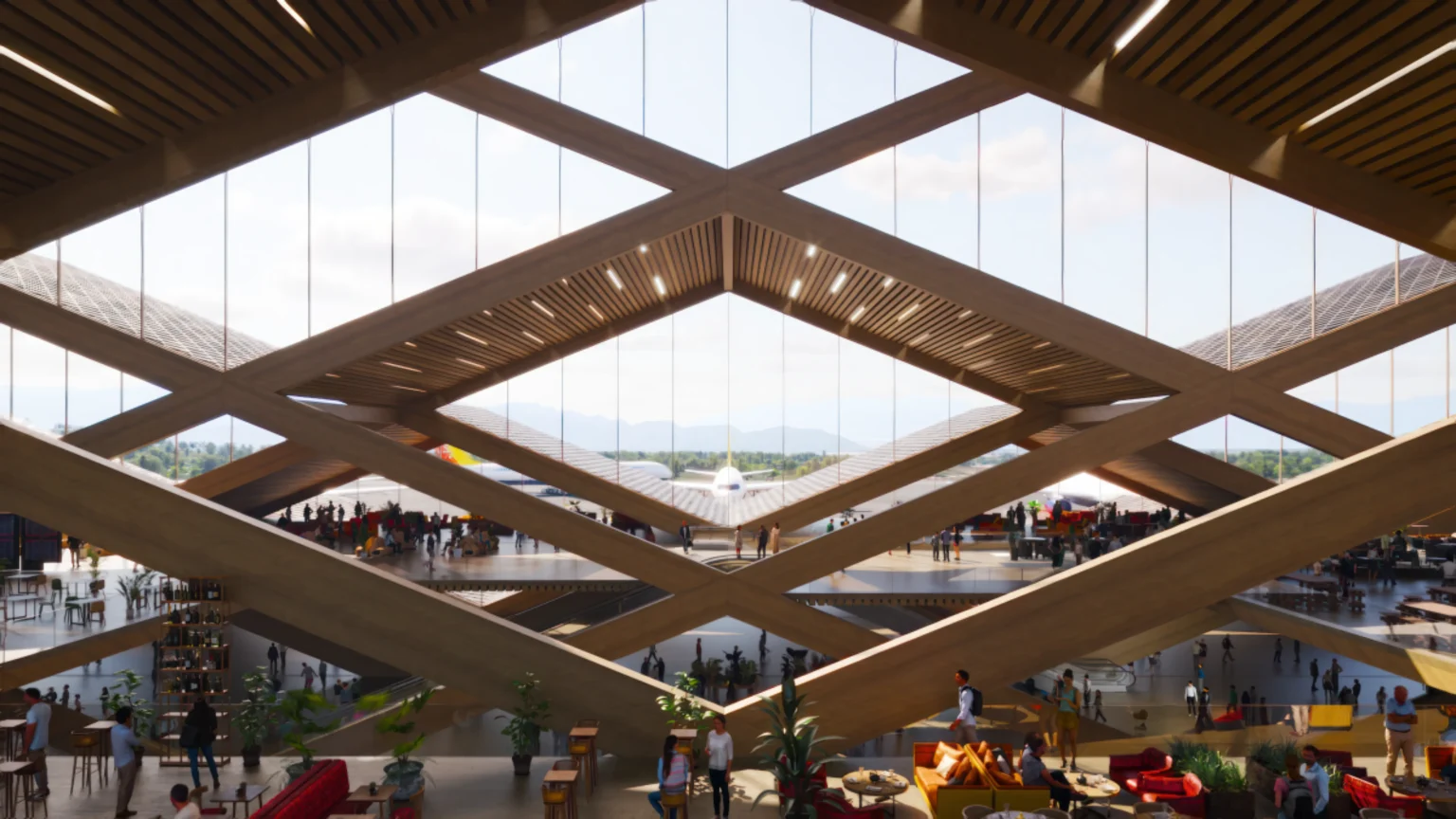
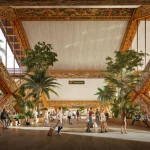
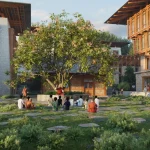
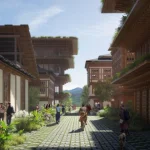
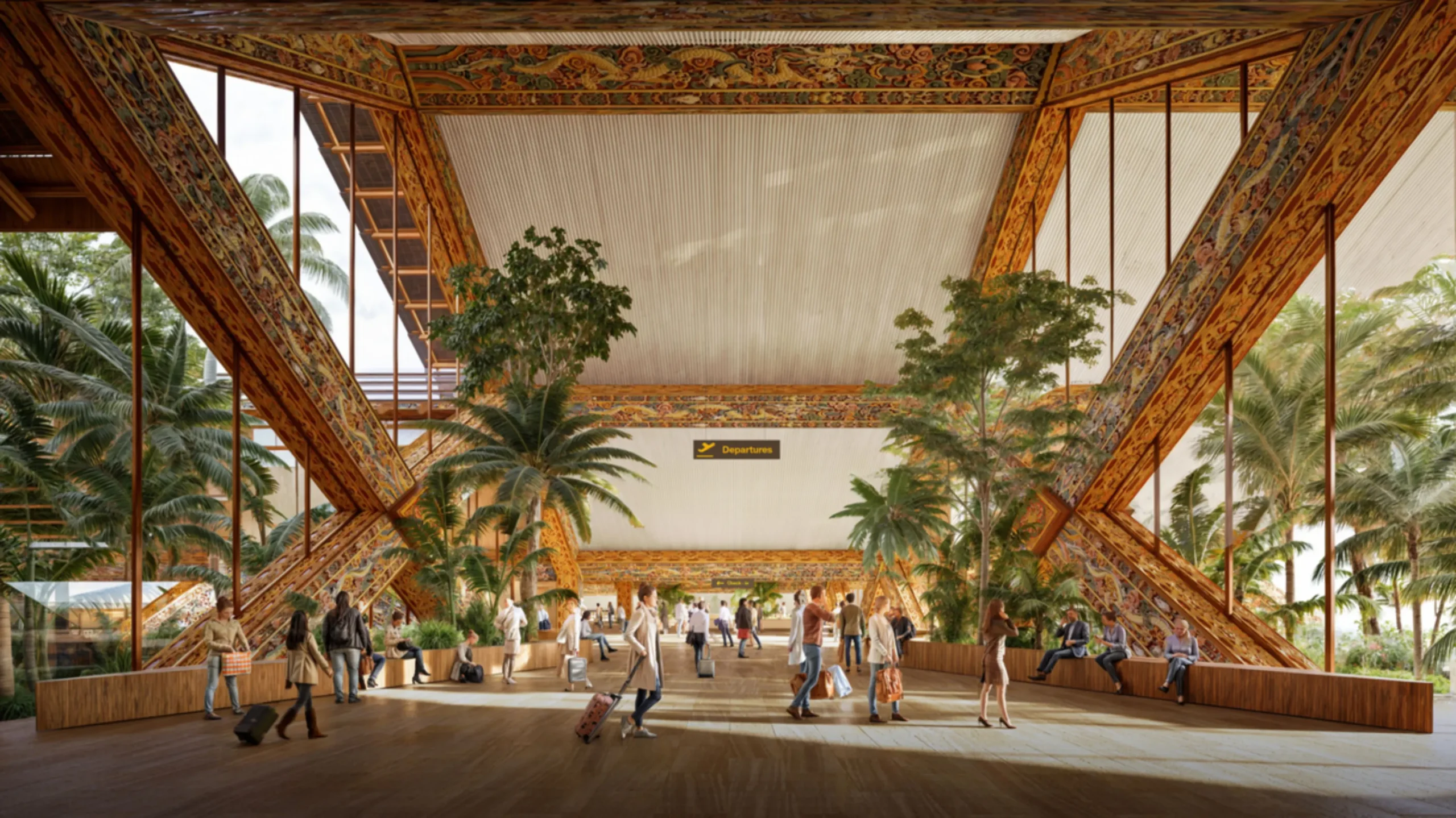
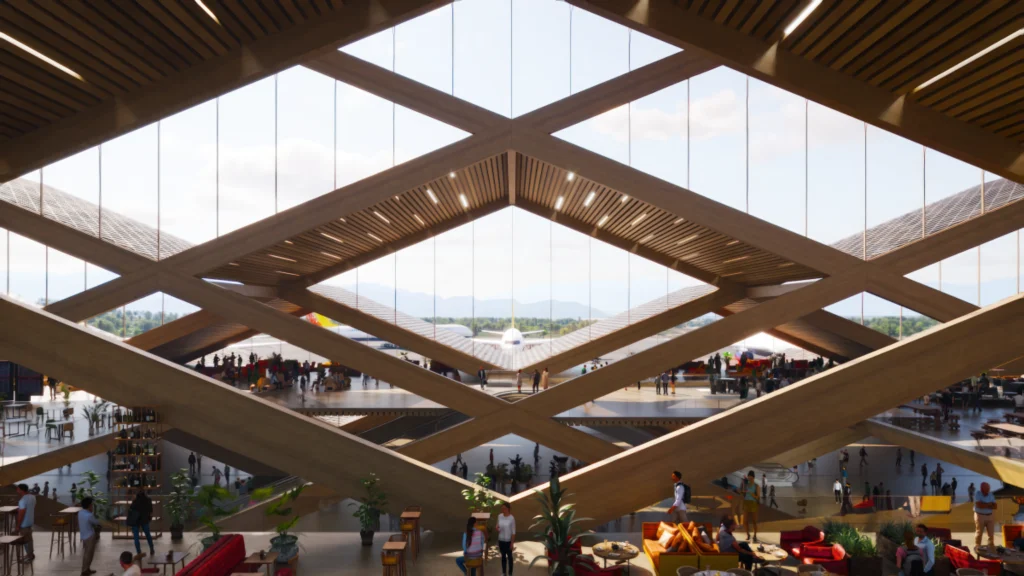
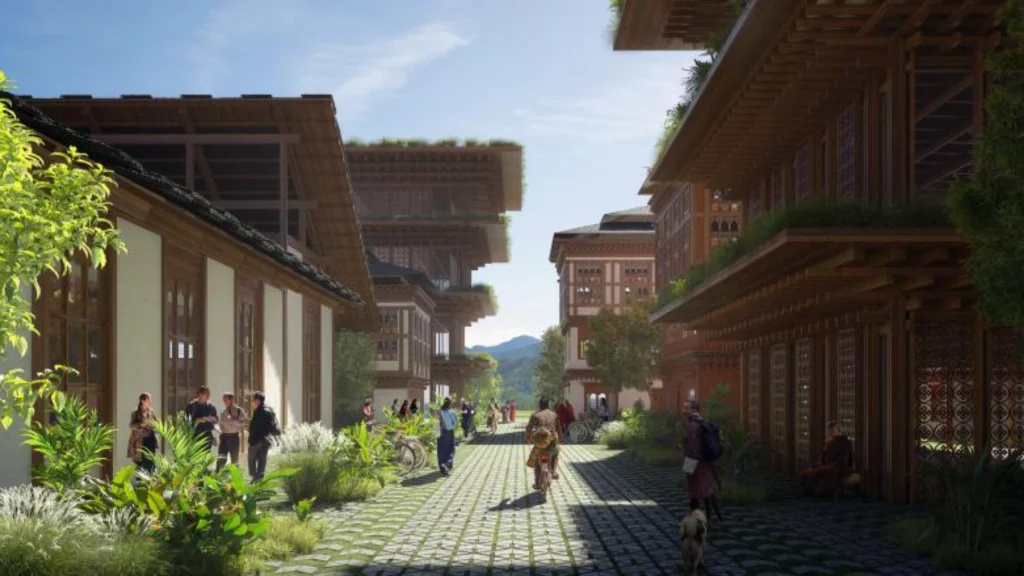
The architectural language proposed for Gelephu draws directly from Bhutanese vernacular. Local materials — wood, stone, bamboo — and traditional details such as rabsel timber frames, deep overhanging eaves, and ornamented cornices are reinterpreted for contemporary performance. Passive strategies long used in dzong architecture, including extended roofs for monsoon protection and natural cooling, are retained and refined.
The result is not pastiche. It is an attempt to evolve a living tradition rather than freeze it. Buildings are intended to feel continuous with the cultural landscape while meeting modern standards of comfort, resilience, and energy performance. In a country that has made carbon neutrality a national priority, the integration of hydropower, careful material selection, and landscape-based stormwater management becomes both practical and symbolic.
Hospitality as Cultural Infrastructure
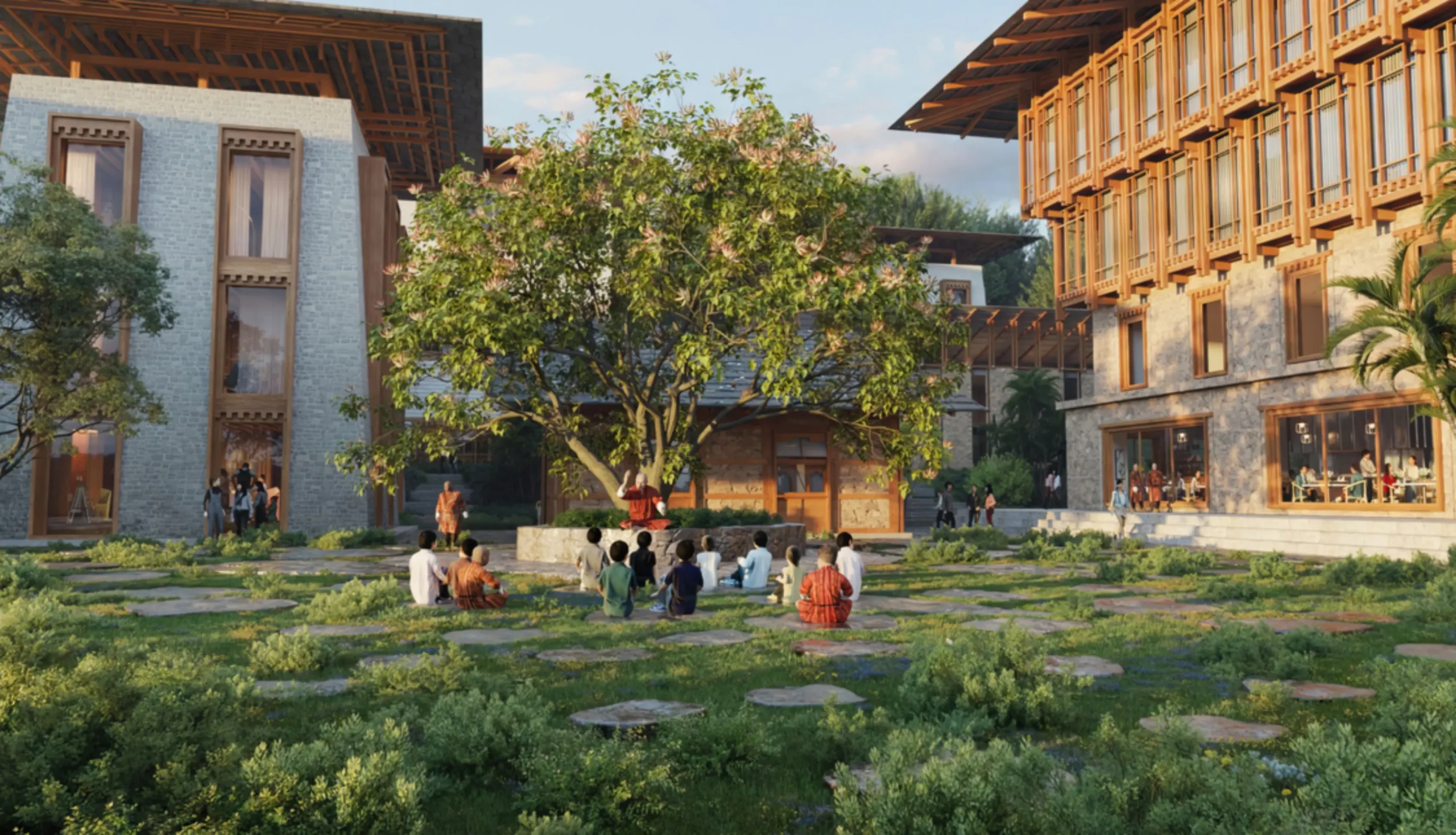
Aman’s role in the partnership is particularly significant because of its history in Bhutan. For over twenty years, Amankora has operated a series of lodges that prioritize quiet immersion over spectacle. The brand’s approach — low density, deep respect for place, and an emphasis on wellbeing — aligns closely with the stated values of Gelephu Mindfulness City.
By joining Patience Capital Group, which brings real-estate investment and fund-management expertise, and GDL-Raven, which is embedded in the city’s development structure, Aman helps position hospitality not as an extractive industry but as a potential carrier of the city’s ethos. The hope is that investment attracted through this collaboration will support projects capable of generating economic activity while remaining consistent with Gross National Happiness principles: psychological wellbeing, cultural continuity, ecological resilience, and community vitality.
The Risk and the Possibility
Large-scale planned cities have a mixed record. Many begin with compelling visions and end as generic developments that dilute the very qualities they claimed to protect. Gelephu’s difference lies in the explicit elevation of non-economic values to the level of design criteria. Whether that intention can survive the pressures of capital, construction timelines, and international expectations remains an open question.
Yet the early signals are careful. The masterplan avoids the tabula-rasa impulse. The partnership with Aman suggests an understanding that luxury, in this context, must be redefined as quality of attention rather than abundance of amenity. And the continued involvement of Bhutanese leadership and institutions indicates that the project is not being outsourced in spirit even as it seeks external investment.
A Different Measure of Success
If Gelephu Mindfulness City succeeds on its own terms, success will not be measured solely in square meters built or capital deployed. It will be visible in whether the rivers still run clean, whether traditional building knowledge remains active rather than archival, whether residents and visitors experience a sense of spaciousness rather than congestion, and whether economic activity strengthens rather than erodes cultural and ecological systems.
Architecture and urbanism rarely get the chance to organize themselves around such priorities at this scale. In most of the world, mindfulness is treated as a personal practice or a wellness add-on. In Gelephu, it is being tested as a principle of city-making.
The partnership announced between Aman Group, Patience Capital Group, and GDL-Raven does not guarantee the outcome. It does, however, bring experienced actors into a project that is trying to prove a difficult proposition: that a city can grow without forgetting how to be still. In an era of accelerating urbanization and ecological strain, that proposition is worth watching closely.