

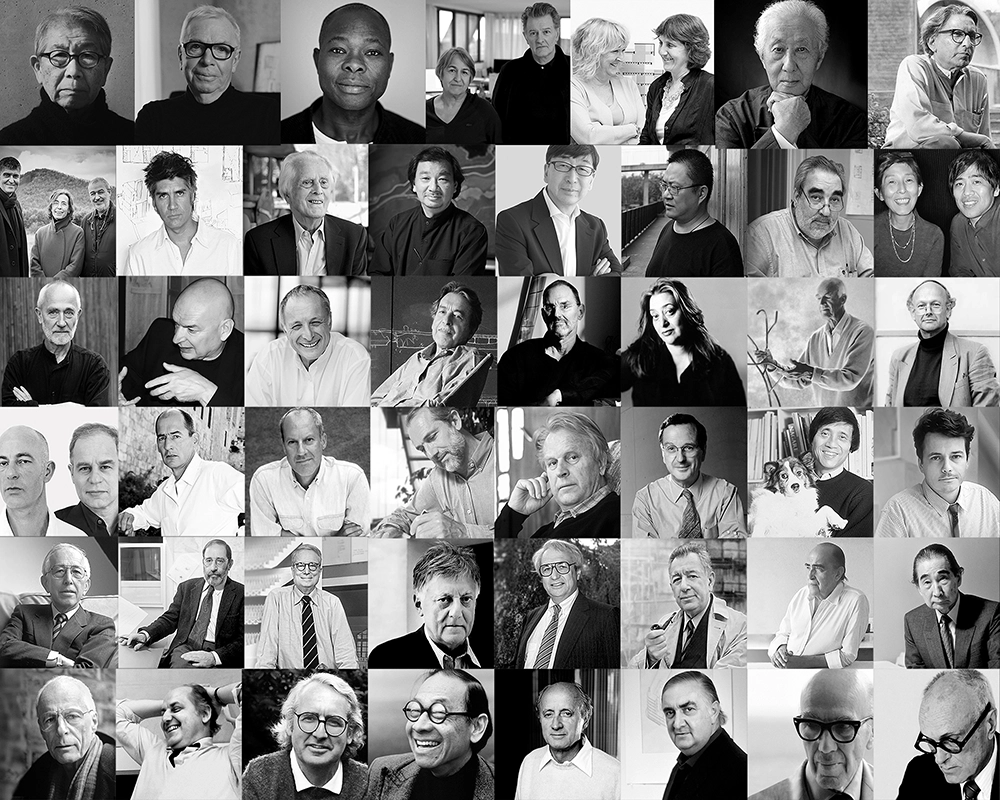
For decades, architecture has been fascinated by the architect as a celebrity. Buildings became signatures, signatures became brands, and architects became cultural figures whose names could attract investors, tourists, and international attention. The so-called starchitect emerged as a powerful figure in this system: an architect whose personal reputation could transform an ordinary development into a global event. Yet the model is beginning to show signs of exhaustion. Cities are questioning the value of spectacular buildings, clients are becoming more cautious about expensive architectural statements, and the public is increasingly interested in what buildings actually contribute to everyday life.
The problem is not that famous architects have lost their talent or that ambitious architecture has become unnecessary. It is that the relationship between architectural quality and architectural celebrity has become increasingly difficult to defend. At a moment when cities face housing shortages, environmental pressures, social inequalities, and declining public infrastructure, the endless production of architectural icons feels strangely disconnected from the conditions that shape urban life. Perhaps the starchitect is not simply tired. Perhaps the profession is finally tired of the idea that architecture needs a hero.
The Rise of the Architect as a Global Brand
The emergence of the starchitect was closely connected to the transformation of architecture into a global cultural industry. During the late twentieth century, international institutions, private developers, and ambitious city governments began competing for buildings that could distinguish their locations on the world stage. Architecture became an instrument of visibility, and the architect’s name became part of the marketing strategy.
The success of projects such as the Guggenheim Museum Bilbao, designed by Frank Gehry, demonstrated how a single building could reshape the international image of a city. Its distinctive titanium surfaces and sculptural form attracted visitors, media attention, and investment. The so-called Bilbao effect became a model for cities hoping to reproduce the economic and cultural success associated with architectural spectacle.
However, what began as an exceptional relationship between architecture and urban transformation gradually developed into an expectation. Every ambitious cultural institution seemed to require an internationally recognized architect, and every major development needed a recognizable architectural identity. The building was no longer simply expected to accommodate its program. It was expected to generate publicity, stimulate investment, and communicate the ambitions of its owner.
In this environment, architectural authorship became increasingly similar to commercial branding. The architect’s reputation sometimes mattered more than the building’s relationship with its surroundings.
When the Signature Becomes More Important Than the Building
One of the central problems with the starchitect phenomenon is the elevation of architectural authorship above architectural performance. A recognizable design language can establish continuity across an architect’s work, but it can also become a formula. Buildings begin to resemble variations of an established visual identity rather than responses to specific cultural, climatic, and social conditions.
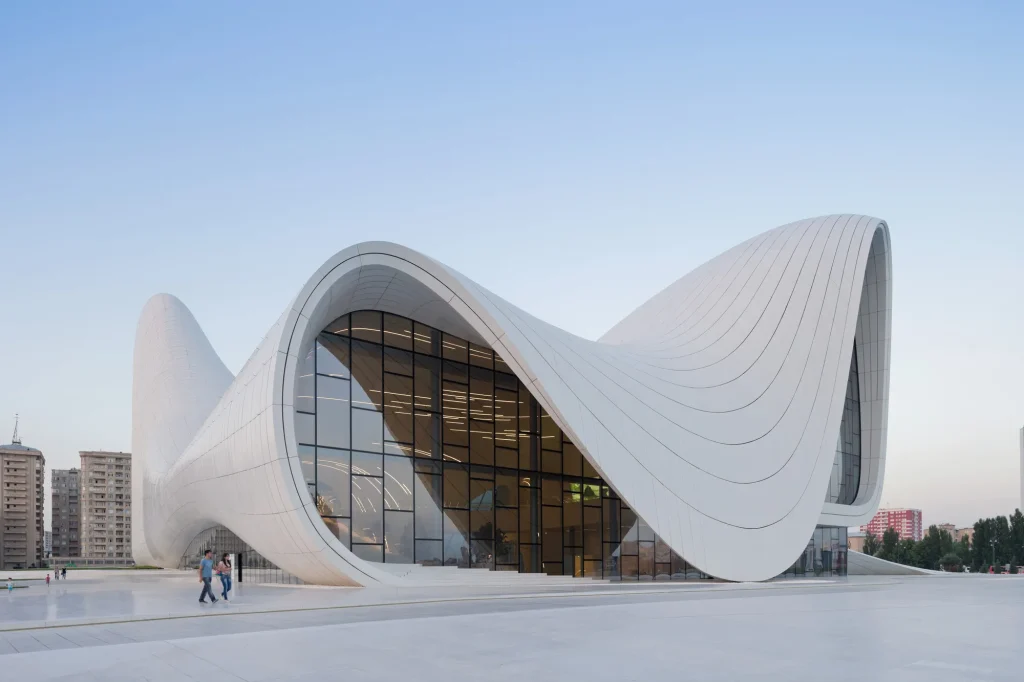
The international success of architects such as Zaha Hadid, Rem Koolhaas, Norman Foster, and Santiago Calatrava demonstrated the extraordinary possibilities of contemporary architectural expression. Their projects expanded the formal vocabulary of architecture and challenged conventional relationships between structure, space, and movement. Their contributions should not be reduced to celebrity culture.
Nevertheless, the global circulation of architectural images has encouraged a particular kind of repetition. Curved façades, dramatic structural systems, unusual geometries, and oversized public interiors can become recognizable products in an international architectural marketplace. The question is no longer whether a particular formal language is appropriate for a specific place, but whether it can be reproduced as part of an established architectural identity.
This creates a contradiction. Architecture is fundamentally concerned with particular conditions, yet the starchitect model often depends on the international circulation of a recognizable signature. The more successful the signature becomes, the greater the temptation to apply it regardless of context.

The Economic Cost of Architectural Spectacle
Iconic architecture is rarely an inexpensive undertaking. Complex geometries, unconventional materials, specialized construction methods, and ambitious engineering systems can increase both construction and maintenance costs. While these expenses may be justified in exceptional circumstances, they become difficult to defend when architectural spectacle competes with more immediate urban needs.
Publicly funded cultural buildings provide an especially important example. Museums, concert halls, libraries, and performing arts centers can make meaningful contributions to urban culture. However, their long-term value depends on more than architectural appearance. They require accessible programming, adequate maintenance budgets, affordable admission policies, and meaningful relationships with local communities.
A spectacular building that becomes financially difficult to operate can quickly turn into an urban liability. Its architectural ambition may remain impressive, but its institutional purpose becomes compromised.
The same concern applies to private developments. Developers frequently use internationally recognized architects to increase property values and distinguish luxury projects from their competitors. Architecture becomes a mechanism for creating exclusivity, while the surrounding urban environment may receive little meaningful benefit. The issue is not that expensive architecture should disappear. It is that architectural expenditure should be evaluated according to the public, environmental, and spatial value it produces rather than the prestige attached to its author.

Cities Need More Than Photogenic Buildings
The global competition for architectural icons has encouraged cities to think about urban development through images. A dramatic museum, a distinctive skyscraper, or an unusual cultural center can become an instantly recognizable representation of a city. Such buildings are particularly attractive in an age when tourism, international investment, and digital communication influence urban policy.
Yet cities are not collections of photographs. They are complex environments shaped by housing, transportation, public services, social relationships, and everyday patterns of movement.
A building may become internationally famous while contributing very little to the neighborhood in which it stands. Its relationship with surrounding streets may be weak, its ground floor inaccessible, and its public spaces designed primarily as visual extensions of the architecture rather than places for everyday occupation.
The architectural quality of a city cannot be measured by the number of recognizable buildings it contains. It is equally dependent on the quality of ordinary streets, affordable housing, public schools, neighborhood facilities, and accessible open spaces.
This does not mean that iconic architecture has no place in urban development. Rather, it suggests that architectural distinction should emerge from a meaningful contribution to the city instead of being treated as an independent objective.

The Environmental Limits of the Icon
The environmental consequences of architectural spectacle present another challenge to the starchitect model. Buildings with highly complex envelopes, extensive glazing, unusual structural systems, and demanding mechanical requirements can create significant environmental pressures throughout their life cycles.
A visually impressive building may require substantial energy for heating, cooling, ventilation, and lighting. Its construction may involve materials with high embodied carbon, while its maintenance can depend on specialized components that are difficult to replace or repair.
These concerns are particularly relevant as the architectural profession moves towards more rigorous approaches to sustainability. Energy efficiency, material reuse, adaptability, passive environmental design, and whole-life carbon assessment are becoming central considerations rather than optional technical additions.
The environmental challenge also raises questions about architectural permanence. A building designed around a highly specific program or an extravagant formal concept may be difficult to adapt when its original function changes. Architecture that cannot accommodate uncertainty risks becoming obsolete long before the physical structure reaches the end of its useful life.
The future of architectural innovation may therefore depend less on producing unprecedented forms and more on designing buildings capable of surviving changing environmental, economic, and social conditions.

The Return of the Ordinary Architect
As confidence in the starchitect model weakens, another understanding of architectural value becomes increasingly relevant. It places greater emphasis on architects who work with existing buildings, neighborhoods, public infrastructure, and everyday spatial problems.
Adaptive reuse, incremental urban development, community-based design, and the rehabilitation of neglected buildings rarely produce the same international attention as spectacular new construction. Yet these practices often address more urgent architectural questions.
Working with an existing building requires a different kind of intelligence. Architects must understand its material history, structural limitations, environmental performance, and cultural significance. Rather than beginning with an unrestricted formal concept, they must negotiate between what already exists and what needs to change.
This approach also challenges the traditional idea of architectural authorship. The architect becomes less of an individual creator and more of a mediator among users, institutions, engineers, craftspeople, and local communities.
The result may not be immediately recognizable as the work of a particular designer. Its success may instead be measured through improved accessibility, extended building life, reduced environmental impact, and the quality of spaces experienced by their occupants.
There is something quietly radical about this shift. It suggests that architecture can become more important precisely when the architect becomes less visible.

Architecture After Celebrity
The decline of the starchitect model should not be confused with the disappearance of architectural ambition. Architecture still needs imagination, experimentation, technical invention, and the courage to challenge established conventions. The question is where these ambitions should be directed.
Contemporary architectural practice faces problems that cannot be resolved through formal novelty alone. Housing affordability, climate adaptation, demographic change, urban inequality, and the transformation of existing building stock require architectural thinking that extends beyond the production of recognizable objects.
This shift also creates an opportunity to reconsider how architectural success is evaluated. Instead of asking whether a building has become an international attraction, we might ask whether it improves its neighborhood. Instead of celebrating an architect’s signature, we might examine the quality of construction, the building’s environmental performance, and its capacity to accommodate different users over time.
Architectural education has a role to play in this transformation. Students should be encouraged to understand the social and political consequences of design decisions, not simply to produce compelling visual representations. The ability to develop an impressive architectural image is not the same as the ability to create a successful building.
The profession also needs to reconsider its relationship with media culture. Architectural publications and digital platforms have enormous influence over which projects receive attention. A greater commitment to documenting ordinary but intelligent architectural interventions could help broaden public understanding of what architectural excellence looks like.

The Future Belongs to Buildings, Not Personalities
The starchitect is tired because the cultural conditions that once sustained architectural celebrity are becoming increasingly difficult to reconcile with the realities of contemporary cities. The promise that a single extraordinary building can transform an entire urban environment has become less convincing, particularly when the structural problems of that environment remain untouched.
There will always be architects whose work attracts international attention, and there is nothing inherently wrong with that. Architectural excellence deserves recognition. But recognition should follow meaningful architectural achievement rather than replace it.
Perhaps the most important question for the next generation of architects is not how to develop a distinctive signature, but how to make architecture matter beyond the image. A successful building does not necessarily need to become a landmark, appear on magazine covers, or carry the name of a celebrated designer. It needs to work, endure, respond to its surroundings, and offer something valuable to the people who use it.
Architecture does not need fewer ambitious architects. It needs a broader definition of ambition. And perhaps that is the most interesting possibility emerging from the exhaustion of the starchitect: a profession ready to shift its attention away from personalities and back towards the buildings, cities, and people that give architecture its purpose.