

You need technology solutions that match your business goals and technical requirements to create quality custom software.
The right tools will help you simplify your operations and reduce development costs as your business grows. So, you need to make smart decisions that will ensure proper software performance.
Some businesses choose flexible systems, while others prefer fast data processing and integrations. You need to understand which technologies can help you build reliable custom software solutions.
Factors to Consider When Choosing Technologies
You have to outline your business requirements to decide on the purpose of your future software. Make sure to determine which features are essential and what problems they should solve.
You can use specialized custom software development services to find appropriate technologies and assess your integration needs. They will ensure the solution meets your operational needs.
You have to evaluate several factors when selecting. These should include
- Scalability
- Performance
- Security features
- Integration capabilities
- Development costs
- Maintenance needs
Your existing infrastructure and technical expertise are important as well. You can build on familiar technologies to simplify the adaptation for your team. However, these tools might not work out if they don’t satisfy your current performance needs.
Top 8 Technologies for Custom Software Development
As you already know, a proper technology stack is essential for creating dependable custom software. The right options depend on your business goals and plans for future growth.
We gathered 8 technologies you can consider for your custom software project.
1. AI and ML

These technologies can reduce most of your manual work and recognize trends across complex datasets. You can use them to create applications that respond to changing user requirements.
Some common applications of AI are
- Predictive analytics
- Individual recommendations
- Intelligent chatbots
- Automatic document processing
These tools will simplify your work and free up time for more important tasks. However, you should evaluate their development expenses and the technical resources you’ll need to manage them.
2. Cloud Solutions
These solutions allow you to run your applications and manage computing resources in the cloud.
You can use cloud-native principles to develop applications for these environments. This architecture type includes containers and automated deployment processes to ensure more consistent releases.
You will be able to create solutions that will scale with your user growth and workloads. They will also speed up most of your deployment activities.
Yet, you should arrange expenses and security measures before migrating to the cloud. Plus, make sure to assess any restrictions on changing vendors and other possible complications.
3. Programming Languages and Frameworks

Successful software development depends on the right languages and frameworks. You have to evaluate the complexity of your project and integration needs when choosing.
Some of the alternatives other businesses use are
- Python
- JavaScript
- TypeScript
- Java
- C#
Many frameworks have prebuilt elements. They simplify your development efforts and ensure a more uniform code structure.
You just have to find an option that will be compatible with your current environment. Plus, you should evaluate your maintenance needs. Any future improvements will be less expensive with technologies that are easy to update.
4. APIs and System Integration Tools
Your applications and services can exchange data with the help of APIs. They help you connect new custom software solutions with existing systems.
Some of the integration technologies you can use are
- REST APIs
- GraphQL
- Webhooks
- Middleware
They offer integration capabilities for CRM and ERP systems. They can help you connect payment processing systems with customer service software.
Effective API integration improves data accuracy and lets you avoid duplicate work and improve data accuracy. You just have to plan for authentication and API versioning to achieve these benefits.
5. Cybersecurity Tools
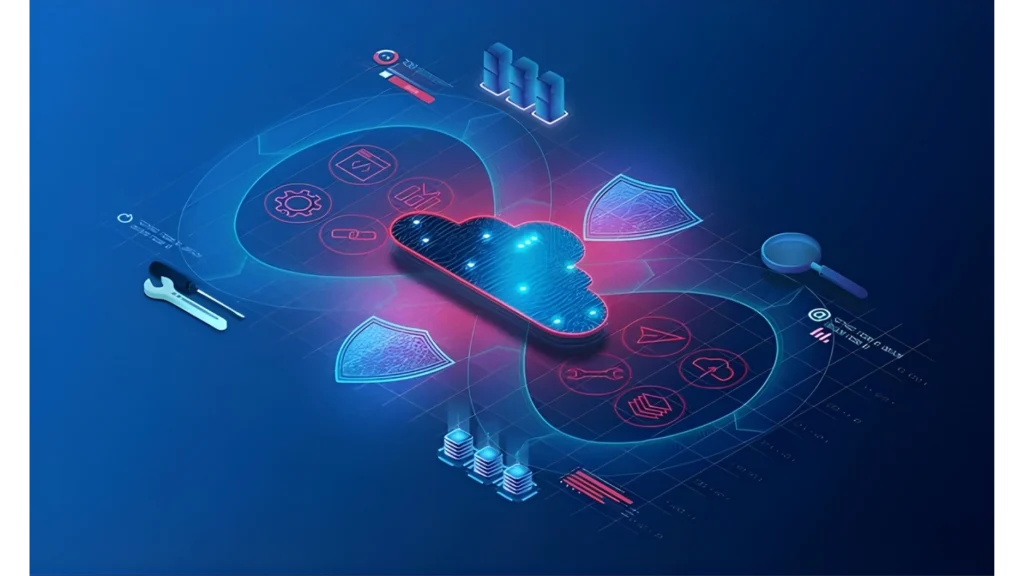
You have to include security systems at every stage of your software development. Building protection measures into the development process will help you safeguard any sensitive information.
You can strengthen your software security through
- Encryption
- Multi-factor authentication
- IAM
- Vulnerability detection
- Penetration testing
- Constant monitoring
Plus, your developers should validate input and follow relevant security guidelines. You also have to include checks in testing and deployment workflows.
6. Data Analytics Tools
Choosing suitable data solutions is an important part of software architecture. Your data storage and processing will impact your application performance a lot.
You might need relational databases to organize important information into structured tables. They are great for applications with consistent data and transactions.
You can use NoSQL databases for applications that handle varied information. They are suitable for CMS platforms and systems that manage flexible data formats.
Plus, you might need data warehouses to centralize information from various sources. BI tools will help you transform it into dashboards and visualizations.
7. Microservices and Containerization
Software architecture determines the entire structure of your application. You can use two common options – monolithic architecture and microservices architecture.
A monolithic solution integrates its functions into one deployable unit. You can easily develop and maintain this structure at the early stages. Yet, you might have to rebuild your whole system to update one component.
Microservices divide your application into smaller elements. You can update and scale these components independently. So, this alternative is more useful for applications with changing workloads.
You might also use containerization to run your applications across development and production environments. Two popular software development technologies in this area are
- Docker
- Kubernetes
These tools can improve your deployment consistency and resource management.
8. IoT and Edge Computing
The IoT unites physical devices and your software applications. You can use IoT technologies to monitor these physical assets and handle any changes.
Some of its common applications include
- Manufacturing
- Logistics
- Smart buildings
- Equipment monitoring
You can also use edge computing to complete IoT functionalities. It will process data closer to the device. You just have to ensure compatibility and reliable network connections when implementing these technologies.
You should also employ strong security to protect connected devices from potential threats.
Conclusion
A smart choice of technology stack is essential for building custom software. You should evaluate your
- Requirements
- Budget
- Existing infrastructure
- Future development plans
AI can automate processes and improve your decisions. Cloud computing will provide flexible infrastructure for expanding workloads. You also need APIs to connect your systems and cybersecurity technologies to protect sensitive information.
Database technologies, containerization, and IoT solutions can offer some additional capabilities when your project needs them.
You just need to find a combination that fits your available resources and lets your software evolve.