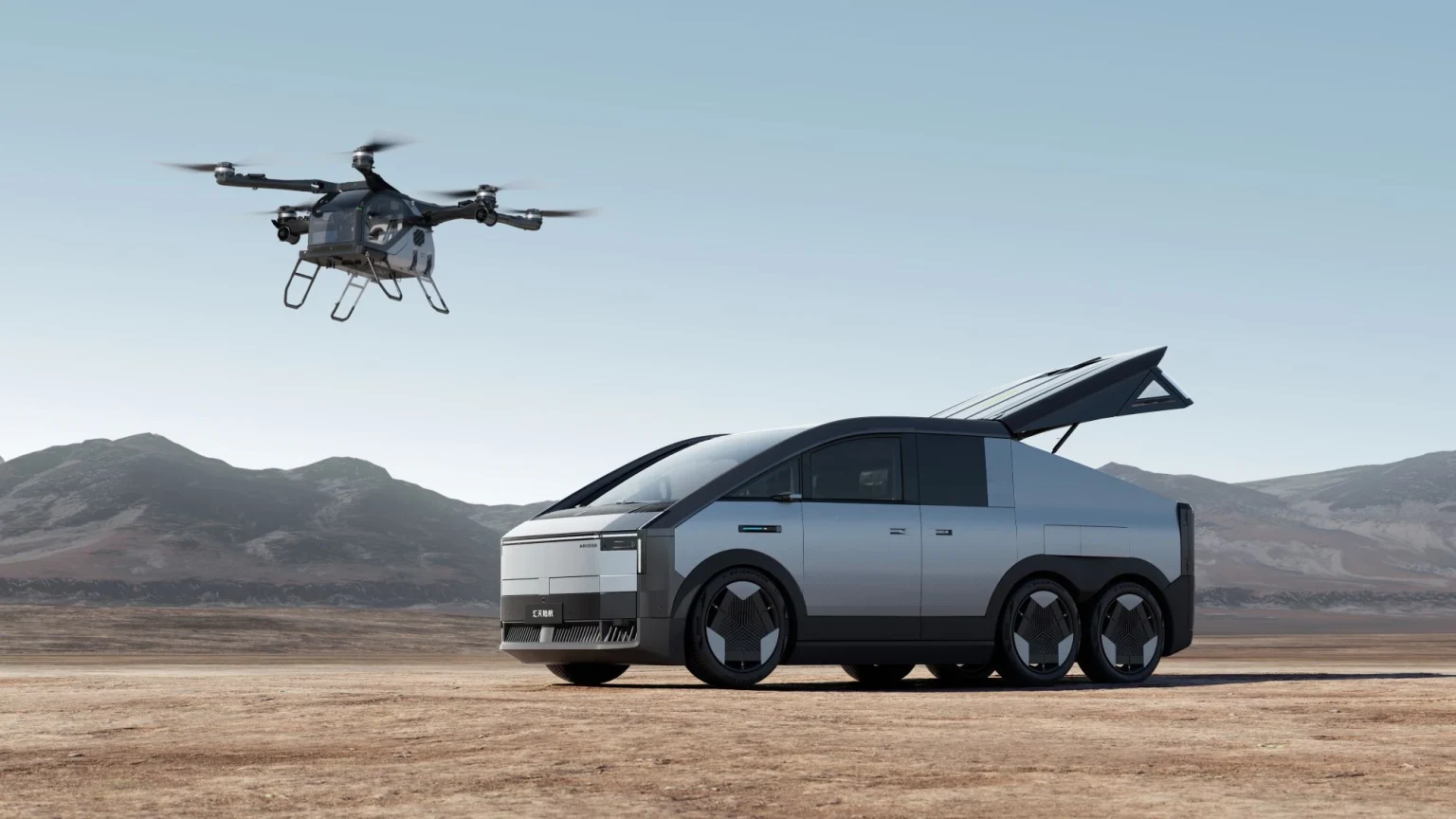

XPeng’s flying-car division has spent several years moving from concept videos to something closer to a product. Now operating under the name Aridge, the company is pushing its modular “Land Aircraft Carrier” system toward mass production in the second half of 2026 while simultaneously developing a larger, longer-range aircraft called the A868.
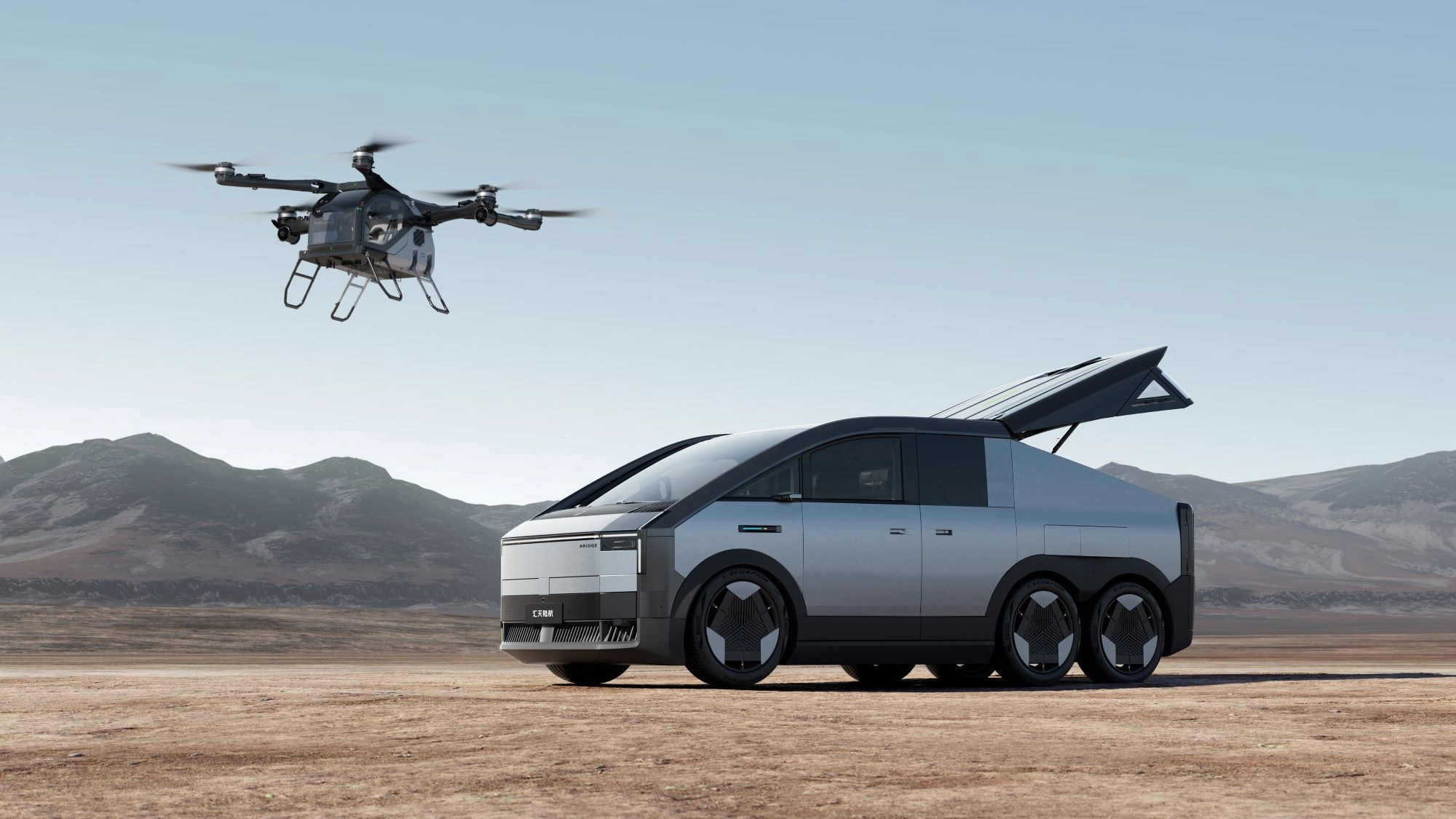
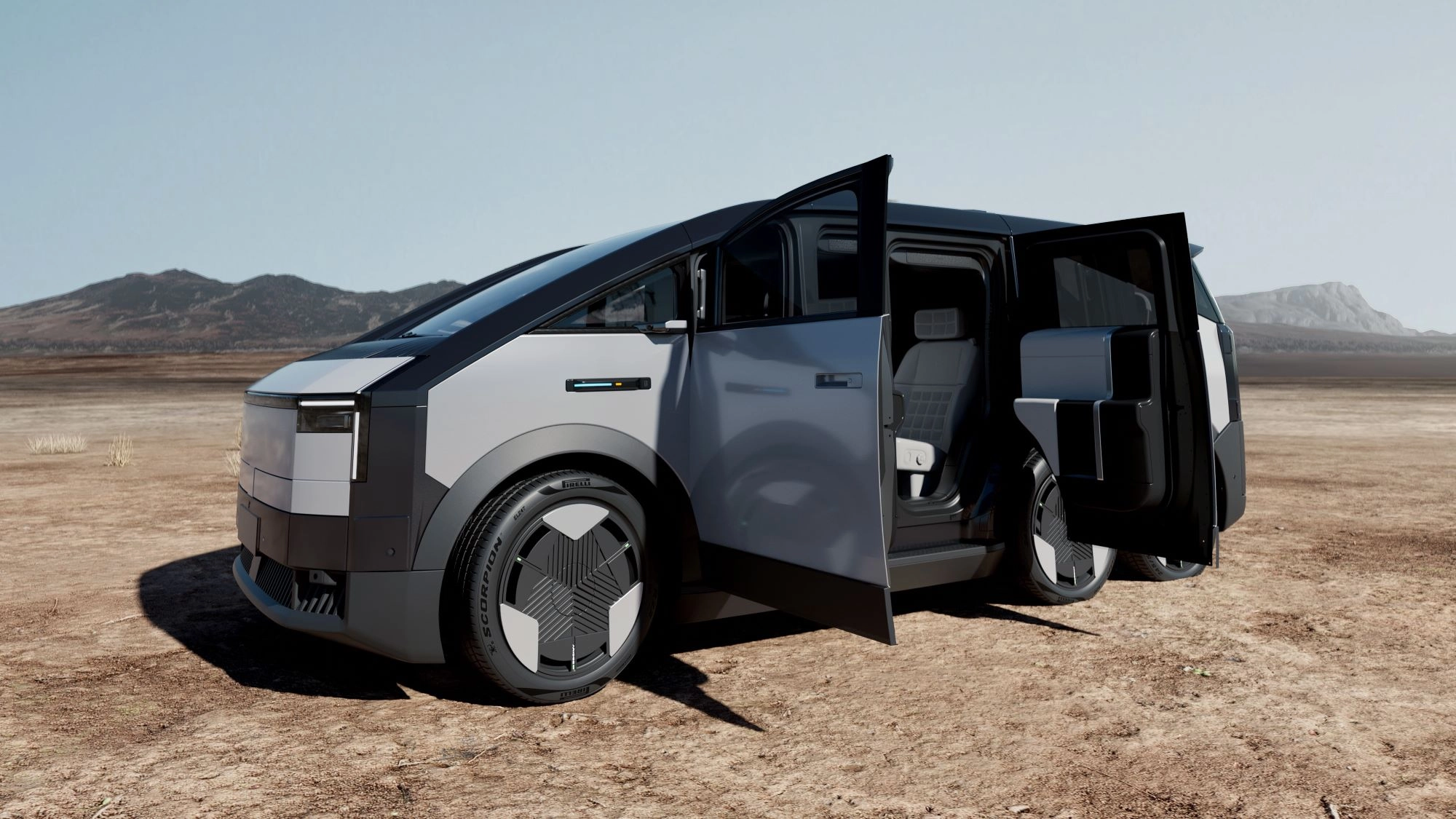
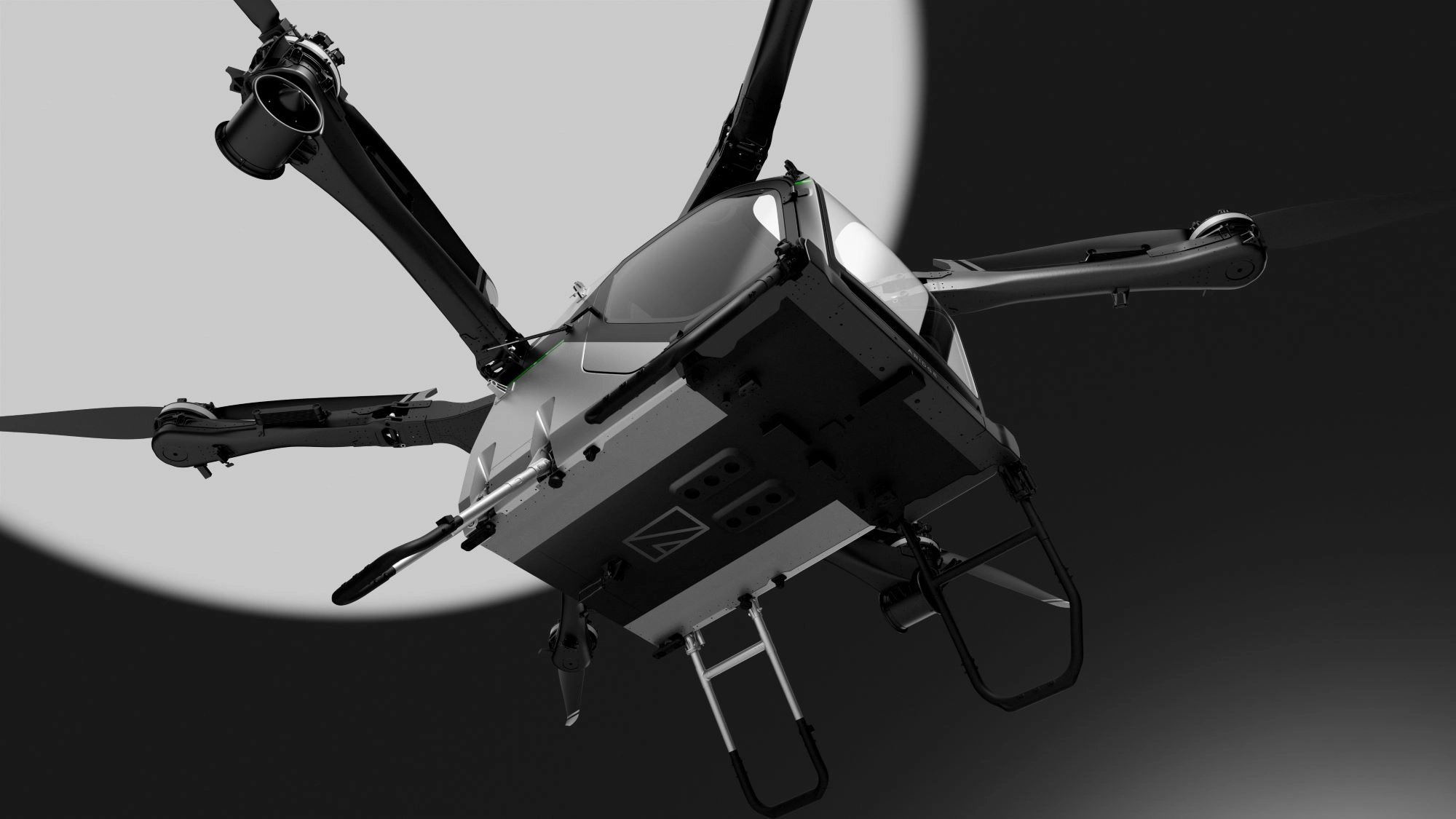
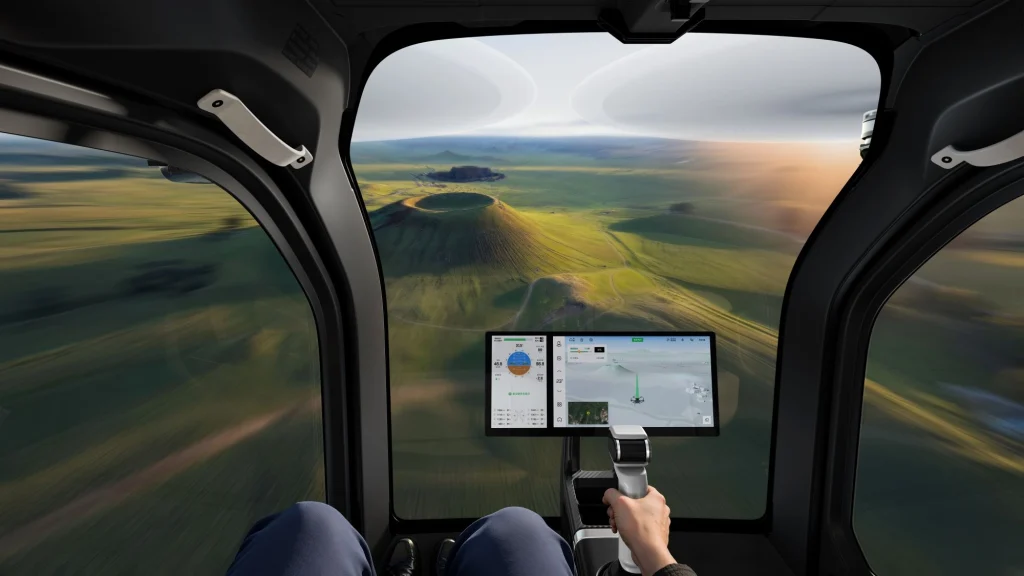
The Land Aircraft Carrier is the near-term focus. It consists of a six-wheeled hybrid ground vehicle that carries a detachable two-seat electric vertical-take-off-and-landing aircraft in its rear. Once at a suitable site, the airborne unit can be unloaded, its propellers unfolded, and flown. The process is claimed to take about five minutes. The eVTOL itself is a carbon-fiber hexacopter seating two people, controlled primarily by a single joystick, with a reported empty weight around 560 kg and a useful load that leaves roughly 200 kg for occupants and cargo.
Orders and manufacturing plans
Aridge reports more than 7,000 pre-orders worldwide, many of them from China and the Middle East. In September 2026, the company announced a bulk order of 600 units from partners in the UAE, Qatar, and Kuwait, described as the largest overseas order so far in the personal flying-car category. A manufacturing facility in Guangzhou has been completed and is intended to support an initial annual capacity of around 5,000 units, with later expansion toward 10,000.
The company has framed the system as the first mass-produced flying car of its kind. Deliveries are targeted to begin before the end of 2026, subject to regulatory progress. China’s civil aviation authority has already granted Aridge basic manufacturer qualification, placing it on a faster certification track for eVTOL types.
The A868: longer range, more seats
Alongside the modular system, Aridge has unveiled the A868, a six-seat hybrid-electric tilt-rotor aircraft aimed at longer journeys. The design targets a range exceeding 500 km and a maximum speed above 360 km/h. It uses a full tilt-rotor configuration and an aviation-grade hybrid powertrain based on XPeng’s Kunpeng extended-range architecture. The prototype has entered flight verification. Public debut material positions the A868 for business and inter-city travel rather than the short personal hops of the hexacopter.
The two products reflect a staged strategy. The Land Aircraft Carrier addresses limited, controlled scenarios where a ground vehicle can deliver the aircraft to a safe take-off point. The A868 is intended for more conventional air-taxi or regional routes once infrastructure and regulation mature.
Middle East expansion
Aridge has been active in the Gulf. It signed a cooperation agreement with Ras Al Khaimah to become a founding partner in an advanced air mobility test zone under the UAE’s General Civil Aviation Authority. The company describes the arrangement as a regulatory sandbox for personal low-altitude flight and a step toward demonstration routes, including potential links to Abu Dhabi. Middle East market entry is currently projected for 2027.
Practical realities
Price remains high. The Land Aircraft Carrier system is quoted in the region of $280,000 to $300,000. That figure places it firmly in the luxury or early-adopter category rather than everyday transport. Flight time for the two-seat eVTOL on a single charge is reported to be around 20 minutes, limiting its independent range. Regulatory approval, pilot training requirements, airspace access, and the availability of suitable take-off and landing sites will determine how useful the system actually becomes.
The modular concept itself is an attempt to solve one of the hardest problems in personal eVTOL: the need for infrastructure. By carrying the aircraft inside a road-legal vehicle, Aridge reduces dependence on fixed vertiports for every journey. Whether that advantage outweighs the complexity and cost of the dual system will become clearer once units reach customers.
A measured view
Aridge’s progress is notable for the volume of orders and the concrete manufacturing timeline. Many eVTOL projects remain at the prototype or limited-demonstration stage. Moving from concept to a factory capable of producing thousands of units per year is a significant step, even if early production is modest and regulatory hurdles remain.
At the same time, the gap between pre-order numbers and everyday utility is still wide. Short flight endurance, high price, and the need for trained operators mean the Land Aircraft Carrier will initially serve enthusiasts, corporate buyers, and specialized use cases rather than transforming personal mobility. The A868, if it meets its range and speed targets, could address a different market segment, but it is further from certification and delivery.
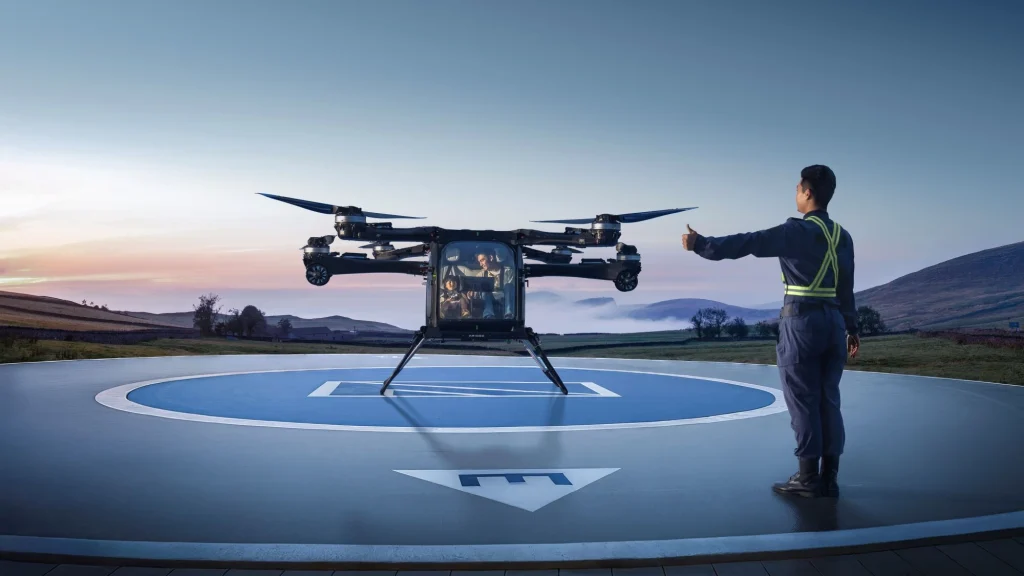
XPeng’s decision to rebrand the unit as Aridge and to pursue both a modular personal system and a larger hybrid aircraft shows an intention to cover more than one niche. Success will depend less on the next demonstration flight and more on whether the company can deliver reliable, certified aircraft at the volumes it has planned, and whether customers find genuine value in the combination of ground vehicle and flying module.
For now the factory is ready, the order book is substantial, and the first mass-produced examples are scheduled to leave the line before the year is out. The real test begins when those aircraft start flying outside controlled events and into ordinary operational conditions.