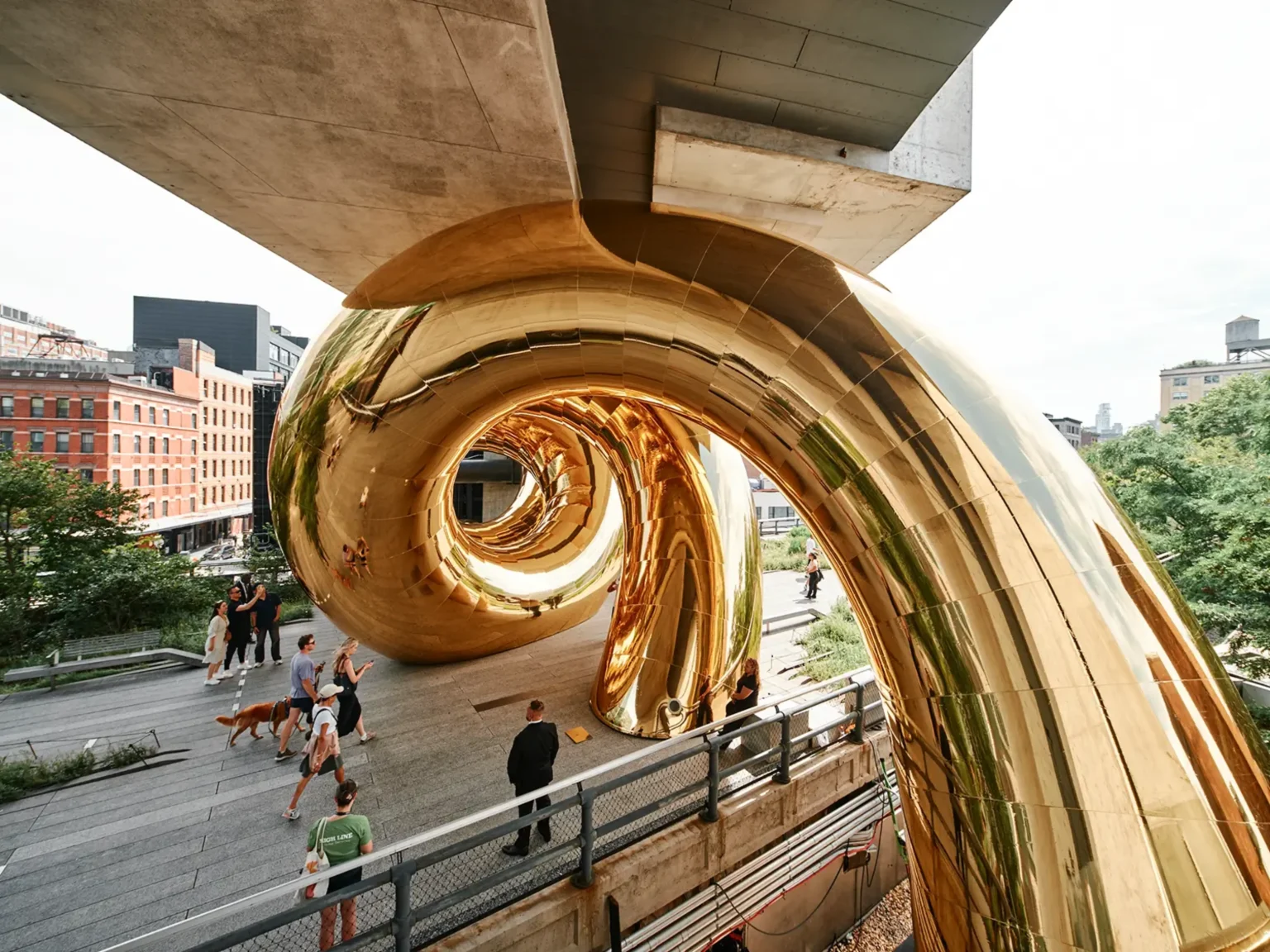


Berlin duo Plastique Fantastique installed auruBOROS, a golden pneumatic sculpture inspired by the ouroboros, on New York’s High Line from September 10 to 20, 2026, commissioned by Bulgari as part of its Serpenti Infinito series.
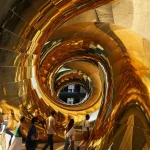
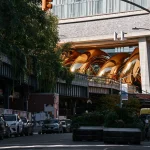
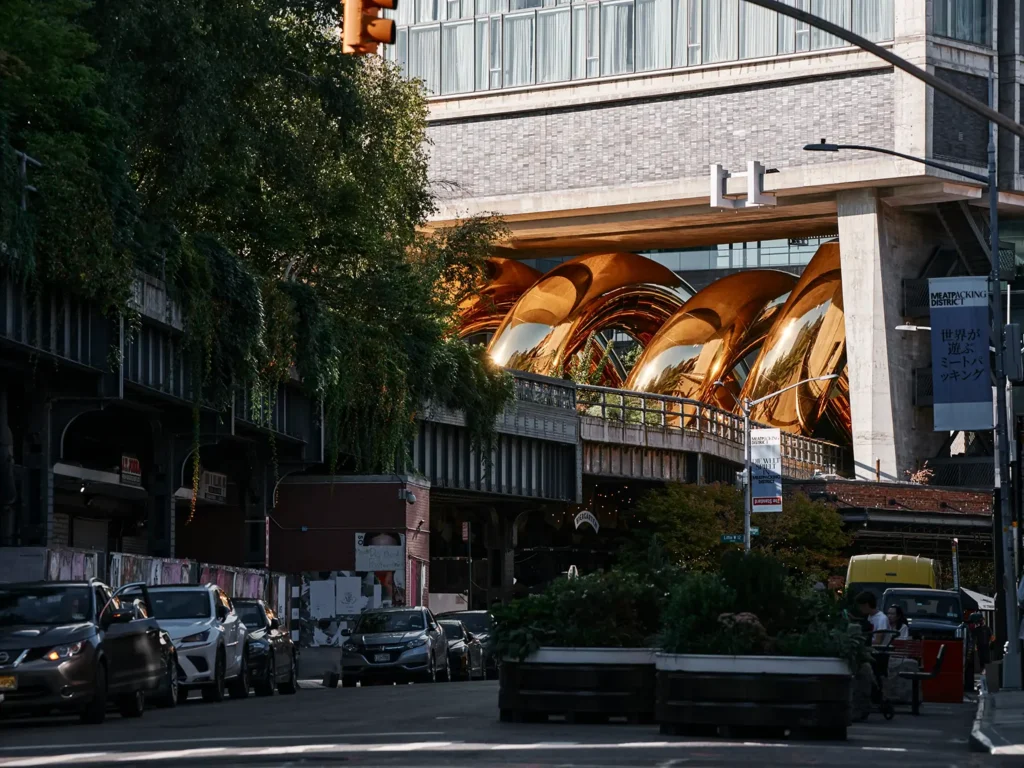
For ten days in September 2026 a golden form wound through the space beneath The Standard on New York’s High Line. It looked solid and precious, yet it was held up by nothing more than air. Visitors walking the elevated park had no choice but to pass through its coils, watching their own reflections ripple across the mirrored surface as the city moved around them.
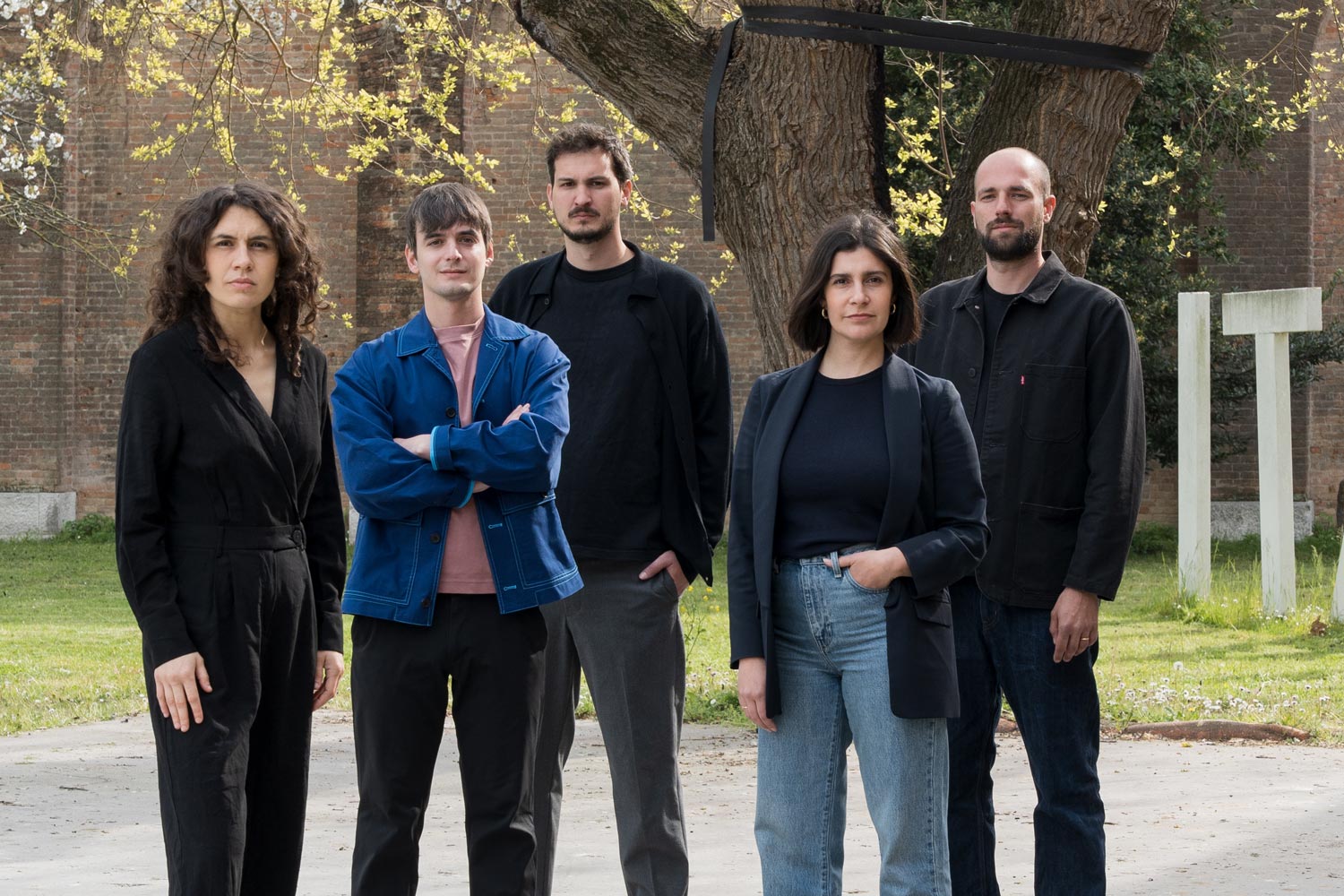
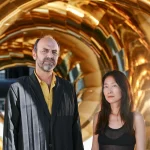
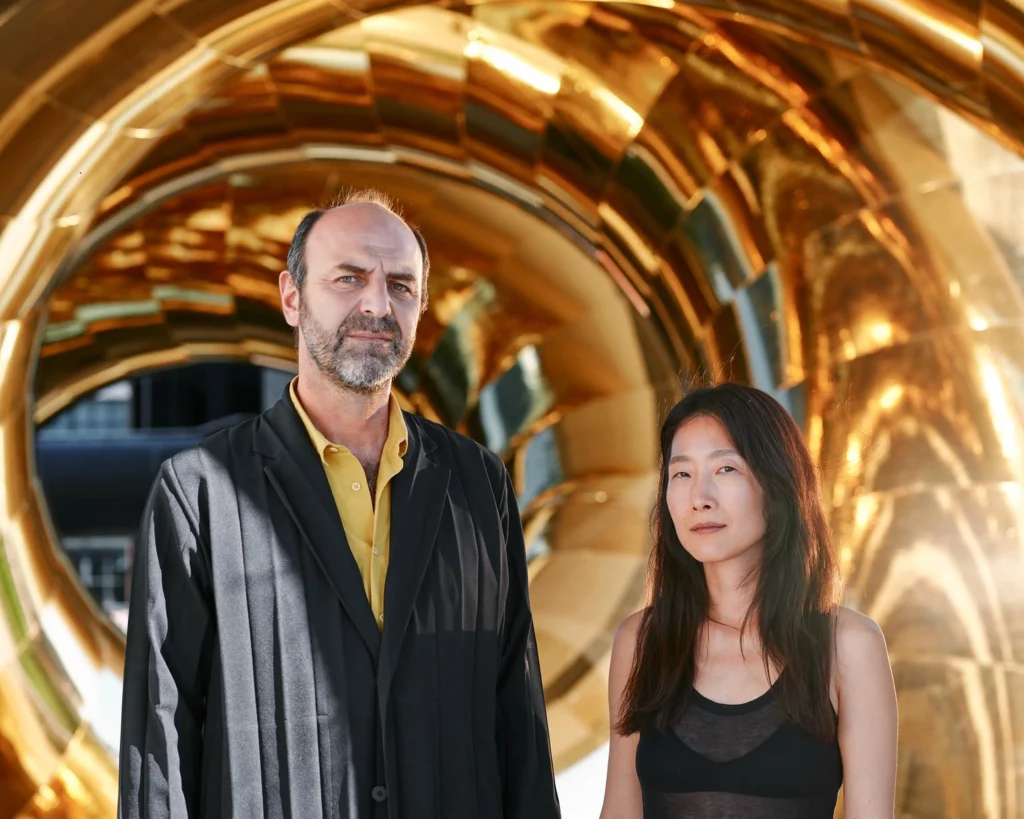
The work is called auruBOROS – Urban Memory and Collective Dream. Created by the Berlin-based duo Plastique Fantastique, Marco Canevacci and Yena Young, it was commissioned by Bulgari as the first public art installation the house has presented in the United States. It formed part of the brand’s ongoing Serpenti Infinito series, which has previously appeared in Shanghai, Seoul and Mumbai.
A temporary monument of air and gold
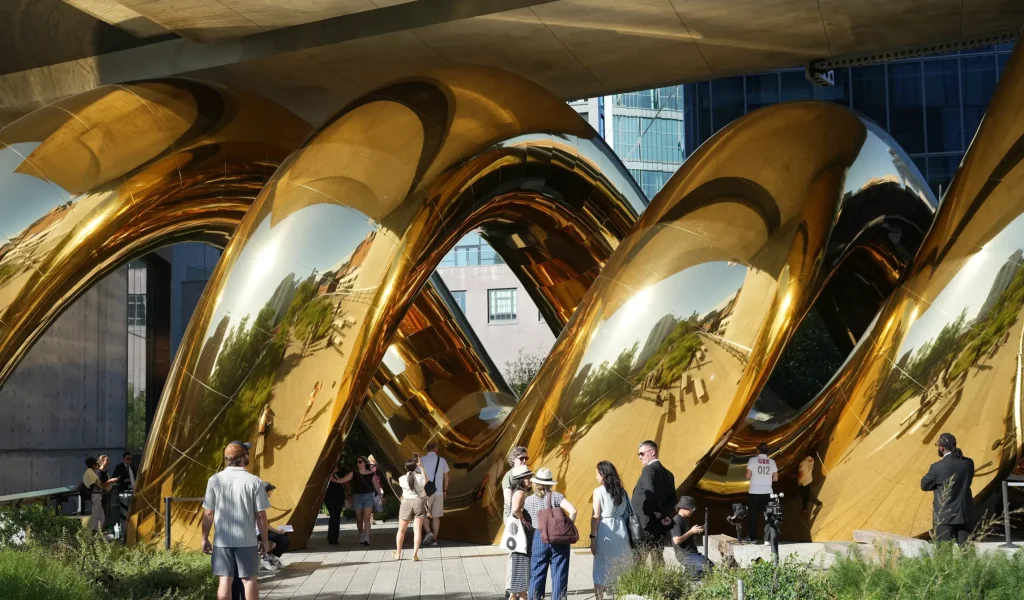
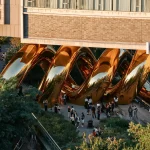
The sculpture measured roughly 30 by 10 by 10 metres. Constructed from lightweight reflective TPU membrane and kept inflated by continuous airflow, it took the shape of two interlocking coils, closer to a double helix than a closed loop. One section dipped toward the awning of the Standard’s Soda Shop below. Other parts brushed the underside of the structure above. The only path forward for pedestrians was through the golden volume itself.
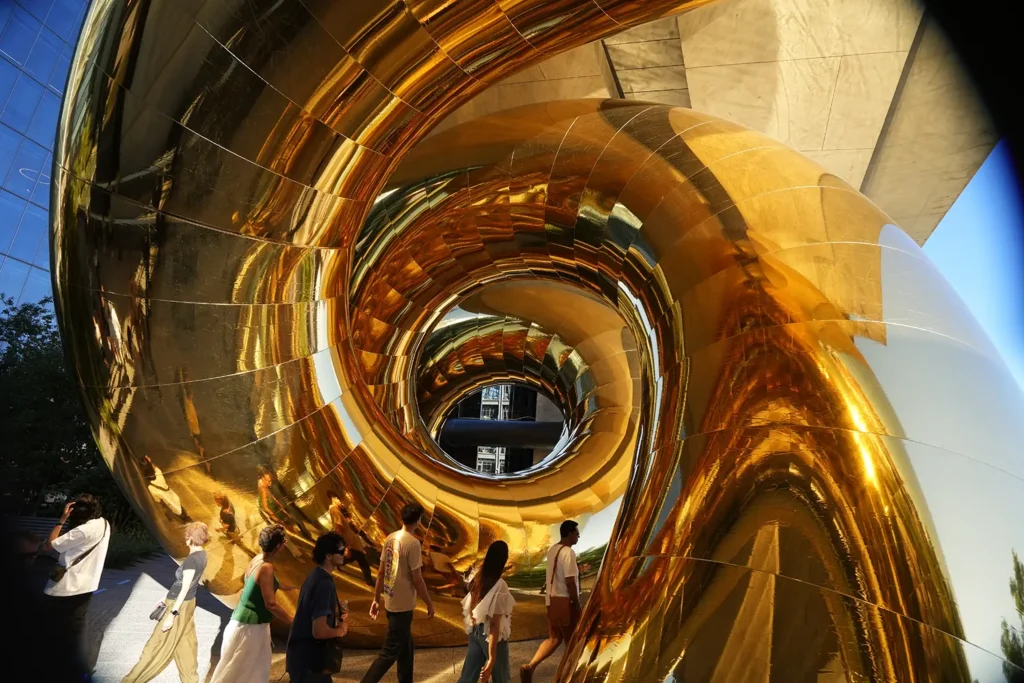
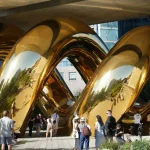
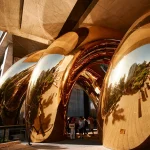
The name combines “aurum,” the Latin for gold, with ouroboros, the ancient symbol of a serpent consuming its own tail. Instead of forming a perfect circle, the artists broke and extended the motif so that the form could occupy the specific three-storey gap between the High Line and the hotel. Gold here is less a statement of luxury than a responsive surface. It absorbs the surrounding buildings, vegetation, people, weather and sky, turning the installation into a living mirror of the site.
Public space as shared encounter
Plastique Fantastique has long worked with pneumatic structures that insert temporary environments into existing architecture. Their projects often explore how soft, air-filled forms can alter the way people move and meet. On the High Line the effect was immediate. Strangers shared the same narrow passage, saw themselves and one another reflected, and then continued on. The artists have described these brief, collective moments as a form of “Public Love.”
Because the piece existed only from September 10 to 20, its presence was deliberately fleeting. The artists emphasise the contradiction at its core: something that looks monumental and permanent is in fact light, fragile and temporary. Once the air is released, the structure collapses and disappears. What remains are the changed memories of the place and the conversations that took place inside it.
Brand, art and the High Line
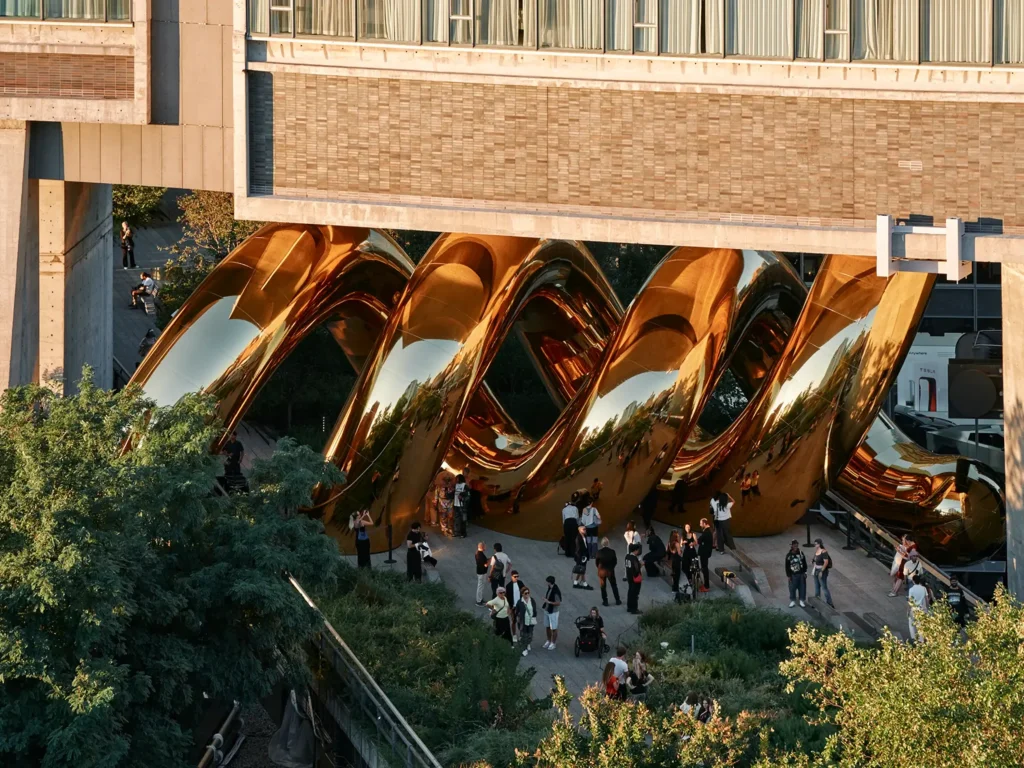
Luxury houses have increasingly turned to temporary public art as a way of entering cultural conversation. Bulgari’s decision to place a large-scale work on the High Line during Fashion Week follows a familiar pattern, yet the choice of Plastique Fantastique kept the project closer to spatial experiment than pure spectacle. The sculpture did not simply display a logo. It occupied and transformed a well-known urban threshold, forcing physical engagement rather than passive viewing.
The High Line itself has hosted a wide range of art since it opened as a park. Most pieces sit within planting beds or on platforms and can be observed from a distance. auruBOROS was different. It filled the vertical space and required visitors to walk through it. That immersive quality aligned with the artists’ interest in architecture as something experienced by the body rather than only by the eye.
Reflection as material
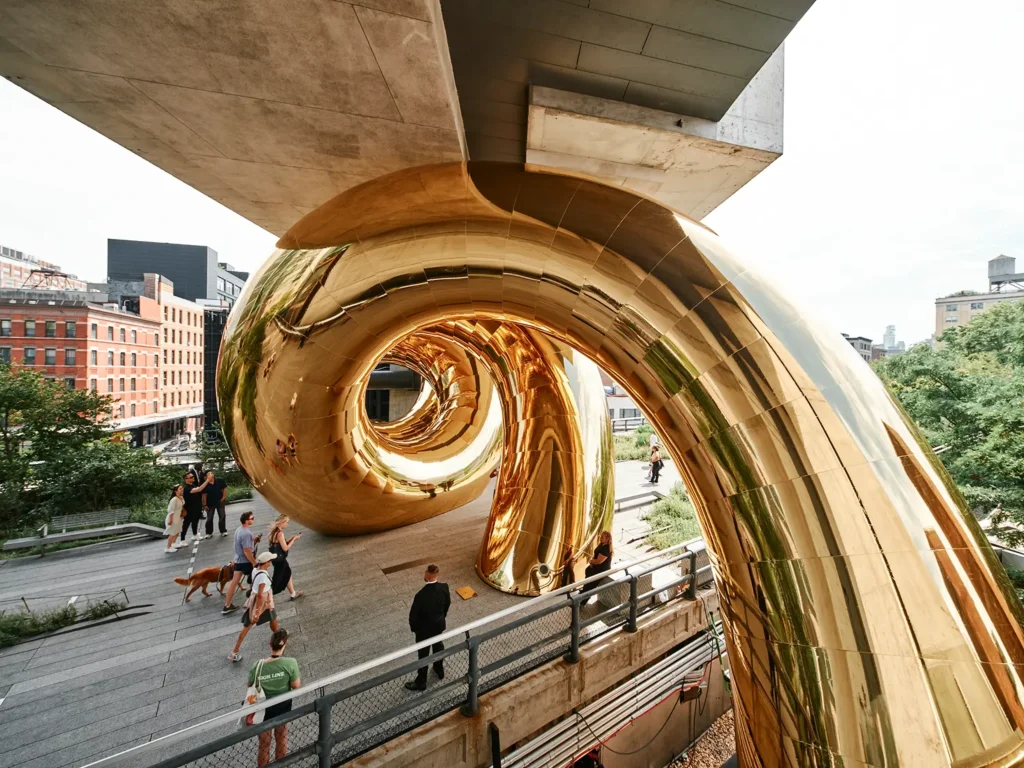
The golden mirrored surface was central to the experience. As light shifted across the day, the reflections changed constantly. Morning sun, afternoon haze, evening artificial light and the movement of people all altered the appearance of the coils. The installation never looked the same twice. In that sense it behaved less like a fixed object and more like a responsive environment that registered the life of the city around it.
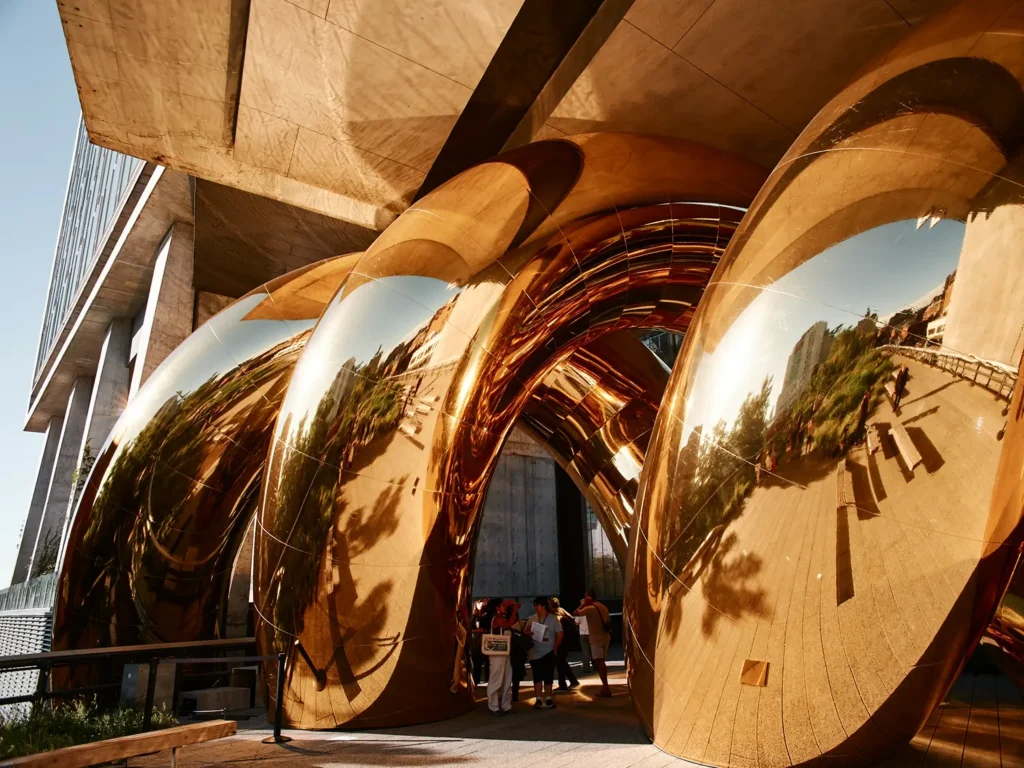
The artists have spoken of the work as an exploration of urban memory. The High Line already carries layers of history: industrial rail line, abandoned structure, designed landscape, tourist destination. auruBOROS added one more temporary layer, then withdrew, leaving the site altered only in recollection.
After the air is gone
By September 20 the golden form was gone. The space beneath The Standard returned to its ordinary condition. Yet for those who walked through the coils, the memory of the reflective passage remains. In a city that constantly replaces its surfaces, a ten-day structure made of air and gold managed to create a brief, shared pause.
auruBOROS did not claim permanence. It claimed attention. In doing so it demonstrated how temporary architecture can still leave a lasting mark on the way a familiar place is remembered.