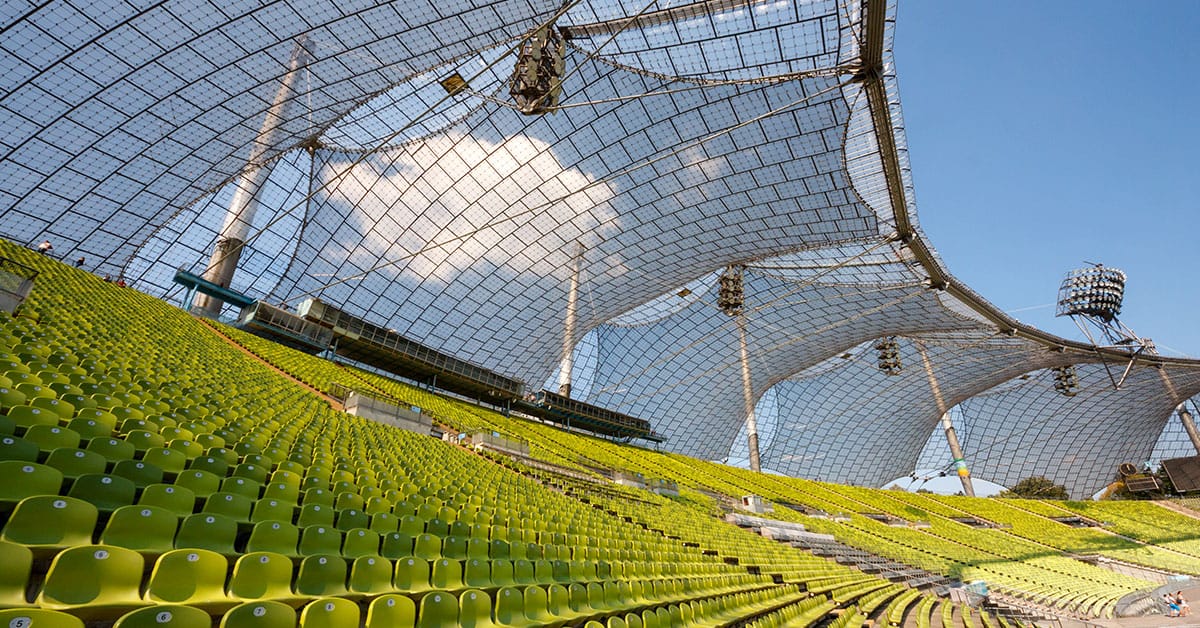

Form-finding has always sat at the heart of certain kinds of architecture. Think of the cable nets of Frei Otto, the tensegrity experiments of Buckminster Fuller, or the contemporary cable domes that span stadiums with remarkable economy. These structures do not begin with a fixed shape that is then made to stand up. They begin with forces. The geometry emerges from the search for equilibrium.
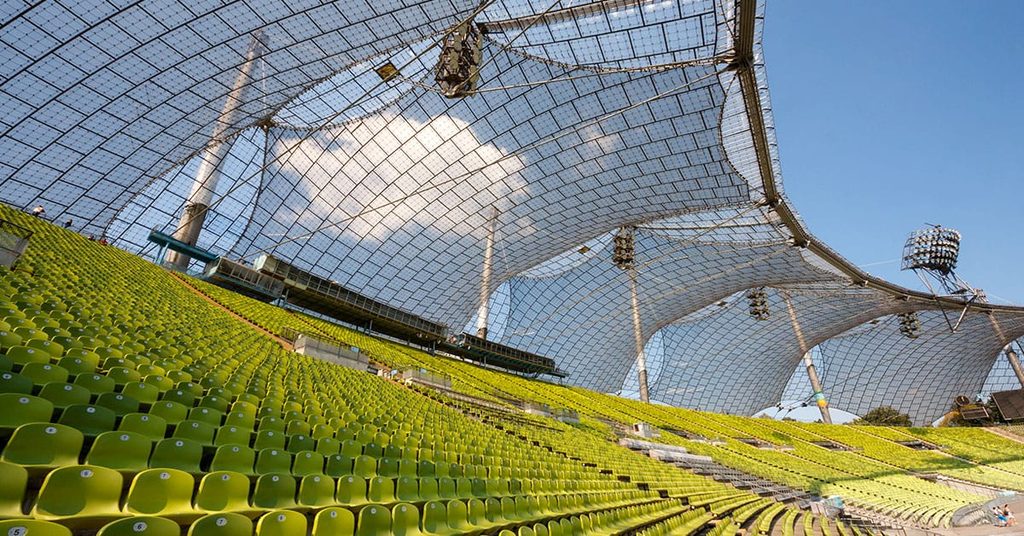
For mixed systems that combine tension and continuous compression members, that search has remained stubbornly difficult. Existing methods often struggle when compression elements are continuous rather than discrete bars, or when designers want both forward form-finding (discover a stable shape) and inverse form-finding (reach a specific target geometry while staying in equilibrium). A new paper published in Engineering Structures in September 2026 offers a practical way forward.
The core idea
Researchers Zongshuai Wan and Kam-Ming Mark Tam present an optimization-integrated framework that reformulates structural equilibrium as a differentiable nonlinear least-squares problem. Instead of treating residual forces as something to be driven to zero through iterative physical simulation alone, the method minimizes those residual nodal forces within a trust-region optimization scheme.
The formulation uses explicit force, length, and stiffness parameters. The structure itself is represented as a graph. This graph-based assembly allows the use of automatic differentiation to compute exact Jacobians and Hessians. No symbolic derivatives need to be written by hand. No numerical approximations are required. The derivatives are obtained directly from the computational graph.
By bringing together ideas from dynamic relaxation and energy-based approaches, the framework supports both directions of form-finding. Designers can explore stable configurations that arise naturally from the force system, or they can start with a desired geometry and ask the algorithm to adjust forces and lengths until equilibrium is reached while respecting constraints.
Why continuous compression matters
Many classical form-finding tools work well for pure tensegrity or for cable nets with discrete struts. Real architectural structures often need continuous compression members: arches, rings, or beams that carry compression along their length. These continuous elements change the mathematical character of the problem. The new method is specifically developed to handle them.
Case studies in the paper range from simple cable nets to more complex cable-arch systems and full cable domes. Some of the examples include external supports; others are entirely self-stressed. Across these tests, the framework produces stable equilibria and recovers target geometries with high accuracy. The resulting forms remain expressive. They do not collapse into the most conservative or least interesting solutions.
What this means for parametric and computational design
For architects and designers working in parametric environments, the significance is practical. Form-finding has often lived in specialized software or research code that is hard to connect to everyday modeling tools. An auto-differentiable approach sits naturally inside modern computational workflows. Because gradients are exact and efficient to compute, the method can be embedded in larger optimization loops that already consider fabrication limits, material quantities, or environmental performance.
A designer can define relationships between force densities, member lengths, and geometric targets, then let the optimization adjust the system while other parametric controls remain active. Constraints can be added without rewriting the core solver. This is the kind of flexibility that turns a research method into a usable design tool.
The graph representation also aligns with how many computational designers already think. Structures are networks of nodes and edges. Treating them explicitly as graphs makes the connection to other graph-based methods in architecture and engineering more direct.
From research to possible practice
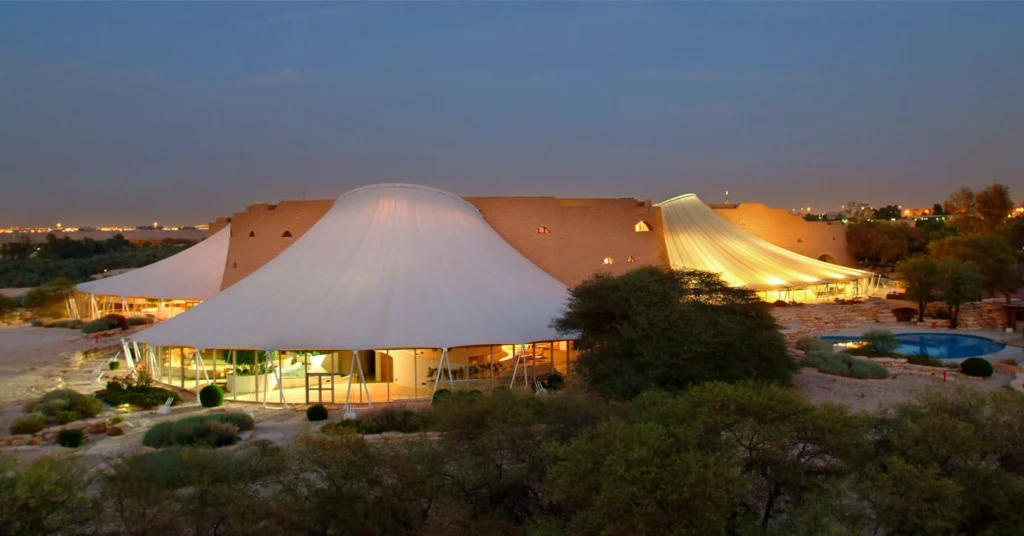
Lightweight, long-span, and material-efficient structures continue to attract interest for both environmental and formal reasons. Reducing the amount of material while maintaining stability and achieving distinctive geometry remains a central challenge. Methods that make the search for equilibrium more reliable and more controllable help close the gap between ambitious formal ideas and buildable outcomes.
The paper does not claim to solve every problem in the field. It focuses on self-stressed tension-compression systems with continuous compression members and demonstrates the approach on a range of three-dimensional examples. The strength lies in the combination of mathematical clarity, computational efficiency through automatic differentiation, and the ability to handle both forward and inverse problems within the same framework.
For practices already using Grasshopper, Python-based structural tools, or custom optimization scripts, this kind of work points toward a future in which form-finding is less of a specialized side process and more of an integrated step in the design conversation. Geometry, force, and constraint can be adjusted together rather than in sequence.
A quieter shift in how form is found
There is something almost philosophical in the approach. Instead of imposing a shape and then checking whether it can stand, the method starts from the requirement of equilibrium and lets form arise or adapt under that condition. Automatic differentiation simply makes the mathematics tractable at a useful scale.
Architects have long been drawn to structures that express the flow of force. The new framework gives that intuition a more precise computational partner. It does not replace judgment about proportion, material, or context. It expands the range of stable configurations that can be explored with confidence.
In the wider landscape of computational design, work like this matters because it keeps structural intelligence close to the generative process. Parametric models are only as useful as the behaviors they can reliably encode. When equilibrium itself becomes a differentiable objective, the models gain a deeper kind of agency. They can search for forms that are not only interesting to look at but genuinely at rest under their own forces.
The paper by Wan and Tam is a technical contribution, yet its implications reach into the everyday questions of architectural design: how to span further with less, how to let material and force shape geometry, and how to keep computational tools in service of clear structural thinking. For anyone working at the intersection of parametric modeling and lightweight structures, it is a development worth watching.