
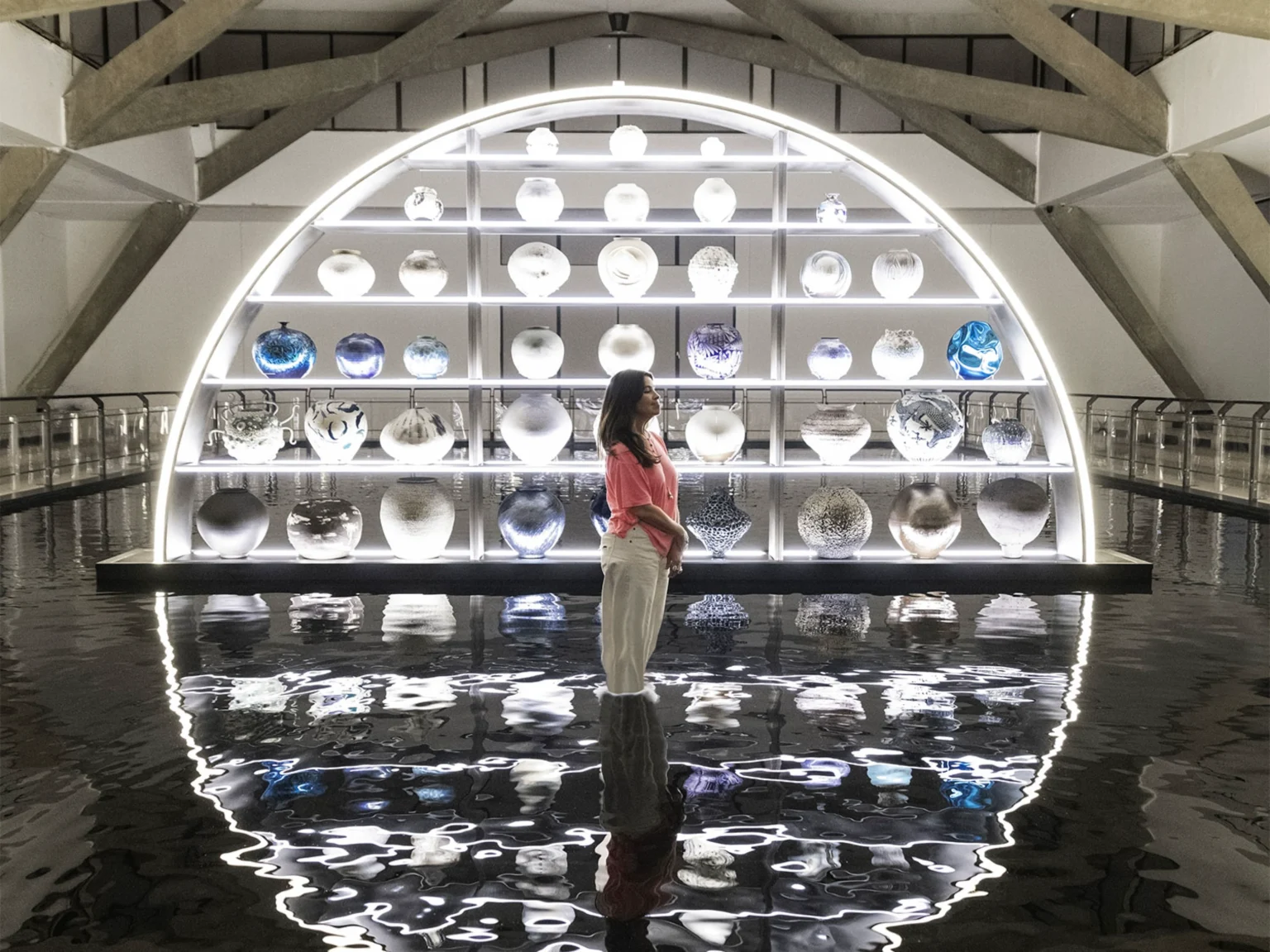

Homo Faber 2026: Before a visitor sees an object, they encounter a condition: darkness, reflection, a shifting horizon, a sound, a filament of light passing across stone. On San Giorgio Maggiore in Venice, craft does not sit quietly inside display cases. It is staged as a sequence of encounters.
For Homo Faber 2026: An Island of Light, British artist and designer Es Devlin has transformed the Fondazione Giorgio Cini into 15 immersive installations, bringing together more than 500 craft artists from over 70 countries and over 700 handmade works. The fourth edition of the international biennial runs from 1 to 30 September 2026.
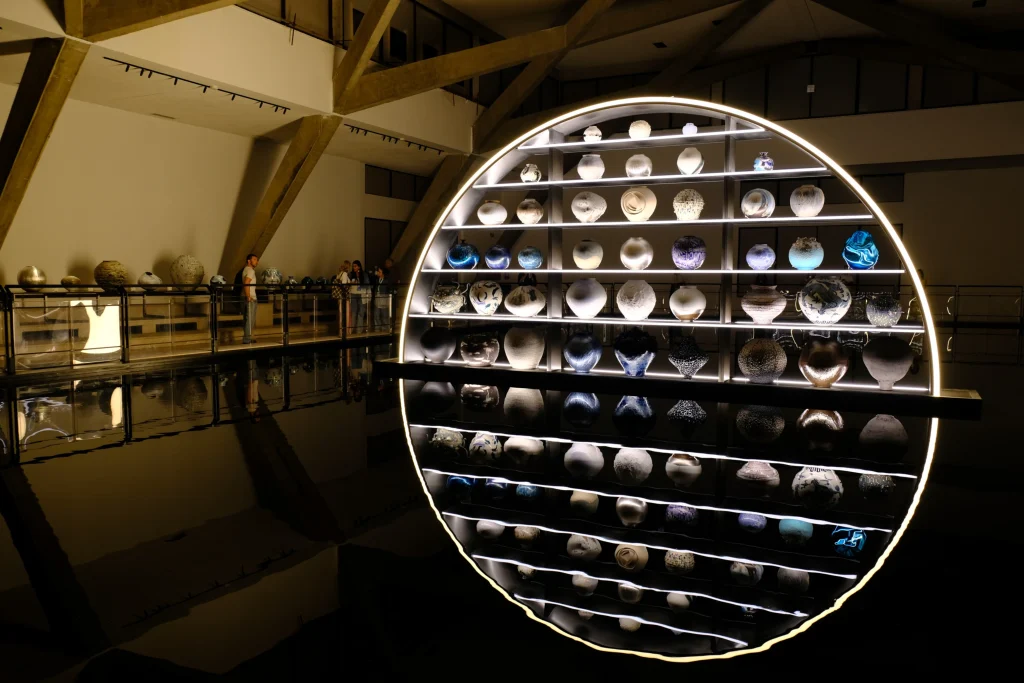
The event arrives with a generous ambition. Rather than treating craftsmanship as an archive of endangered techniques, it presents making as a live and evolving design intelligence. For architects, computational designers, and material researchers, the exhibition offers a different model of innovation: one rooted in attention, iteration, physical knowledge, and the unpredictable behavior of matter.
An island becomes an exhibition instrument
Venice is already a city built from thresholds. Water separates buildings, bridges create a sequence, light moves across facades, and every arrival is choreographed by a change in speed and perspective.
Devlin’s curatorial concept uses this condition rather than competing with it. An Island of Light is structured around San Giorgio Maggiore and the historic buildings and gardens of Fondazione Giorgio Cini, a former Benedictine monastery facing St Mark’s Square across the lagoon.
The exhibition follows the logic of an archipelago. Individual makers become distinct “islands” of skill, while the installations create connections between their practices. This is not a collection of national pavilions or isolated craft demonstrations. It is a designed route in which objects, rooms, gardens, water and light build a shared spatial narrative.
That approach is particularly relevant to architecture. A building exhibition often asks visitors to look at objects. Devlin asks them to move through a system of atmospheres. The work is encountered through distance, shadow, reflection and changing proximity.
Fifteen spaces, one material language
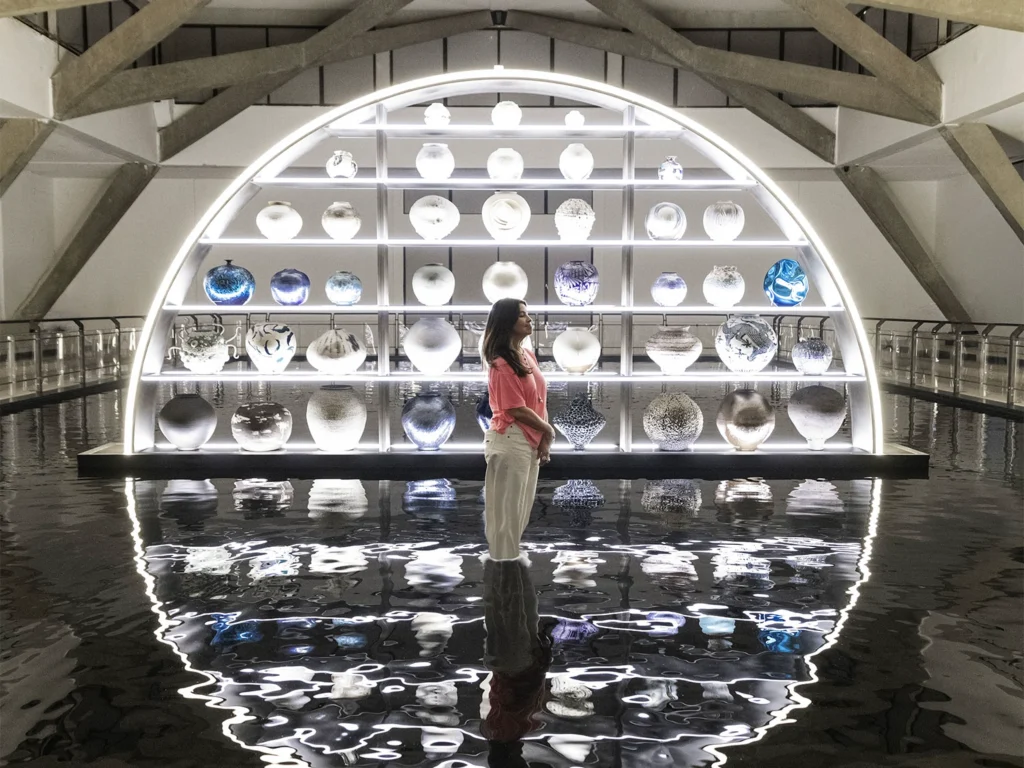
The 15 installations use light as their organizing medium, but the aim is not theatrical excess. Light becomes a way to direct attention to surfaces, textures, color, translucency, and handwork.
The exhibition is organized through themes that include the maker, silhouette, material, element, process, translucency, color and sound. These themes provide a useful structure for approaching craft beyond category. A ceramic vessel, a handwoven textile, a metal object and a glass form may be materially different, but each can be understood through the way it receives light, records touch or carries time.
For a computational-design audience, the exhibition offers an important contrast with screen-based form-making. Parametric tools can describe a surface precisely, yet physical materials resist complete prediction. Glass refracts. Clay shrinks. Textile stretches. Metal oxidizes. Timber moves with moisture. Craft often begins where a digital model’s certainty ends.
That does not make craft anti-digital. It makes it an essential source of feedback for digital practice.
Craft as material computation
The phrase “computation” is usually associated with software, processing power, and automation. Yet many craft processes are computational in their own way. They involve rule sets, repeated actions, tolerances, calibration, and continuous adjustment.
A weaver controls tension, density, rhythm, and pattern. A glassmaker works with heat, gravity, timing, and breath. A ceramicist anticipates shrinkage and deformation before firing. A metalworker reads resistance through the tool and the hand.
These are material algorithms, though they are rarely written as code.
Homo Faber makes this intelligence visible. By bringing hundreds of artisans into a spatial framework shaped by light, the exhibition draws attention to the knowledge embedded in making. For architects using digital fabrication, this is a valuable reminder that precision is not identical to uniformity.
A robotic arm can mill a component to a fraction of a millimeter. A skilled craftsperson can alter a process in response to a flaw, a grain direction, a temperature shift, or an unexpected pattern. Future fabrication systems will be stronger when they learn to accommodate such material feedback rather than eliminate it.
Es Devlin’s architecture of attention
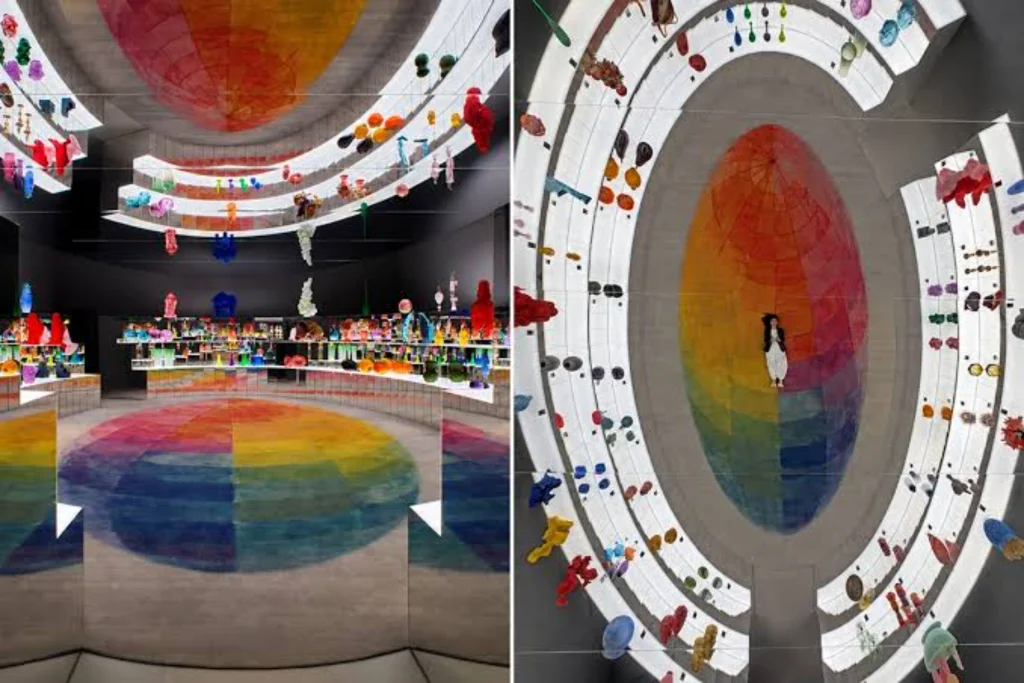
Es Devlin is known for large-scale performance environments, sculptural public works, and installations that combine narrative, architecture, and light. Her work has appeared in theatres, museums, concerts, and major cultural venues around the world.
At Homo Faber, her role is less about creating a singular object and more about establishing an environment in which other people’s work can be seen differently.
This is a demanding form of exhibition architecture. The scenography must have enough identity to carry visitors through the island, but not so much that it overwhelms the artisans’ objects. Devlin’s “Island of Light” concept attempts to solve this by making light itself the connective element.
Light is inherently architectural because it changes the reading of form without changing the form itself. It can turn glass into color, emphasize a rough ceramic edge, flatten a texture, or reveal a fine weave. It is also time-based. A visitor never sees an installation as a static image; they experience it through movement and duration.
That makes the exhibition particularly useful for architects. It demonstrates that experience is often built through sequencing rather than geometry alone.
Venice, craft and the contemporary city
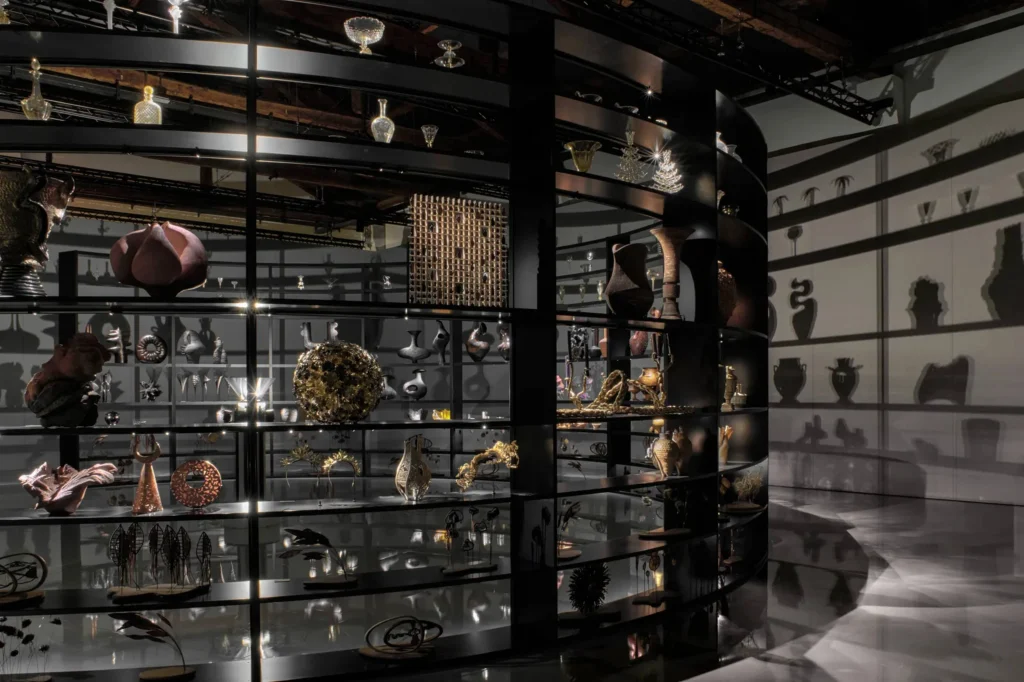
Venice is frequently described as a museum city, but Homo Faber places it in a more active conversation about contemporary production. The city’s historical connection to glass, textiles, metalwork, bookmaking and maritime craftsmanship gives the event a strong contextual foundation.
San Giorgio Maggiore is an ideal setting because it operates at multiple scales. From across the water, the island reads as part of Venice’s iconic skyline. Up close, it offers cloisters, gardens, corridors, and rooms that can support intimate encounters with objects and makers.
The exhibition’s global scope matters here. More than 500 participants from over 70 countries bring distinct techniques, local materials, and cultural histories into conversation. The result is not a claim that all craft is the same. It is an opportunity to recognize that material expertise develops through place.
A woven structure carries the climate, fiber supply, and social traditions of its origin. A ceramic object carries the chemistry of clay and firing. A piece of woodwork reflects local species, tools, and joinery traditions. In an era of increasingly standardized global interiors, these differences become a form of design value.
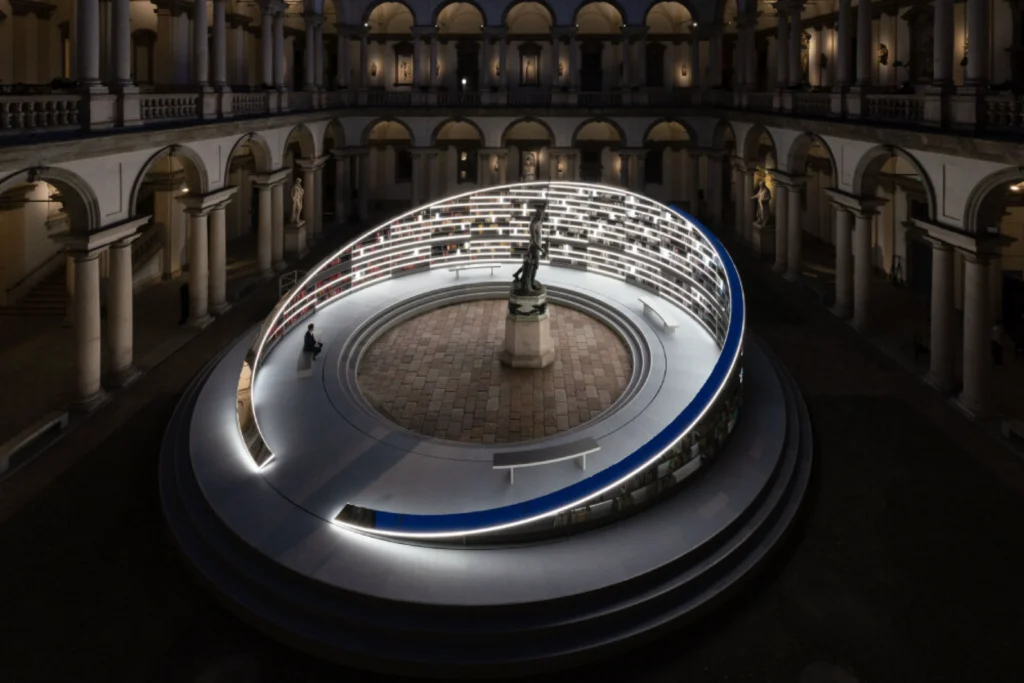
The exhibition does not position itself as a technology fair, yet it has clear relevance for advanced architecture and digital design.
It argues for material literacy. Designers should understand how a material behaves before asking it to perform computationally complex tasks. It highlights the value of variation. Craft does not treat inconsistency as failure. Controlled variation can create depth, identity, and visual richness.
It makes a case for slow knowledge. Craft processes are built through observation and repeated adjustment. In practice, this can improve early-stage prototyping, fabrication testing, and post-occupancy learning.
Homo Faber demonstrates the importance of curation. Data-rich design environments can produce an overwhelming number of options. Architecture needs frameworks that help people understand what deserves attention. Devlin’s installation sequence performs exactly that role.
Light reveals what software cannot
Homo Faber 2026 is not an argument against technology. It is an argument against shallow ideas of progress.
At An Island of Light, the hand is presented as a sophisticated design instrument. The 500 participating craft artists bring knowledge that exists in gesture, material memory, and the ability to make decisions at the scale of touch.
For architects and computational designers, the exhibition offers a productive challenge. The future of design will depend on faster tools, better simulations, and more capable fabrication systems. It will also depend on the ability to notice what those systems cannot automatically capture: texture, resistance, patience, error, light, and human judgment.
In Venice, Es Devlin has created a setting where these qualities become visible. The island does not simply display craft. It asks visitors to slow down enough to understand why craft still matters.