The UNESCO-UIA designation positions Beijing at the center of global architectural discourse, with computational design, adaptive reuse and human-centered technology shaping the 2029 agenda.
A global platform for equilibrium in the built environment
Beijing has been designated as the UNESCO-UIA World Capital of Architecture for 2029, a title awarded every three years to a city that hosts a year of architecture-focused programming aligned with the UIA World Congress of Architects. The announcement was made on August 5, 2026, following a recommendation from the Joint Committee for the World Capital of Architecture, chaired by architect Dominique Perrault.
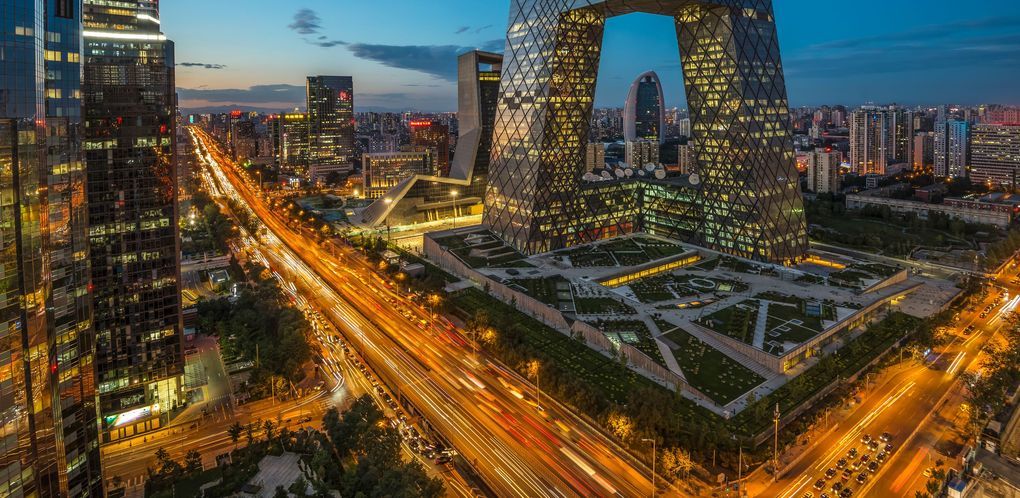
The designation recognizes Beijing’s capacity to integrate one of the world’s richest architectural heritages with a forward-looking vision of sustainable urban development. UNESCO highlighted the city’s historic urban fabric, successful regeneration projects and dynamic architectural culture as evidence of how heritage, innovation and community life can reinforce one another in shaping resilient and livable cities. Under the theme “Back to Balance,” Beijing 2029 will promote architecture as a bridge between culture, nature and people. The program will address three areas of equilibrium: balance between human and human through social coherence, balance between human and nature through environmental responsibility, and balance between human and technology through the humanization of digital tools.
For the parametric architecture and computational design community, this designation creates a significant opportunity. Beijing has become a testing ground for advanced digital workflows, from algorithmic form-finding to robotic fabrication and performance-driven envelope systems. The 2029 program is expected to include exhibitions, conferences, workshops and public events that explore how computational methods can support heritage conservation, ecological regeneration and socially responsive urbanism.
Computational design meets craft in Beijing’s recent projects
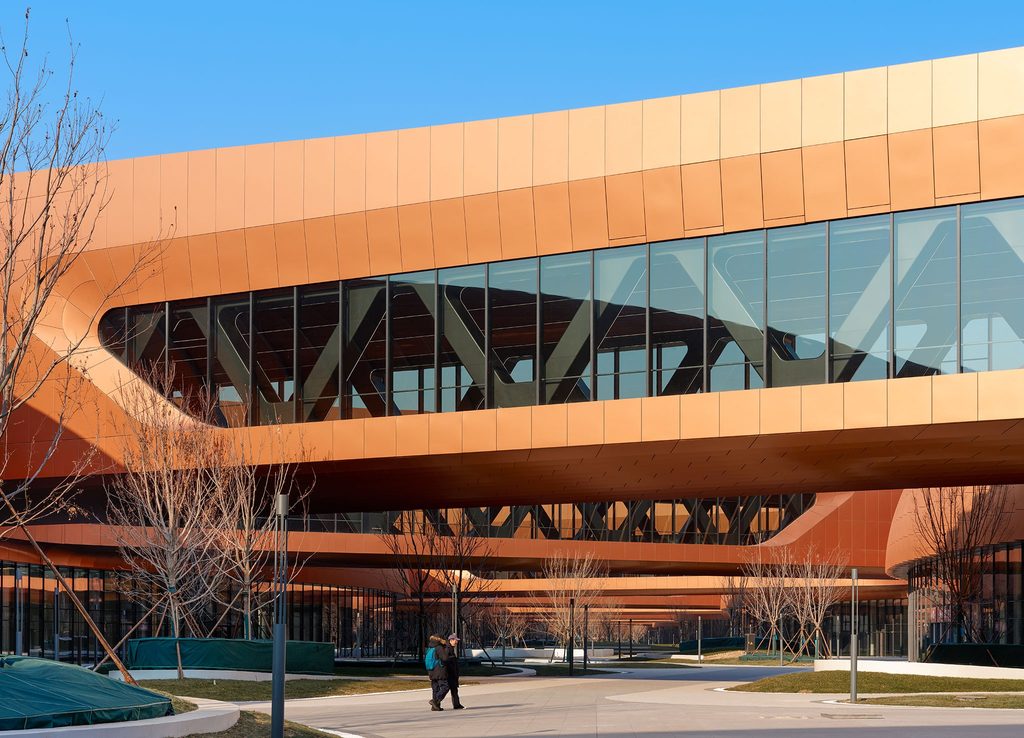
Beijing’s recent architectural landscape demonstrates how parametric modeling and digital fabrication are being integrated into both large-scale infrastructure and intimate urban interventions. Zaha Hadid Architects’ Capital International Exhibition and Convention Centre (CIECC), completed in 2025, exemplifies this approach. The project expands Beijing’s exhibition capacity to over 611,000 square meters with nine new halls, three reception spaces, a conference center for 9,000 delegates and a 410-room hotel.
The CIECC roof system uses symmetric parametric geometries to create an insulated, lightweight, large-span structure. The composite geometry allows column-free spaces that can be reconfigured quickly for different exhibition formats. The design depends on computational structural optimization to reduce material use while maintaining performance under variable loads.
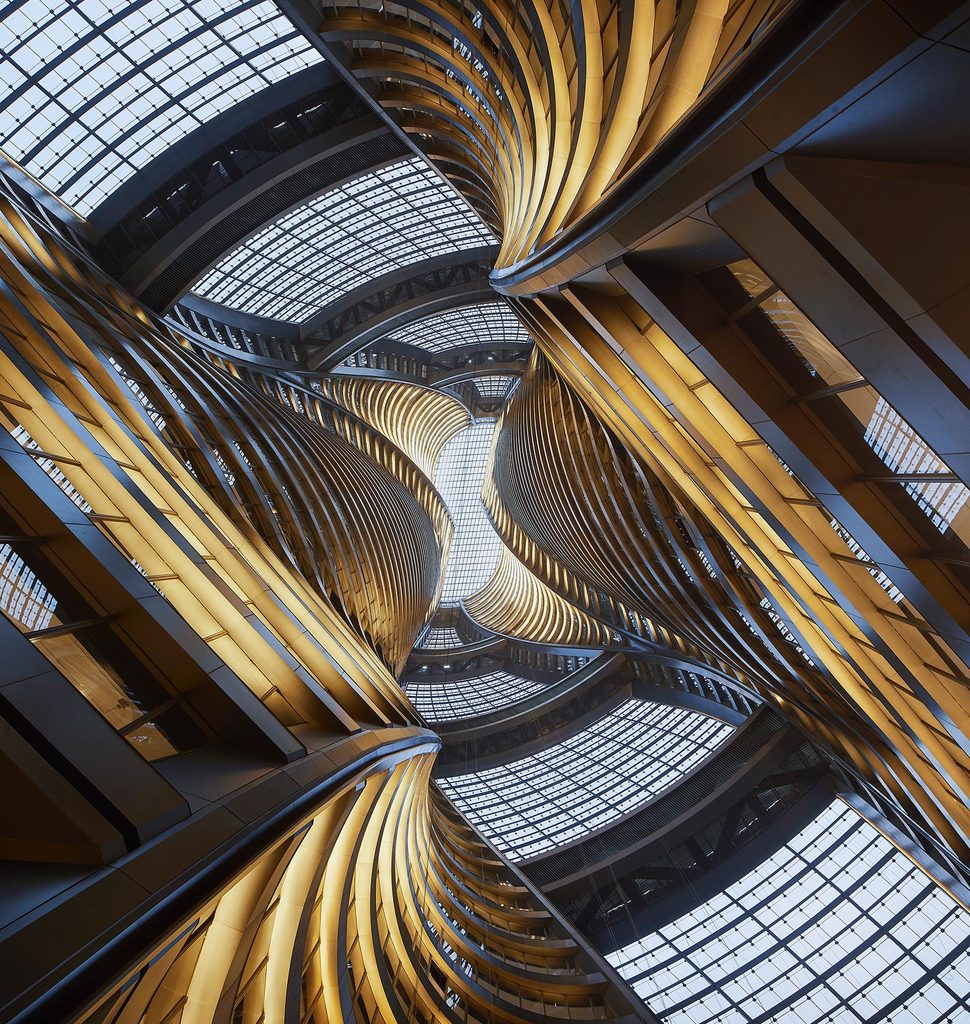
Leeza SOHO, another ZHA project in Beijing’s Fengtai business district, uses a twisted cylindrical volume to create a 190-meter atrium. The tower’s form emerges from parametric analysis of sightlines, structural efficiency and circulation patterns. The result is a continuous interior space that connects multiple programmatic levels through a single vertical void.
At a smaller scale, the Hermès Beijing flagship in Sanlitun demonstrates how computational design can merge with traditional craft. The five-story building features a porous ceramic veil designed by Mamou-Mani in collaboration with RDAI. The facade uses modular ceramic components arranged in a rhythmic parametric pattern. Curved elements were produced through 3D-printed positives used to create molds, bringing digital fabrication into a material language associated with handcraft.
The project shows how parametric modeling can generate complex surface patterns while maintaining practical logic. Removable panels allow maintenance and replacement, giving the facade a functional dimension beyond its ornamental role. The final expression depends on ceramic weight, glaze, shadow and repetition, creating a dialogue between algorithmic precision and material variability.
Heritage, technology and the road to 2029
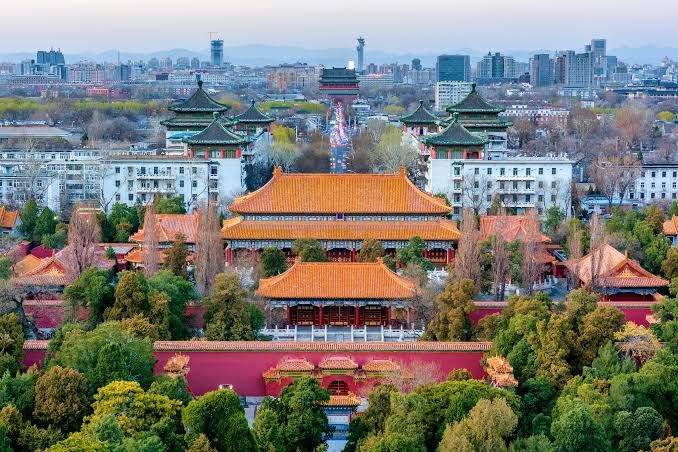
Beijing’s Central Axis, a UNESCO World Heritage site, provides another context where computational tools support conservation and adaptive reuse. The axis integrates imperial palaces, temples, markets and residential quarters into a continuous urban sequence. Digital scanning, parametric modeling and performance simulation are being used to document historic structures, analyze environmental conditions and propose interventions that respect existing fabric while introducing contemporary functions.
The “Back to Balance” theme resonates with ongoing shifts in Chinese urban policy. Cities are moving away from purely growth-driven development toward models that prioritize ecological restoration, cultural continuity and social equity. Parametric architecture can contribute to this transition by enabling performance-driven design, optimizing material use and creating responsive environments that adapt to changing conditions.
Leading practices in Beijing and beyond are already exploring these directions. MAD Architects’ recent projects, including the Shenzhen Bay Culture Square, use rolling green roofs and porous public galleries to blur boundaries between landscape, architecture, and civic space. Computational tools help coordinate complex geometries, structural systems and environmental strategies across large sites.
The 2029 World Congress of Architects will provide a global platform for discussing these approaches. Topics are expected to include digital twins for heritage management, robotic fabrication for low-carbon construction, AI-assisted design workflows and participatory modeling tools that engage communities in the design process. The congress aims to examine how the built environment can be designed in harmony with technology and society, addressing the global anticipation of restoring balance in a rapidly evolving world.
Beijing’s designation as World Capital of Architecture 2029 therefore represents more than a symbolic honor. It establishes a framework for advancing parametric architecture, computational design and digital fabrication within a context that values heritage, ecology and human experience. The city’s projects demonstrate that advanced technology and cultural continuity can coexist, creating a model for other metropolitan regions seeking to balance innovation with responsibility.