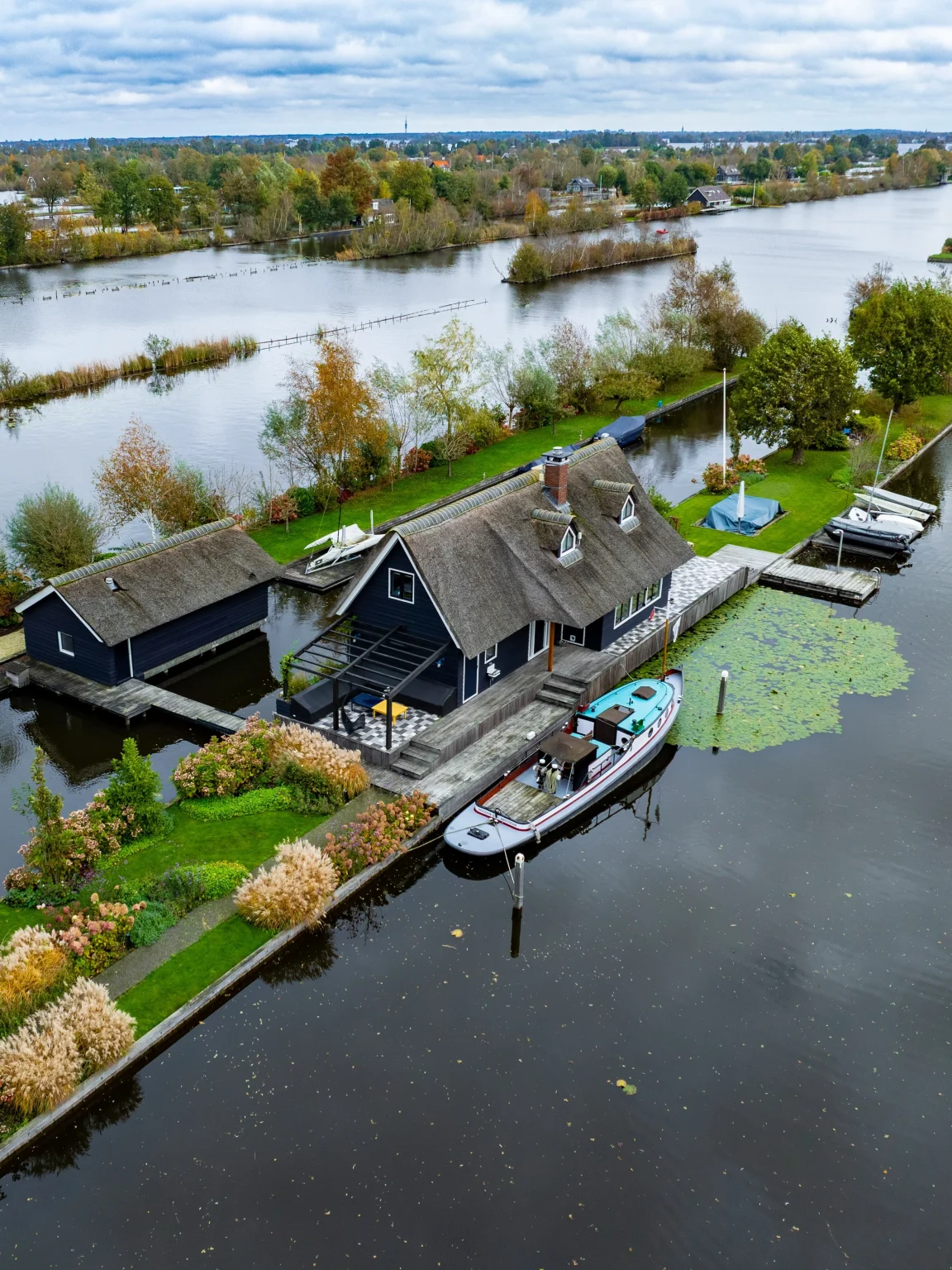


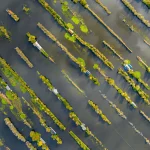
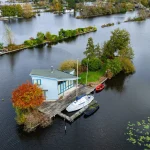
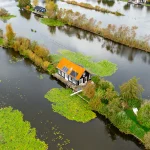
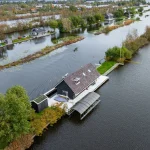
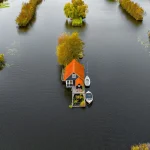
What appears to be an AI-generated landscape has become one of the internet’s latest architectural fascinations. Aerial photographs of hundreds of homes perched on impossibly narrow strips of land in the Loosdrecht Lakes, Netherlands, have gone viral across social media, leaving viewers wondering how such an unusual settlement could exist. Yet these extraordinary waterfront homes are not a modern design experiment; they are the legacy of centuries-old landscape engineering that transformed an industrial landscape into one of the Netherlands’ most distinctive residential environments.
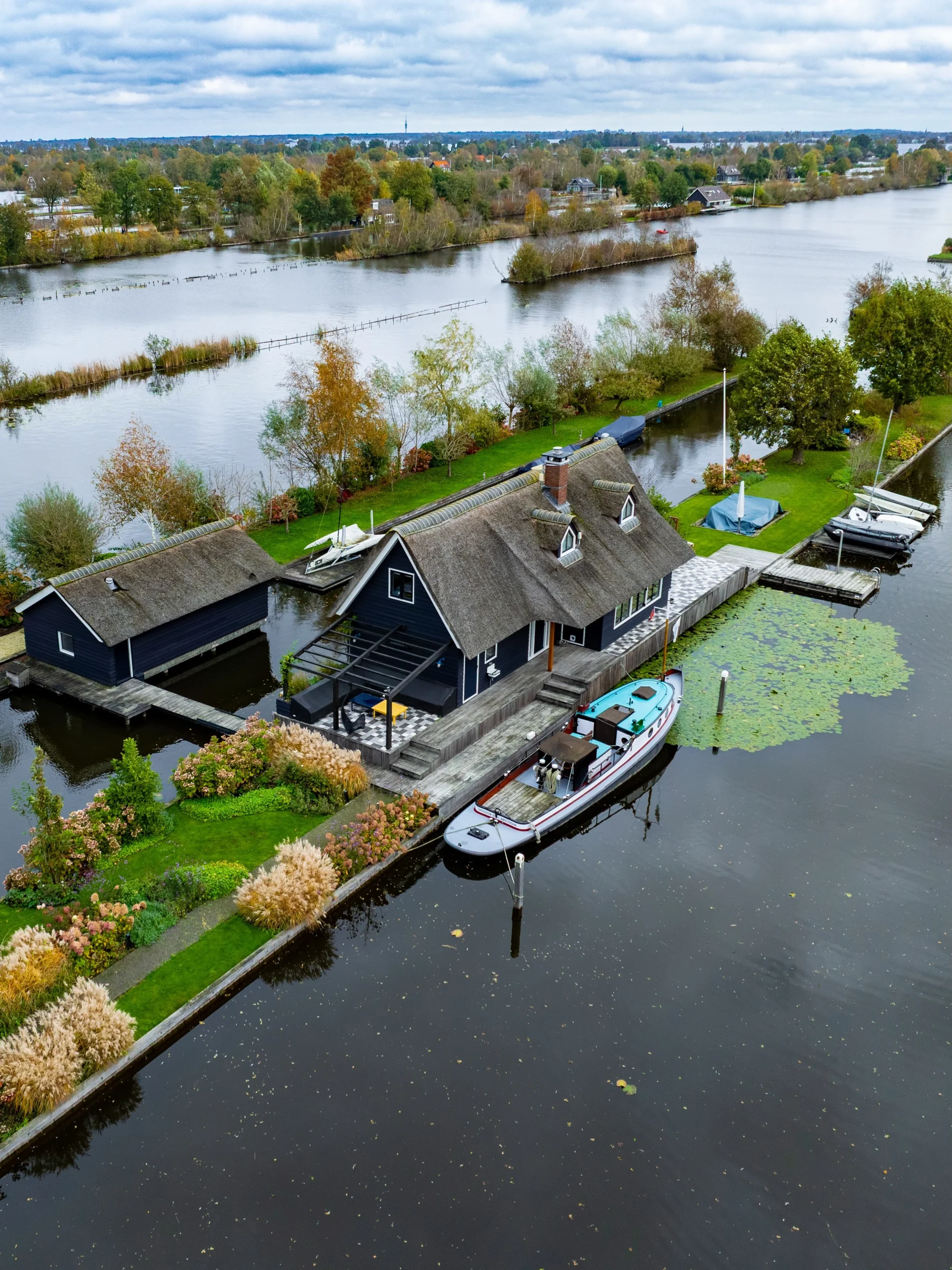
Nestled southeast of Amsterdam, the Loosdrecht Lakes reveal a uniquely Dutch approach to inhabiting water. Instead of resisting it, residents have embraced it, creating a settlement where narrow islands serve as both gardens and foundations for homes, while canals function as streets and boats often replace cars.
A Landscape Shaped by Peat Mining
The story of the Loosdrecht Lakes begins in the Middle Ages, when peat extraction became a major industry across the Netherlands. Peat, harvested as fuel, was cut from vast wetlands, leaving long excavated trenches separated by narrow embankments.
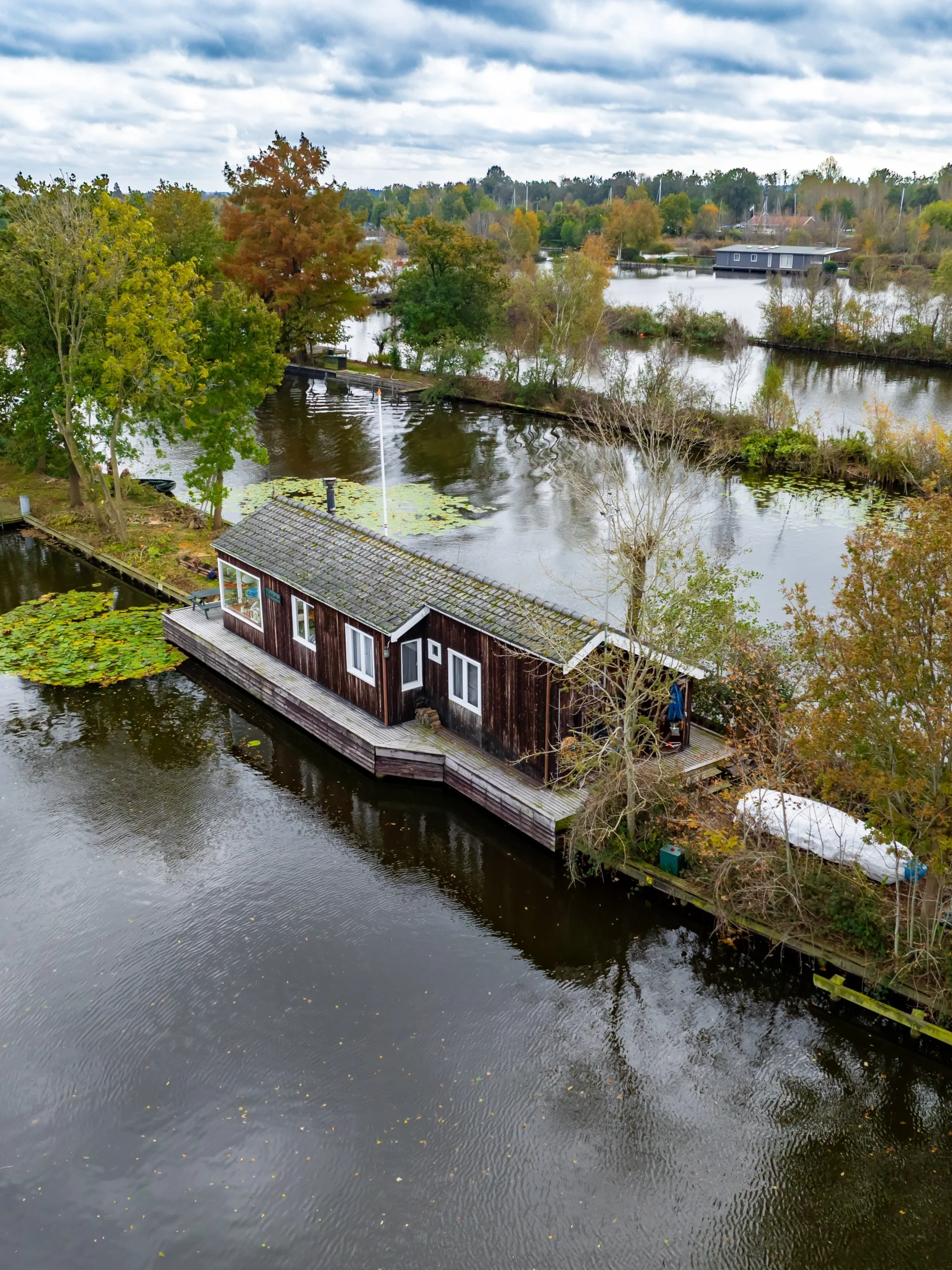
Over centuries, these excavated areas gradually filled with water through rainfall, groundwater, and natural flooding. What remained were elongated strips of land surrounded by interconnected lakes, an accidental landscape that would later become one of the country’s most sought-after recreational and residential destinations.
Instead of reclaiming the water completely, the Dutch adapted to this transformed terrain, allowing settlement patterns to evolve around its unique geography.
Living on Strips of Land
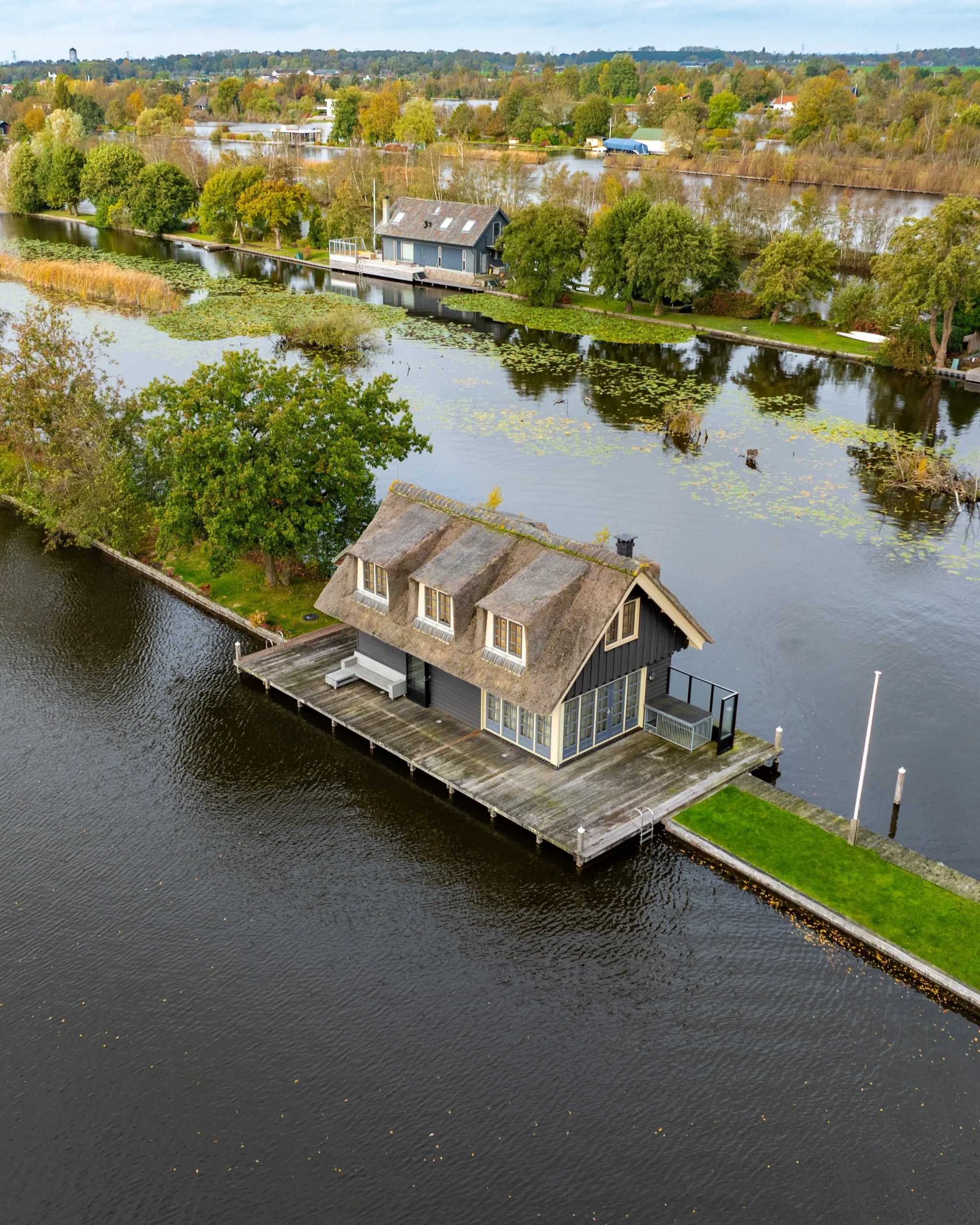
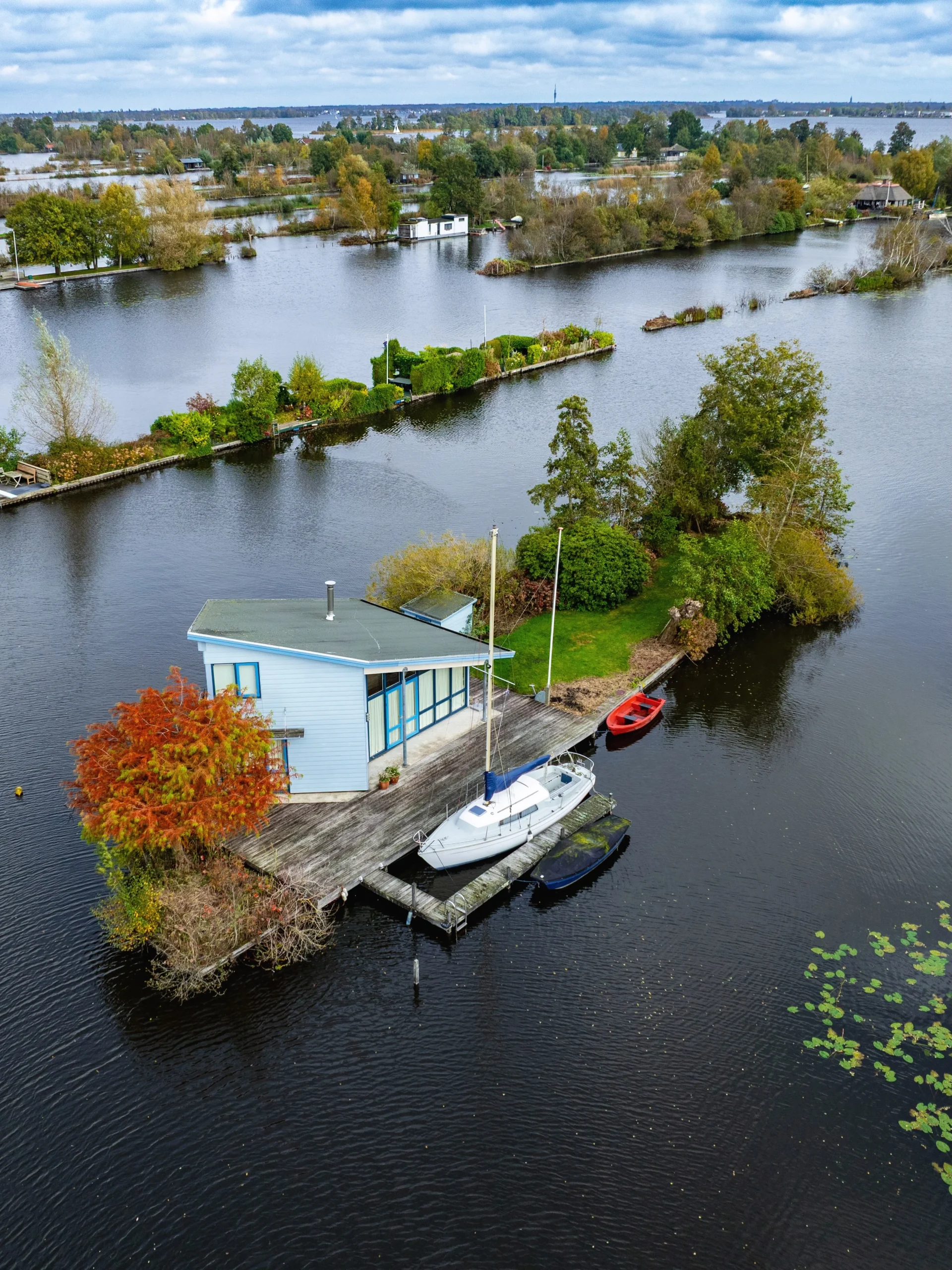
Unlike conventional suburban neighborhoods organized around roads, the houses of the Loosdrecht Lakes occupy exceptionally narrow plots, many only a few meters wide but extending deep into the water. Their elongated footprints reflect the historic geometry of the former peat fields.
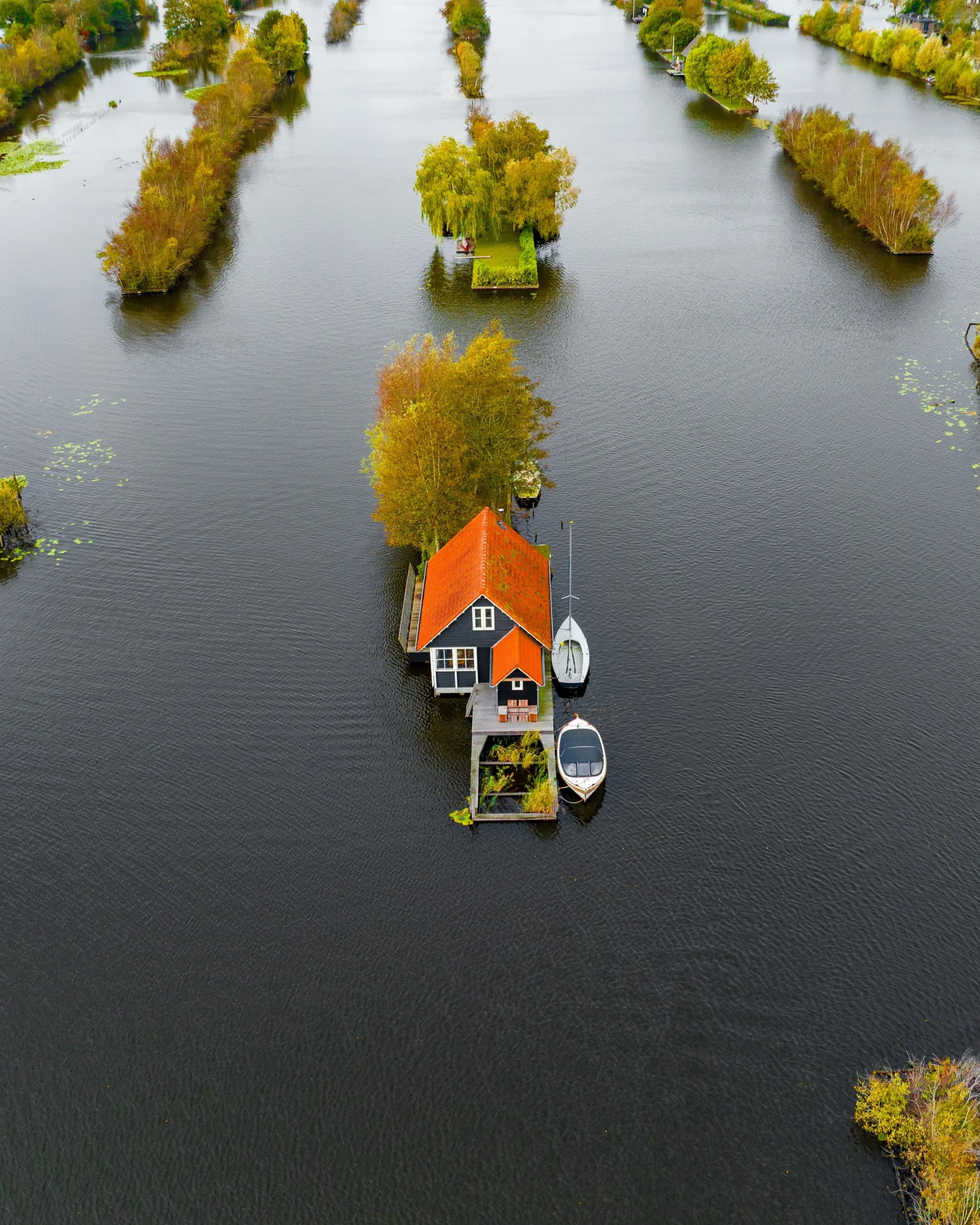
Architecture here is defined by adaptation. Homes are carefully positioned to maximize lake views while preserving outdoor space despite limited land width. Large glazed facades, timber decks, private jetties, and boat docks become natural extensions of daily life.
The result is a housing typology where the relationship between architecture and landscape is inseparable. Buildings do not dominate the environment; instead, they fit within a centuries-old pattern established long before residential development began.
Water as Infrastructure
One of the most distinctive characteristics of the Loosdrecht Lakes is that water functions as both landscape and infrastructure.
Many homes are accessed directly by boat, with canals serving the role typically played by streets. Private docks replace driveways, while sailing boats, kayaks, and small electric vessels are integrated into everyday mobility.
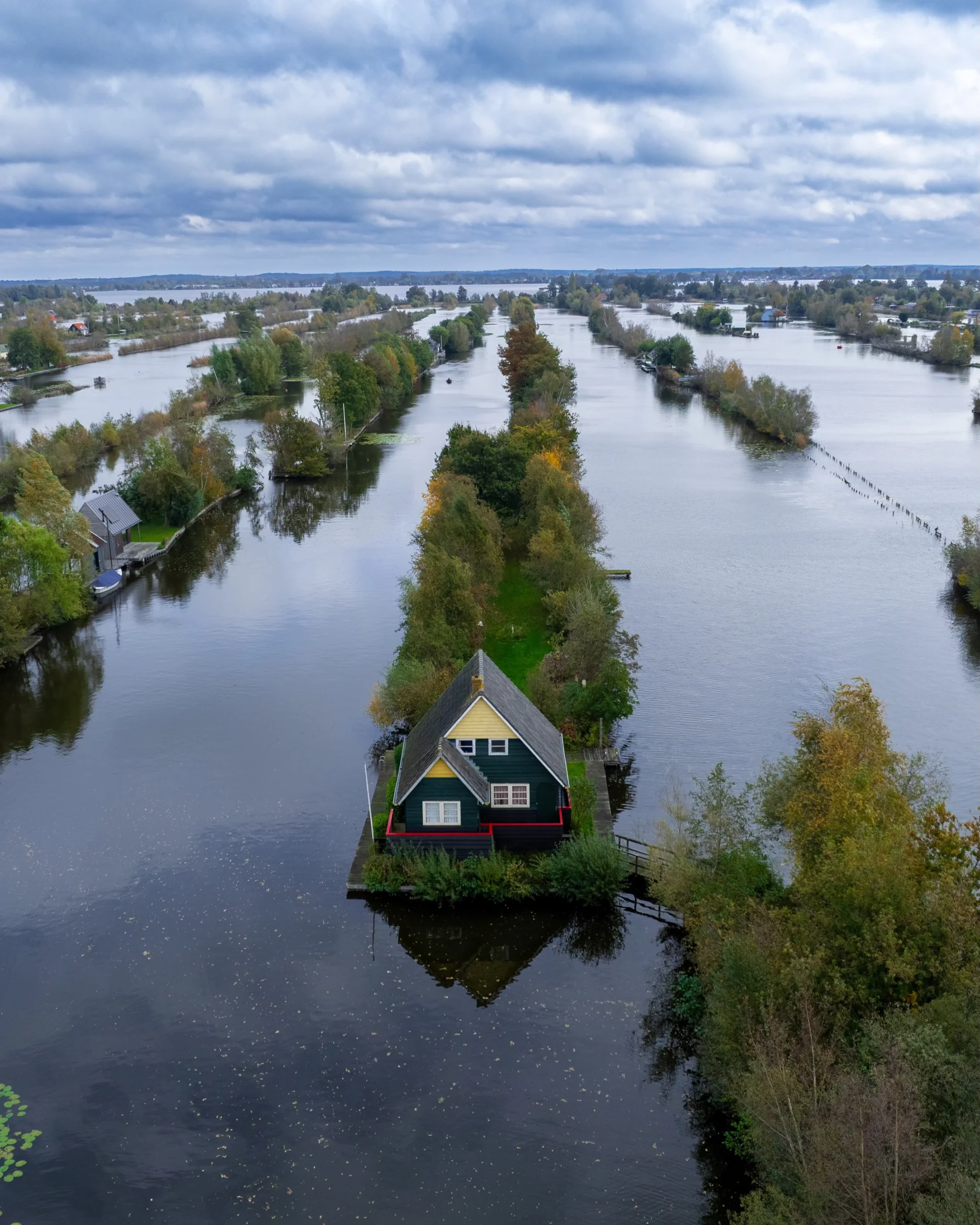
This relationship fundamentally changes the experience of housing. The transition between private and public space occurs across water rather than pavement, creating a quieter, slower rhythm of life that has become synonymous with Dutch waterside living.
Architecture That Works With Nature
The viral images resonate because they represent a broader architectural philosophy that is increasingly relevant today: designing with natural systems. The settlement evolved by respecting existing hydrological conditions. The narrow islands remain largely intact, while vegetation, waterways, and built form coexist within a delicate ecological balance.
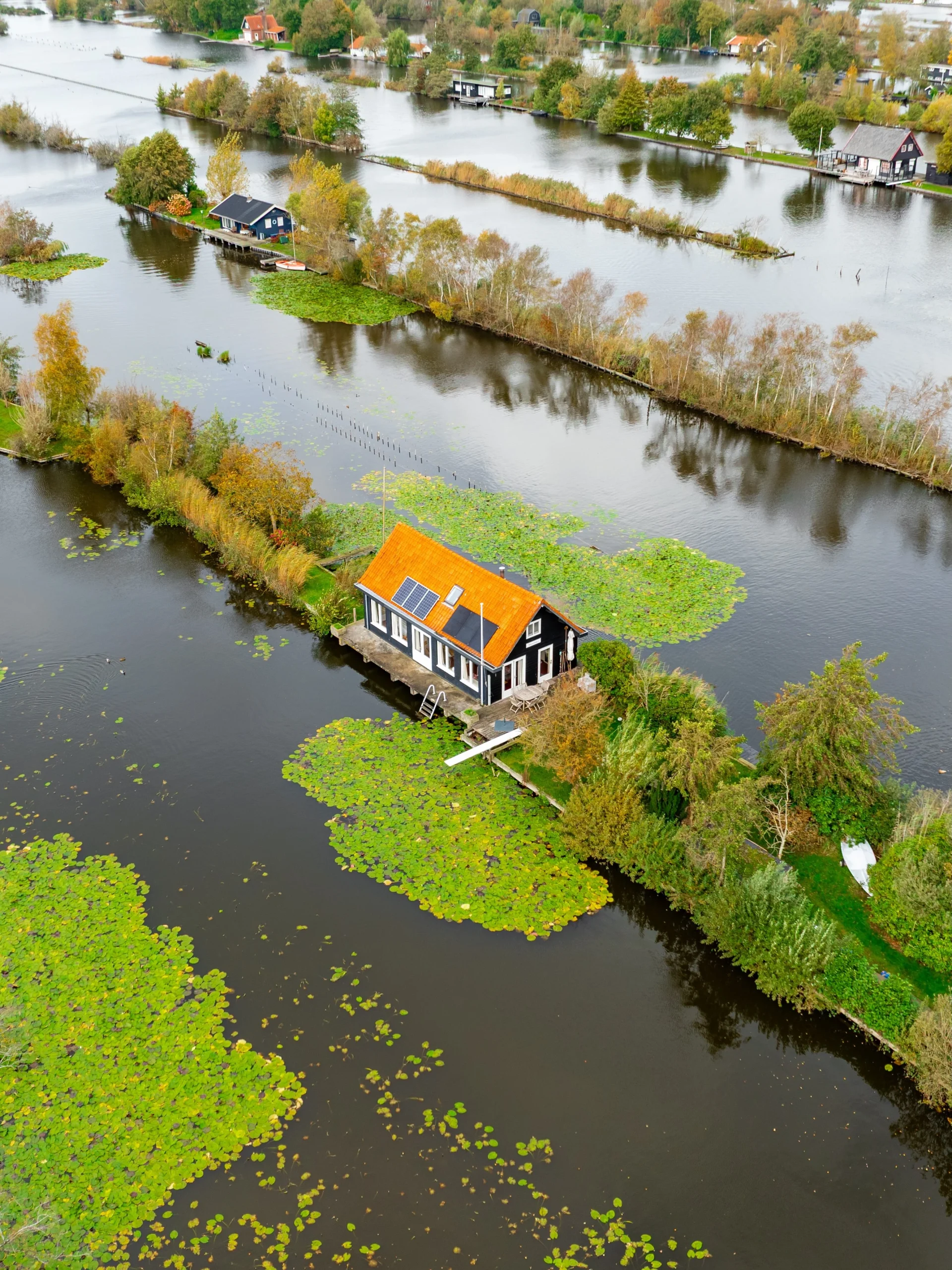
This approach reflects a long-standing Dutch tradition of water-sensitive planning, where engineering, landscape design, and architecture work together to accommodate changing environmental conditions.
Why the Loosdrecht Lakes Have Captivated the Internet
Beyond their striking aerial appearance, the Loosdrecht Lakes embody a rare example of landscape history directly shaping contemporary architecture. Every narrow island tells the story of medieval peat extraction, while every waterfront house demonstrates how historical landforms can inspire new ways of living.
In an era increasingly defined by climate adaptation and rising water levels, these centuries-old settlements offer more than picturesque scenery. They illustrate how communities can transform industrial scars into resilient residential landscapes, where architecture is guided by geography rather than imposed upon it.
The viral fascination surrounding the Loosdrecht Lakes is therefore about more than unusual houses. It is a reminder that some of the world’s most remarkable architectural environments emerge not from iconic buildings alone, but from generations of people learning to live in harmony with the landscapes they inherit.
Image credit: @erikkruug