

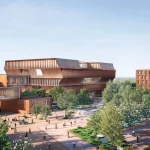
For decades, the former Walmart Home Office site in Bentonville, Arkansas, symbolized the rise of one of the world’s largest corporations. Soon, the same ground will host a very different institution. Designed by BIG – Bjarke Ingels Group in collaboration with Polk Stanley Wilcox Architects, STEM University proposes not merely a collection of academic buildings but an entirely new urban district where education, research, fabrication, and public life intersect. The project marks one of the rare instances in contemporary America where a completely new university is being established from the ground up.
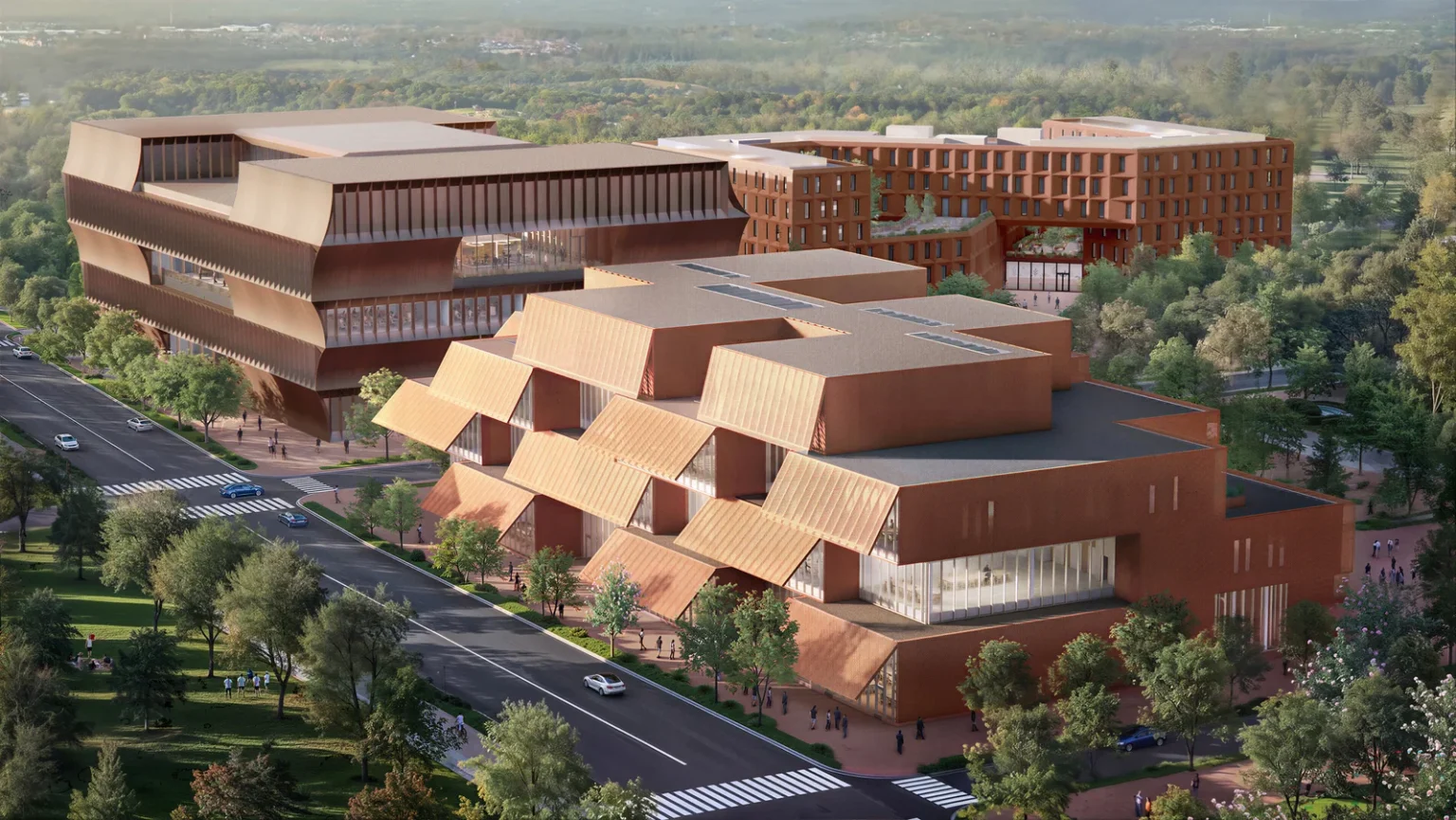
Spread across approximately 422,000 square feet (39,240 square meters), STEM University occupies two city blocks near downtown Bentonville. The campus has been designed as an extension of the city itself. Public plazas, landscaped corridors, and pedestrian connections stitch the development into the surrounding urban fabric, dissolving the boundary between campus and community.
Reworking a Historic Corridor into Campus Life
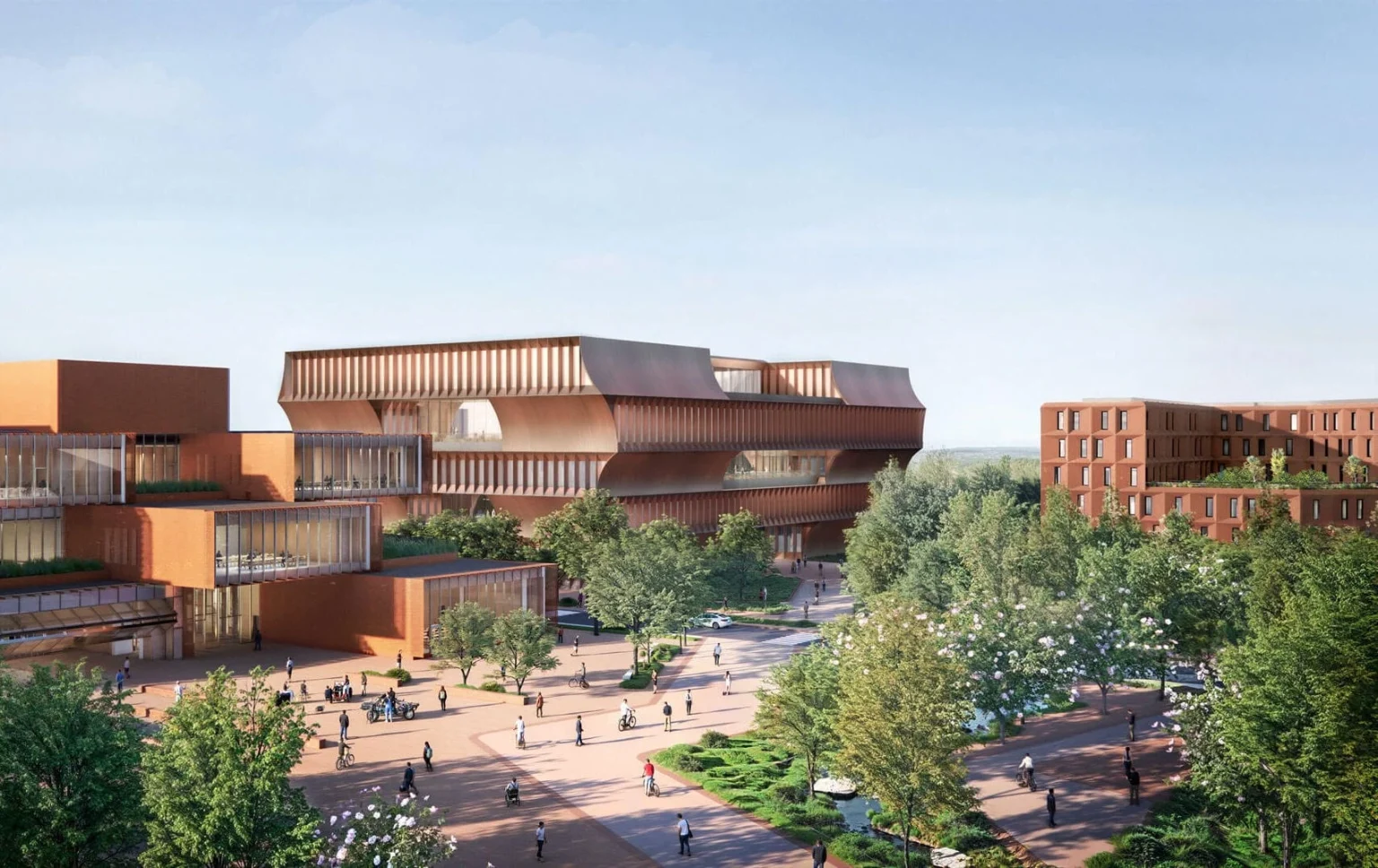
The master plan is organized around a former rail corridor that once cut diagonally across the site. Instead of erasing this piece of local infrastructure, BIG uses it as the project’s spatial backbone. The route becomes a sequence of green public spaces linking downtown Bentonville to Gateway Park while guiding movement through the campus.
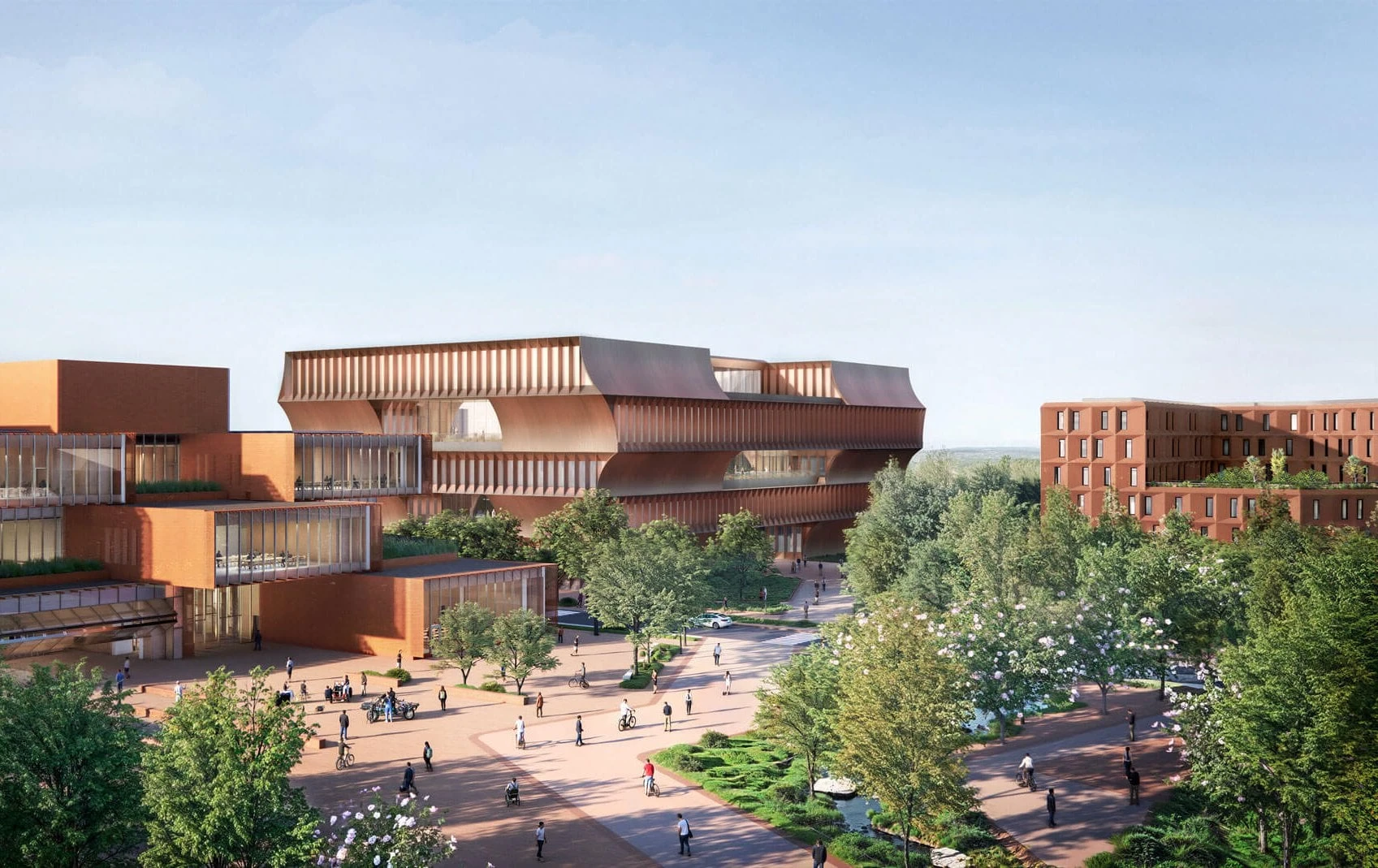
This decision reveals one of the most compelling aspects of STEM University. The project grows from existing patterns of movement and landscape. Inspired by the Ozark region’s network of parks and open spaces, the campus introduces outdoor gathering areas that blur distinctions between students, faculty, residents, and visitors.
Three Buildings, Three Forms of Learning
At the STEM University, there are three distinct buildings, each dedicated to a different dimension of campus life: making, learning, and living. BIG gives each structure its own material identity and spatial logic while maintaining cohesion through scale, color, and public space.
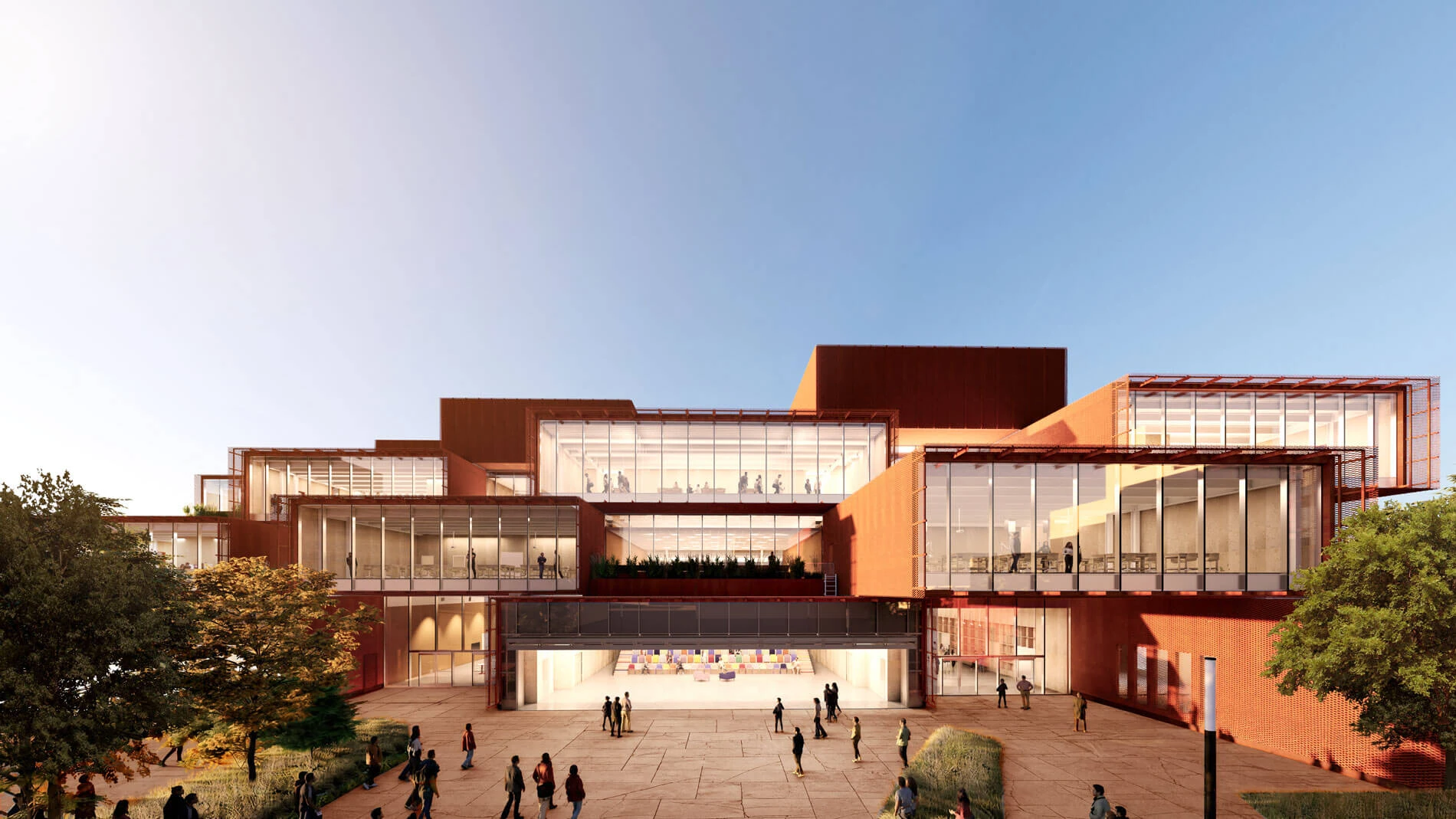
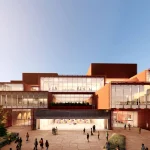
The first is a 130,614-square-foot makerspace envisioned as the university’s innovation hub. Wrapped in weathering Corten steel, the building is composed of stacked and offset volumes that create terraces, voids, and visual connections. Workshops, laboratories, and fabrication spaces are intentionally exposed through large glazed surfaces, allowing the work of students and researchers to become visible from the street. In many ways, the makerspace functions as a public exhibition of experimentation rather than a closed technical facility.
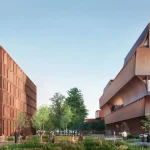
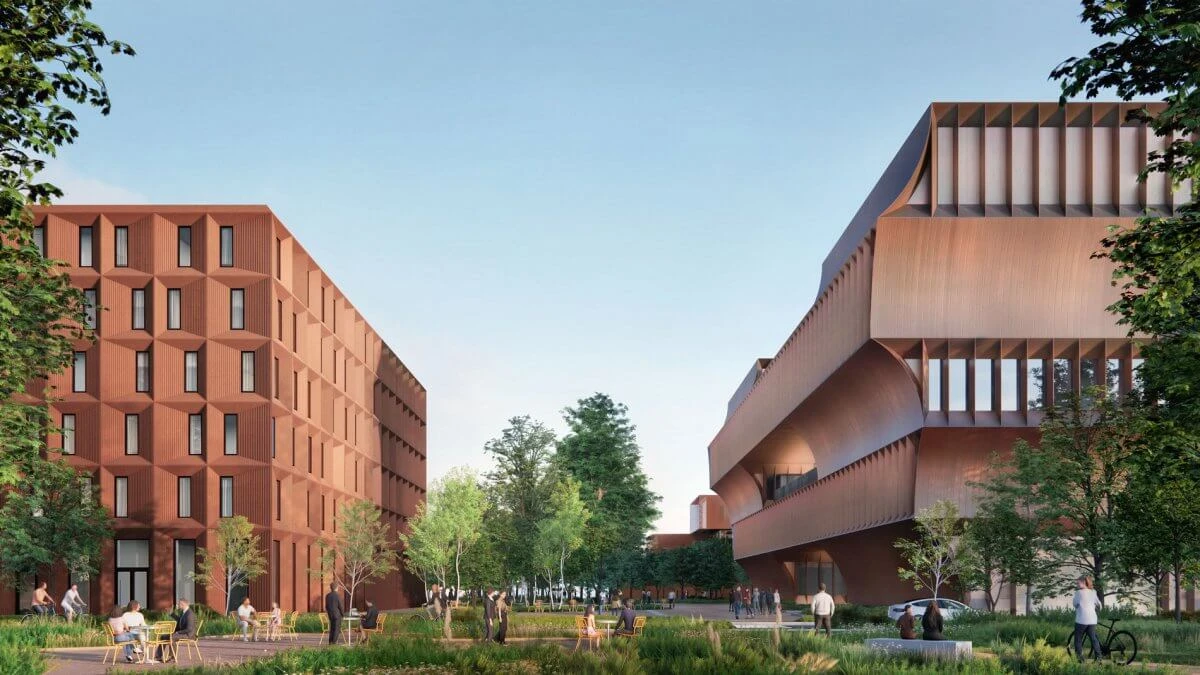
Across the street sits the 147,525-square-foot academic building. Here, BIG draws from Ozark vernacular architecture, particularly the “dogtrot” house typology known for its breezeways and climate-responsive organization. The building is formed by stacked bars that alternate direction floor by floor, generating terraces, internal connections, and a central atrium filled with daylight. The arrangement encourages encounters between disciplines while reducing the sense of departmental isolation often found in university buildings.
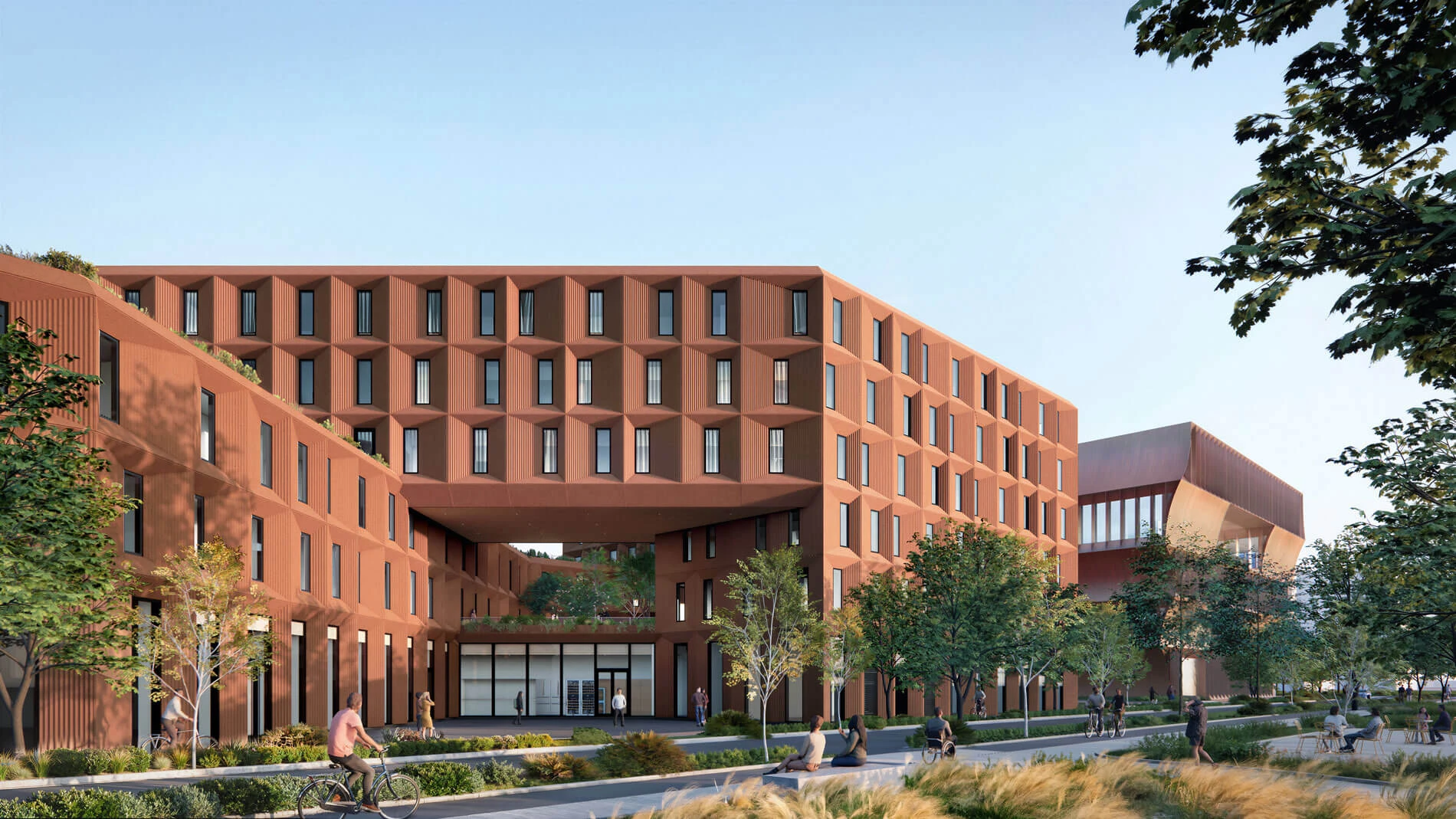
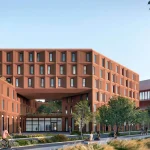
Completing the trio is a 400-bed student residence organized as a figure eight. The building carves out two elevated courtyards above communal amenities and dining spaces. One courtyard captures morning light while the other receives afternoon sun, ensuring the outdoor space remains active throughout the day. The circulation strategy channels movement through a shared core, creating opportunities for informal interaction among residents.
Architecture Shaped by the Ozarks
While the project embraces contemporary forms, its material palette is deeply tied to Northwest Arkansas. The makerspace uses weathering steel that will gradually develop a patina, echoing the region’s industrial heritage. The academic building adopts a copper-toned metal façade inspired by the interlocking timber construction of traditional log structures. The residence hall is finished with red-hued cement panels that relate to the earthy colors of the surrounding landscape.
This emphasis on regional identity distinguishes STEM University from many technology-focused campuses that rely on generic glass-and-steel aesthetics. BIG frames scientific and technological education within a specific cultural and environmental context.
An Academic Quarter for Bentonville
Perhaps the most significant aspect of STEM University is its rejection of the traditional campus boundary. The makerspace opens research and fabrication to public view. Terraces and plazas function as civic spaces. Landscape becomes infrastructure, connecting neighborhoods. The project suggests that universities can operate less as self-contained institutions and more as active participants in urban life.
Scheduled to welcome its first class in 2029, STEM University represents a broader transformation underway in Bentonville, where cultural, educational, and architectural investments are increasingly shaping the city’s identity beyond its corporate roots. On the site where Walmart once managed a retail empire, BIG’s new campus proposes a different kind of production: the creation of knowledge, experimentation, and future talent.
Image credit: BIG