



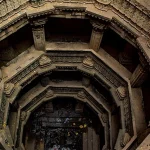
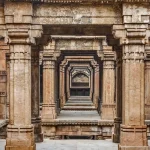
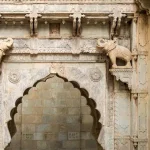
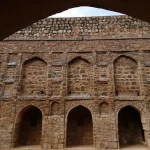
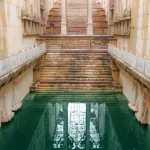
Some of India’s most remarkable structures do not rise above ground but descend into it. Stepwells emerged from the need to access water in regions where rivers dried up and seasons were unpredictable, pushing builders to follow water underground. Over time, these structures evolved beyond utility into elaborately carved galleries of stone, pillars, and descending corridors.
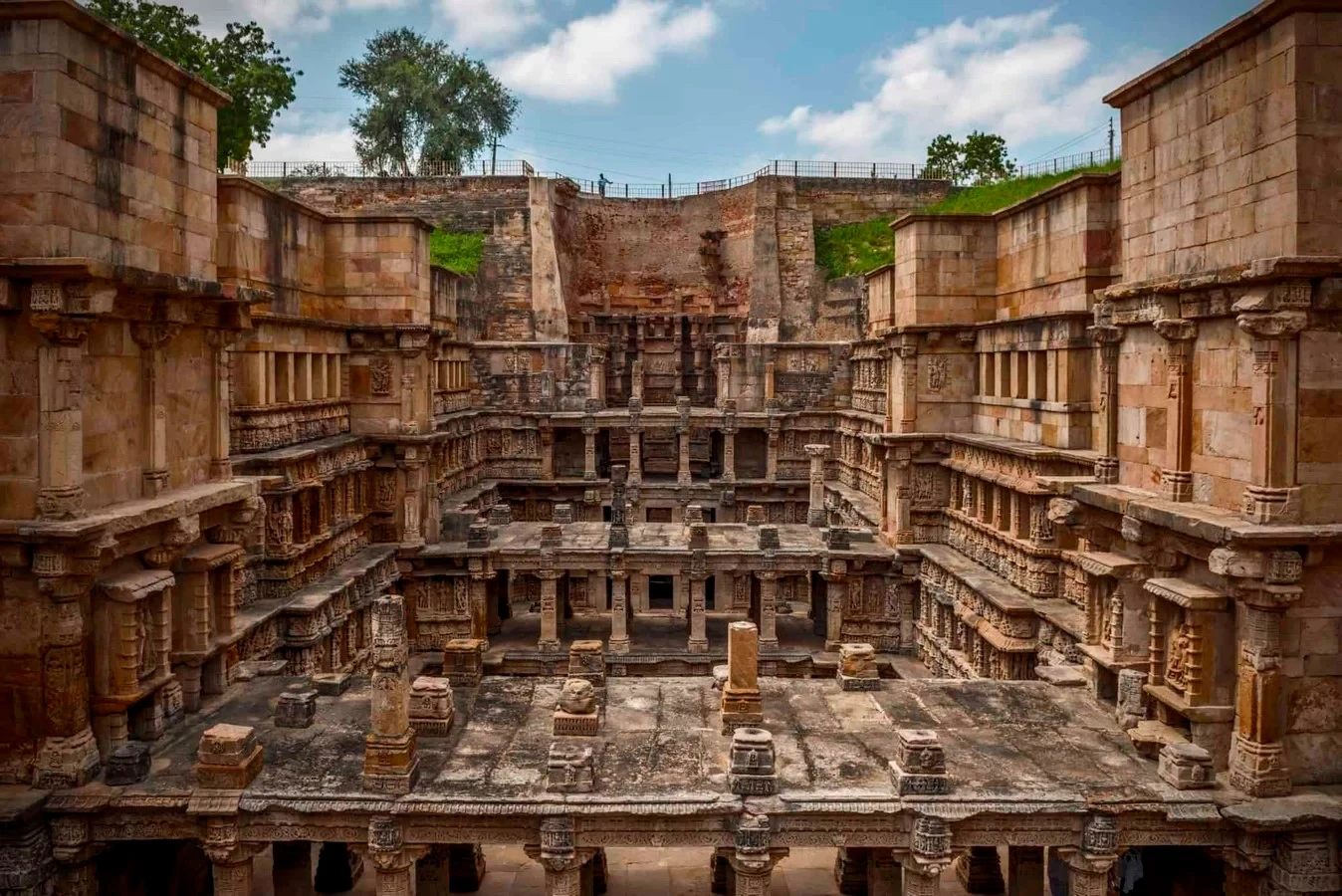
At Rani ki Vav, builders carved the stepwell downward in tiers, while in Dada Harir Vav, every step pulls visitors into cooler air and narrower passages. Across stepwells, stepped corridors, and pillared hallways, craftsmen covered the walls with intricate figures, animal motifs, and devotional imagery.
What is Baoli?
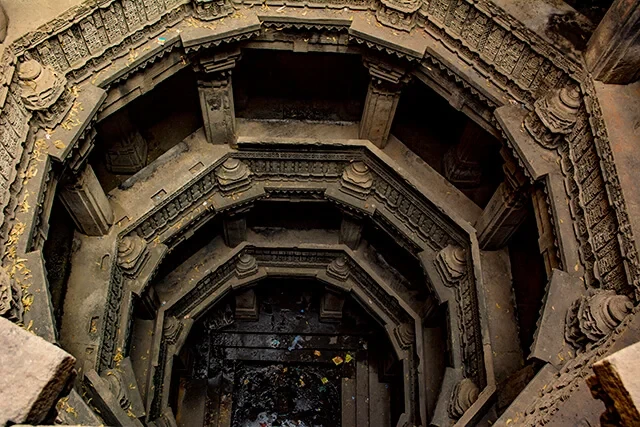
A baoli, also known as a vav, bawdi, or baori, is a stepwell with a series of steps descending to the water. Unlike traditional wells, which require lifting water, it allows direct access to water as levels rise and fall seasonally. Historians trace baolis back to the Indus Valley Civilization, where people used them for drinking, bathing, and performing religious ceremonies.
1. Rani ki Vav
Location: Patan, Gujarat
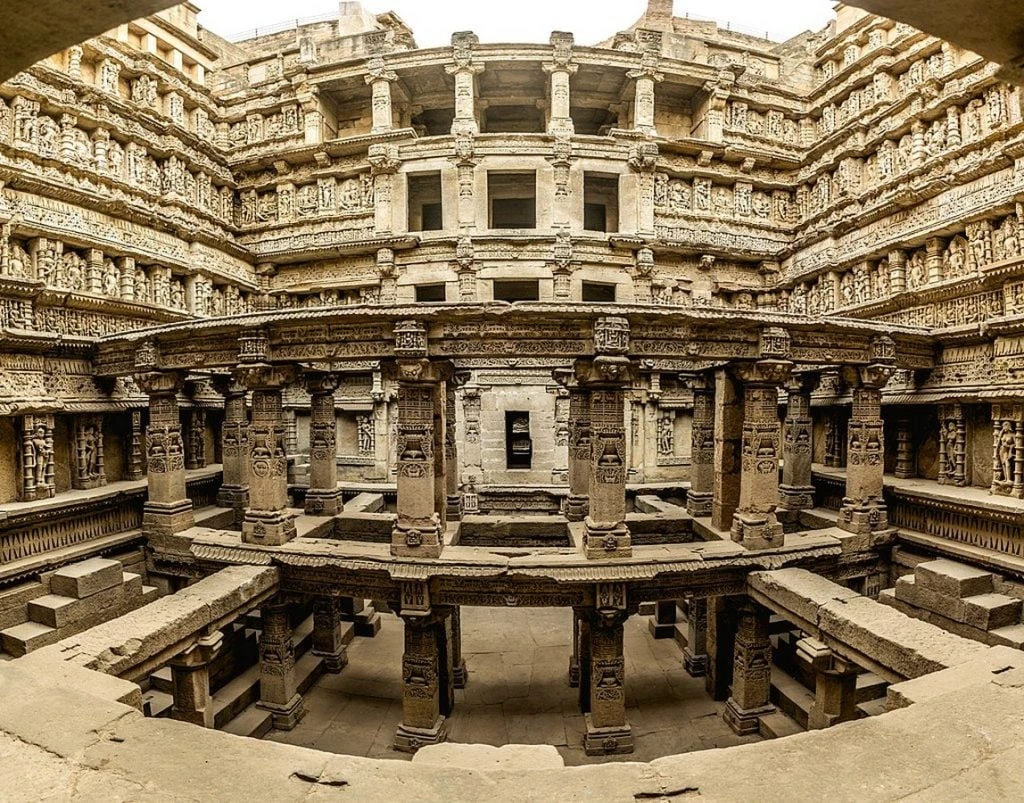
Rani ki Vav is the only UNESCO-listed stepwell in India, built on the banks of the Saraswati River. Queen Udayamati commissioned it in memory of King Bhima I of the Chaulukya dynasty. Architects designed it in the Maru-Gurjara style and created it as an inverted temple with seven floors and five stories.
As visitors descend, they see more than 800 sculptures of Vishnu’s Dashavatara, apsaras, and Vedic deities displayed on its pillars and walls. It’s also remarkable to note that floodwaters from the Sabarmati River buried it under silt for centuries until archaeologists rediscovered it in the 1980s.
2. Chand Baori
Location: Abhaneri, Rajasthan
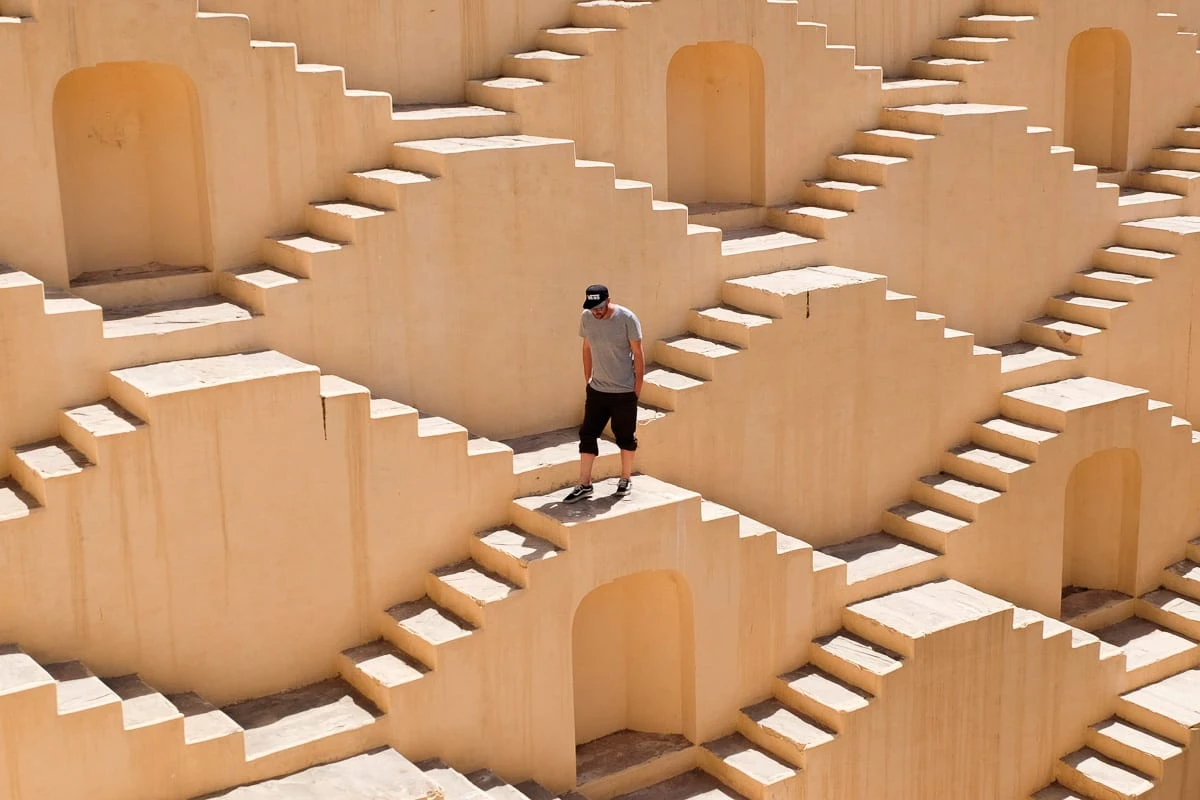
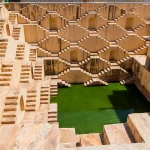
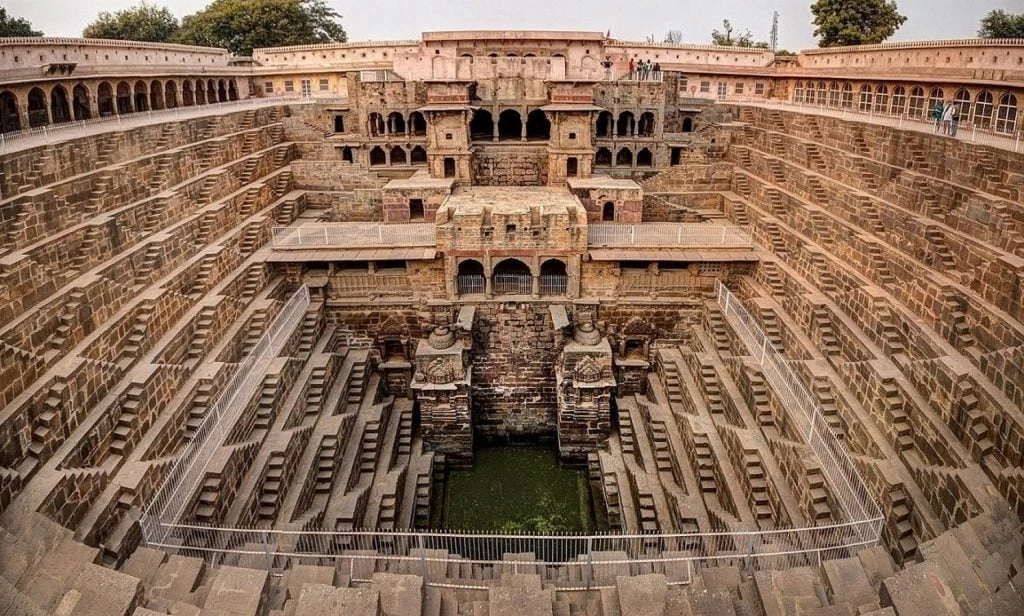
King Chanda of the Nikumbh dynasty constructed Chand Baori in the ninth century to combat water scarcity in drought-prone Abhaneri. It is one of India’s deepest stepwells, featuring 13 levels and almost 3,500 perfectly symmetrical stairs descending nearly 20 meters.
This stepwell dedicated to Goddess Harshat Mata stood beside her temple and served ritual and social purposes. Its remarkable geometry has also attracted global notice, with Hollywood filmmakers using it in their films.
3. Raniji ki Baori
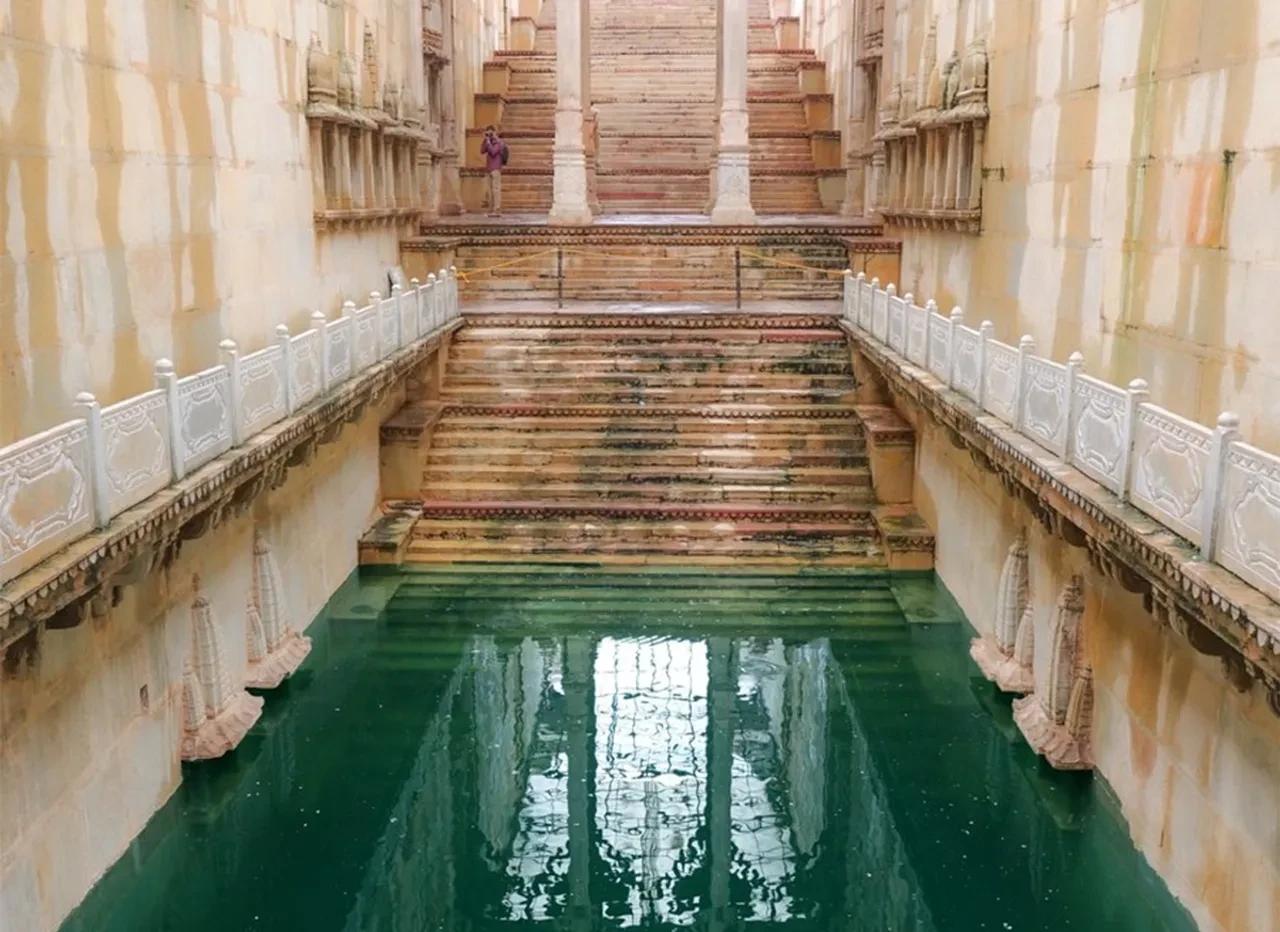
Location: Bundi, Rajasthan
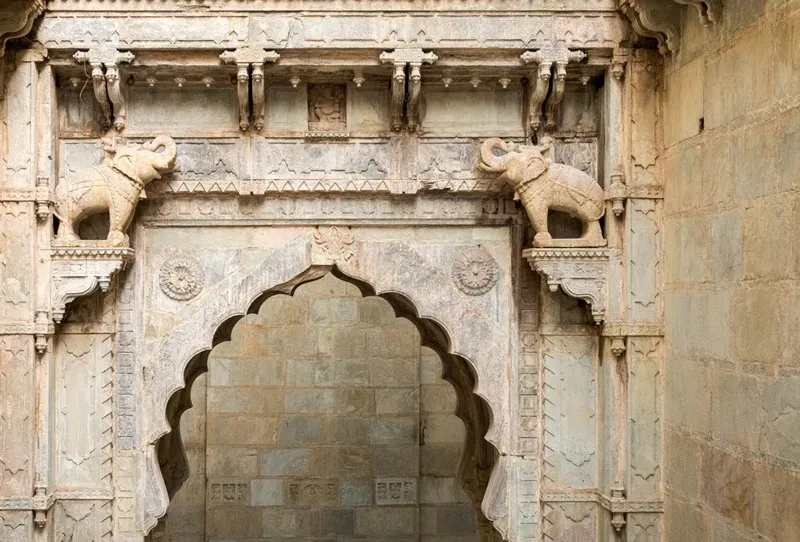
Queen Nathavati built Raniji ki Baori, one of Bundi’s finest stepwells, in 1699 CE. It depicts the magnificence of Hindu Rajput architecture and descends 46 meters with multi-storied corridors and temples on three floors.
Its entry is through a narrow doorway with intricately carved pillars and stone elephant motifs at the corners, which appear to be drinking from the well. Along with this, it has three arched gateways, with the final gate carrying carvings on all four sides. This stepwell’s walls feature temple-like carvings of Vishnu’s avatars, Ganesha, Saraswati, and Gajendra Moksh, while its entrance has inscriptions detailing the Hada rulers’ lineage.
4. Pushkarani
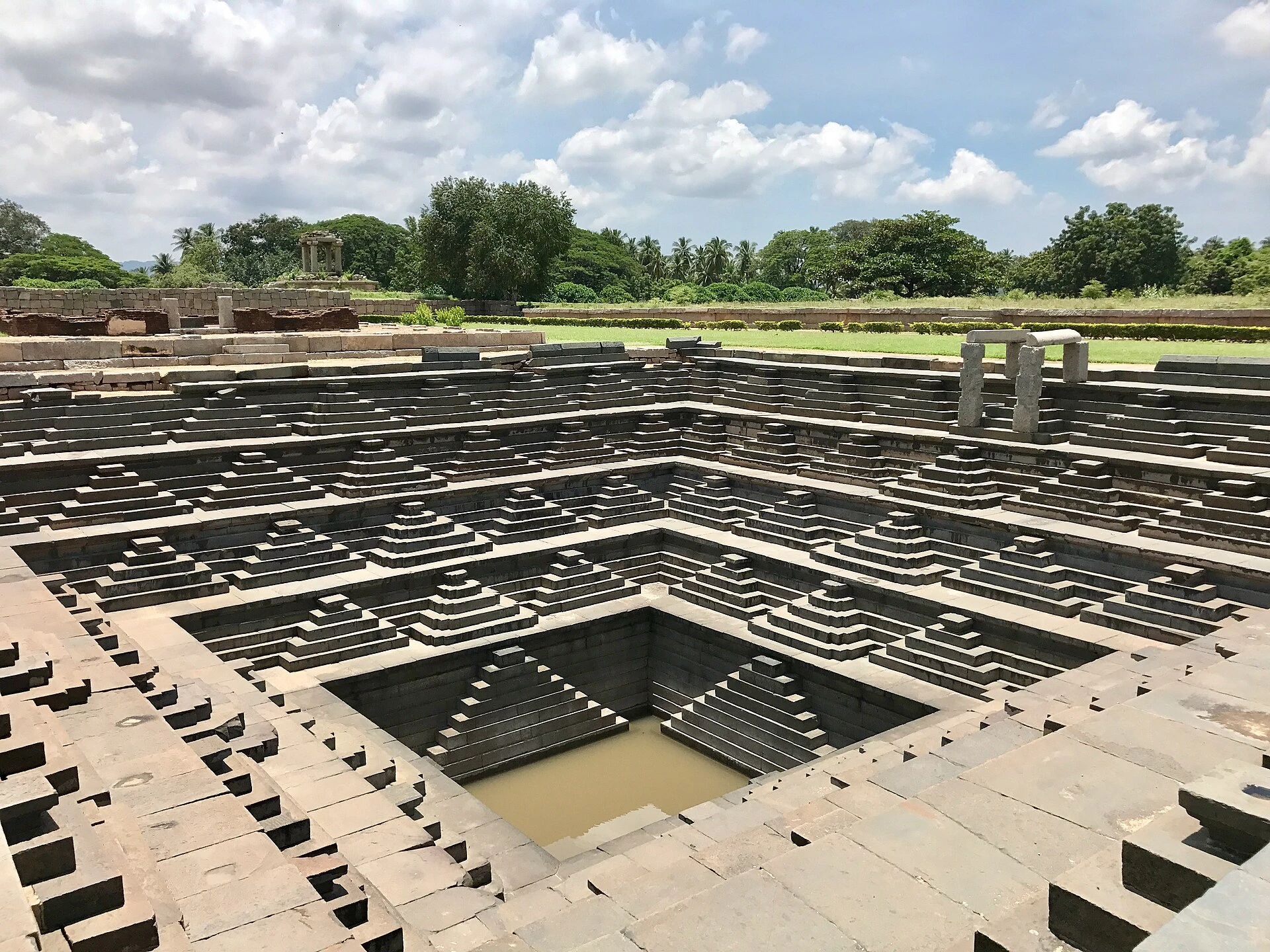
Location: Hampi, Karnataka
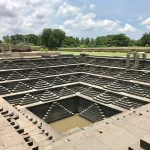
The Pushkarani in Hampi, located in the Royal Enclosure near the Hazara Rama Temple, is from the Vijayanagara period. Builders constructed this stepwell in five descending stages that lead into the tank, resulting in a perfectly symmetrical geometric structure.
Craftsmen built it using fine granite blocks and achieved perfection through proportion rather than adornment. Unlike highly carved northern stepwells, this Pushkarani has structural balance and simplicity. It also connects to a complex canal system that brought water from the Tungabhadra River. Beyond storage, it served as a sacred tank for ritual purification, temple use, and ceremonial events.
5. Agrasen ki Baoli
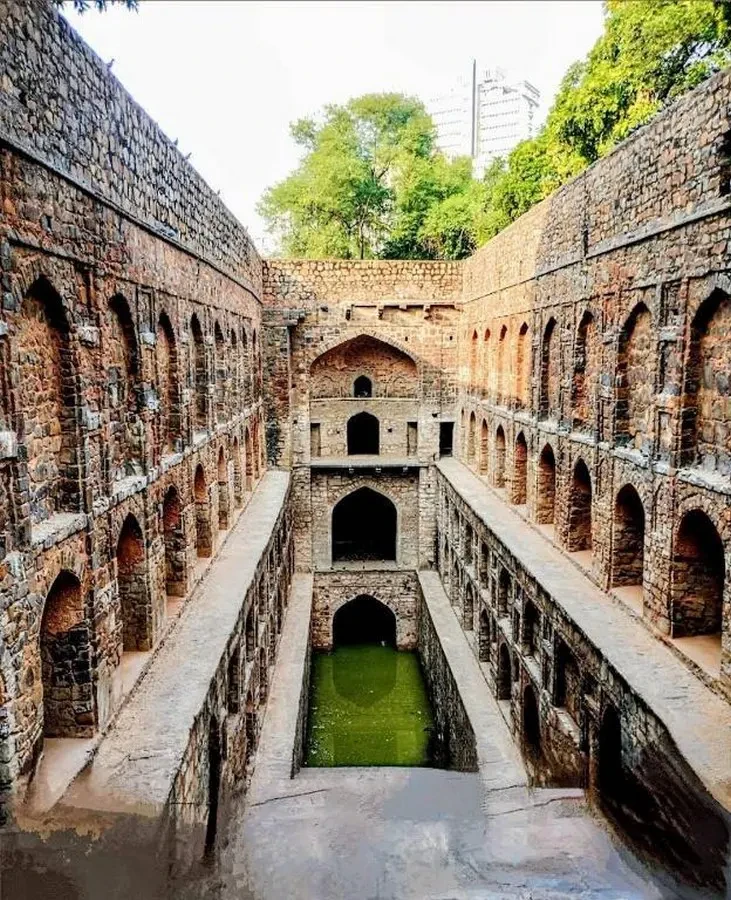
Location: New Delhi
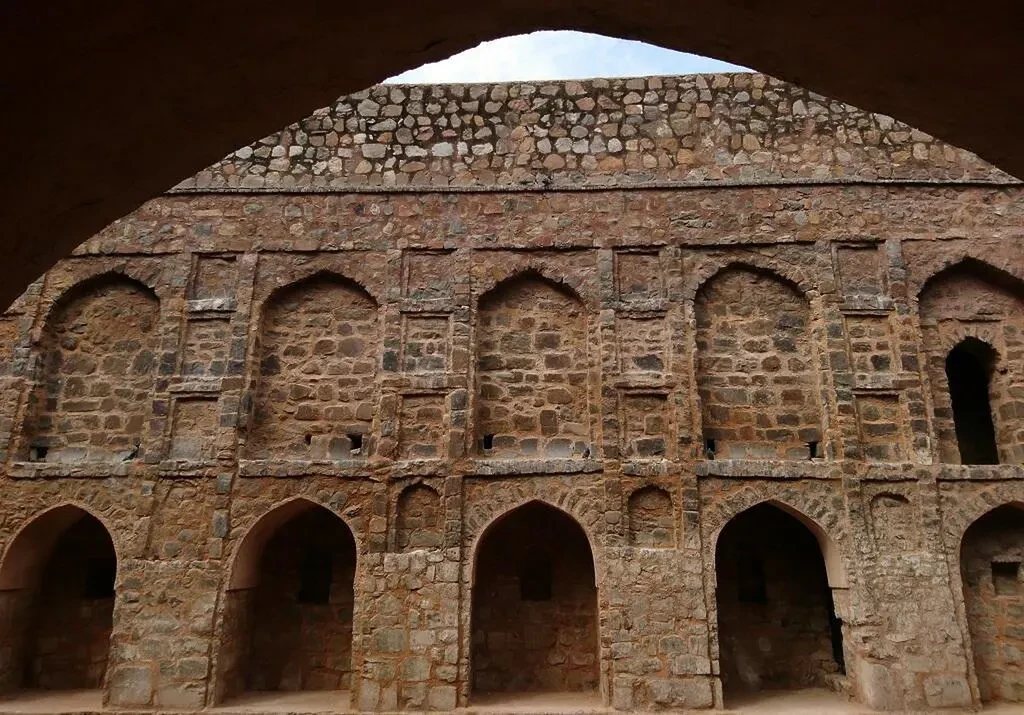
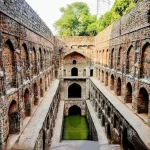
Agrasen ki Baoli is a well-known urban stepwell in Delhi, and its structure was constructed in the 14th century. The four-story baoli is about 60 meters long and 15 meters broad with more than 100 stone steps leading down through arched niches and open brick hallways.
It is primarily constructed of red sandstone and lime mortar. Notably, designers created an internal bawri system as a well within a well, which helped keep the water cool all year and made it useful in dry conditions.
6. Rajon ki Baoli
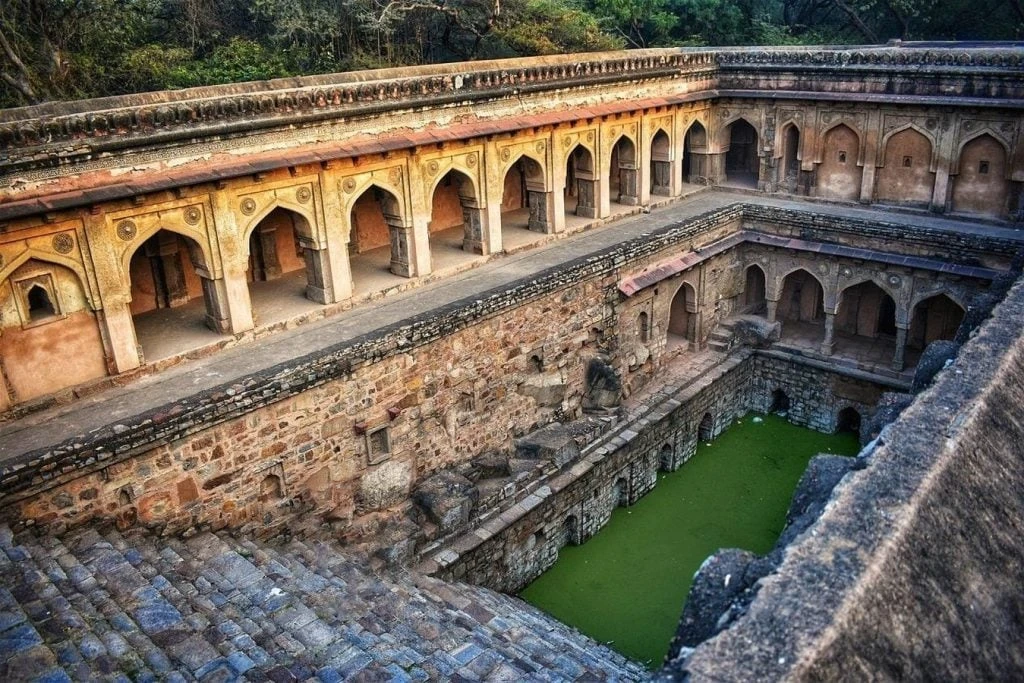
Location: Mehrauli, Delhi
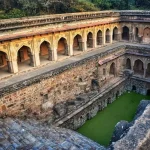
Rajon ki Baoli, located in Mehrauli Archaeological Park, displays the architectural style of the Lodi period. This stepwell demonstrates its close link with craftsmen who most likely used it for daily purposes while also serving as a resting place for tourists and pilgrims visiting the neighboring mosque.
This structure, commissioned by Daulat Khan Lodi in the early 16th century, descends through a rectangular layout with numerous levels, room-like chambers, stucco motifs, and lantern niches that emphasize its Islamic architectural identity. Because it lies next to a mosque, tombs, and pavilions, it was part of a broader socio-religious complex, though it is less well-preserved than Agrasen ki Baoli.
7. Toorji ka Jhalra
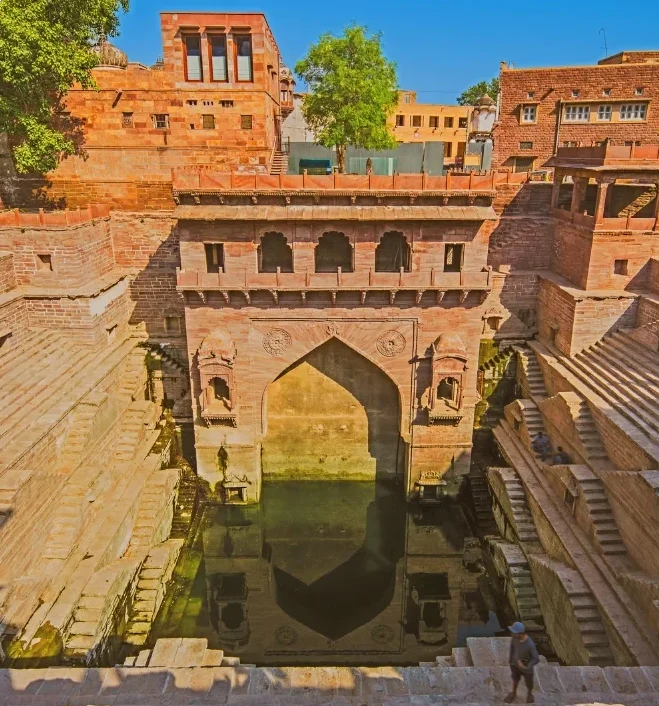
Location: Jodhpur, Rajasthan
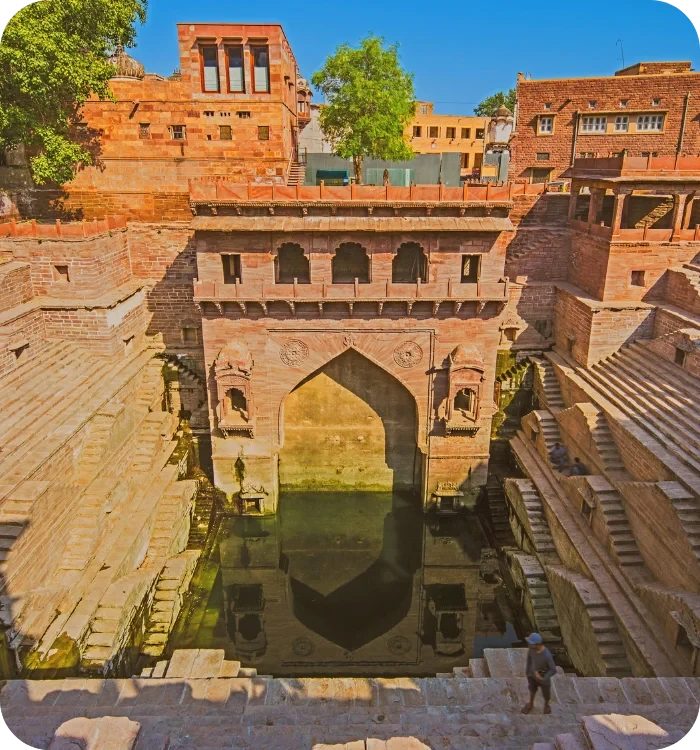
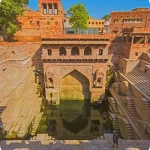
Queen Tanwar Ji built Toorji ka Jhalra in 1740 in memory of Raja Abhai Singh. Locals derived the name Toorji from the popular name they fondly used for the king. This stepwell descends approximately 200 feet structurally with deities and animals carved into the red sandstone walls that surround the center shaft.
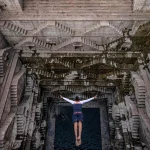
Also, it served as the primary water source until 1996, when the canal project reduced its use. After reconstruction, authorities revived it as a public space where people now hold events like the 2019 Red Bull Cliff Diving competition, and locals use it for Hindu wedding customs as the bride comes here just before the big day.
8. Surya Kund
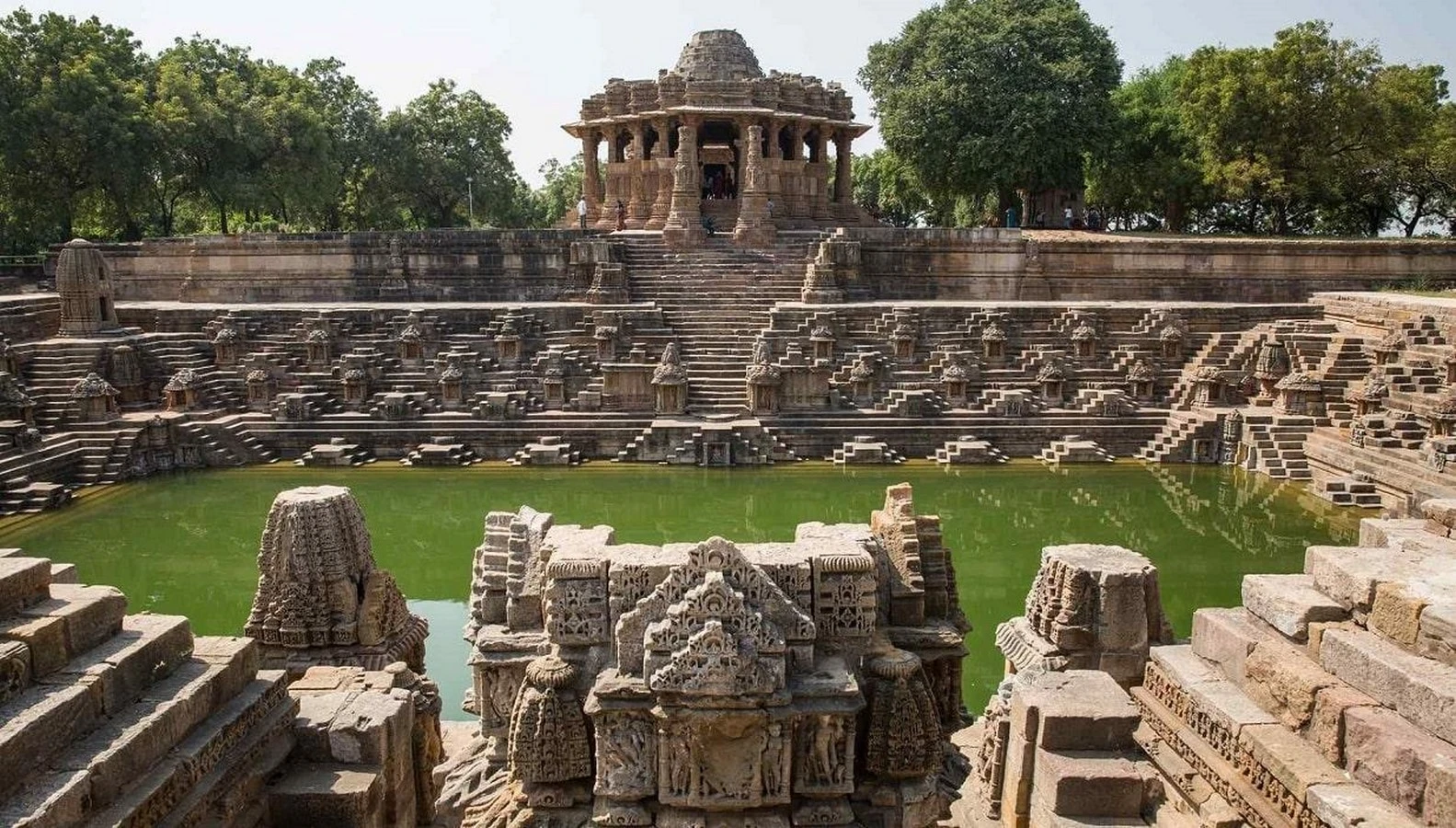
Location: Modhera, Gujarat
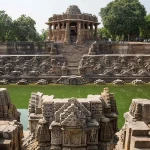
Surya Kund is an essential part of the Sun Temple complex, showing the religious significance of water in temple building. Bhima, I built it in the early eleventh century, and it stands just in front of the Surya temple. The kund measures around 176 by 120 feet and descends four terraces, each with 108 small shrines devoted to Vishnu, Ganesha, and other deities.
Notably, architects designed the building in such a way that the first rays of sunlight illuminate the idol of Surya in the sanctum. This is still a bustling cultural location, with the three-day Modhera Dance Festival held during Uttarayan, the sun festival.
9. Panna Meena ka Kund
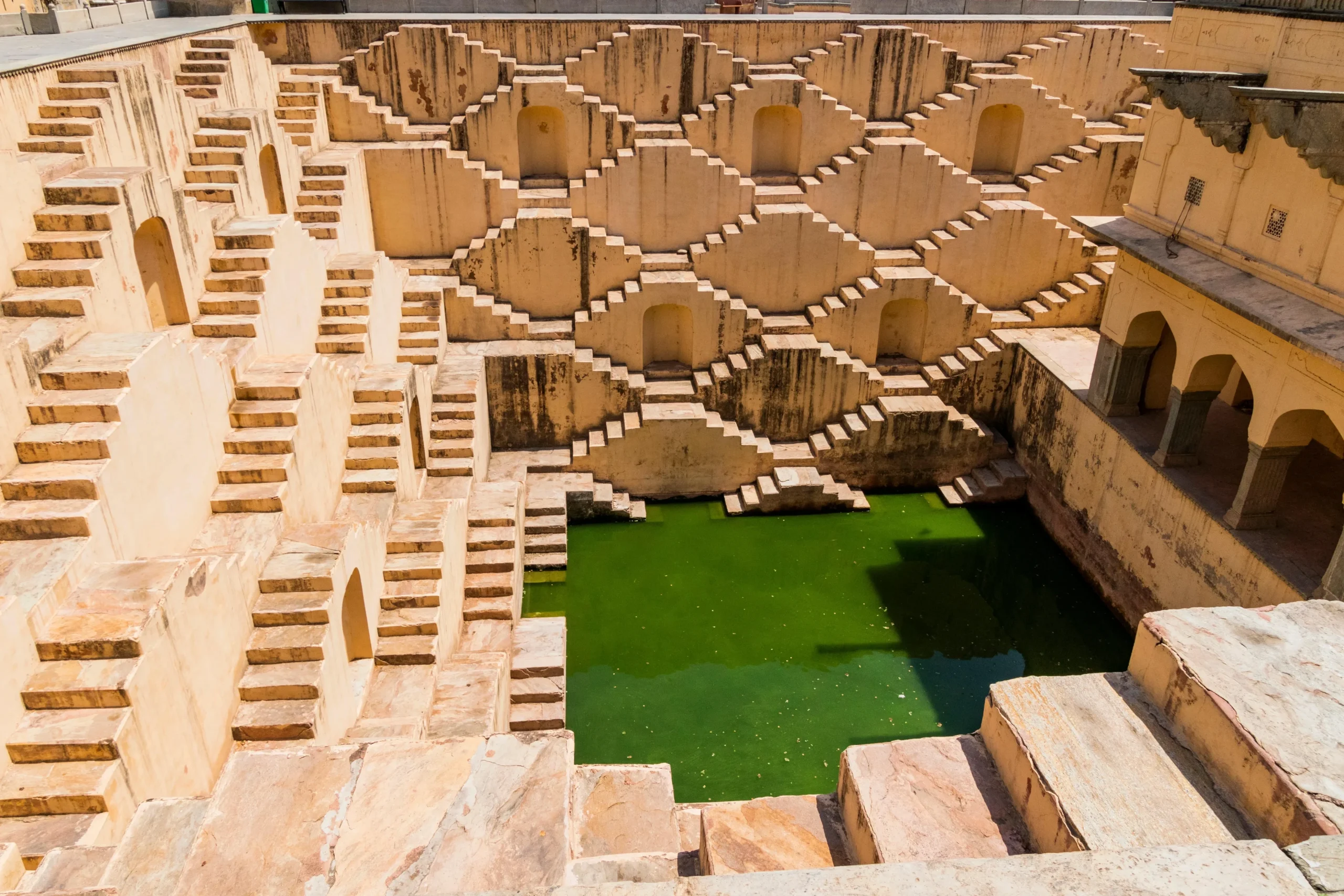
Location: Amer, Jaipur
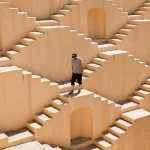
Builders constructed Panna Meena ka Kund near Amer Fort in yellow sandstone with an exact square layout. Some legends associate the stepwell with the Meena clan, who dominated the region before the Rajputs, while other accounts trace it to the reign of Maharaja Jai Singh in the 16th century.
Structurally, a stepwell has around 1,800 stairs descending in a crisscross pattern on both sides, providing access to water at various levels. Its recessed doors, a chamber along the northern wall, and octagonal pavilions define the architectural layout. The kund became a community place utilized for bathing, washing, irrigation, and informal gatherings, particularly among women.
10. Dada Harir Vav
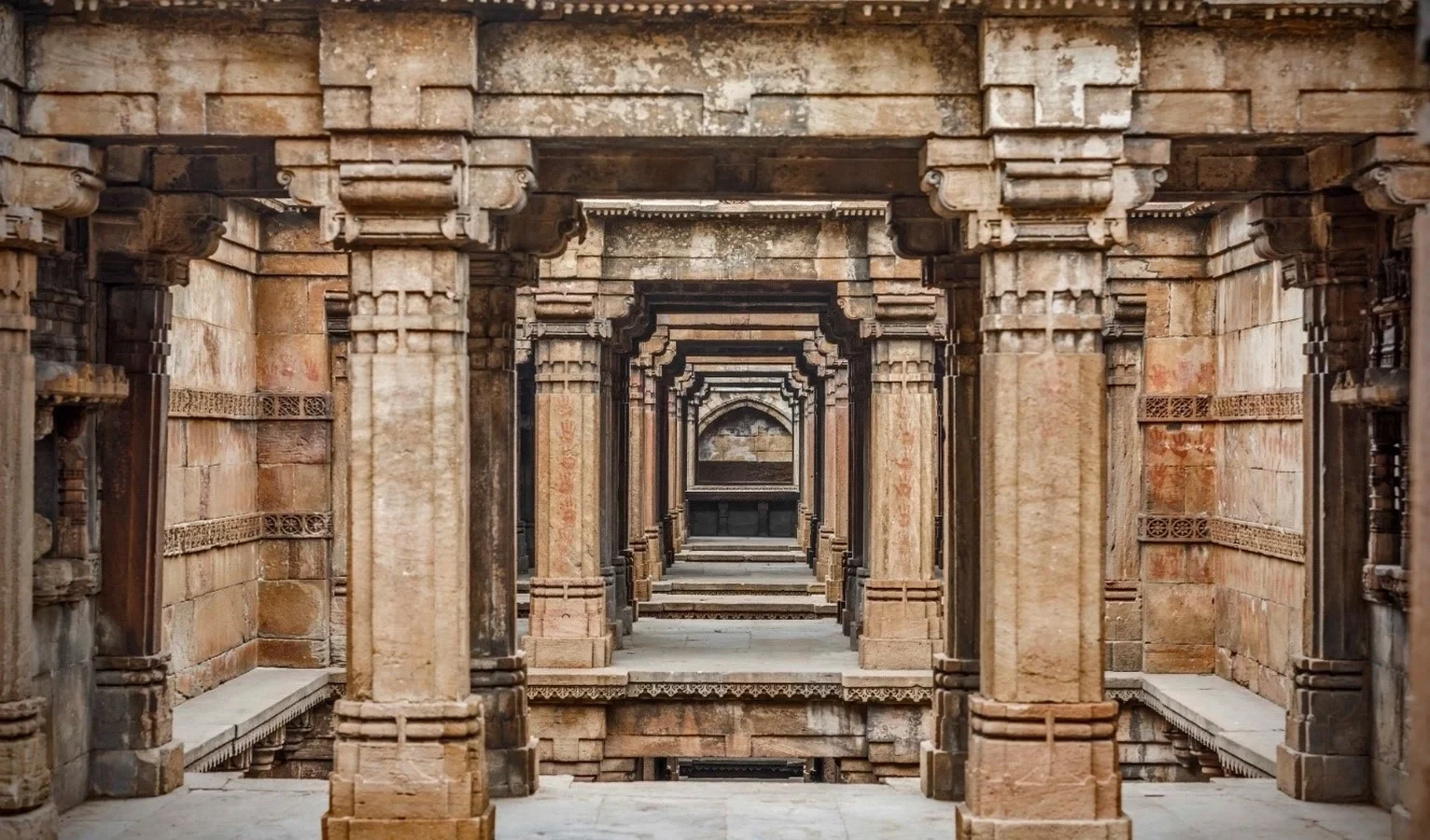
Location: Ahmedabad, Gujarat
Dada Harir Vav is a five-story, octagonal stepwell built in 1499 by Dhai Harir, a significant figure in Mahmud Begada’s court who is also referred to as his foster mother and superintendent. She was even associated with Adalaj Vav, indicating her influence on water architecture in Gujarat.
Builders constructed it in the Solanki style and placed it opposite Dhai Harir’s mosque and tomb, forming a cohesive structure. The stepwell spans roughly 190 by 40 feet with finely carved sandstone pillars and walls. Its interiors remain cooler due to their design for water storage and shelter during hot seasons. As visitors descend, they experience an enhanced spatial and visual effect created by the interplay of light and shadow across the sculptures.
These stepwells reflect India’s ingenuity, blending utility with intricate design. Each structure stands as a testament to water wisdom, cultural memory, and architectural excellence that continues to inspire contemporary design thinking.