
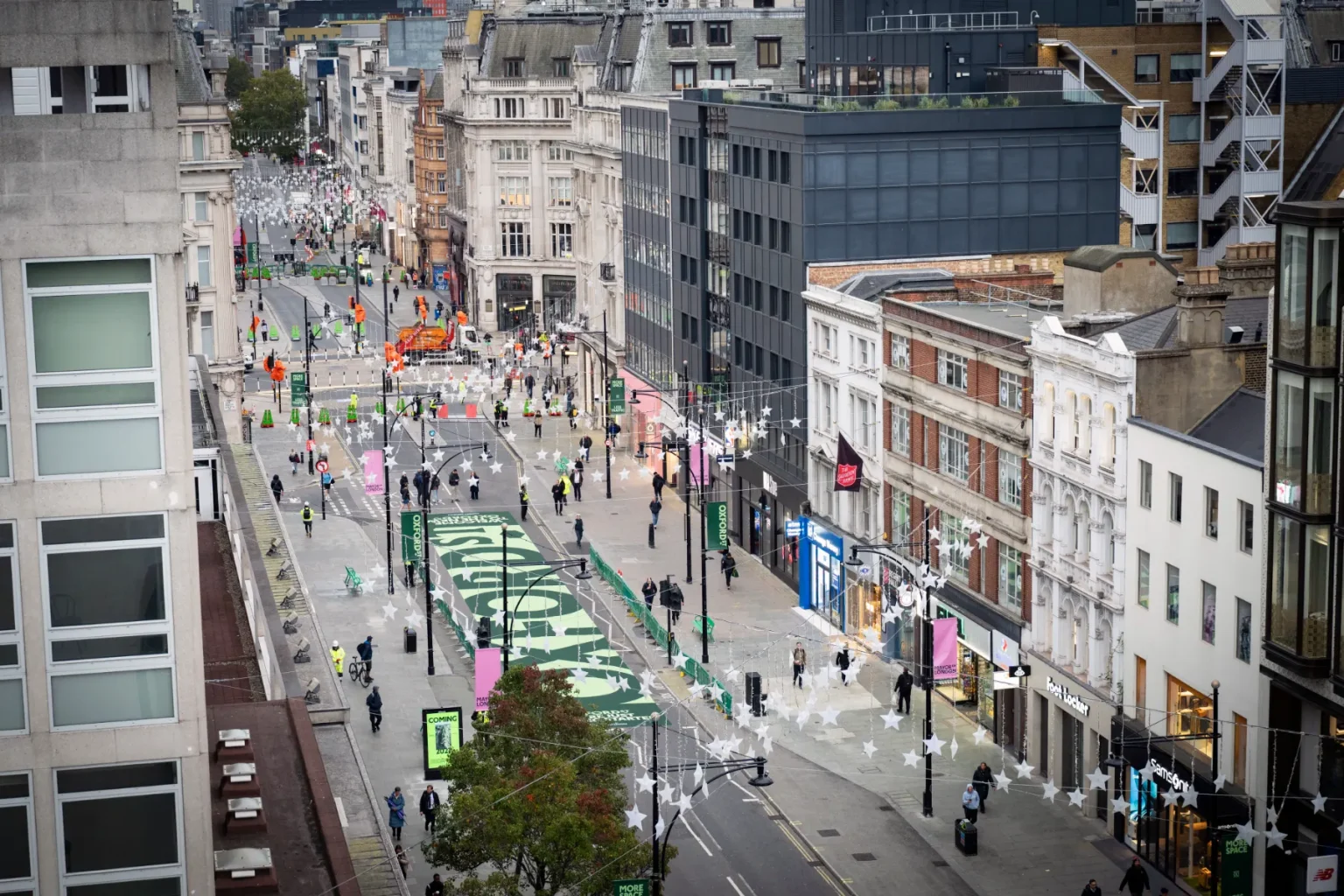
Oxford Street, one of London’s most famous streets, is undergoing a major transformation. Part of the street has been pedestrianized as part of a wider urban regeneration project.
Stretching approximately 1.9 kilometers, Oxford Street has been described as “the city’s most famous street and the busiest shopping destination in Europe.”
Over the years, the street has evolved around a constant flow of buses, taxis, cars and other vehicles. As a result, both its circulation patterns and the way people navigate and experience the street have been shaped by the presence of traffic.
Now, with pedestrianization having begun on 26 October, this transport network, which has evolved over decades, is about to change. However, the decision has also sparked criticism and raised questions about accessibility, transport and the future of the surrounding area.
So, what does this transformation mean for the city, and why has it proved so controversial? Let’s take a closer look.
A Brief History of Oxford Street
The idea of transforming Oxford Street is not new. Over the years, successive mayors, local authorities and other stakeholders have proposed different ways to improve this strategic part of London. In 2004, then-Mayor Ken Livingstone proposed introducing a tram system along Oxford Street. Two decades later, Mayor Sadiq Khan revived pedestrianization plans and announced new proposals in September 2024.
Although the proposals have differed, they have all aimed to address the challenges of managing heavy traffic and large numbers of pedestrians. The latest plan focuses on creating more space for people while keeping Oxford Street an important shopping destination.
What Does the Transformation Mean for Oxford Street?
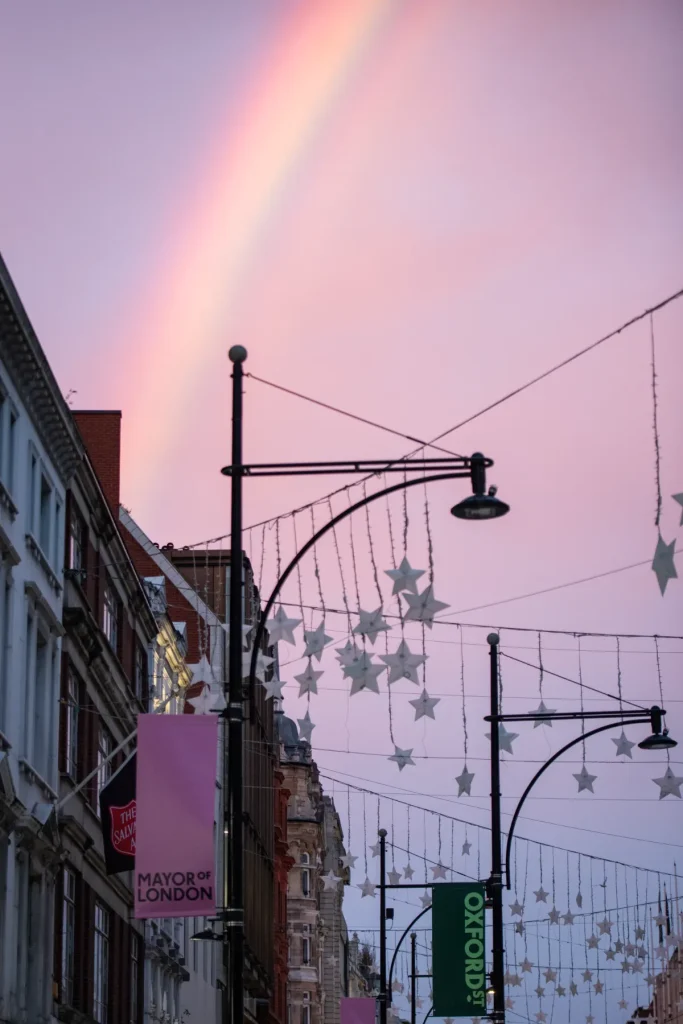
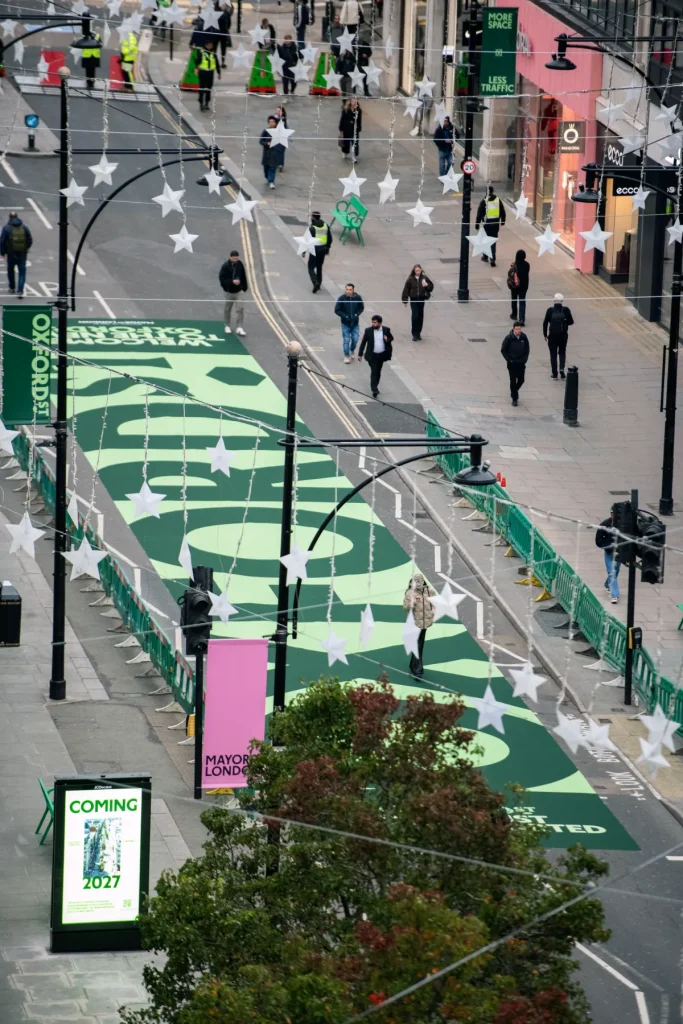
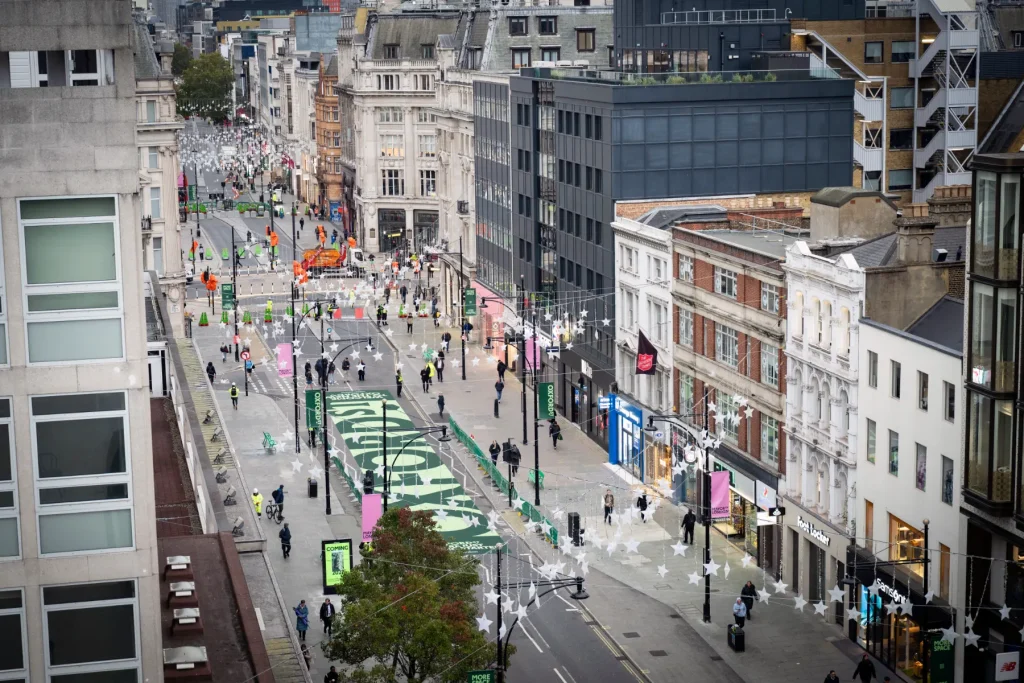
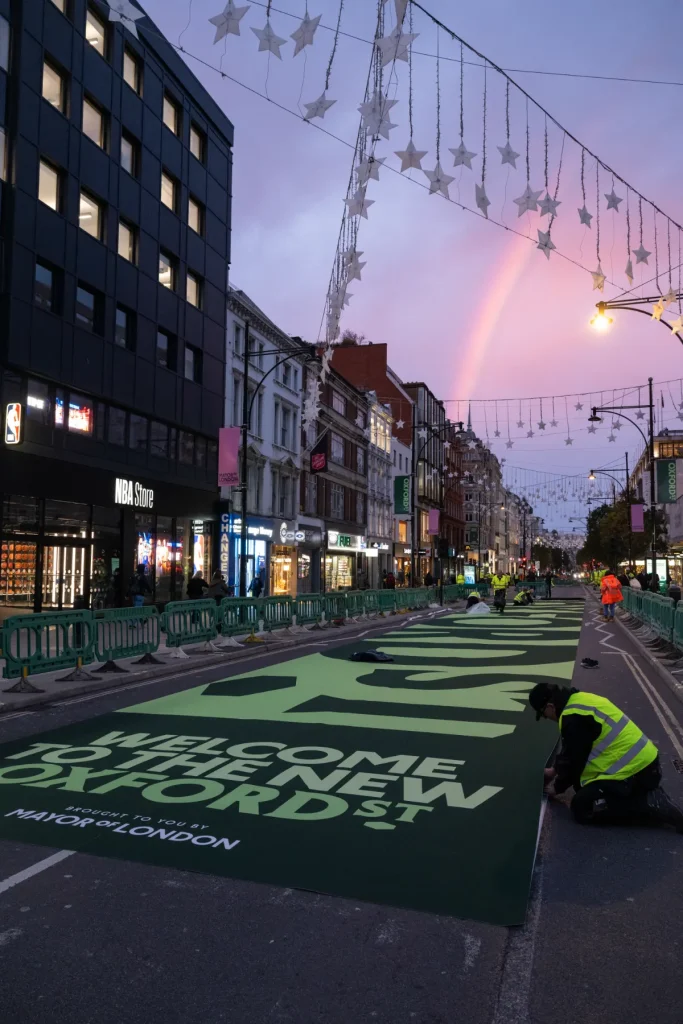
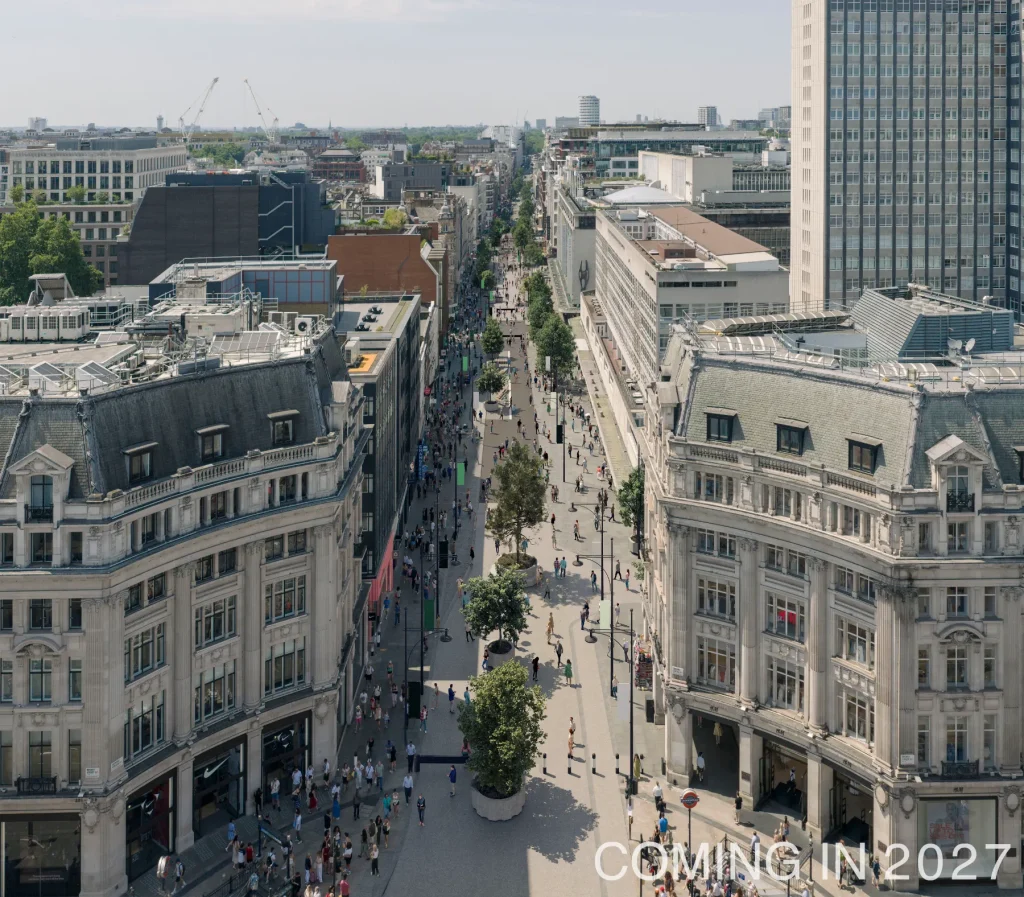
On Monday, 26 October 2026, the first phase of Oxford Street’s pedestrianization was unveiled by the Oxford Street Development Corporation (OSDC) and East, the design studio involved in the project. Nearly one kilometer of the street, between Orchard Street and Great Portland Street, is now pedestrianized.
The aim goes beyond removing vehicles. The project seeks to create a more accessible and welcoming public space, encouraging people not only to stop by and shop, but also to spend time, meet and participate in activities along the street. It also reflects a further ambition to make Oxford Street a destination for leisure, culture and hospitality.
Julian Lewis, director at East, says:
“As we have seen from Borough High Street to Eltham, from Croydon to Green Lanes, London’s high streets are the public face of the city in all its diversity, its greenery and its energy. We design to preserve and support this energy, maintaining the ebbs and flows of these places which make our neighborhoods unique. The same is true at Oxford Street – the place where ‘Everything glitters and twinkles’, as Virginia Woolf wrote in 1931 – a street whose future is set to be as dynamic and bustling as its storied past.”
However, pedestrianization is only the first step. The initial layout is temporary, allowing the project team to observe how people use the space and gather feedback before refining the permanent design.
The plans for the next phase include more than 50 new trees, over 100 seats, improved lighting and signage, and two public squares that could host events. Sections of the road will also be raised to pavement level, creating a more continuous surface between the former carriageway and the pavements. These changes are intended to make the street greener and more comfortable.
Yet the transformation also raises questions about how far its benefits will extend. Changes to traffic and bus routes have raised concerns about congestion and impacts on nearby neighborhoods. Meanwhile, the economic benefits of the project remain to be demonstrated.
Reactions and Concerns
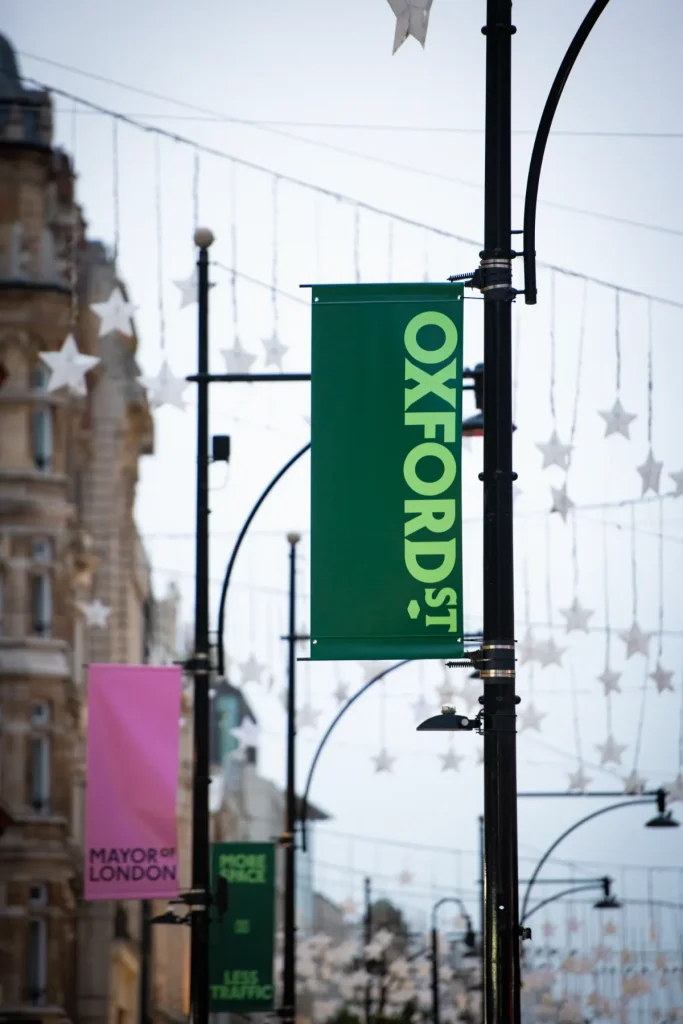
Despite its ambition to create a more pedestrian-friendly public space, the project has raised concerns about accessibility, bus routes, and impacts on surrounding streets. Westminster City Council has highlighted the need to ensure that the changes do not create additional difficulties for residents and visitors.
Pedestrian safety is another key issue. In a response to the London Assembly, Mayor Sadiq Khan reported that 79 collisions occurred on Oxford Street West and at its junctions between May 2022 and April 2025, resulting in 24 serious injuries. Although pedestrianization aims to reduce conflicts between vehicles and pedestrians, questions remain about traffic on crossing roads and the effects on neighboring areas. Ultimately, the project’s success will depend on how well it balances a more welcoming public space with accessibility and the needs of the wider urban network.
What Comes Next?
Oxford Street’s transformation is still in its early stages. In the coming months, it will become clearer how people use the new space and whether pedestrianization can bring lasting change to one of London’s most famous streets.