


Soviet-era landmarks were never neutral, as they were designed to do more than occupy space. They were built to communicate power, shape memory, and give physical form to ideology. Across Eastern Europe and the Caucasus, architecture and sculpture showcased a language that was bold and deeply symbolic.
What makes these structures compelling today is not just their scale or form, but the way they were built to commemorate war, resistance, or national identity within a broader socialist framework. Others represented technological progress or collective ambition. Some have been restored and continue to function, while others remain abandoned, slowly changing with time.
This list brings together six landmarks that capture different aspects of the Soviet era. Each one sits within a specific political and cultural context.
1. Chronicle of Georgia, Tbilisi
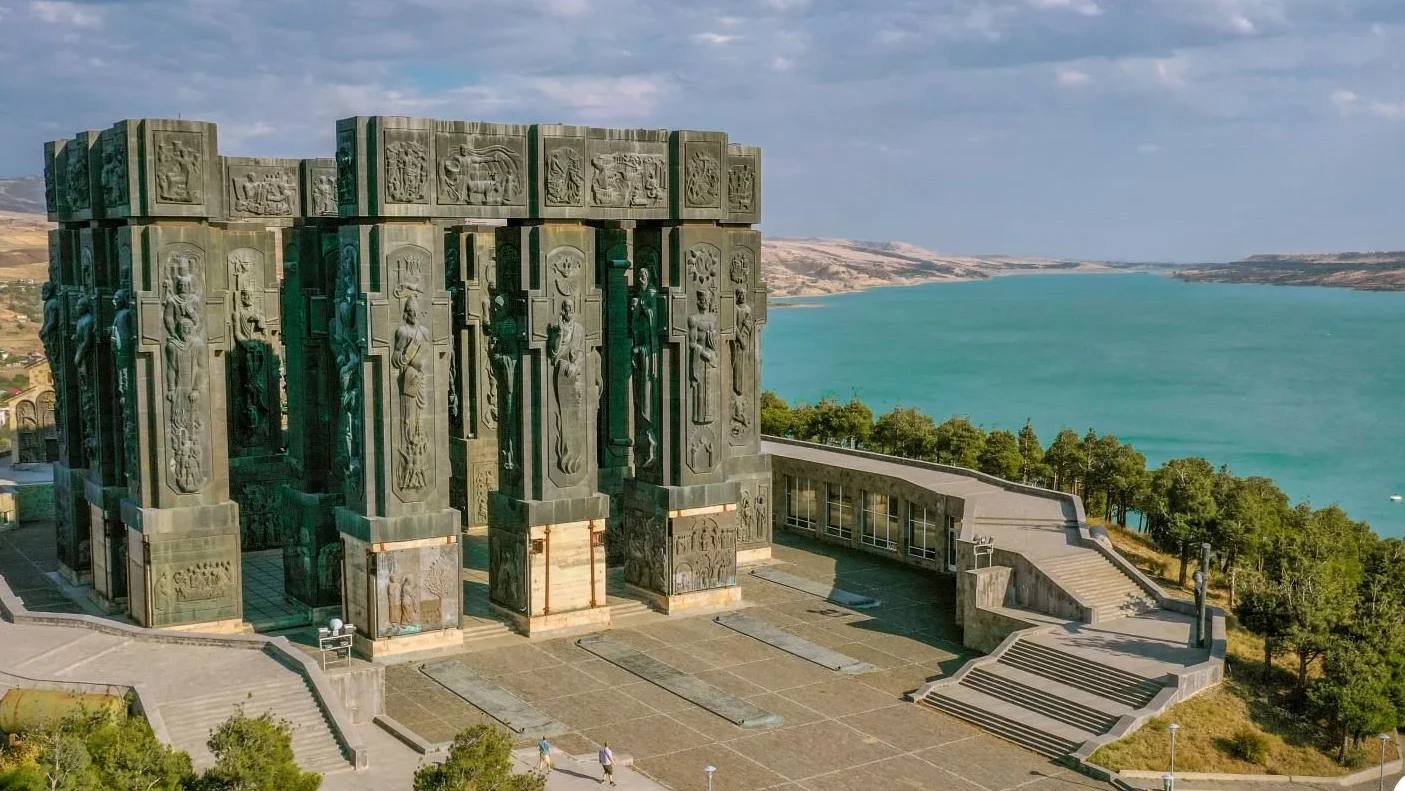
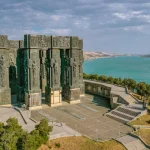
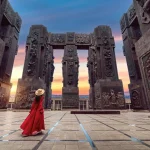
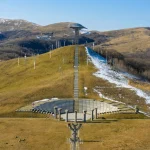
Located on a hill overlooking Tbilisi, the Chronicle of Georgia is a monumental complex that combines history, religion, and national identity. Construction began in the late Soviet period under artist Zurab Tsereteli and remains incomplete. The site is composed of large stone columns arranged in a grid-like formation. Each column is carved with detailed scenes. The lower sections depict biblical narratives, while the upper sections focus on figures from Georgian history. This layering creates a connection between religious and cultural identity.
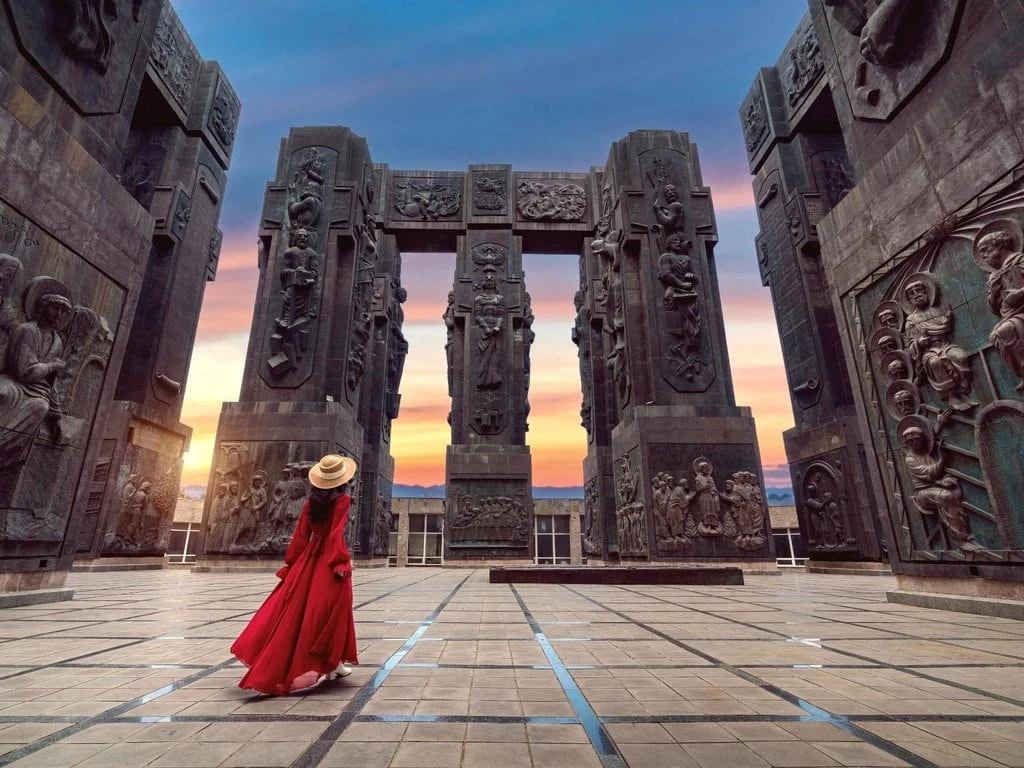
The scale of the monument is overwhelming at first. The columns rise high above the ground, creating a sense of enclosure without forming a traditional building. As one moves closer, the carvings become more detailed, revealing a complex narrative embedded in the stone. Its unfinished state adds to its character. It feels complete and open-ended at the same time, reflecting a moment of transition. The monument bridges different time periods, combining ancient themes with the monumental language of the Soviet era.
2. Avala Tower, Belgrade
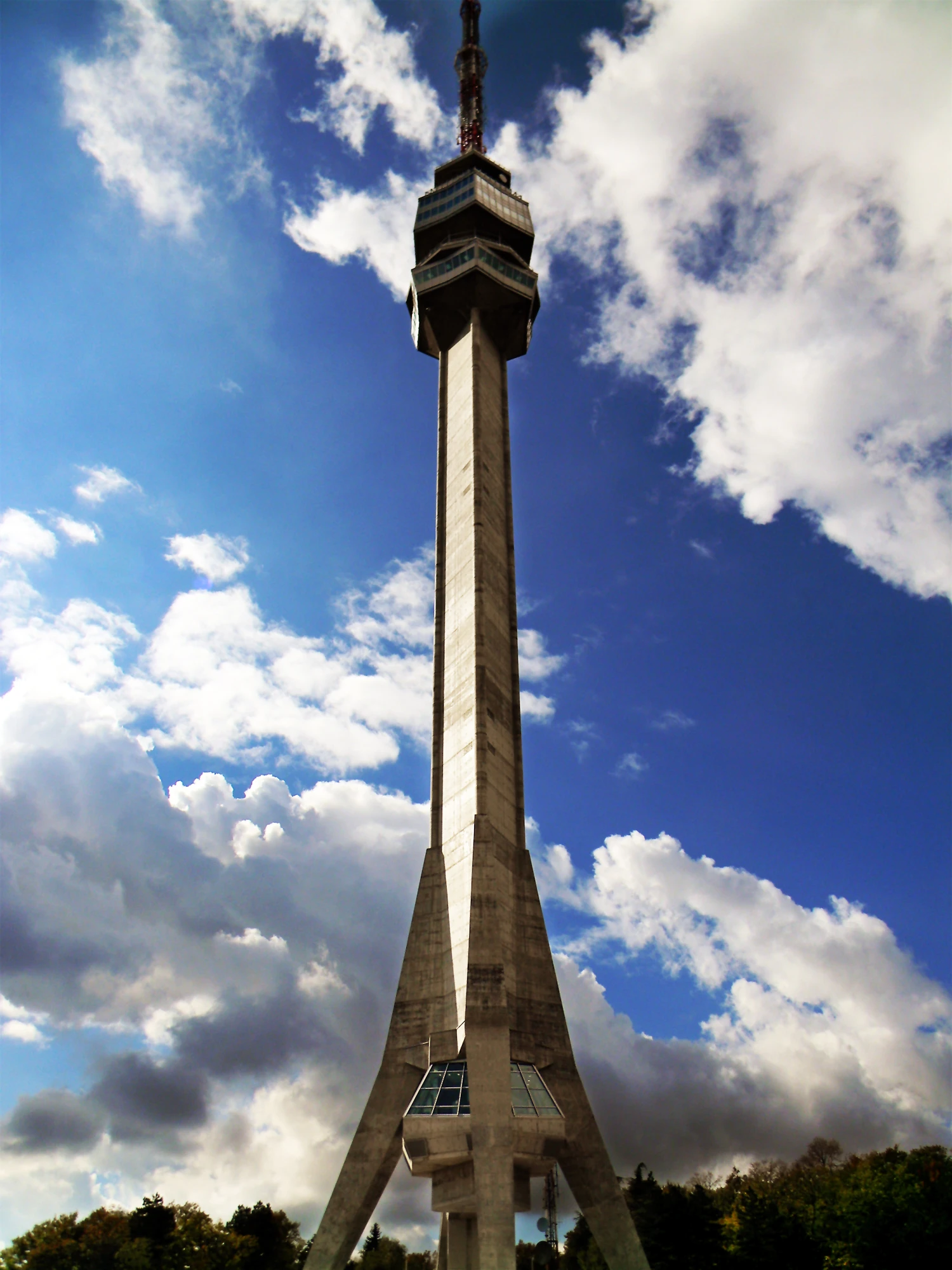
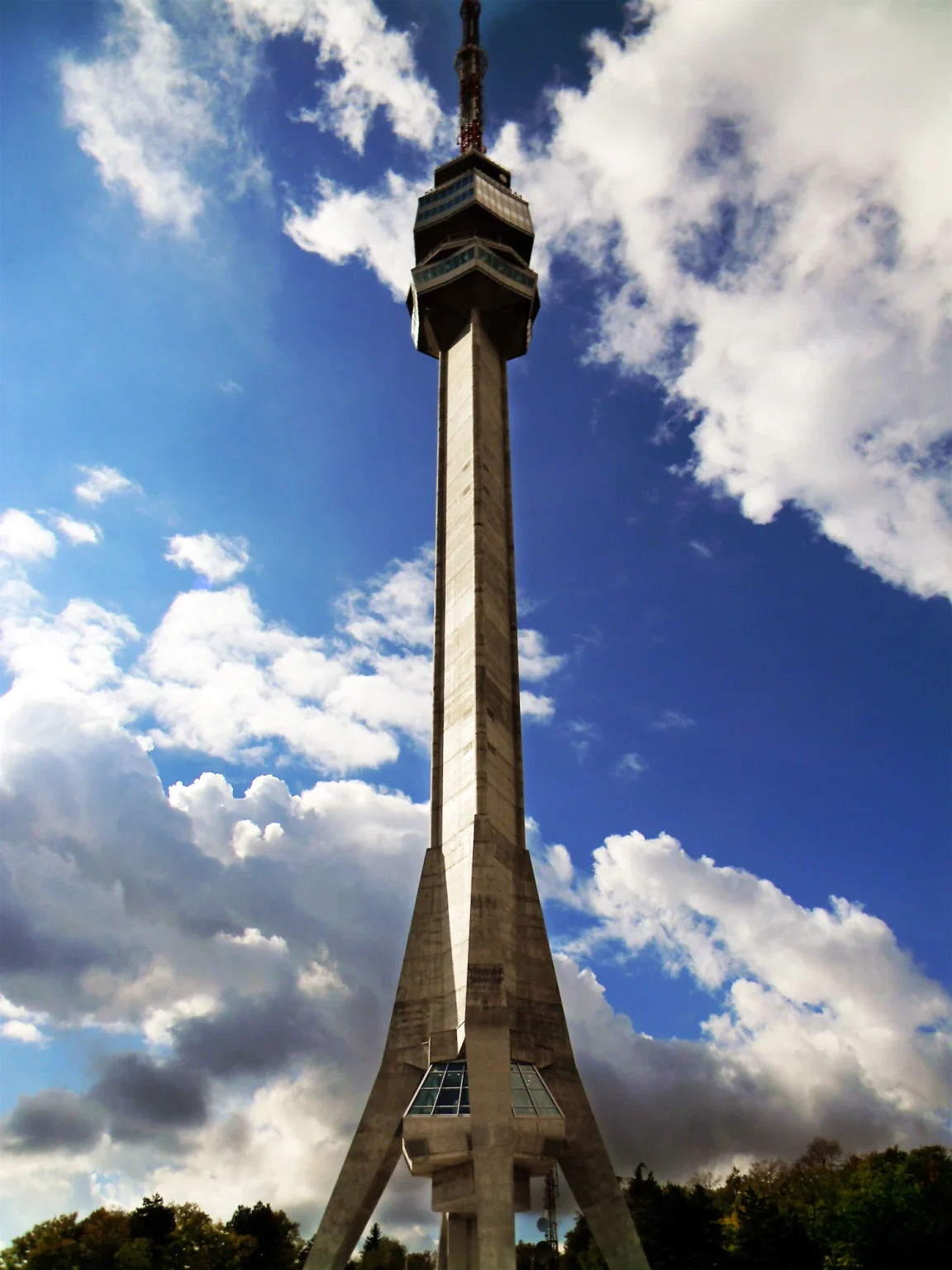
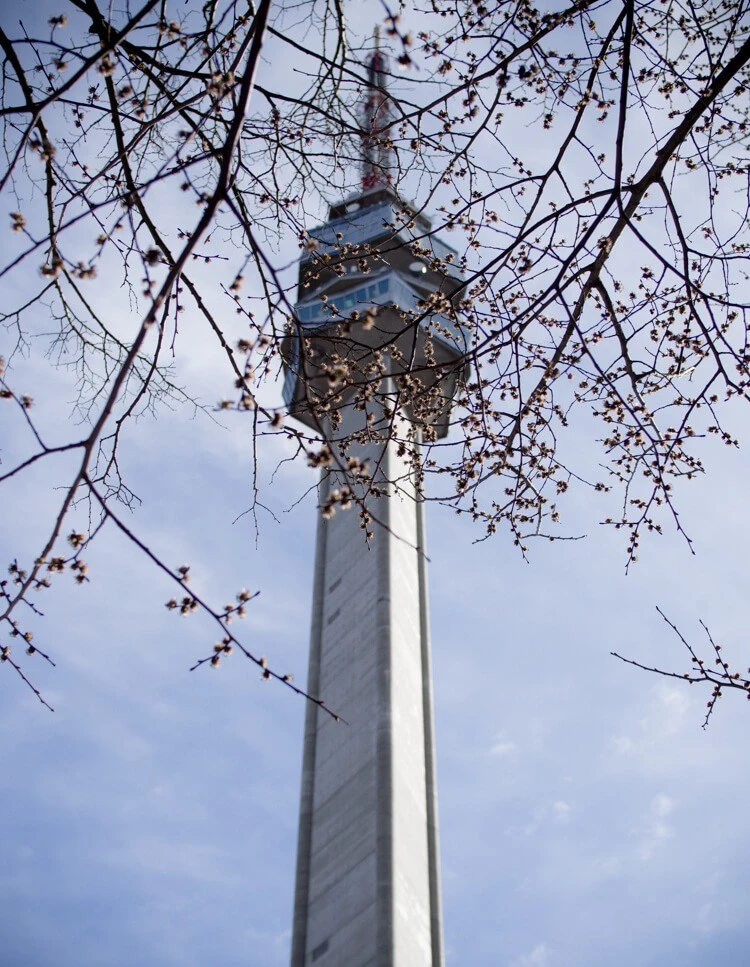
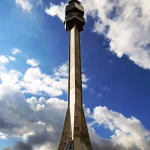
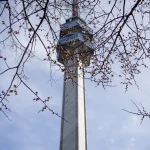
The Avala Tower, located on Mount Avala near Belgrade, represents a different aspect of Soviet-era design. Unlike memorials, it was built as infrastructure, specifically as a telecommunications tower completed in 1965. Its architectural language reflects modernist principles. The tower is defined by a triangular base that lifts the structure above the ground, creating a sense of lightness. The slender shaft rises cleanly upward, leading to an observation deck that offers panoramic views of the surrounding landscape. The design is minimal, relying on proportion and structure.
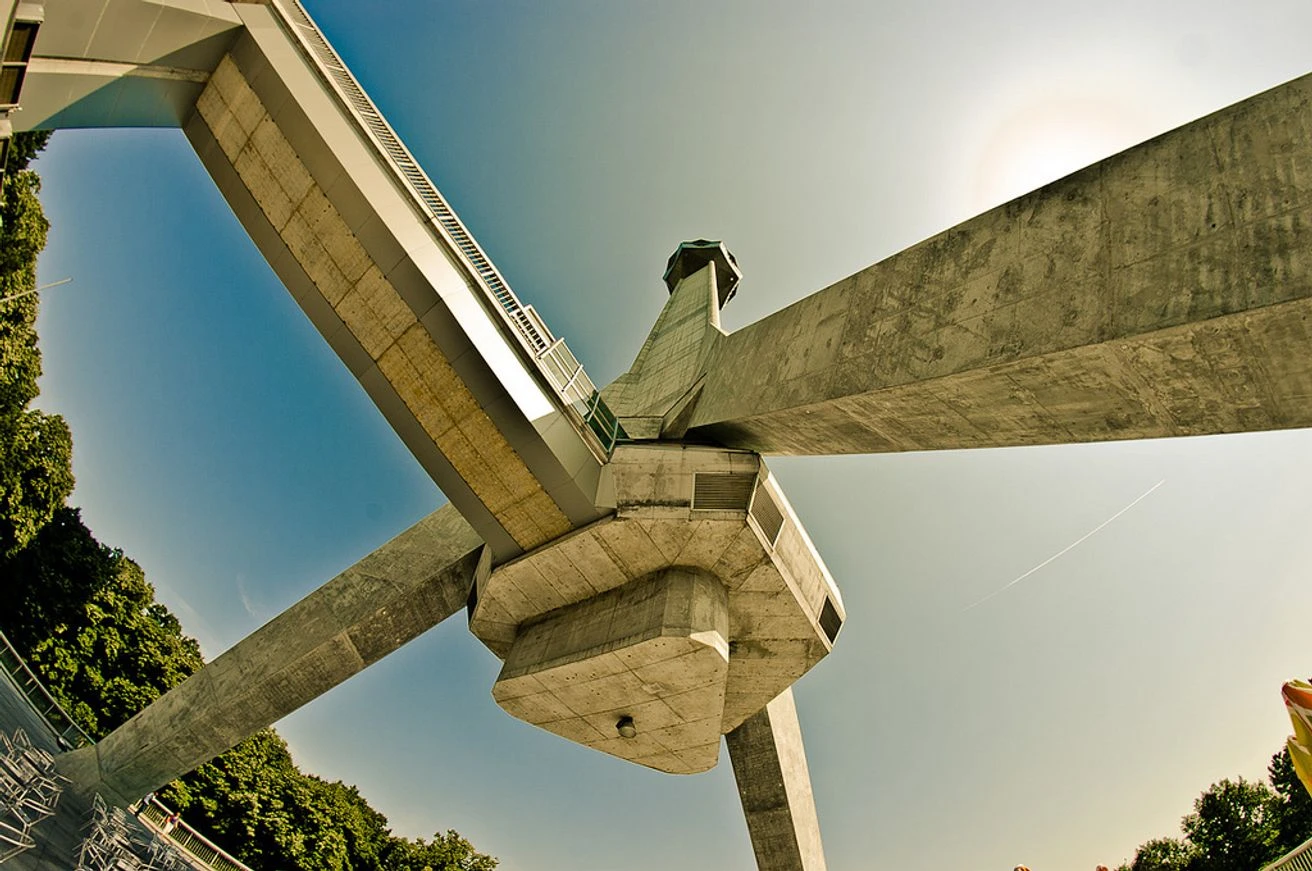
The tower was destroyed in 1999 during NATO bombing, becoming one of the most visible losses of that period. Its reconstruction in 2010 closely followed the original design, turning it into a symbol of resilience and continuity. Today, the Avala Tower operates as a functional piece of infrastructure and a cultural landmark. Its presence on the hill makes it a visual anchor, visible from across the city and beyond.
3. Monument to the Kosmaj Partisan Detachment, Serbia
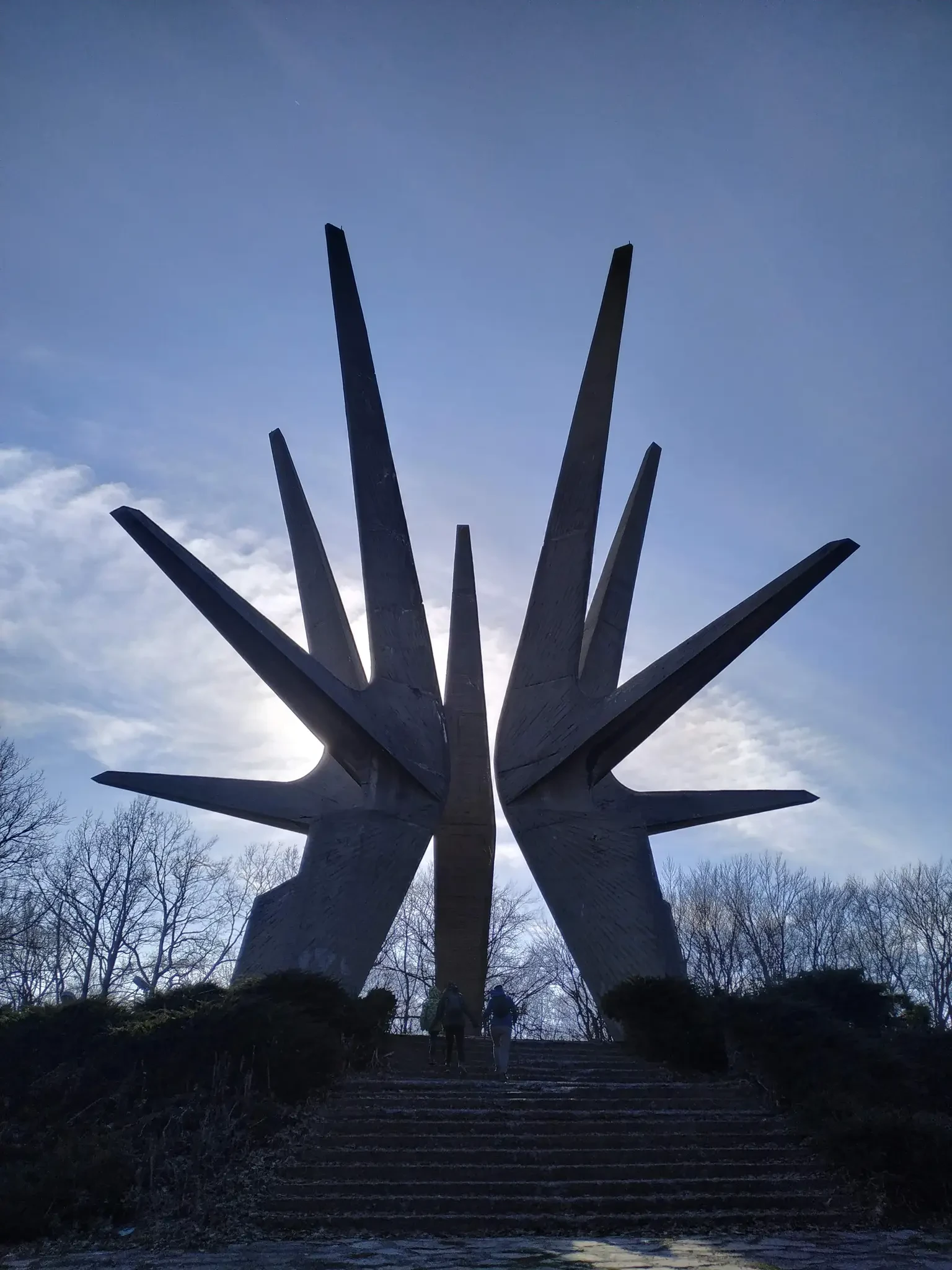
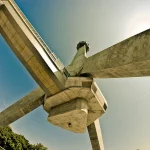
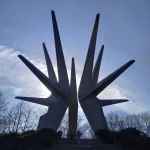
Built in 1971 on Mount Kosmaj, this monument commemorates the partisan fighters who resisted occupation during World War II. It is one of many “spomeniks” constructed across the former Yugoslavia, each using abstract forms to represent collective memory. The structure consists of large concrete elements arranged in a radial pattern. These forms extend outward from a central point, creating a star-like composition. Its name, “Spark of Freedom,” reflects this idea, suggesting the beginning of resistance and the outward spread of energy.
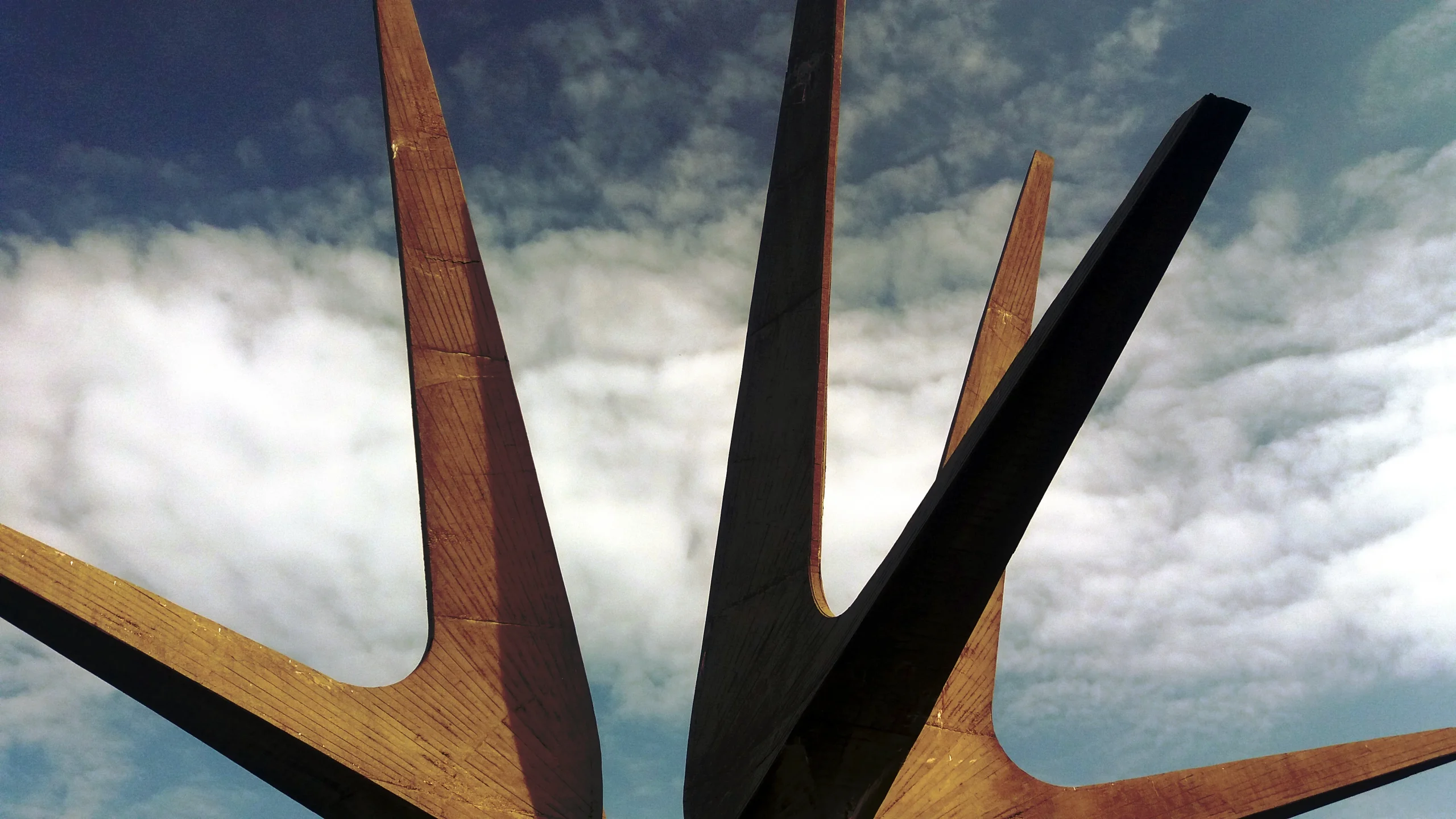
Unlike traditional war memorials, there are no statues of soldiers or literal depictions of battle. The design relies entirely on abstraction. The geometry, the scale, and the material work together to convey meaning, and the concrete surfaces emphasize mass and solidity, which are raw and textured. The setting within a forested hill enhances the experience. As you approach the monument, it appears gradually through the trees.
4. Buzludzha Monument, Bulgaria
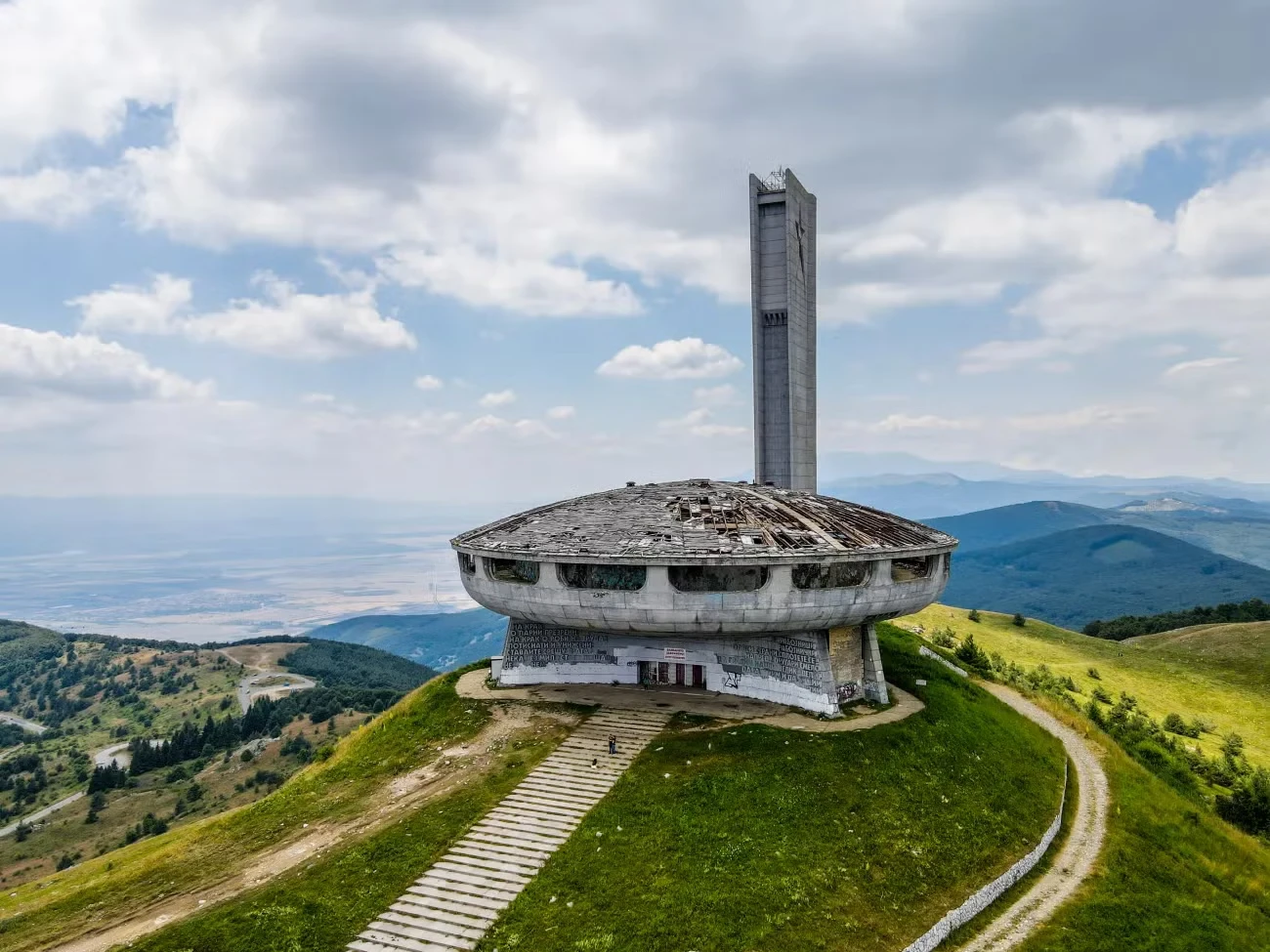
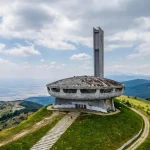
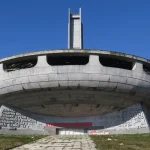
The Buzludzha Monument, completed in 1981, sits on a remote mountain ridge in Bulgaria. It was built as a ceremonial headquarters for the Bulgarian Communist Party, intended to host meetings, events, and gatherings tied to the state. Its form is immediately recognizable. A large circular structure rests on the landscape, accompanied by a tall tower that once displayed a red star. The design is often compared to a spacecraft, with its disc-like geometry and elevated position giving it a futuristic quality.
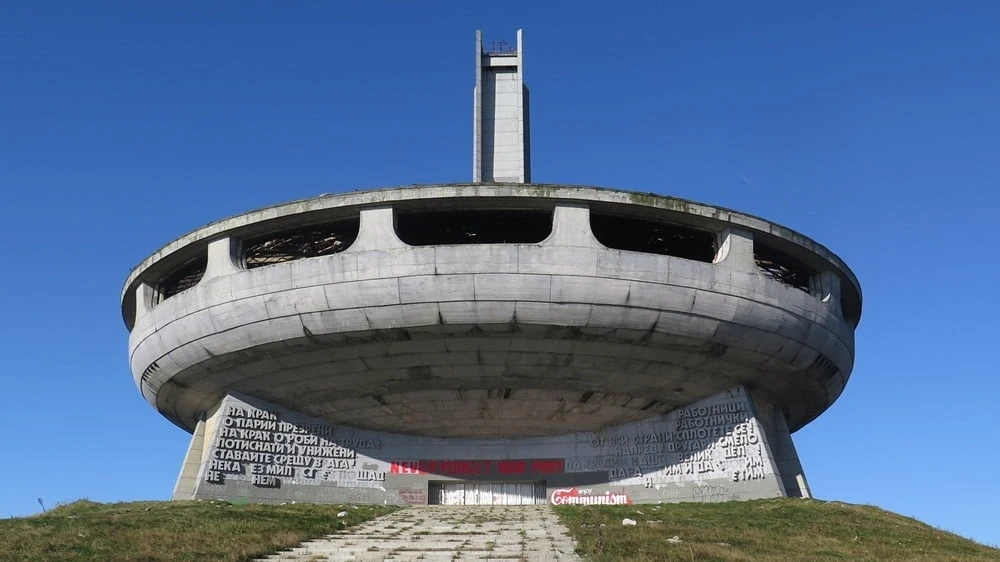
Inside, the building was richly decorated with mosaics depicting political leaders, workers, and historical scenes. These visual narratives reinforced the ideological message of unity and progress. The scale of the interior space, combined with the detailed artwork, created a powerful sense of collective identity. Following the collapse of the socialist system, the monument was abandoned. Over time, it has deteriorated, with broken surfaces, exposed interiors, and fading mosaics. Despite its condition, Buzludzha continues to attract attention for its design and its history.
5. Didgori Battle Monument, Georgia
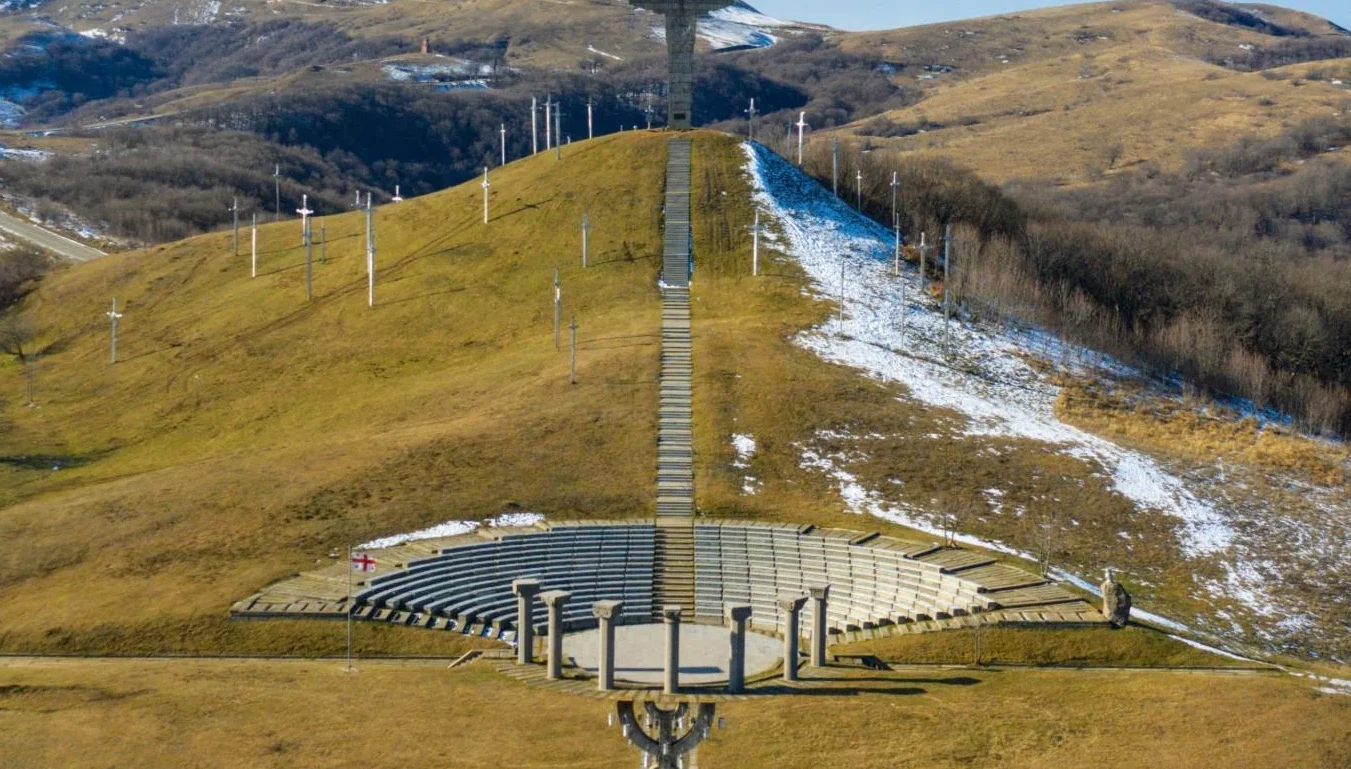
The Didgori Battle Monument stands on a wide, open hillside just outside Tbilisi, marking one of the most important victories in Georgian history. The Battle of Didgori, fought in 1121 under King David IV, is remembered as a moment that secured Georgia’s strength and independence. Although the event itself predates the Soviet era by centuries, the monument was constructed in the late 20th century, during a time when history was reinterpreted to align with broader ideological frameworks. In this case, the emphasis is on unity, resistance, and collective strength, themes that resonated strongly within Soviet narratives.
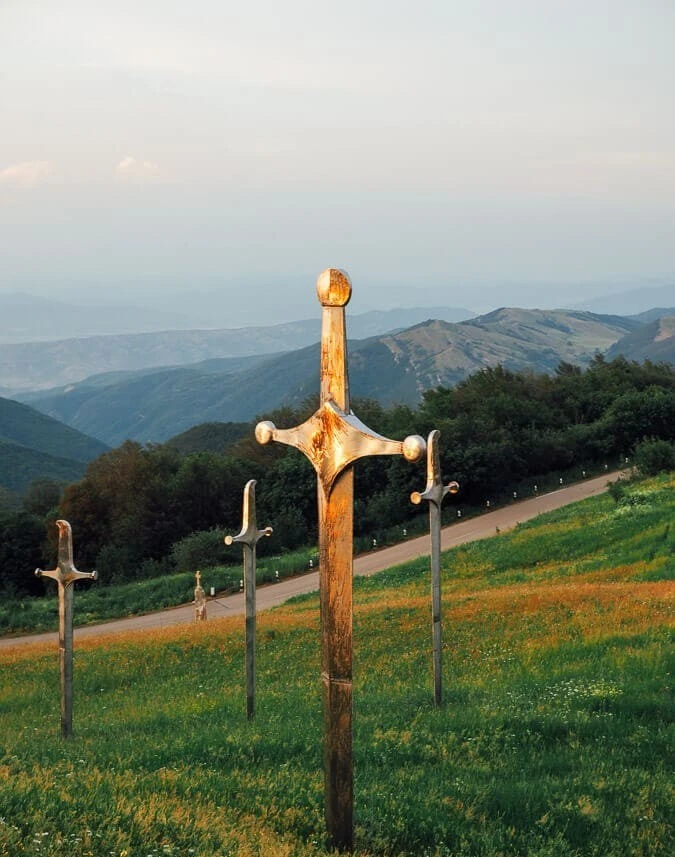
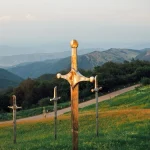
The design is direct and dramatic. Massive metal swords are embedded in the ground at different angles, creating the impression of a battlefield frozen in time. These vertical elements dominate the composition, rising sharply against the horizon. Around them, sculptural reliefs depict scenes of combat, soldiers, and movement, adding a narrative layer to the installation. What makes the monument particularly effective is its relationship with the landscape. It is not confined to a single platform or structure. Instead, it spreads across the terrain, allowing visitors to move through it.
6. Motherland Monument, Kyiv
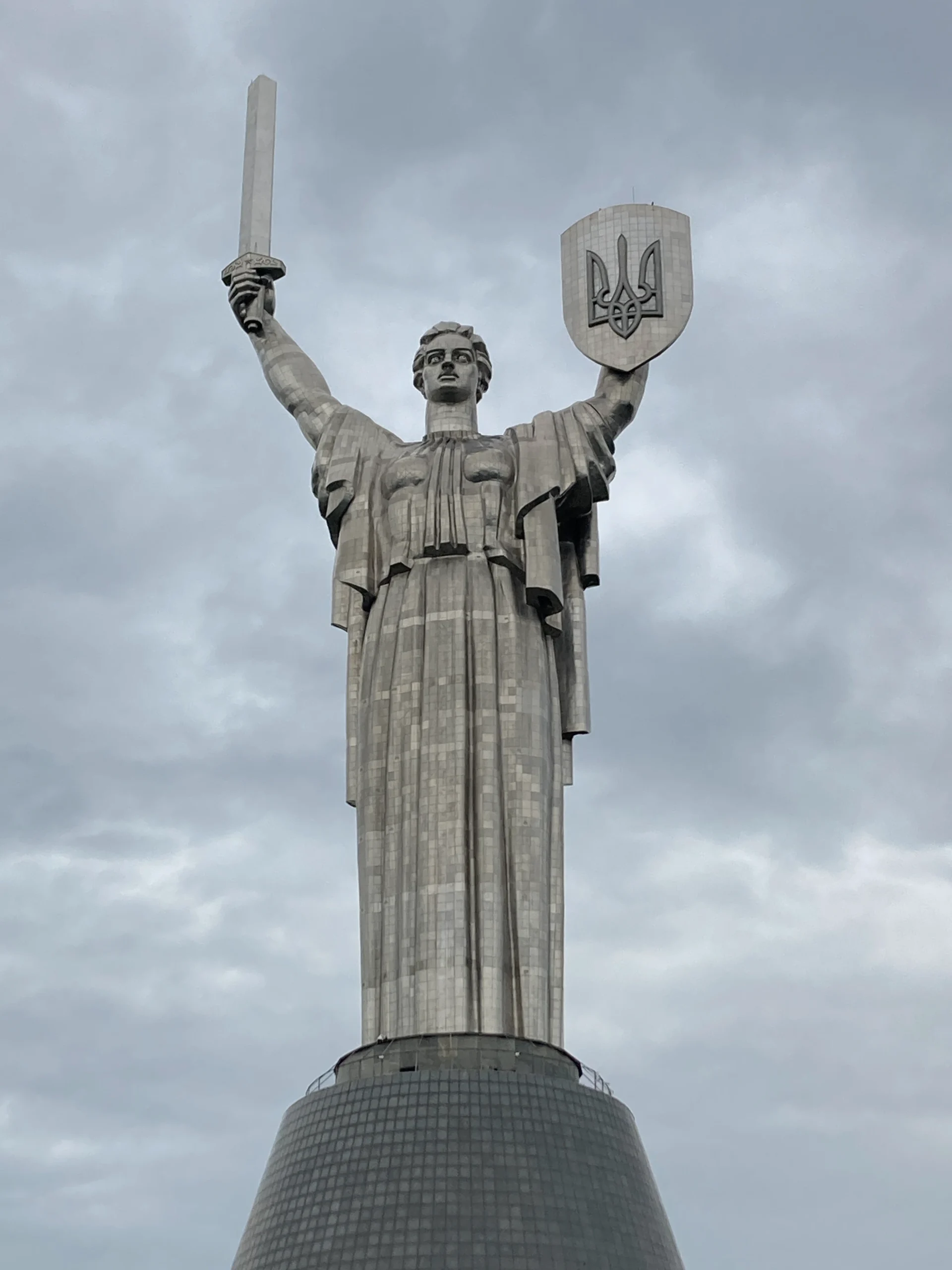
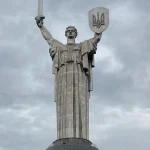
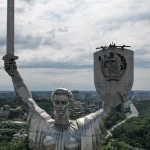
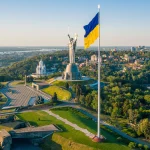
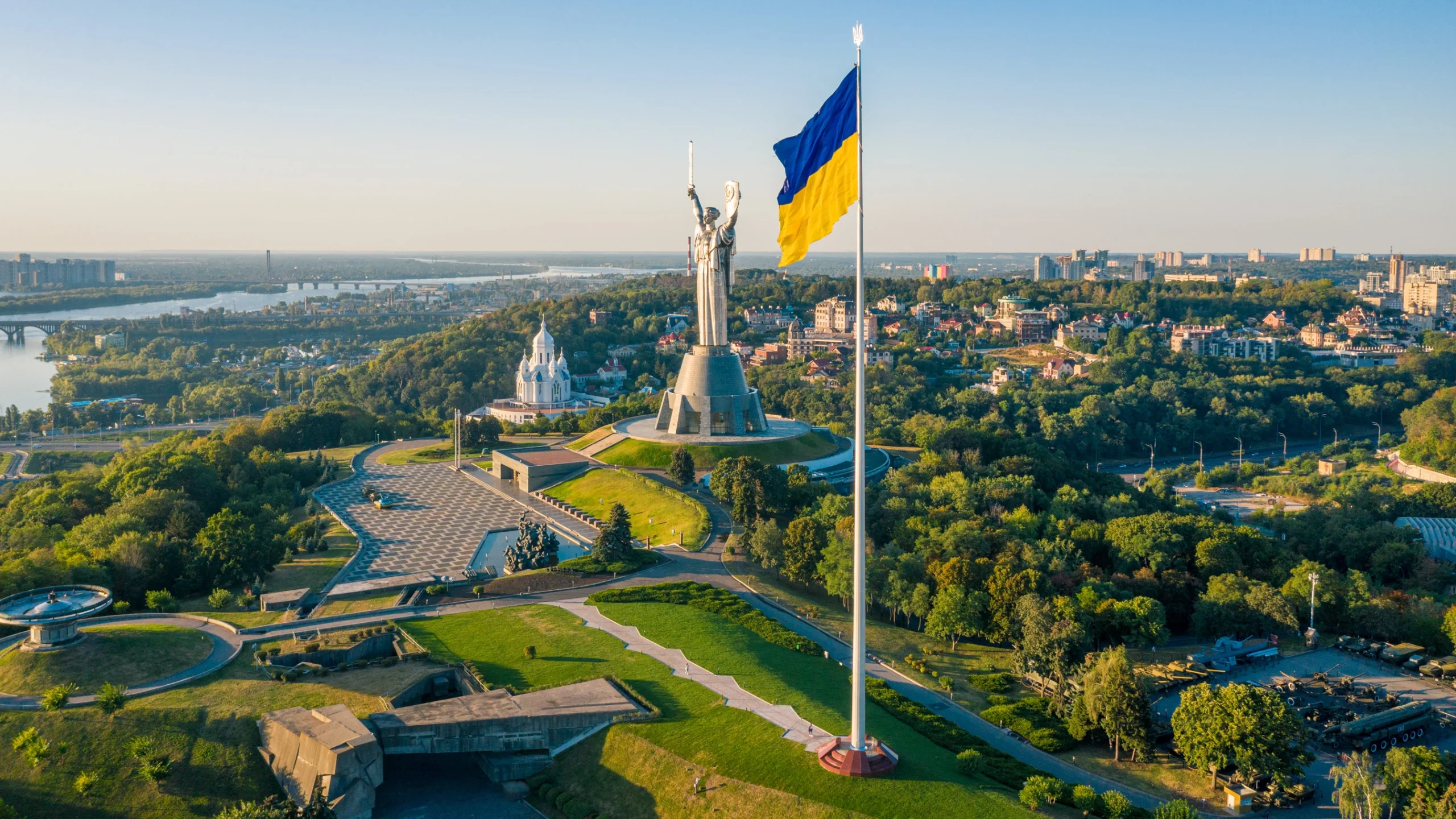
The Motherland Monument rises above Kyiv as part of a larger museum complex dedicated to World War II. Completed in 1981, it was designed to represent strength, protection, and victory. The figure holds a sword in one hand and a shield in the other, making its symbolism clear and direct. Unlike abstract memorials, this monument uses a recognizable human form to communicate its message. However, it is the scale that defines its impact.
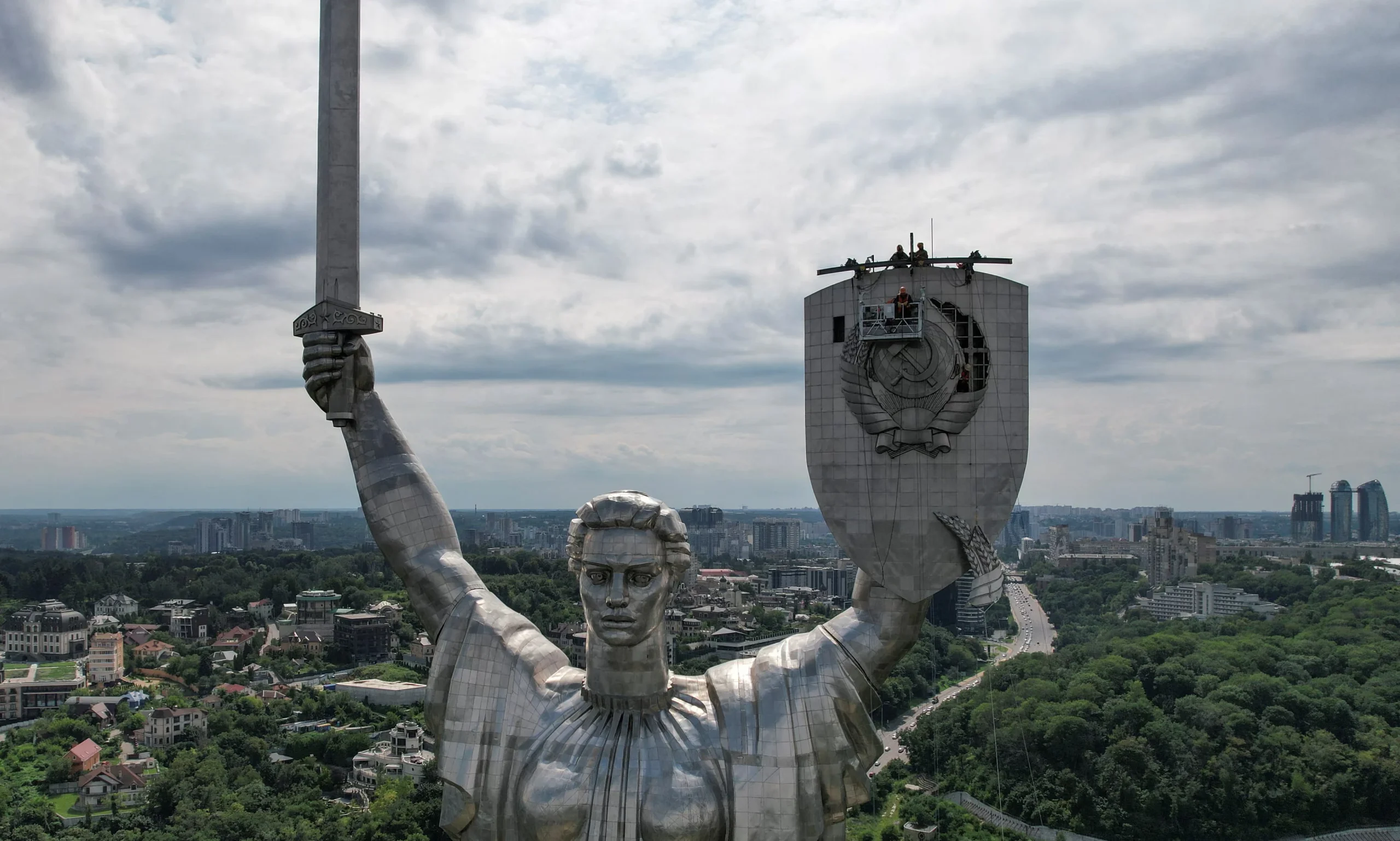
Standing over 100 meters tall, the statue dominates the skyline. It is visible from across the city, acting as a constant presence that must be sought out. The use of stainless steel gives it a uniform, reflective surface that changes subtly with light and weather. The monument reflects a broader approach to Soviet design, where scale and visibility were used to reinforce authority.
These Soviet landmarks reflect ambition, power, and bold design thinking. They continue to influence architecture today, representing an era where design balanced control with creative experimentation.
These landmarks were built to last, but what they represent has not stayed fixed. Each one comes from a time when architecture was closely tied to ideology. Today, they are read differently. A structure like Buzludzha now speaks as much about abandonment as it once did about ambition. The Avala Tower carries the memory of destruction and rebuilding. The Chronicle of Georgia feels unfinished. What remains constant is their ability to hold attention as they leave space for interpretation.