


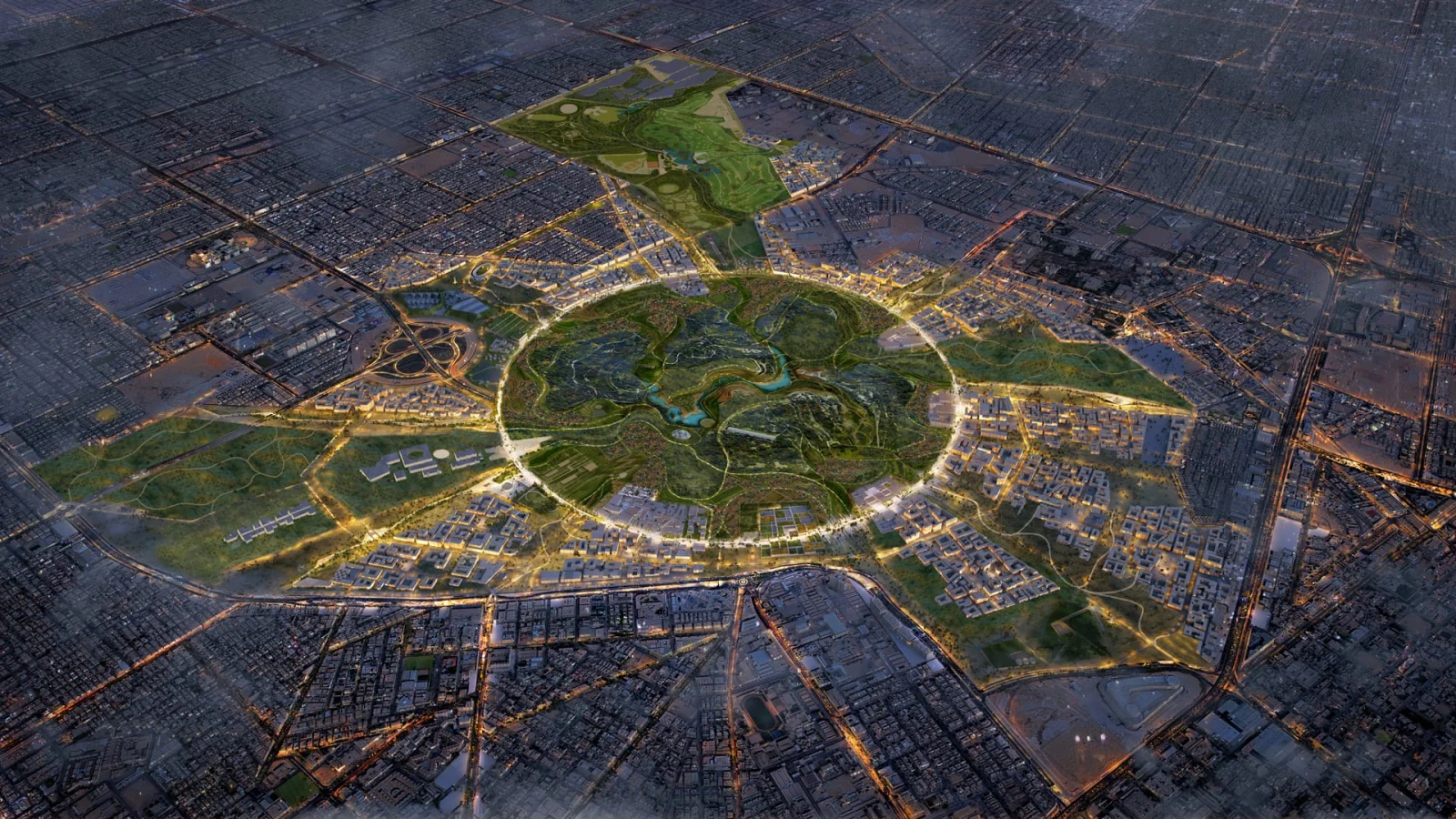
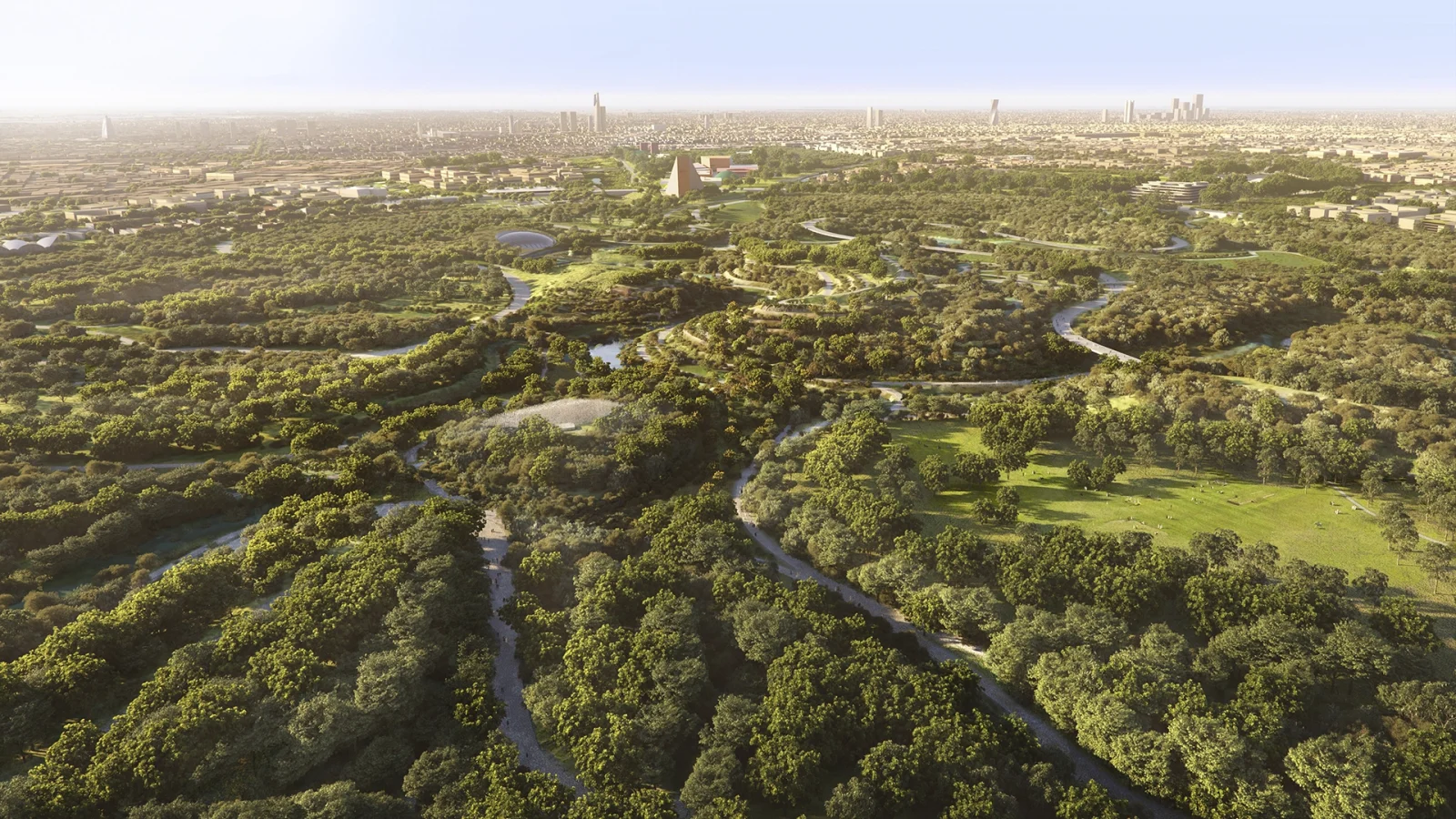
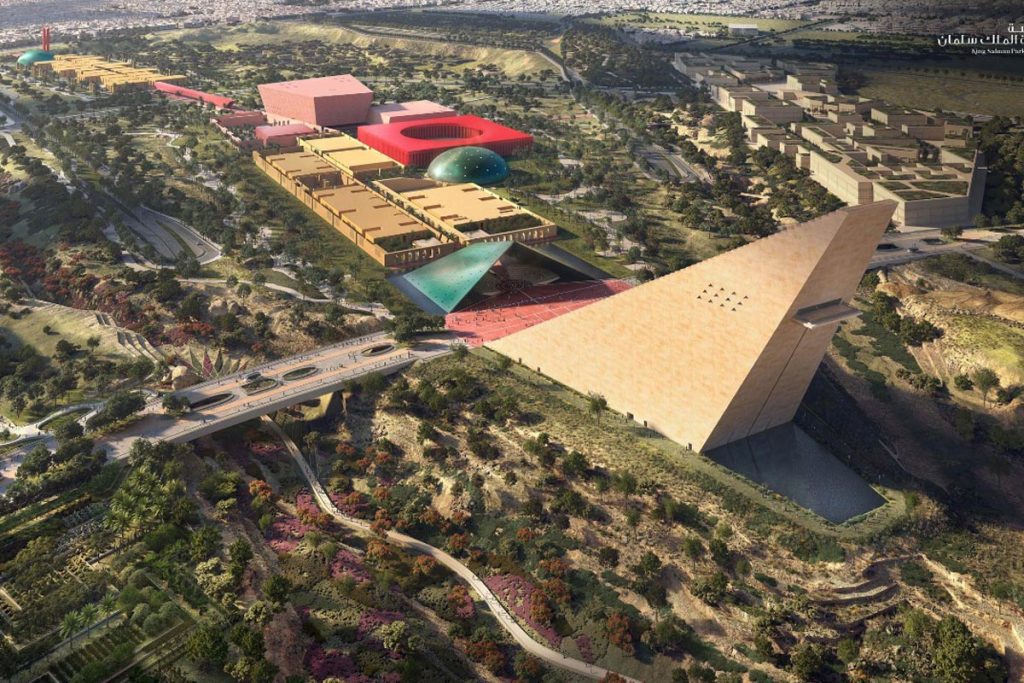
King Salman Park is set to become one of the world’s largest urban park projects. Located on the site of the old Riyadh Air Base in Saudi Arabia’s capital, this vast landscape is reimagining a once-restricted area into an expansive public realm. At 16.6 square kilometers, it will encompass many of the world’s famous parks, being roughly seven times the size of London’s Hyde Park and five times that of New York’s Central Park, and aims to transform Riyadh’s urban landscape while boosting the quality of life for residents and visitors alike.
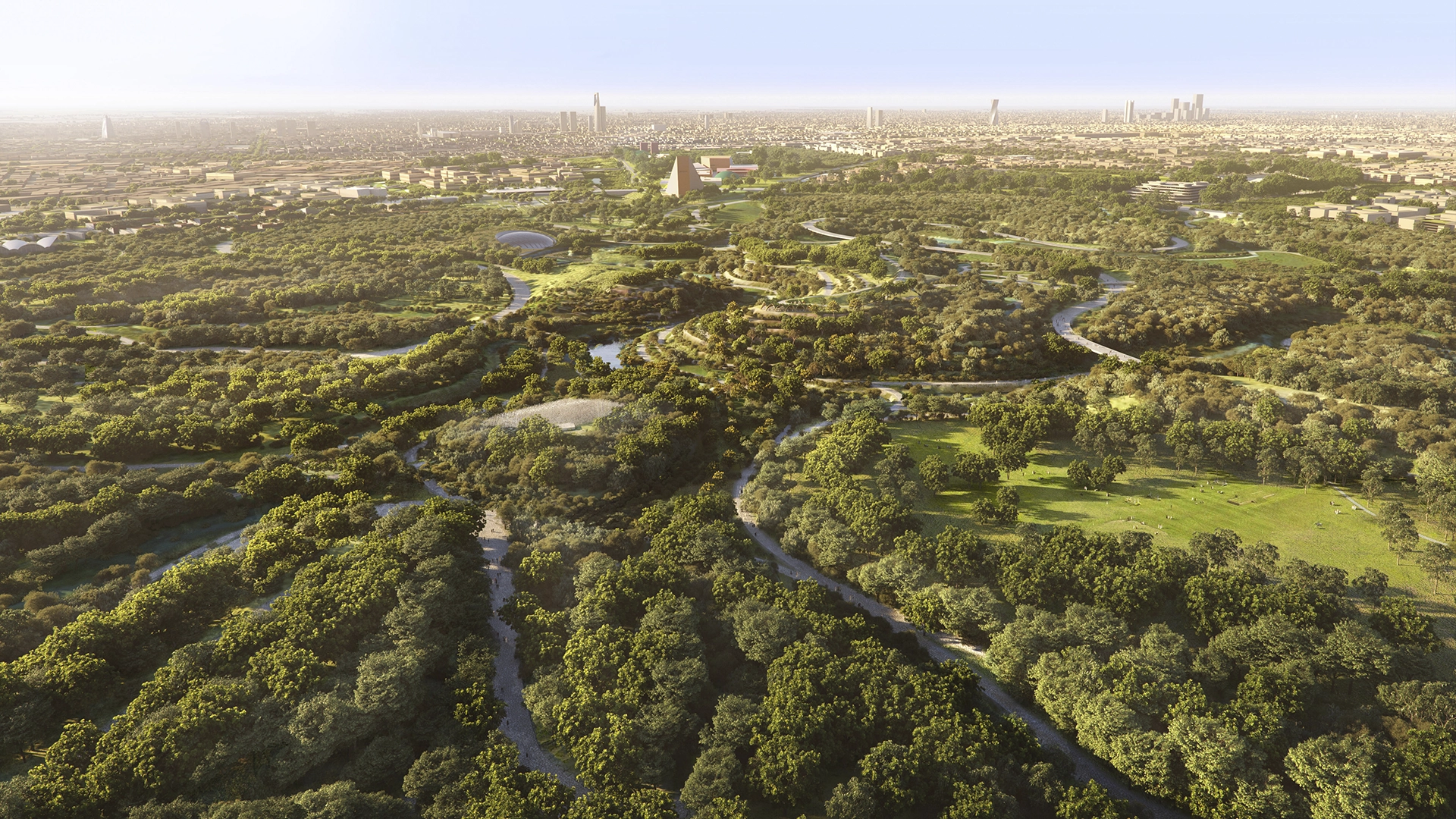
Work on King Salman Park has progressed steadily since its announcement in 2019 under the patronage of King Salman bin Abdulaziz Al Saud and as part of Saudi Vision 2030. The first phase of the park is planned to open to the public in 2026, with major sections of green space, walkways, and initial facilities expected to be ready by then.
Reclaiming the Former Riyadh Air Base
The park occupies the footprint of the former Riyadh Air Base, a centrally positioned site that had been closed and cleared to make way for this new public landscape. Designers have embraced the site’s scale, setting out a network of open green spaces, pathways, and ecological features that aim to both regenerate the environment and offer a diverse range of experiences.
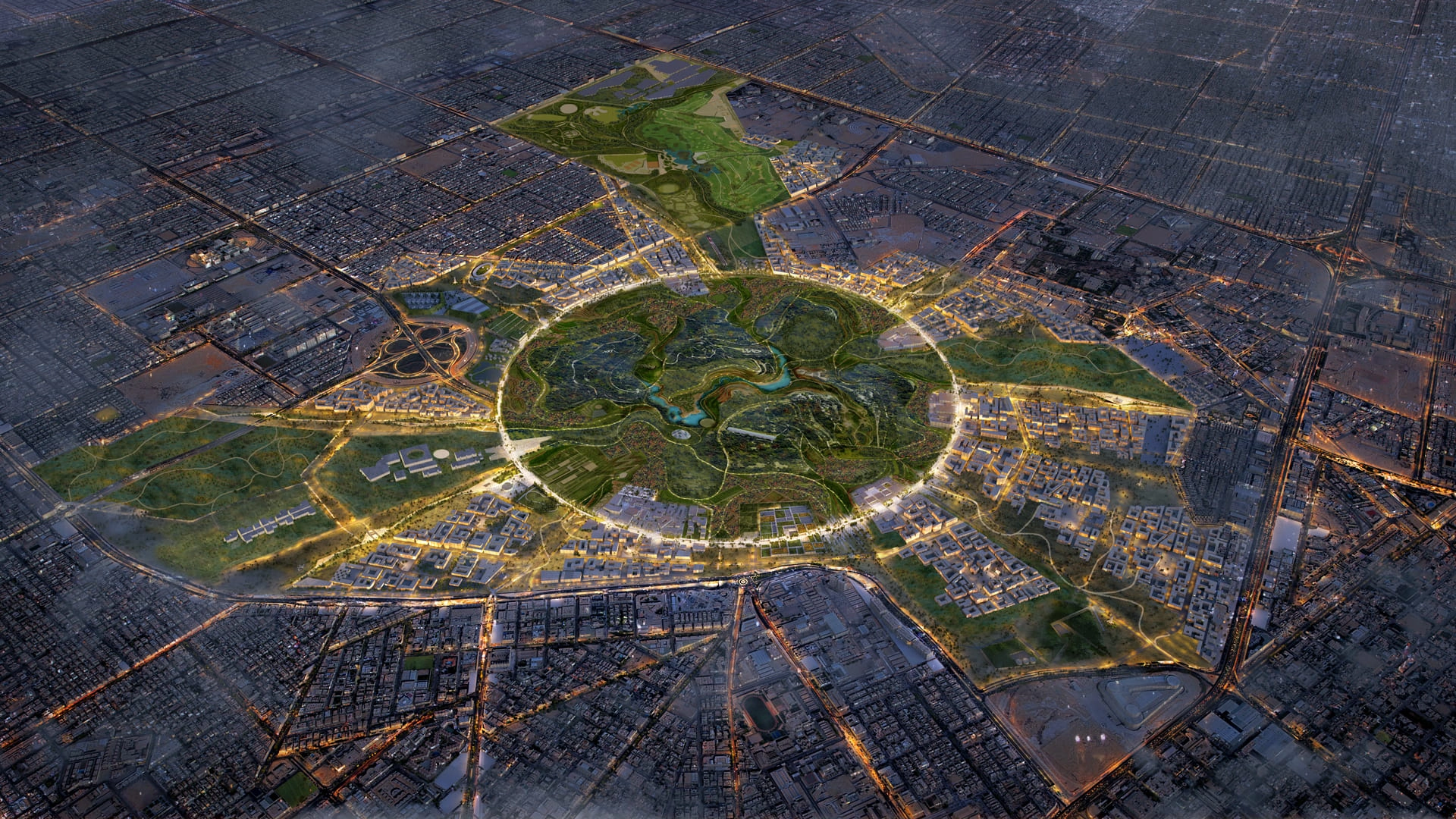
A defining feature of the park’s layout is its system of branching valleys inspired by the natural wadi riverbeds of the Arabian Peninsula. These shaded, vegetated corridors will run through the landscape, creating cooler microclimates and spaces for respite in the city’s desert climate. The design features soil regeneration layers and irrigation systems supplied by treated wastewater to support the growth of over one million trees across the site.
Culture and Community at King Salman Park
King Salman Park’s program is broad and varied, combining natural landscapes with cultural, recreational, and lifestyle facilities. Central to the plan is the Innovation Loop, a continuous path designed for walking, cycling, and electric or autonomous mobility. This internal loop connects the park’s main destinations and serves as a spine for movement across the site.
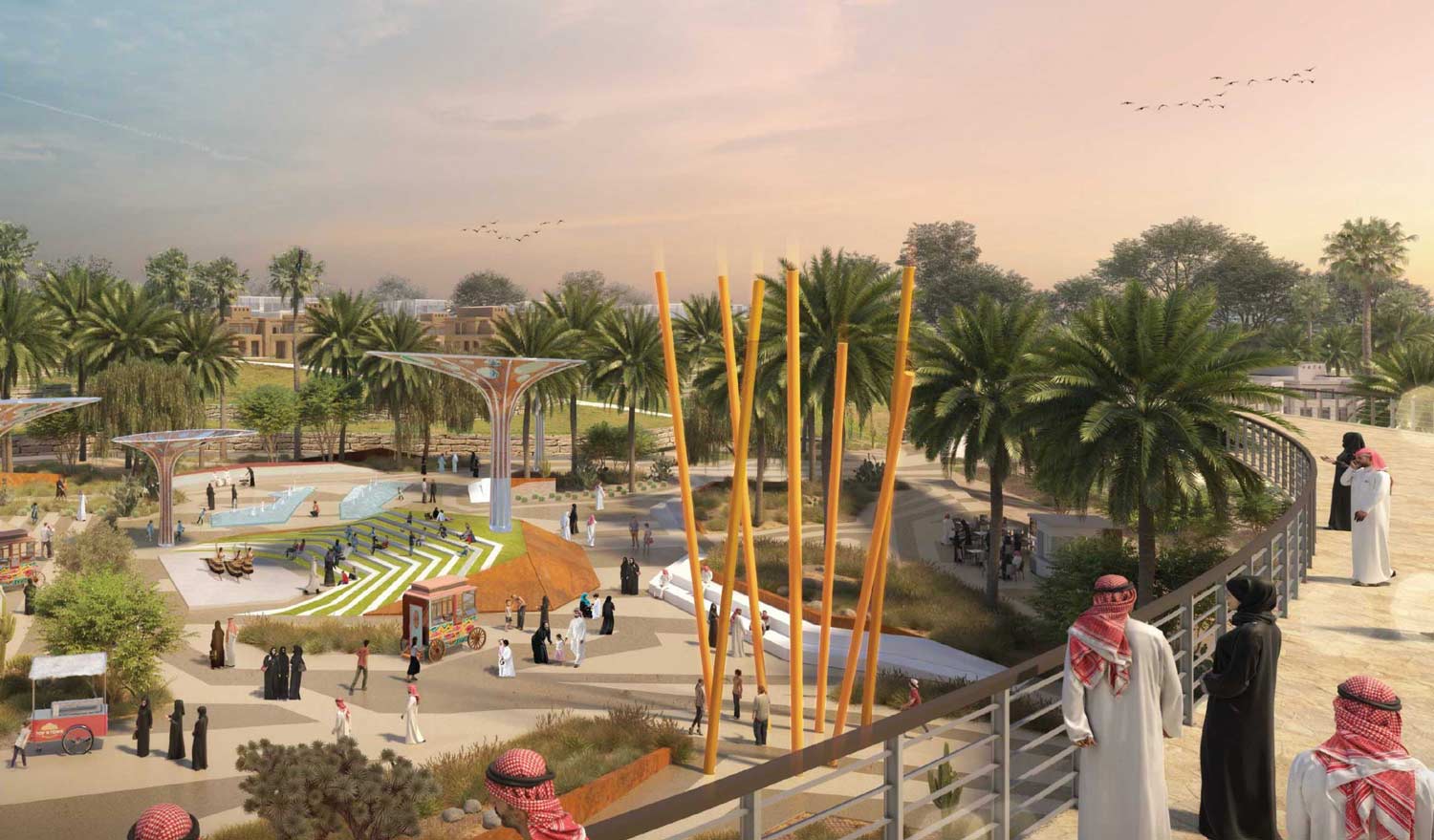
Key cultural elements planned within the park include the Royal Arts Complex by Bofill Taller de Arquitectura, which will contain performance spaces, galleries, and venues for exhibitions and events. A visitors pavilion, residential areas, and commercial districts will also frame the park, offering places to live, work, eat, and gather.
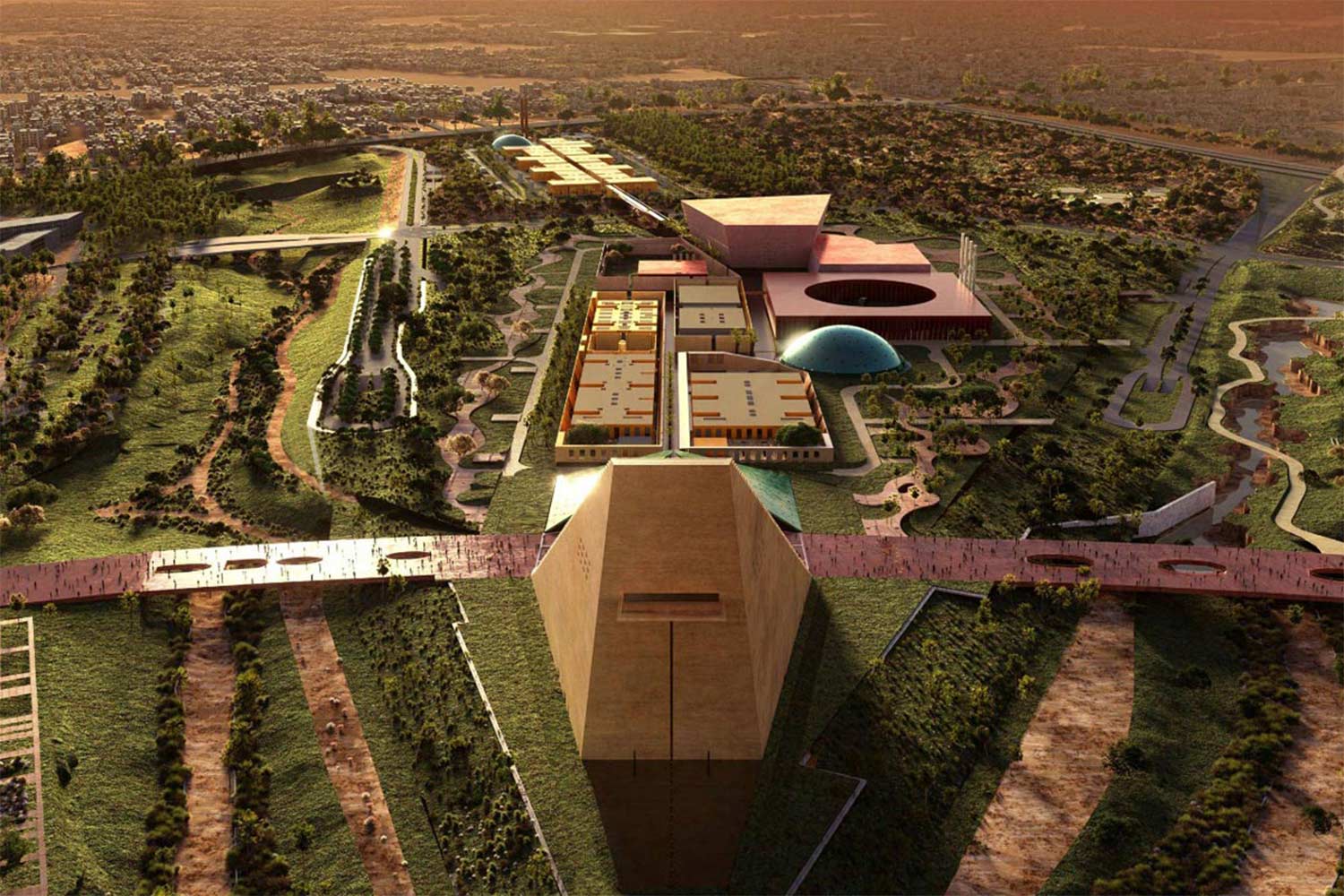
Beyond cultural amenities, the master plan anticipates a range of facilities that encourage sports, leisure, and family activities. These include long pedestrian and cycling pathways, open event spaces, sports fields, and areas dedicated to education, play, and exploration.
Integration and Accessibility
A key part of the park’s success will be how well it connects with the rest of Riyadh. The design places the park at the heart of the city’s transport network, linking to major roadways and public transit. It is planned to be accessible from multiple Riyadh Metro stations along key lines, as well as by bus rapid transit stops, ensuring visitors from across the city can reach the park without relying solely on cars.
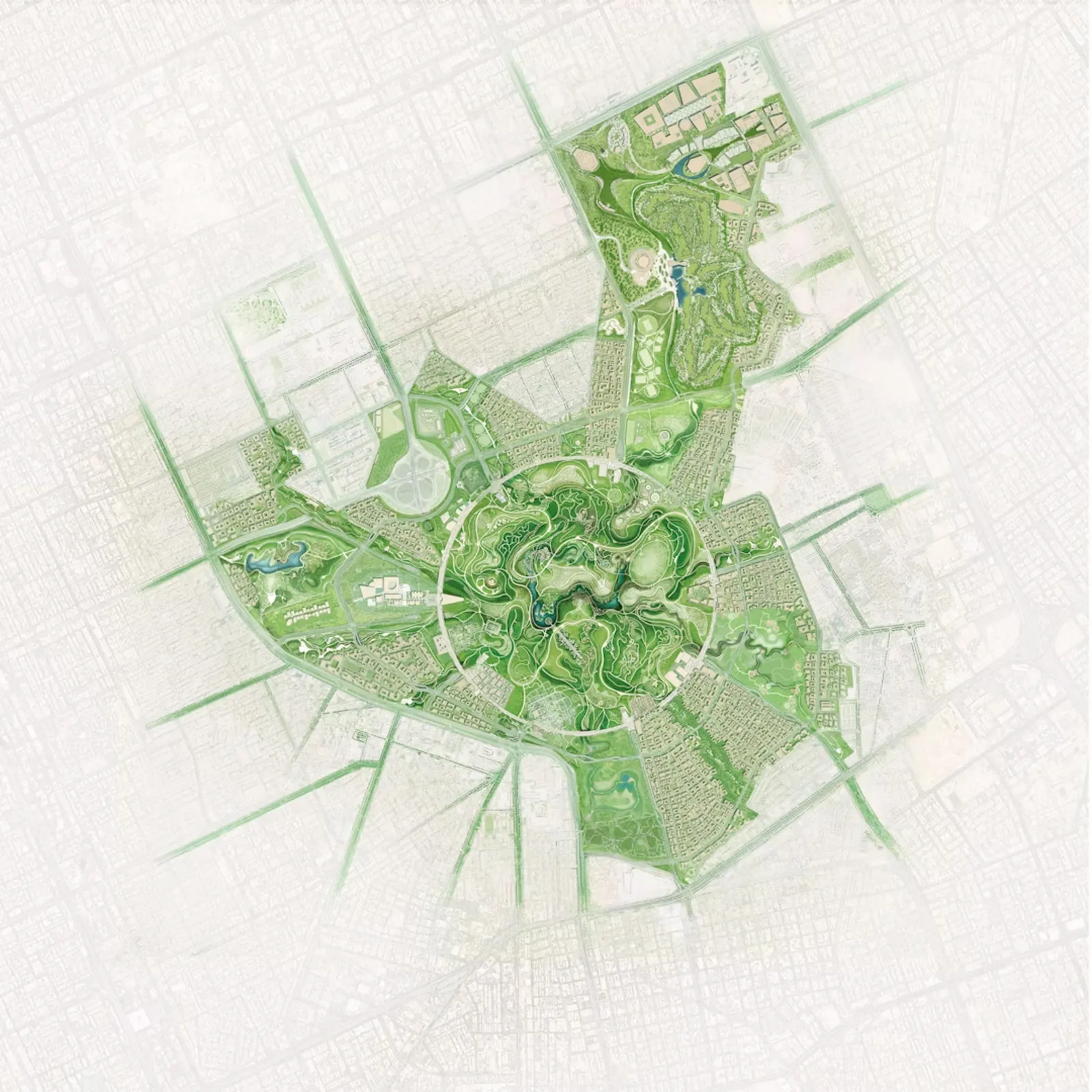
These connections are part of a broader push to create a more walkable, transit-oriented urban core for Riyadh, and King Salman Park is seen as a catalyst for this movement.
First Phase Opening in 2026
While the full park and all its planned elements will take years to complete, the first phase is scheduled to open in 2026. This opening will mark a major milestone in the park’s development, offering a large amount of public space and initial facilities for visitors to enjoy.
Subsequent phases will continue to roll out more cultural, recreational, and mixed-use components, with overall completion expected to extend into 2027 and beyond. Over time, King Salman Park aims to reshape Riyadh’s landscape and also shift how people live, work, and play in the city.
King Salman Park stands as an example of green urbanism in an arid context. Its planting strategy, water management systems, and climate-responsive design reflect a careful response to local environmental conditions. More importantly, by placing people, culture, and nature at the center of a massive redevelopment effort, the park is poised to become a key part of Riyadh’s future.
Image credit: King Salman Park
Explore Courses
.jpg "Ondrej Chybik - Rethinking Architecture")